
Opinion & Analysis
Stronger iron lofts don’t always create more distance

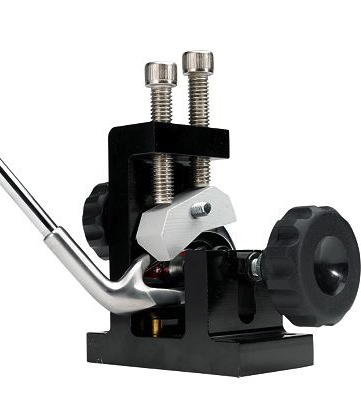
The most common complaint I hear from golfers looking for new irons is that all the lofts are “jacked strong.” If someone is playing an iron set, for instance, from the late 1990’s or earlier they will most likely find their irons to be 2-to-3 degrees weaker than today’s game-improvement irons, and even some players irons. So the assumption is that the loft alone is what is creating more distance with the new irons. But there is a lot more to it than that.
In the fittings I do on a golf radar, I see all types of swings and golfers of different ability levels, so the variances in fittings can be dramatic. But the end result for an iron fitting is the same: I want the customer to leave with a set of irons that produce the best possible launch conditions for them. So it doesn’t matter to me what loft a golfer’s 6 iron is, as long as that loft allows a golfer to launch and spin the ball in a way that’s ideal for their swing.
It is common for the golfers I fit to hit todays irons, which average about 2 degrees less loft per club, as high as their current set (if not higher). The reason this happens has to do with an iron’s center of gravity (COG), because when you lower an iron’s COG you add a lot of potential height to a golf shot.
Let’s assume that the launch angle with a modern-lofted set of irons is ideal. As long as the spin rate is acceptable, the new irons, because of their lower center of gravity, are going to produce more speed off the face (due to the lower loft and lower COG) and more distance. But they will still land on the green as soft as an older set of irons (if not softer). Add in the added forgiveness of modern irons, and you have a winning combination.
Another reason why stronger lofts don’t always mean more distance is something I do frequently to help golfers hit the ball farther — weaken lofts. It is common for a golfer with a swing speed of 70-to-80 mph or less to hit the ball with a lower trajectory than what is considered ideal. Fitters have to find some way to raise their ball flight, because those golfers lack the speed necessary to get the best results from many modern iron heads.
Step 1 for those golfers is to increase ball speed. More ball speed helps them keep the ball in the air longer, which raises their maximum height. If the added ball speed of modern irons is not enough to achieve an ideal landing angle, I have to add loft. That’s why I custom order iron sets with lofts that are 1-to-2 degrees weaker than standard about 40 percent of the time.
By adding loft, those golfers achieve more ideal launch conditions, which means they carry shots farther and stop the ball faster on the green. Think about how much this could help golfers from the rough as well. Golfers can see their spin rate drop thousands of RPM’s from the rough (depending on the rough and type of lie), so being able to keep their shots in the air with enough spin to stop the ball on the green can be a huge part of helping them shoot lower scores.
It is hard for some golfers to understand how irons with more loft can help them hit the ball farther, and this is understandable. But when I show them the results on golf radar, which can be as much as 5-to-10 yards more carry distance, they start to get it.
Golfers should liken their iron fittings to that of a driver. They won’t question a fitter who recommends that they switch to a 10.5-degree driver instead of an 8.5 or 9.5, because those are established as acceptable driver lofts. But bending an iron weak is not as well understood by many golfers, so they are more hesitant.
Golfers can talk about shafts until they are blue in the face, and different shafts will make a difference in control, feel and sometimes launch and spin. But loft is a much more important factor in fitting.
That’s why I recommend that golfers get fit for irons on golf radar by a certified fitter who understands how loft and COG work together in iron design. You’ll be amazed at the difference a properly fit set of irons can make to your game.









This past Monday, I played in the U.S. Amateur local qualifier at Rock Creek Country Club in Portland, Oregon. A full tee sheet from 7:30 a.m. to 1:55 p.m., the top 11 scores would make it to the U.S. Amateur final qualifying.
I teed off at 10:48 a.m.. With the 7:30 am tee time, you can get a feel for the leaders’ pace, and they were off and running on the challenging setup at Rock Creek.
View this post on Instagram
Getting to the highlight of the round on the par five 17th, a drive up the left side and 212 yards left to the front hole location. I took out a 5-iron with plans of middle of the green. The ball ended up 8 feet left of the hole, pin high. A slight downhill putt dropped in for an eagle 3 on the 17th. With the cut line looking to be anywhere from -2 to even par. This was the boost I had been waiting for all day.
With making par from the trees on 18, it was time to wait for a potential playoff with a posted score of one under par 71.
Three hours later, it was playoff time. 8 players for 6 spots. I made par on the playoff hole, which was good enough to advance to the U.S. Amateur final qualifying in July. USGA qualifiers sure deliver on all of the emotions in golf!
Club Junkie
Building my 2026 gamer WITB: Ranking the contenders and new putter projects – Club Junkie Podcast

The annual What’s In The Bag build is underway, and on this episode of Club Junkie, Brian breaks down the clubs currently leading the race for a spot in his 2026 gamer setup. From drivers and fairway woods to irons, wedges, and shafts, he ranks the equipment that’s performing best and explains what’s separating the front runners from the rest of the field.
Brian also heads into the workshop to discuss several putter projects currently on the bench. From head options and shaft choices to build ideas and testing plans, he shares what he’s working on and which putters could become serious contenders for the bag this season.
If you’re a gear junkie who loves equipment testing, club building, and the never-ending pursuit of the perfect setup, this episode is for you.
Follow Club Junkie:
Instagram: @clubjunkiepod
TikTok: @clubjunkiepod
Threads: @clubjunkiepod
X: @ClubJunkiePod
Club Junkie
Tour Edge Exotics mini driver review + TaylorMade Spider ZT Max first look – Club Junkie

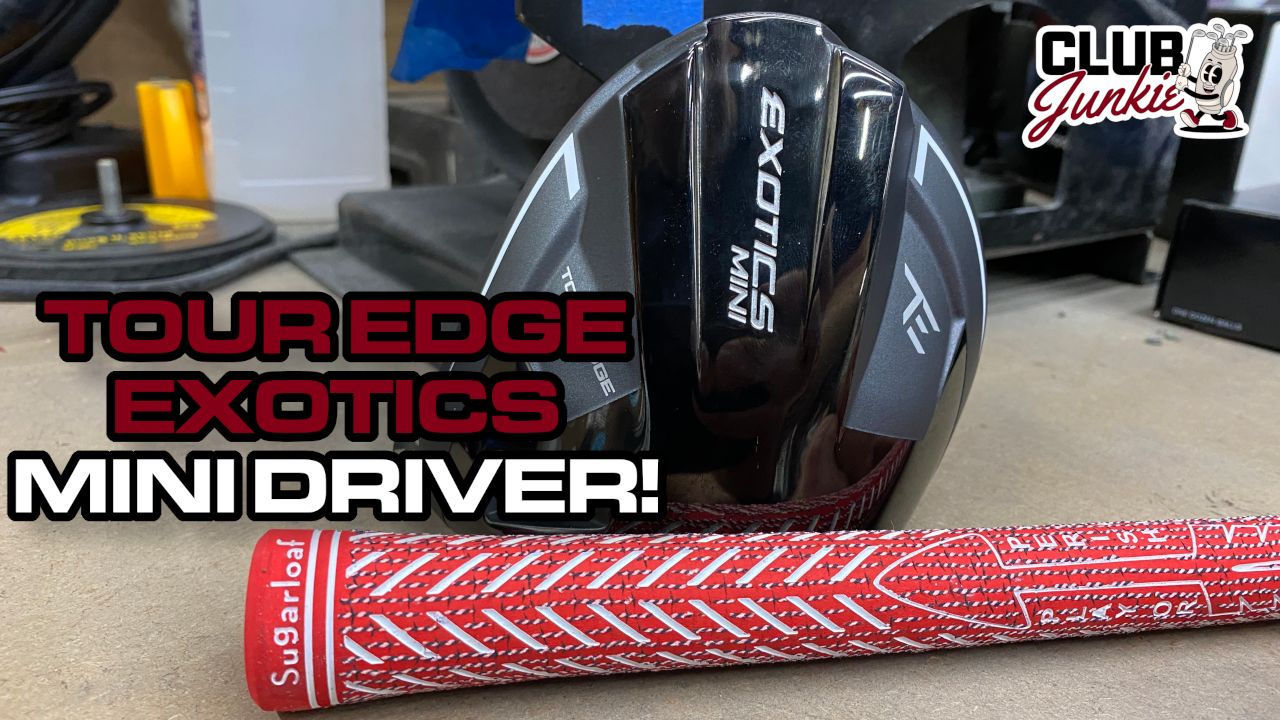
On this episode of Club Junkie, I put the new Tour Edge Exotics Mini Driver to the test and break down the performance, forgiveness, distance, and where it fits compared to a traditional driver or strong fairway wood. If you have been curious about adding a mini driver to the bag, this one is worth a look.
I also dive into the new TaylorMade Spider ZT Max putter that was recently spotted and discuss the growing zero torque putter trend. Plus, there is a closer look at the new Project X Titan Yellow shaft showing up on the PGA Tour and what makes it different from other profiles currently out there.

Justin Rose WITB 2026 (April): Full WITB breakdown with new McLaren irons

What’s the story behind Webb Simpson’s custom-stamped irons?

Cadillac Championship Tour Report: Spieth’s sizable changes, McLaren Golf launches, and more

Memorial Tournament Tour Report: Rory McIlroy, Cameron Young switch up drivers, and more

Russell Henley’s winning WITB: 2026 Charles Schwab Challenge

Kristoffer Reitan’s winning WITB: 2026 Truist Championship

Aaron Rai’s winning WITB: 2026 PGA Championship

Cameron Young’s winning WITB: 2026 Cadillac Championship

J.T. Poston’s winning WITB: 2026 Memorial Tournament

Best irons 2026: Best irons overall, most forgiving irons, and more


Hannah Green WITB 2026 (June)
Driver: Titleist GTS3 (10 degrees, D4 SureFit setting) Shaft: Mitsubishi Chemical Diamana RB 53 S 3-wood: Titleist GT3 (15 degrees,...


Asterisk Talley WITB 2026 (June)
Driver: TaylorMade Qi4D (9 degrees) Shaft: Fujikura Ventus Blue 6 S 3-wood: TaylorMade Qi4D (16.5 degrees) Shaft: Fujikura Ventus Blue...

Brianna Do WITB 2026 (June)
Driver: Callaway Quantum Triple Diamond (9 degrees) Shaft: KBS PGW 3-wood: Callaway Elyte Titanium (15 degrees) Shaft: KBS PGW 5-wood:...


Athena Singh WITB 2026 (June)
Driver: TaylorMade Qi4D (10.5 Degrees) Shaft: Fujikura Ventus Blue 6 S 3-wood: TaylorMade Qi10 Max (16 Degrees) Shaft: Fujikura Ventus Red 6...
-
 Equipment5 days ago
Memorial Tournament Tour Report: Rory McIlroy, Cameron Young switch up drivers, and more
-
 News1 week ago
Russell Henley’s winning WITB: 2026 Charles Schwab Challenge
-
 Whats in the Bag3 days ago
J.T. Poston’s winning WITB: 2026 Memorial Tournament
-
 Equipment2 days ago
Best irons 2026: Best irons overall, most forgiving irons, and more
-
 Equipment1 week ago
Details on Jason Day’s latest prototype Avoda iron setup
-

 Equipment3 weeks ago
CJ Cup Byron Nelson Tour Report: Koepka and Kim’s newest putters finally get hot
-

 News2 weeks ago
Charles Schwab Challenge Tour Report: MacIntyre, Åberg and Spaun all switch putters, TaylorMade launches new Spider
-
 Equipment2 weeks ago
Details on J.J. Spaun’s surprise putter switch


Mccance79
Oct 26, 2014 at 2:09 pm
Great point… I am a low ball hitter looking for more distance especially in my high irons. The concern is that all the fitting carts only have 6 irons and with the gaping on the 3, 4 and 5 irons lonely being 3* I am concerned on irons would react to my adjustments.
Frank Garrett
Dec 11, 2013 at 7:32 pm
Add loft for distance?????? I tried it today but I can still hit my 6i farther than my 64 degree lw…. Guess I don’t get it
mwb
Oct 29, 2013 at 7:16 am
I am purchasing new irons and am seriously considering getting the lofts 2* weak to create a 48* PW and 4* loft spacing. I’m also adding a 5 wood to the bag and changing to a 54/60 wedge set-up.
The new era of stronger lofts is all about how far to hit 7 iron vs how close to hit 7 iron and more accurate. Today’s golf ball travels farther than ever before and I don’t see any need to jack up the short iron lofts. Tiger Woods plays his irons in weaker lofts and he doesn’t seem to have any distance issues!
Freddy V.
Oct 24, 2013 at 11:40 pm
So glad this was posted. “people hit it further because of stronger lofts” is such a wifes tale. Ball speed from the new irons is what is creating the distance. With added ball speed comes more launch. Loft is used to get the irons back to the proper launch window…
Rick Zarlengo
Oct 21, 2013 at 3:30 pm
What I haven’t seen mentioned is that iron shafts have changed a great deal and offer more low kick (higher launch/spin) options to be able to match with those lofts. It is a combination of those factors to get consistent results.
Thankfully gone are the days of everyone demanding s300 S or X when they don’t have the swing speed to support them.
Gio
Oct 21, 2013 at 9:50 am
there comes a time when too much ‘loft jacking’ is too much. I know for people with slower swing speeds these crazy lofted, ultimate SGI irons are perfect. for the ‘better’ golfer, these lofts leave nothing at the bottom of the bag. (others have mentioned) I went to GG with my pops and hit the speedblade 9i for sheets and was hitting them 165-170…why? i don’t need that. traditional lofts ftw (let the ‘technology’ be what determines added length/distance, not loft changes)
Freddy V.
Oct 24, 2013 at 11:42 pm
Its ball speed not loft that is increasing distance. Guaranteed that if you looked at your ball speed it was dramatically higher.
SV
Oct 19, 2013 at 3:58 pm
I am in favor of weaker lofts. I don’t pretend to be an expert, or even close. But, as lofts are strengthened the gaps become compressed on the long end and widened on the short. When you get 2* gaps on the long end there is almost no difference between clubs. On the short end, as the pitching wedge loft gets stronger you end up with wider gaps in the scoring clubs. If this continues we’ll end up with 25* 7 irons and carry 6 or 7 “gap” wedges.
After this long introduction, Nick keep preaching this gospel. Maybe manufacturers will take note (I doubt it, but keep trying.
Phil E
Oct 18, 2013 at 10:45 am
Not a dispute with the OP, maybe even validation, but what about head style?
In my experience I have seen guys in the 8-14 handicap range with moderate ball speed try X Hot irons, and see much better results with the Rocketbladez. Typical launch angle would improve from 13-14* to 17-18*. In turn creating around 12 more yds. of distance, and more playable iron trajectories.
Idk CG specifics on those models, but I have seen similar results with I20, and G25.
Nick Morrow
Oct 18, 2013 at 1:11 pm
I completely agree Phil E.
It is amazing how much higher/lower similar irons can perform, in terms of player level. And you are right about the irons listed, X Hot is a shockingly low launching iron and the G25 would be the exact opposite, with Rocketbladez mixed in the middle. We have seen significant distance improvements with all 3 of these irons, it just needs to match up with how you launch the ball. That is why getting the numbers is so important.
Zachary Yaz
Oct 18, 2013 at 9:13 am
Thank you for such an eye opening article. Will keep that in mind from now on
8thehardway
Oct 18, 2013 at 8:38 am
“It is hard for some golfers to understand how irons with more loft can help them hit the ball farther,”
Maybe it’s conceptually challenging but when all sets came 3-PW with heads the size of your pinky-toe, golfers either left their 3 iron home or just used it for low punch shots back to the fairway; back then, a well-hit 6 iron would outdistance an over-muscled 3 iron seven times out of 10. If experience still trumps explanations, simulations and printouts, print out some ebay listings – there are lots of older sets with ‘barely used’ 3 irons.
Craig
Oct 18, 2013 at 8:12 am
Hi Nick,
I know its different for each golfer depending on their individual characteristics but do you have rough numbers (for iron set) to be looking for in terms of launch angle, spin rate etc. I am 2 handicap, playing Scottish Links golf, smooth tempo, 80-90mph, pretty straight flight, shallow divot.
Cheers
Nick Morrow
Oct 18, 2013 at 9:51 am
Craig,
Good question. Assuming you are not altering the trajectory due to the conditions. An ideal Launch Angle and Spin Rate for a Ball Speed with a 6 iron of 115 MPH would be right about 15-16* and 6000 RPM’s respectively.
If your Ball Speed was higher than that, say up to 125, which is a few MPH slower than PGA Tour average, you would want spin to stay within 200-300 RPM’s higher, and Launch Angle to come down to about 14*. And the opposite is true as the speed drops.
Jeff
Oct 21, 2013 at 2:57 pm
So what makes 15-16° and 6000 RPM “ideal”? Does that create the maximum distance for that ball speed? What if I get those numbers with a 7-iron, or a 5-iron? Would they still be “ideal”?
Nick Morrow
Oct 21, 2013 at 6:06 pm
Yes for that particular Ball Speed, the ball can not carry any further with a better stopping power than with those conditions. If you want to simply hit the ball further, find an iron that launches really high and spins really low, you will knuckle ball the shot a long ways, but odds are you will not be able to control yardages or stop the ball under most conditions.
I am not sure exactly what you are asking with the final 2 questions, are you asking should the 5 and 7 iron have the same launch conditions as the 6 iron, or would there be any issues if your 5 iron or the 7 iron launched like the “ideal” conditions for the 6 iron?
Jeff
Oct 28, 2013 at 6:11 pm
Yes, that’s essentially what I’m asking. I know some pros naturally hit it higher, and some lower. Some get more spin, some less. I realize this can be affected by angle of attack, swing speed, iron/shaft design, and ball design. But if a “high spin” player gets a 15° launch and 6000 RPM with a 115 MPH ball speed with a 5-iron, then what’s wrong with that? If the launch conditions work, what matter the number on the club? Surely getting consistent results and regular yardage gaps between clubs is more important than shooting for some “ideal” stats that may go against your natural swing? Some people prefer a higher or lower, high- or low-spin ball flight for strategic purposes. Or if you’re playing in firm conditions, you might want more spin and a higher launch. The idea of one ideal spin rate and launch angle for each iron doesn’t really make sense to me.
As far as lofts for amateurs go, I feel like long irons have to little difference between them. Since such a precise hit is needed to take advantage of the lower loft, the “average” distance each club hits the ball tends to converge at lower lofts for less-skilled players. Including me. I have a 17-degree 4-wood, a 21-degree hybrid, a 26-degree hybrid, and a 29-degree iron as my longer (non-driver) clubs. This also gives me room for more wedges.
yo!
Oct 17, 2013 at 5:46 pm
For you lower swing speed players, go to blades with weaker lofts or better yet go to an old vintage blades with the pitching wedge 52 degrees, and you can hit the ball farther … hehe.
kloyd0306
Oct 17, 2013 at 4:50 pm
The industry is run by marketing divisions, who are responsible for stronger lofted irons, in the mistaken belief that lower loft equals more distance. The fact remains that only stronger, faster swings can support lower lofts.
So, I am now waiting for a major brand to market and advertise that their new, weaker lofts will add distance for most golfers.
I suspect I’ll be waiting a very long time………
mitch
Oct 17, 2013 at 4:29 pm
Amen, finally some one with great insight. Like most things in life, the real answer is “it all depends”, golf is probably the only sport where they use generalization to describe something that is quite complicated. examples, keep you head down, hit down on the ball, you gotta swing inside out…
mr_divots
Oct 17, 2013 at 3:16 pm
Good info to pass along regarding COG. Seems that the article could have suggested that for higher swing speed players, the stronger lofts and COG location is necessary to not have the ball shoot straight up. The new grooves should also be mentioned as allowing the ball to slide up the face a little more compared to the older grooves.
Another point regarding GI/SGI clubs that I would love to see a fitter touch on is shaft length. Routinely, I notice longer than standard 85g shafts with these sets. Perhaps the lighter weight is good, but how many people fit into these longer lengths? I’m 6’2″ and most GI clubs are too long even for me in their stock iteration with this “progressive” shaft lengths concept. The “lightweight speed” designs don’t seem to help the everyday golfer from the examples I see out on the course. That said, people will usually launch clubs higher with a longer shaft length as well, (mechanical advantage/physics) so again, it kind of goes hand in hand with the stronger lofts.
Nick Morrow
Oct 17, 2013 at 4:41 pm
Mr Divots, good point on the higher swing speeds, but like anything else we still see higher speed guys still launch the ball too low, it just is not as common as the low swing speed player.
I am glad you mentioned shaft length, static lengths for GI clubs, how it impacts flight, etc. These are topics that have been kicked around and that are important in today’s market, so articles will most likely be touching on them in the future.
Thank you for the comment and ideas.
Joe Golfer
Oct 18, 2013 at 5:50 am
Good point.
Plus, those superlight steel shafts in the 85-90 gram range feel like a softer flex than what is listed, probably due to the thinner steel in the shaft.
KBS even notes it in the swing speed recommendations for their different model shafts, as their very lightweight steel shafts are about a full flex softer frequency than the standard weight counterpart.
Drew
Oct 17, 2013 at 1:12 pm
But what I don’t understand is why you would need to weaken the loft of irons 2-3* when the gap between irons is 3-4*. Say you have a modern set that is 3-PW, 19*-45*. Why would you weaken the lofts of every club and increase the bounce angle by a proportionate amount if you could just get rid of the 3 iron and add a gap wedge? That’s basically what companies are doing anyway. 4-AW with juiced lofts is the same set as an old 3-PW that would probably be 22*-48*. If the customer can’t get the 4 iron in the air, pull that too and give them a hybrid that will get in the air. Weakening lofts makes zero sense to me. On a driver? Sure. But I’m not sure what’s being accomplished with weakening irons. Even if you want to say a weakened 4 iron is longer in length than a 5 iron of the same loft and therefore goes farther, your gaps in your set will still be equally proportionate. You get to replace the 4 iron that’s gone with something you can get in the air. It’s like that distance is just not filled. There only seems to be one logical reason to do this and that’s just in the odd situation where someone needs more bounce.
Nick Morrow
Oct 17, 2013 at 2:57 pm
I do not disagree with you on the long irons Drew, we have hybrids to replace those. But what about the mid and low irons, yes I understand some companies make 6/7 hybrids (7 and up is very rare), but you can not really replace an 8 iron with a true hybrid. So to get the most performance out of each iron, for these low ball hitters, we need to add loft. And yes it is common to not have an iron longer than 6 or 5 for some of these guys because they carry them all the same distance, and then hybrids come into play. We also see these players having gapping issues with a mid iron, not just 4 and 5 like your example, so adding loft achieves better gapping as well.
Drew
Oct 17, 2013 at 3:02 pm
Well gee, I guess if you can’t get a 7 iron in the air, you really do need some help haha.
Conrad
Oct 17, 2013 at 1:10 pm
well unfortunately people buy clubs based on their ego and the club manufactures feed it. Everyone tries to boast yardage, not consistency and accuracy. most amateurs like to hit the long ball not the low score.
chris Steele
Oct 17, 2013 at 11:49 am
Bravo, As a club fitter who deals with players that purchase equipment based on what their ego tells them they need verses the facts this is a breath of fresh air!
AJ Jensen
Oct 17, 2013 at 11:17 am
OK, quick question. I’m contemplating a set of Mizuno MP-53 irons. Currently I play a set of old-school Ping Eye 2’s, which I love, but I want the benefits of modern irons and forged heads. I know my distances with the Ping set too well and I don’t want to go through a whole season of trial-and-error with new irons, so would it make sense to have my new Mizuno irons bent to the old Ping specs?
Drew Farron
Oct 17, 2013 at 10:01 am
Brilliant information ! More is not always better, but I would expect nothing less from a fitter at Carl’s Golfland…
Ryan
Oct 17, 2013 at 6:17 am
About time someone who knows what they’re talking about said what the the real deal is with loft and modern clubs. LOWER COG IN NEW IRONS REQUIRES LESS LOFT A LOT OF THE TIME TO GET THE SAME DISTANCE OF OLDER CLUBS WITH A HIGHER COG. The golfwrx wannabe touring pro’s will argue otherwise..
Mikko U
Oct 17, 2013 at 5:34 am
After reading the headline I was expecting a slightly different subject discussed but this topic is something I’ve been wondering about myself.
The GI/SGI clubs are basically directed to help players with lesser abilities to hit the golf ball, usually that also means lower swing speeds. They’re selling the clubs by saying that you will hit them longer, yet like you said, many of those who’d need the help aren’t really hitting at least the longer irons any longer.
What I was hoping from this article was proof for that a current 46* MB/CB PW doesn’t go any further than the 47/48* PWs of the past. I guess I’ll need to have my next irons bent weaker leaving some marks on the blade and hosel.
birly-shirly
Oct 17, 2013 at 5:12 am
Nick – so, how much difference can CoG location make to the “optimum” loft?
Say you start with a classic blade 7 iron with 40* static loft – by how much could you reduce the loft in conjunction with a GI head design without launching the ball lower?
Pete Farner
Oct 17, 2013 at 11:06 am
That would depend on what GI head design you have and to be quite honest the only way to be sure would be to test these irons on a golf radar. Each player is different and because of this each iron plays different for each player.
KK
Oct 17, 2013 at 1:21 am
It’s not about research or information, it’s about ego and emotion. Humans think they’re logical but when it comes down to it (when the wallet hits the counter), they are controlled by feelings, who they wish they could play like and what company has qualities that match their identity. As club fitters, you have to find the balance between measurable results and what the customer THINKS is happening. Good luck!
Pooch
Oct 17, 2013 at 12:07 am
Great article. I am a club fitter also and see this every day. I have to explain that the design allows the iron to have a stronger loft. What still kills me are the guys coming in and demanding a lower lofted driver thinking it will give them more distance. I even fitted a customer with a new SLDR and put him in a 12 degree head with a TP shaft. I showed him all the stats on the monitor and he was in agreement but when it came to buying the actual driver he insisted on buying the 9.5 head with the TP after all the work on the launch monitor. I truly wish customers would do their do diligence before getting fit.
Chris
Oct 16, 2013 at 11:53 pm
I completely agree with this! I just switched from Wilson Ci9 to Taylormade TP MC, and I’ve gained almost 15 yards despite the lofts being higher. Great article!
[email protected]
Oct 18, 2013 at 8:44 am
Yup…been there done that. Agreed.