
Equipment
When are your grooves worn out?

Have you ever heard an announcer during a golf telecast talk about how PGA Tour players “control their spin?” If you’re like me, you probably thought to yourself, “I wish I actually had some spin to control.”
It’s frustrating to hit what looks like a good pitch shot only to see it bound past the pin and off the back of the green. But if you’ve been using the same wedge for awhile, there might be an easy fix to get more grab on your greens, because having sharp grooves in your wedges gives you the best chance at creating the spin you want inside the 100-yard scoring zone.
Before you run to the store, let’s discuss how wedges actually create spin. From there, we can determine if your lack of spin is actually an equipment problem.
How wedges create spin
At impact, the grooves are responsible for biting into the cover of the golf ball. The downward strike on the ball, coupled with the sharp grooves, traps the ball against the ground and creates backspin.
Over time, the lower grooves will start to wear out and eventually will not catch the ball as sharply. The dulling grooves allow the ball to roll up the face just slightly before catching some of the higher grooves. When the ball rolls up the face, spin is lost because friction is lost.
Creating spin is not done by the grooves alone, however. Spin is a function of the golf club as a whole. Research is finding more and more that spin also has a lot to do with the roughness of the face of the wedge. Pick up a new Cleveland wedge and look closely at the new Rotex milled face of the club. The laser milled pattern you see between the grooves creates miniature grooves on the face and increases the “grab” factor at impact, especially on less than full shots.
To research the difference between new and two-year-old grooves, I hit identical 56 degree Titleist Vokey wedges on a launch monitor using Titleist ProV1s. All the shots I charted were 90 to 110 yards. The wedge that I had in my bag for two years spun an average of 9000 rpms; enough to keep the ball within three or four yards on average of where it landed, never spinning back.
When I switched to the new Vokey, I instantly noticed the difference. The feel and sound was completely different. I heard the sharp groves catching the ball on the bottom few grooves, and I felt the ball staying on the lower grooves. Looking at the ball, I noticed the difference as the new wedge bit into the ball and scuffed the cover. The new wedge spun an average of 12,000 rpms and pulled back on the majority of shots.
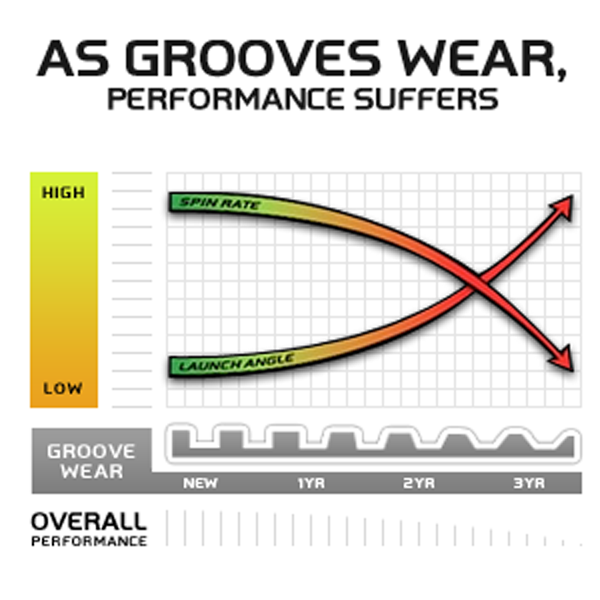
(Graph from TaylorMade about its XFT wedges with interchangable faces)
What kind of a difference can these numbers make during a round? Let’s say you’re 90 yards away from a front pin that is tucked behind a bunker and your ball lands just three yards beyond the pin. With old grooves, your ball will most likely stop around seven feet beyond where it lands, leaving you with a 15 to 20 foot putt. With new grooves, that same shot will have a chance at stopping where it lands, if not spinning back towards the hole, leaving you inside of 10 feet and a very makeable putt.
One solution to bringing back some sharpness to grooves that have worn down is to purchase a groove sharpening tool. You can buy these tools at any local golf retailer, but you need to be careful about a few things. While the sharpening tools do give a little bite back to an old wedge, they do not come close to the sharpness of new grooves. When I tested an old wedge after groove sharpening, it averaged about 10,500 rpms on 100-yard shots.
It is worth noting that a groove sharpener works by grinding out some of the metal on the club face. The rules of golf state that grooves must be no more than 0.035 inches wide, 0.020 inches deep and 0.075 inches from any adjacent grooves. If you play competitively, using a groove sharpener could make your clubs non-conforming and illegal for competition. In fact, Titleist’s Vokey Wedgeworks shops will not resharpen grooves because the margin is so thin between conforming and non-conforming.
The sole of the wedge can also determine if it is time to replace the club. When you buy a new wedge, the sole of the wedge has a specific grind to it that hopefully fits your swing and the turf conditions you typically play on. Vokey alone offers 11 different sole grinds on their SM4 wedges. Over time, the sole wears down to fit your individual swing print. As the grind changes, so does the performance of the club. Tiger has said he will change his 60-degree wedge about four times per year because of how much he practices.
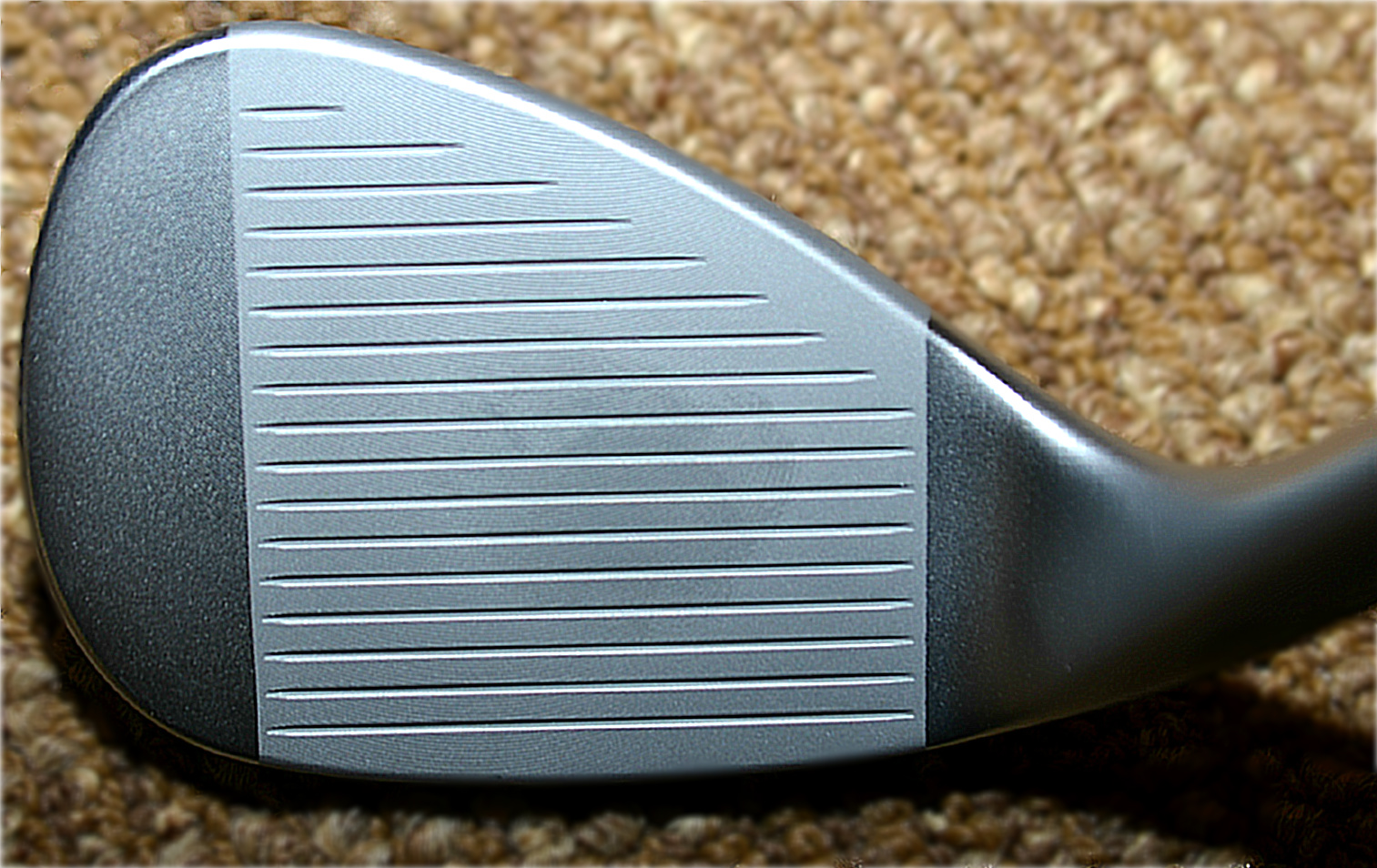
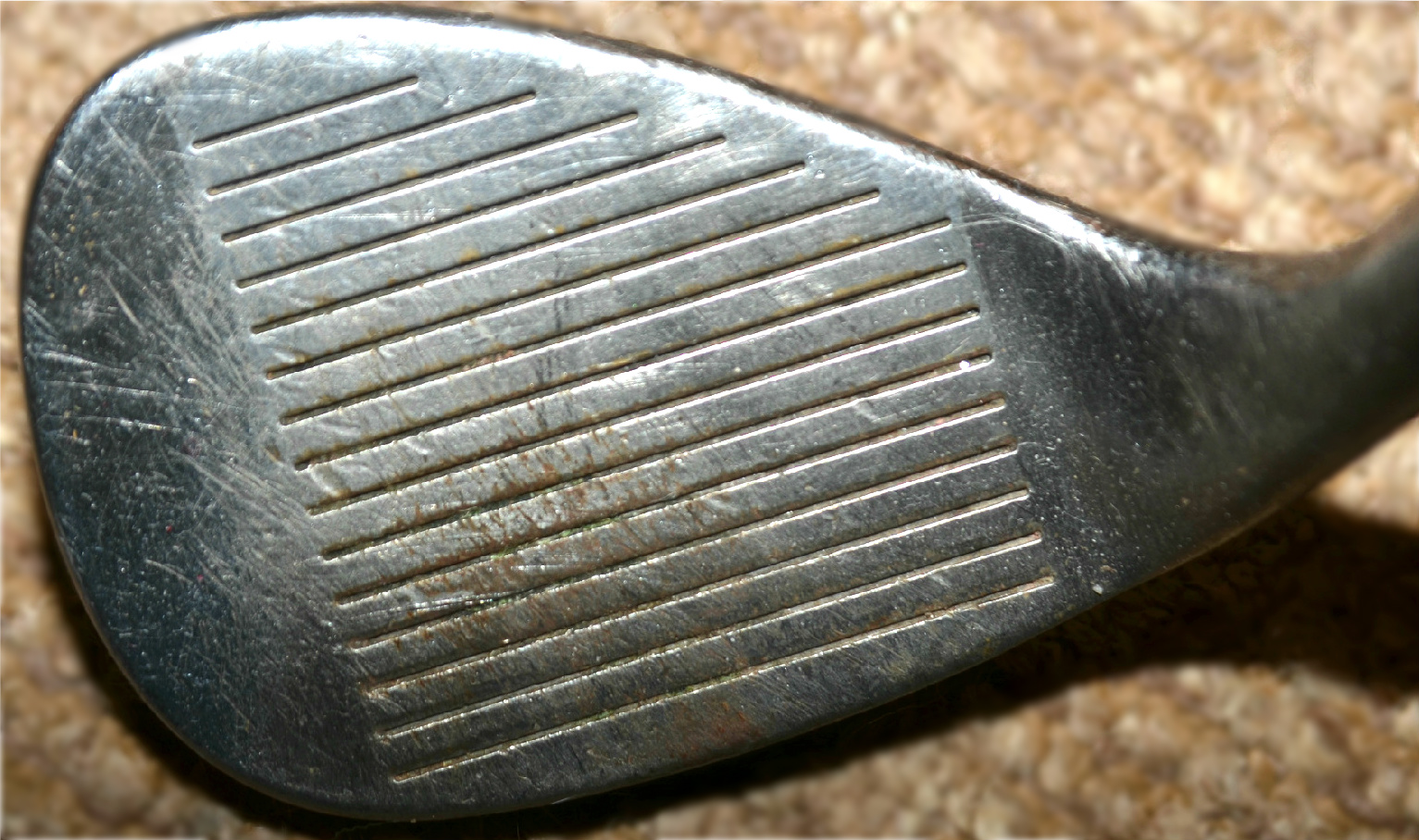
New grooves (left) versus worn out grooves (right)
The Takeaway
The best way to know whether to replace your wedges is to practice with them. Although this may seem counter-intuitive, as using your wedges will only wear down the grooves, it is a great opportunity to get a good feel for how much life is left in them. When you are practicing, take note of your ball flight. Does it come out low with a lot of spin, or does it launch high with little spin?
If you are practicing on grass, hit a few shots with some grass built up in the grooves. Try to feel the ball rolling up the face of the club before being caught by some of the higher grooves. These shots will typical launch high with little spin, and seem to fall out of the sky. After you have felt what a shot feels like with less spin, give your wedges a good cleaning and notice the difference as your next shots come out slightly lower, but with much more spin.
Eventually, your wedges will wear down to the point where it feels like there is grass built up in your grooves even after you have cleaned them. This is when it is time to replace your wedges. To test if your wedges are already at that point, check with your local golf shop to see if they have any wedges available for demo. Take the wedge to the range and try it against your current wedges, or schedule a fitting with a PGA professional who can help you determine if your wedge is worn down enough to be replaced.









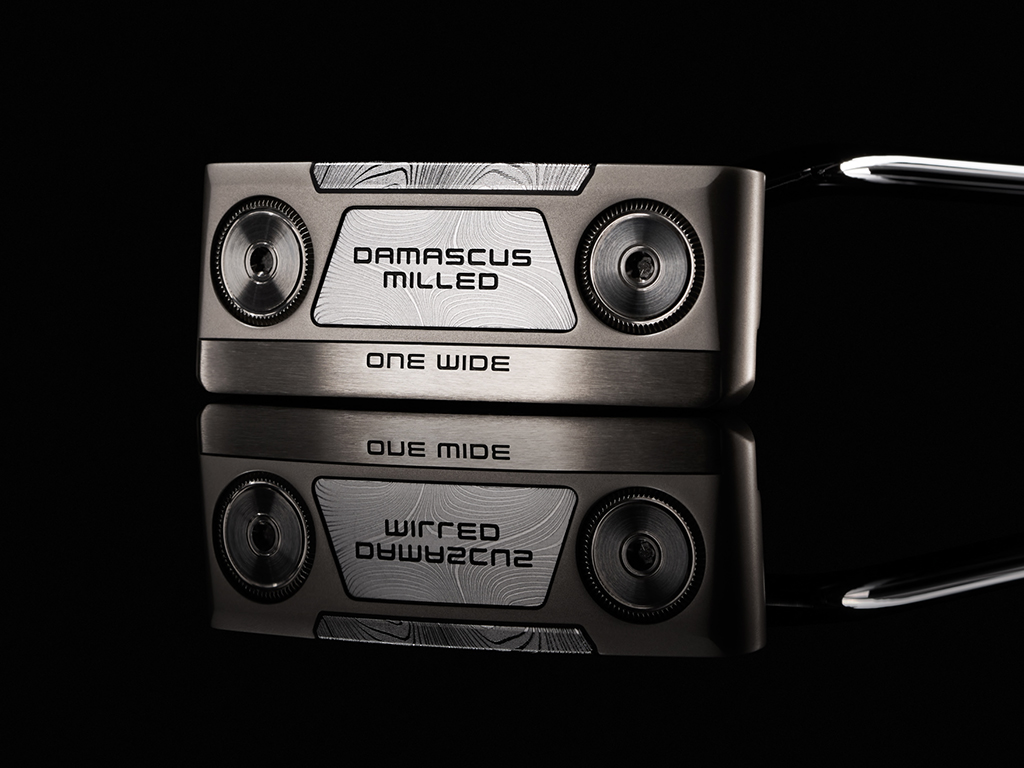
Odyssey Golf announced Tuesday that the already popular Damascus Milled putter lineup is getting more options.
Initially launched back in April, only in a Damascus Milled #7 head (in plumbers or double bend configurations), the family grows to four with a One Wide, Two and Rossie S shape, all available in the second limited-edition drop at retail on June 6th.
“Damascus Steel is a beautiful material, and the patterns tell the story, because every one is different” said Odyssey General Manager, Jacob Davidson. “But what stands out is that as beautiful as these putters are, the feedback from Tour has been the exceptional feel of these putters. We wanted to deliver the most premium performance-driven putter we’ve ever done at Odyssey. When you look at this product, we have so much confidence because there is not one thing we’d do different. On this one we really took our time over the last couple years to try to perfect the design.”
Created from a layered construction of multiple steel alloys, this Damascus Steel insert is forged, folded and pressed to create a unique, striking pattern in every piece. Think of it like a fingerprint. Each Damascus construction comes with its own 1-of-1 style pattern. No offerings will ever look the same.
The layered structure, combined with a specialized heat treatment, delivers a finely tuned, highly responsive feel different from other insert materials. The Damascus steel is audibly different compared to other inserts, potentially with slightly more feedback. Odyssey also uses AI-designed back contours to maintain consistent ball speed across the face, blending traditional craftsmanship with modern tech.
Each head in the line is precision-milled from stainless steel and features a blasted silver finish to complement the Damascus insert and sole plates.
With Tour feedback, Odyssey has also developed, in collaboration with Golf Pride, a grip featuring meticulously crafted edges, pistol shaping and a classic modern tour feel.


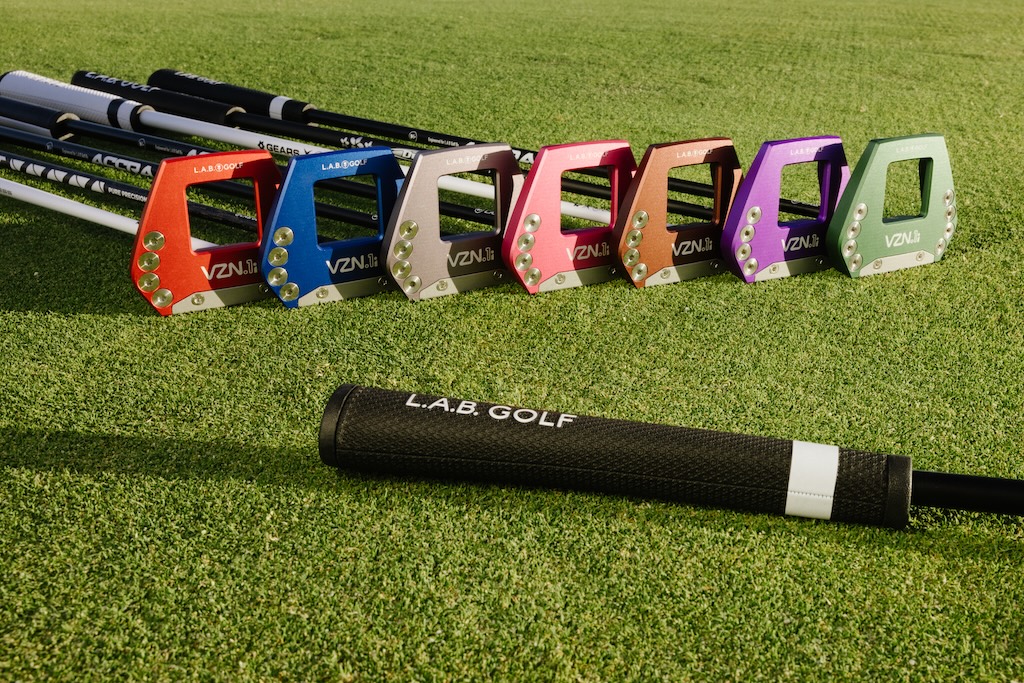
L.A.B. Golf has been the pioneer when it comes to Lie Angle Balanced putters for years now. When you talk to another golfer and zero torque putters comes up, as it will since it is the hottest thing in golf, the first brand out of their mouthes is L.A.B. Golf. Currently their putter line up has something for every golfer, wether your like blades or mallets. But the company has a new creation for golfers that we saw out on tour just a few weeks ago and is now available to us, the VZN.1i putter.

One of the big stories with the new VZN.1i putter is alignment in the form of the shape. L.A.B. has always given us plenty of alignment options in their putters with different line formations and shapes that can be laser etched onto the top of the putter. With this new design they used the shape of the head and the open cavity in the middle to help enhance the alignment for players. These shapes help players lock into their intended line to improve accuracy and concistency.
“VZN.1i was approached formulaically by combining everything we’ve learned from the success of previous L.A.B. Golf models into a familiar mallet shape that’s easy on the eyes and even easier to putt with,” said Cameron Day, Senior Vice President of Product at L.A.B. Golf. “Every L.A.B. putter is engineered to roll the ball on its intended line through Lie Angle Balance technology. With VZN.1i, we took things a step further by simplifying another critical aspect of putting: alignment.”

Like most of the other L.A.B. mallet putters the VZN.1i is machined from a solid block of aluminum and features a 303 stainless steel face insert. Steel face inserts on all L.A.B. putters not only enhance the sound and feel but they improve ball speed for better distance control. The new shaping also offers two ways of picking up your ball, using the sole or the rear flange can scoop up the ball. The company is offering the VZN.1i with a 1.5 degree forward shaft lean or a vertical shaft option in order to fit more golfers. Each VZN.1i is hand balanced and 10 other stages before it is complete and ready to ship. L.A.B. has its custom program where the golfer can select their length and lie but also head color, shaft upgrades, and grips to make their VZN.1i fit them perfectly.

The VZN.1i is available now starting at $499 for stock models and $599 for custom.

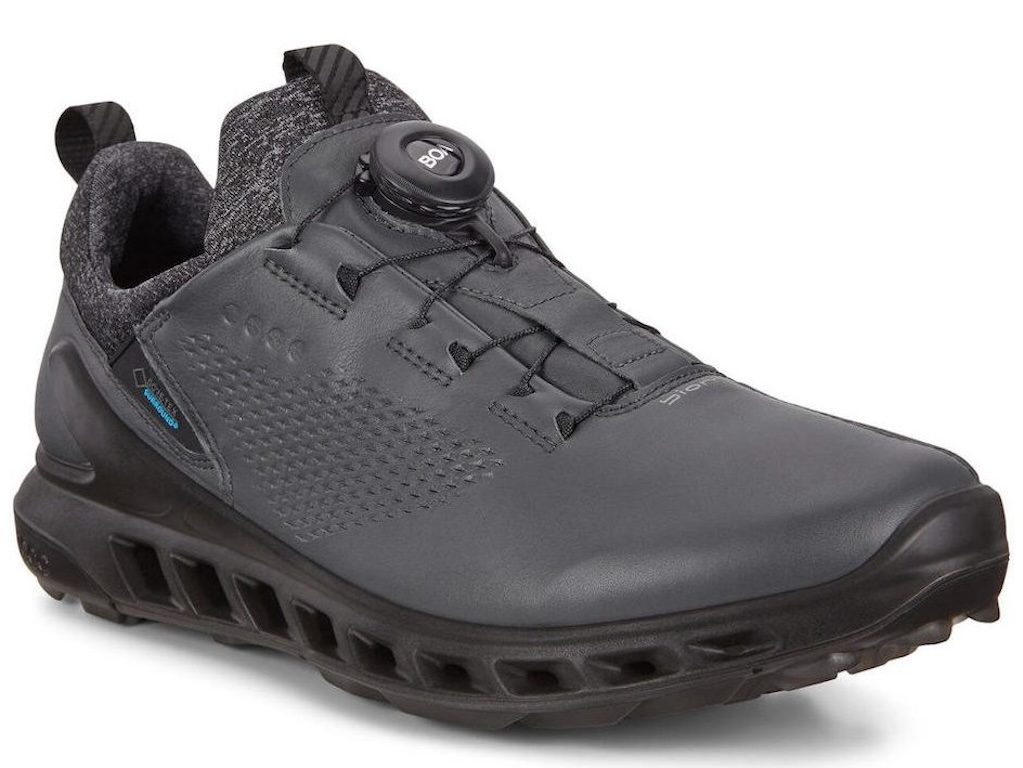
In our forums, one user has asked a question sure to interest all sorts of golfers. What’s the most comfortable walking shoe of 2026?
@RobDMB posed the following question:
“Looking for suggestions/recommendations on the currently available most comfortable walking shoes – preferably waterproof. Essentially looking for something comfortable like a running shoe, but with some stability and waterproof for golf. Decent room in toe box as well. Any recommendations are appreciated. Thanks!”
Our members in the forum have been sharing their own recommendations on the best walking shoes that can also survive a number of golf rounds. Here are a few posts from the thread, but make sure to check out the entire discussion and have your say at the link below.
- SheriffBooth: “To check all your boxes I’d vote for whichever of the current Nike lineup fits your feet the best. Obviously the Victory Pro 4 and Victory Tour 4 are good enough for the two best players in the world, but the new Pegasus, Next% Tour 3, and Tempo all look really good too.”
- i*windows: “when I had issues with my feet I played in Asics running shoes they were a little bit like the hoka’s above, very comfortable, now I’m back to Ecco shoes which are great.”
- mshills: “Everyone’s feet are different so this will be a long list of lots of different shoes. For me, anything from Ecco’s Biom lineup. Nothing else comes close.”
Entire Thread: “2026 Edition: Most Comfortable Walking Shoe?”
If you aren’t a member, join us in the GolfWRX forums today!

Justin Rose WITB 2026 (April): Full WITB breakdown with new McLaren irons

What’s the story behind Webb Simpson’s custom-stamped irons?

Cadillac Championship Tour Report: Spieth’s sizable changes, McLaren Golf launches, and more

Kristoffer Reitan’s winning WITB: 2026 Truist Championship

Russell Henley’s winning WITB: 2026 Charles Schwab Challenge

Cameron Young’s winning WITB: 2026 Cadillac Championship

Aaron Rai’s winning WITB: 2026 PGA Championship

Nelly Korda WITB 2026 (April)

Justin Rose on the switch to McLaren Golf, learnings from previous equipment moves

Photos from the 2026 CJ Cup Byron Nelson

Nastasia Nadaud WITB 2026 (June)
Driver: Titleist TSR4 (9 Degrees) Shaft: Project X EvenFlow Riptide CB 6.0 S 3-wood: Titleist GTS2 (15 degrees) Shaft: Graphite Design Tour AD DI...

Keith Mitchell WITB 2026 (June)
Driver: TaylorMade Qi4D LS Shaft: Project X Titan Yellow 6 X 3-wood: TaylorMade Qi10 (16.5 degrees) Shaft: Mitsubishi Tensei 1K Blue 90...


Matt Kuchar WITB 2026 (June)
Driver: Titleist GTS3 (9 degrees) Shaft: Fujikura Ventus TR Blue 6 X 3-wood: Callaway Quantum Max HL (16.5 degrees) Shaft:...


Maria Torres WITB 2026 (June)
Driver: Ping G440 LST (9 degrees) Shaft: Accra TourZ Green 5-M4 3-wood: Ping G440 Max (15 degrees) Shaft: Accra TourZ Green 6-M4 5-wood: Ping G440...
-
 News2 days ago
Russell Henley’s winning WITB: 2026 Charles Schwab Challenge
-
 Whats in the Bag2 weeks ago
Aaron Rai’s winning WITB: 2026 PGA Championship
-
 Tour Photo Galleries2 weeks ago
Photos from the 2026 CJ Cup Byron Nelson
-

 Equipment2 weeks ago
CJ Cup Byron Nelson Tour Report: Koepka and Kim’s newest putters finally get hot
-
 News5 days ago
Charles Schwab Challenge Tour Report: MacIntyre, Åberg and Spaun all switch putters, TaylorMade launches new Spider
-
 Equipment6 days ago
Details on J.J. Spaun’s surprise putter switch
-
 Equipment3 weeks ago
GolfWRX Launch Report: 2026 Titleist GTS drivers
-
 Popular Photo Galleries1 week ago
Photos from the 2026 Charles Schwab Challenge


Dan H
Jan 12, 2017 at 8:54 pm
Here’s a video with a study on it comparing a new wedge to a one year old wedge using Trackman numbers: https://youtu.be/PeOboLZcUuY
K
Aug 3, 2016 at 3:52 am
“The downward strike on the ball, coupled with the sharp grooves, traps the ball against the ground and creates backspin.”
This is ridiculous. When a golf ball is struck it does NOT compress into the ground and then shoot up. The only time that happens is when you completely top it. The face is pointing up, therefore the ball must go up. Please take this article off this site. It’s embarrassing.
Brent Tharp
Oct 4, 2021 at 10:46 pm
I know this post is old, but it’s always good to hear from those who don’t understand the physics of golf.
Jeff Black
Jan 7, 2015 at 3:19 pm
I Sandblast the face of my wedges
Pingback: Sharpening Your Golf Club Grooves Is a Must! - The Womens Tour
Servost
Nov 9, 2014 at 1:24 pm
Is there any downside of practicing on the range with your worn out wedges and using your new ones when actually playing. For evry sand wedge I hit during a round, I bet I hit 100 on the range.
kr
Oct 22, 2014 at 10:16 am
Very few PGA professionals are qualified to qualified to judge the condition of your clubs….do yourselves a favor and find a qualified club fitting professional!
Brodie Pendleton PGA
Jun 11, 2013 at 10:38 am
Howdy to all,
I received my groove sharpener about 2 months ago. Works real well on my Miz irons and wedges. Takes about 15 mins for a thorough regroove.
Noticed a real difference in stopping power.
I got mine from the friendly folks at http://www.groovesharpener.org
The 3 blades really speeds thing up 🙂
So long folks – Brodie
Kent T. Depuydt
Mar 22, 2013 at 10:29 am
I have several original Cleveland 588 Tour Action wedges bought in the late 90’s and still use them. Each spring I spend some time with a carbide groove tool, but I also have a nice flat file I use to (carefully) flatten the face of the blade. Combined with the groove tool I can get the edges of the grooves incredibly sharp. I refinish the heads with some gun bluing (They are all RTG raw tour grind wedges.) They come out looking like new and performing like new too.
BTW – cut the knob end off an old golf grip and slip it over the end of the tool to make a cushion. You can really dig down with the tool and it is easier on the hand too! K.
AJ Jensen
Oct 24, 2014 at 10:55 am
Great tip on using a grip on the tool handle. My hands get sore after just one club. I have a set of old Ping Eye 2’s that I absolutely love, so I had got in the habit of grooving one club per day over the winter. With your grip handle idea I could easily do the set in one evening
Tyler Sandford III
Mar 20, 2013 at 11:32 am
Aloha folks,
Really good article this Grant – thanks for coming up with it 🙂
I was sceptical about sharpener tools for a long while, but recently relented and bought 1 after a particularly frustrating round.
I bought a triple blade tool from what I am guessing to be a parent company of the 1 listed above.
Well to coin a well known phrase I was “freaking delighted” with the improved performance around the greens that I saw in my game.
The tool arrived in about 7 days to my place in Hawaii – and regrooving is something I will do frequently from now on.
Thought I would give a shout out to the site I bought mine from because the cust serv was excellent as well – it was shipped with online tracking which was a nice touch 🙂
So here is the link guys: http://www.golfgroover.co.uk
Spine Finder
Mar 19, 2013 at 4:54 am
Hi y’all,
I got a hold of a slightly different groove sharpener, but it works pretty darn good.
http://www.groovesharpener.org
Saved my Spin Doctor & Mizuno Wedges.
My missus was real happy coz the money I saved got spent on her LOL.
Just waiting for this darn snow to clear so I can get back out on the course again.
Hope the above helps y’all.
http://www.spinefinder.co
Golf Grip Mate Airtool MK 2
Mar 15, 2013 at 5:14 am
My goodness,
Never throw your favourite irons/wedges out. All you need is a groove sharpener to revitalise your grooves.
I agree with R. Prince above – the best groove sharpener is the 1 from the Golf Groover folks – that’s where I got mine from anways.
Here is the link for those that are interested:
http://www.golfgroover.com
PS: Good to see Tiger back putting the way he used to – can’t wait for all the head to heads between him and Rory this season.
Rodney Prince
Mar 15, 2013 at 1:24 am
I bought a groove sharpener from golfgroover.com two years ago works great for me, still using my old favorite vokeys.
Ryan Tracy
Mar 14, 2013 at 1:44 am
Is there a particular groove sharpener that you would recommend? Also, how many times can you resharpen your grooves before the wedge starts to lose consistency and the accuracy of the grooves?
Jeff
Mar 22, 2013 at 2:36 pm
Most groove sharpeners on the market will do the job and like anything else they will also wear down, but spending 25-30$ on the tool or $100+ on a new wedge makes a lot of sense. Wedgedoctor.com has a good product and I have done about 10 clubs with one tool no problem. It’s longer than most so it’s comfortable to use and comes with a carry case so it wont rip your bag.
Ryan Tracy
Apr 15, 2013 at 9:24 pm
Thanks for the info Jeff! I’ll have to look into it.
kloyd0306
Mar 13, 2013 at 5:29 pm
Studies and tests have shown that in very dry conditions, a wedge with NO grooves actually creates MORE spin than one WITH grooves.
The real purpose of grooves is to displace moisture and the USGA’s own testing proves as much. Grass contains a good deal of moisture.
Grant’s “research” clearly did not include talking to the USGA and it’s findings.
Straightdriver235
Dec 18, 2014 at 10:07 am
I’m reading this much later, but find this interesting. I have a Ram Tom Watson lob wedge, based on the model he chipped in with at 17 on Pebble. No other wedge–and I’ve been through about 15–matches it for looks and feel, but true it spins less than it might. I keep it and my love for it grows over the years because I can land it where I want to better than other wedge. I am going to pay attention to how well it works then when no grass gets in the way, or the conditions are dry compared to moister more lush grass to see if this is so. If what you say is true it also indicates that we may not hit the ball as precisely as we think, if you have a clean lie, what is grass doing getting into the grooves?
Todd
Mar 12, 2013 at 9:54 pm
Which is better, non conforming worn grooves, or fresh conforming grooves? My instinct tells me the non comforting grooves win, even if a bit dull. Thoughts?
Rufiolegacy
Mar 12, 2013 at 3:36 pm
interesting read! Makes me think I should get into new wedges!
Marc Kilgore
Mar 12, 2013 at 3:31 pm
There must be something useful we can do with these old wedges that get worn out. It seems like a waste to just throw them away, and even worse to rip off some unsuspecting person by selling them a wedge that is worn out. Seems like we should be able to recycle these or something.
Grant Shafranski
Mar 12, 2013 at 3:56 pm
A great thought, and thank you for commenting! I absolutely agree that it seems like a waste, but please consider donating your used clubs to The First Tee. They are always taking donations, and will make great use out of used clubs!
Potomac Golfer
Mar 13, 2013 at 9:46 am
One thought — consider DONATING old wedges to your local First Tee program — they always need equipment, and most of us can afford to sacrifice the $25 trade value of an old wedge.