
Opinion & Analysis
Want to go lower? The stats say you need an earlier tee time


Recently, I was researching data for some of my PGA Tour clients on tee times (late vs. early) and scoring average. Is there a correlation, I wondered. I assumed there was, and knew that the results would be applicable to golfers of all handicap levels. Everyone could use these findings to help them refine their on-course and practice strategies and improve their scores.
The PGA Tour defines an “early round” as any round where the player tees off in the first half of the set of tee times for that day, and one of the clear results was that a player’s average score is typically better in early rounds than later rounds.
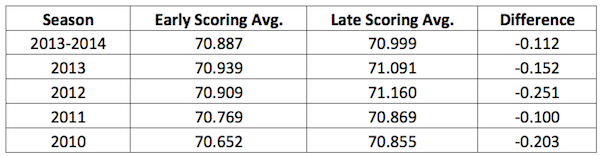
For the last five seasons, the early rounds scoring average has been 0.163 strokes better than the late rounds scoring average. While 0.163 strokes may not seem like much of a difference, it translates to roughly 20 spots on the PGA Tour Money List.
So, why are the late rounds worse than the early rounds? My theory is that it comes down to two different factors.
No. 1: Wind
The wind tends to pick up around noon and is usually at its lowest speed at the break of dawn. Here’s a chart showing the measured wind speeds in Orlando, Fla., on March 21st of this year. I picked this date arbitrarily to illustrate what the typical wind speeds look like during the day.
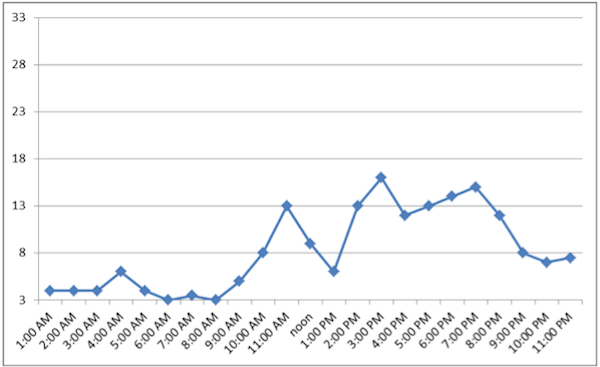
Last year I did some statistical research on Tour players and wind. What I found was that once the wind speed reached greater than 12 mph, the scores started to rise noticeably. The chart above shows that the wind increased to more than 12 mph around 11 a.m., but actually became consistently more than 12 mph around 2 p.m.
I also did research on players who became more or less effective when the wind picked up. When the wind speeds rise, I found that score averages also rise regardless of the player, but I wanted to check out the players who were the least affected by the wind and the players that were most affected by the wind and see what they had in common.
Some of the best wind players include:
- Stuart Appleby
- Brian Harman
- Chris Kirk
- Matt Jones
Some of the worst wind players include:
- John Daly
- Keegan Bradley
- Bill Haas
- Hunter Mahan
While there were some very good wind players who grew up in windy areas like Texas, Scotland or Australia, there were also plenty of poor wind players from those areas as well. That tells me that growing up in a windy area does not guarantee that a golfer will be effective in the wind. There were main areas of the game that the good wind players had in common, however, which were good play from 75-to-125 yards and with short game shots around the green.
My conclusions to those findings is that the wind makes it more difficult for golfers to find the green in regulation, and therefore golfers need to be able to get up and down with more regularity. It is certainly worth noting that big winds can take bad shots, specifically bad tee shots, and push them farther offline. That creates more third or fourth shots from 75-to-125 yards.
No. 2: Putting
There is the theory that it is more difficult to make putts later in the day because of the spike marks and foot imprints.
I did not know if that theory had any merit, so I started looking at the scoring averages of individual players in the early and late rounds over the years. I was most interested in the players who saw the largest regression from the early round scoring average to the late round scoring average and vice versa.
What I found was that the players who had the largest regression in the early rounds usually tend to struggle in three areas of the game:
- Approach shots from 175-to-225 yards
- Shots from 250-to-275 yards (most likely 3-wood play)
- Par-4 Scoring Average
This indicates that golfers who tee off in the morning are playing the course on an even playing field because on Tour, shots from 175-to-225 yards have the largest correlation to success of any individual part of the game. And par-4 scoring averages correlates much more strongly to success on Tour than par-3 or par-5 scoring average. I am not sure what the shots from 250-to-275 yards indicate at this time.
The players with the largest regression in the late rounds, however, tend to struggle in these four very opposite parts of the game:
- Putting from 3-to-10 feet
- 3-Putt Percentage
- Strokes Gained – Putting
- Shots from 100-to-125 yards
The approach shots from 100-to-125 yards goes along with the research I have done on the better wind players on Tour. And the putting from 3-to-10 feet and 3-putt percentage indicates that the theory that you will make less putts in the afternoon does have some merit to it.
One of the other things my research has shown is that the golfers who rank the best in Strokes Gained – Putting tend to gain the most strokes on the more difficult greens like Pebble Beach and Riviera. Therefore, it does not surprise me that players who rank poorly in Strokes Gained – Putting would struggle more in the afternoon because the green conditions are more difficult.
Here’s some bullet points of what I think the average player can learn from my study:
- You’re likely to shoot lower scores early in the morning, so do not be afraid to be aggressive in going after some flags and hitting driver instead of laying up.
- If you have an afternoon tee time, check to see what the wind speed is like. If it is more than 12 mph, you may want to put a little extra time on hitting wedge shots and short game shots around the green before you tee off.
- If you have an afternoon tee time, you may want to spend a little more time on the practice green to better help adjust to the worsened green conditions.


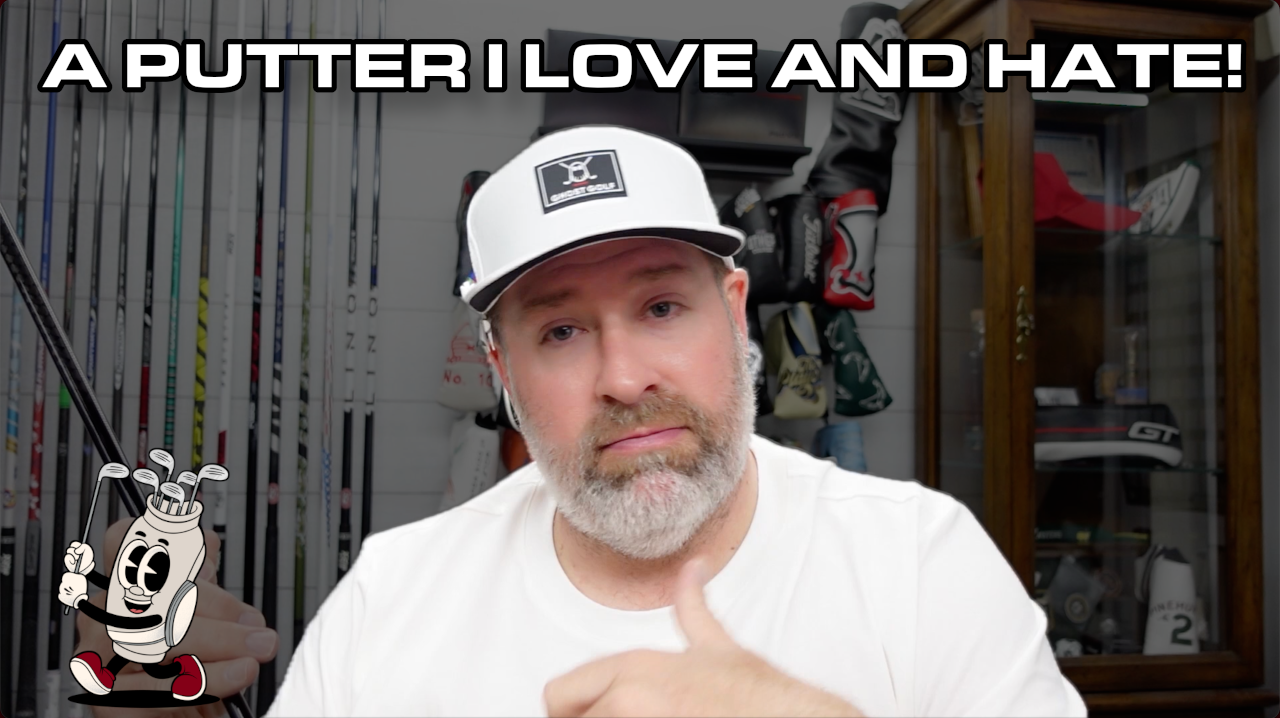
In this episode of the Club Junkie Podcast, we dive into one of the most interesting flatstick releases of the year with a full review of the new TaylorMade SYSTM 2 putters. After spending time on the greens, I break down what makes this design stand out, where it performs, and why it has me completely torn between loving it and fighting it. If you are into feel, alignment, and consistency, this is one you will want to hear about.
We also take a look at some of the putters in play on the PGA Tour last week. From familiar favorites to a few surprising setups, there is always something to learn from what the best players in the world are rolling with under pressure.
To wrap things up, I walk through the process of building a set of JP Golf Prime irons paired with Baddazz Gold Series shafts. From component selection to performance goals, this is a deep dive into what goes into creating a unique custom set and why this combo has been so intriguing.


This year my 50th birthday. Gosh, where has the time gone?
As a teenager in rural Missouri, some of my junior high and high school years felt interminable. Graduation seemed light years away. But the older I get, the faster life seems to fly by.
I’m also increasingly aware of my mortality. My dad died recently. Earlier this year, a friend and fellow PGA of America professional and I were texting about our next catch-up. The next message I received was news of his unexpected passing at 48. Shortly after, a woman I dated in college succumbed to cancer at 51.
Certainly, one can share perspective at any age. Seniors help freshmen, veterans guide rookies. But reaching this milestone feels like as good a time as any to do one of those “what would I tell my younger self?” articles.
I’ve had a uniquely varied career in golf. I started as a 27-year-old, average-length-hitting, 14-handicap computer engineer and somehow managed to turn pro before running out of money, constantly bootstrapping my way forward. I’ve won qualifiers and set venue records in the World Long Drive Championships, finished fifth at the Speedgolf World Championships, coached all skill levels as a PGA of America professional, built industry-leading swing speed training programs for Swing Man Golf, helped advance the single-length iron market with Sterling Irons®, caddied on the PGA TOUR and PGA TOUR Champions, and played about 300 courses across 32 countries.
It’s been a ride, and I’ve gone both deep and wide.
So while I can consult and advise from a lot of angles, let me keep it to a few things I’d tell the average golfer who wants to improve.
1. Think About What You Want
Everyone has their own reason for picking up a golf club.
Oddly, as a professional athlete, I’m not internally driven by competition. That can be challenging, as the industry currently prioritizes and incentivizes competition over the love of the game.
For me, I love walking and being outdoors. Nature helps balance my energy. I prefer courses that are integrated into the natural beauty of their surroundings. I’m comfortable practicing alone. I’m a deep thinker, and I genuinely enjoy investigating the game, using data and intuition to unearth unique, often innovative insights. I’m fortunate to be strong and athletic, so I appreciate the chance to engage with my abilities. Traveling feels adventurous. I could go on.
You don’t have to overthink it like I do. For you, it might be as simple as hitting balls to escape work, hanging out with friends, and playing loosely with the rules and the score.
The point is to give yourself permission to play for your own reasons, and let that be enough.
But if improvement is your goal, thinking about your destination—and when you want to get there—is important, because it dictates the steps you need to take. When I set out to go from a 14-handicap to the PGA TOUR as quickly as possible, the steps I needed were very different from those of a working golfer trying to break 90 in six months. That’s also different from someone who just wants a few peaceful hours outside each week, away from work or family.
None of these goals are better than the others, but each requires a different plan that you can work backward from.
2. There Are Lots of Things That Can Work
One of the challenges of golf is that, although there are rules for playing, there aren’t clear, industry-wide standards for how to best play the game. There’s a lot of gray area.
You might hear a top coach or trainer insist that a certain move is the best way to swing or train. Then you dig a bit deeper and, much to your confusion and frustration, another respected coach or trainer says something completely different. I don’t think anyone is trying to confuse you—at least I hope not. It’s just where the industry is right now.
You have to be careful with advice from tournament pros, too. They might be great at scoring, but they’re also human and sometimes just as susceptible as amateurs to believing things that don’t really move the needle. Tour players might describe what they feel, but that’s not always what they’re actually doing when assessed with technology.
I recently ran a test on my YouTube channel (which connects to my GolfWRX article “How to use your hands in the golf swing for power and accuracy”), and, interestingly, two of the most commonly taught hand actions produced the worst results in the test.
Coaches can certainly help. If you find someone you connect with to help navigate, that’s great. But there are many ways to get the ball in the hole. In the current landscape, you may need to seek multiple opinions, think critically, and use your own intuition to discern what seems true and whose advice resonates with you.
I’d recommend seeking someone who is open-minded and always learning, because things constantly change. Absolutes like “correct” or “proper” should raise a red flag. AI can be useful, but it tends to confidently repeat popular advice, so proceed with caution.
3. Get Custom Fit
If you’re serious about becoming a better player, getting custom fit is hugely important. There’s no sense fighting your equipment if you don’t have to. Most better players get fit these days and, if they don’t, they’re usually skilled enough to work around clubs that aren’t ideal.
If you plan to play for a long time, it’s worth spending a little more upfront to get something that truly fits you and your game, rather than continually buying and discarding equipment.
Equipment rules haven’t really changed significantly since the early 2000s. To stay in business, manufacturers keep pushing those limits. If you pull a bunch of clubs and balls off the rack and test them, you’ll find differences. I’ve tested two new drivers and seen a 30-yard total distance gap. Usually, the issue isn’t bad equipment; it’s that the combination of components simply isn’t the best fit.
It’s like wearing a new pair of floppy clown shoes. Sure, they’re shoes—but you won’t sprint your best in them compared to track shoes that fit perfectly.
Be wary of what’s called custom fitting, too. Sometimes the term is used as a marketing strategy rather than an actual fitting. In some retail settings, fitters may be incentivized to steer you toward higher-priced components. That doesn’t automatically mean it’s not the best fit, but you should be aware of potential biases.
I learned a version of this lesson outside of golf. Years ago, I bought a tennis racquet at a big box store from a seemingly knowledgeable employee who thought it would suit me best. The racquet gave me tennis elbow, and I spent months recovering with rest and acupuncture. The next season, I invested more time and money to find what actually fit me, and I walked away with something amazing that I still play with years later.
So if you’re going to get fit, be smart about it.
Find someone you believe has deep knowledge—possibly with certifications, but not necessarily. Make sure there’s a wide inventory across many brands. Check recent reviews for the individual fitter if possible. Make sure you trust that the fitter has your best interests at heart. If they’re wearing a hat or shirt with a specific brand’s logo, proceed with caution. Unless you specifically want a certain brand or look, be wary of upsells, especially if two options perform nearly the same.
Also, while golf is called a sport of integrity, there’s a thread of manipulation in the industry. I once drafted an equipment article for an industry magazine, structured just like one of their previous popular stories, with matching word count and great photos. The assistant editor loved it; it was useful to readers and required little work on his part. But the editor-in-chief nixed the story. When I asked why, I was told it was because I wasn’t an advertiser. It turned out the article I’d modeled mine after was a paid ad cleverly disguised as editorial content.
I really dislike games, clickbait, and fear-based manipulation. I hope this changes, but golfers deserve to know it exists.
4. Distance and Strategy Matter
There’s a real relationship between how far you hit the ball and your scoring average, even at the PGA TOUR level.
I experienced this early in my pro career. I started as a power hitter, swinging in the high 120s and breaking 200 mph ball speed with a stock driver.
Back then, some instructors advised swinging at 80%, so I tried slowing down for more accuracy. That worked fine on shorter, tighter courses. But on longer setups, I was coming into greens with too much club, and par 5s stopped being

The 2026 Grass League Grass Clippings Open is officially in the books! With championship-level conditions, outstanding play, and plenty of lessons both on and off the course, this event kicked off the Grass League season in style. The winning team of Austin Quick and Tyler Weworski set a new scoring record at 23 under par, marking a spectacular start to the year. Several franchise-drafted teams also finished in the top 10. I partnered with Blake Snyder, and we finished at 11 under par—good for a tie for 33rd place in this highly competitive league. I can still picture the putts that lipped out and the tee shots I wish I could take back. As the saying goes: that’s golf. Here are some of my key takeaways from the first Grass League event of 2026.
The Draft

The event kicked off with a draft. Each Grass League franchise has a roster of 14 players, and the GC Open features the largest field of the season, with 12 of those 14 players competing. The two-man scramble format puts roster depth to the test. With 11 franchises, each drafted two teams on the Thursday before the first round. It all began with 100 two-man teams battling it out in a qualifier that ran from sunrise to sunset on Wednesday.
To be eligible for the draft, teams had to finish in the top 25 of the qualifier. This year, the Grass League eliminated the playoff for the top 25 due to time constraints—last year’s qualifier didn’t end until 1:30 a.m.! With no playoff and ties advancing, 44 teams qualified for the draft, but only 22 draft picks were available.
Watching teams make their picks was fascinating. In my view, it all comes down to relationships. This is a team game, so you want players who contribute both on the course and “in the clubhouse.” Being a great teammate is the top priority, and it’s a given that everyone brings serious golf skills to the table.
Three more Grass League events are on the calendar this year. There’s the Match Series, where franchises face off in two-man scramble match play. The twist? Once a team wins and advances, they can’t be used again for the rest of the series. The Summer Grind at Goat Hill Park takes place September 5–6, followed by the GL Championship on December 4–5. Roster depth is critical, and having a true team makes all the difference in the Grass League. Speaking for our LA Roses squad, we love to compete and stay connected all year, sharing updates on our games.
The Tournament

In traditional tournament golf, events are at least 54 holes, and patience is key—everyone says it’s a marathon, not a sprint. In the Grass League, that old adage doesn’t apply. This format is a full-on sprint. While patience still matters, there’s a constant sense of urgency. Top teams rarely make more than four pars in a row—it’s all about making birdies, and lots of them. But with all those scoring chances, precision is everything. A two-man scramble on a par 3 course may sound relaxed, but it’s a real grind. The greens are set up to major championship standards: balls can bounce up to three paces on landing, and green speeds reach 12 to 13 on the stimpmeter for flat putts. Downhill putts get downright scary. Combined with tight landing areas, every shot requires your full concentration.
As for my results with teammate Blake Snyder, we finished the event at 11 under par. It was frustrating—we started strong, going 5 under through the first 6 holes on day one, but then hit a cold streak where good tee shots didn’t turn into birdies. Lip outs, burned edges, a few misreads—you know the feeling. We picked up one more birdie, but then made the cardinal mistake in Grass League: a bogey on our final hole. I left the green fuming, but reminded myself we had another day to make up ground. In the final round, we shot 6 under to finish at 11 under for the championship. We struck the ball well, but just couldn’t get the putts to fall. With such a crowded leaderboard, it’s easy to slide to 33rd place. The winners finished at 23 under, second place at 17 under, and fifth at 16 under.
Our Los Angeles Roses franchise finished 7th overall. Charlie Reiter and Mason Gilinski shot 16 under, tying for 5th. Ryan Ruffles and Canon Claycomb tied for 15th at 14 under. Blake Snyder and I tied for 33rd at 11 under. Aaron Hicks and Marty Sanchez, along with Blake Bertand and Manny Manzone, tied for 52nd at 8 under par. Alex Zurat and Max Green finished tied for 58th at 7 under. In this league, the margins are razor-thin. Without the traditional tee ball, it’s all about immediate action from tee to green.
The Atmosphere

The event’s atmosphere is one-of-a-kind, letting you choose your own pace. As a golfer, seeing a par 3 course in true championship condition is a treat—Superintendent Scott Hebert and his team do a phenomenal job. Every score is hard-earned. Grass League events take the experience up a notch each time. Music plays into the night, tents surround the 15th green, and the 18th offers a true stadium finish. Food trucks and entertainment add to the fun. You can show up just to hang out and leave a golf fan, thanks to the energy and inclusivity woven into the tournament’s fabric.
As a player, it’s an honor to compete in this tournament. The Grass League welcomes a wide range of talent: up-and-coming pros and amateurs, former Tour players, current Tour players, and even athletes from other professional sports. This mix creates a championship atmosphere and, with the team format, endless opportunities for new champions and unforgettable moments.
With more qualifiers and amateur events on the schedule this spring and summer, I’ve got the Summer Grind at Goat Hill Park circled on my calendar. This last event has left my team and me hungrier than ever.

RBC Heritage Tour Report: More minis, course-specific setups, Spider & GTS launches

Justin Rose WITB 2026 (April): Full WITB breakdown with new McLaren irons

Best fairway woods of 2026: The most versatile fairway woods + the most forgiving fairway woods

Gary Woodland’s winning WITB: 2026 Texas Children’s Houston Open

Cadillac Championship Tour Report: Spieth’s sizable changes, McLaren Golf launches, and more

What’s the story behind Webb Simpson’s custom-stamped irons?

The 24 players who can win the Masters

Rory McIlroy’s winning WITB: 2026 Masters

J.J. Spaun’s winning WITB: 2026 Valero Texas Open

How one of the tour’s longest hitters is getting even longer


WITB Time Machine: Rory McIlroy’s winning WITB, 2021 Truist Championship
Rory McIlroy’s victory at the 2021 Wells Fargo Championship 2021 (now the Truist Championship) marked a significant return to form,...


Collin Morikawa WITB 2026 (May)
Driver: TaylorMade Qi4D LS (8 degrees) Shaft: Mitsubishi Diamana D+ Limited 60 TX 3-wood: TaylorMade SIM Tour (14 degrees) Shaft:...


Cameron Young’s winning WITB: 2026 Cadillac Championship
Editor’s note: For a deeper dive into Cam Young’s witb, check out Alistair Cameron’s “Building the Bag” Driver: Titleist GT3...


Adam Scott WITB 2026 (April)
Driver: Titleist GT2 (9 degrees, C2 SureFit setting) Shaft: Mitsubishi Diamana WB 63 TX Mini driver: TaylorMade BRNR Mini Driver...
-
 Equipment2 weeks ago
Justin Rose WITB 2026 (April): Full WITB breakdown with new McLaren irons
-
 Equipment1 week ago
Cadillac Championship Tour Report: Spieth’s sizable changes, McLaren Golf launches, and more
-
 Equipment3 days ago
What’s the story behind Webb Simpson’s custom-stamped irons?
-
Whats in the Bag6 days ago
Cameron Young’s winning WITB: 2026 Cadillac Championship
-

 Whats in the Bag2 weeks ago
Nelly Korda WITB 2026 (April)
-

 Equipment2 weeks ago
Justin Rose on the switch to McLaren Golf, learnings from previous equipment moves
-

 Tour Photo Galleries2 weeks ago
Photos from the 2026 Cadillac Championship
-

 Equipment3 weeks ago
Photos from the 2026 Zurich Classic of New Orleans


Cecilia
Aug 30, 2014 at 3:33 pm
HT
leftright
Aug 29, 2014 at 8:40 am
I don’t like to dew sweep and want no part of the golf course early. I also cannot get loose when I play early, especially if it’s cold. I’ll keep my mid-day tee times. Only play early if you have to.
Speaking of statisticians, I work with a guy who is a Bio-Statistics PhD and he wrote a couple of baseball books. He is really into baseball and knows a lot about the players and obviously their stats. His book says Tony Gwynn (recently died of cancer) was the best hitter when he gathered all his data and crunched it. I’m not trying to start a debate but I thought Rich might chime in on this if he is familiar with Dr Schell.
Scooter McGavin
Aug 29, 2014 at 7:12 am
I like how my questions get ignored or not published, when I ask about the margin of error with these numbers. Probably because the .163 strokes difference between early and late rounds lies within the margin of error, which means there is literally no story here. As a “statistician” the author would know this, and was obviously trying to create a story from nothing.
Pingback: Why and How to Become a Morning Golfer - Distance Direction
DT
Aug 27, 2014 at 11:53 am
What % of amateurs actually hit the range before there round at all, never mind before an early round? Thousands of rounds of data and the best difference is just over 2 tenths of a stroke.
The margin is so slim for the PGA tour, that’s after a proper warm up and stretch. Amateurs are lose by the third or fourth hole, move often then not starting with bogeys, doubles or worse.
Rich
Aug 27, 2014 at 8:37 am
Really? So we’re talking about a quarter of a shot at worst right? Over analyse much! Keep reading your articles to see if one might be worth it but still haven’t found one. Hit the ball, walk, find it, hit it again. It’s that simple.
John
Aug 27, 2014 at 1:03 am
Ok, it’s time a senior weighed in here. I’m 58, single digit capper in pretty decent shape. I swim and hike. However, the difference in my creaky body between 7am and 10am is significant. These days the later in the day I play, the better I play. My body just feels better with a few hours to oil up.
MHendon
Aug 28, 2014 at 4:37 pm
Same here johnny boy.
MHendon
Aug 27, 2014 at 12:51 am
Yeah I’m sure early is better for most people but not me. It’s hard to play well when you’re still asleep. lol
larrybud
Aug 26, 2014 at 2:22 pm
A couple of things were left out:
1) Greens are probably more receptive on average in the morning before the heat of the day starts to bake them out
2) If these stats include Sunday rounds, the pressure of a later tee time probably has some influence.
It’d be interesting to see stats just for thursday and friday.
GermanBallHunter
Aug 26, 2014 at 10:42 am
The reason why I play better in the morning compared to later in the afternoon is simply because my mind is fresh and less distructed from the day. In the morning I weak up and am totally focused on my game. I head with my coffee straight to the range, hit some balls and I am ready to tee off.
Late tee times usually means that I was working or did my weekend shoppings before.
Captain Oblivious
Aug 26, 2014 at 9:45 am
From Dave Pelz:
“What is the lumpy doughnut?
(Fig – pages 33,35) The lumpy doughnut is the congregation of footprints within a radius of 6 feet from the hole. The last 12 inches is almost footprint free and form the doughnut’s hole. This creates a volcanic like entrance ramp that can have significant impact on a ball’s line relative to its speed. The average 500+ footprints a foursome makes in the green take up to 2 hours to spring back up to normal shape. Fresh footprints are to the golf ball like a curb is to a pedestrian crossing the street… in other words, your ball can “trip” on its way to the hole. ”
It amazes me how well the final groups do on the pro tours. They area at quite a disadvantage, IMO.
Nigel
Aug 26, 2014 at 9:29 am
As someone who almost exclusively plays pre-8am rounds, I feel that there is a serious third factor: pace of play. I realize that it is possible to have a reasonable pace of play later in the day, but nothing gets me in a good groove like knowing that there is no one (or very few people) in front of me, and that I can play at my own (relatively quick) pace. I usually play my best golf when I can get around in 3.5 hours or less.
Dave C
Aug 26, 2014 at 1:23 pm
TOTALLY AGREE! At least a point for us amateurs.
Nick
Aug 26, 2014 at 8:59 am
While I will say that greens are better when freshly mowed and not chewed up by spikes, the truth is the scoring average is better in earlier tee times because the players are better, not just the conditions. Players that tee off early usually have regular tee times and therefore are regular players, as opposed to say a guy playing his first round in 6 months. That guy usually isn’t in the 7:05 group. Not saying you won’t find lots of good sticks later, but I think, the averages favor the early birds. I bet the statistical significance of the scoring average would evaporate if controlled for handicap of player.
Captain Oblivious
Aug 26, 2014 at 9:57 am
How can you say “the statistical significance of the scoring average would disappear” when his study was conducted with the very best golfers on the planet?
I rarely play early morning because I prefer to walk the course. However, when I do, I notice a favorable difference partly due to less wind, but mainly to the better condition of the greens. In the afternoon I have to deal with far more unrepaired ball marks, (which are much more easily repaired immediately than 2 hours later by me), many more scuff marks where some people cannot find the energy to pick up their feet when they walk and many, many more footprints.
Early
Aug 26, 2014 at 12:43 am
“you may want to put a little extra time on hitting wedge shots and short game shots around the green before you tee off.”
How about practicing to hit worm-burner bullets à la Lee Trevino so that it gets under the wind and rolls for miles, and also thinking about may be replacing the high-launching clubs with lower launching ones?
“struggle more in the afternoon because the green conditions are more difficult.”
How about the fact that pressure also has a lot to do with it, and not just green conditions?
I don’t see anybody looking at the stats of the guys at the bottom 1/3 of the leaderboard on the 2nd day, as they are about to get cut and go home. Telling me they don’t count? The stats are skewed if you don’t count them in
Richie Hunt
Aug 26, 2014 at 9:11 am
On Thursday and Friday, everybody gets an early or late tee time on Tour regardless of score. So, if you tee off late on Thursday and take the lead after that day, you have an early tee time on Friday regardless of your position.
I actually checked the late vs. early tee times for round 1 vs. round 2 vs. round 3 vs. round 4 and the stats were nearly identical. So for the sake of brevity, I just used the total early vs. late round data.
Scooter McGavin
Aug 26, 2014 at 11:39 pm
What is the margin of error for late vs early round averages?
Early
Aug 26, 2014 at 12:38 am
Please lets not compare the Tour stats to our, menial, public-course type stats, hmmmm? Because they don’t relate.
Richie Hunt
Aug 26, 2014 at 9:13 am
So, are you saying that the green conditions do not get worse and the wind will not pick up later in the day?
Driving range closed
Aug 26, 2014 at 9:23 am
No, the difference being that public courses don’t usually have the driving range open an hour before the first tee time !
paul
Aug 25, 2014 at 11:42 pm
For me the difference can be several strokes. I love playing at 6am and being done before its hot out. Greens are slowed down and putting is much easier. I suck on fast greens cause I am to aggressive putting.
Paul Christianson
Aug 25, 2014 at 10:48 pm
Good stuff. I’d be interested to see the results of just the first two rounds of tournament play. This would allow us to control for more variables and ensure that we are taking a proper sample. Once the cut is made, some more variables come into play that are harder to control for. Is it possible to just measure the 1st and 2nd rounds?
Richie Hunt
Aug 26, 2014 at 9:15 am
I looked at the data for each of the rounds and it’s very similar across the board. So, I just used the total round data for the sake of brevity.
Scooter McGavin
Aug 26, 2014 at 11:40 pm
What is the margin of error for late vs early round averages?
TR1PTIK
Aug 25, 2014 at 10:36 pm
I prefer early tee times when I can get them – 7am if I can, but definitely before 9. I’ve found that I feel more comfortable in the mornings and tend to relax a little more because the temps are cooler, and unless it’s just nasty the scenery and lighting conditions seem to be better in the mornings which helps me stay positive. It’s not that I can’t score well later in the day, but it definitely requires more effort.
Joe Calcio
Aug 25, 2014 at 9:21 pm
Great article and research Rich. Very interesting.
I’d be curious if you looked at whether the results hold up when only looking at Thurs/Fri rounds pre-cut?
Part of me wonders if pressure of trying hold a lead or move up the board on Sat/Sun has any impact. But these are the pros, right? They don’t feel pressure!
Jimmy Jimmy
Aug 27, 2014 at 5:41 pm
I wonder if the difference is even more than just a tenth of a shot. If Saturday and Sunday are included in the figures above, then the leaders (presumably playing better golf cause they’re in the lead) go out at the end of the day while those playing more poorly go out earlier. The guys that aren’t playing as good are being given a boost, resulting in better scores than the leaders.
Martin
Aug 25, 2014 at 8:59 pm
It’s not better for me, I live in the north and am not a good enough putter to putt on greens covered in dew for 7 holes the 2 holes while it burns off and then a third speed when they are dry.
I can count on one hand the number of really great rounds I have played before 9:00 AM.
My preference is the crack of 10:00.
Kristian
Aug 25, 2014 at 7:15 pm
For me, early tee times often have me playing slightly worse than daytime rounds purely for the fact that I get to short-warmup jitters. During the day, I’m awake, fed, and feeling energized. In the morning, I usually feel a bit tired, I’ve not always eaten a full meal, and I don’t always have time to really warm up. That difference usually results in me standing over the ball on the first few holes with an iron or a wedge in my hand having a n inner dialogue with myself about not making a mis-hit.
Happyday_J
Aug 25, 2014 at 8:17 pm
Adam Scott had a similar problem and took the advice from a veteran tour player, always wake up 3 hours before your tee time.
I do the same, and if it is a tournament, I will work out and go for a run before hand. That way, my blood has been pumping, I’ve loosened up from my sleep and when I get the range an hour before, I am ready to start warming up and preparing for the round of golf. Allowing to be in attacking mode the first few holes and not be cautious b.c I am not awake.
Can make for early 4 am wake up calls, but hey, my motto, we all have plenty of time to sleep when we are dead, dont waste time while we are alive ;).
Early
Aug 26, 2014 at 12:36 am
HappydayJ:
Yeah? Have you ever played the first tee time of the morning on a public course? The driving range ain’t open, man. it’s usually still dark as you tee the ball up. So how do you expect to “warm up”???
Happyday_J
Aug 26, 2014 at 12:28 pm
I have hit balls in the dark on numerous occasions, a warm up is a warm up, get the motion of the swing down, loosen up and make solid contact. Believe it or not, based on how you hit it, you can get a good idea where its going, shape and trajectory.
Happyday_J
Aug 26, 2014 at 12:29 pm
Sorry, missed the point of the range not being open, in that case, I have a couple spare balls in the bag that are hit-aways, and go to the range and hit them. There is always a way.
Scooter McGavin
Aug 25, 2014 at 5:20 pm
For the Late vs. Early round averages, what is the margin of error?