
Opinion & Analysis
The Wedge Guy: Scoring Series Part 4: Chipping fundamentals

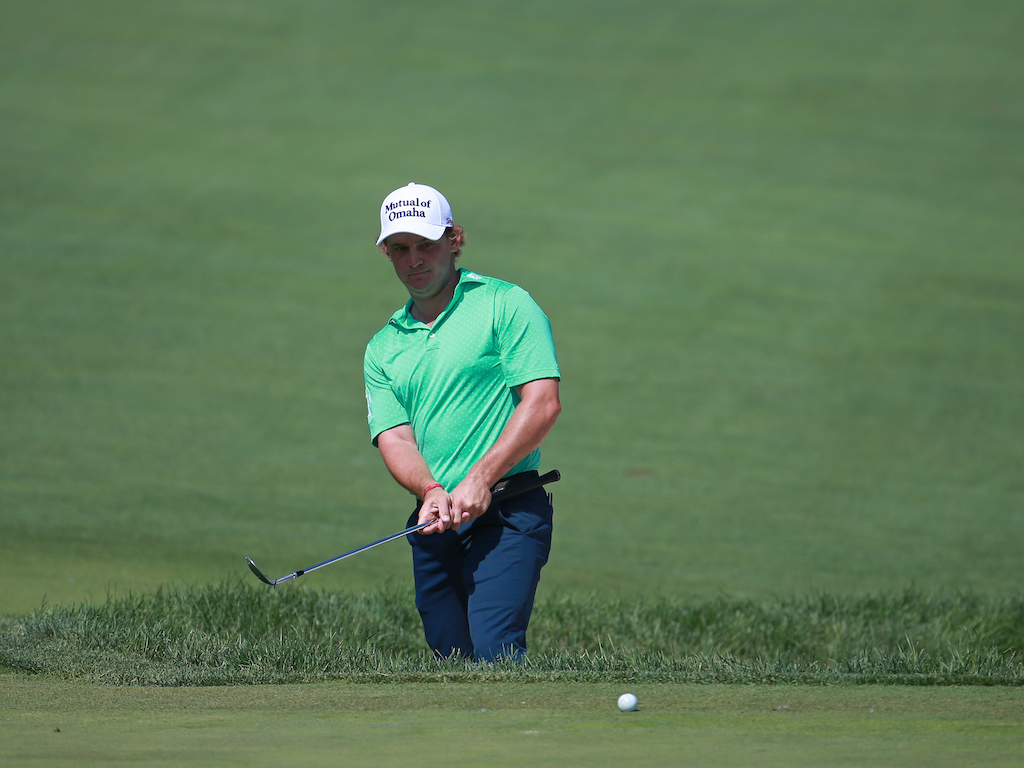
Editor’s Note: Pictured above, Bud Cauley is the PGA Tour leader in strokes gained: around the green this season, picking up an average of .684 strokes on the field.
In this fourth part of my series on short range performance, I am going to dive into what I consider the basics of chipping. Understand that I know some of you are already superb chippers of the ball, while others struggle with this part of the game. It is this latter group that I hope to help with my thoughts today.
One of the odd things about chipping is that you can see golfers with their own “home-made” technique that do just fine, possibly even much better than average. We all know some of those guys. This treatise, however, is to try to break down some of the basic fundamentals that will help you become better on those short shots around the greens.
When the ball is off the putting surface, and you face a basic chip, think of it as a mini-swing or a long putt. You are trying to execute a rather relaxed back-and-through with only a little movement in the wrists…but there will always be some if you are relaxed. The essence of the chipping stroke, however, is a rotation of the shoulders. With that as our foundation, here is my take on the basics
- Your basic chipping posture is somewhere between your putting set up and that for a half-wedge. Knees should be flexed, and your upper body should be bent over from the hips so that your free-hanging left arm puts your left hand clear of your thigh. Your front foot should be pulled back from the line a little so that your hips and shoulders are slightly open to square to the intended line. Notice where your naturally hanging left-hand position is in relation to your body—I’m a believer that in the shorter golf shots you want the left hand to “cover” its address position as it comes back through the impact zone.
- Set up with the ball at or just back of the center of your stance. Pay attention to this, as you will find that the open stance might visually throw you off here. Use your naturally hanging left hand as your guide. Gripping the club there, the shaft should have a slight backward angle so that your hands are just forward of the ball. The most common error I see in chipping setups is that golfers have a severe backward angle of the shaft, which de-lofts the club too much for good chipping. But having the ball too far forward will cause you to “flip” the clubhead at the ball, usually resulting in very thin contact, or chunking the club behind the ball.
- Use a very light grip on the club. This is a feel shot, and a tight grip destroys all sensation of touch, and ruins tempo. I like to feel like my left arm and hand are holding the club with control, and my right hand is taking it back and through with precision and touch. If you are right-handed, your eye-hand coordination is firmly established between your eyes and right fingers and thumb. Use this natural “touch” in your putting and chipping as much as you can.
- The back stroke is almost lazy. —A very simple backward rotation of the body core, allowing the right hand to “feel” the shot all the way. A slight break of the wrists can be allowed at the end of the backstroke, and you should feel the club stop and reverse direction—pause if you have to. But a hurried downstroke is the killer.
- On the through stroke, the body core and shoulders lead, with the left arm and hand guiding the path and the right hand determining the touch required to generate the proper force. Do not make an awkward attempt to “accelerate” but just emulate a pendulum stroke—back and through, keeping the hands ahead of the clubhead. Your goal is for the impact position to exactly duplicate your set up position.
- Finally, I’m a proponent of chipping with different clubs, while others believe you should always chip with your sand wedge or even lob wedge. My philosophy is that you should choose a club that will just loft the ball safely over the fringe, so that it lands on the green where bounce and roll-out are predictable. For consistency, figure out where the ball needs to land on the green, and then how much roll to allow for after that, to get it all the way to the hole. If you want to carry it only 10-20 percent of the way, a 6- 8-iron is usually good. At the other end, if you want to carry it more than half-way to the hole, you might opt for a pitching or gap wedge or even more loft. Of course, green speed and firmness have to be taken into account. It only takes a little experimenting learn this basic piece of the puzzle.
To give yourself the best chance at giving the shot the right touch and speed control, pick out the exact spot you want the ball to land…and then forget the hole! Focus intently on this landing spot. Your natural eye-hand coordination will always register on where you are looking, and if you are looking at the hole, you will usually fly the ball too far and hit your chips long more often than not.
So, that is my guide to a good chipping technique. I hope many of you can put at least one or two of these fundamentals to work right away.
.











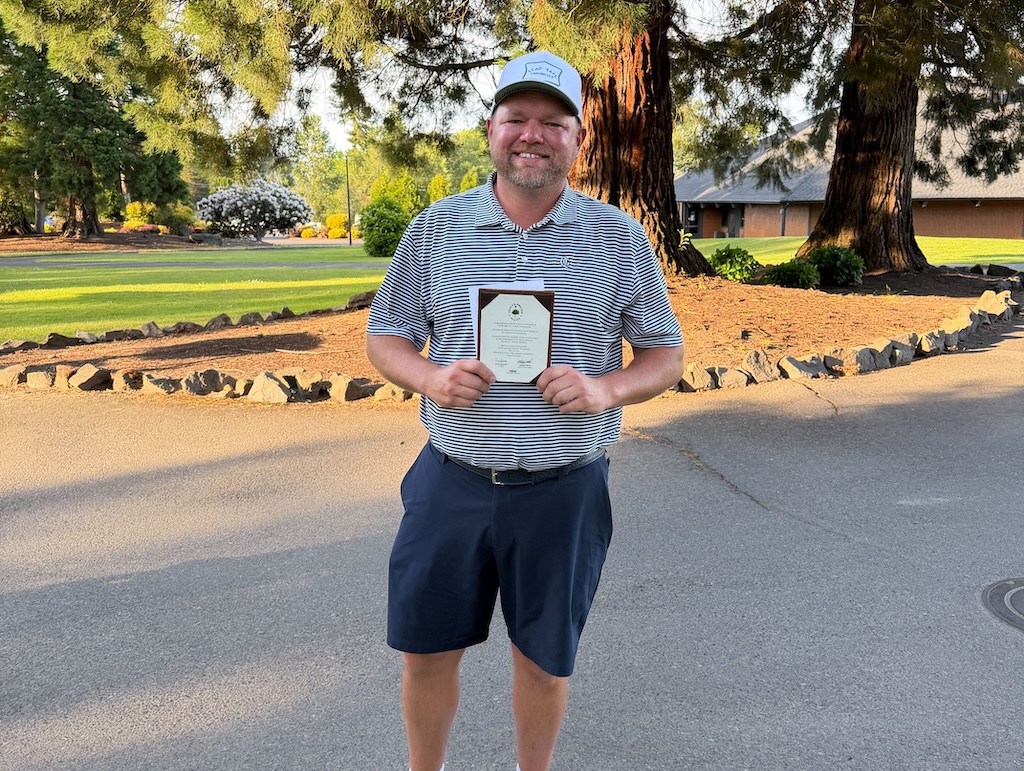
This past Monday, I played in the U.S. Amateur local qualifier at Rock Creek Country Club in Portland, Oregon. A full tee sheet from 7:30 a.m. to 1:55 p.m., the top 11 scores would make it to the U.S. Amateur final qualifying.
I teed off at 10:48 a.m.. With the 7:30 am tee time, you can get a feel for the leaders’ pace, and they were off and running on the challenging setup at Rock Creek.
View this post on Instagram
Getting to the highlight of the round on the par five 17th, a drive up the left side and 212 yards left to the front hole location. I took out a 5-iron with plans of middle of the green. The ball ended up 8 feet left of the hole, pin high. A slight downhill putt dropped in for an eagle 3 on the 17th. With the cut line looking to be anywhere from -2 to even par. This was the boost I had been waiting for all day.
With making par from the trees on 18, it was time to wait for a potential playoff with a posted score of one under par 71.
Three hours later, it was playoff time. 8 players for 6 spots. I made par on the playoff hole, which was good enough to advance to the U.S. Amateur final qualifying in July. USGA qualifiers sure deliver on all of the emotions in golf!
Club Junkie
Building my 2026 gamer WITB: Ranking the contenders and new putter projects – Club Junkie Podcast

The annual What’s In The Bag build is underway, and on this episode of Club Junkie, Brian breaks down the clubs currently leading the race for a spot in his 2026 gamer setup. From drivers and fairway woods to irons, wedges, and shafts, he ranks the equipment that’s performing best and explains what’s separating the front runners from the rest of the field.
Brian also heads into the workshop to discuss several putter projects currently on the bench. From head options and shaft choices to build ideas and testing plans, he shares what he’s working on and which putters could become serious contenders for the bag this season.
If you’re a gear junkie who loves equipment testing, club building, and the never-ending pursuit of the perfect setup, this episode is for you.
Follow Club Junkie:
Instagram: @clubjunkiepod
TikTok: @clubjunkiepod
Threads: @clubjunkiepod
X: @ClubJunkiePod
Club Junkie
Tour Edge Exotics mini driver review + TaylorMade Spider ZT Max first look – Club Junkie

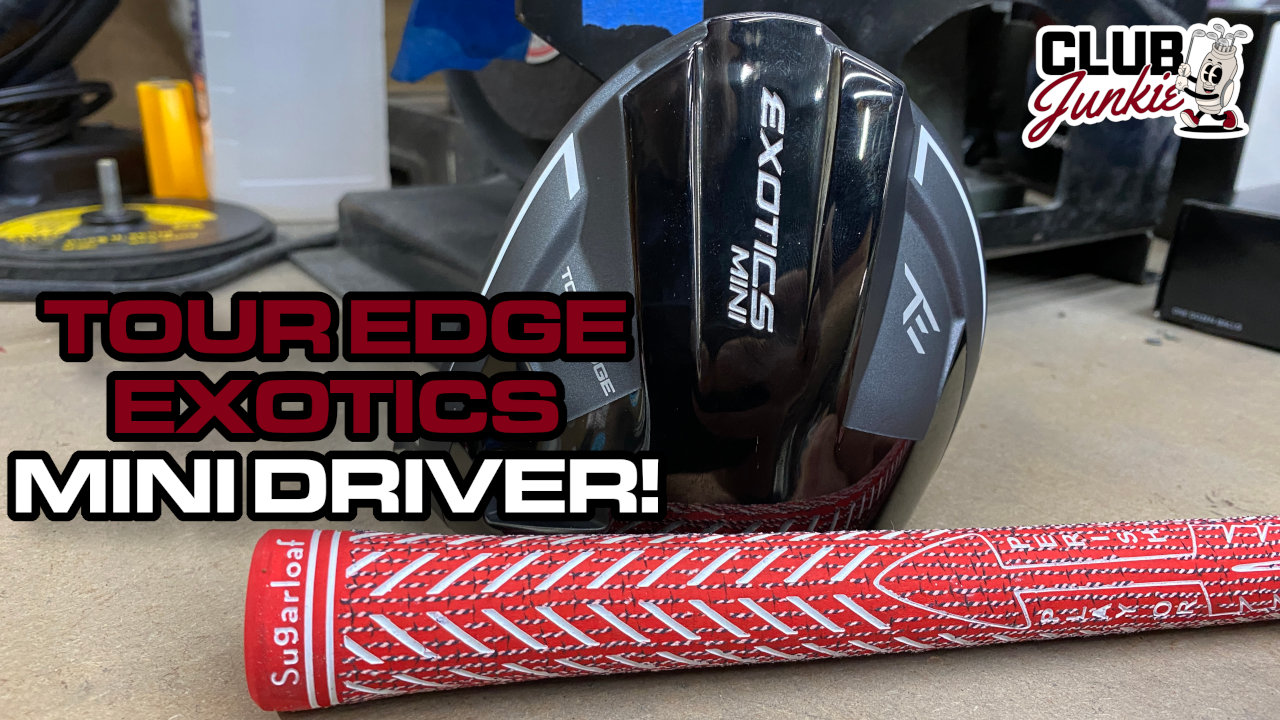
On this episode of Club Junkie, I put the new Tour Edge Exotics Mini Driver to the test and break down the performance, forgiveness, distance, and where it fits compared to a traditional driver or strong fairway wood. If you have been curious about adding a mini driver to the bag, this one is worth a look.
I also dive into the new TaylorMade Spider ZT Max putter that was recently spotted and discuss the growing zero torque putter trend. Plus, there is a closer look at the new Project X Titan Yellow shaft showing up on the PGA Tour and what makes it different from other profiles currently out there.

Justin Rose WITB 2026 (April): Full WITB breakdown with new McLaren irons

What’s the story behind Webb Simpson’s custom-stamped irons?

Cadillac Championship Tour Report: Spieth’s sizable changes, McLaren Golf launches, and more

Memorial Tournament Tour Report: Rory McIlroy, Cameron Young switch up drivers, and more

Russell Henley’s winning WITB: 2026 Charles Schwab Challenge

Kristoffer Reitan’s winning WITB: 2026 Truist Championship

Aaron Rai’s winning WITB: 2026 PGA Championship

Cameron Young’s winning WITB: 2026 Cadillac Championship

Details on Jason Day’s latest prototype Avoda iron setup

Justin Rose on the switch to McLaren Golf, learnings from previous equipment moves


Alex Noren WITB 2026 (June)
Driver: Callaway Paradym Ai Smoke Max D (9 degrees @7, draw setting) Shaft: Graphite Design Tour AD VF 6 X 3-wood: Callaway...


Melanie Green WITB 2026 (June)
Driver: TaylorMade Qi4D (9 degrees) Shaft: Graphite Design Tour AD VF 5 S 3-wood: TaylorMade Qi4D (15 degrees) Shaft: Graphite Design Tour...


Sungjae Im WITB 2026 (June)
Sungjae Im had >14 clubs in his bag when photographed prior to the Memorial Tournament. Driver: Titleist TSi2 (8 degrees, B1...


Lucas Glover WITB 2026 (June)
Lucas Glover had >14 clubs in his bag when photographed prior to the Memorial Tournament. Driver: Titleist GTS2 (10 degrees, B2 SureFit...
-
 Equipment2 days ago
Memorial Tournament Tour Report: Rory McIlroy, Cameron Young switch up drivers, and more
-
 News7 days ago
Russell Henley’s winning WITB: 2026 Charles Schwab Challenge
-
 Whats in the Bag3 weeks ago
Aaron Rai’s winning WITB: 2026 PGA Championship
-
 Equipment4 days ago
Details on Jason Day’s latest prototype Avoda iron setup
-
 Tour Photo Galleries3 weeks ago
Photos from the 2026 CJ Cup Byron Nelson
-

 Equipment2 weeks ago
CJ Cup Byron Nelson Tour Report: Koepka and Kim’s newest putters finally get hot
-
 News1 week ago
Charles Schwab Challenge Tour Report: MacIntyre, Åberg and Spaun all switch putters, TaylorMade launches new Spider
-
 Equipment2 weeks ago
Details on J.J. Spaun’s surprise putter switch


Dan Poehler
Jul 25, 2019 at 9:52 am
Terry, this is all good and I agree. A personal preference that I would like to add is to let the hips rotate back & then through. This changes the swing to a mini version of my full swing where the club travels back inside, square and then back to inside instead of like a pendulum. My home course is Timber Creek in Friendswood, Texas.
Bob Jones
Jul 24, 2019 at 7:28 pm
#3, grip pressure, is super-important for the very reason you mention.
DJM
Jul 24, 2019 at 4:51 am
What grip do you like to use when you chip? Also, this product helps achieve everything you discuss and is an awesome chipping aid: https://www.amazon.com/IdealStretch-Doctor-Training-Practicing-Easiest/dp/B07TKMPRL8/
Johann van der Walt
Jul 23, 2019 at 11:08 am
Fantastic guidelines! Thank you.