
Equipment
A Guide to Shafts

 To most people, the shaft is just the long thin bit of the club that connects the grip to the clubhead. Apart from deciding which flex they would like when they bought the club, few golfers seem to realise the importance the shaft plays in getting the head from the top of the backswing to the impact zone and the resulting trajectory of the ball.
It has only been fairly recently that manufacturers have begun to realise that pairing their latest high-tech titanium/carbon whiz-bang clubheads with average shafts defeats the technological marvels that their clubs have become. It’s still the case that many clubs are bought and sold with only the barest nod to whether the shaft is suitable to the person holding the top end of the club.
The truth is that while the clubhead does act pretty much independently to the shaft at impact, unless you have the correct shaft for your swing you will be fighting for the correct ball flight rather than letting the shaft do the work for you.
Shafts really need to be matched to the swing. Two players with the same speed swing may require two completely different shafts. But how is this true, I hear you say, surely a shaft is just a shaft? How the shaft reacts is completely dependent on the specific swing moves, so players with similar swing speeds but different moves require a shaft with different properties. Of these properties there may be the minor matter of stiffness or flex but what other properties are there? Well firstly there are the fairly basic issues of weight and length. Then there is also torque, tip stiffness, bend point, composition, shaft frequency, and spine-alignment. So just a couple of things then!
If you get lost in the confusion of all these terms, they all become pretty simple when you realise that they are just measuring different factors of the club, apart from obvious attributes like weight and length, that otherwise would be termed components of "feel".
Now for the disclaimer. I’m no Tom Wishon or Joe Kwok (I get nervous re-gripping my clubs let alone reshafting them) but I’ve done a fair bit of digging trying to establish just what the important factors are when choosing a shaft. This is a synopsis of pretty much everything I’ve found, having separated the fact from the fantasy and the helpful from the hype.
Flex: Everyone is familiar with shaft flex. All of us know that flex is simply how much a shaft bends when you swing it. The shaft bends back as you start your down swing, loading up with stored energy that is released as the club straightens at the impact zone. The amount of flex you need will depend on how fast you swing the club and also how smoothly. Playing with a shaft that is too stiff will rob you of distance if you do not swing hard enough to load up the club. Similarly, releasing too early will also rob you of distance as the shaft will have recovered long before impact. Playing with a shaft that is too soft will exaggerate your swing imperfections, with gentle fades becoming wild slices and pulls turning into snap hooks. So getting the right flex in a shaft is vitally important, but the trouble comes when you realise that there is no standard level of bend for each category so one manufacturers regular flex could be another’s stiff so moving from one brand to another may mean using a completely different flex.
Weight: While the shaft is not the heaviest component of a club, it is pretty much the main way to alter the overall weight of a club and is one of the most important aspects in matching a club to a golfer. A lighter club can be swung faster than a heavier club. That seems pretty reasonable, so why doesn’t everybody play with the lightest possible shafts in their clubs? That’s because there is a trade off between speed and control. The lighter shaft may be easier to swing faster, but the heavier shaft is easier to swing more accurately. So using a shaft that is too light would result in more off-centre hits, negating any gains from the increased swing speed. Typically this means that player with higher swing speeds should choose a shaft with a weight of 70g or over. But using a shaft that is too heavy will rob you of swing speed.
Length: A longer shaft equals higher clubhead speed which equals more distance, approximately 8 yards more per inch. As with the weight though, this increase in speed comes with a penalty of the longer shaft being more difficult to control. So again it’s a trade off between distance and accuracy.
Torque: How much does the shaft twist around its vertical axis when you swing it. Torque is mainly a feel issue. As the clubhead is on one side of the club, a shaft is exposed to a twisting force when swung as the inertia of the clubhead pulls on one side. A high torque shaft will give good feedback and absorb vibrations well but have a tendency to open the club face. A low torque shaft will resist this turning force, offering better consistency of shot, but feel stiff and board-like. This was more of a problem when graphite shafts were first manufactured in the 1970’s as the higher (and often varying) torque made for inconsistent results. This stigma of inconsistency has dogged graphite shafts, especially graphite iron shafts, ever since. Modern shafts have almost none of these inconsistancies and now offer pretty much ideal torque levels, the right blend of feedback and absorption of vibration. Attention should also be paid to the role of torque with high MOI driver heads that can cause high levels of twisting.
Sectional stiffness and bend point: These are two descriptions of effectively the same thing; how the shaft actually bends when force is applied to it. A shaft that is equally stiff along its entire length would bend in the centre when a force is applied to it. A shaft that is a little stiffer at one end than the other would have a bend point closer to the softer end. But what does that mean to a golfer? Well a shaft that has a soft tip has a low bend point and this helps lift the ball in the air by adding dynamic loft. Players who hit the ball too high should look for a tip stiff shaft which does not add so much loft, which produces a lower and more penetrating trajectory. It should be noted that a shaft can only add a maximum of about 3° of loft and only when a golf swing has a late release but this still amounts to yards lost or gained.
Composition: What the club is made from. It’s not just a simple question of steel or graphite anymore, but how the shaft is formed. This is more of an issue with graphite shafts where manufactures use up to 20 layers of carbon fibre in varying orientations to ensure top performance, with different orientations offering different properties. Shaft composition is now such that they are made to better fit players swing characteristics. Such as ultra light steel shafts that have the weight of graphite but the feel and delivery of steel, and graphite shafts for better player irons. There are also shafts that mix graphite and steel together such as the Epic and Bimatrx which try to offer the advantages of both materials. In some ways, composition both does and does not matter. Two shafts with precisely the same numbers (flex, weight, length etc) but made from different materials will give you exactly the same performance. How it feels may be different, but how far and straight you hit the ball will be the same. It is how the composition affects the other properties of the shaft that makes it so important.
Frequency: This is a method of precisely measuring and defining the flex of the golf shaft through electronic calibration. When a shaft is pulled and then released, it will oscillate up and down, with the frequency of the oscillation determined by the stiffness and length of the shaft. A stiffer or shorter shaft will oscillate faster while a softer or longer club will oscillate slower. A normal set of irons will have the 3 iron oscillate the slowest and the wedges oscillate the fastest, with the clubs progressively increasing from the long irons to the short. Where frequency matched irons differ from normal irons is that the frequency will increase by a consistent amount, whereas normal irons will have varying amounts of difference between each club. While the benefits to us mortal golfers may be marginal, pros are increasingly using this technology to ensure consistency across their clubs.
Spine Alignment: All shafts have some degree of ‘spine’. No shaft is made completely round or straight. This means that shafts do not bend in the same direction when force is applied such as when swinging. Aligning the spine makes the shaft behave as if it were symmetrical and round, improving the likelihood of on-centre hits and giving better and more consistent results. Like frequency matching, this measurement of the variability of shafts is not a distinctive shaft option that you would request like weight or flex but it is still a very important aspect in building the ideal set.
Installation:: Not so much a property of the shaft but of how the shaft is installed. The correct or incorrect installation can have a huge effect on the performance and feel of the shaft. Having been under the impression that the job of putting a shaft in a club head is an easy one – it’s just putting epoxy on the end and sticking it in the hole, isn’t it? – a little bit of research showed that such hazards as tipping, blind boring, the difficulty of shaft centreing and avoiding ‘leaners’ are there to trap the unwary or inexperienced club fitter.
So after looking at all these different properties of a golf shaft, where does that leave the average player? Thankfully, the most important ones are the ones that you would expect, namely weight, length and flex. That being said, I would be tempted to add bend point to this list. The benefit of a softer tipped shaft with a lower bend point is quite noticeable for slower swingers so if you struggle to get the ball in the air this really is a must. Likewise, a faster swinging player with a late release who has trouble with the ball ballooning and a too high a trajectory would benefit from a tip stiff shaft. The other less important properties are either issues from when graphite shafts where first produced (torque, composition) or ones that concern single figure handicappers than your weekend hacker (frequency matching and spine alignment).
Issues that are not important: Having just run through a whole range of factors that determine whether a club is right for you it is only fair that I mention some that are not.
Colour: Having a shaft in a spiffy colour will not help you hit the ball further or straighter. By all means have a bit of fun and get something funky for your driver but realise that that is all it is; a bit of fun. If someone tries to sell you a shaft that is exactly the same as the normal shaft but costs more because it is a different colour, run for the hills for this person loves you for your money and not your golf swing.
Tour Issue: Now this one is a little bit more debatable. Club fitters with contacts in certain companies and even some shaft manufacturers offer direct access to tour shafts. For example, UST have a separate website that sells tour only shafts (selling tour only shafts to the general public, surely that’s a contradition in terms!). They offer versions of their stock shafts that are optimised for the swings and feel preferences of tour players – often higher weight and lower torque with extra materials in certain areas of the shaft. Contrary to what some people tell you – normally the same snake oil seller that tells you that you need to pay extra for a funny coloured shaft – these are not magic shafts that will straighten you out and add extra yards. In fact unless you have a tour type swing – 100+ mph swing speed with a late release – you would probably lose distance and be more inaccurate. The flip side is that if you do have a fast swing speed you get access to improved versions of shafts that may offer real benefits. As these shafts might not reach retail for months, if they ever do, they have a certain cachet among the club junkies among us but the fact that a shaft is Tour issue or not is not important, what is important is that it is the best shaft for you (and not some scratch golfer or tour player).
So how much difference does the correct shaft make? It might seem a bit strange but this is still debated. A respected and knowledgeable writer recently wrote that a different shaft could not add more than 15 yards to a drive. Many people here on golfwrx.com have since recounted how proper fittings have led to distance increases of over 15 yards. Without wanting to put words in the writers mouth, I believe that he was trying to say that every new shaft seems to advertise itself as offering up to 15-20 yards more distance, which is patently wrong. What he maybe missed was that these distance gains are not all due to an increase in clubhead speed but a change to other launch conditions like spin and launch angle. If you already have a shaft that matches your swing to produce optimum results, you will not get an extra 15 yards just by using the next generation of shafts. You may – and hopefully for all that money should – see a modest increase but certainly not 15 yards. If you have a shaft that does not fit your swing, then you will see large increase in distances – most probably more than 15 yards – just by getting a shaft that does suit your swing, irrespective of whether that shaft is high end or not. The focus on distance with new driver shafts tends also to miss the increase in accuracy that these shafts provide. Booming drives are no good when your ball lands OB. Dispersion and reliability should be given more importance than they currently are.
While commentating at the most recent Ryder Cup, Nick Faldo mentioned that when he replaced a club in his set he would always use the shaft from his old club in his new one, as replacement shafts could not be guaranteed to be completely the same. He contrasted this with the modern tour pro, who can change individual irons at a whim without too much fuss, due to the increased knowledge of about shafts, the better standard of manufacture and the application of such technologies as frequency matching and spine alignment which take the guess work out of getting the right feel in a set of clubs.
Much of shaft preference still relies on feel but with the relentless march of technology, expect to see these factors move from the tour van and club fitter’s workshops into pro shops and golf warehouses.



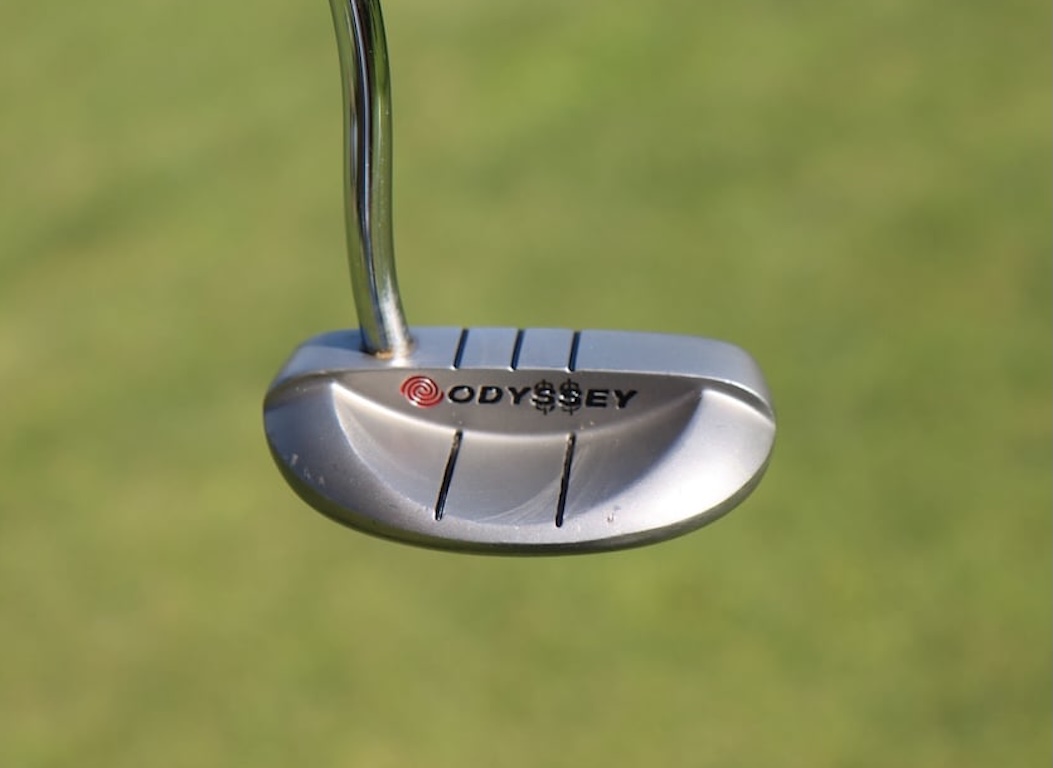
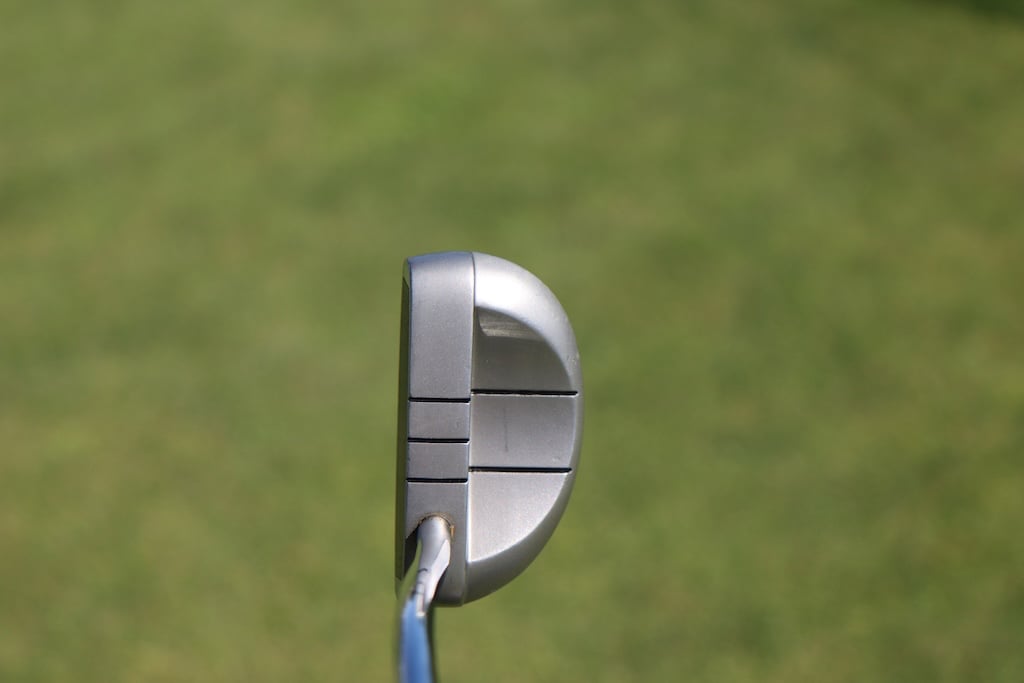
When it comes to a club that is battle-tested, it means it has been there for the peaks and valleys, the good and the bad. The club has stayed in the bag. Without a doubt, we are starting things off with a bang at a worthy all-time contender. The putter of PGA Tour veteran Ryan Palmer. This Odyssey Dual Force Rossie II is one of the foundational putters in the modern game.
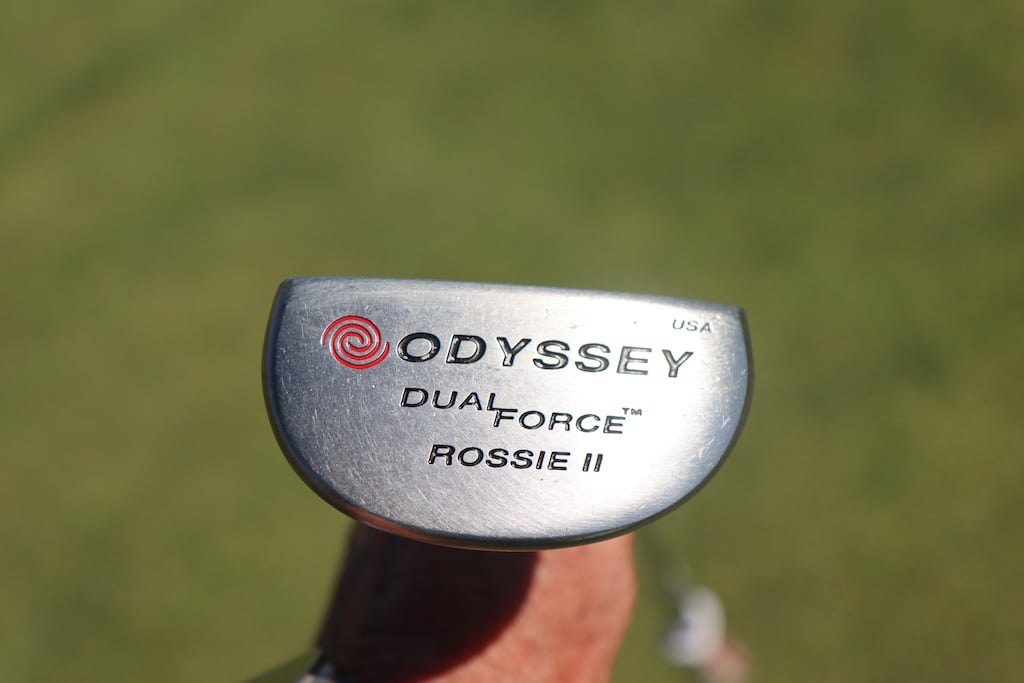
The Dual Force Rossie II was originally released in 1994. Ryan Palmer won in his rookie year on the PGA Tour in 2004 at the FUNAI Classic at the Walt Disney World Resort. The putter in his hand for the win? You guessed it. The Rossie II. Maybe a few trials and tribulations of other putters through the years, but this is the predominant putter in the bag.
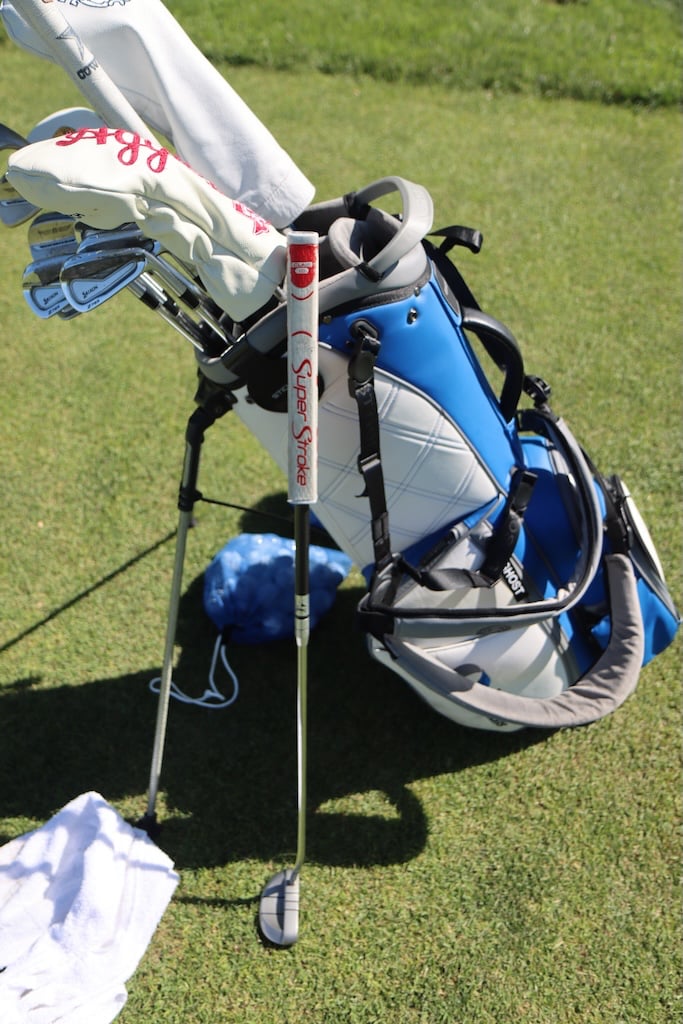
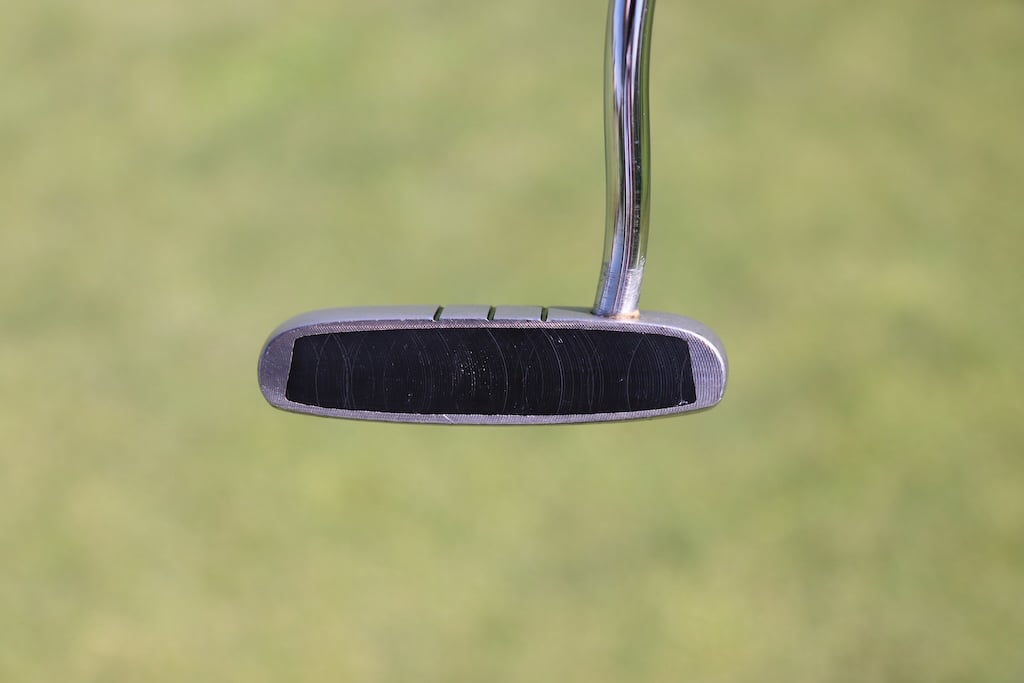
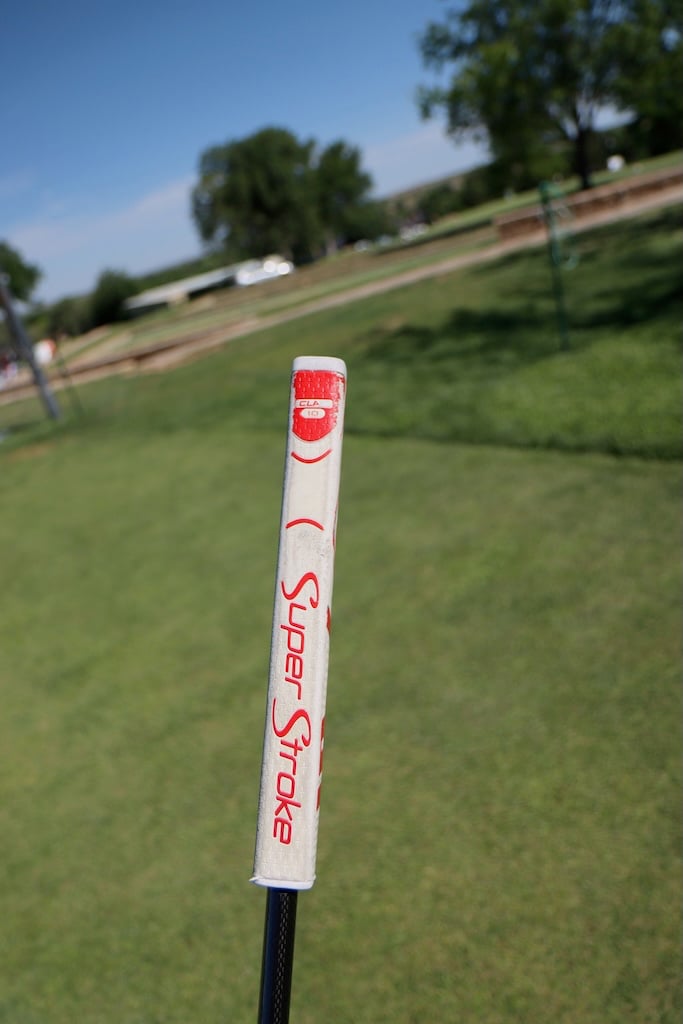
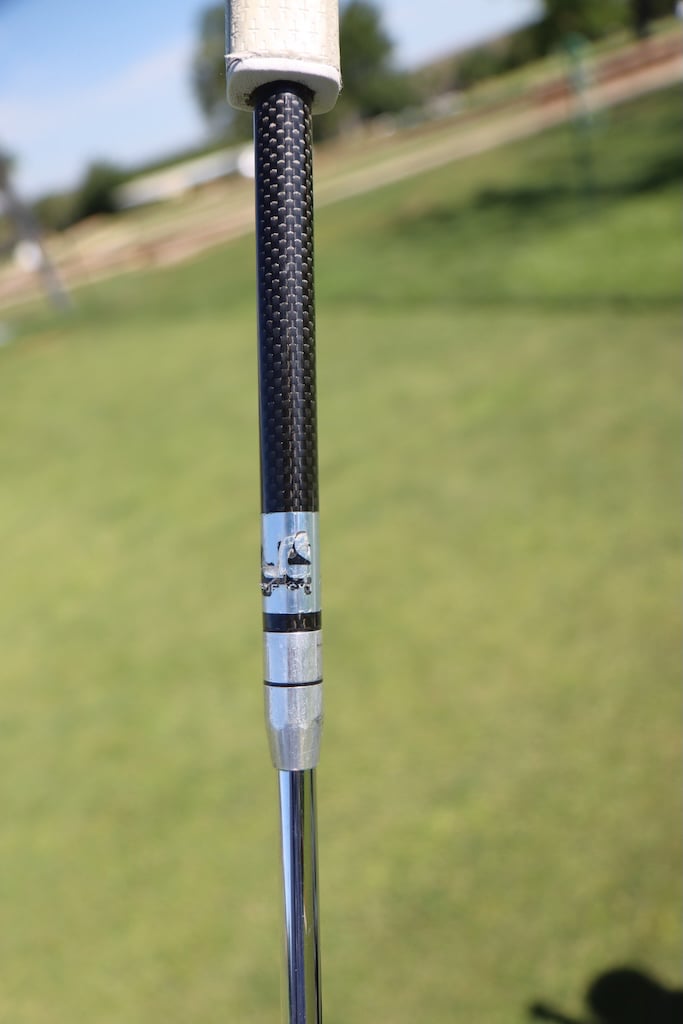
As time has gone on, the Rossie II Palmer plays has a few “modern” game upgrades compared to its 1994 release year. There is a custom dollar sign logo on the back cavity of the putter to keep the spirits high. Additionally, we can see a Breakthrough Golf Stability putter shaft along with a SuperStroke Claw 1.0 grip. These updates bring this model to a generation blend spanning over 30 years.
With a setup like this, putter for Ryan Palmer, this is the definition of Battle Tested!

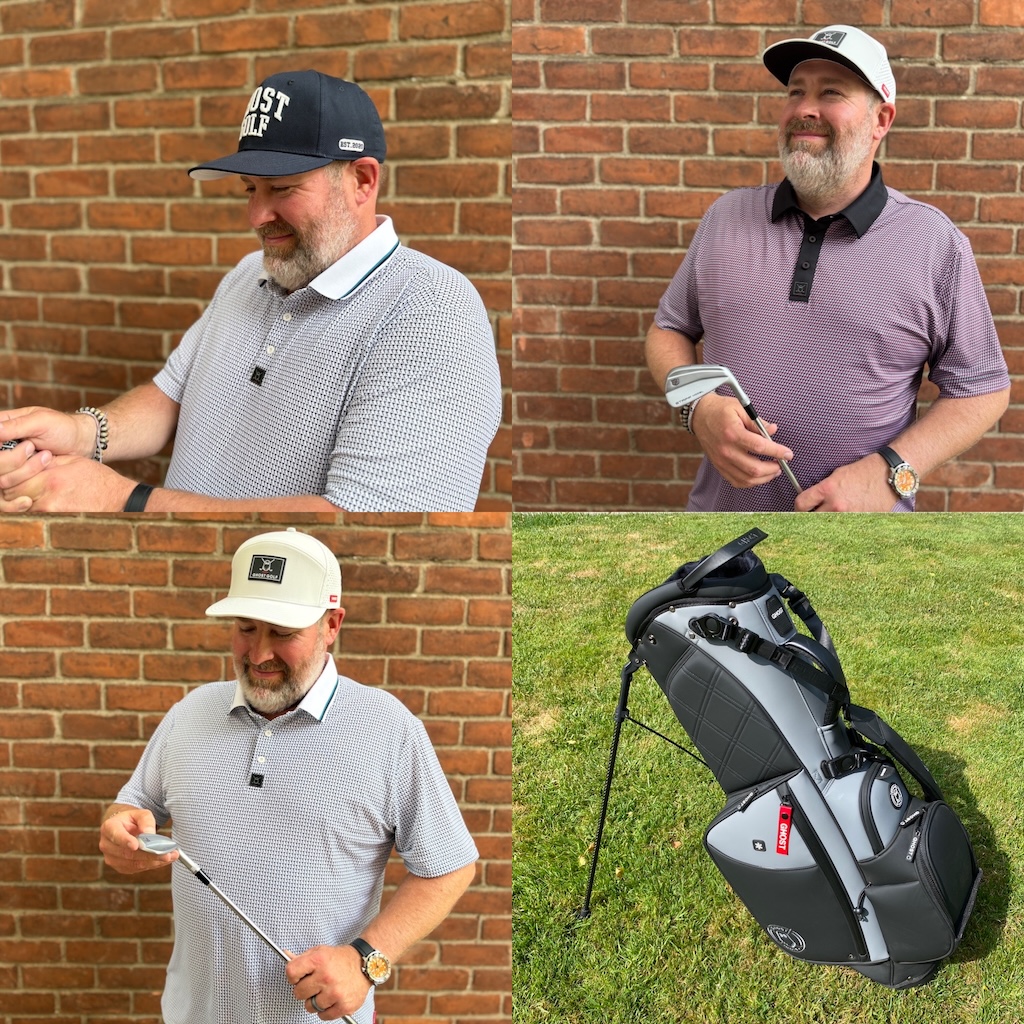
The summer season is getting closer by the day and some of us need to add a little style to our wardrobe. Thankfully, Ghost Golf is here with their exciting new Qualifier Collection that will get us looking better than our swing. This new collection, along with tons of other options from Ghost, also makes great Father’s Day gifts. Clubs and golf balls can be tough, since some dads are pickier than others. So I went through and put together just a few items from Ghost Golf that could be perfect for your dad. None of these requires a handicap or club fitting to help elevate their game and style out on the course!
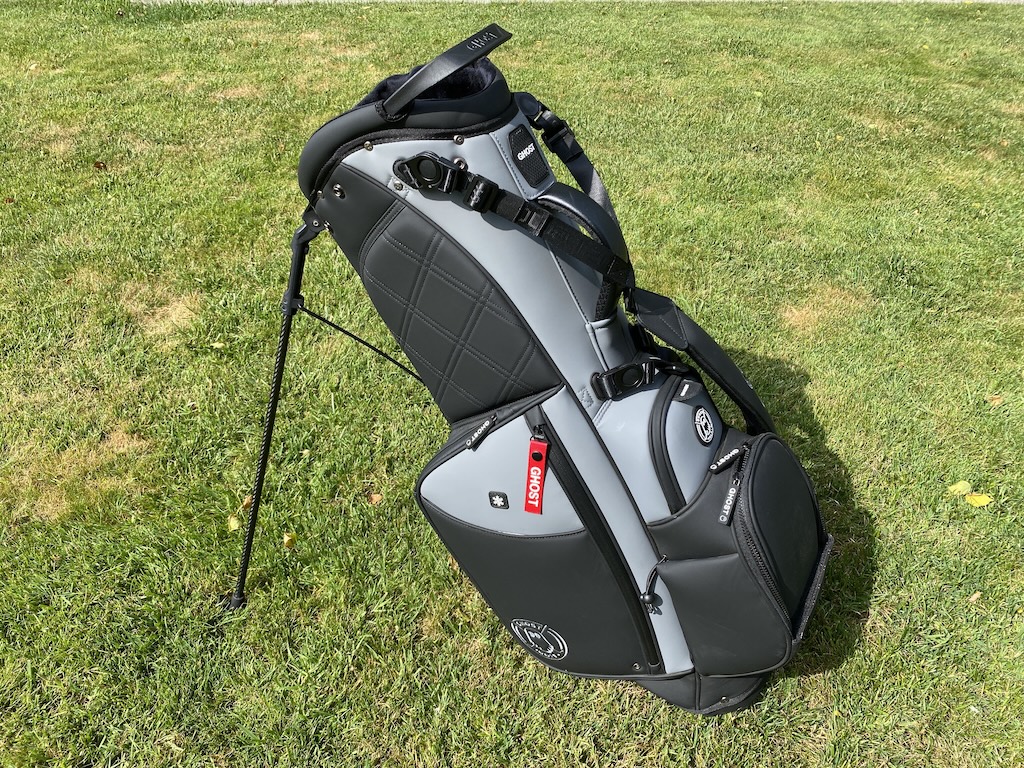
If you have seen any of my WITB videos, you will see that I am putting my clubs into the Anyday Black Ops stand bag. High quality is key with the Anyday bag, and you will immediately feel that with the materials and craftsmanship Ghost uses. I love how versatile the bag is, going from range, to cart, to push cart without breaking a sweat. I typically bring a lot of stuff with me when I play, and I was shocked at how much the Anyday can hold while still being lightweight. You get a single and double shoulder strap that is super easy to swap out to dial in the comfort or convenience you desire.
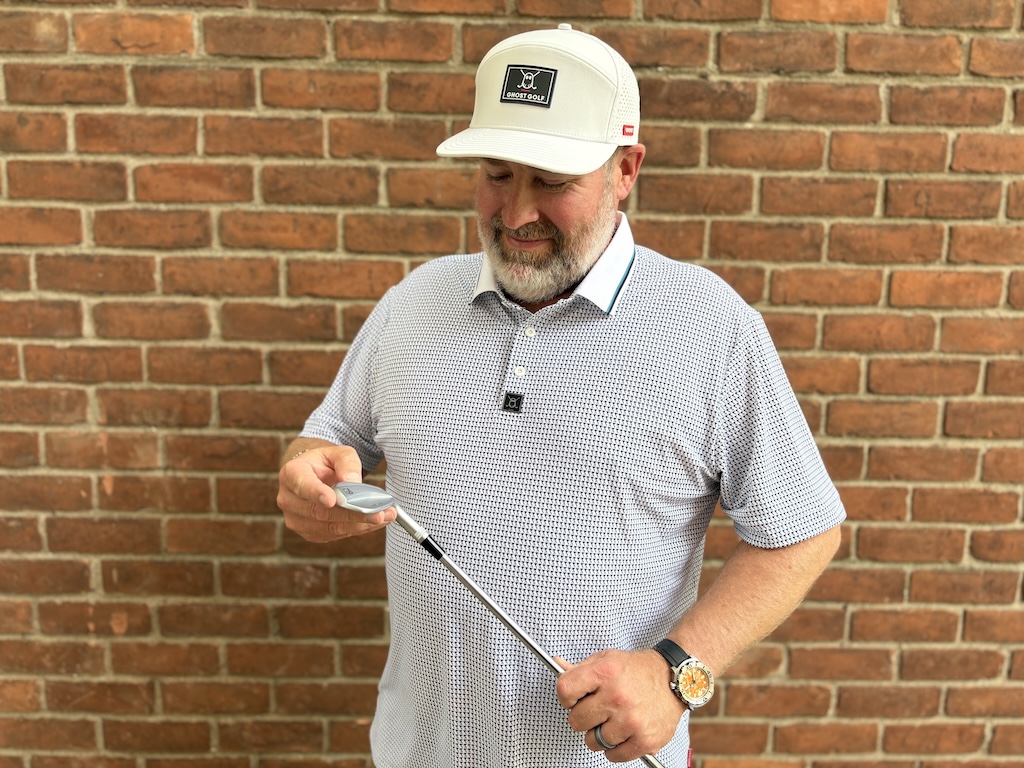
I loved the new Qualifier Polo as soon as I took it out of the package and tried it on. The Micro Pique fabric is soft and comfortable, so you can wear it all day and almost forget it was on. Ghost dialed in the fit as well; it doesn’t bind or bunch up anywhere and looks great. The little touches and Ghost logos make this polo perfect for the course, office, or date night.
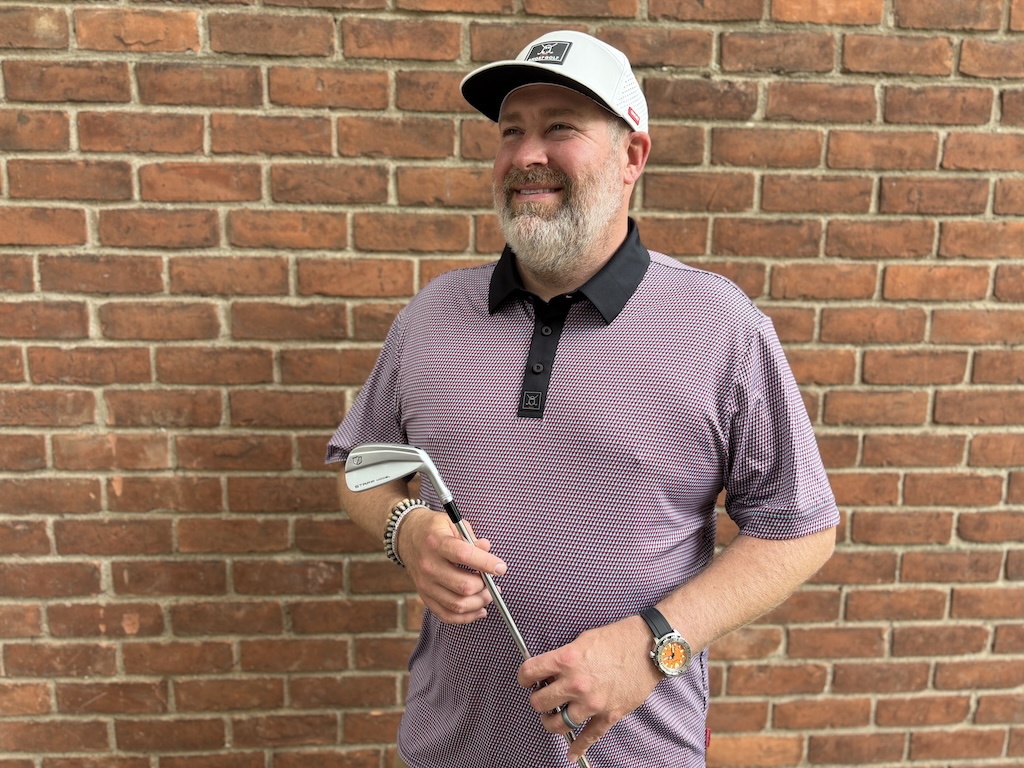
Another polo from Ghost that has become a staple in my rotation. The black collar combines with the diamond pattern to stand out just enough. Definitely not too loud to wear to work. Ghost made sure these polos feature a soft, breathable fabric with Spandex for free, easy movement during your swing. With the warmer weather here, I have found this polo to be cool and dry from the moisture-wicking material.
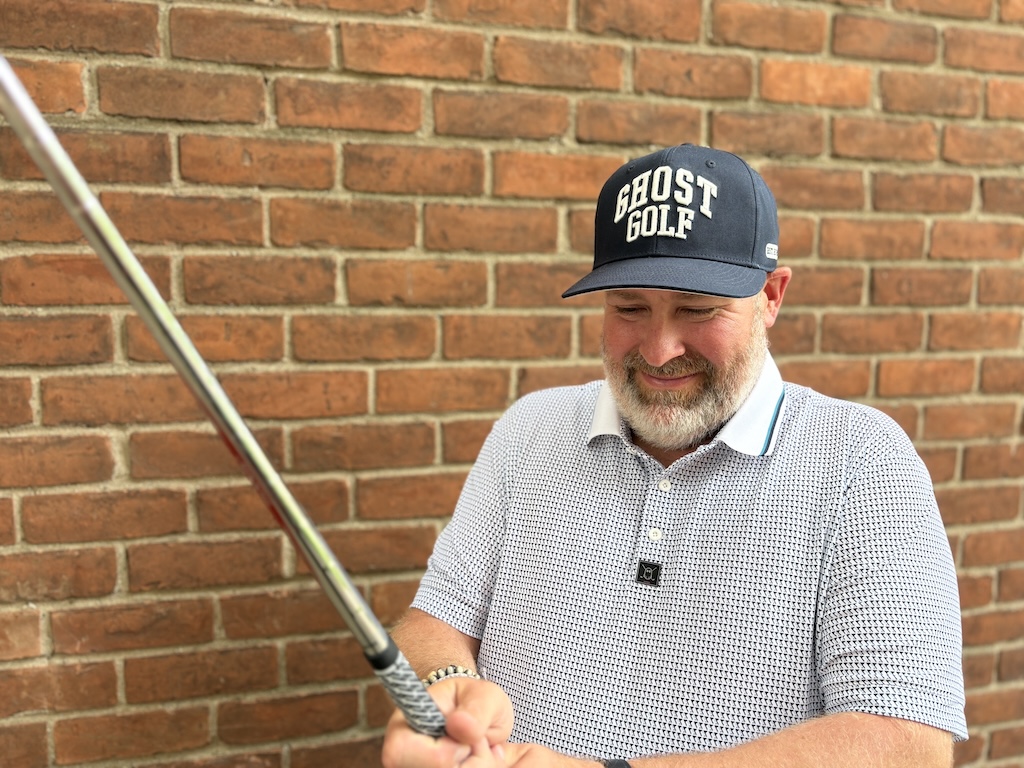
I have a lot of hats (ask my wife), but this one has become my go-to since I got it. The 100% cotton fabric just feels high quality, and the Spectator hat just holds its shape so well. Average-to-large heads, like mine, get a great fit that is snug enough to stay on during an aggressive swing but not uncomfortably tight. This hat goes from school drop-off to the course without missing a beat.
At first glance, you will think this is just another club brush. Look closer, and you will see the thought and detail the team at Ghost put into it. A built-in magnet lets you slap it onto the golf cart, right there to clean off your club after your shot! Two sets of bristles are quickly swapped out so you can clean your clubs and then your shoes to keep them looking fresh. A built-in water reservoir also pumps out water to make sure your grooves are perfectly clean for every shot.


At GolfWRX, we are a community of like-minded individuals who all experience and express our enjoyment of the game in many ways.
It’s that sense of community that drives day-to-day interactions in the forums on topics that range from best driver to what marker you use to mark your ball. It even allows us to share another thing we all love – buying and selling equipment.
Currently, in our GolfWRX buy/sell/trade (BST) forum, @raehtz10 is selling putters…and lots of them. Available for purchase Scotty Camerons, Bettinardis, and Odysseys.
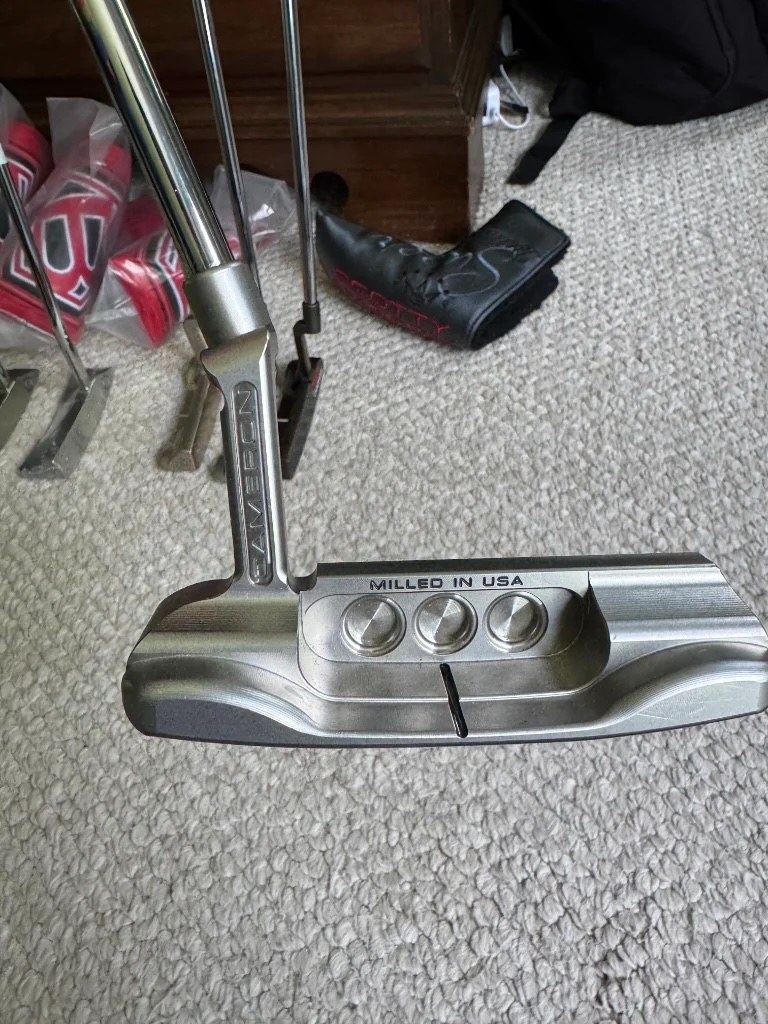
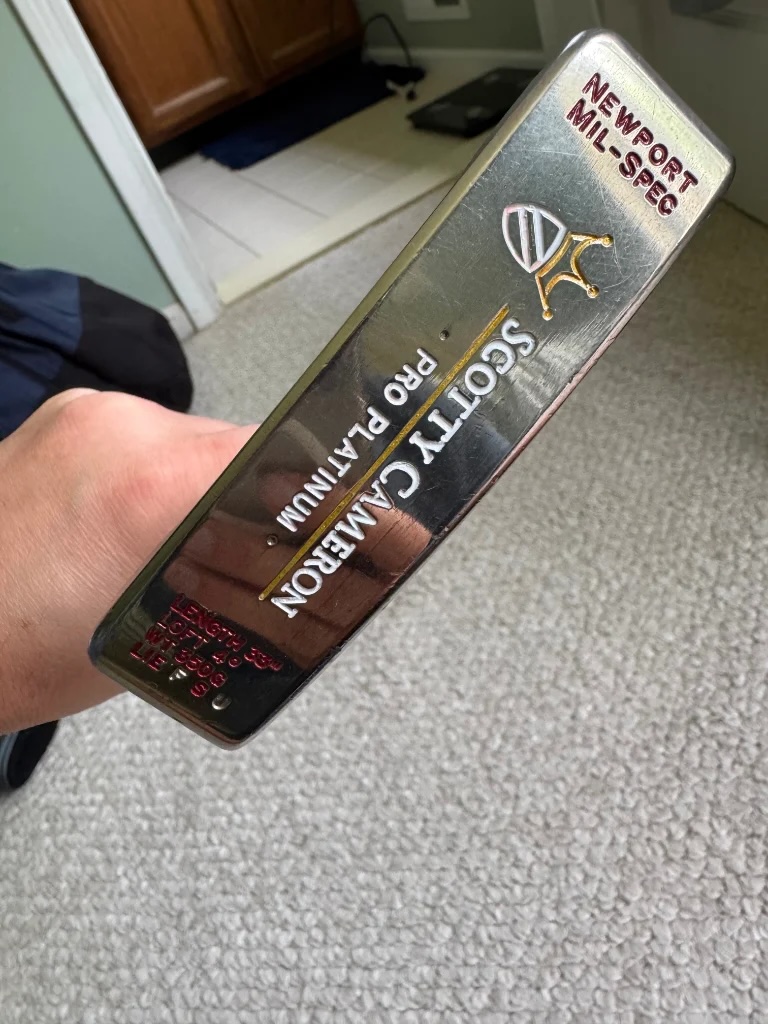
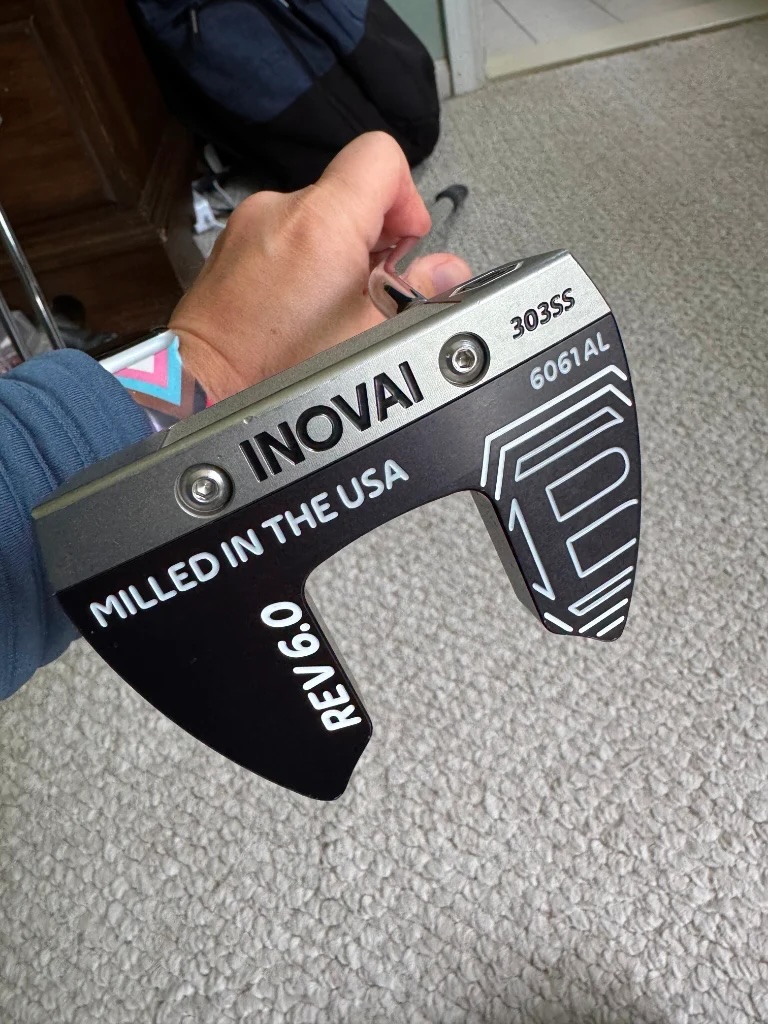
From the listing:
All prices are OBO and include shipping and Paypal G&S and Venmo’s version too. If you’re west of the Mississippi, please add $5. If you have any questions or want additional pictures, please message me.
1. Scotty Cameron Super Select Newport. 34″, original grip and headcover. Weights are aftermarket 40g. Small ding on the hosel was repaired. Will send updated photo if interested. $300.
2. Scotty Cameron Mil-Spec 33/350g – 33 inches, 350g. Red dancing cord grip. No headcover. – $350.
3. Bettinardi Studio Stock 9. 35″, brand new in plastic. Does not include original headcover, but will come with new in plastic 2021 Studio Stock headcover. $275.
4. Bettinardi 2022 Inovai 6.0 – 33″, original grip and shaft. The pictures really tell the tale on this one. $230.
To check out the full listing in our BST forum, head through the link. If you are curious about the rules to participate in the BST Forum, you can learn more here: GolfWRX BST Rules.

What’s the story behind Webb Simpson’s custom-stamped irons?

Memorial Tournament Tour Report: Rory McIlroy, Cameron Young switch up drivers, and more

Cadillac Championship Tour Report: Spieth’s sizable changes, McLaren Golf launches, and more

Russell Henley’s winning WITB: 2026 Charles Schwab Challenge

Kristoffer Reitan’s winning WITB: 2026 Truist Championship

Best irons 2026: Best irons overall, most forgiving irons, and more

J.T. Poston’s winning WITB: 2026 Memorial Tournament

Aaron Rai’s winning WITB: 2026 PGA Championship

Cameron Young’s winning WITB: 2026 Cadillac Championship

Details on Jason Day’s latest prototype Avoda iron setup


Christiaan Maas WITB 2026 (June)
Driver: TaylorMade Qi4D LS (8 degrees) Shaft: Fujikura Ventus TR Blue 6 X 3-wood: TaylorMade Qi10 (15 degrees) Shaft: Fujikura Ventus Black...


Ryan Palmer WITB 2026 (June)
Driver: Callaway Quantum Triple Diamond (9 degrees) Shaft: Project X HZRDUS Smoke Blue RDX 60 TX 3-wood: TaylorMade Qi10 (15 degrees) Shaft:...


Bud Cauley WITB 2026 (June)
Bud Cauley had >14 clubs in his bag when photographed prior to the Memorial Tournament. Driver: Titleist GTS2 (8 degrees) Shaft: Fujikura...


Hannah Green WITB 2026 (June)
Driver: Titleist GTS3 (10 degrees, D4 SureFit setting) Shaft: Mitsubishi Chemical Diamana RB 53 S 3-wood: Titleist GT3 (15 degrees,...
-
 Equipment1 week ago
Memorial Tournament Tour Report: Rory McIlroy, Cameron Young switch up drivers, and more
-
 News2 weeks ago
Russell Henley’s winning WITB: 2026 Charles Schwab Challenge
-
 Equipment4 days ago
Best irons 2026: Best irons overall, most forgiving irons, and more
-
 Whats in the Bag5 days ago
J.T. Poston’s winning WITB: 2026 Memorial Tournament
-
 Equipment1 week ago
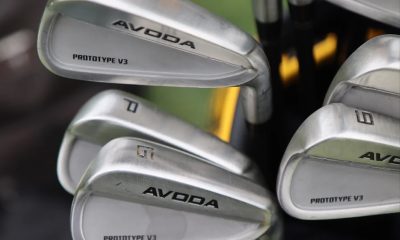
Details on Jason Day’s latest prototype Avoda iron setup
-

 News2 weeks ago
Charles Schwab Challenge Tour Report: MacIntyre, Åberg and Spaun all switch putters, TaylorMade launches new Spider
-
 Equipment2 weeks ago
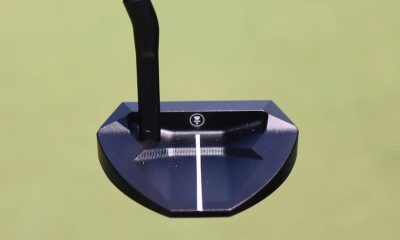
Details on J.J. Spaun’s surprise putter switch
-

 Popular Photo Galleries3 weeks ago
Photos from the 2026 Charles Schwab Challenge


M Anderson
Aug 17, 2007 at 6:45 am
Thanks guys 🙂 glad to be able to help.
Martin
hobbes
Aug 15, 2007 at 6:03 pm
Thanks for putting all of this information in one spot. I enjoyed it,
rosskoss
Aug 15, 2007 at 2:34 pm
Excellent, informative article!