
Equipment
2021 Cobra RadSpeed irons

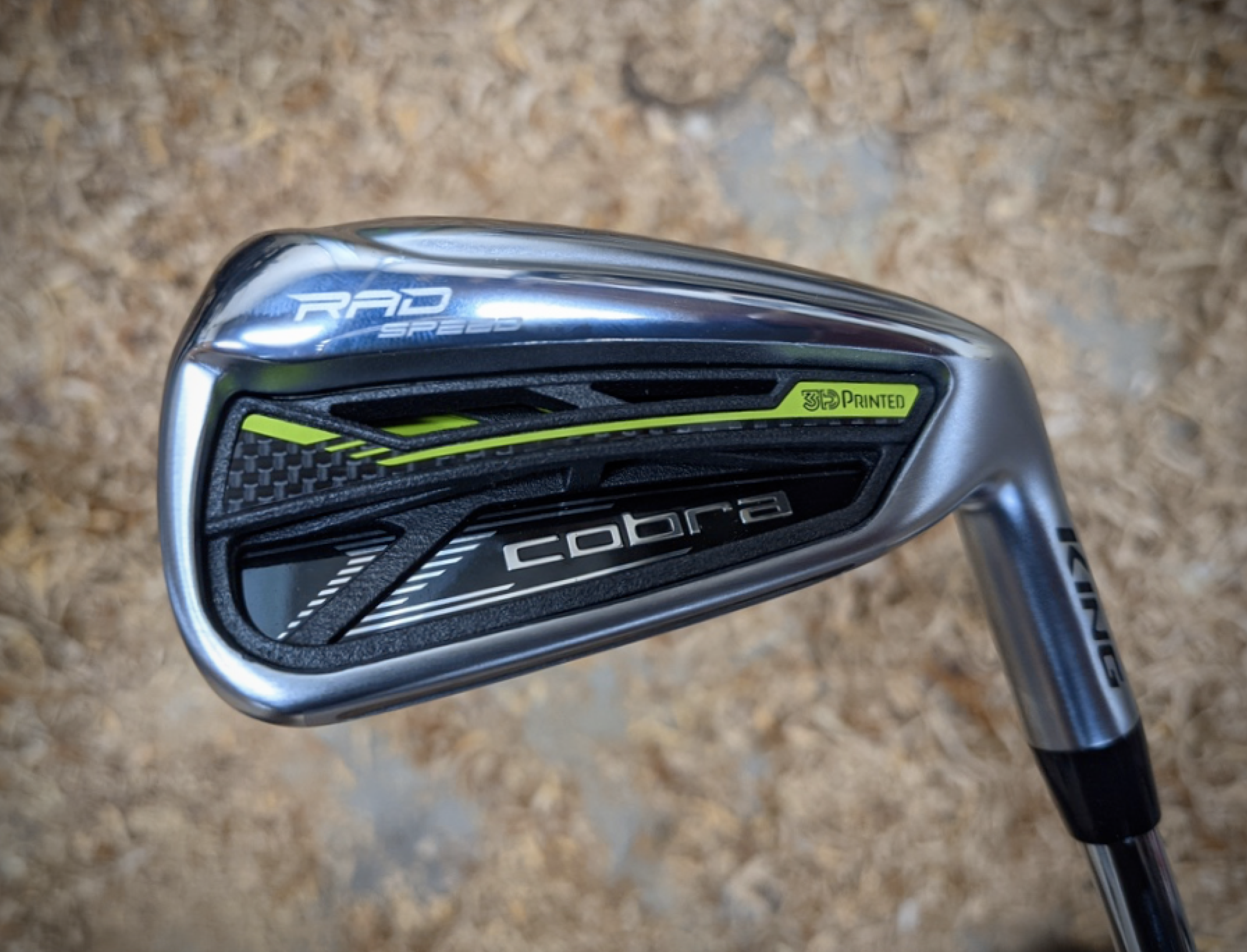
3D printing has officially gone mainstream in golf. On the heels of the recently launched 3D-printed King SuperSport-35 putter, Cobra is introducing the new 2021 Cobra RadSpeed irons with golf’s first-ever 3D-printed nylon medallion designed to save weight, increase forgiveness, and fine-tune acoustics. All of this while being built into a sportier-looking iron.
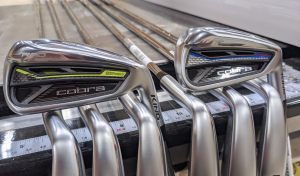
2021 Cobra RadSpeed irons: The package
If you talk to golfers who are the target market for technology-packed irons there are generally a few requests:
- I want them as forgiving as possible
- I want them to feel good
- I want them to be compact because “I don’t want to play a shovel.”
To these golfers, the engineers at Cobra have heard your requests and they are here to deliver.

The lead of this story, for good reason, is the large 3D-printed medallion designed to enhance the feel of the irons while also saving weight and increasing the MOI, but the real star of the show for golfers and fitters is the new Radial Weighting system around the head—and specifically in the toe of club.
The whole package creates a set of irons that can be built to exacting specs like never before, and just like the 3D-printed medallion, Cobra is demonstrating that precision in the design and build process leads to better performance for the end-user.
2021 Cobra RadSpeed irons: The technology
3D printing
Let’s start with the medallion. Unlike traditional badges used in irons, which are made using various injection molding processes, the 3D-printed medallion is comprised of nylon and uses an intricate structure of intertwined lattice to increase strength while also reducing weight.
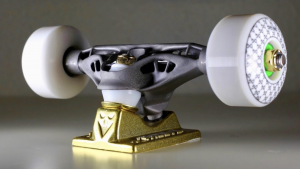
3D-printed titanium skateboard truck
The backbone of this technology is the ability to create shapes that maximize strength while also reducing both material use and weight. In the case of golf clubs, this saves engineers precious grams of mass, which can be repositioned around the head. This is a crucial element of golf club design since the final mass of each part is defined by its position in the set (i.e. the final 7-iron mass on a standard set of clubs is roughly 268g, no more and no less.)
3D-printing has been used for years to prototype clubs, but thanks to the evolution of the technology, which in turn has helped drive down the cost, Cobra can effectively bring this to market while offering an advantage over previous and not having to pass enormous costs on to the consumer.
Radial Weighting
Much like the RadSpeed driver, the irons derive their name from newly positioned weights around the radius of the iron head designed to increase stability. By placing weight on the extreme perimeter of the head (away from the center of gravity), Cobra can both lower the CG and make the club slightly more compact while not sacrificing forgiveness. The screw-in weights are 10g in the toe and 3g in the heel (in a stock-configured club) but can be reconfigured for custom builds depending on the specs.
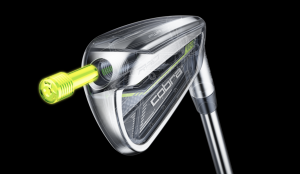
This allows the engineers to keep the center of gravity directly behind the middle of the face, which is especially important when tip weights might be involved to adjust any custom orders. Let me explain in a little more detail: Basically, every iron on the market utilizes a tip weight, either inserted into the shaft or into a port in the bottom of the hosel. OEMs use them all the time, and there is 100 percent nothing wrong with using tip weights to achieve the desired swing weight, but when you use them, you move the CG closer to the hosel/heel side of the club. It’s not moved on a humanly noticeable level but from an engineering perspective, it occurs.
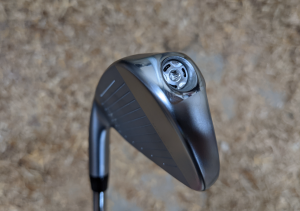
According to Cobra, this weight may be adjusted +/- 6g during custom builds to dial in proper swing weight based on length, shaft weight, and grip specs.
PWRShell Technology
Besides the perimeter of the club, where the forgiveness is created, the most important single “part” of any club is the face. Cobra has worked long and hard to maximize speed and increase launch with PWRShell technology, which has once again been refined to improve performance.
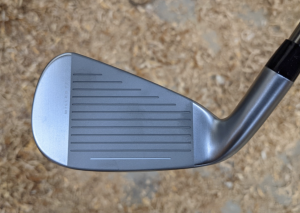
Forged from high-strength 17-4 stainless steel, the thin face has a longer and deeper internal channel to increase compliance—a fancy physics term for an object’s ability to flex, which in turn increases the ball speed retention around the face to create a larger area of maximum energy transfer. The forged PWRShell faces are found in the 4-7 irons, while the 8-SW use a one-piece construction. NOTE: The term “area of maximum energy return” is a way to define the face area where a player is going to see great results versus the traditional “sweet spot.” Even as irons, and clubs in general, get more forgiving, there is still only a tiny single defined sweet spot.
The other component of the face puzzle is control, and that means talking grooves. The variable-length RadSpeed irons feature progressive groove shapes—V grooves in the longer irons for reduced spin, and U grooves in the shorter irons (8-SW) for added spin and control.
Carbon Fiber Topline
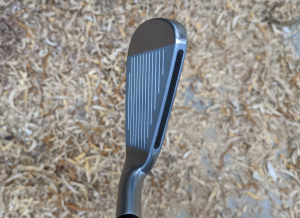
Just like the previous SpeedsZone irons, the RadSpeed irons have a unique carbon fiber topline that saves two grams to be moved around the head—remember, every gram counts! The insert has been tweaked to an all-black cosmetic to offer a slimmer and more compact look from address.
One Length is growing
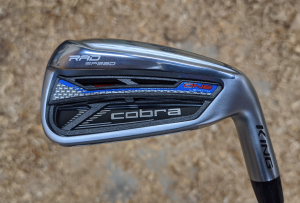
We can’t talk Cobra irons without talking One Length. And yes, the RadSpeed irons are offered in a one-length package to promote repeatability at address for improved consistency shot after shot. The stock configuration is built around matching lengths of 37.5” (custom single lengths are available), along with consistent head weights and swing weights in every iron.

There are some progressive aspects of the RadSpeed One Length irons and that is their lie angles and shaft weighting to promote higher launch in the lower-lofted clubs and more control in the scoring clubs.

Sole comparison: RadSpeed variable-length (left ) One Length (right)
Last but not least, when you look at the soles of the RadSpeed One Length irons, you will notice the soles get wider from the 6-iron up to the 4-iron. Once again, this progression is thanks to some well thought-out engineering.
The wider soles create a lower and deeper CG to make it easier for golfers to increase peak height and land/descent angle to help hold greens from longer distances and improve gapping.
With constantly improving fitting techniques, alongside evolving technology, you can expect to see more golfers either switch to or take up the game with single-length clubs. Cobra is leading the way in the consumer market, and thanks to greater education, at this point One Length makes up over 30 percent of their irons sales with it expecting to continue to grow. When you consider how many new golfers have been created in 2020, and how One Length clubs help create greater consistency, it should be no surprise to see more of these sets in golf bags moving into 2021.
Price, specs, and availability
The Cobra RadSpeed irons, along with the entire RadSpeed product line, will be available at retail and online starting January 29, 2021.
The RadSpeed variable length irons will be available in a Nickel Chrome finish and come stock 5-gap wedge (7 piece set) in both right and left-handed or 4-PW in right hand only for $899. There is also a graphite combo set which includes a 5 hybrid and goes 6 iron to gap wedge in right hand only for $999.
The stock shafts are KBS Tour 90 in steel and UST Recoil ESX 460 in graphite, along with Lamkin Crossline Connect black grips.
There is also a black PVD finish option available through custom order only for an additional $100 upcharge.
The Cobra RadSpeed ONE Length irons also come in a Nickel Chrome finish and can be differentiated by their black, silver, and blue medallion. They will come stock in a 5-gap wedge (7 piece set) in both right and left-handed for $899, with a graphite combo set which includes 5 hybrid, 6 iron to gap wedge for $999 right-handed.
The ONE Length stock steel shafts are progressive and are made up of KBS Tour 80 (4-6i), KBS Tour 90 (7-9i), and Tour 120 (PW, SW). The graphite stock shafts are also progressive with UST Recoil ESX 460 (4-9i) and the UST Recoil ESX 480 (PW, SW). The One length grips are the Lamkin Crossline Connect in blue.
Lofts

The 2021 Cobra RadSpeed irons, along with the entire RadSpeed line, will continue to employ Cobra Connect powered by Arccos. Every club comes with an embedded electronic sensor in the grip to automatically record the distance and accuracy of every shot so golfers can track their improvements round-to-round.
For more information, visit www.cobragolf.com.


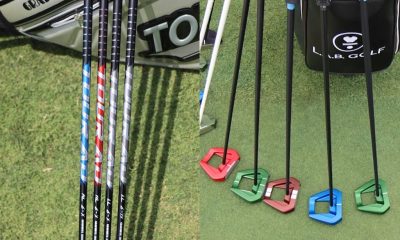




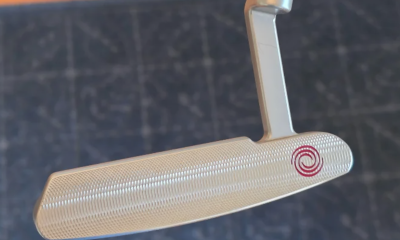


While many were slogging their way through 36 holes of U.S. Open qualifying on Monday in Dallas, those who were on-site at The CJ Cup Byron Nelson were welcomed with two new product releases on the PGA Tour: Graphite Design’s new Tour AD shafts and a full lineup of L.A.B. Golf’s VZN.1i putters, which were seen for the first time at the PGA Championship.
Starting with Graphite Design’s new Tour AD shaft, our Tour Photographer, Greg Moore, captured three versions of the shaft’s new look: LL Silver, ML Blue, and HL Red.
According to Graphite Design’s Tour Promotions Manager, Simon Wood, each shaft features a brand-new construction and an updated, modern Tour AD logo and stripes. We’ll wait to hear more on the construction, but from the eye, each color determines a launch characteristic of the shaft.
The LL Silver seems to be the lowest-launching, with ML Red a mid-launch option, and the Red HL the highest of the three. With the shafts out on the PGA Tour, they likely sit on the lower end of the spin range. On display were both the X and Tour X stiffness levels.

Of those on-site at TPC Craig Ranch, Adam Svensson, Keita Nakajima, Neal Shipley, and Max McGreevy will all likely test the shaft according to Wood.
After spotting the first L.A.B. Golf VZN.1i in the wild, being used by Adrien Saddier at the PGA Championship, the zero-torque putter company displayed plenty of color options at the Byron Nelson.

The VZN.1 is the latest L.A.B. putter to be spotted, and the company returns to a center-shafted style, after the traditional blade-style LINK.2.1 and LINK.2.2 were released on Tour, which feature a heel-shaft.
More importantly, though, L.A.B. let forum members know that the VZN.1i can be used to scoop or pick up a golf ball.

Driver: Titleist GT3 (10 degrees, A1 SureFit setting)
Shaft: Mitsubishi Diamana D Limited 60 TX


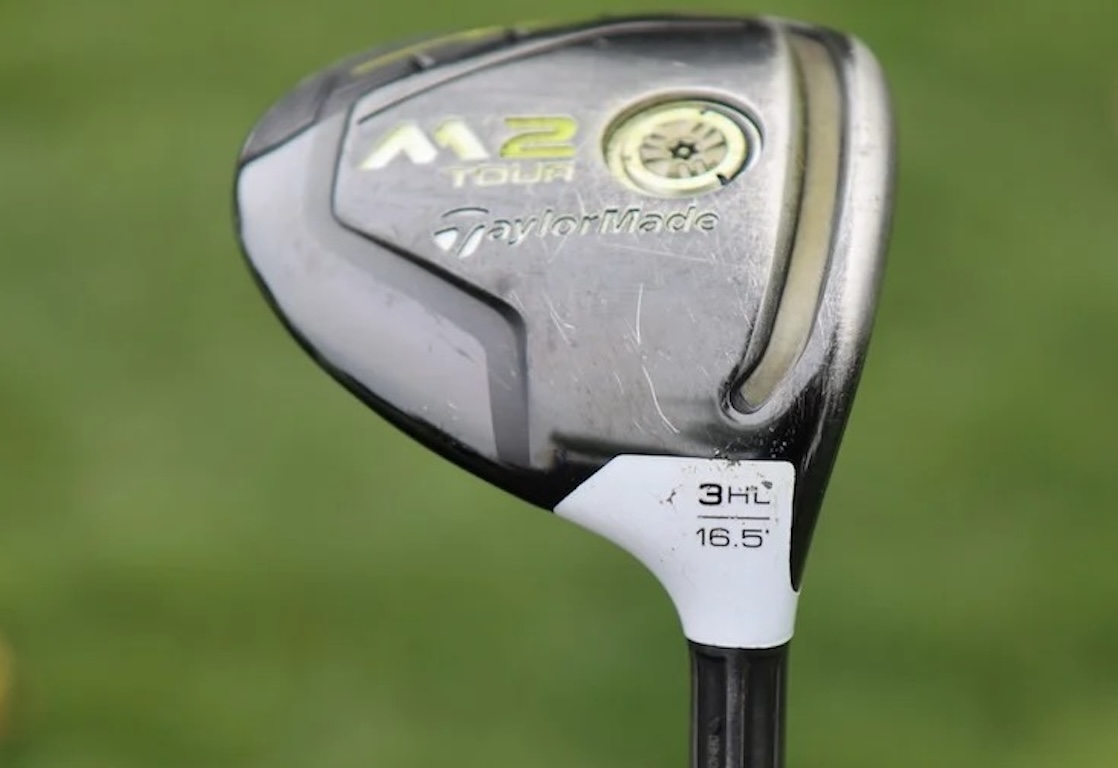
3-wood: TaylorMade M2 Tour HL (16.5 degrees)
Shaft: Mitsubishi Diamana D+ 80 TX

Irons: Nike Vapor Pro (3), Srixon ZX7 Mk II (4-9)
Shaft: Fujikura Pro Tour Spec 95 X (3), True Temper Dynamic Gold Tour Issue X100 (4-9)


Wedges: Titleist Vokey Design SM11 (48-10F, 52-12F, 56-10S), WedgeWorks (60-08)
Shaft: True Temper Dynamic Gold Tour Issue X100

Putter: TaylorMade Spider Tour V

Grips: Golf Pride Tour Velvet Cord (midsize)
Ball: Titleist Pro V1x
Check out more in-hand photos of Brooks Koepka’s clubs here.


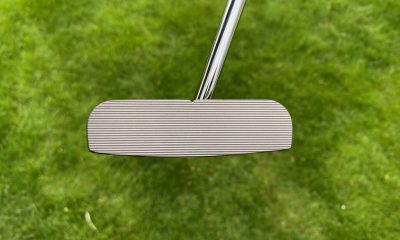
Tour Edge Golf has today introduced the all-new Zero T Putter Series, a four-model lineup engineered with Zero Torque technology to promote a square face at impact and improve start-line consistency.

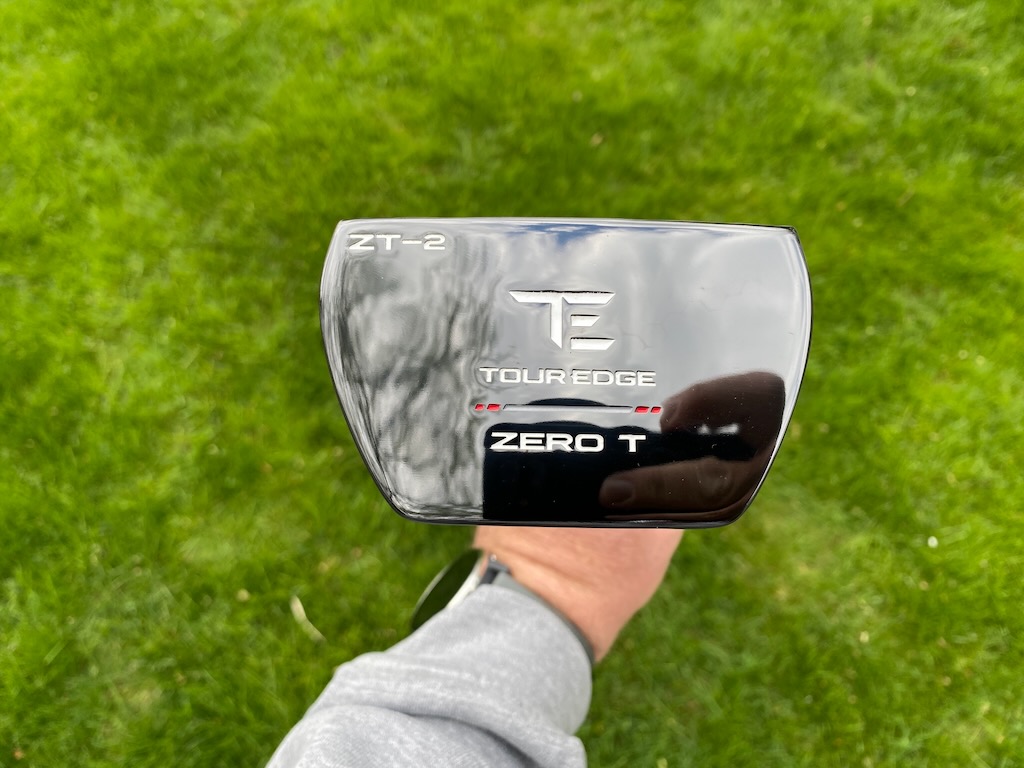
ZT-2
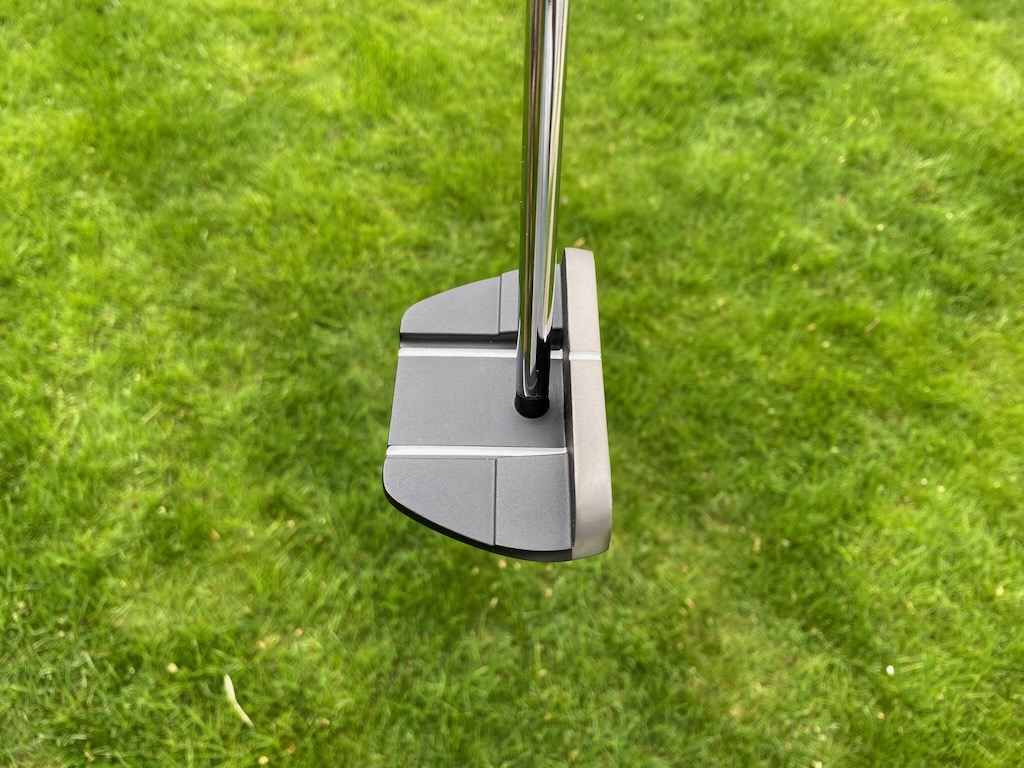
Each model aligns the shaft axis through the putter’s center of gravity to reduce torque and resist face rotation throughout the stroke. High-MOI head designs aim to further enhance stability, limiting twisting at impact and improving forgiveness and consistency.

“Returning the putter face square to the target line at impact is critical for putting performance. The Zero T design stabilizes the face through the stroke to support that outcome for golfers of all skill levels.” – Tour Edge CEO David Glod
The series incorporates precision-milled faces with horizontal milling to produce consistent contact and predictable roll. ZT-1, ZT-2, and ZT-3 are constructed from one-piece cast 304 stainless-steel, while ZT-4 features an aluminum body with a TPU insert for a softer feel in a larger mallet profile. Alignment systems vary by model to accommodate different visual preferences while supporting consistency aim and setup.
Model Overview
- ZT-1: compact mallet with a 3D sloped alignment bridge for target-line guidance. RH only.
- ZT-2: Mallet with contrast topline alignment linking strike point to shaft axis. RH and LH available.
- ZT-3: Squared frame design to frame the ball and extend the target line visually. RH only.
- ZT-4: Highest MOI-mallet with alignment stripe and rear visual aide for maximum forgiveness. RH and LH available.
All models are offered in 34”, 35” and 38” lengths. The 34” and 35” options include a 10.4” oversized-pistol grip, while the 38” model features a 16” extended oversized grip for added stability.

The Zero T Putter Series will be available at authorized Tour Edge golf shops globally beginning May 22, 2026, with each model retailing for $199.99.

RBC Heritage Tour Report: More minis, course-specific setups, Spider & GTS launches

Justin Rose WITB 2026 (April): Full WITB breakdown with new McLaren irons

What’s the story behind Webb Simpson’s custom-stamped irons?

Cadillac Championship Tour Report: Spieth’s sizable changes, McLaren Golf launches, and more

The 24 players who can win the Masters

Rory McIlroy’s winning WITB: 2026 Masters

Kristoffer Reitan’s winning WITB: 2026 Truist Championship

J.J. Spaun’s winning WITB: 2026 Valero Texas Open

Cameron Young’s winning WITB: 2026 Cadillac Championship

Aaron Rai’s winning WITB: 2026 PGA Championship


Brooks Koepka WITB 2026 (May)
Driver: Titleist GT3 (10 degrees, A1 SureFit setting) Shaft: Mitsubishi Diamana D Limited 60 TX 3-wood: TaylorMade M2 Tour HL...

Patrick Reed WITB 2026 (May)
Driver: Titleist GT3 (9 degrees) Buy here. Shaft: Aldila Rogue Silver 130 M.S.I. 70 TX 3-wood: TaylorMade Qi35 (15 degrees)...
Aaron Rai’s winning WITB: 2026 PGA Championship
Driver: TaylorMade M6 (9 degrees) Shaft: Aldilda Synergy Blue 70 TX 3-wood: TaylorMade Qi10 (15 degrees) Shaft: Fujikura Ventus Blue...

Michael Block WITB 2026 (May)
Driver: TaylorMade Qi4D (9 degrees) Shaft: Fujikura Ventus Black VeloCore+ 5 X 3-wood: TaylorMade Qi4D (15 degrees @14.25) Shaft: Mitsubishi...
-
 Equipment2 weeks ago
What’s the story behind Webb Simpson’s custom-stamped irons?
-
 Equipment3 weeks ago
Cadillac Championship Tour Report: Spieth’s sizable changes, McLaren Golf launches, and more
-
 Whats in the Bag1 week ago
Kristoffer Reitan’s winning WITB: 2026 Truist Championship
-
 Whats in the Bag2 weeks ago
Cameron Young’s winning WITB: 2026 Cadillac Championship
-
Whats in the Bag2 days ago
Aaron Rai’s winning WITB: 2026 PGA Championship
-

 Tour Photo Galleries1 week ago
Photos from the 2026 PGA Championship
-

 Equipment3 weeks ago
What GolfWRXers are saying about McLaren Golf’s new irons
-
 News2 weeks ago
Lead Tape Report: Finau, Simpson’s slabs at the Truist Championship


retired04
Apr 21, 2021 at 11:46 am
Am confused-If you put “V” grooves on the mid irons reducing spin, doesn’t that impact your ability to get the ball to stop on the green?
Pingback: Best irons in golf of 2021: Most technology packed – GolfWRX
Mower
Dec 9, 2020 at 7:15 pm
Oh yeah! Chunky Monkey city!
Mike
Dec 8, 2020 at 5:58 pm
And the lofts just keep getting stronger & stronger………..
Why bother putting #’s on the club, just put the loft #. Then we could have meaningful comparisons.
IG
Dec 8, 2020 at 3:48 pm
21 degree 5 iron and 42,5 PW!
Cobra will need to bring a gap wedge out to fit the gap between a PW and a normal gap wedge.
Iain Gold
Dec 8, 2020 at 3:46 pm
21 degree 5 iron and 42,5 PW!
Cobra will need to bring a gap wedge out to fit the gap between a PW and a normal gap wedge.
Gerry T
Dec 15, 2023 at 2:27 am
Ian, you can also solve this by replacing the pw with a 44 degree PW. The loft difference of 7 degrees will dictate whether you need a weak 9 iron (an F9 comes to mind) or to play the stronger PW. With practice you’re sure to find what works.
Juan Won
Dec 8, 2020 at 3:01 pm
Love the look of the RAD iron line. The shaft options are garbage though. I do like the KBS line minus the Tour. I’ve tested the entire line up. I have the Recoil Proto F5 in my back up set and they are awesome but the retail version is mediocre.
Juanny
Dec 8, 2020 at 11:05 am
I just want that Lefty 4 iron at 19* for a DI. Using an F7 4 iron at 20* and it’s outstanding off the tee.
Zewi
Dec 9, 2020 at 4:53 pm
Surely you can buy it as a single iron. It’ll cost you, though…