
Opinion & Analysis
Nike’s exit from the golf equipment business: How will it impact the college game?

Back in early August, Nike threw the golfing world for a loop by announcing its exit from the golf equipment business. After years of disappointing sales and growth, the company revealed that it will “transition out of equipment — including clubs, balls, and bags.”
Once the news broke, a wave of questions arose as many in the industry were left with uncertain futures. Much of the initial focus converged on the company’s existing professional endorsement contracts. Nike’s PGA Tour players, ranging from up-and-comers like Patrick Rodgers and Abraham Ancer to big name stars like Rory McIlroy and Tiger Woods, now had to carefully consider their next step.
The decision not only affected the professional ranks, but anyone associated with Nike Golf. Retailers, distributors, employees, sales representatives and teaching professionals all were left searching for answers. Nike’s sports marketing reach also extends to collegiate athletics; as such, the sponsorships of many college golf programs was suddenly up in the air.
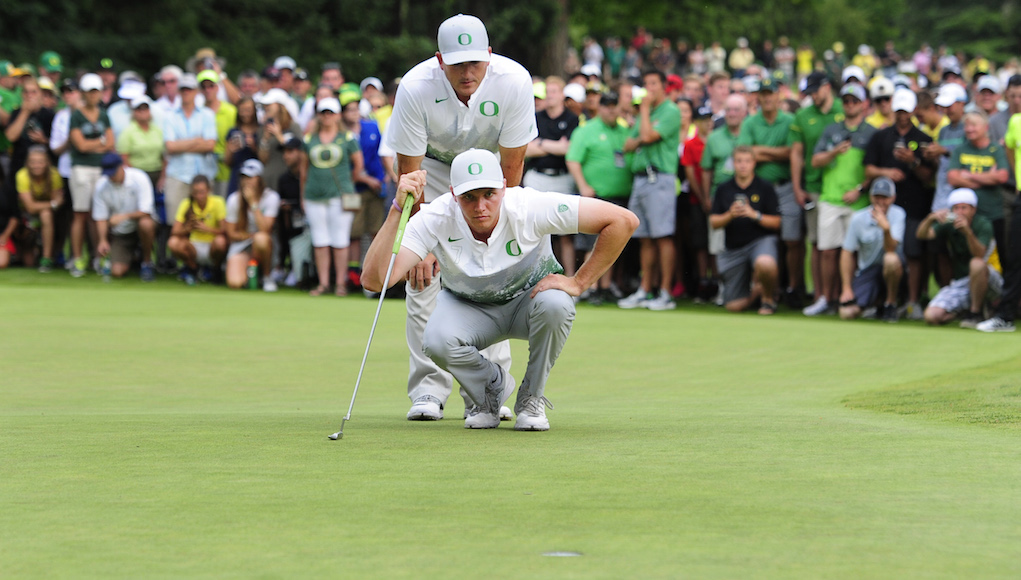
Over the years, Nike has supported a large contingent of college golf’s top programs, and by extension many elite collegiate players. This past season, Nike schools took top honors in both the men’s and women’s NCAA golf championships with the respective victories of Oregon and Washington. Further, the Nike Collegiate Invitational, held at historic Colonial Country Club in Fort Worth back in October, brought together a strong field (10 of the top-20 ranked men’s teams) in a Nike-only affair.
Meanwhile, coaches at these schools have spent much of the fall season formulating a post-fallout strategy. If they haven’t already, these programs must now switch sponsors and begin the process of implementing significant changes in their equipment.
As with the tour players, many of whom were “shocked” by the news, Nike’s decision caught everybody in the college ranks off guard. Casey Martin, the men’s golf head coach at Oregon, noted that he was “definitely surprised,” a sentiment shared by his colleague at Stanford, Conrad Ray. This reaction included the players as well. Maverick McNealy, the current No. 1 ranked amateur in the world and a senior on the Stanford team, got the news from his brother and “thought he was playing some sort of joke.” The lack of advanced notice, however, can be explained by Nike’s status as a publicly traded company. Thus, they were required to withhold any classified information related to the company as a going concern.
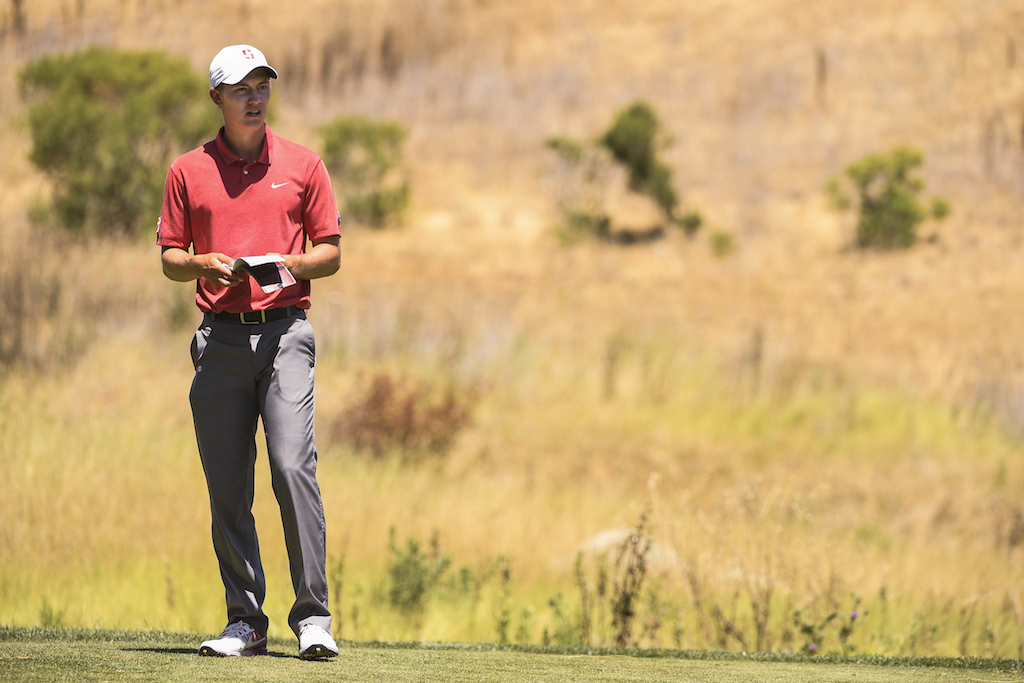
Maverick McNealy, a senior at Stanford, is the No. 1-ranked amateur golfer in the world.
While Nike’s departure from the equipment business has been swift, it was also predictable to a certain degree. “Looking back, I could see a few signs,” Martin said. For the last two years, annual sales in golf (including footwear and apparel) were either flat or down. Nike also held only a fraction of the market share in club sales. In addition, a few days before making the big announcement, the company dropped prices substantially on its 2016 line of clubs. Coach Ray said the decision “makes sense when learning about the economics and business side.” Still, for those impacted by the decision, there remains a trace of disappointment.
“I was really excited about how good the equipment was getting,” McNealy said. “I had just put the last few pieces (of equipment) in play.”
Ray was also impressed with the newer line of products, saying Nike was “making good headway with R&D.” But with Nike’s departure and the fall season winding down, the next few months will serve as a great opportunity for players to begin switching equipment.
McNealy, who played Nike equipment exclusively beforehand, said that the only thing he’s switched back was his golf ball, “because to me everything should be fitted around the golf ball that I play.” He also revealed plans to use this upcoming offseason to continue implementing equipment changes. Coach Martin recognized that there will definitely be an adjustment period for his players, but agreed that “now is a great time to adjust.” He believes most of the challenges will come with getting the proper fit for the driver.
Oregon recently signed with Parsons Xtreme Golf (PXG), an up-and-coming equipment manufacturer. Martin mentioned that a few of his players already put some of PXG’s clubs into play when they competed at the East Lake Cup in Atlanta. In the search for a new sponsor, Martin said he was “looking for a quality product that would serve the guys.” He said he feels fortunate to have built a relationship with PXG, which is one of many equipment companies that stand to benefit greatly from Nike’s departure. Indeed, Bob Philion, president and CEO of Cobra Puma Golf, humorously said that his company is “poised to pounce” on the newfound opportunities.
On the other hand, the Stanford men’s golf program will align with Callaway, another likely beneficiary of the shake-up in the industry. Ray said that the decision was “based on service and support for the program” and identified Callaway’s proven track record and its full product line as key factors.
While a good number of players are already experimenting with new equipment, Coach Ray emphasized the importance of “being methodical in testing,” as it can be “dangerous to make a full-scale switch.” He advised changing one thing at a time, which is exactly the approach that his star player McNealy is planning to follow.
“I want to go piece-by-piece instead of a wholesale change,” McNealy said, “so that I can really eliminate variables…and have a comparable testing through the bag.”
Certainly these next few months will provide some much-needed time for players to hone the different feel of their new equipment.
Despite dropping its underperforming golf equipment business, Nike vows that it will remain in the golf business. “We’re committed to being the undisputed leader in footwear and apparel” said Trevor Edwards, Nike Brand president. Certainly, this evolved strategy represents a step in the right direction. Ray believes that Nike “needed to re-trench and focus on their apparel and shoe business,” and stressed that the company will “not be pulling back budget-wise.” Indeed, there are indications that Nike will look to expand its athlete roster, as the announcement disclosed plans to “partner with more of the world’s best golfers.”
Both Ray and Martin are confident that their programs will maintain a strong relationship with Nike. Martin pointed to the deep ties that Oregon and Nike have developed over the years, and said that he continues to “keep in touch with the reps on a weekly basis.” Both schools will continue to be outfitted in Nike apparel and shoes.
As college teams continue to work out their short-term response during this time of change, the lasting impact remains uncertain. The golf equipment industry will continue to evolve and deliver innovative products, and Nike appears to be taking a more practical approach to its investment in golf.
Still, many ball and club R&D employees have been laid off, and certain Nike Golf facilities, such as The Oven and The Clubhouse, are likely to be shut down. Even among college golf programs, the enduring effects are hard to grasp at this time. Coach Ray suspects that the changes “won’t leave a huge mark” on the Stanford program, but also recognized that it “depends on the perspective you take.” Coach Martin acknowledged that the news came as “a pretty big hit” due to his school’s fondness for Nike.
Speaking in the immediate aftermath of the news release, one Nike staff player told Golf Digest: “I really love their equipment, but I’ll tell you this: In all the pro-ams I’ve played, I’ve never once seen one of my partners using a Nike club.” Ultimately, the real problem for Nike was as simple as that. Now, in the wake of their departure, the golfing world is obliged to fill in the void, for better or for worse.


Club Junkie
Building my 2026 gamer WITB: Ranking the contenders and new putter projects – Club Junkie Podcast

The annual What’s In The Bag build is underway, and on this episode of Club Junkie, Brian breaks down the clubs currently leading the race for a spot in his 2026 gamer setup. From drivers and fairway woods to irons, wedges, and shafts, he ranks the equipment that’s performing best and explains what’s separating the front runners from the rest of the field.
Brian also heads into the workshop to discuss several putter projects currently on the bench. From head options and shaft choices to build ideas and testing plans, he shares what he’s working on and which putters could become serious contenders for the bag this season.
If you’re a gear junkie who loves equipment testing, club building, and the never-ending pursuit of the perfect setup, this episode is for you.
Follow Club Junkie:
Instagram: @clubjunkiepod
TikTok: @clubjunkiepod
Threads: @clubjunkiepod
X: @ClubJunkiePod
Club Junkie
Tour Edge Exotics mini driver review + TaylorMade Spider ZT Max first look – Club Junkie

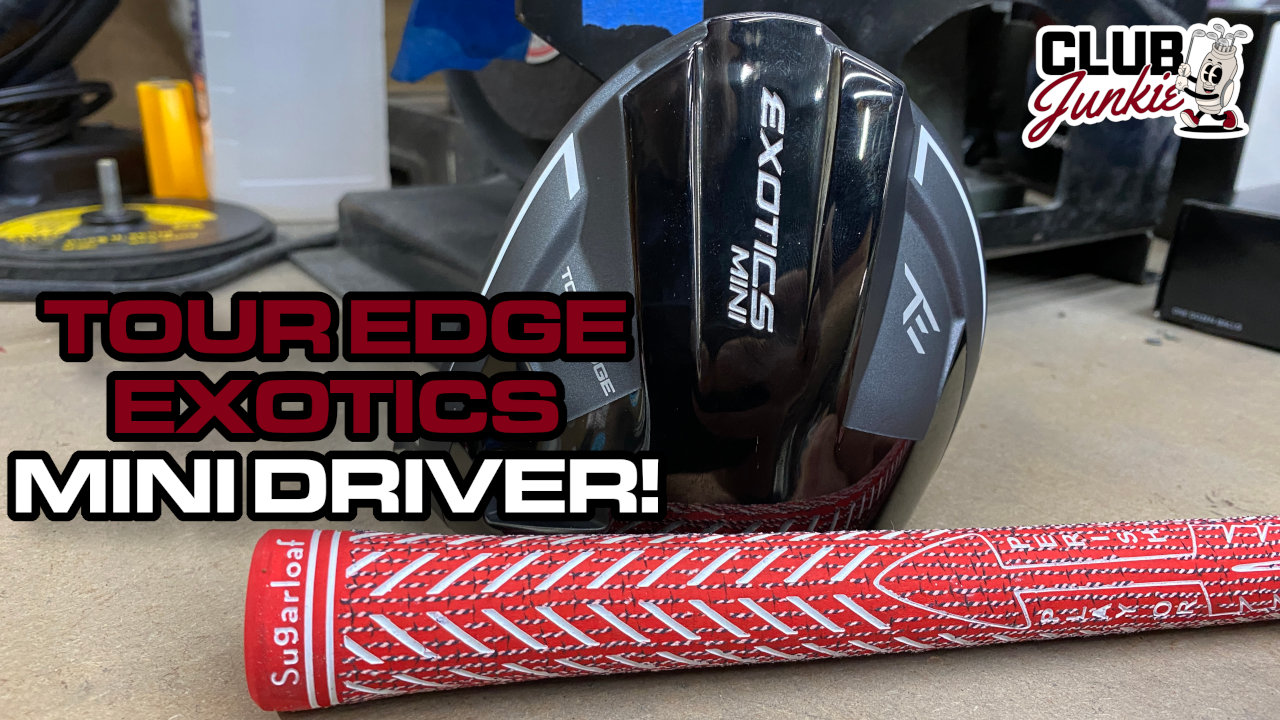
On this episode of Club Junkie, I put the new Tour Edge Exotics Mini Driver to the test and break down the performance, forgiveness, distance, and where it fits compared to a traditional driver or strong fairway wood. If you have been curious about adding a mini driver to the bag, this one is worth a look.
I also dive into the new TaylorMade Spider ZT Max putter that was recently spotted and discuss the growing zero torque putter trend. Plus, there is a closer look at the new Project X Titan Yellow shaft showing up on the PGA Tour and what makes it different from other profiles currently out there.
Opinion & Analysis
AVL: We’re talking about practice! My best tips for taking your game to the course

With the beginning of June on the horizon and courses rounding into peak condition for the season, it’s time to hone the finer skills that often get rusty over the winter. More sunlight also means more time to get out on the course and work on your game.
Whether it’s the practice green or the driving range, there’s always something to improve—whether you’re enjoying the fresh air or preparing for a weekend game or tournament. You can work on drills or freestyle around the green, and friendly competition is a great way to sharpen your skills.
While there are endless ways to get better at golf, I’m going to focus on practicing around the green. Let’s take a look at a few things to keep in mind as we head into the summer months.
Drills
From the driving range to the practice green, it’s important to incorporate drills into your routine. Years ago, I spent a weekend working on my short game with James Sieckmann. He recommended doing drill work for 5–10 minutes, then returning to your main practice.
This way, you create a balance between structured drills and real-world scenarios, so you’re not confined to “perfect” situations. For example, hitting the same three-foot putt over and over is good for repetition, but after a while, it becomes less interactive for your brain.
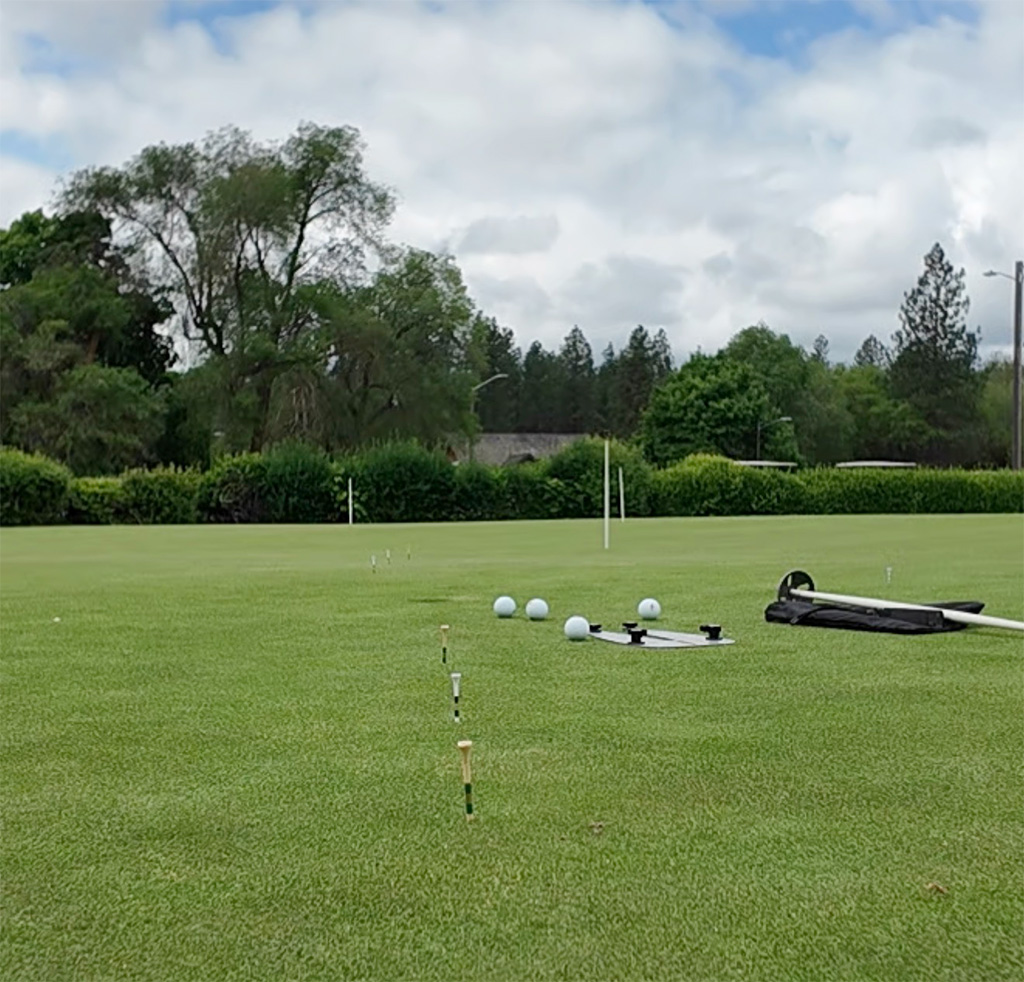
My approach is to use a putting trainer with a narrow gate for the ball to pass through, or simply place tees just outside the width of the ball. I’ll hit a series of four putts through the gate for three sets. Then, from a similar distance, I’ll hit four putts without the training aid and repeat that sequence three times.
Next, I’ll hit a number of 15–25 foot putts in a random fashion, then circle back to repeat the short putt drills with and without the training aid.
This breaks up the rhythm of hitting short putts with the training aid. When you hit the same short putts over and over, it’s easy to get into a groove—which is great for the drill, but not reflective of actual course play. While finding a rhythm is fundamental for drills, I like to introduce variation with longer putts to keep things realistic.
Game Mode
Once you’ve established a foundation with drills, it’s time to simulate on-course scenarios. This is where a few practice games come in handy.
One that I’ve been enjoying lately involves putting 10- to 15-footers with two balls. If I make the putt, great! If I miss, I pull the missed ball back a putter length. Suddenly, that little tap-in becomes a nerve-wracking three-footer—at least at first. As you get better at this game, those three- and five-footers become much more comfortable and routine.
It may sound cliché, but each shot is just what it is—it’s how we react that makes the difference. I like this game because it blends the pressure of on-course putting with the consequence of leaving yourself a much longer putt than usual.
Another game I like is one I recently learned from Brad Faxon. Place three tees in a line at four different locations around the hole: one at 3 feet, one at 6 feet, and one at 8 feet. The 3- and 6-foot putts count as par, and the 8-footer is for birdie.
This game keeps you focused on scoring and helps you get into a competitive mindset. You can even think about this putting game while you’re on the course. I just started playing it, and last week I couldn’t get better than two under par.
Competition
Competition during practice is when drills and games come to life, and you start to see results. For me, nothing beats a putting contest with a friend or two. In the right setting, these contests can become talking points for the whole season.
Match play, a game of 21, or simply seeing who can make the most one-putts (with a small prize on the line) are all great ways to simulate real on-course pressure. Recently, I played in a putting contest where one competitor made back-to-back 30- and 50-foot putts. As they say, expect your opponent to make every putt—and he nearly did. That’s impressive, and it’s something you see on the course, too: you have to stay committed to your game plan, no matter what.
When it comes to practice, it’s important to blend feedback from recent rounds with the fundamentals you want to reinforce. Drills, games, and competition—from the driving range to the putting green—form the backbone of skills you’ll rely on during actual rounds.
Finding the right balance is something we’re all working on, one practice session at a time. With the beginning of June on the horizon and courses rounding into peak condition for the season, it’s time to hone the finer skills that often get rusty over the winter. More sunlight also means more time to get out on the course and work on your game. Whether it’s the practice green or the driving range, there’s always something to improve—whether you’re enjoying the fresh air or preparing for a weekend game or tournament. You can work on drills or freestyle around the green, and friendly competition is a great way to sharpen your skills. While there are endless ways to get better at golf, I’m going to focus on practicing around the green. Let’s take a look at a few things to keep in mind as we head into the summer months.
Drills
From the driving range to the practice green, it’s important to incorporate drills into your routine. Years ago, I spent a weekend working on my short game with James Sieckmann. He recommended doing drill work for 5–10 minutes, then returning to your main practice. This way, you create a balance between structured drills and real-world scenarios, so you’re not confined to “perfect” situations. For example, hitting the same three-foot putt over and over is good for repetition, but after a while, it becomes less interactive for your brain.
My approach is to use a putting trainer with a narrow gate for the ball to pass through, or simply place tees just outside the width of the ball. I’ll hit a series of four putts through the gate for three sets. Then, from a similar distance, I’ll hit four putts without the training aid and repeat that sequence three times. Next, I’ll hit a number of 15–25 foot putts in a random fashion, then circle back to repeat the short putt drills with and without the training aid.
This breaks up the rhythm of hitting short putts with the training aid. When you hit the same short putts over and over, it’s easy to get into a groove—which is great for the drill, but not reflective of actual course play. While finding a rhythm is fundamental for drills, I like to introduce variation with longer putts to keep things realistic.
Game Mode
Once you’ve established a foundation with drills, it’s time to simulate on-course scenarios. This is where a few practice games come in handy. One that I’ve been enjoying lately involves putting 10- to 15-footers with two balls. If I make the putt, great! If I miss, I pull the missed ball back a putter length.
Suddenly, that little tap-in becomes a nerve-wracking three-footer—at least at first. As you get better at this game, those three- and five-footers become much more comfortable and routine. It may sound cliché, but each shot is just what it is—it’s how we react that makes the difference. I like this game because it blends the pressure of on-course putting with the consequence of leaving yourself a much longer putt than usual.
Another game I like is one I recently learned from Brad Faxon. Place three tees in a line at four different locations around the hole: one at 3 feet, one at 6 feet, and one at 8 feet. The 3- and 6-foot putts count as par, and the 8-footer is for birdie.
This game keeps you focused on scoring and helps you get into a competitive mindset. You can even think about this putting game while you’re on the course. I just started playing it, and last week I couldn’t get better than two under par.
Competition
Competition during practice is when drills and games come to life, and you start to see results. For me, nothing beats a putting contest with a friend or two. In the right setting, these contests can become talking points for the whole season. Match play, a game of 21, or simply seeing who can make the most one-putts (with a small prize on the line) are all great ways to simulate real on-course pressure. Recently, I played in a putting contest where one competitor made back-to-back 30- and 50-foot putts. As they say, expect your opponent to make every putt—and he nearly did. That’s impressive, and it’s something you see on the course, too: you have to stay committed to your game plan, no matter what.
When it comes to practice, it’s important to blend feedback from recent rounds with the fundamentals you want to reinforce. Drills, games, and competition—from the driving range to the putting green—form the backbone of skills you’ll rely on during actual rounds. Finding the right balance is something we’re all working on, one practice session at a time.

Justin Rose WITB 2026 (April): Full WITB breakdown with new McLaren irons

What’s the story behind Webb Simpson’s custom-stamped irons?

Cadillac Championship Tour Report: Spieth’s sizable changes, McLaren Golf launches, and more

Russell Henley’s winning WITB: 2026 Charles Schwab Challenge

Kristoffer Reitan’s winning WITB: 2026 Truist Championship

Cameron Young’s winning WITB: 2026 Cadillac Championship

Aaron Rai’s winning WITB: 2026 PGA Championship

Details on Jason Day’s latest prototype Avoda iron setup

Nelly Korda WITB 2026 (April)

Justin Rose on the switch to McLaren Golf, learnings from previous equipment moves


Sungjae Im WITB 2026 (June)
Sungjae Im had >14 clubs in his bag when photographed prior to the Memorial Tournament. Driver: Titleist TSi2 (8 degrees, B1...

Lucas Glover WITB 2026 (June)
Lucas Glover had >14 clubs in his bag when photographed prior to the Memorial Tournament. Driver: Titleist GTS2 (10 degrees, B2 SureFit...

Chris Gotterup WITB 2026 (June)
Chris Gotterup had >14 clubs in his bag when photographed prior to the Memorial Tournament. Drivers: TaylorMade Qi4D (8 degrees), Ping...

Jason Day WITB 2026 (June)
Jason Day had >14 clubs in his bag when photographed prior to the Memorial Tournament. Driver: Ping G430 LST (10.5 degrees...
-
 News4 days ago
Russell Henley’s winning WITB: 2026 Charles Schwab Challenge
-
 Whats in the Bag3 weeks ago
Aaron Rai’s winning WITB: 2026 PGA Championship
-
Equipment1 day ago
Details on Jason Day’s latest prototype Avoda iron setup
-
 Tour Photo Galleries2 weeks ago
Photos from the 2026 CJ Cup Byron Nelson
-

 Equipment2 weeks ago
CJ Cup Byron Nelson Tour Report: Koepka and Kim’s newest putters finally get hot
-
 News6 days ago
Charles Schwab Challenge Tour Report: MacIntyre, Åberg and Spaun all switch putters, TaylorMade launches new Spider
-
 Equipment1 week ago
Details on J.J. Spaun’s surprise putter switch
-
 Popular Photo Galleries1 week ago
Photos from the 2026 Charles Schwab Challenge


Darryl
Dec 16, 2016 at 8:15 am
Nike equipment was pretty decent, they made a couple of sets of irons over the years that will be spoken about in the same conversations as some of the best contemporary products from Mizuno, Titleist, Callaway, Taylormade or Ping. The VRS line of drivers and fairway woods was as good as anything around at the time even if their wedges and putters never quite hit the same highs. Their ball was as good as any of the alternatives. Their main problem was price, they pitched their gear too high too soon so they didn’t get a good enough market share early on, so no amateurs really became what you would call “brand loyalists”. What are you going to do when you are buying your $400 driver, buy a proven name like Taylormade or Titleist, or go with a new player who have no track record in the game? That was their problem when they first came out.
Sam
Nov 28, 2016 at 12:33 pm
WOW that’s crazy to hear that PXG is getting into the college levels!! This is great for them to get more exposure, but also do some more testing on their products. I wonder how many schools they will sign next year and in the next few years.
M Smile
Nov 25, 2016 at 2:45 pm
Even if i am a hacker I like to look great in Nike clothing!
Tom
Nov 24, 2016 at 2:39 pm
Oregon goin with PXG. HA!
Boobsy McKiss
Nov 26, 2016 at 1:26 am
I agree that is quite funny. From one billionaire to another I suppose.
Tom
Nov 24, 2016 at 1:55 pm
good on ya Smizz
RAT
Nov 24, 2016 at 12:54 pm
They are and have always been a shoe and clothing business .Golf clubs and balls were not their expertise and it showed that’s why they aren’t in that business and I give them credit for seeing that and making the change .
Dj
Nov 24, 2016 at 11:23 am
Interesting article. It’s funny that Nike gets ripped here but staffers and d1 athletes loved the gear and have great things to say about it.
TR1PTIK
Nov 24, 2016 at 12:56 pm
I’ve been playing a vapor pro driver, flex 3 wood, and flex hybrid since June and really enjoy them. Still contemplating if I want to scoop up some vapor pro irons while they’re still available. I don’t think I could ever do their wedges or putters though. Just not for me.
Dj
Nov 24, 2016 at 9:38 pm
Think you’d be surprised by both. But hey not everything is for everyone
Brian
Nov 24, 2016 at 9:16 pm
I personally don’t care to hear the opinions of people that are paid to play or given free gear from an OEM.
Dj
Nov 24, 2016 at 9:38 pm
College players can play whatever they want.
Boobsy McKiss
Nov 26, 2016 at 1:29 am
I’m curious what college players can get from manufacturers, when a football player can’t take $5 from someone for an autograph without destroying the reputation of the entire football program.
BC
Nov 30, 2016 at 3:28 pm
There was an article about this in Golf Digest a few months ago. From what I remember the schools are given donations of equipment that they can in turn “gift” to players.
The article mentioned the same thing happening with elite juniors.
BC
Nov 30, 2016 at 3:35 pm
Heres the article: http://www.golfdigest.com/story/getting-free-stuff