
Opinion & Analysis
Forgiving irons? A perspective you might not like

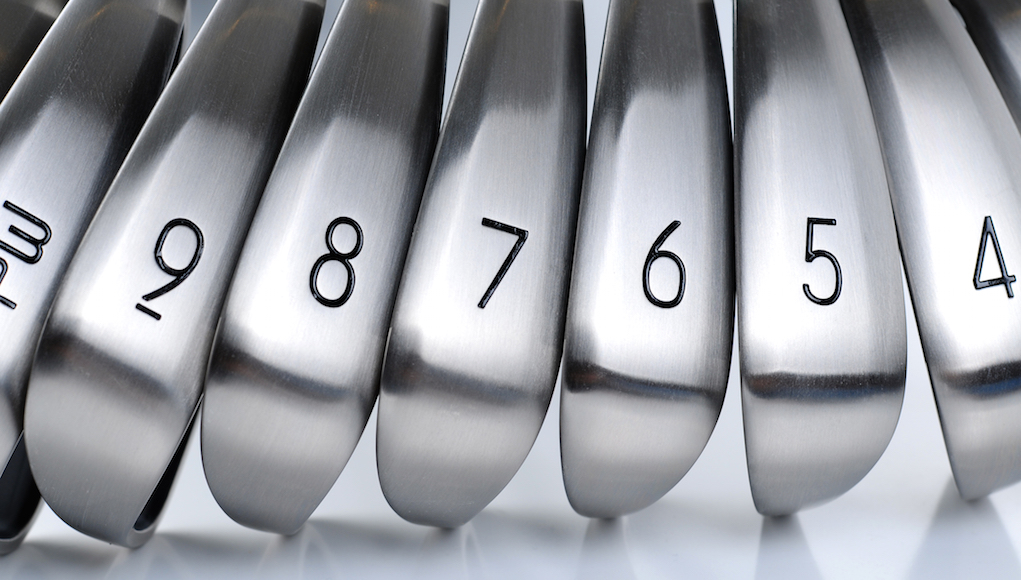
Club manufacturers have glommed onto the term “forgiving” to coax golfers to their products, and I think it’s done more to detract beginners from learning the game properly and eventually dropping out. In the process, people try the game thinking their forgiving clubs will essentially do it all for them, almost by magic.
Back in the day, blade irons and 200-cubic-centimeter persimmon drivers were the standard, with sweet spots about the size of a pencil eraser. You had to learn to hit the ball in the absolute center of the club face — on the screws, as we used to say — or face the consequences of contact that felt more like mashed potatoes (maybe that’s where that stupid crowd reaction came from). Bobby Jones purportedly had to change the screws on his drivers (yes, they were constructed with four screws holding a plastic plate that covered the sweet spot) four times during the course of a competitive season.
Today, with irons looking more like garden tools, and drivers more like battle-axes, forgiveness is the keyword. As the commercial for the XE1 wedge says: “The XE1 is awesome. It just popped the ball right up,” says a guy with a swing not unlike Charles Barkley’s.
Effortless? The club does all the work? Right: All you have to do is take the same lousy swing you’ve brought to the course for 30 years, and it bounces right on the green. I kid the XE1. It’s probably a fine club, but we all know down deep the club is probably not much better than Gene Sarazen’s sand wedge he invented in 1928. You still need to swing the club properly to make it do what it was intended to do. That takes good instruction and lots of practice.
With a 200cc driver, you had to have pretty darn good technique to make solid contact, so the emphasis for the recreational golfer was solid contact and not so much club head speed. Swings then were smoother, better paced, slower and more athletic. My models were Bobby Nichols, Ken Venturi, Gene “The Machine” Littler, Bobby Jones videos and later, Freddy Couples, Tom Watson, and Ernie Els. Guys like Palmer, Nicklaus, Trevino, Player, Miller, Price, Ballesteros, Norman, Faldo, and Woods could make those smaller club heads dance like Gene Kelly in Singing in the Rain, with as much control. Bobby Jones, using even less sophisticated equipment than they had in the ’60s, could hit his driver 300 yards when he needed to. Forgiveness? Bobby’s swing was all the forgiveness he needed.
But in one of the greatest marketing ploys in sports history, golf club manufacturers have convinced us that salvation was in larger and larger club head sizes for both irons and drivers, digging out huge cavities in the backs of irons, switching to whippier and ever-lighter graphite shafts, and fatter, flatter, less tapered grips (Billy Casper must be having a good laugh in heaven at those grips). With drivers, we can change lofts and shafts with a few clicks (but just about no one does); with putters, we can adjust weight and lie angles with a device that can bend the shaft and add weights to the head (again, hardly anyone does); and, of course, with hybrids you can make-over your entire set to look and act like woods (which just about everyone does).
As I mentioned in my last piece for GolfWRX, I banished my 6 iron to the garage, replacing it with a hybrid. Well, as one commenter to my post scolded, I could have stuck with the iron, gone to my pro, and figured out why I wasn’t hitting the bloody 6. He’s right. I was too quick to buy that hybrid, and was suckered into buying the 3, 4, and 5 as well over a 7-to-10-year period. The marketing boys got to me, and now I kind of miss the challenge of learning how to hit those long irons. I can launch the hy-birds long and high, but I often miss greens. These days, young golfers wouldn’t know what Trevino meant when he joked, after being struck by lightening with a long-iron in his hands, “Only God can hit a 1-iron.”
And are handicaps any lower since the days of steel shafts and persimmon heads? Apparently they are by two strokes, according to Golf Digest. But consider this possible cause of that questionable stat, which I borrowed from an astute commenter on the web. Compared to 30 years ago, the game is costlier now, more competitive, and much easier to lose face if you’re playing poorly. The result is that poor players are dropping out, resulting in overall handicaps slowly lowering because the high handicappers are disappearing. In the statistical scheme of things, as handicaps lower, the appearance will be that golf is getting easier because of all the forgiving equipment.
Now understand, I am no Luddite. It’s a tough game, and I don’t have the time I had to practice when I was a kid. So, I’m all for improved equipment. My gripe is the aggressive marketing and “new, improved” nature of drivers, and putters in particular. But new equipment will not necessarily deliver lower scores as they promise. You can’t reliably buy a guaranteed better game, unless you’re talking about lessons. If you practice the wrong fundamentals, you will dig yourself a deeper golf hole. As Palmer says in a recent TV spot, “Swing your swing. Perfect in its imperfection. Swing your swing. I know: I did.” Play the game more for fun than showing off your inflated handicap to your friends, who may believe you up until the time you hit your next three tee balls into the trees.
And, please, don’t buy a club because it’s more forgiving. Just forgive yourself for not using your pro more often, and squeezing in just a bit more time for practice and playing.
So go ahead: Hit the shank button below. But give it some thought the next time you buy a club hoping to lower your handicap. Only working with a pro, and digging improvement out of the dirt, with whatever equipment you have, can do that.







Club Junkie
Tour Edge Exotics mini driver review + TaylorMade Spider ZT Max first look – Club Junkie

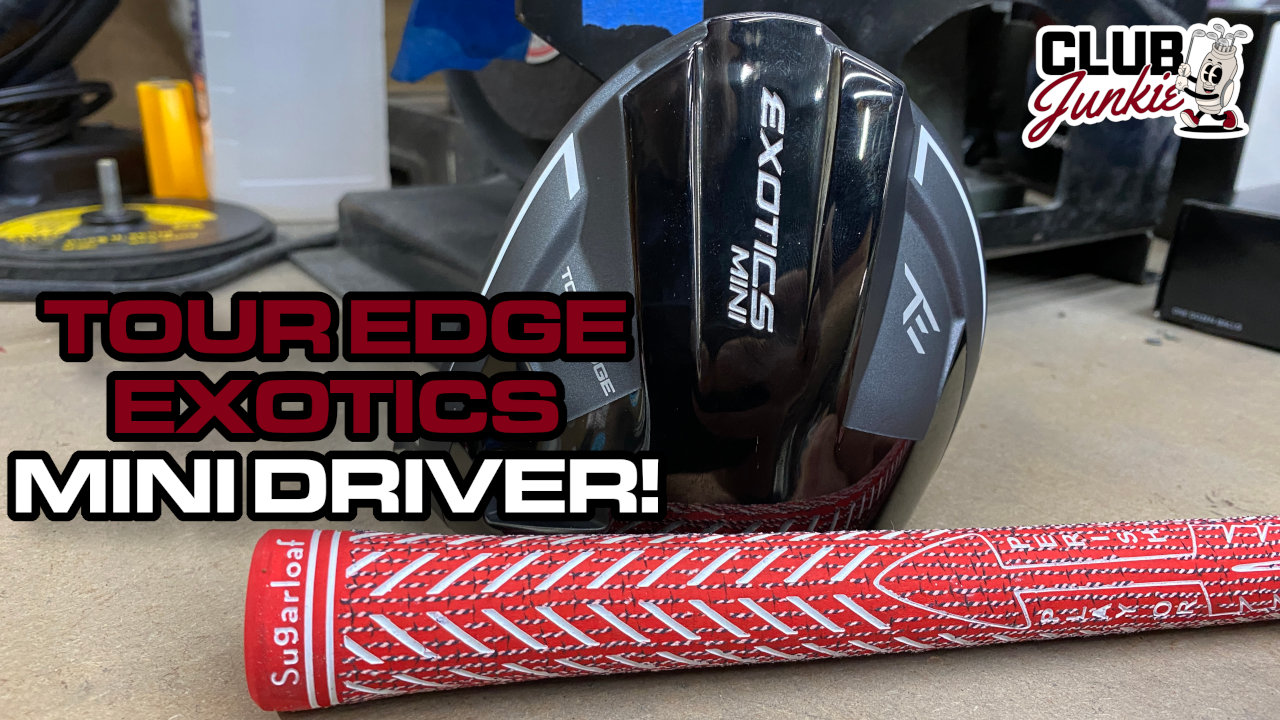
On this episode of Club Junkie, I put the new Tour Edge Exotics Mini Driver to the test and break down the performance, forgiveness, distance, and where it fits compared to a traditional driver or strong fairway wood. If you have been curious about adding a mini driver to the bag, this one is worth a look.
I also dive into the new TaylorMade Spider ZT Max putter that was recently spotted and discuss the growing zero torque putter trend. Plus, there is a closer look at the new Project X Titan Yellow shaft showing up on the PGA Tour and what makes it different from other profiles currently out there.
Opinion & Analysis
AVL: We’re talking about practice! My best tips for taking your game to the course


With the beginning of June on the horizon and courses rounding into peak condition for the season, it’s time to hone the finer skills that often get rusty over the winter. More sunlight also means more time to get out on the course and work on your game.
Whether it’s the practice green or the driving range, there’s always something to improve—whether you’re enjoying the fresh air or preparing for a weekend game or tournament. You can work on drills or freestyle around the green, and friendly competition is a great way to sharpen your skills.
While there are endless ways to get better at golf, I’m going to focus on practicing around the green. Let’s take a look at a few things to keep in mind as we head into the summer months.
Drills
From the driving range to the practice green, it’s important to incorporate drills into your routine. Years ago, I spent a weekend working on my short game with James Sieckmann. He recommended doing drill work for 5–10 minutes, then returning to your main practice.
This way, you create a balance between structured drills and real-world scenarios, so you’re not confined to “perfect” situations. For example, hitting the same three-foot putt over and over is good for repetition, but after a while, it becomes less interactive for your brain.
My approach is to use a putting trainer with a narrow gate for the ball to pass through, or simply place tees just outside the width of the ball. I’ll hit a series of four putts through the gate for three sets. Then, from a similar distance, I’ll hit four putts without the training aid and repeat that sequence three times.
Next, I’ll hit a number of 15–25 foot putts in a random fashion, then circle back to repeat the short putt drills with and without the training aid.
This breaks up the rhythm of hitting short putts with the training aid. When you hit the same short putts over and over, it’s easy to get into a groove—which is great for the drill, but not reflective of actual course play. While finding a rhythm is fundamental for drills, I like to introduce variation with longer putts to keep things realistic.
Game Mode
Once you’ve established a foundation with drills, it’s time to simulate on-course scenarios. This is where a few practice games come in handy.
One that I’ve been enjoying lately involves putting 10- to 15-footers with two balls. If I make the putt, great! If I miss, I pull the missed ball back a putter length. Suddenly, that little tap-in becomes a nerve-wracking three-footer—at least at first. As you get better at this game, those three- and five-footers become much more comfortable and routine.
It may sound cliché, but each shot is just what it is—it’s how we react that makes the difference. I like this game because it blends the pressure of on-course putting with the consequence of leaving yourself a much longer putt than usual.
Another game I like is one I recently learned from Brad Faxon. Place three tees in a line at four different locations around the hole: one at 3 feet, one at 6 feet, and one at 8 feet. The 3- and 6-foot putts count as par, and the 8-footer is for birdie.
This game keeps you focused on scoring and helps you get into a competitive mindset. You can even think about this putting game while you’re on the course. I just started playing it, and last week I couldn’t get better than two under par.
Competition
Competition during practice is when drills and games come to life, and you start to see results. For me, nothing beats a putting contest with a friend or two. In the right setting, these contests can become talking points for the whole season.
Match play, a game of 21, or simply seeing who can make the most one-putts (with a small prize on the line) are all great ways to simulate real on-course pressure. Recently, I played in a putting contest where one competitor made back-to-back 30- and 50-foot putts. As they say, expect your opponent to make every putt—and he nearly did. That’s impressive, and it’s something you see on the course, too: you have to stay committed to your game plan, no matter what.
When it comes to practice, it’s important to blend feedback from recent rounds with the fundamentals you want to reinforce. Drills, games, and competition—from the driving range to the putting green—form the backbone of skills you’ll rely on during actual rounds.
Finding the right balance is something we’re all working on, one practice session at a time. With the beginning of June on the horizon and courses rounding into peak condition for the season, it’s time to hone the finer skills that often get rusty over the winter. More sunlight also means more time to get out on the course and work on your game. Whether it’s the practice green or the driving range, there’s always something to improve—whether you’re enjoying the fresh air or preparing for a weekend game or tournament. You can work on drills or freestyle around the green, and friendly competition is a great way to sharpen your skills. While there are endless ways to get better at golf, I’m going to focus on practicing around the green. Let’s take a look at a few things to keep in mind as we head into the summer months.
Drills
From the driving range to the practice green, it’s important to incorporate drills into your routine. Years ago, I spent a weekend working on my short game with James Sieckmann. He recommended doing drill work for 5–10 minutes, then returning to your main practice. This way, you create a balance between structured drills and real-world scenarios, so you’re not confined to “perfect” situations. For example, hitting the same three-foot putt over and over is good for repetition, but after a while, it becomes less interactive for your brain.
My approach is to use a putting trainer with a narrow gate for the ball to pass through, or simply place tees just outside the width of the ball. I’ll hit a series of four putts through the gate for three sets. Then, from a similar distance, I’ll hit four putts without the training aid and repeat that sequence three times. Next, I’ll hit a number of 15–25 foot putts in a random fashion, then circle back to repeat the short putt drills with and without the training aid.
This breaks up the rhythm of hitting short putts with the training aid. When you hit the same short putts over and over, it’s easy to get into a groove—which is great for the drill, but not reflective of actual course play. While finding a rhythm is fundamental for drills, I like to introduce variation with longer putts to keep things realistic.
Game Mode
Once you’ve established a foundation with drills, it’s time to simulate on-course scenarios. This is where a few practice games come in handy. One that I’ve been enjoying lately involves putting 10- to 15-footers with two balls. If I make the putt, great! If I miss, I pull the missed ball back a putter length.
Suddenly, that little tap-in becomes a nerve-wracking three-footer—at least at first. As you get better at this game, those three- and five-footers become much more comfortable and routine. It may sound cliché, but each shot is just what it is—it’s how we react that makes the difference. I like this game because it blends the pressure of on-course putting with the consequence of leaving yourself a much longer putt than usual.
Another game I like is one I recently learned from Brad Faxon. Place three tees in a line at four different locations around the hole: one at 3 feet, one at 6 feet, and one at 8 feet. The 3- and 6-foot putts count as par, and the 8-footer is for birdie.
This game keeps you focused on scoring and helps you get into a competitive mindset. You can even think about this putting game while you’re on the course. I just started playing it, and last week I couldn’t get better than two under par.
Competition
Competition during practice is when drills and games come to life, and you start to see results. For me, nothing beats a putting contest with a friend or two. In the right setting, these contests can become talking points for the whole season. Match play, a game of 21, or simply seeing who can make the most one-putts (with a small prize on the line) are all great ways to simulate real on-course pressure. Recently, I played in a putting contest where one competitor made back-to-back 30- and 50-foot putts. As they say, expect your opponent to make every putt—and he nearly did. That’s impressive, and it’s something you see on the course, too: you have to stay committed to your game plan, no matter what.
When it comes to practice, it’s important to blend feedback from recent rounds with the fundamentals you want to reinforce. Drills, games, and competition—from the driving range to the putting green—form the backbone of skills you’ll rely on during actual rounds. Finding the right balance is something we’re all working on, one practice session at a time.


For Korean golfers, we always look forward to the last of the kkot-saem-chu-I for the true start of a new golf season. The term refers to a cold snap, but literally translates as “winter being jealous of the flowers beginning to bloom, thus lashing out one final time before surrendering to spring”.
A rather poetic mouthful packed into a short expression.
Koreans can be like that. Understated, yet oddly expressive at the same time. And nowhere is this more true on the golf course and in our golf bags. In fact, I suspect many Korean golfers look forward to new apparel and accessory drops more than they do actual equipment launches each year.

At this point, Korean golf fashion may exist on its own timeline. (courtesy of @seonbi_golfer)
There is ample evidence to support that suspicion. Korea is the world’s third-largest golf market behind the United States and Japan, yet its appetite for golf apparel exceeds that of both countries combined. Recent estimates suggest that Korea accounts for nearly 40 percent of the global golf apparel market, placing it among the world’s most influential golf fashion markets and punching well above its size.
Simply, we care deeply about how new golf clubs look and feel, but enjoy looking good while swinging them even more.
Golfers in the West may laugh and say that golf is played on a course, not a fashion runway. Perhaps. But what’s the harm in trying to look and feel good, if the added self-confidence can help actual performance? It certainly seems to have worked for Jason Day, who may have unlocked a new stats category: dormant strokes gained. Coincidence?

During the COVID-era, estimates placed the market near $9 billion, an astonishing figure for a single country.
As a proud member of Gen X, I’ve witnessed the highs and lows of golf fashion firsthand. The pleated trousers and wing-tipped shoes of Jack Nicklaus, the stylish plus-fours and knickers of Payne Stewart, the baggy black trousers and fitted mock-necks of Tiger Woods, and the thigh-hugging athletic tailoring of Rory McIlroy. Golf fashion, like the golf swing itself, has rarely stood still.
But nowhere have those trends shifted, evolved, and been scrutinized quite as relentlessly as in Korea. Here, golf fashion moves faster than fairway gossip, and consumers dissect brands with a level of discernment that can be both impressive and mildly terrifying. New brands are studied, judged, embraced, or dismissed with startling efficiency.
The result is a consumer base with one of the sharpest eyes for quality and authenticity anywhere in the world. It is difficult to quantify, but easy to recognize. Clean lines without trying too hard. Luxury mixed with utility. Trend awareness balanced by restraint and purpose.
It’s golf fashion shaped by one of the world’s most style-literate cities, something I like to call Seoul Sensibilities, referring to the taste level forged by a uniquely competitive environment.
And increasingly, global brands have noticed.

Many golf brands in Korea have their own flagship shops dedicated to apparel only
Titleist understood this years ago, when its apparel business in Korea took on a life of its own under new ownership and local direction. What had once been a straightforward extension of an iconic equipment giant became something sharper and more premium. By going all in on the serious Tour-player look (I couldn’t even fit into their XL sizes), Titleist struck the right chord with Korean consumers and helped its fledgling apparel business break into the mainstream. Titleist became a household name even for non-golfers who wore its caps, shirts, and windbreakers in daily life. In many ways, it proved that even heritage golf brands could carry real fashion credibility when viewed through a Korean lens.
Several years later, PXG took a page out of Titleist’s playbook and followed suit. Korean consumers helped transform the brand from one known largely for irons and loud commercials into something broader and more stylish. PXG apparel’s growth in Korea was explosive, where it found an early audience and turned the category into something more than mere logo merchandise. It is still hard to walk anywhere in Seoul without seeing its palindrome logo.
Malbon’s meteoric rise in the United States was genuine, but its ascent into a global golf lifestyle brand owes much to Korea, where it was elevated by a market already fluent in modern golf style. Korea did not simply embrace Malbon. It pressure-tested the concept, refined its appeal, and helped push it into the global spotlight.
As such, new brands may arrive from abroad, but more often than not, their sharpest evolution happens here. If a brand can earn credibility in Seoul, it’s deemed to have passed one of the toughest style audits in the game.
That is why the next meaningful chapter may not come from outside, but from a Korean brand moving in the opposite direction, carrying those Seoul Sensibilities outward as K-pop once did.

Play young Stay dope.
From Seoul, With Intent
Khalhon is a label that feels less like a trend-chasing newcomer and more like the product of a market that has already seen everything. Golfers here have long been surrounded by luxury logos, technical fabrics, and tour uniforms disguised as lifestyle wear and vice-versa. In other words, novelty alone rarely lasts here, and the Koreans seems to understand that instinctively.
Its style language leans into clean silhouettes, relaxed but tailored proportions, muted palettes, and premium materials that speak quietly but confidently. There is a modern city aesthetic running through it all, with strong layering pieces, thoughtful textures, and subtle branding that suggests sophistication rather than demanding attention.

“Built for the course. Designed beyond it.”
Most importantly, the garments seem designed to blur the line between golfwear and everyday style. Shirts, trousers, knitwear, and outer layers move comfortably between a game of screen golf, a lunch reservation, an airport gate, or an afternoon coffee in Gangnam with friends.
It raises the question of whether this is golfwear that happens to look good off the course, or everyday clothing that performs beautifully on the fairways.
Personally, I have long appreciated Nike Golf for its clean, athletic modernization of golf attire. It also has the useful side effect of making me look like a more serious golfer than I probably am. But off the course, there are times when being instantly identified as the golf guy in a crowd of non-golfers can feel a touch self-conscious.

“Built for the course. Designed beyond it.”
That is part of what drew me to Khalhon, which seemed to blend golf and everyday wear naturally. While some of the outfits may be slightly beyond my personal confidence level, the brand also offers tasteful options for older guys like me who still want to express a little personality without regretting the decision later.
These are not simply flashy outfits worn on the course and then banished to the closet until the next tee time. They work surprisingly well off the course too, and I suspect many of the pieces will still look right a couple of years from now, which would certainly be kinder to my wallet than most golf fashion trends tend to be.
And perhaps that broader lifestyle positioning also helps explain why someone like Sean Wotherspoon would find Khalhon creatively interesting in the first place.

“Built for the course. Designed beyond it.”
“Korea is not only one of the most fashion-forward golf markets in the world, but one of the most fashion-forward markets globally. Korea is ahead, and I love to watch and try to catch up.” – Sean Wotherspoon, Creative Director at Khalhon
Seoul and Beyond
If Khalhon’s rise says something about where Korean golf fashion is today, its relationship with Sean Wotherspoon says even more about where it is heading.
For readers less familiar with Sean Wotherspoon, his arrival at Khalhon is not some routine celebrity endorsement or influencer collaboration. In design and streetwear circles, Wotherspoon is regarded as one of the more influential creative voices of his generation, particularly when it comes to blending nostalgia, storytelling, and contemporary culture into products that people can connect with.
He first gained widespread attention through his now-famous Nike sneaker collaborations, where his vintage-inspired designs and instinct for color helped turn him into one of the defining artists of the late-2010s sneaker era. His work gradually expanded beyond footwear into apparel, automotive collaborations, collectibles, and broader lifestyle design.
Modern golf style now extends well beyond the fairways, where performance and functionality are largely expected by default. And while plenty of brands already make technically competent golfwear, Khalhon seems more focused on designing clothes people would genuinely want to wear even after the round ends.
And when guys at Wotherspoon’s level show genuine interest in working with a Korean golf brand as its new Creative Director, fashion circles tend to sit up and pay attention. There’s already a huge buzz among the fashion-conscious here about upcoming collabs with iconic sports stars and brands.

“My creative direction for Khalhon is disruptive, colorful, nostalgic, and modern. My goal is to blend these avenues seamlessly within each collection.” – Sean Wotherspoon
In chatting with Sean, what stood out most to me was how genuinely energized he sounded about the project itself. Despite having already worked across and countless other creative spaces, he described golf as a completely fresh category for him, saying that Khalhon “will be an amazing vehicle for my design work.”
At the same time, his enthusiasm seemed tied just as much to Korea itself. He spoke openly about admiring Korea’s fashion culture while repeatedly insisting he is still a terrible golfer.
There was something oddly refreshing about that humility. Rather than sounding like a celebrity parachuting into golf simply because the category suddenly became fashionable, Sean sounded genuinely curious about what Korea might do with the category next.
And perhaps that is what makes Khalhon feel interesting right now. The brand feels less like a trend-chaser and more like the natural result of a market now confident enough to export its own point of view.
For years, global brands came to Korea to sharpen their image against one of the most discerning audiences anywhere. Now, a Korean label appears ready to send those Seoul Sensibilities outward instead.
Which brings us back to kkot-saem-chu-i.
That final cold snap before spring always arrives with a reminder that seasons are changing, whether we notice it immediately or not. Golf fashion feels a little like that right now as well, as the old boundaries between sport, streetwear, luxury, and everyday style continue to soften.
And somewhere in Seoul, a Korean golf label already seems prepared for whatever season comes next. I just hope they have everything in my size.

Justin Rose WITB 2026 (April): Full WITB breakdown with new McLaren irons

What’s the story behind Webb Simpson’s custom-stamped irons?

Cadillac Championship Tour Report: Spieth’s sizable changes, McLaren Golf launches, and more

Kristoffer Reitan’s winning WITB: 2026 Truist Championship

Russell Henley’s winning WITB: 2026 Charles Schwab Challenge

Cameron Young’s winning WITB: 2026 Cadillac Championship

Aaron Rai’s winning WITB: 2026 PGA Championship

Nelly Korda WITB 2026 (April)

Justin Rose on the switch to McLaren Golf, learnings from previous equipment moves

Photos from the 2026 CJ Cup Byron Nelson


Chris Gotterup WITB 2026 (June)
Chris Gotterup had >14 clubs in his bag when photographed prior to the Memorial Tournament. Drivers: TaylorMade Qi4D (8 degrees), Ping...


Jason Day WITB 2026 (June)
Jason Day had >14 clubs in his bag when photographed prior to the Memorial Tournament. Driver: Ping G430 LST (10.5 degrees...

Nastasia Nadaud WITB 2026 (June)
Driver: Titleist TSR4 (9 Degrees) Shaft: Project X EvenFlow Riptide CB 6.0 S 3-wood: Titleist GTS2 (15 degrees) Shaft: Graphite Design Tour AD DI...

Keith Mitchell WITB 2026 (June)
Driver: TaylorMade Qi4D LS Shaft: Project X Titan Yellow 6 X 3-wood: TaylorMade Qi10 (16.5 degrees) Shaft: Mitsubishi Tensei 1K Blue 90...
-
 News3 days ago
Russell Henley’s winning WITB: 2026 Charles Schwab Challenge
-
 Whats in the Bag2 weeks ago
Aaron Rai’s winning WITB: 2026 PGA Championship
-
 Tour Photo Galleries2 weeks ago
Photos from the 2026 CJ Cup Byron Nelson
-

 Equipment2 weeks ago
CJ Cup Byron Nelson Tour Report: Koepka and Kim’s newest putters finally get hot
-
 News5 days ago
Charles Schwab Challenge Tour Report: MacIntyre, Åberg and Spaun all switch putters, TaylorMade launches new Spider
-
Equipment9 hours ago
Details on Jason Day’s latest prototype Avoda iron setup
-
 Equipment1 week ago
Details on J.J. Spaun’s surprise putter switch
-
 Popular Photo Galleries1 week ago
Photos from the 2026 Charles Schwab Challenge


joro
Jun 7, 2019 at 1:38 pm
This writer needs to have HIS screws replaced like Bobby Jones insert. He has no clue what the game is all about and whether he gets it or not GI Irons have been played by the best and won Tournaments, Clubs like the Pings and Callaways, Tommy Armour, and others have been around for years and a lot of the Pros he mentioned in his “article” played and won with them and if he had any knowledge of the Game he would know that the 2 strokes he shrugged off often win Tournaments.
The guy is a hack
Peter McGill
Dec 21, 2018 at 3:15 am
Always thought it was “not even God can hit a one iron”
uglande
Nov 20, 2018 at 11:07 pm
I would add that the difference in performance — particularly with irons — between “player” and “game improvement” irons is not nearly as big as people think. Mis-hits between various iron models are not that different in terms of results (controlling for loft, length, shaft flex, etc.). But because GI irons don’t produce as harsh a feel on mis-hits, a lot of people mistakenly call that “forgiveness” when it’s really just a more deadened feel.
ChipNRun
Nov 16, 2018 at 12:33 pm
” …With drivers, we can change lofts and shafts with a
few clicks (but just about no one does)…”
The benefits of adjustable drivers and fairway woods also show up in the supply chain. A couple of years back, I got to talk to a local country club pro at at golf expo. She said adjustability allows her to carry only half the inventory she once held in fixed-shaft days.
She said the adjustability allows her to make slight changes in loft and lie for her golfers. Or, she can switch out a S-flex shaft for an R-flex without the golfer having to wait a week for a special order to come in.
Walt Pendleton
Oct 15, 2018 at 2:57 pm
Amazing…the author suggest spending more money on lessons while using clubs designed in the 19th century. Most of these antiques are used are our gardens to support vegetables. Maybe I’m wrong but, I thought the objective in golf was scoring! Thank God he didn’t ask us to use wooded shafted putter for better feel!
CrashTestDummy
Sep 24, 2018 at 12:32 am
Missing the sweet spot with persimmon woods and old school blades was more like getting shocked than feeling like mashed potatoes. It just stung and ball went nowhere. Today’s clubs are light years ahead.
Lily Taggert
Aug 4, 2018 at 6:53 pm
There was a time before we married when my husband had a 6pm to midnight girlfriend and a midnight to 3 am girlfriend. He also was -2 hitting no name stiff shaft blades and persimmon woods. He got the woods handed down from his father and still uses them to this day. But after a decade of little golf while raising children, coaching baseball and a career, his almost 60 back and his handicap are shot. I guess this MAN (he IS one) should feel like a wimp for wanting a cavity back iron and a turtle on a stick (my pet name for oversized drivers). I’m heading to the sewing machine to make him some pink head covers right now. .
bonifacj
Apr 17, 2018 at 10:29 am
I had been gaming forged cavity back irons, Srixon Z545s, for a couple of years now. This past winter I wanted to practice during the cold weather months with a less forgiving iron set in the hope of improving my ball striking, fully intending on going back the the Z545s in the spring. I purchased a set of Srixon Z745 musclebacks and practiced with them through the winter. Once I was able to get several rounds in – sparing you my Arccos approach and G.I.R. stats and my scoring – I performed markedly better with the musclebacks then the cavity backs. I do not have an explanation for why this is the case. I had been a long believer in the benefits of using more forgiving clubs. I am now not so sure. There is a lot of merit to this article.
Simms
Apr 6, 2018 at 2:09 pm
Ping Eye 2, everything after is just a copy without any real advantages…
Coach Vitti
Mar 15, 2018 at 11:19 pm
Had I bought a new driver each year for the past ten years, I would be hitting my drives 480 yards! Don’t you just love marketing? Leave the blades for those who can use them. I you don’t need training wheels, stay away from the ‘super’ game improvement clubs. The vast majority of amateurs should be using game improvement clubs. Can I state a handicap range for each? No. Go see a good fitter for that answer. Just remember, the key goal of club design for the past 30 years has been the to make the game easier by finding ways to GET THE BALL IN THE AIR! All else is secondary. Golf is NOT a ground game (other than the putter).
Great article and a brave writer to go up against the marketing mafia!
Dan
Jan 11, 2018 at 10:50 am
Interesting article, and yet the author completely misses the mark. The real problem is identified in one sentence, which mentions marketing. The clubs are “marketed” as fixes, but that is not how they are designed. It is mentioned that the drivers are now adjustable, but rarely are adjusted. GOOD, that isn’t what the design is for. It is so fitters can dial the driver in to best match a golfers swing, +2 HC or 32 HC. The idea of designing clubs which are more forgiving, is not to necessarily lower the handicap, but rather to enjoy the round more. The only way to lower the handicap, is by using a well practiced, proper, swing, with the most appropriate equipment for that golfer. Many Golfers just want to go out and have a good time and drink some beers with their buddies. It’s more fun to hit a 93 with balls that go straighter, and higher, and don’t hurt your fingers, than it is to worm burn it all over the course and feel the sting of an off center shot on a set blades. The problem is even when a club is designed to just increase the enjoyment of the round (not the score), the manufacturers still advertise as score lowering technology. If you want score lowering technology, hire someone to help you with chipping and putting. But if you just want to have fun and feel what a good shot feels like (even if the shot is only mediocre) buy some forgiving clubs and six pack, and have a good time. If you want to learn to play like a 2 handicapper, you have to do the work. But until you have that desire. The hybrids, the MGI irons, and the bigger sweet spots, will make hitting a 93 more enjoyable. Heck, even a 105 round is more fun when the ball goes in the air. For the rest of us. The super small percentage of us trying to break that par barrier, lessons and practice are more important, but find the correct equipment for your ability and swing. It really doesn’t matter what Bobby Jones, or Dustin Johnson, or Tiger, or even your best buddy plays, the only thing that matters is that you like the clubs in your hands. Some play better with forgiving models, some with traditional. But there is no one right way to make clubs or play the game.
TeeUp
Nov 10, 2017 at 8:20 pm
Try the Forgiving Irons Prayer:
Luke 11:2–11:4
OMG, hallowed be your name. Your golf kingdom come. Give us each day our daily game. And forgive us our sinfully bad shots, for we ourselves forgive everyone everybody playing with us. And do not bring us to the time of scorecard trial. Amen.
Pal2f
Jul 7, 2017 at 7:26 pm
I just worked @ the driving range for the web.com tour this week Lecom Health care challenge, a course i play 5-6 times a year. I was in the tour trailers since Monday you would be surprised how many of these guys are getting High HC clubs built that are being put play right away. The Trailer reps can’t believe it. players are telling them i need a 7 Iron that goes 190 build it and a full set is built in less than 30 min. Ping I200, Titleist AP 3’s & Callaway CF 16 seem to be the flavor right now?.
Norm
Apr 22, 2017 at 12:26 am
Surely if you cannot hit a one-iron you cannot hit a driver. Best to practice with a one-iron before you attempt the driver.
Jim
Jan 18, 2017 at 1:19 pm
The better the player the better the forgiveness….Anyone that has played for 5 10 years and is stuck at 14, 15 handicap has reached a point where playing what you like and want to play is the answer..moving past the 14, 15 handicap (unless you been playing about a year or 13 years old) is a challenge very few are going to make…you may never get better but the fun of playing the clubs you love (can afford) does help make the game more fun.
Scientific Golfer
Jan 7, 2017 at 8:29 pm
The most ‘forgiving’ clubs are the ones YOU hit the ball on the club sweet spot … plain & simple.
SV
Dec 29, 2016 at 8:03 am
I agree with the author. And, if you want to improve find a real wood and blade iron and go hit balls. Once you do this and then use your forgiving clubs you will hit the ball better.
As to athletic swings from the past, I agree again, but why leave out Sam Snead? He had the best swing ever. Rory, DJ and others could never swing like they do with the old equipment. With their talent they would adapt, but their swings would be more like Snead, Littler and Jones. You can’t swing at 120 mph and make sweet-spot contact on an old persimmon wood.
Brian
Dec 29, 2016 at 2:38 pm
John Daly’s driver in the 1991 PGA Championship was no bigger than a persimmon wood back in the day.
Cobra Ultramid
Matt
Nov 14, 2016 at 10:47 am
At the risk of sounding as curmudgeonly as the author (nice piece btw) I’d say the bigger shame is what has happened to the golf ball. Sure clubs are more forgiving, but the ball travels SOO much further now. This has affected the game in 2 negative ways. The game at a highly competitive level is balanced a bit too far towards power and away from finesse IMO. 2. Golf courses never had to be 7500 yards. These resort courses are spread out over thousand and thousands of acres. While the ball is amazing its not helping the 30 handicapper one iota. Its taking them 6 hours to play these courses.
I am from the northeast. There is no better experience than putting a bag on your shoulder and walking onto the first tee on old Ross or Tillinghast designed at 6:30 on a summer evening. Every tee is a few feet from the previous green. You can play 9 in under 90 minutes with a playing partner easily, and its heaven on Earth. These courses are all but obsolete now. Hybrids that fly 230 and straight, who would ever need to hit a driver on a par 4 under 400. The par 5s are a joke now on many of these classics. Its just sad. Nicklaus was absolutely right when he was harping on this in the late 90s early 2000s. Its too late now, oh well. Still the best game ever invented.
MBU
Jan 20, 2017 at 3:45 pm
What you are saying is simple, so why was nothing ever done? They are still squeezing a few more yards out of technology, making a few more courses obsolete. I would’ve been easy to halt it all.
I’d like them to turn it back and restrict the distance of the ball And the size of the driver head to 200cc.
ButchT
Nov 11, 2016 at 9:28 am
I recall the first time that I encountered what I believe to be a benefit from a “game improve iron.” I switched from a set of Mizunos to a Callaway set purported to be very forgiving. I was hitting to a 145 yard pin on a par 3 over water. I put a really bad swing on it – expecting it to wind up in the pond. However the shot went about 135 yards and 10 yards right of the pin but still on the green. I knew that with the Mizunos I would never have gotten away with that result. I think that demonstrated “forgiveness.” Thereafter, I noticed that all my bad swings produced a somewhat better result than expected. Forgiving clubs do provide a benefit!
piter
Sep 16, 2016 at 6:04 pm
As someone here said, if you really don’t have a game at all, then no club will make you better. However for me the difference is pretty clear. I am a 29 HC but my clubs (Titleist 755) were originally advertised for player around 10HC. My single-figure golf mates said I should not play these clubs. I reckon they are right. I am terribly inconsistent with my shots. I borrowed a set of Ram Axials – big head beginner clubs. The first 9 holes I played showed far more consistency and ‘normal’ shots (as in normal grip instead of resorting to “finger-down-the-shaft” putter grip chip and run shots even at 100m out with a 6 or 7i if I want to get the ball of the ground with my 755s..). Saturday comp even saw a birdie-par-birdie start of the back 9! Sure I still had 2 really bad holes (+5 and +6) but that’s kind of normal for my HC level I’d say, there are always 1 or 2 bad ones. I ended -2 net.
So I am chasing some SGI clubs.
sac
Sep 13, 2016 at 3:37 pm
Interesting article, many have said that Greg Norman’s ability to hit the small headed driver long and straight was nullified by the introduction of the larger headed driver which allowed more players to also get their ball down there long and on the fairway.
For myself I started playing golf in the 80s with a set of woods and irons from the 60s. I couldn’t hit the 1 wood decently at all and like many average players at the time, used a 2 wood off the tee just to get it in the air. The 2 iron had a sweet spot about the size of a pea and would leave my hands wringing on a cold day if it were missed by even a millimetre.
I play with clubs from the early 2000s with slight cavity backs and a more recent 460cc driver and they are forgiving enough to enjoy the game. I could get some more forgiving clubs and perhaps shave 1 or 2 strokes off my handicap, but for what benefit? Whether I play of 11 or 13 really makes no difference to me and forking out $$$ for the latest and greatest doesnt make any (cents/sense) whilst we have a handicapping system that factors my clubs in there.
All that nonsense about blades giving more feel and feedback? well they let you know that you havent got the center of the club by the ball not going as far and the wringing in the hands, and feel, its not like one can change what has happened when one feels the off centre hit. Shaping the ball with the irons because the clubheads are easier to swing off line…..let the good players work with that one. One can just as easily look on the face of the cavity back and just check where the ball mark was to see how one is going with hitting the centre.
One can always practice with the old blades and fine tune hitting the middle of the club, but take the more forgiving clubs to the course.
TOM HARDY
Aug 24, 2016 at 9:18 am
Well, I am into all irons, any old iron, any any any old iron.
As the song goes, I like to hit on the centre, I like that buttery compression, hit down on the ball. Compress the ball into the ground and hit it. Scoop it up like ice cream. Eat a ball of vanilla. if you hit a ball, what makes you able to hit it and get the belltower every time? It’s just luck. I have a new game improvement iron. They’re called lucky irons. Come get your lucky irons here. Many thanks.
GetRichorTyTryon
Aug 19, 2016 at 9:25 pm
Nostalgia is influencing his opinion. Completely disagree that swings back in the day were more athletic. That’s a bit ridiculous as there are absolute freaks in the game today. DJ would have to change the screws in his persimmon driver 4 times a round let alone a season. To each their own but I think the author needs to get his Bagger Vance outfit on and join a hickory shaft league if he hasn’t already.
GetRichorTyTryon
Aug 19, 2016 at 9:07 pm
Some valid points but I think nostalgia is influencing his opinion. Completely disagree that swings back in the day were more athletic. That’s a joke as there are absolute freaks in the game today. DJ would have to change the screws in his persimmon driver 4 times a round let alone in a season.
Steven
Aug 17, 2016 at 2:17 pm
Interesting article. In the mid-2000s, someone made a similar comment to me. Playing with the less forgiving equipment will make you better by forcing better technique. I took that advice and bought the Taylormade r7 TPs. Those are still my favorite irons ever. My old 425cc Nickent Genex driver was my favorite driver. I have owned numerous clubs since then, and I don’t feel my swing is nearly as good. I don’t play as much and am older, but I am seriously contemplating a player’s iron for my next set.
Bob
Jul 26, 2016 at 6:57 pm
Here is a big difference no one has mentioned. With players clubs, blades if you wish you get better control of the ball on centered hits, better control of trajectory, distance and ability to shape your shot.
With SGI’s centered hits are less forgiving, wider dispersion and not as consistent. Now SGI’s are more forgiving on the of hit shots were Players clubs are less forgiving. Its a trade off.
And really “Game improvement Irons” I think they should be called “Hide My Bad Game Clubs”
A golf club is not going to improve you golf game. Only a improved golf swing and better use of the grey stuff between the ears is going to improve your golf game. And if think different your have most certainly bought into the marketing hype!
DanJan
Aug 4, 2016 at 6:36 am
You failed to mention the feel of a poorly struck shot that stings the hands and vibrates up to the shoulders. There are iron designs so unforgiving the pros won’t play them. Do you use a heel-toe weighted putter like a Ping or a blade putter where if you miss the sweet spot you miss the putt? If game improvement clubs are marketing hype as you think, Ping would not exist! You play better than Bubba Watson and Lee Westwood , huh???
Keith V Shannon
Aug 27, 2016 at 4:27 pm
This is my sentiment, though maybe not as extreme. The less forgiving the iron, the better you have to swing, and the better your swing the better your game.
I’ve also seen firsthand the difference in dispersion between GIs and blades when your ball striking is on; I got the chance to A/B some Ping S55s against a set of Cally GIs, and except for one toe shot on the 55s, the dispersion distance over five shots was about half the Callaways.
What the manufacturers need to make for “game improvement irons” is a club that will give you the tactile feedback when you’re hitting it poorly, without totally destroying your chances for a hole as punishment for one mishit. That’s usually what reviewers say about the mid-cap irons (which were, more or less, the GIs of the early tech revolution, aimed at the ten-capper to get them to scratch)
Sam
Jul 21, 2016 at 2:30 pm
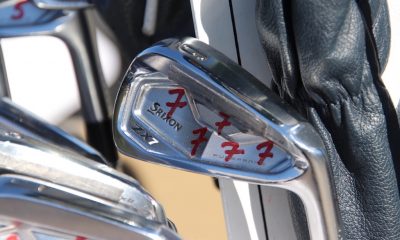
i have a bigger qn, i like the way clubs look in the pic, does anyone know the model/manufacturer?
TW
Dec 23, 2016 at 2:42 pm
Looks like Maruman’s lettering.
DrRob1963
Jul 7, 2016 at 6:34 am
This story reflects my experience:
I grew up with blades – that’s all there was! And I loved the feel of a 2-iron blade, struck right out of the sweet spot. Fast forward through a busy life: marriage, career & kids with little room for golf, until about 1999. Despite 3 sets of “forgiving” cavity-backs, I wasn’t enjoying golf like I had as a junior, and struggling off 9 handicap. But one day there was an epiphany! I saw the most beautiful set of clubs in a bag near the first. “Wow – did you see those Hogan Apex blades?” “Too good for you” said the pro, but the young trainee pulled me aside “I’ve got to mind the pro shop today – take my Hogans out for a spin, you may just like them.” I didn’t like them, I LOVED them! The magic was back! I bought a set. For the first time since school, I couldn’t wait to play, I wanted to beat balls, I wanted that feeling of a sweetly struck bladed iron – instant golf addiction. My handicap? It went down to 4 – and I even won a Club Matchplay Championship, after middling a bladed 3-iron over water onto the 18th green in the final, to win 1 up. What a feeling! So eat your hearts out, marketing boys – Blades are better!
DanJan
Aug 4, 2016 at 6:40 am
So do you still play with a 200 cc persimmon driver with a steel shaft like Jack Nicklaus did in the 1960s, or a modern forgiving 460 cc titanium club???
Bigleftygolfer
Jan 20, 2017 at 6:52 pm
Personally I would love a much smaller club head that delivers similar distance to modern day drivers for par fives and really long par four’s (450 plus yards) until somebody developed this I will continue to use a 3-wood off the box with a consistent 250-260 placing the ball where I am looking. This gives me the same feel as my old persimmons clubs with about the same distance… in college I averaged an very accurate 250 with persimmons and I was considered very long when compared to my peers.
DrRob1963
Mar 29, 2017 at 2:42 pm
460cc Driver (GBB) & modern fairway woods definitely go better & further, and are in my Comp bag along with the blades (MP-68s). The blades are there because they give me better feel & shot shaping options, and I love their pure buttery ball-strike, but sure, they’re not for everyone.
Occasionally, I do have practice rounds with my 30 year old Hogan ‘Redline’ set, including the persimmon headed Driver & 3-wood. A joy to hit – and lots of interest from fellow golfers: “These little wooden heads are so heavy!”, “Wow – a real bladed 1-iron!” & “Can I have a hit?” are common comments – especially from the juniors! Great fun!
PS How are your shovels going?
Jack B
Jun 8, 2016 at 11:08 am
Stephen,
Nice article. What’s your gripe against less tapered grips?
Johny Thunder
Jun 7, 2016 at 6:55 am
The real problem with almost every discussion on Golfwrx – including every single “blades vs SGIs” – is that the majority of people try to oversimplify the conversation.
Yes, taking lessons (or improving your swing on your own, which I don’t think I’ve ever read anyone suggest) is the first part of the equation. Yes, forgiveness absolutely is overrated – it’s all about marketing, and modern marketing tends to be more hype and hyperbole than anything else. There is little that a club company can sell to the “average” golfer apart from distance and forgiveness. What else are you going to sell to the masses – turf interaction? Look at address??
I don’t think many people truly believe you can buy a better game – and if they do actually believe that, they learn their lesson after the first purchase. People have many other reasons for buying new clubs, and marketing is just an excuse (like my old boss, who bought a new car because the old one needed new tires). Tinkering might be a hobby, we like shiny new things, we want to rid ourselves of clubs with bad memories (and embarrassing ball marks), something else looks better, feels better, sounds better, gives us more confidence (size and offset do that for many), maybe we just like the color.
Golf clubs are a luxury, as is the game itself. New clubs – and their ludicrous marketing – might do as much to fuel interest and keep people coming back as they do driving people away. Maybe teaching pros just need to be ludicrous in their marketing, then people will take more lessons!
In any case, if there’s an argument for better constraints on marketing, truth in advertising, regulation of false and exaggerated claims, I’d be all for it. As a global society, we are SO far away from anything like that happening – and even if it did, golf is the last place it’s needed (we could start with banking, investments and health care)… Again, golf is a luxury; you can play golf with a single set of clubs until you wear them out. For the “average” golfer, that might be a lifetime.
Perhaps if club companies didn’t sponsor a long list of tour pros with multi-million dollar contracts, the entire equipment game wouldn’t be so out of control. But then how would Phil be able to afford losing $1 mil on a bet? That pocket change for him is more than some make in a lifetime – including a lot of people doing things far more important that smacking a ball around a field and missing 3 footers.
Bob Pegram
May 25, 2016 at 12:58 pm
Your comments about people swinging harder now with their massive drivers is true. I used woods made out of wood long after most people switched to metal woods. I was just as accurate (and as long) then as now. I concentrated on good contact because I couldn’t get away with off center hits. With a huge metal driver I tend to get sloppy. I can get good results with a slightly off-center hit.
Also, blades that have a low center of gravity are not difficult to hit. I used some old Bullet blades from 1993 for years. They were the same head as KZG Zero Offset made by Kyoei Golf in Japan. Sometimes on the range somebody would ask to hit them. They were always surprised how easy they were to hit. High center of gravity blades are a different story.
I now use old Orlimar cavity back blades with longer graphite shafts. They don’t seem any more forgiving. My woods are longer too. I have gotten back my lost distance due to age and lack of frequent play.
I won’t use cast head irons – no feedback – and inconsistent distance with hot spots – distance is too unpredictable.
TN
May 25, 2016 at 11:38 am
As someone who works in the golf industry I have no problem selling blades or players clubs to anyone if and only if they have time to commit to practice and instruction. Because if the customer doesn’t than they are going to be miserable. The truth is, not everyone has the time to commit. So why not play a club that provides more distance ( strong lofts, low cg, long length etc) so that the player can swing with more control and let the club do most of the “work” for them. Contrary to the article I believe that “distance” or game improvement equipment has made golf more accessible to many people especially those who have deteriorating physical abilities. i think the article is addressing some people who think that a good golf game can be “bought” with the latest and greatest equipment. It can be improved up to a certain point then it’s up to the user. But the reality is that a majority of people have not taken advantage of what technology has to offer.
NC Golfa
May 21, 2016 at 7:51 am
Cleveland HB3’s (hybrid irons) have really helped the consistency of my strikes. Did it help my score, maybe 1-2 strokes per round. I’ll take it and the confidence that can bleed into the rest of my game.
Dave
May 19, 2016 at 11:52 am
Being honest I hit the ball farther now than when I was in my twentys . The ball goes farther and the drivers have hotter faces so it’s the equipment thats got better not me. My swing is still the same mabey a little shorter that’s all.
Blue
May 18, 2016 at 9:35 am
As for the article I didn’t care for the hyperbole. But some v. good points.
If you only play occasionally and just to have fun by all means get the most forgiving clubs you would like. If you’re serious about improving your game or you’re a decent ball striker I say play whatever you want. I personally don’t see much difference between blades versus a players cavity back. Also, if you have never done it, at least go through a fitting with a certified fitter before buying -you might learn something that will help you and it’s often free or very cheap even if you don’t buy anything. I find a players club, while slightly more difficult to hit, provides other benefits –better feedback; distance and trajectory control and workability are all easier w/blades IMO. Also, IMO, technology advancements are A LOT of marketing. If everything was true every year we should probably be able to hit our 8iron 220 off the toe. Get a set you like and invest in your swing. No properly fitted club is going to help you with a shut/open face, a pull or a push or path issues.
As for the pros playing cavity backs…. They are encouraged and paid by their sponsor to play those clubs. Especially the Callaway, Ping and TM pros. Before “pay for play” from the manufactures became big in the late 1990s/early 2000s, Mizuno/Titleist blades were in a lot of bags –even if the manufactures name on the bag was different. Pros can play anything. You can’t make a living on any tour hitting it off the toe/heel and hoping the club will help you. If you ever look closely at any pros club face that has been used for a bit, it will have a worn out impact spot on the first few grooves about the size of a dime. They’re good.
Jack
May 29, 2016 at 6:34 am
But the difference for me isn’t that I can’t hit them, it’s the long distance shots from 180 to 200 where I need 6 to 3 iron where hybrids really make things easier. Long irons I need a perfect strike with a high club speed. Hybrids are much more forgiving. For hybrids I just have to deal with hitting them too far actually. Long and stright is better than short and left.
Bogeypro
May 17, 2016 at 9:44 am
I say buy all the equipment you want. If it helps, even just a little, then it makes the game easier. I don’t guess I understand the point you are trying to make here. Shank…
Mark H
May 17, 2016 at 12:15 am
You can definitely buy a better putter
Dave
May 16, 2016 at 7:14 pm
I like the response Fuzzy Zoeller had best at a clinic he led that I attended when someone asked the question about spending money on high end equipment. “You can’t buy Golf”
jp
Jul 20, 2016 at 12:33 am
Fuzzy Zoeller’s clubs are given to him…
By the way, he uses cavity back irons and hybrids!
Oldplayer
May 16, 2016 at 4:30 pm
This is a tired subject and old news around here. Has the author read any of the blades vs. cavity back threads around here that have been running for decades?
Chip
May 16, 2016 at 1:29 pm
I’d definitely agree that ‘forgiveness’ is highly overstated. I’ve always played GI irons and recently bought an old Ben Hogan blade with a senior flex shaft (I normally play a stiff) at a garage sale just for kicks. Honestly, I would be hard pressed to tell much difference between that chewed up old 7 iron and my equivalent Callaway XR Pro. I could game a set of those Director blades and my playing partner wouldn’t be able to tell unless I told him. Is the XR longer? Sure, a little bit, and if that’s your problem then a new club may help. But if you hit it fat, a new club won’t help. You hit it thin? You fight pulls or a chronic slice? In the bay with a launch monitor, sure the new club may technically put up better numbers, but out on the course your score will likely not change. I think the point of the article is that if you think buying new clubs (outside of a driver) is going to make you a better player, all else being equal, then you’re going to be very disappointed, maybe to the point of thinking that if you can’t play “the most forgiving iron in golf” then you just can’t play and you give up the sport. That’s something I’ve seen and I definitely think it contributes to frustration since the marketing folks make it seem like any idiot can score with their new clubs. If you want to be a better golfer there is only one true answer, and that’s lessons and practice. That’s been my personal experience anyway.
On the mark
May 17, 2016 at 6:29 pm
You are ON THE MARK!
Darren
May 16, 2016 at 12:20 pm
I’ve read the article and most of the comments and there are fair points on both sides. I’m a former golf professional who played blades, persimmon and used balata balls. I tend to look at it like this: if you were throwing darts and the only requirement was that you had to hit the board your technique could be horrible, but you would accomplish that goal most times. If the goal was to hit the bullseye, your technique would have to vastly improve to have any success at that goal and if it did improve I would dare say that you would NEVER miss the board. I think its not a bad idea to go to a driving range and practice with your older, less forgiving clubs every once in a while to re-sharpen your blade (no pun intended). Less forgiving equipment will allow you to be a bit sloppier in both your physical and mental technique. Its up to each player to decide what they want out of the game and go from there. If your desire is to continually get better I think you can do yourself a disservice by continually looking for next new club, but if you are a casual golfer who just wants to play and enjoy themselves a few times a year then there is no better time, equipment wise, to be playing the game.
Rick
Jun 6, 2016 at 4:46 pm
I think you are correct about pulling out the blades now and then. I used to start the season with my Wilson Staff blades and then switch to my Tommy Armour 845’s. I think you can tend to get your swing out of whack with clubs that are too “forgiving” because you don’t get the feedback on off center shots. With blades you know exactly where you hit it.
DanJan
Aug 4, 2016 at 6:50 am
Use your eyes-ball flight is best feedback – straight, left, right, low, high. Why do you think you need stinging hands for feedback?
Billy
May 16, 2016 at 11:59 am
Re: handicaps….
Have the standards for rating courses stayed the same over the last 30 yrs? Does a course that had a 72/113 rating 30 years ago still have the same rating? If so, is that same rating with the exact same course? I.e. same yardage, same greens, same hazards? If the course rating standards have changed in conjunction with changes in courses and equipment, then handicap comparisons are meaningless.
IMO, for most amateurs, being able to put a tee shot in the fairway is FAR more beneficial to being able to shape a shot. Does anyone really think that someone who misses every fairway is capable of shaping their next shot to get out of trouble?
Nocklaus
Dec 28, 2016 at 12:59 am
Thank you for the best comment. Totally agree.
Tom D
May 16, 2016 at 10:57 am
I hit more bad shots with the XE1 wedge (and a bad swing) than I did with my 56° sand wedge. So I went back to the convention 56.12° sand wedge and learned how to hit it properly. Now I can get out of the sand most of the time in 1 shot and I’ve learned how the “bounce” is my friend on several other shots I need.
Jack Nash
May 16, 2016 at 11:11 am
I agree. That wedge and the commercial is a laugh a minute. Look at their swings pre EX and look at the proper swing method after with it. Knowing how to properly hit a wedge in different situations will benefit you more than buying the so called next greatest thing.
DaveT
May 16, 2016 at 10:52 am
I have a big problem with this article. Not your major conclusions, but the argument that gets you there. The conclusions, as I understand them, are:
(1) You can’t buy a game by buying forgiving clubs.
(2) Marketing for the club companies is lying, because it says you can.
I have no quarrel with these conclusions.
But you overstate your arguments for #1, implying that forgiving clubs are not forgiving at all. Not true! They don’t forgive enough to give you a game when you have none. But suppose they reduce the evil consequences of a marginal swing by 50%, or even only 25%? That will still improve how you play, how you score, and how you feel about it.
You are also ignoring an important difference between clubs, other than the engineer’s design: the benefit of proper fitting! The greats of old that you mention had the benefits of using clubs that were properly fit to them. Club fitting for the rest of us is a much more recent phenomenon — and too many of “the rest of us” don’t take proper advantage. But a lot of those forgiving clubs represent the fact that the rest of us don’t have the clubhead speed of the greats, neither those of yesterday nor today. And that implies some considerably different design parameters in things like loft, shaft flex, etc.
Finally (nit-picking here) you absolutely blew the Trevino story. You told the facts wrong, you got the quote wrong, and you used those distortions to make a somewhat different point from Trevino’s. (see https://en.wikipedia.org/wiki/Lee_Trevino#Humor)
joro
May 16, 2016 at 10:12 am
The fact is that clubs are better than ever. Pros and all players can benefit from the design of clubs today more than the clubs of yesterday. Sure, they aren’t as pretty, but they are more efficient, a lot more forgiving and just plain better. But, Golfers like to make it as hard on themselves cause “It makes them better ball strikers”. I have been listening to that for 60 yrs and they still aren’t any better today than they were then and I have been beating them for years with my game improvement clubs. The best I ever had was the 2002 Big Berthas, like a whole set of Hybrids, which designers will tell you is the perfect design.
Oh, and when did Bobby Jones Driver have a Plastic insert? very interesting.
Rick Altham
May 16, 2016 at 9:49 am
This is the best article I have every read on wrx. Golfers should be playing with smaller, shorter and heavier woods. They will learn to hit the sweet spot and not over accelerate which causes the dreaded over the top move. The club velocity revolution which started 20 years ago is ruining golfers swings. I hope to read more intelligent articles such as yours and maybe equipment manufacturers will build clubs correctly.
Ryan morris
May 16, 2016 at 9:49 am
I agree with almost everything this article had to say. As a full-fledged ho, I play in a given month clubs that are 40 years old, to pcb tours, to apex 03s, to mp4s, to 714ap2s. The difference is pretty slim, admittingly, there isn’t a cast cavity back in that list, but I bought the xrs for my dad and played them a few times b4 selling them, only to watch my swing get more sloppy, my dispersion expand, all for the gain of about 4 to 8 yards. I wonder how my swing would be had I played those as my standard clubs.
I also agree that courses have become more hostile to higher handicapped performance. Bring ur 6 year old, you’ll get smiles and nods of approval, but be a 32 year old who can’t find a fairway, and you’ll feel the burning eyes on ur back. I’m guilty too. Golf takes a while to play, let alone being stuck behind someone who doesn’t pick up after 8 strokes to get down half a fairway.
However, I have to remind myself that embracing this guy and giving him pointers will grow the game and making him feel comfortable and at ease will grow the man.
Jack B
May 16, 2016 at 9:44 am
I though Lee Trevino said you are supposed to hold a 1-iron above your head in a lightning storm because even God can’t hit a 1-iron.
Mike Garcia
Jun 18, 2018 at 3:47 pm
Yes, the original story was that Lee was asked what he did in a lightning storm and he said that he grabbed a 1-iron and held it up because (al together now) Even God…..
alan
May 16, 2016 at 7:30 am
interesting article however i believe the ball has more to do with lower handicaps than the clubs. im not suggesting more forgiving clubs have no effect on indexes i just there is less of an effect that the clubs. ie more reachable par 5’s, more lofted clubs into the greens etc etc.
joro
May 16, 2016 at 10:17 am
In a way you are right, the ball is a lot better, faster, straighter, and just plain better. The design of the clubs is to provide the best hit. Forget lofts and lengths, they are just stronger and longer to sell clubs, but they are easier to hit with a lot less bad hits cause you missed the eraser sweet spot. More Golfers, if they want to play better should swallow their Pride and go them. But……….
Gorden
May 16, 2016 at 10:19 am
If you even have a clue how to hit a sand shot, tight lie chip then the XE1 or easy out by Tour Edge is like magic. At a charity scramble tournament this past weekend a group of us had a chance to try the Tour Edge version easy out sand wedge…amazing out of about 15 guys and gals not one could not get out of the sand with it and the two guys we call the pros called it cheating.
Quint
May 16, 2016 at 6:31 am
I get the article, and your correct, blades do teach you how to hit the ball properly, however, its not what the blades can do for you on a good day, but what the cavity backs can do for you on a bad day. Unless your are a scratch, and on top of that like to work the ball, then why bother with blades? Been to a tour event lately? There are more bags with cavities in those bags than you think.
Dale Doback
Dec 1, 2016 at 3:44 pm
This would be my point. The bigger the sweet spot the more consistent the result. Even scratch players miss the sweet spot on occasion. Hogan said in 5 lessons that he only hit about 1 perfect shot every 18 holes so imagine how many he would have hit with PXGs sweet spot the size of Texas or Ping Gs with an Alaskan sized sweet spot. Forgiveness improves consistency. I love my Bridgestone J15 CB irons because I feel like with an average striking day I can maneuver the ball up, down, left or right a lot easier than a super game improvement club mostly due to massive offset that is usually built into their designs but to this day the easiest round of golf i have ever had was using my dads Ping G25 set, harder to work but harder to miss hit.
Mat
May 16, 2016 at 3:43 am
Once I saw, “Back In My Day”, it was obvious that this was going to be 100% GET OFF MY LAWN.
What you’re saying is that clubs are a little better, but expectations are too high because manufacturers pump people full of marketing. Ya, that’s NEVER happened before in anything, ever.
¯\_(?)_/¯
Mat
May 16, 2016 at 3:51 am
Also, just as a counterargument… I have had lessons that required 3 months of physical therapy. I have definitely had equipment that has helped play better. We all have. It sounds more like you’re advocating for old clubs to be training aids…
Berry
May 16, 2016 at 3:02 am
Grumpy ol’ men…
Nick
May 16, 2016 at 2:49 am
So the question is, just how much difference does equipment make? As someone who switches from playing a six hybrid some days (mizuno ez fli hi) to a butter knife set all the way to four iron others (wilson fg 62), I think it is certainly an interesting discussion.
Whilst i wouldn’t say that there is nothing to forgiveness, there is no doubt that marketing plays a huge part. We believe (or at least would like to believe) that modern sgi clubs will cure a horrible swing, and this isn’t the case. They will provide a somewhat better result on an off-centre strike and that’s it.
As far as woods go though, I’m not sure. Hitting a persimmon driver on the screws is really quite tough!
Philip
May 16, 2016 at 1:20 am
Lessons are no more a solution than changing to more forgiving clubs. Figuring out how to control the ball is the issue – then using the correct club to get the ball to the correct apex to maximize distance and be able to hold a green. Of course, how does one figure out how to control the golf ball – that is the question.
Anna
May 15, 2016 at 11:06 pm
Most accurate and brutally honest article in a long time, way past due and much needed!
Tom
May 15, 2016 at 9:03 pm
I am not so sure about the game being more expensive now. going back 40 years balls were $1.25 ea. (that’s equal to about $5.64 ea now adjusted for inflation) and you were lucky to get 18 holes play from one. One bad shot and they had a nice big smile. Shucks one big drive and I might have scored the ball with drivers grooves. Clubs, in 1981 I paid $1400 for 1-SW and D,3w,5w that is about $3,766 now. I paid only about $2100 last year for a full set. Both sets were custom fit so to me both of these argue golf is cheaper now.
Mat
May 16, 2016 at 3:46 am
Pffft… you and these “facts”… So truthy…
Dutxdeanster
May 15, 2016 at 8:28 pm
Hence the article title…”a persepective you might not like”. My opinion, it is Money that is the reason. Whether there are more golfers, less golfers, etc. there is less play due to higher prices in the golf industry, forgiving or not. Ever wonder why the sale price of more forgiving clubs cost less than the clubs that are less forgiving? Take a lesson and learn a little about the swing and you will eventually play better if you practice that lesson. That is if the instructor knows what he is teaching. As for me I went the other way, took a bad habit and practice it until it became a good habit and played better. Certainly not the way anyone should go about it but it got the results I wanted to play better, forgiving club or not.
As you see with mine and everyone else who responded to and about this article, it is just an opinion and not words set in stone.
KK
May 15, 2016 at 7:43 pm
Vast majority of players can’t hit that 4 iron higher and softer than that 4 hybrid no matter how many lessons. It’s all physics. Just look at LPGA players. They have the most efficient golf games in the world and they play plenty of hybrids and forgiving clubs. Horrible article.
bob
May 15, 2016 at 7:23 pm
its real simple-get some blades and persimmon and get modern stuff. go play, and most that hit the blades would quit in a short period of time. for most, its nothing more than a recreational sport. they don’t have the time to practice and perfect their game. its not that important to them. coming from a retail background, most won’t take the time to be fit properly. they don’t care, they just enjoy getting out, drinking a few beers. its a social event for most.
gwillis7
May 15, 2016 at 7:36 pm
+1
cgasucks
May 15, 2016 at 8:28 pm
+1
farmer
May 15, 2016 at 6:04 pm
This topic has a hundred threads, has been knocked down and kicked to death. Kudos to the OP for opening yet another.
Joe
May 15, 2016 at 5:23 pm
I am not sure what point the author is trying to make. The article seems to be all over the place.
I learned to play with MBs because there wasn’t anything else at that time. Misses were easy, mostly because I didn’t have a consistent swing, but eventually they became less.
Game improvement clubs, that is a misnomer, the term assumes that you have a game to improve upon. I think they work simply because they have a larger head and usually don’t spray the ball as much. A scratch golfer (or low handicapper) won’t see much difference between them and a so called players club. Truth is that if you are an elite player you can probably play with anything. Beginners need all the help they can get, they need the larger head.
Most of us buy off the rack because we can’t afford to be fitted by a professional fitter. I don’t think I have ever bought clubs off the rack that I didn’t have adjusted for length, grip, or the loft or lie changed. That is I self fitted them myself, of course some were failures, because it was trial and error. If I could afford it I would go to a fitter.
Does a fitter make a difference??? Without a doubt. I have 2 friends that were professionally fit and it changed their game dramatically. They are longer, have a better flighted ball, and their confidence has soared. Of course they still can’t beat me, but that has to do with physical ability, neither is particularily athletic. You can only go so far with what you have been God given.
I can’t speak for everyone that buys adjustable woods or putters. I do adjust mine, once done I usually never have to adjust again. I like the idea.
My next venture is that I have a set of the one-length-set of irons on order, they should be here next month. They are the Sterling Irons. I have great faith in what Tom Wishon has added to the science and am looking forward to playing them. Hitting an 5 iron with and 8 iron length/lie intrigues me, and may give me back some shots I no longer possess with standard length 5 iron.
Bob
Jul 26, 2016 at 6:45 pm
Here is a big difference no one has mentioned. With players clubs, blades if you wish you get better control of the ball on centered hits, better control of trajectory, distance and ability to shape your shot.
With SGI’s centered hits are less forgiving, wider dispersion and not as consistent. Now SGI’s are more forgiving on the of hit shots were Players clubs are less forgiving. Its a trade off.
And really “Game improvement Irons” I think they should be called “Hide My Bad Game Clubs”
A golf club is not going to improve you golf game. Only a improved golf swing and better use of the grey stuff between the ears is going to improve your golf game. And if think different your have most certainly bought into the marketing hype!
Chris
May 15, 2016 at 4:57 pm
I partially agree with this article, but agree more with Tom Wishon. Not all players are going to play competitive golf, and the majority are recreational golfers. For most, getting fit, and a set of clubs built for your current game, body size and swing type will help get more ENJOYMENT out of the GAME while you learn and improve. Not every player should be playing blades. But that is the beauty of living in a free country….. Wanna play blades, go for it! Wanna beat your playing buddies? Get fit, get a set of clubs that work for you and practice more!
kolfpro
Aug 10, 2016 at 1:53 pm
Amen!
cgasucks
May 15, 2016 at 4:30 pm
I practice with 1971 Wilson Staffs and persimmon woods and my distance and accuracy has improved when playing with my gamers…I could never improve that quickly the only clubs I could practice are iron shovels and 460 CC drivers…I am glad that golf club technology has gotten more forgiving when I play for real short term but old technology is available if I want to improve for the long term…
If you don’t agree with me….then I guess you would have to disagree with Tiger and Fowler as well..they are known to practice with persimmon as well…
Nevin
May 15, 2016 at 4:04 pm
I’ve been playing for about 50 years and learned to play with MaGregor blades. To say that today’s clubs are not easier to hit and make the game harder is definitely not consistent with what I have experienced during my golfing career. I hit the ball as far now at age 60 as I did in the 70’s. The difference is that I now play 430 yard par 4’s that stimp at 12 rather that 380 par 4’s with greens that stimp at 8. The argument that because handicaps haven’t dropped, the equipment improvements haven’t been helpful is flawed because of the increased length and severity of today’s golf courses. When I go play the courses that were around when I was young, i’m impressed by how flat and non-intimidating they are.
Regis
May 16, 2016 at 12:29 pm
You and I are from the same era. My first clubs were McGregor’s purchased in 1963. But I have to take issue with your course narrative. Most of my golf is played in the Northeast on the same type of courses I played when I was a kid. Built in the 1920’s by named architects with a member’s tee distance of about 6500 yards. Same type of courses you’ll find used for a US Open. Sure the championship tees have been lengthened where possible but still the same basic course. Advances in equipment have allowed me to still play these courses (maybe from the gold tees) despite the passage of time, but the difficulties and nuances of the courses are the same.
Geoff
May 15, 2016 at 2:34 pm
I agree with the thought of getting better with your current equipment, being consistent start with the same clubs. It is fun to tinker though.
Tom Wishon
May 15, 2016 at 2:07 pm
Sorry, but this is a VERY lame article also filled with sweeping generalizations and one very big flaw – to assume that ALL golfers can improve by taking lessons is both ludicrous and proof that you’ve never taught the game to know that many people simply do not have the athletic ability to learn the right swing moves, even if they did have the time and the money to take lots of lessons and practice properly what they are taught.
Once before I read something like this – a book by former tour player David Graham in which he advised that all golfers buy blade irons so they could learn to hit the ball on center. Right. . . . . You’re pushing the same “Marine Boot Camp” method of learning the game, that it has to really hurt and from that you learn to do it right.
Sorry, doesn’t work that way in the real world of golf with its millions and millions of average to less skilled players. No question that high MOI/good variable thickness face clubheads do offer more ball speed and a little more distance when you hit the ball off center. What’s wrong with that? Why’s that so bad in a game that is very hard to begin with?
But then too, if the millions of golfers continue to buy their game improvement models in standard form off the rack without being fully custom fit, then the help of the high MOI/VTF technology may be about as significant as a F__T in a windstorm.
Geez I dislike it when people who really have no real experience in equipment design and technology attempt to write/talk about golf clubs. It just leads to more misinformation and there is way too much of that already in this game.
ooffa
May 15, 2016 at 3:44 pm
So basically your saying your lazy and don’t want to practice. You are the equipment manufacturers dream customer.
The Mad Bomber
May 15, 2016 at 4:10 pm
Ummmm…about that…
???? Maybe Google “Tom Wishon” and the come back and apologize to the man. I’m gonna guess he knows a *little* more about the game and club design than you do. Just a hunch.
Keith
May 15, 2016 at 4:33 pm
Ooffa, you have no idea who Tom is. He is one of the most respected club fitters and manufacturers in the world. He has forgotten more than you will ever know about golf.
Hunterdog
May 15, 2016 at 4:36 pm
Ahem. I don’ t always agree with Tom Wishon I know that he is an expert in the field.
Ballbuster
May 16, 2016 at 10:45 pm
The ludicrous idea here is that one can be lazy, pick up a GI club and viola… Never a bad shot! Right. The swing to produce a quality shot with either club is the same. Best that can be said is the feel of a pure struck blade inspires one to practice and strive more is possible. But after playing forged Hogans for decades and loving them, I now have Titleist AP1s and aflush feel off them is a good as ever…
Read more by Wishon and you’ll see you’re outta your league…
Grizz01
Jun 6, 2016 at 12:19 am
So, you really didn’t read what Tim wrote. He did say pretty much that if you are not athletic, no amount of teaching is going to help if you can’t do it athletically. He also said that club head design only gives help on off center hits… pretty much helpful for your average guy just trying to play a hard game.
As I always have said, “There is no substitute for skill.” An athletic golfer from the 60’s is just going to be that good with today’s equipment. An athletic golfer from today is just going to be that good in the 60’s (in comparison).
The modern club is really made for those who just want to play a better game and keep it more often out of the tall stuff.
davemac
May 15, 2016 at 8:28 pm
+1 from me, how was this article was passed for publishing.
Bob Pegram
May 25, 2016 at 1:04 pm
While many “game improvement” clubs are more hype than technology, that is not true of Wishon golf heads. They are based on science. Tom Wishon has WAY more golf head design patents than anybody. It isn’t even close. His game improvement heads work – and he actually explains WHY they work.
kolfpro
Aug 10, 2016 at 1:33 pm
Nope, I don’t buy into that one. It sounds self-serving. All in all, life is too short so play what you like!
steve
May 24, 2018 at 4:38 pm
According to statistics, 90% of golfers worldwide cannot break 100.. and only 1% can break 80. That’s because most who attempt to play golf invent a new swing every time they swing any club. Learning, lots of practice, commitment and fitted clubs are necessary to play decent golf.
Jason
May 15, 2016 at 2:03 pm
I agree. The fact is, if you can’t deliver the club head to the back of the ball, making contact somewhere near the center of the face, there isn’t a club that is going to help you. There are not clubs with bigger sweet spots. There isn’t a club that will help you get the ball up into the air. If you hit the ball low on the face, off the toe, off the heel, or anywhere that isn’t somewhere near the center, the club can’t help you. And I’ll guarantee you that almost every amateur player just assumes they make contact with the middle of the club face. They’ve probably never put even 2 two minutes of practice into the most basic part of the game. Instead, they buy a new “more forgiving” club or continue to work on the “swing advice” given to them by another terrible, unknowledgeable player.
DanJan
Aug 4, 2016 at 7:13 am
Yes, there is an iron that can help you get the ball in the air on a low face hit – Taylormade Rsi. The ball also flies straighter on toe and heel strikes because of the face slots. How did you not know about this?
Nocklaus
Dec 28, 2016 at 4:30 am
I play off hcp 8 and I hit the sweetspot maybe once in a round. I know that because that’s the shot that goes too far. The rest of the round my shots vary maybe about 1/2 inch from the sweetspot. I play forged Mizuno mp 54 and I love the “buttery” feeling. I have taken many many lessons from a lot of pro’s and I have practiced more than most people. I just love to be on the range. I dont have to practise too much around the greens because I hit many greens. I have graphite shafts in my clubs. I have tried a few different but these seem to fit me very well. Of course I have hardstepped them and kept them an inch shorter and changed the swingweight a couple of times to get it right for me.
So equipment for me means a lot and I should think that it would do for most people. Get the clubs that fit you and you play best with. It matters.
Ok. About blades. I have tried them, but I just can not play with them. My shots are all over the place. I am never sure where the shots will end up. It can be pulls, pushes, draws or fades, never know. If you don’t hit them exactly in the middle (and that’s just one shot per round for me) you’ll never know where the shot will end up. Dont like that. Like to be on the green. Preferably 2-4 yards from the flag. I can do that with my clubs. But they are easier for me to hit. Maybe it’s cheating, I dont know.
But I dont think you should play with clubs that make the game harder for you…..
Rob
May 15, 2016 at 1:59 pm
Clubs that are easier to hit are the reason people quit. Now I truly have heard everything.
Lol
May 15, 2016 at 1:49 pm
Let me be the first to click the LOL
Tom
May 15, 2016 at 1:32 pm
And it’s back…..back…….BACK …..and outta here.