
Opinion & Analysis
The 15 best inventions in golf history


I think we can all agree that the game of golf has changed immensely over time. From the days of mashie niblicks and featheries to adjustable drivers with graphite shafts, the game we now play bears little resemblance to the game of Scotland of yore. Most of the changes have been fairly recent and hugely innovative.
With new scientific discoveries made daily, not one among us would dare to predict where the game might be in 25 years, or even 10 years from now. So I thought it might be fun to think about some of the inventions that have most radically changed our game. Here’s my list of the 15 best innovations in golf history, and I invite your thoughts on the ones you think I missed.
I did not go into any depth with these, as they can all be explored elsewhere. The list is not in any particular order, but we will start in antiquity.
The Molded Golf Ball
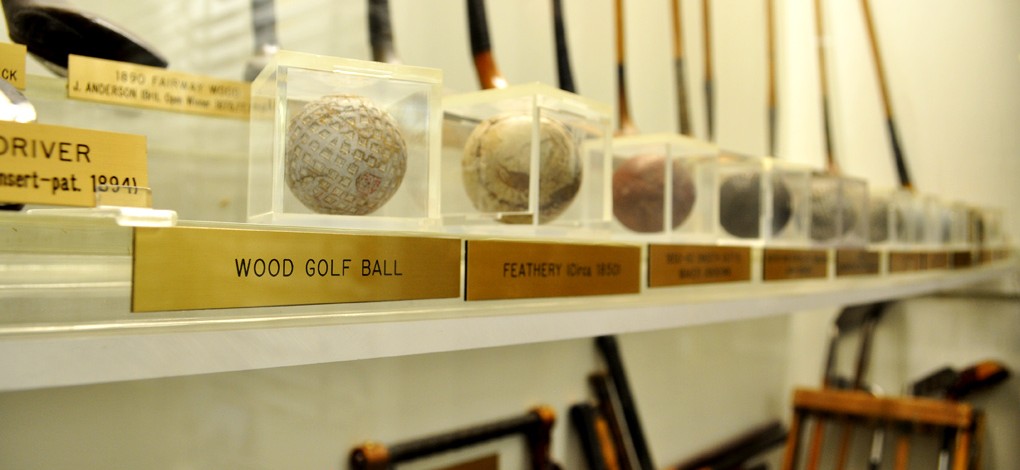
From hard wooden balls, followed by Featheries, followed by the Haskell ball, then the Balata era and finally the solid core, multi-layer urethane, the modern golf ball hardly resembles its ancestors. The biggest impact here was clearly cost. While no one could argue that their aerodynamic performance was seriously enhanced with each passing era, the mass production of the molded golf ball made the game more affordable for everyone. A Featherie could cost as much as the modern day equivalent of $20 per ball… Of course, if we keep going we may be headed back there.
The Tee
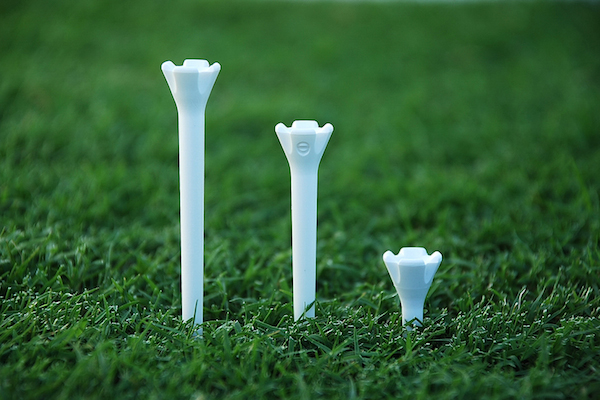
Clumps of dirt and later sand were used to tee the ball for some 500 years before the first peg actually designed to stick in the ground was invented in the late 19th century. Imagine how dirty a golfer’s hands used to get by the back nine.
The Lawn Mower
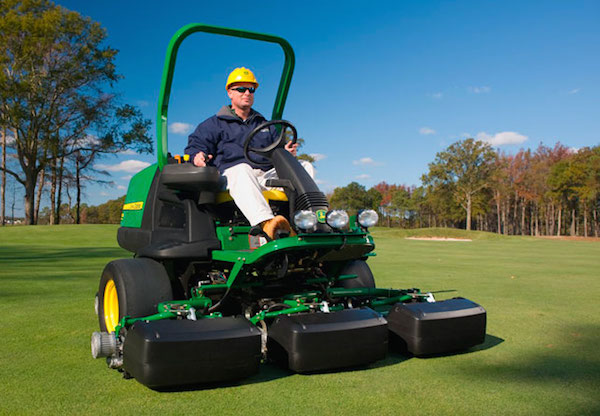
Grazing sheep can nip grass down pretty tightly, but mowers can do it a LOT more quickly and over much greater areas. It is interesting that the game was played for hundreds of years before greens keepers and their staff started riding mowers. By the 1980s, the whole course was being mowed by riding mowers and we had better lies everywhere.
Steel Shafts
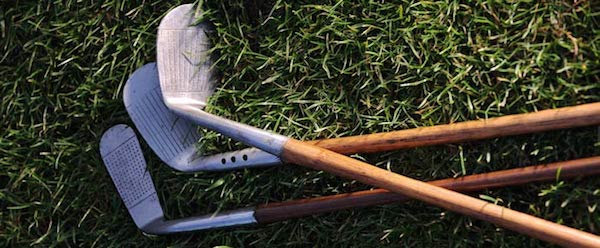
The first golf clubs were rather primitive looking things made mostly from hickory wood. Go into any collectors golf shop and you see them displayed conspicuously in the “unplayable classics” section. Golf clubmaking was an artful and tedious task in which some of the early golf professionals specialized, but because of this clubs were expensive and the game remained an elite affair.
The invention of mass produced steel-shafted clubs brought golf to more people because they could afford them, but steel had another effect — they played much differently than hickory shafts. It was said that one could hold the shaft of a hickory club in one hand and the head in the other hand and twist it almost halfway around. Compare that to the low torque graphite shafts of today, and the picture is quite clear: The same swing for both clubs is simply not going to work.
An interesting note: Bobby Jones retired from competitive golf when he was 28, allegedly to escape some of the pressures he faced and pursue his myriad other interests. It is also said that his golf swing never quite adjusted to the steel era, which was well under way by the mid 1930s (steel shafts were patented in 1910). Personally, I think he would have figured it out.
Irrigation

Mother nature in the form of precipitation watered golf courses for hundreds of years. The first fairway irrigation system was developed in Dallas, Texas, in 1925. The impact? Golf courses could be built where they previously could not. Irrigation and the roaring 20s saw a proliferation of golf courses like never before. Thus began the “greening of American golf,” an era from which we are only now beginning to recover. Courses in America and across the pond were so distinctly different, the first time Sam Snead saw the Old Course he asked what it was! Impact? American golf became an airborne affair, and yet another expense was added to our pastime.
The Stymie

Being blocked by an opponent’s ball, or being “stymied,” was outlawed in 1952. Match play, the oldest form of play, was never the same. I would love to see one tournament a year played with stymies still in effect.
The 14-Club Rule
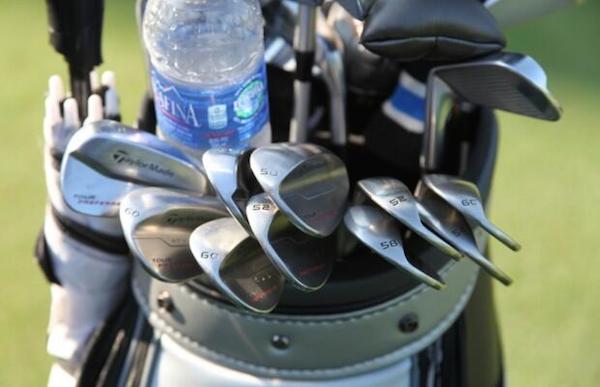
It wasn’t really an “invention,” but it shaped a lot of future ones.
The year 1938 saw the end of unlimited clubs in the bag and I’m sure caddies all over the world rejoiced. Lawson Little, the great amateur player of the 1930s, once went to battle with 31 clubs in his bag. Shotmaking has evolved in the modern era, or at least it had until the ball became nearly impossible to curve.
Golf Carts
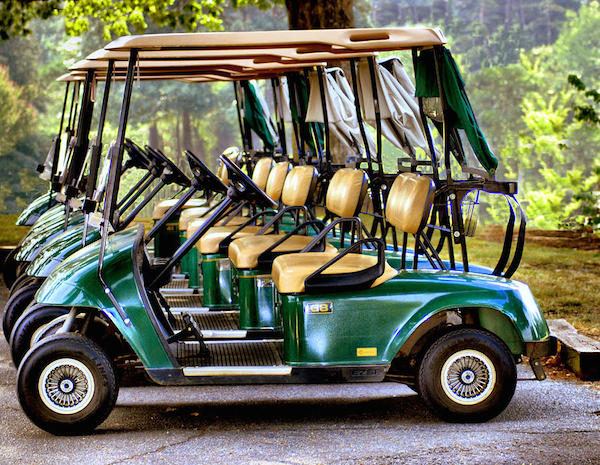
Although they were used as early as the 1930s, golf carts were everywhere by the 1950s. Their impact was immediate, bringing many more people to the game and allowing people who previously had trouble walking the course to play. In fact, the 1950s saw a huge wave of popularity in our game influenced largely by the emergence of fan-favorite Arnold Palmer and Dwight Eisenhower, a popular president who played a lot more golf than any of his predecessors and didn’t care who knew about it.
Television
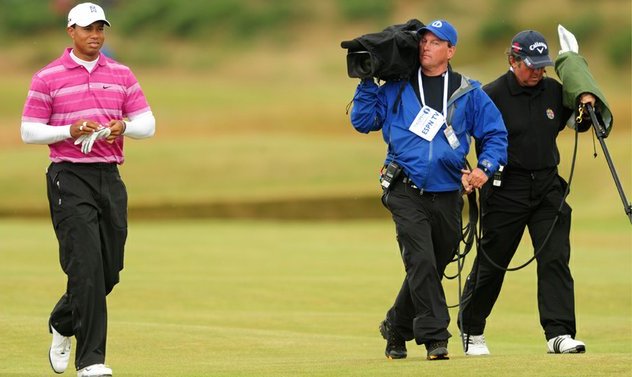
Another 1950s legacy, the first televised golf event, was in 1954 at George May’s famous Tam O’Shanter Open. This was really the first time viewers could enjoy the game as spectators even if they didn’t play. A great surge, particularly of professional golf, followed and the game began to lose much of the pomposity many attached to it. The era of the blue collar golfer was just around the corner.
The Lob Wedge
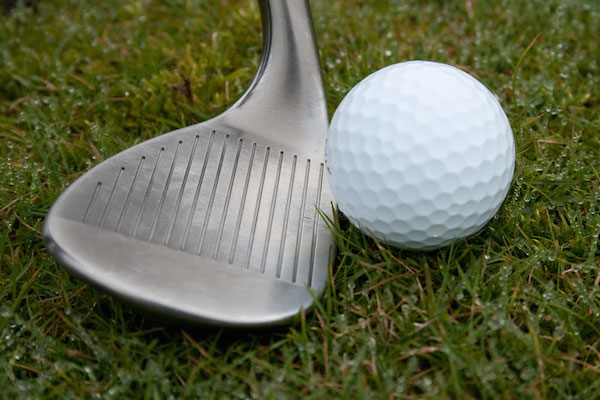
Although not that new, the popularity of the lofted wedge has had a significant impact, particularly on professional golf. Where players once feared “short siding” themselves, they now are more apt to go for tucked hole locations because of the lob wedge. Even the amateurs who have suffered forever from the perennial condition of trying to flip more loft on the club have benefited greatly from the lob. It is underrated in its impact on modern golf.
Perimeter Weighting

If I had to pick one man who may be more responsible for changing the modern game more than any other, I would unequivocally choose Karsten Solheim. His concept of moving the weight from the center of the clubface to the perimeter of putters and then irons has made golf easier for all of us. I’m 66 years old and still play fairly well thanks to Karsten’s curiosity.
Investment Casting
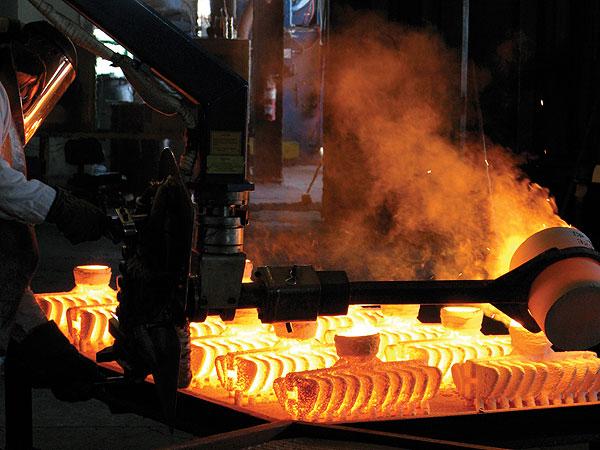
A more efficient, economic way to make golf clubs, casting has pretty much sent forged clubs packing. Ninety percent of irons today are cast, and all the woods… or metals, I mean, are cast.
Metal Woods
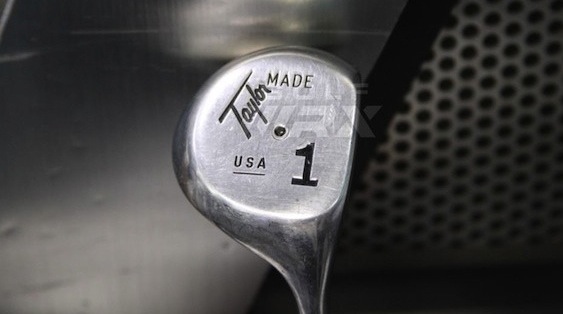
This oxymoron has confounded some English teachers, but has been the single greatest blessing to the modern game of golf. It’s now almost inconceivable to think of driving a golf ball with a wooden club head. Think about how slow we were on this one: The idea arrived in the 1970s, meaning that the game was played for about 500 years before someone raised the question: Isn’t the wood absorbing a lot of the energy in the hit? Duh!
It’s a good thing, too. Let’s leave the trees alone! When I hit a solid drive in the persimmon/balata era, which was when I wore a younger man’s clothes, it might go 250. Now I’m on the mid-to-late back nine of my golfing life and I can still drive it 250. Let’s use another sport as an example. In college I could dunk a basketball, but now I can’t even touch the net.
Oversized Drivers
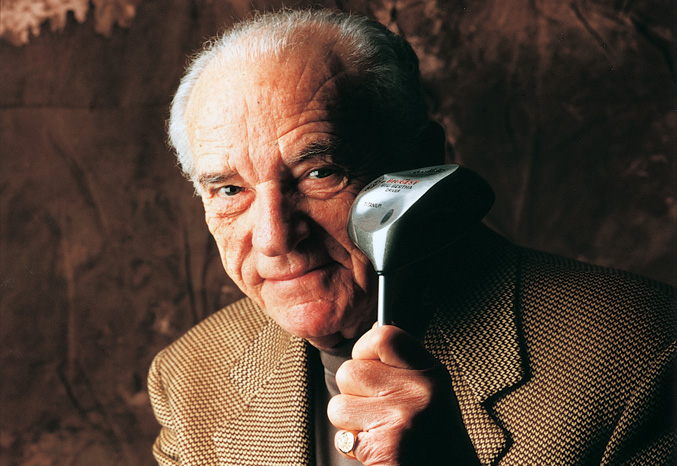
Some 25 years ago, Ely Callaway got to wondering if larger drivers might make the tee ball easier for golfers. He came out with the “Big Bertha” and the rest is history. My 460-cubic-centimeter driver looks perfectly normal to me now.
Graphite Shafts
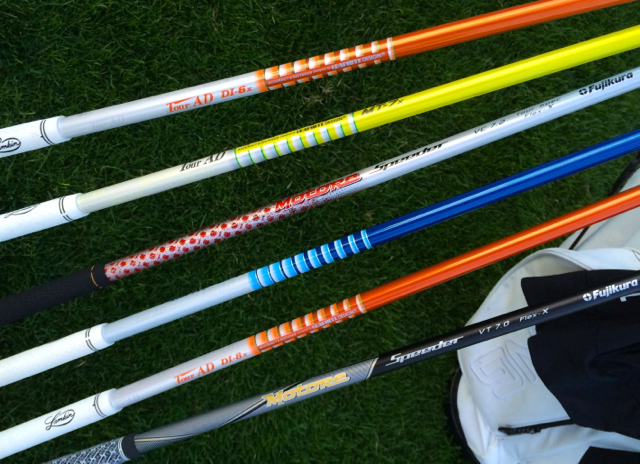
Talk about taking over the game. Try finding a steel-shafted driver driver in any serious golfer’s bag now. Do you want to swing this thing or this other thing that is a third of the weight? Golfers are pretty smart, after all. Credit Frank Thomas for this concept.
—
Curiosity might kill cats, but in golf it has made the game easier for all of us. While it is true that there are downsides to some of the changes — the lively golf ball, hot drivers that require larger playing fields and the like — changes are inevitable, and if these changes help the average golfer enjoy this wonderful game just a little bit more I’m ok with that. I am an advocate of some degree of bifurcation and think it’s only a matter of time.
Again, I welcome your comments on other inventions I may have omitted.
As always, feel free to send a swing video to my Facebook page and I will do my best to give you my feedback.


Club Junkie
Tour Edge Exotics mini driver review + TaylorMade Spider ZT Max first look – Club Junkie

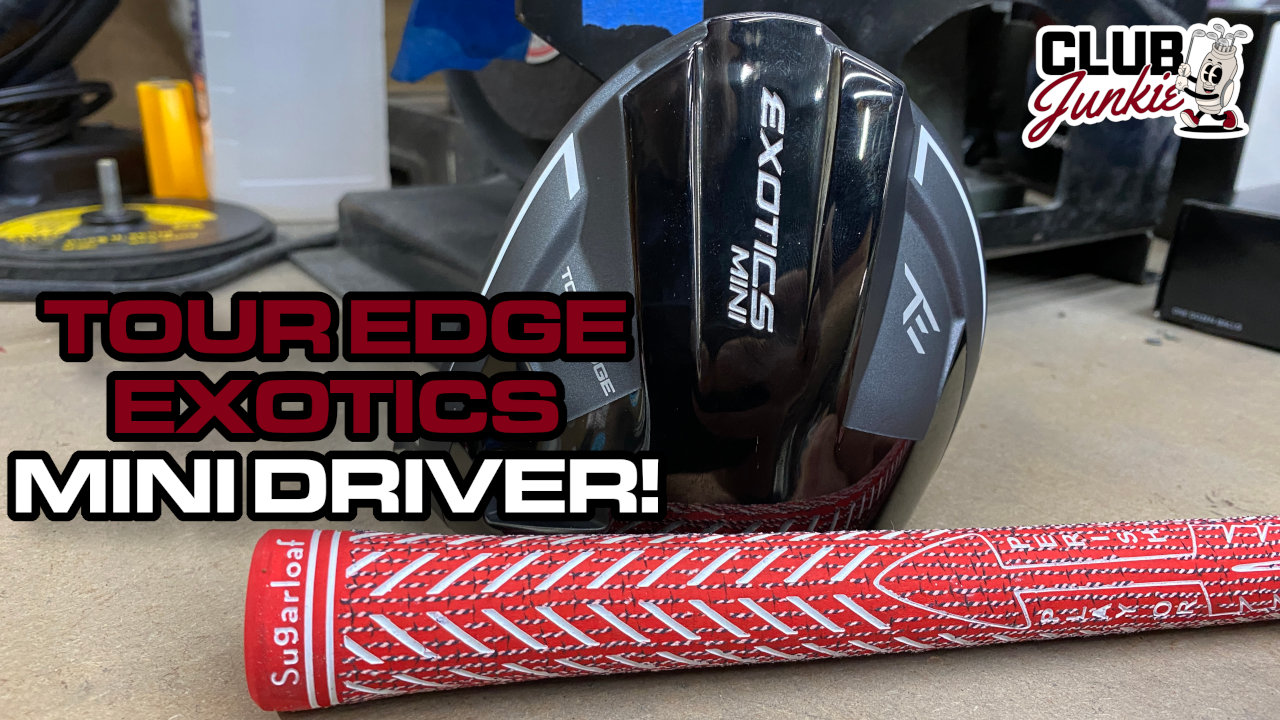
On this episode of Club Junkie, I put the new Tour Edge Exotics Mini Driver to the test and break down the performance, forgiveness, distance, and where it fits compared to a traditional driver or strong fairway wood. If you have been curious about adding a mini driver to the bag, this one is worth a look.
I also dive into the new TaylorMade Spider ZT Max putter that was recently spotted and discuss the growing zero torque putter trend. Plus, there is a closer look at the new Project X Titan Yellow shaft showing up on the PGA Tour and what makes it different from other profiles currently out there.
Opinion & Analysis
AVL: We’re talking about practice! My best tips for taking your game to the course

With the beginning of June on the horizon and courses rounding into peak condition for the season, it’s time to hone the finer skills that often get rusty over the winter. More sunlight also means more time to get out on the course and work on your game.
Whether it’s the practice green or the driving range, there’s always something to improve—whether you’re enjoying the fresh air or preparing for a weekend game or tournament. You can work on drills or freestyle around the green, and friendly competition is a great way to sharpen your skills.
While there are endless ways to get better at golf, I’m going to focus on practicing around the green. Let’s take a look at a few things to keep in mind as we head into the summer months.
Drills
From the driving range to the practice green, it’s important to incorporate drills into your routine. Years ago, I spent a weekend working on my short game with James Sieckmann. He recommended doing drill work for 5–10 minutes, then returning to your main practice.
This way, you create a balance between structured drills and real-world scenarios, so you’re not confined to “perfect” situations. For example, hitting the same three-foot putt over and over is good for repetition, but after a while, it becomes less interactive for your brain.
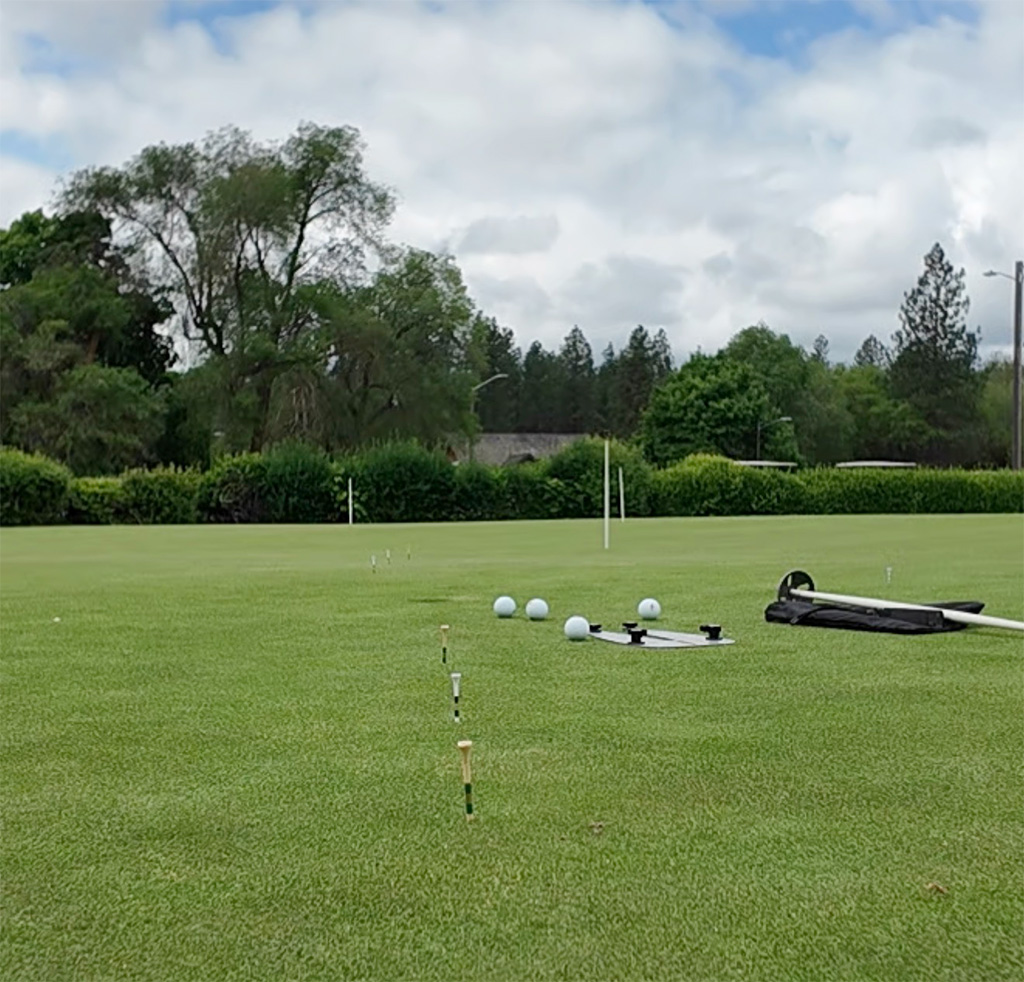
My approach is to use a putting trainer with a narrow gate for the ball to pass through, or simply place tees just outside the width of the ball. I’ll hit a series of four putts through the gate for three sets. Then, from a similar distance, I’ll hit four putts without the training aid and repeat that sequence three times.
Next, I’ll hit a number of 15–25 foot putts in a random fashion, then circle back to repeat the short putt drills with and without the training aid.
This breaks up the rhythm of hitting short putts with the training aid. When you hit the same short putts over and over, it’s easy to get into a groove—which is great for the drill, but not reflective of actual course play. While finding a rhythm is fundamental for drills, I like to introduce variation with longer putts to keep things realistic.
Game Mode
Once you’ve established a foundation with drills, it’s time to simulate on-course scenarios. This is where a few practice games come in handy.
One that I’ve been enjoying lately involves putting 10- to 15-footers with two balls. If I make the putt, great! If I miss, I pull the missed ball back a putter length. Suddenly, that little tap-in becomes a nerve-wracking three-footer—at least at first. As you get better at this game, those three- and five-footers become much more comfortable and routine.
It may sound cliché, but each shot is just what it is—it’s how we react that makes the difference. I like this game because it blends the pressure of on-course putting with the consequence of leaving yourself a much longer putt than usual.
Another game I like is one I recently learned from Brad Faxon. Place three tees in a line at four different locations around the hole: one at 3 feet, one at 6 feet, and one at 8 feet. The 3- and 6-foot putts count as par, and the 8-footer is for birdie.
This game keeps you focused on scoring and helps you get into a competitive mindset. You can even think about this putting game while you’re on the course. I just started playing it, and last week I couldn’t get better than two under par.
Competition
Competition during practice is when drills and games come to life, and you start to see results. For me, nothing beats a putting contest with a friend or two. In the right setting, these contests can become talking points for the whole season.
Match play, a game of 21, or simply seeing who can make the most one-putts (with a small prize on the line) are all great ways to simulate real on-course pressure. Recently, I played in a putting contest where one competitor made back-to-back 30- and 50-foot putts. As they say, expect your opponent to make every putt—and he nearly did. That’s impressive, and it’s something you see on the course, too: you have to stay committed to your game plan, no matter what.
When it comes to practice, it’s important to blend feedback from recent rounds with the fundamentals you want to reinforce. Drills, games, and competition—from the driving range to the putting green—form the backbone of skills you’ll rely on during actual rounds.
Finding the right balance is something we’re all working on, one practice session at a time. With the beginning of June on the horizon and courses rounding into peak condition for the season, it’s time to hone the finer skills that often get rusty over the winter. More sunlight also means more time to get out on the course and work on your game. Whether it’s the practice green or the driving range, there’s always something to improve—whether you’re enjoying the fresh air or preparing for a weekend game or tournament. You can work on drills or freestyle around the green, and friendly competition is a great way to sharpen your skills. While there are endless ways to get better at golf, I’m going to focus on practicing around the green. Let’s take a look at a few things to keep in mind as we head into the summer months.
Drills
From the driving range to the practice green, it’s important to incorporate drills into your routine. Years ago, I spent a weekend working on my short game with James Sieckmann. He recommended doing drill work for 5–10 minutes, then returning to your main practice. This way, you create a balance between structured drills and real-world scenarios, so you’re not confined to “perfect” situations. For example, hitting the same three-foot putt over and over is good for repetition, but after a while, it becomes less interactive for your brain.
My approach is to use a putting trainer with a narrow gate for the ball to pass through, or simply place tees just outside the width of the ball. I’ll hit a series of four putts through the gate for three sets. Then, from a similar distance, I’ll hit four putts without the training aid and repeat that sequence three times. Next, I’ll hit a number of 15–25 foot putts in a random fashion, then circle back to repeat the short putt drills with and without the training aid.
This breaks up the rhythm of hitting short putts with the training aid. When you hit the same short putts over and over, it’s easy to get into a groove—which is great for the drill, but not reflective of actual course play. While finding a rhythm is fundamental for drills, I like to introduce variation with longer putts to keep things realistic.
Game Mode
Once you’ve established a foundation with drills, it’s time to simulate on-course scenarios. This is where a few practice games come in handy. One that I’ve been enjoying lately involves putting 10- to 15-footers with two balls. If I make the putt, great! If I miss, I pull the missed ball back a putter length.
Suddenly, that little tap-in becomes a nerve-wracking three-footer—at least at first. As you get better at this game, those three- and five-footers become much more comfortable and routine. It may sound cliché, but each shot is just what it is—it’s how we react that makes the difference. I like this game because it blends the pressure of on-course putting with the consequence of leaving yourself a much longer putt than usual.
Another game I like is one I recently learned from Brad Faxon. Place three tees in a line at four different locations around the hole: one at 3 feet, one at 6 feet, and one at 8 feet. The 3- and 6-foot putts count as par, and the 8-footer is for birdie.
This game keeps you focused on scoring and helps you get into a competitive mindset. You can even think about this putting game while you’re on the course. I just started playing it, and last week I couldn’t get better than two under par.
Competition
Competition during practice is when drills and games come to life, and you start to see results. For me, nothing beats a putting contest with a friend or two. In the right setting, these contests can become talking points for the whole season. Match play, a game of 21, or simply seeing who can make the most one-putts (with a small prize on the line) are all great ways to simulate real on-course pressure. Recently, I played in a putting contest where one competitor made back-to-back 30- and 50-foot putts. As they say, expect your opponent to make every putt—and he nearly did. That’s impressive, and it’s something you see on the course, too: you have to stay committed to your game plan, no matter what.
When it comes to practice, it’s important to blend feedback from recent rounds with the fundamentals you want to reinforce. Drills, games, and competition—from the driving range to the putting green—form the backbone of skills you’ll rely on during actual rounds. Finding the right balance is something we’re all working on, one practice session at a time.


For Korean golfers, we always look forward to the last of the kkot-saem-chu-I for the true start of a new golf season. The term refers to a cold snap, but literally translates as “winter being jealous of the flowers beginning to bloom, thus lashing out one final time before surrendering to spring”.
A rather poetic mouthful packed into a short expression.
Koreans can be like that. Understated, yet oddly expressive at the same time. And nowhere is this more true on the golf course and in our golf bags. In fact, I suspect many Korean golfers look forward to new apparel and accessory drops more than they do actual equipment launches each year.

At this point, Korean golf fashion may exist on its own timeline. (courtesy of @seonbi_golfer)
There is ample evidence to support that suspicion. Korea is the world’s third-largest golf market behind the United States and Japan, yet its appetite for golf apparel exceeds that of both countries combined. Recent estimates suggest that Korea accounts for nearly 40 percent of the global golf apparel market, placing it among the world’s most influential golf fashion markets and punching well above its size.
Simply, we care deeply about how new golf clubs look and feel, but enjoy looking good while swinging them even more.
Golfers in the West may laugh and say that golf is played on a course, not a fashion runway. Perhaps. But what’s the harm in trying to look and feel good, if the added self-confidence can help actual performance? It certainly seems to have worked for Jason Day, who may have unlocked a new stats category: dormant strokes gained. Coincidence?

During the COVID-era, estimates placed the market near $9 billion, an astonishing figure for a single country.
As a proud member of Gen X, I’ve witnessed the highs and lows of golf fashion firsthand. The pleated trousers and wing-tipped shoes of Jack Nicklaus, the stylish plus-fours and knickers of Payne Stewart, the baggy black trousers and fitted mock-necks of Tiger Woods, and the thigh-hugging athletic tailoring of Rory McIlroy. Golf fashion, like the golf swing itself, has rarely stood still.
But nowhere have those trends shifted, evolved, and been scrutinized quite as relentlessly as in Korea. Here, golf fashion moves faster than fairway gossip, and consumers dissect brands with a level of discernment that can be both impressive and mildly terrifying. New brands are studied, judged, embraced, or dismissed with startling efficiency.
The result is a consumer base with one of the sharpest eyes for quality and authenticity anywhere in the world. It is difficult to quantify, but easy to recognize. Clean lines without trying too hard. Luxury mixed with utility. Trend awareness balanced by restraint and purpose.
It’s golf fashion shaped by one of the world’s most style-literate cities, something I like to call Seoul Sensibilities, referring to the taste level forged by a uniquely competitive environment.
And increasingly, global brands have noticed.

Many golf brands in Korea have their own flagship shops dedicated to apparel only
Titleist understood this years ago, when its apparel business in Korea took on a life of its own under new ownership and local direction. What had once been a straightforward extension of an iconic equipment giant became something sharper and more premium. By going all in on the serious Tour-player look (I couldn’t even fit into their XL sizes), Titleist struck the right chord with Korean consumers and helped its fledgling apparel business break into the mainstream. Titleist became a household name even for non-golfers who wore its caps, shirts, and windbreakers in daily life. In many ways, it proved that even heritage golf brands could carry real fashion credibility when viewed through a Korean lens.
Several years later, PXG took a page out of Titleist’s playbook and followed suit. Korean consumers helped transform the brand from one known largely for irons and loud commercials into something broader and more stylish. PXG apparel’s growth in Korea was explosive, where it found an early audience and turned the category into something more than mere logo merchandise. It is still hard to walk anywhere in Seoul without seeing its palindrome logo.
Malbon’s meteoric rise in the United States was genuine, but its ascent into a global golf lifestyle brand owes much to Korea, where it was elevated by a market already fluent in modern golf style. Korea did not simply embrace Malbon. It pressure-tested the concept, refined its appeal, and helped push it into the global spotlight.
As such, new brands may arrive from abroad, but more often than not, their sharpest evolution happens here. If a brand can earn credibility in Seoul, it’s deemed to have passed one of the toughest style audits in the game.
That is why the next meaningful chapter may not come from outside, but from a Korean brand moving in the opposite direction, carrying those Seoul Sensibilities outward as K-pop once did.

Play young Stay dope.
From Seoul, With Intent
Khalhon is a label that feels less like a trend-chasing newcomer and more like the product of a market that has already seen everything. Golfers here have long been surrounded by luxury logos, technical fabrics, and tour uniforms disguised as lifestyle wear and vice-versa. In other words, novelty alone rarely lasts here, and the Koreans seems to understand that instinctively.
Its style language leans into clean silhouettes, relaxed but tailored proportions, muted palettes, and premium materials that speak quietly but confidently. There is a modern city aesthetic running through it all, with strong layering pieces, thoughtful textures, and subtle branding that suggests sophistication rather than demanding attention.

“Built for the course. Designed beyond it.”
Most importantly, the garments seem designed to blur the line between golfwear and everyday style. Shirts, trousers, knitwear, and outer layers move comfortably between a game of screen golf, a lunch reservation, an airport gate, or an afternoon coffee in Gangnam with friends.
It raises the question of whether this is golfwear that happens to look good off the course, or everyday clothing that performs beautifully on the fairways.
Personally, I have long appreciated Nike Golf for its clean, athletic modernization of golf attire. It also has the useful side effect of making me look like a more serious golfer than I probably am. But off the course, there are times when being instantly identified as the golf guy in a crowd of non-golfers can feel a touch self-conscious.

“Built for the course. Designed beyond it.”
That is part of what drew me to Khalhon, which seemed to blend golf and everyday wear naturally. While some of the outfits may be slightly beyond my personal confidence level, the brand also offers tasteful options for older guys like me who still want to express a little personality without regretting the decision later.
These are not simply flashy outfits worn on the course and then banished to the closet until the next tee time. They work surprisingly well off the course too, and I suspect many of the pieces will still look right a couple of years from now, which would certainly be kinder to my wallet than most golf fashion trends tend to be.
And perhaps that broader lifestyle positioning also helps explain why someone like Sean Wotherspoon would find Khalhon creatively interesting in the first place.

“Built for the course. Designed beyond it.”
“Korea is not only one of the most fashion-forward golf markets in the world, but one of the most fashion-forward markets globally. Korea is ahead, and I love to watch and try to catch up.” – Sean Wotherspoon, Creative Director at Khalhon
Seoul and Beyond
If Khalhon’s rise says something about where Korean golf fashion is today, its relationship with Sean Wotherspoon says even more about where it is heading.
For readers less familiar with Sean Wotherspoon, his arrival at Khalhon is not some routine celebrity endorsement or influencer collaboration. In design and streetwear circles, Wotherspoon is regarded as one of the more influential creative voices of his generation, particularly when it comes to blending nostalgia, storytelling, and contemporary culture into products that people can connect with.
He first gained widespread attention through his now-famous Nike sneaker collaborations, where his vintage-inspired designs and instinct for color helped turn him into one of the defining artists of the late-2010s sneaker era. His work gradually expanded beyond footwear into apparel, automotive collaborations, collectibles, and broader lifestyle design.
Modern golf style now extends well beyond the fairways, where performance and functionality are largely expected by default. And while plenty of brands already make technically competent golfwear, Khalhon seems more focused on designing clothes people would genuinely want to wear even after the round ends.
And when guys at Wotherspoon’s level show genuine interest in working with a Korean golf brand as its new Creative Director, fashion circles tend to sit up and pay attention. There’s already a huge buzz among the fashion-conscious here about upcoming collabs with iconic sports stars and brands.

“My creative direction for Khalhon is disruptive, colorful, nostalgic, and modern. My goal is to blend these avenues seamlessly within each collection.” – Sean Wotherspoon
In chatting with Sean, what stood out most to me was how genuinely energized he sounded about the project itself. Despite having already worked across and countless other creative spaces, he described golf as a completely fresh category for him, saying that Khalhon “will be an amazing vehicle for my design work.”
At the same time, his enthusiasm seemed tied just as much to Korea itself. He spoke openly about admiring Korea’s fashion culture while repeatedly insisting he is still a terrible golfer.
There was something oddly refreshing about that humility. Rather than sounding like a celebrity parachuting into golf simply because the category suddenly became fashionable, Sean sounded genuinely curious about what Korea might do with the category next.
And perhaps that is what makes Khalhon feel interesting right now. The brand feels less like a trend-chaser and more like the natural result of a market now confident enough to export its own point of view.
For years, global brands came to Korea to sharpen their image against one of the most discerning audiences anywhere. Now, a Korean label appears ready to send those Seoul Sensibilities outward instead.
Which brings us back to kkot-saem-chu-i.
That final cold snap before spring always arrives with a reminder that seasons are changing, whether we notice it immediately or not. Golf fashion feels a little like that right now as well, as the old boundaries between sport, streetwear, luxury, and everyday style continue to soften.
And somewhere in Seoul, a Korean golf label already seems prepared for whatever season comes next. I just hope they have everything in my size.

Justin Rose WITB 2026 (April): Full WITB breakdown with new McLaren irons

What’s the story behind Webb Simpson’s custom-stamped irons?

Cadillac Championship Tour Report: Spieth’s sizable changes, McLaren Golf launches, and more

Kristoffer Reitan’s winning WITB: 2026 Truist Championship

Russell Henley’s winning WITB: 2026 Charles Schwab Challenge

Cameron Young’s winning WITB: 2026 Cadillac Championship

Aaron Rai’s winning WITB: 2026 PGA Championship

Nelly Korda WITB 2026 (April)

Justin Rose on the switch to McLaren Golf, learnings from previous equipment moves

Photos from the 2026 CJ Cup Byron Nelson

Chris Gotterup WITB 2026 (June)
Chris Gotterup had >14 clubs in his bag when photographed prior to the Memorial Tournament. Drivers: TaylorMade Qi4D (8 degrees), Ping...


Jason Day WITB 2026 (June)
Jason Day had >14 clubs in his bag when photographed prior to the Memorial Tournament. Driver: Ping G430 LST (10.5 degrees...

Nastasia Nadaud WITB 2026 (June)
Driver: Titleist TSR4 (9 Degrees) Shaft: Project X EvenFlow Riptide CB 6.0 S 3-wood: Titleist GTS2 (15 degrees) Shaft: Graphite Design Tour AD DI...

Keith Mitchell WITB 2026 (June)
Driver: TaylorMade Qi4D LS Shaft: Project X Titan Yellow 6 X 3-wood: TaylorMade Qi10 (16.5 degrees) Shaft: Mitsubishi Tensei 1K Blue 90...
-
 News3 days ago
Russell Henley’s winning WITB: 2026 Charles Schwab Challenge
-
 Whats in the Bag2 weeks ago
Aaron Rai’s winning WITB: 2026 PGA Championship
-
 Tour Photo Galleries2 weeks ago
Photos from the 2026 CJ Cup Byron Nelson
-
Equipment13 hours ago
Details on Jason Day’s latest prototype Avoda iron setup
-

 Equipment2 weeks ago
CJ Cup Byron Nelson Tour Report: Koepka and Kim’s newest putters finally get hot
-
 News6 days ago
Charles Schwab Challenge Tour Report: MacIntyre, Åberg and Spaun all switch putters, TaylorMade launches new Spider
-
 Equipment1 week ago
Details on J.J. Spaun’s surprise putter switch
-
 Popular Photo Galleries1 week ago
Photos from the 2026 Charles Schwab Challenge


Pingback: Agree with Clark’s Top 15 Golf Inventions? Share yours. - Golf Slot Machine
kev
Feb 23, 2015 at 7:29 am
I have a golf idea /invention how do I get it off the groud . Anyone know
Pingback: Agree with Clark’s Top 15 Golf Inventions? Share yours.
Pingback: 15 Golf Inventions You Under-Appreciate - The Golf Shop Online Blog - The Golf Shop Online Blog
Pingback: The Advancing Game Of Golf - The Golf Shop Online Blog
Jeff
Nov 10, 2014 at 6:42 pm
If it wasn’t for a cart I’d never be able to take my 3 year old neice to the course when I play and get her around the course. I know you all can say what you want, “3 year Olds don’t belong on the golf course.” Well, she likes it, she loves golf now. She can hit the ball and she’s 3. I pay my greens fees, she stays mostly in the cart, I will drive up and tell anyone I see on the course to feel free to play through. The course gets the cart revenue. I keep playing, she’ll keep playing the rest of her life.
Carts aren’t evil, lazy golfers are. If you took carts away the same assholes would be decking out their pushcarts with padded seats, retaking yardage on their watch, taking a sip of their warmed beverage, and missing the green, and repeating it every shot. Carts aren’t the only thing making these guys slow.
Taylor
Nov 7, 2014 at 3:50 pm
What a bunch of snobs!!! You guys blasting carts have absolutely ZERO understanding of what golf has evolved to.
I was a pro for many years. Wife still is a pro who also played professionally. I love the game passionately. But that is what it is. A game. Golf is not a not a sport. Its recreation. I rarely ride. I much prefer to walk. That’s just my personal preference. My wife and daughter ride and I walk along as we play. However, carts are an absolute accepted part of the game and more importantly the industry. Try running a charity tournament without one. Try pulling cart revenue out of the game and watch just about every course you play go out of business.
I agree that walking is a far superior way to experience a round of golf. But carts have expanded the reach of the game to levels it never could have dreamed of without them. Golf is more accessible because of them. It is more social because of them. From my years in the biz, I can say that most of the golf snobs are far more detrimental than the majority of the beer swilling (Hey, they’re buying 5 dollar beer and generating revenue, never see a walker doing that) golf illiterate cart riders I’ve encountered.
Rant over.
Barney Adams
Nov 6, 2014 at 9:04 pm
Dennis. The graphite shaft was Jim Flood. As for the 60 deg wedge I could argue that all but a very few should consider using one. Would replace with soft spikes in a heartbeat.
Dennis Clark
Nov 6, 2014 at 9:16 pm
I want to hear why most shouldn’t use it pls
Al385
Nov 8, 2014 at 4:08 am
The most used clubs in my bag: putter and 60º lob wedge
barney adams
Nov 8, 2014 at 11:37 am
It’s too often a risk reward shot that requires a high degree of skill. The flop over the trap slightly under-hit ends up semi buried in the sand because of the spin. I’ll skip the skulls some of which have never been found.
you can hit a great flop and end up 7′ from the hole still odds on to 2 putt and if you don’t hit it perfectly it’s a disaster.
The key is practice, lots and lots. not something a lot of amateurs do and even if they wanted there aren’t many adequate facilities.
A full swing 60,70 yd shot you can do the same with a SW and avoid the beauty that goes straight up.
Some folks do fine, I’m talking about the majority.
have you noticed how much better putting surfaces have become since softspikes
Dennis Clark
Nov 8, 2014 at 3:17 pm
putting surfaces have improved certainly; putting stats have not kept pace but thats another story.
Quite the opposite on the 60. mid-high handicapper can be more aggressive with attack angle and body rotation on short pitches with more loft on club. Shallow attack angles from backing up or chicken winging from early release can all benefit from MORE loft around the greens. It’s when they don’t have enough loft that they get in trouble. I have a 64 I use for teaching, But of course this is a teachers perspective. Theorettically i agree… they don’t know how to use it from so many years of flipping loft on the club. Its like a player using too stiff a shaft to too little loft and hanging back to
get loft on the club. Give them a ladies shaft and 13 degrees of loft and you’ll see them start turning through the shot with mess less right side bend. Promoting bad swings with clubs that off set the mistake is not something I prefer as a teacher.
Dennis Clark
Nov 8, 2014 at 3:49 pm
I mist my steel spikes when I walk on the cart path!! Loved the old sound: 🙂
Jack Wullkotte
Nov 29, 2014 at 12:36 pm
Hi Barney,
First of all, I still can’t believe Flip is gone. I thought he would live forever. As far as the different wedges they now make, I’m still all for the old fashioned way of opening the face of the sand iron to whatever degree of loft that you need. Throughout the 49 years that I was Jack’s personal clubmaker, he used a 52 degree pitching wedge and a 58 degree sand wedge. Some critics say he was never a good wedge player. Are they serious? Try winning 20 majors (includes 2 US Amateurs) without a few good wedge shots. True, if he would have had Gary Player’s short game, he would have consistently shot scores in the 50’s. 🙂
See you at the show.
Jack Wullkotte
Dennis Clark
Nov 6, 2014 at 9:23 pm
Power Pod Jim…
barney adams
Nov 8, 2014 at 11:41 am
and graphite shafts as he started Aldila, ( I researched this one with a couple of my ancient contemporaries) and the backassward putter and a bunch of other things. I loved the power pod the face was about 7deg closed !
I have a dual strap stand bag next to the wall in my office from 1870 ! Interesting how long it took for a modern version.
Dennis Clark
Nov 12, 2014 at 6:31 pm
Barney my friend, what’s up? See below.
http://www.golfchannel.com/media/ul-innovation-series-graphite-shafts/
Jack Wullkotte
Nov 29, 2014 at 1:31 pm
Having worked with Toney Penna for 20 years at the MacGregor Golf Co. in Cincinnati, Ohio and then 6 years with him at the Penna Golf Co. in Jupiter , FL, here are some of the innovations he brought to the manufacturing area of golf. In 1950, he designed the MT model, which was essentially the precursor of the low profile iron that was supposedly started in the 1970’s. He also went to cycolac, aluminum, and graphite face inserts in the 1960’s. As far as I know, he was the first manufacturer to feature a whole set of investment cast irons. From what I can remember, Ping only made putters at that time and a small company named Tomahawk Golf Co. made putters and wedges. Toney also featured the Colo-Krome faces on the Tommy Armour irons in the late 1950’s and the black ceramic faces in several iron models in the early 1960’s. He was the first one to feature “bounce” on the soles of iron heads. He created antique finishes on wood heads in the late 1950’s and 60’s. He was one of the first manufacturers to begin producing complete sets of irons with Aldila graphite shafts. Unfortunately, it was a big mistake because he installed them in his short necked forgings, and all the shafts snapped at the top of the hosel. Not the fault of Aldila. Toney designed the jumbo LHHLTFF model in the 1960’s. LHHLTFF stood for “Left hip high and let the f—– fly.” I know there were other firsts that were initiated by Toney, but that should be sufficient to bring some comments that are either informative, corrective, or complimentary.
Jack Wullkotte
Jack Wullkotte
Nov 29, 2014 at 3:22 pm
Barney, Here’s a little incident that occurred at the Penna Golf Co. in 1973 when I was the plant supervisor. Jim Flood came to our plant with some of his Aldila shafts, intent on selling Toney the idea of using graphite shafts in all of our clubs. Toney instead, demeaned the graphite shaft as having more torque than hickory shafts, more flex than hickory shafts, and too light, along with the fact that he thought they would break too easily. Flood then took one of the shafts, put the tip end of the shaft on the lowest rung of a chair, and the butt end of the shaft on the floor, and stepped on the middle of the shaft. The shaft bent, but did not break. Toney was impressed. I tried to make Toney aware of the fact that the middle of the shaft touched the floor before it ever got to the breaking point, but he told me to mind my own business. Because of that demonstration, Toney ordered a ton of Aldila shafts. After the shafts were delivered, a contingent of executives from the ATO Co., our parent company, came to Jupiter for a visit. Toney gave them a tour of the plant and then we all went back to Toney’s office. That’s when he unveiled the Aldila graphite shaft. He used Flood’s method to demonstrate how strong and limber the shaft was. The only problem was, Toney put the tip of the shaft on a higher rung with the butt end on the floor. The shaft was at a much more severe angle than Flood had it. After Toney had set the shaft in position, he stepped back and sent his foot into the middle of the shaft. Naturally, the shaft snapped in two with one part going one way and the other going the other way. He literally screamed, “that dirty SOB, I’ll kill him.” Eventually, Toney tried to get Aldila to take the shafts back, but they wouldn’t do it, so, Toney began putting Aldila shafts in all the iron heads. Most all of the shafts broke, because of the short hosels. By then, I had quit Penna’s, so I don’t know what went on from there.
True story.
Jack Wullkotte
Dennis Clark
Dec 2, 2014 at 3:00 pm
LOL Jack, that’s a great story!! To get back to the issue, I’m discussing with Barney, did Flood or Frank Thomas first come up with idea for graphite? On the putter, are you saying that Karsten was first responsible for the idea of perimeter weighting, but Penna built that concept into his irons before Karsten? Thx for reading my column.
Tom Beavers
Nov 6, 2014 at 7:28 pm
Dual strap stand bags. The thing old guys put on the putter grip to pull the ball out of the hole. Lightweight waterproof golf shoes. And the headcover that keeps a beer cold !
Dennis Clark
Nov 6, 2014 at 9:04 pm
I wish they had the double strap bag when I carried!
Dan
Nov 6, 2014 at 11:44 am
As stated golf carts are a neccesary evil only to those who can still walk a course. I carried my bag for over 25 years but, got sick and can’t handle walking 18 holes anymore or even 9. I wish I could because I loved to walk the fairways and had time to think about my next shot but, the fact is I would have had to give up the game I love without golf carts. Adding GPS to carts was maybe not an invention but, a way to speed a round up for those of us who don’t own personal GPS devices IMHO.
Straightdriver235
Nov 6, 2014 at 12:49 pm
These are labeled the “best inventions”–the golf cart is not among them. Time for you to give up the game, or play in that cart when no one else is around, dude. The caddy provided more jobs around the course and introduced lower class youth to the game. We are much worse for it, not to mention paths are built way too close to fairways and greens. I am sympathetic to Casey Martin, but for the masses, no. Tghe cart is a lazy excuse for claiming you are playing golf. Absent a medical waiver it is not golf when you ride a cart.
Jeremy
Nov 6, 2014 at 2:18 pm
“It’s not golf unless you pay a lower class child to do the heavy labor, dude.”
-You
Dennis Clark
Nov 6, 2014 at 6:03 pm
i think your medical exemption is exactly what carts should be for. i think some of the comments are more directed to the “abusers”. Actually at many courses they are MANDATORY now, a revenue source of course.
Dennis Clark
Nov 6, 2014 at 6:05 pm
i certainly agree on the caddy. its how i started and many more like me. Growing up on the “other side of the tracks” had it not been for caddying , no golf.
Dan
Nov 7, 2014 at 1:17 pm
I hope and pray you stay young and never get sick enough to need a cart. I’m not making an issue of this but, as I said, I walked for over 25 years (even before dual straps) and I miss it a lot but, I’m not giving up the game I love because I have to use a cart. Good Luck to you as you grow older.
Jem
Nov 8, 2014 at 11:22 pm
“Time for you to give up the game”? Seriously? Who do you think pays the bills at that course you play? Old guys in carts. Remember that before you take away their clubs and stick them in a nursing home. I love to walk, but it’s hard to find playing partners who share that desire, so sometimes I use a cart. I agree that, in my opinion at least, the game is better when walked, but it’s not up to me to judge how another guy wants to play. As long as they’re not running over me, more power to them in the cart.
bok006
Nov 6, 2014 at 10:26 am
I still get stymied now and then.
Not by opponents ball but trees, bushes, rocks……..
Simon Hubbard
Nov 6, 2014 at 6:23 am
Not an invention really but the USGA and the R&A. Some would argue that they don’t get things right all the time, but the intent is there to preserve the heritage of the game.
And again not an invention but the book written by Dr Alastair Cochran, the search for the perfect swing, still current and used after 40 years. This has helped our overall understanding of what happens when a ball is struck.
Dennis Clark
Nov 6, 2014 at 7:29 am
Spot on wih Search. Soooo far ahead of its time. I still use a lot of the information in there in my teaching and its over 45 years old! Good call.
Shakers97
Nov 6, 2014 at 1:13 am
Golf gps watch, stand bag, mallet putter, trackman, video analysis……
Terry
Nov 6, 2014 at 1:23 pm
The Velcro glove!
Dennis Clark
Nov 6, 2014 at 9:01 pm
Remember the old button down gloves? Hard to imagine now!
Pingback: The 15 Best Inventions in Golf History | Golf Gear Select
leftright
Nov 5, 2014 at 8:17 pm
Personally I wish graphite shafts had never been invented. If I was omnipotent I would do away with them. They have caused more frustration, money and confusion than anything else in the game. You think I’m crazy just ask Barney Adams. The earliest ones would send the ball into the next county and now they create more confusion and bankruptcies than the Democratic party.
marcel
Nov 5, 2014 at 6:49 pm
Robin Williams is missing there
Phil
Nov 5, 2014 at 4:51 pm
What about the Cart/Beverage Babe? It’s gotta be up there….
Nathan
Nov 5, 2014 at 2:43 pm
What about Soft Spikes or Golf Chain Retail Stores?
SMH
Nov 5, 2014 at 1:34 pm
This article is complete garbage, the best inventions were the last 5 TMAG drivers, fairway woods, and hybrids
Andrew
Nov 5, 2014 at 10:36 pm
Dagnabbit…I can’t find mention of screws, slots and white paint anywhere…
Bernhard
Nov 5, 2014 at 1:10 pm
You forgot anchoring with longer putters. This great invention has allowed us to lower handicaps by 10 or more, enabled us to make just about every putt within 30 feet, cured the yips, and made us taller and better looking. God knows where the game would have gone if the higher ups would have allowed it to continue….
Dennis Clark
Nov 5, 2014 at 3:32 pm
Made us younger, more virile and so on…:)
Dennis Clark
Nov 5, 2014 at 3:34 pm
well we know that experiment was short lived by USGA standards. What will Keegan do in a year and a half???
Tom WIshon
Nov 5, 2014 at 1:03 pm
1, Titanium alloys – they not only taught the industry about COR to open the door to a little more distance with drivers, but its lower density with the same or higher strength than traditional stainless alloys allowed larger driver heads with much higher MOI for much better off center hit forgiveness.
2. Launch Monitors – they opened the door to having the information to lead to more in depth clubfitting research which in turn offers golfers a much greater chance to play to the best of their given abilities.
Dennis Clark
Nov 5, 2014 at 3:32 pm
True. true. I suppose anything with its own atomic number should be on the list of greatest everything; like aerospace, medicine, nuclear waste…Still blows my mind that anything that light could be that strong! Raise the COR for amateurs!! 🙂
brian
Nov 5, 2014 at 12:55 pm
How about the “Arnold Palmer”. The 19th hole has never been the same since that was invented haha
Paul Wilson
Nov 5, 2014 at 12:09 pm
You forgot Iron Byron. Not only did it test golf clubs and balls but it is also responsible for gathering important swing data which is found in today’s launch monitors.
Dennis Clark
Nov 5, 2014 at 3:35 pm
I was at the testing facility one time when a club broke on that thing; talk about some freaked out observers!
ProAmDuffer
Nov 5, 2014 at 11:30 am
I believe the author in many instances here is confused between a discovery and an invention.
hayesh
Nov 5, 2014 at 11:19 am
Lightweight and WATERPROOF golf shoes have to be on the list. Remember when you’d play on a normal morning, and just the dew from the course would soak into your leather soles and they’d weigh a ton by the second hole? Your socks would even be damp by the third hole. Great shoes make walking so much more enjoyable.
As do lightweight carry bags, with legs.
LRRY
Nov 5, 2014 at 11:18 am
yOU MENTION FRANK THOMAS IN YOUR STORY, HOW GREAT WOULD IT HAVE BEEN TO HAVE FRANK THOMAS AND BERNY ADAMS TOGEATHER TO TALK GOLF CLUBS AND BALLS…BOTH THESE MEN TELL IT LIKE IT IS..
Crabgrass
Nov 5, 2014 at 10:03 am
Is the 14 club rule an “invention”?
I’d like to see the ‘stymie’ in action sometime, but, again, not sure it can be called an invention.
When did grooves appear on clubs? That seems like a biggie.
Dennis Clark
Nov 5, 2014 at 3:38 pm
Not technically but but a huge impact nonetheless. I think most got my drift…
Yeas grooves were like dimples on the ball; hard to imagine the game without them.
other paul
Nov 5, 2014 at 9:05 am
You said it was getting harder to curve the golf ball. Not sure why, I can slice it 50 yards and hook it 30 no problem. Also small draws and fades aren’t to difficult.
Daniel
Nov 5, 2014 at 7:11 am
You have the lob wedge but how would we all do if we didn’t have BOUNCE?
Dennis Clark
Nov 5, 2014 at 7:32 am
very true, bounce comes under Sarazen’s invention in 1932, the SAND wedge. Story has it that after he came up with the idea, he actually turned the club upside down in his bag so competitors wouldn’t copy it:)
Jack Wullkotte
Nov 29, 2014 at 2:32 pm
I mentioned bounce as one of Toney Penna’s innovations from the late 1950’s. Gene Sarazan might have put it on his sand iron, but Toney did it on the whole set irons.
John
Nov 5, 2014 at 2:13 am
I play a lot of hickory golf, and while the clubs certainly have more torque than a modern club, saying you could twist the head “halfway around” is a huge exaggeration. Someone would have to have enormous “Bo Jackson in his prime” strength to do that.
Dennis Clark
Nov 5, 2014 at 6:56 am
It sounded far fetched to me too; I went back looking for where I read it and can’t find it…It HAS to be exaggerated I agree but it made the point, there was a LOT of twist in those shaft. Where do you play hickory golf? And why?
John
Nov 6, 2014 at 1:01 am
I’m a member of the Society of Hickory golfers, an organization founded in 2000 by a small group of hickory players including famed club designer Tad Moore. In the insuring 14 years this organization has grown by leaps and bounds. There are now several thousand hickory players in the US and abroad. There is a hickory tourmanment somewhere just about every week save Dec. and Jan. There are, in the US, five “major championships”, the US Hickory Open and four others. The USHO was won this year by Jeremy Moe, a club pro from Arkansas who shot 69/68 at the Asheville (NC) CC, the World Hickory Open was played in Scotland this year with Sandy Lyle (yes, that Sandy Lyle) winning with 74/69. Those are great scores with hickory. So that’s a bit of what, and now the why. It’s more fun. It’s creative, most guys carry 9 to 10 clubs so you’re inventing shots as you go along. A 6100 yard course is not obsolete. No glove, no Trackman. No rangefinders. Simple, straightforward golf. Harry Vardon won major championships with 8 to 9 clubs and his gift to get the best out of them. Those 15 inventions? Ours pretty much stops after the tee. Modern golf is in decline for a number of reasons, many of them discussed in detail by Barney and others on this site. Our version of golf is growing, fast.
Dennis Clark
Nov 4, 2014 at 7:39 pm
One of the inventions I did not list but certainly has had a great impact on the game is modern, earth moving equipment. For example, tractors, backhoes, etc. Remember golf course used to be built with mules and drag pans…a developer can now have almost any piece of ground developed into a golf course. Couldn’t do that years ago
Iman
Nov 4, 2014 at 6:22 pm
I’d add launch monitor/flightscope to the list. Not only it measures distance/spin/etc, it “changes” the way we hit the ball.
Dennis Clark
Nov 5, 2014 at 6:57 am
what do you feel you’ve done differently in the hit since LMs?
Dennis Clark
Nov 4, 2014 at 5:38 pm
Golf carts come under the “necessary evil” tag i suppose…the WRX readers are among the most upper echelon of true golfers who love the pure aspect of the game. But I fear to think how the might shrink if we removed the cart. Would anyone play in Colorado or on really hot days or over the age of 70 or…:)
bradford
Nov 5, 2014 at 8:23 am
Unfortunately, they’re a mode of profit now rather than accessibility. Most don’t “need” them, nor do they speed up play, but you’ll be forced on a Saturday morning to pay for it whether you take one or not. Granted it’s changed the game, but I would say for the worse. The exception for me is for those who could not play without it, but not for those who simply would not.
I WOULD add the 2-strapped carry bag to the list.
dot dot
Nov 5, 2014 at 10:20 am
Carts are great. Best thing that ever happened to golf. Who carries a bag any more? Barbarians!
PAUL GRAY
Nov 5, 2014 at 12:45 pm
Proper golfers that appreciate proper golf course architect, that’s who.
bradford
Nov 6, 2014 at 10:39 am
The sarcastic tone means we may actually agree on something for once?
Busterpar
Nov 7, 2014 at 1:41 pm
That’s what pushcarts are for! Outlaw carts – they lead to too long courses, housing developments with no personality courses attached, 200 yards between tees, and rude inconsiderate people that don’t/won’t play ready golf because they can just ride to their ball. Then take 43 practice swings, reline the shot, 37 more practice swings……you know the ones.
Pingback: Sun Mountain Adds to List of Best Golf Inventions
Dennis Clark
Nov 4, 2014 at 5:09 pm
Range finders are a great addition to the list; where they’d fall on the impact scale i don’t know, Certainly down from the tee and modern ball but maybe ahead of some other things. How much have they made the game easier? Im not sure really. If you know the target is precisely 167 yards, you have to be able to hit the ball that far. And hitting the ball that far comes back to steel clubs, graphite shaft, the modern ball, and on and on down the list. so its an INDIRECT influence i suppose. Thoughts?
Jeremy
Nov 4, 2014 at 4:42 pm
Perhaps it falls under the category of Television, but I’d include YouTube/the internet. I worked my way down to about a 7 handicap without ever having a teacher or coach, just copying what I see the best in the world doing on TV and the internet. Throw in the super-slow-motion camera while you’re at it. Frankly, I can’t imagine how people ever played golf before having access to the wealth of instruction that’s now available.
Dennis Clark
Nov 4, 2014 at 4:56 pm
Agreed, the internet has helped a lot of golfers! Great invention by no less than the US government through the defense department largely!
CD
Nov 4, 2014 at 5:41 pm
Internet was invented by Tim Beners-Lee (British)
Dennis Clark
Nov 4, 2014 at 6:12 pm
The world wide web was first conceived by Berners lee. Military research was done years before that…A good book on the subject: “Digital Disconnect”
ams165
Nov 5, 2014 at 12:34 am
ahhhh no…
it was Al Gore…….insert sarcasm laugh..
Dennis Clark
Nov 5, 2014 at 6:59 am
actually bad rap on Gore, but it WAS funny. He DID push for a lot of funding during his time in office though. Again for the military research.
1GolfJones
Nov 6, 2014 at 4:53 am
Albert Arnold Gore was born on March 31,1948 exactly 9 months to the day after the Roswell, New Mexico incident. Coincidence? I don’t think so.
Gustavo
Nov 7, 2014 at 2:54 pm
you know how people played golf before YouTube…they went out to the course and practiced and played. They also could sit and watch a live PGA teaching pro in person, that is just as good, if not better then sitting at a computer and getting “YouTube Lessons”.
TRocket
Nov 4, 2014 at 4:20 pm
George Franklin Grant
George Franklin Grant. in Chester, New Hampshire George Franklin Grant (September 15, 1846 – August 21, 1910) was the first African American professor at Harvard. He was also a Boston dentist, and an inventor of a wooden golf tee.
Dennis Clark
Nov 4, 2014 at 4:54 pm
Great stuff; I heard a dentist from Maplewood NJ somewhere in my travels, but I can’t recall I ever read that so your discovery may very well be accurate
Archie Bunker
Nov 4, 2014 at 4:07 pm
What? Where’s THE HAMMER on this list? BAM!
Not Brandel
Nov 4, 2014 at 4:22 pm
“I JUST HIT IT OVER A MOUNTAIN!!!”
Jeff
Nov 10, 2014 at 6:22 pm
The Hammer X! BOOM
D
Nov 4, 2014 at 3:49 pm
I would nominate the “beverage girl” to the best innovation list and remove the lob wedge.
adolfo
Nov 4, 2014 at 3:24 pm
Take the carts out and put in the Rangefinder. A Cart is not going to help you hit the ball closer to the pin
birly-shirly
Nov 4, 2014 at 4:17 pm
Depends on your criteria for inclusion. I think way more people play golf because they can ride around in a cart than care about the precise yardage. Not saying that’s necessarily a good or healthy thing, just an observation.
Dennis Clark
Nov 4, 2014 at 4:58 pm
I agree Birly, the IMPACT of carts was probably greater, good or bad?
Rich
Nov 5, 2014 at 9:45 am
I wouldn’t include the Rangefinder, as the only difference I see it making when I play is slowing everyone down. How many people on here constantly find themselves waiting for playing partners to laser a yardage only to watch them miss the green altogether? The majority of us mere mortals need to focus on just hitting greens in the first place and as our skill level improves then tool like this become more useful…
bradford
Nov 6, 2014 at 10:46 am
Fully agree, I’m a 6.3 index right now, and I can get by 100% on the 100, 150, and 200 yard markers. It does not help a 20hcp to know the difference between 160 and 170, because he’s not consistent enough to know which club that would be anyway. The ONLY time I wish I had more info is for trouble off the teebox.
Tom Henman
Nov 4, 2014 at 3:23 pm
How about the sand wedge? Seems to be to be a bigger thing than the lob wedge.
Dennis Clark
Nov 4, 2014 at 4:52 pm
True, the sand wedge could easily have been on the top list, I agree! 1932 Gene Sarazen! Certainly made the game easier for every golfer; though it amazes me how many people cannot use it correctly
CD
Nov 4, 2014 at 5:43 pm
Sand wedge used correctly = biggest difference or steel shafts. Hmm!
Mandark
Nov 4, 2014 at 3:21 pm
No turbulators.
CM
Nov 4, 2014 at 8:32 pm
+1
bradford
Nov 6, 2014 at 10:47 am
or face slots?
steven j
Nov 4, 2014 at 3:18 pm
How about some of the items that make it easier to walk the course such as the lightweight golf bag, golf stand bag, dual shoulder straps and the golf push cart?
in mentioning irrigation and riding mowers, along with that group could come the drainage systems on greens and beyond.
Jafar
Nov 4, 2014 at 2:47 pm
I think GPS rangefinders take some of the fun out of the game.
Dave S
Nov 4, 2014 at 2:54 pm
Have to respectfully disagree. Nothing worse than hitting exactly the shot you mean to hit, only to see it fall short or go long and off the green. Professionals have caddies that give then exact yardage, wind direction and suggestions on what to hit and hot to hit it. Us weekend warriors have none of that, and have a far smaller margin of error on our shots. Knowing the distance to the green as made golf more fun (for me at least) and has sped up play… no more searching for the sprinkler head and then pacing off yardage.
TR1PTIK
Nov 4, 2014 at 3:21 pm
Agreed. I’m horrible at judging distances and wouldn’t stand a chance if not for GPS.
CD
Nov 5, 2014 at 2:37 am
I think that it is a key thing to learn and which improves you as a player – acquiring ‘feel’ and judging by eye. There is knowing a distance and then adjusting to it anyway. I think it can be learned and taught and is another under-rated thing that separates good players, especially in the short game. Including and perhaps especially where there is a trompe l’oeil from the course architect.
Dave S
Nov 4, 2014 at 2:34 pm
How about modern golf apparel? I realize this is less of an “invention” and more of an evolution over time, but enough cannot be said about how much better it is to play wearing moisture-wicking shorts and polo (while walking the course in any one of the number of incredibly comfortable golf shoes on the market) vs. wearing plus-fours and a shirt/tie/jacket combo.
Also on my list would be laser rangefinders/personal GPS devices. The biggest game-changer golf purchase I’ve made in the last 10 years was buying a gps watch. Nothing else (including various drivers, putters, irons and wedges) comes close.
Bob Gom
Nov 4, 2014 at 2:31 pm
Have to agree….rangefinder should not been left out.
Danny
Nov 4, 2014 at 2:29 pm
I’m assuming you have the bubble burner shaft at number 16
Jadon
Nov 4, 2014 at 2:25 pm
The range finder/GPS technology has been a game changer for me personally. That’s pretty weird to think about. Download an app on your phone to tell you how far away you are from the green.
Big_5_Hole
Nov 4, 2014 at 2:23 pm
No mention of the pencil with an eraser on the end?
JJC
Nov 4, 2014 at 2:21 pm
golf carts? really? if it were up to me they would be banned without a medical certificate. the game was meant to be walked and with the obesity epidemic in this country, a lot of people would be well served to hoof it around the course.
Derek
Nov 4, 2014 at 3:08 pm
^^^ truer words have not been spoken. Leave the carts for the medically unable.
TR1PTIK
Nov 4, 2014 at 3:25 pm
Absolutely agree. And, I hate trying to deal with slow play from a group with carts when I’m walking. I feel like they never want to let me play through because they don’t want to wait long enough for me to walk by them even though I have to wait on nearly every shot. Carts should only be an option for the elderly and disabled.
Jeremy
Nov 4, 2014 at 4:36 pm
And the hungover, of course.
Justin
Nov 4, 2014 at 5:23 pm
One could argue that the igloo ice chest coupled with the golf cart had a tremendous impact on the popularity of the game. At least where I live, way more people happen to play golf while they are drinking beer instead of drink beer when they are playing golf. Remove the cold beverage and a vehicle to tote it around with and we would lose 70% of our golfing public!
Sad truth. Maybe we need a little bit of that pomposity back?
Fatty
Nov 5, 2014 at 1:16 am
Derek,
As they do, at the Old Course – you have to have a handicap certificate to rent a buggy.
That’s why you don’t see too many fat, lazy American golfers playing that course on their golf vacation
Oldplayer
Nov 6, 2014 at 5:47 am
Agree. Carts are a blight on the game and should not be allowed for able bodied golfers.
Busterpar
Nov 7, 2014 at 1:47 pm
So bloody true!!!!! And this from someone with a new knee. Walk, walk, walk!