
Opinion & Analysis
Are titanium drivers really that much better than wood drivers?

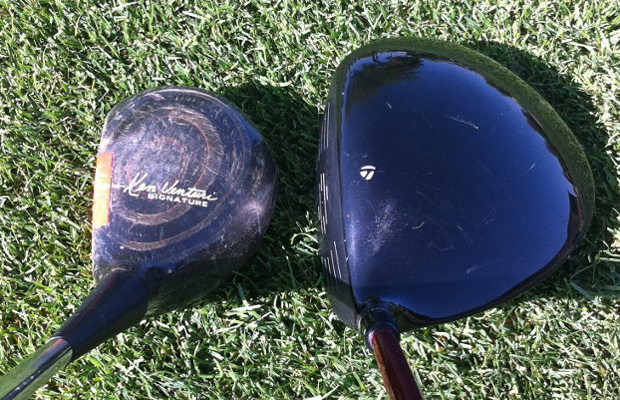
Let’s forget about center of gravity, moment of inertia, weight adjustability and turbulators for a moment. I know it’s difficult, but bear with me.
The golf industry has made significant (and I mean significant) improvements in driver technology in recent decades. I started playing golf with a wood driver and quickly found my way into the metal wood family, which was replaced by titanium shortly afterward. I hardly stopped to think about buying the newest technology, but it always seemed to help.
It made me wonder, how much better are titanium drivers of today than the wood drivers we played 30 and 40 years ago? If it’s starting to sound like I’m introducing results to an experiment, that’s because I am.
For my experiment, I dug out an old “wood” from the garage, along with my current driver and then tested them on a Trackman. To test the two against each other, I hit 10-to-15 shots with each driver, doing my best to create the same swing and launch conditions for both clubs, and let the numbers tell the story. I was a little afraid of hitting hard range balls with the wood driver, so for this test I dug into the shag bag and pulled out some old tournament golf balls.
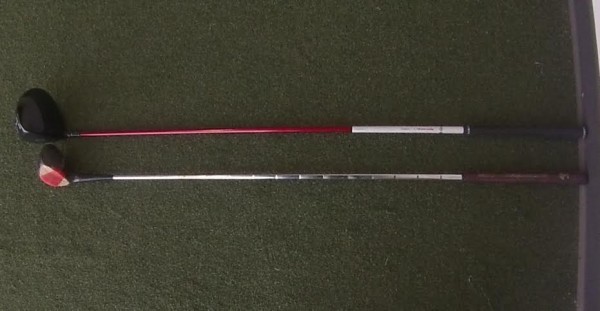
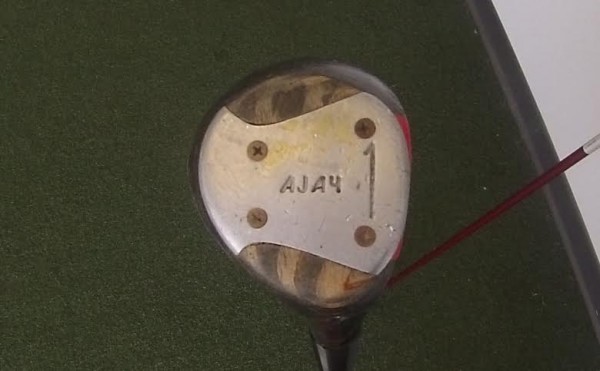
There were a couple of major differences in the two clubs that affected performance. The wood driver was 43 inches long and built with a steel shaft. The shaft felt soft and whippy, and in my estimation, it was probably something close to a True Temper Dynamic Gold R300, maybe even softer.
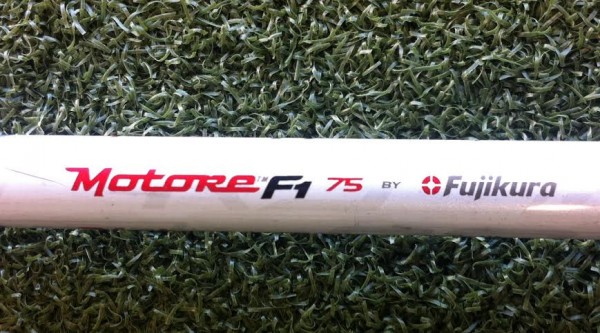
My modern driver, a TaylorMade R9 SuperTri, which was built with a Fujikura Motore F1 75-gram S-Flex shaft, measured 44.5 inches.
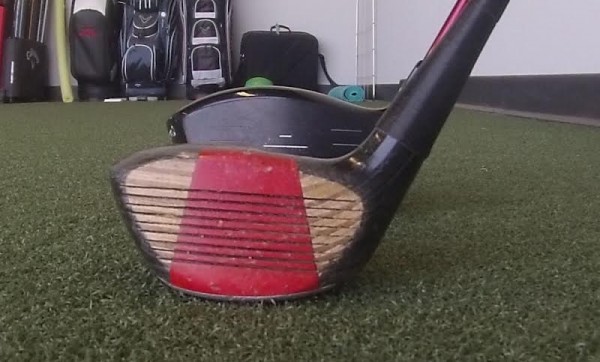
The two competitors meet at center-ring before the battle begins.
Below are my results to the experiment.
New School Driver
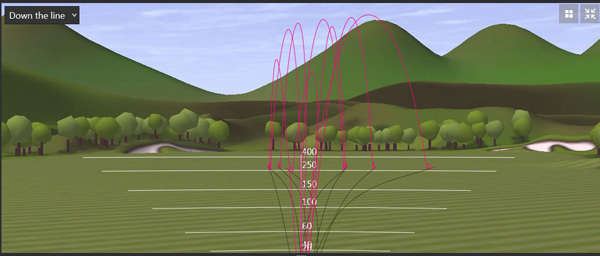
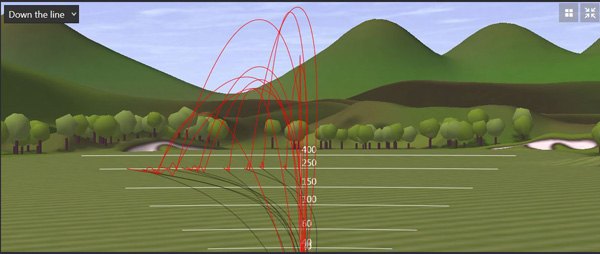
Illustrated in the images below, you can see both the dispersion and the averages for the group of drives I hit. My thought was to try to swing with the same speed on each shot, with the same golf balls, to identify the difference between the clubs.
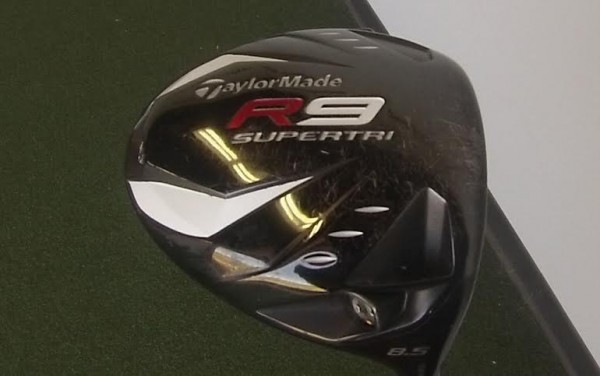
New Driver Data: Avg. Launch Numbers, 10 Drives

Dispersion
Old School Driver
Old Driver Data: Avg. Launch Numbers, 10 Drives

Dispersion
Observations
The wood driver had a strong left bias which could have been the result of:
- The weak steel shaft, making the timing of the strike more difficult.
- More likely, it was the lack of bulge and roll on the face of the wood driver, making a center strike even more valuable.
You can see from the Trackman numbers of the wood driver that the face was pointed 0.2 degrees to the right of the target on average, with a swing path that was 4 degrees right. This path and face relationship should create a nice little draw, not a snap hook.
The modern driver’s average path and face numbers were only slightly different — path 2.5-degrees right and face 0.7-degrees right — yet the ball flights were markedly different. Modern drivers are built with a lot of bulge and roll to help the player in the case of an off-center hit. The point of impact on the driver face more important than any other factor, and it was even more important in the days of wood drivers!
I wasn’t overly concerned about the static loft of each driver because Trackman gives you dynamic loft, or the loft of the club at impact, which you can see was only slightly different between the two. The average dynamic loft for the wooden driver was 13.9 degrees at impact while the modern driver was 14.1 degrees. Their respective launch angles varied only slightly as well (0.5 degrees). I wanted these numbers to be as close as possible to show the difference in performance between the two clubs under similar circumstances.
Shot for Shot
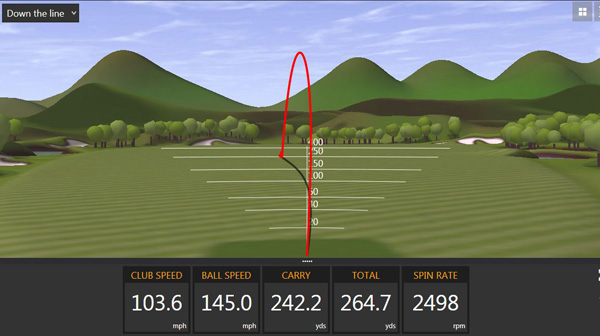
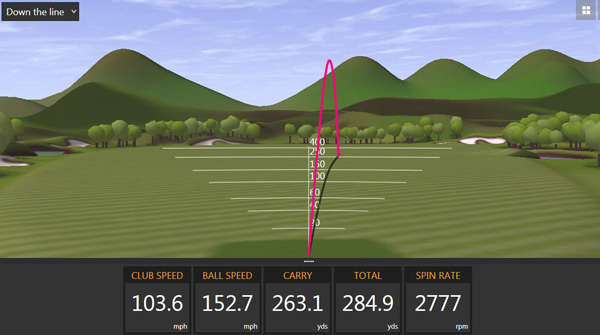
I was able to get two swings with the exact same club head speed.
Old Driver
New Driver
Observations
There’s only a few differences in the individual shots, but they clearly have a tremendous impact on the flight of the golf ball. The angle of attack with the modern driver is about 3 degrees more “up” than the wooden driver and both dynamic loft and launch angle were higher for the wooden driver, even though I was hitting up less. The most likely explanation comes from center of gravity location, gear effect and the point of impact.
With path and face angle numbers being similar, you’d expect the curve of the ball to be similar. The tilt of the axis of the golf ball should be similar with a center strike on both clubs, but Trackman tells us this likely didn’t happen for either shot. Spin Axis is the amount of tilt in the axis of the golf ball at impact: a negative number means the left side of the golf ball tilts lower by degrees causing a right-to-left ball flight, while a positive number means the right side of the golf ball tilts lower by degrees causing left-to-right flight.
You can see the glaring difference in the spin axis number between the two shots; negative 8.0 and positive 1.5. That’s almost a 10-degrees difference. With the wood driver, the strike was more than likely to the toe side of the face and without a lot of bulge and roll, the result was a severe hook. With the modern driver, the strike was more than likely lower on the face and towards the heel, causing the ball to launch a little lower (gear effect), and the technology of the face (more gear effect) caused the ball to actually fade.
Conclusion and Thoughts
The wood driver, if you can find one, could be used as a great practice tool. The importance of the center strike is really valuable and using a smaller head with a higher degree of feedback (slices and hooks) can help you improve. However, by producing 20 yards more distance with a tighter dispersion, the new driver is difficult to argue against.
It’s eye-opening how driver design technology influences not only distance but the curve of golf shots. Bulge and roll, which aids in gear effect, works to hit the ball undeniably straighter and farther. So how much better is titanium than wood? Short answer – a lot.
The guys at sports science conducted a similar experiment with Rory McIlroy as their test dummy (he’s decent at golf). Watch the video here.


Club Junkie
Tour Edge Exotics mini driver review + TaylorMade Spider ZT Max first look – Club Junkie

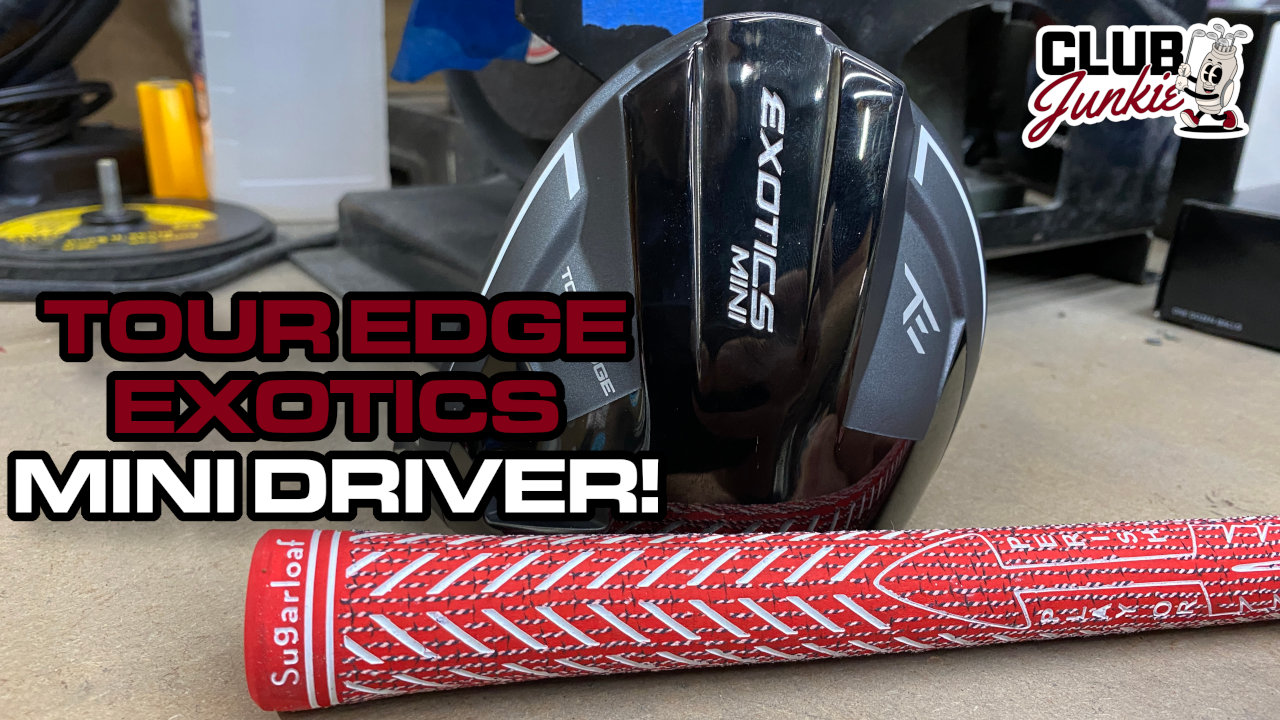
On this episode of Club Junkie, I put the new Tour Edge Exotics Mini Driver to the test and break down the performance, forgiveness, distance, and where it fits compared to a traditional driver or strong fairway wood. If you have been curious about adding a mini driver to the bag, this one is worth a look.
I also dive into the new TaylorMade Spider ZT Max putter that was recently spotted and discuss the growing zero torque putter trend. Plus, there is a closer look at the new Project X Titan Yellow shaft showing up on the PGA Tour and what makes it different from other profiles currently out there.
Opinion & Analysis
AVL: We’re talking about practice! My best tips for taking your game to the course

With the beginning of June on the horizon and courses rounding into peak condition for the season, it’s time to hone the finer skills that often get rusty over the winter. More sunlight also means more time to get out on the course and work on your game.
Whether it’s the practice green or the driving range, there’s always something to improve—whether you’re enjoying the fresh air or preparing for a weekend game or tournament. You can work on drills or freestyle around the green, and friendly competition is a great way to sharpen your skills.
While there are endless ways to get better at golf, I’m going to focus on practicing around the green. Let’s take a look at a few things to keep in mind as we head into the summer months.
Drills
From the driving range to the practice green, it’s important to incorporate drills into your routine. Years ago, I spent a weekend working on my short game with James Sieckmann. He recommended doing drill work for 5–10 minutes, then returning to your main practice.
This way, you create a balance between structured drills and real-world scenarios, so you’re not confined to “perfect” situations. For example, hitting the same three-foot putt over and over is good for repetition, but after a while, it becomes less interactive for your brain.
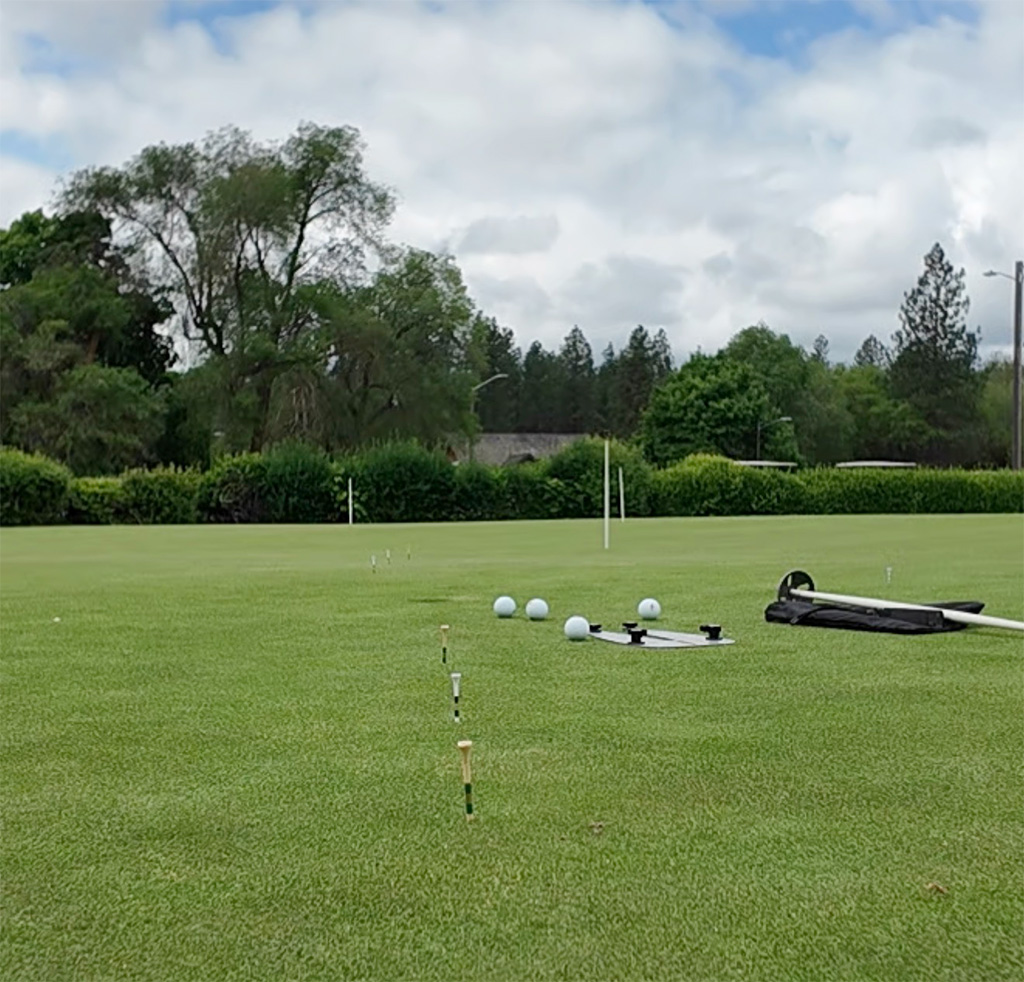
My approach is to use a putting trainer with a narrow gate for the ball to pass through, or simply place tees just outside the width of the ball. I’ll hit a series of four putts through the gate for three sets. Then, from a similar distance, I’ll hit four putts without the training aid and repeat that sequence three times.
Next, I’ll hit a number of 15–25 foot putts in a random fashion, then circle back to repeat the short putt drills with and without the training aid.
This breaks up the rhythm of hitting short putts with the training aid. When you hit the same short putts over and over, it’s easy to get into a groove—which is great for the drill, but not reflective of actual course play. While finding a rhythm is fundamental for drills, I like to introduce variation with longer putts to keep things realistic.
Game Mode
Once you’ve established a foundation with drills, it’s time to simulate on-course scenarios. This is where a few practice games come in handy.
One that I’ve been enjoying lately involves putting 10- to 15-footers with two balls. If I make the putt, great! If I miss, I pull the missed ball back a putter length. Suddenly, that little tap-in becomes a nerve-wracking three-footer—at least at first. As you get better at this game, those three- and five-footers become much more comfortable and routine.
It may sound cliché, but each shot is just what it is—it’s how we react that makes the difference. I like this game because it blends the pressure of on-course putting with the consequence of leaving yourself a much longer putt than usual.
Another game I like is one I recently learned from Brad Faxon. Place three tees in a line at four different locations around the hole: one at 3 feet, one at 6 feet, and one at 8 feet. The 3- and 6-foot putts count as par, and the 8-footer is for birdie.
This game keeps you focused on scoring and helps you get into a competitive mindset. You can even think about this putting game while you’re on the course. I just started playing it, and last week I couldn’t get better than two under par.
Competition
Competition during practice is when drills and games come to life, and you start to see results. For me, nothing beats a putting contest with a friend or two. In the right setting, these contests can become talking points for the whole season.
Match play, a game of 21, or simply seeing who can make the most one-putts (with a small prize on the line) are all great ways to simulate real on-course pressure. Recently, I played in a putting contest where one competitor made back-to-back 30- and 50-foot putts. As they say, expect your opponent to make every putt—and he nearly did. That’s impressive, and it’s something you see on the course, too: you have to stay committed to your game plan, no matter what.
When it comes to practice, it’s important to blend feedback from recent rounds with the fundamentals you want to reinforce. Drills, games, and competition—from the driving range to the putting green—form the backbone of skills you’ll rely on during actual rounds.
Finding the right balance is something we’re all working on, one practice session at a time. With the beginning of June on the horizon and courses rounding into peak condition for the season, it’s time to hone the finer skills that often get rusty over the winter. More sunlight also means more time to get out on the course and work on your game. Whether it’s the practice green or the driving range, there’s always something to improve—whether you’re enjoying the fresh air or preparing for a weekend game or tournament. You can work on drills or freestyle around the green, and friendly competition is a great way to sharpen your skills. While there are endless ways to get better at golf, I’m going to focus on practicing around the green. Let’s take a look at a few things to keep in mind as we head into the summer months.
Drills
From the driving range to the practice green, it’s important to incorporate drills into your routine. Years ago, I spent a weekend working on my short game with James Sieckmann. He recommended doing drill work for 5–10 minutes, then returning to your main practice. This way, you create a balance between structured drills and real-world scenarios, so you’re not confined to “perfect” situations. For example, hitting the same three-foot putt over and over is good for repetition, but after a while, it becomes less interactive for your brain.
My approach is to use a putting trainer with a narrow gate for the ball to pass through, or simply place tees just outside the width of the ball. I’ll hit a series of four putts through the gate for three sets. Then, from a similar distance, I’ll hit four putts without the training aid and repeat that sequence three times. Next, I’ll hit a number of 15–25 foot putts in a random fashion, then circle back to repeat the short putt drills with and without the training aid.
This breaks up the rhythm of hitting short putts with the training aid. When you hit the same short putts over and over, it’s easy to get into a groove—which is great for the drill, but not reflective of actual course play. While finding a rhythm is fundamental for drills, I like to introduce variation with longer putts to keep things realistic.
Game Mode
Once you’ve established a foundation with drills, it’s time to simulate on-course scenarios. This is where a few practice games come in handy. One that I’ve been enjoying lately involves putting 10- to 15-footers with two balls. If I make the putt, great! If I miss, I pull the missed ball back a putter length.
Suddenly, that little tap-in becomes a nerve-wracking three-footer—at least at first. As you get better at this game, those three- and five-footers become much more comfortable and routine. It may sound cliché, but each shot is just what it is—it’s how we react that makes the difference. I like this game because it blends the pressure of on-course putting with the consequence of leaving yourself a much longer putt than usual.
Another game I like is one I recently learned from Brad Faxon. Place three tees in a line at four different locations around the hole: one at 3 feet, one at 6 feet, and one at 8 feet. The 3- and 6-foot putts count as par, and the 8-footer is for birdie.
This game keeps you focused on scoring and helps you get into a competitive mindset. You can even think about this putting game while you’re on the course. I just started playing it, and last week I couldn’t get better than two under par.
Competition
Competition during practice is when drills and games come to life, and you start to see results. For me, nothing beats a putting contest with a friend or two. In the right setting, these contests can become talking points for the whole season. Match play, a game of 21, or simply seeing who can make the most one-putts (with a small prize on the line) are all great ways to simulate real on-course pressure. Recently, I played in a putting contest where one competitor made back-to-back 30- and 50-foot putts. As they say, expect your opponent to make every putt—and he nearly did. That’s impressive, and it’s something you see on the course, too: you have to stay committed to your game plan, no matter what.
When it comes to practice, it’s important to blend feedback from recent rounds with the fundamentals you want to reinforce. Drills, games, and competition—from the driving range to the putting green—form the backbone of skills you’ll rely on during actual rounds. Finding the right balance is something we’re all working on, one practice session at a time.


For Korean golfers, we always look forward to the last of the kkot-saem-chu-I for the true start of a new golf season. The term refers to a cold snap, but literally translates as “winter being jealous of the flowers beginning to bloom, thus lashing out one final time before surrendering to spring”.
A rather poetic mouthful packed into a short expression.
Koreans can be like that. Understated, yet oddly expressive at the same time. And nowhere is this more true on the golf course and in our golf bags. In fact, I suspect many Korean golfers look forward to new apparel and accessory drops more than they do actual equipment launches each year.

At this point, Korean golf fashion may exist on its own timeline. (courtesy of @seonbi_golfer)
There is ample evidence to support that suspicion. Korea is the world’s third-largest golf market behind the United States and Japan, yet its appetite for golf apparel exceeds that of both countries combined. Recent estimates suggest that Korea accounts for nearly 40 percent of the global golf apparel market, placing it among the world’s most influential golf fashion markets and punching well above its size.
Simply, we care deeply about how new golf clubs look and feel, but enjoy looking good while swinging them even more.
Golfers in the West may laugh and say that golf is played on a course, not a fashion runway. Perhaps. But what’s the harm in trying to look and feel good, if the added self-confidence can help actual performance? It certainly seems to have worked for Jason Day, who may have unlocked a new stats category: dormant strokes gained. Coincidence?

During the COVID-era, estimates placed the market near $9 billion, an astonishing figure for a single country.
As a proud member of Gen X, I’ve witnessed the highs and lows of golf fashion firsthand. The pleated trousers and wing-tipped shoes of Jack Nicklaus, the stylish plus-fours and knickers of Payne Stewart, the baggy black trousers and fitted mock-necks of Tiger Woods, and the thigh-hugging athletic tailoring of Rory McIlroy. Golf fashion, like the golf swing itself, has rarely stood still.
But nowhere have those trends shifted, evolved, and been scrutinized quite as relentlessly as in Korea. Here, golf fashion moves faster than fairway gossip, and consumers dissect brands with a level of discernment that can be both impressive and mildly terrifying. New brands are studied, judged, embraced, or dismissed with startling efficiency.
The result is a consumer base with one of the sharpest eyes for quality and authenticity anywhere in the world. It is difficult to quantify, but easy to recognize. Clean lines without trying too hard. Luxury mixed with utility. Trend awareness balanced by restraint and purpose.
It’s golf fashion shaped by one of the world’s most style-literate cities, something I like to call Seoul Sensibilities, referring to the taste level forged by a uniquely competitive environment.
And increasingly, global brands have noticed.

Many golf brands in Korea have their own flagship shops dedicated to apparel only
Titleist understood this years ago, when its apparel business in Korea took on a life of its own under new ownership and local direction. What had once been a straightforward extension of an iconic equipment giant became something sharper and more premium. By going all in on the serious Tour-player look (I couldn’t even fit into their XL sizes), Titleist struck the right chord with Korean consumers and helped its fledgling apparel business break into the mainstream. Titleist became a household name even for non-golfers who wore its caps, shirts, and windbreakers in daily life. In many ways, it proved that even heritage golf brands could carry real fashion credibility when viewed through a Korean lens.
Several years later, PXG took a page out of Titleist’s playbook and followed suit. Korean consumers helped transform the brand from one known largely for irons and loud commercials into something broader and more stylish. PXG apparel’s growth in Korea was explosive, where it found an early audience and turned the category into something more than mere logo merchandise. It is still hard to walk anywhere in Seoul without seeing its palindrome logo.
Malbon’s meteoric rise in the United States was genuine, but its ascent into a global golf lifestyle brand owes much to Korea, where it was elevated by a market already fluent in modern golf style. Korea did not simply embrace Malbon. It pressure-tested the concept, refined its appeal, and helped push it into the global spotlight.
As such, new brands may arrive from abroad, but more often than not, their sharpest evolution happens here. If a brand can earn credibility in Seoul, it’s deemed to have passed one of the toughest style audits in the game.
That is why the next meaningful chapter may not come from outside, but from a Korean brand moving in the opposite direction, carrying those Seoul Sensibilities outward as K-pop once did.

Play young Stay dope.
From Seoul, With Intent
Khalhon is a label that feels less like a trend-chasing newcomer and more like the product of a market that has already seen everything. Golfers here have long been surrounded by luxury logos, technical fabrics, and tour uniforms disguised as lifestyle wear and vice-versa. In other words, novelty alone rarely lasts here, and the Koreans seems to understand that instinctively.
Its style language leans into clean silhouettes, relaxed but tailored proportions, muted palettes, and premium materials that speak quietly but confidently. There is a modern city aesthetic running through it all, with strong layering pieces, thoughtful textures, and subtle branding that suggests sophistication rather than demanding attention.

“Built for the course. Designed beyond it.”
Most importantly, the garments seem designed to blur the line between golfwear and everyday style. Shirts, trousers, knitwear, and outer layers move comfortably between a game of screen golf, a lunch reservation, an airport gate, or an afternoon coffee in Gangnam with friends.
It raises the question of whether this is golfwear that happens to look good off the course, or everyday clothing that performs beautifully on the fairways.
Personally, I have long appreciated Nike Golf for its clean, athletic modernization of golf attire. It also has the useful side effect of making me look like a more serious golfer than I probably am. But off the course, there are times when being instantly identified as the golf guy in a crowd of non-golfers can feel a touch self-conscious.

“Built for the course. Designed beyond it.”
That is part of what drew me to Khalhon, which seemed to blend golf and everyday wear naturally. While some of the outfits may be slightly beyond my personal confidence level, the brand also offers tasteful options for older guys like me who still want to express a little personality without regretting the decision later.
These are not simply flashy outfits worn on the course and then banished to the closet until the next tee time. They work surprisingly well off the course too, and I suspect many of the pieces will still look right a couple of years from now, which would certainly be kinder to my wallet than most golf fashion trends tend to be.
And perhaps that broader lifestyle positioning also helps explain why someone like Sean Wotherspoon would find Khalhon creatively interesting in the first place.

“Built for the course. Designed beyond it.”
“Korea is not only one of the most fashion-forward golf markets in the world, but one of the most fashion-forward markets globally. Korea is ahead, and I love to watch and try to catch up.” – Sean Wotherspoon, Creative Director at Khalhon
Seoul and Beyond
If Khalhon’s rise says something about where Korean golf fashion is today, its relationship with Sean Wotherspoon says even more about where it is heading.
For readers less familiar with Sean Wotherspoon, his arrival at Khalhon is not some routine celebrity endorsement or influencer collaboration. In design and streetwear circles, Wotherspoon is regarded as one of the more influential creative voices of his generation, particularly when it comes to blending nostalgia, storytelling, and contemporary culture into products that people can connect with.
He first gained widespread attention through his now-famous Nike sneaker collaborations, where his vintage-inspired designs and instinct for color helped turn him into one of the defining artists of the late-2010s sneaker era. His work gradually expanded beyond footwear into apparel, automotive collaborations, collectibles, and broader lifestyle design.
Modern golf style now extends well beyond the fairways, where performance and functionality are largely expected by default. And while plenty of brands already make technically competent golfwear, Khalhon seems more focused on designing clothes people would genuinely want to wear even after the round ends.
And when guys at Wotherspoon’s level show genuine interest in working with a Korean golf brand as its new Creative Director, fashion circles tend to sit up and pay attention. There’s already a huge buzz among the fashion-conscious here about upcoming collabs with iconic sports stars and brands.

“My creative direction for Khalhon is disruptive, colorful, nostalgic, and modern. My goal is to blend these avenues seamlessly within each collection.” – Sean Wotherspoon
In chatting with Sean, what stood out most to me was how genuinely energized he sounded about the project itself. Despite having already worked across and countless other creative spaces, he described golf as a completely fresh category for him, saying that Khalhon “will be an amazing vehicle for my design work.”
At the same time, his enthusiasm seemed tied just as much to Korea itself. He spoke openly about admiring Korea’s fashion culture while repeatedly insisting he is still a terrible golfer.
There was something oddly refreshing about that humility. Rather than sounding like a celebrity parachuting into golf simply because the category suddenly became fashionable, Sean sounded genuinely curious about what Korea might do with the category next.
And perhaps that is what makes Khalhon feel interesting right now. The brand feels less like a trend-chaser and more like the natural result of a market now confident enough to export its own point of view.
For years, global brands came to Korea to sharpen their image against one of the most discerning audiences anywhere. Now, a Korean label appears ready to send those Seoul Sensibilities outward instead.
Which brings us back to kkot-saem-chu-i.
That final cold snap before spring always arrives with a reminder that seasons are changing, whether we notice it immediately or not. Golf fashion feels a little like that right now as well, as the old boundaries between sport, streetwear, luxury, and everyday style continue to soften.
And somewhere in Seoul, a Korean golf label already seems prepared for whatever season comes next. I just hope they have everything in my size.

Justin Rose WITB 2026 (April): Full WITB breakdown with new McLaren irons

What’s the story behind Webb Simpson’s custom-stamped irons?

Cadillac Championship Tour Report: Spieth’s sizable changes, McLaren Golf launches, and more

Russell Henley’s winning WITB: 2026 Charles Schwab Challenge

Kristoffer Reitan’s winning WITB: 2026 Truist Championship

Cameron Young’s winning WITB: 2026 Cadillac Championship

Aaron Rai’s winning WITB: 2026 PGA Championship

Nelly Korda WITB 2026 (April)

Justin Rose on the switch to McLaren Golf, learnings from previous equipment moves

Photos from the 2026 CJ Cup Byron Nelson


Chris Gotterup WITB 2026 (June)
Chris Gotterup had >14 clubs in his bag when photographed prior to the Memorial Tournament. Drivers: TaylorMade Qi4D (8 degrees), Ping...


Jason Day WITB 2026 (June)
Jason Day had >14 clubs in his bag when photographed prior to the Memorial Tournament. Driver: Ping G430 LST (10.5 degrees...

Nastasia Nadaud WITB 2026 (June)
Driver: Titleist TSR4 (9 Degrees) Shaft: Project X EvenFlow Riptide CB 6.0 S 3-wood: Titleist GTS2 (15 degrees) Shaft: Graphite Design Tour AD DI...

Keith Mitchell WITB 2026 (June)
Driver: TaylorMade Qi4D LS Shaft: Project X Titan Yellow 6 X 3-wood: TaylorMade Qi10 (16.5 degrees) Shaft: Mitsubishi Tensei 1K Blue 90...
-
 News3 days ago
Russell Henley’s winning WITB: 2026 Charles Schwab Challenge
-
 Whats in the Bag2 weeks ago
Aaron Rai’s winning WITB: 2026 PGA Championship
-
 Tour Photo Galleries2 weeks ago
Photos from the 2026 CJ Cup Byron Nelson
-
Equipment16 hours ago
Details on Jason Day’s latest prototype Avoda iron setup
-

 Equipment2 weeks ago
CJ Cup Byron Nelson Tour Report: Koepka and Kim’s newest putters finally get hot
-
 News6 days ago
Charles Schwab Challenge Tour Report: MacIntyre, Åberg and Spaun all switch putters, TaylorMade launches new Spider
-
 Equipment1 week ago
Details on J.J. Spaun’s surprise putter switch
-
 Popular Photo Galleries1 week ago
Photos from the 2026 Charles Schwab Challenge


Mike
Mar 10, 2019 at 1:58 pm
I grew up playing in the late 80’s and used OLD technology. I shot in the mid 70’s in high school in the early 80’s with an old persimmon 3 wood and tiny little Wilson blades, and one JP copper 55* sand wedge, such a raw, simple setup. I am an athlete and picked up golf fast, and again, in state tournaments in my Sophopmore and Junior years, I shot 77 and 76.
Fast forward to today w/ all the best equipment, I struggle to break 80. I can bomb a modern driver out past 280 yards, but do I know where it’s going? Nope. I scored better slapping a persimmon 3 wood out there at about 240 in high school, BUT IN PLAY, then hit great iron shots and got up and down all day long…
So I went back to a persimmon driver last summer for a try, I’ll be darned. Macgregor S300 shaft, goes straighter than modern drivers, goes lower, DOES NOT go as far, but I am just better off the tee w/ it. It may stay in my bag this season, I’ll check back.
Mike
Mar 10, 2019 at 2:00 pm
***sorry, high school in early 90’s***
Adam
Apr 29, 2017 at 7:18 pm
I’ve been hitting with a Persimmon Auld classic that looked brand new when I bought it, not a mark on it and still glossy. Tested it against Callaway x2hot and XR16. All extra stiff shafts, 10.5° and I see almost no difference in distance, but the wood goes straighter. Longest drive was with the wood BTW. Wood sounds better and I hardly feel the impact. Plus using the wood I felt was more impressive to onlookers “is that a wooden driver” “wow nice hit” I heard people say. Takes better dexterity, but this club won’t crack or go flat.
Eric Cavanagh
Aug 17, 2015 at 1:34 pm
Remember the object of driving is to land the ball before the tee,never after it,so a 310 Yd shot blasted down the fairway that hangs up in the air for a great while isn’t wining or proper. It’s much easier to aim the ball with a wood. Metal drivers are lighter and so must drive farther than wood always,but when a ball hangs up in the air for 30 sec. longer than it does with the wood,you need to compensate to keep it landing in front of the pin. I would say,play with wood and I wish companies would make real wood drivers with graphite shafts so you get a fast sweep like you do with your titanium Hogan but the solid accuracy and slightly less loft that you do with those very,very pretty woods. a $1 wood,with a beat-up face will never be entirely consistent,though,that’s why the manufacturers need to begin making them with a graphite shaft. I talked to some folks to bring back some extinct trees and the one I think would be the best to use to make these new-generation woods is Shittem wood mentioned in the Bible in Exodus and maybe in other books of the Bible.
esc
Brendan
Aug 2, 2014 at 8:29 pm
Hi Rob
I have an old persimmon (I’m old enough to know the difference from laminate!) at mum & dad’s that I use when back in town and love it. I love the feel of a well hit drive, I love the fact that there are actual screws to hit it off and if only I was wearing metal spikes while striding across concrete, it’d *sound* like golf when I was a kid….
I think what you are missing from the trackman data is what trackman always lacks – how does it make you score? Forget trying to get comparable swing speeds and launch angles – go out with two new balls and play head to head to score. Does the 20m difference make an actual distance to scoring? Does the ability to manipulate the ball more easily with a wood have some advantages? In some circumstances, does the lower trajectory actually become a benefit (eg wind)? Do you swing more smoothly with the little head and the shorter shaft? Do you try to take on hero carries, or aim for the middle of the fairway? I find that I often hit more fairways with my wood than I do with my regular driver. And remember, off a good lie, a wooden driver can also be used as a fairway wood.
I’m a big fan and not convinced that I necessarily *score* all that much differently. I’m not sure I’d play persimmon in a head to head match for money, but if you want to spot me a couple of shots because I’m playing with grandpa’s driver – you’re on!
Cheers,
BT
DaveMikulec
Feb 27, 2016 at 12:48 pm
I recently decided to get back into the game and scouted a local thrift shop that had several (real) woods stuck in a barrel, priced at $8 for all of them. All are persimmon and were crafted at Louisville Golf, and they still look new. I can’t wait to try them out.
Don
Jul 17, 2014 at 7:26 pm
Hi Son nice to see that you’ve got the golfers attention. some real food for thought. A similar comparison, who’s a better player Tiger or Jack, different times and different technology. Dad
Morgan
Jul 16, 2014 at 8:38 pm
I love these fun tests done just for the heck of it and usually on the spur of the moment. I had one such moment when I played in an electricians golf day. One of the guys had a really old set with one of those cast aluminium (so it looked like)small headed 1 wood’s. He obviously wasn’t a golfer and was out for a good day. Anyway after 6 holes we were giving him hell about his gear, but I got this bug in my head to want to hit it, so tee it up I did. The metal shaft was rusty and the head very small and dull and even had paint splatter on it. I’ld already hit mine down the fairway and with assurance I would give him a newish driver after the game I gave his the perfect strike. Off it went perfect trajectory down the fairway, the boys go that’s sweet and hang crap on clubs owner as he is defiantly the cause of all his bad drives, got up there both center of the fairway laser-ed his 245m, laser-ed mine 262m. Totally stunned. I could find his club at a second hand shop and buy it for $10, mine was a SLDR @7* with a GD DI6 X FLEX AND COST A HELL OF A LOT MORE. My walk away comment to the clubs owner was “get lessons, nothing wrong with the club” which bought him more heckling from the group and left a very satisfied smile on my face, but bewilderment at why only that much gain over what must be 30+ yrs of golf club and shaft advancement and millions spent in research. Note; I do realize most of the advancement would be seen in dispersion and contact consistency if I had of hit a heap of balls but still with all the new clubs that have come out and people on this site and Golf companies claiming gains of 5 – 20m with their new wonder driver and $1000.00 shafts ( 30yrs x 10 new drivers x 10 more meters ) the newer club should be at least 100m ahead and 150m ahead at least with a persimmon or laminated head. Any way sorry for the long story but it was one of my all time golf feel good moments, smiling now.
Rob Rashell
Jul 17, 2014 at 10:52 am
Morgan,
Great story!My guess would be we’ve reached a bit of a plateau with technology, tough to squeeze much more out of club heads, shafts, balls, etc. I remember playing a practice round my year on tour with a PGA Tour veteran and major champion, he was playing with irons that were 20 years old. He knew how far they went, down to the yard, and didn’t care about anything else. Technology and optimizing are a different endeavor than playing and scoring, as it should be.
All the best!
Rob
James
Jul 29, 2014 at 1:25 pm
you dont think 20 yards difference is a big deal???
t
Jul 15, 2014 at 5:43 pm
My point is…in the 80s, a good long golf course was 6800. and a good tee shot was 250 yards. today, s good long golf course is 7300+ with a good tee shot being 290+. excluding inflation, we are making ourselves pay more money to play a very simple game. dumb dumb dumb. i don’t need to pay $500 for a driver to play a 7300 yard course when i could pay less than $200 for a driver and play a 6800 yard course. and the greens fees are jacked up to pay for the extra distance. doesnt make sense to me.
James
Jul 15, 2014 at 2:16 pm
I would add, I wouldn’t expect the wood driver to perform as well as the modern one in terms of distance because the modern one has more COR. Did the choice of ball make a difference too? I wouldn’t use a range ball but a Pro V1 is softer than the old 90 compression wound balls hit with wood. That, to me, would be more meaningful of a test using the modern ball, same exact shaft, same exact loft of club.
Justin
Aug 18, 2014 at 12:19 am
The COR, when mixed with your higher clubhead speed, also factors in. You need a higher (>95mph) swing to really activate the COR.
I like the attempt, but they probably should be closer to one another, spec-wise, to get any real data out of it. An analogy (to me) would be: testing a well-fit Brand X club to a not-so-well-fit Brand Y club. Of course, Brand X will have better results, but that doesn’t make Brand Y a bad choice, either…
Sorry, but came to this party late and felt the need to add my $.02. I expect change back lol!
James
Jul 15, 2014 at 2:13 pm
I too think this is a bad test because the shafts are not equivalent and that makes a big difference. What would the same shaft that is in your modern driver in terms of smash factor and ball speed? Are the lofts of the two clubs identical? The dynamic loft doesn’t mean much and here is why. I can take a 9 degree driver and tee it up high, play it forward and get a higher launch than I would normally. By the same token you can take a higher lofted driver and play it back to launch it lower. Unless the lofts and shafts are exactly the same the test is sort of useless. The shaft transmits the power from the body to the club and those two shafts are no where near functionally equivalent.
Rob Rashell
Jul 15, 2014 at 3:55 pm
James,
Thanks for the thoughts. My idea originally was to get a shot with each driver that had the same club head speed, same dynamic loft, and same launch angle to see how the heads performed. With the individual shots I got pretty close.
I agree lots of factors to take into account.
Rob
MHendon
Jul 16, 2014 at 1:56 am
It’s not a bad test. It’s a comparison between old equipment and new. If they’d had 45 inch light weight graphite shafts in the day of persimmon woods I’m sure they would have used them. That’s the whole point of this test, you’re not comparing apples to apples here.
James
Jul 16, 2014 at 8:14 am
Yeah but then the courses weren’t playing 500 yard plus par 4s in majors either. The courses were laid out to play for the equipment at hand. If you really wanted to know how wood compares to now then you do need to have everything the same except for the clubhead. In that case, metal would still win out because the COR is .83 and wood is like .78
MHendon
Jul 17, 2014 at 4:25 pm
Yeah I still don’t understand your argument. Yes everyone knows courses have been lengthened because of modern equipment. Again this was simply a comparison between old an new, what was available 30 years ago and now.
Brian S
Jul 15, 2014 at 11:27 am
Seemed to have glossed over the difference in shaft length. My guess is that 1.5″ could be a 10-20 yard difference. And, depending on how you measured, given the size of head on the modern driver, you distance from the end of the shaft to the sweet spot on each club will vary.
As someone mentioned earlier, maybe a better comparison would be a modern 3w, given they would be more similar on overall club length.
I have actually had different results than yours. I don’t have access to Trackman. But, from watching ball flight, I have far more spin with the modern driver versus my old wooden driver. My rollout on the old wooden drivers gives me roughly the same distance when doing my own comparison.
Good article though, nice to see what technology has really given us (or maybe not given us) over the past couple of decades.
Rob Rashell
Jul 15, 2014 at 11:47 am
Brian,
I think a rough guess with length of club would be 1 inch of shaft length equals roughly two mph, each mph of club speed equals just short of 3 yards. So 1.5″ x 2 equals 3 mph, 3 mph x 3 yards = roughly nine yards difference. This would be my best guess.
The difficulty with a three wood would be the difference in dynamic loft or, loft of the club at impact, between 3 wood and wooden driver.
Super fun to use Trackman to turn back the clocks a bit, thanks for the comment!
Rob
Chris Wycoff
Jul 15, 2014 at 10:43 am
We’ve got a couple persimmons with screws sitting around the shop and we’ve done this experiment a few times for fun. Our results have been very close to what Rob found.
On a perfectly hit shot, the our old wood drivers can get pretty close to the distance of today’s modern drivers – maybe 5-10 yards. It’s in the average distances and dispersion where we’ve seen a big difference – probably 20-30 yards shorter on average because the less than perfect shots with persimmon really hurt the averages.
Fun article!
Rob Rashell
Jul 15, 2014 at 10:58 am
Chris,
How great is the feel of those old drivers though? So soft!
Rob
Chris Wycoff
Jul 15, 2014 at 4:59 pm
They do feel amazing when, and for me, if you hit it perfect. If not, watch out!
John
Jul 15, 2014 at 11:48 am
Agree with you Chris. It’s the misses that get you with persimmon. I play my old late 80’s persimmon from time to time, and when I nail one, especially in the summer with dry conditions the distance can be amazingly competitive with titanium. On the other hand, when I catch one squirrelly, well, it certainly does adversely effect one’s distance. You cam move the ball around with persimmon in a way that’s fun, and much harder to do with a big headed driver, and overall with the shorter steel shaft finding fairways is easier than a 46″modern driver. However, if one is fitted and sensible about the desire to hit the ball long AND straight, as opposed to just long, (say a 44″ modern driver) then the advantages are obvious.
All due respect to Rob, his test would a bit more legit using a well designed Macgregor or Penna or a Joe Powell instead of the K Mart special he was using.
Ed Ranfelt
Jul 15, 2014 at 10:29 am
With apologies….
Another error, persimmon and laminated maple drivers have bulge and roll. It’s not as apparent visually, because of the smaller clubhead size, but it IS present.
Bulge works with the gear effect on lateral mishits, producing shots that start left or right, and curve to the center.
Rob Rashell
Jul 15, 2014 at 10:56 am
Ed,
Thanks for the comment, do you know how to tell the difference between persimmon and laminated maple? Just curious. Also curious if modern club makers have ever thought about reducing bulge and roll on modern drivers to help better players curve the ball more? Some times the curve is good.
Thanks
Rob
Ed Ranfelt
Jul 16, 2014 at 10:43 pm
With apologies if this was answered by someone else (I’ve not read all comments)
As it happens, I do know how to tell the difference. Or at least what is perceived as the classic tell.
In the picture of the laminate driver clubface you have accompanying the article, you’ll see alternating “stripes” across the face. That’s the sign of a laminate; they’re made by literally taking strips of maple wood and gluing them together, before they’re cut to shape.
Persimmons are made from solid blocks of wood, and lack these “stripes.”
As for bulge, some have suggested that *some* modern drivers might need MORE bulge. We’ve all seen the classic toe hook or heel fade; all too frequently, these start out online and scream one direction or the other. In the case of a persimmon or laminate driver, they tend to start out more to the left or right, before coming back to the fairway.
Current roll is fine, though some like Tom Wishon have done away with roll below the center of the face. Above the center of the face, the roll assists with the vertical gear effect, helping to provide lower spin, to go with the slightly higher launch you get from hitting above center of the face.
Sorry for the length of this. 🙂
Rob Rashell
Jul 17, 2014 at 10:53 am
Thanks Ed, love the info!
pingmatt
Jul 15, 2014 at 9:43 am
What type of ball was used in testing? Advances in the modern golf ball were made with modern drivers in mind, not old school woods. How would the results be different if you used a balata with each club?
Rob Rashell
Jul 15, 2014 at 9:47 am
Ping,
I used pro v1’s, would love to get my hands on a couple dozen maxfli ddh or titleist balata golf balls, would be fun. Check out the video at the end of the post, good insight into the golf balls as well.
Rob
Chris
Jul 15, 2014 at 9:23 am
Nice experiment! My question would be: How far do you hit your modern 43″ fairway wood? How would that stack up against the old driver?
Rob Rashell
Jul 15, 2014 at 9:50 am
Chris,
Good question, my guess the 3 wood would probably go a bit farther. Better shaft, better head, the feel of those wooden drivers sure is great though.
Rob
Nice
Jul 15, 2014 at 3:13 am
Did you tee the ball up at the same height????? Because that would also affect how it takes off, obviously…… thus, with the old driver, being lower on the tee, means you hit down on it more, and conversely, with the giant-headed driver of the modern day, to tee it that low would not make it as efficient.
Also, in this instance, the wood driver illustrated here does not have any screws in the face, and far too many deep grooves. I would like to see this experiment done with a persimmon driver with screws in the face with a smooth surface.
But thank you for the experiment! Very nicely done.
Rob Rashell
Jul 15, 2014 at 9:58 am
Nice,
Would love to get my hands on a persimmon driver with screws, if I do, I’ll put together part two of this experiment. Tough to find those things.
Rob
Pingback: Are titanium drivers really that much better than wood drivers? | Spacetimeandi.com
Grant
Jul 14, 2014 at 10:00 pm
Quite literally used to have to hit on the screws. The inserts were just a bit larger than the balatas of the day. Lot of penna and MacGregor drivers in the basement. Still have to hit the center for predictable results. Roll and bulge were easily altered back then. Would not go back if I could.
Rob Rashell
Jul 15, 2014 at 10:02 am
Grant,
If you’re in the Phoenix area let me know, would be fun to test the old drivers and fairway woods. Also love the feel of hitting them.
Rob
LaMont
Jul 15, 2014 at 6:49 pm
Rob,
I am in the Phoenix area and mill custom putters out of the Hot Stix Scottsdale location. Contact me via email if you would be interested in using some of the best persimmon woods to go head to head against that TM. I have a driver that was the Rolls Royce of persimmons, shafted with what was the top of the line graphite at the time it was crafted. It was made right here in Tempe and was about fifteen years too late to be an amazing piece of golf equipment.
I think that part of the issue with this test is that you had two clubs that were incredibly far apart in quality, even when they were new. The Ajay driver was junk, at best. TM makes nice drivers that are engineered for distance and they do a good job of it.
I would love to see this same test played out, using the best from back then, against the best of today. I don’t believe that persimmon will win in distance, but as mentioned, there is nothing better than the feeling of catching one right on the screws and watching that piercing ball flight.
Contact me, this sounds like fun.
LaMont
Rob Rashell
Jul 15, 2014 at 10:24 pm
Lamont,
[email protected] shoot me an email, we’ll sort out the details, love the technology old and new, and smashing them together.
DBD
Jul 14, 2014 at 9:06 pm
the picture shows a laminated driver – typically maple, not a persimmon driver
Greg
Jul 14, 2014 at 9:10 pm
DBD is totally correct but to be fair, there wasn’t any real distance difference between persimmon and laminated maple.
Zak Kozuchowski
Jul 14, 2014 at 9:19 pm
This is what happens when young people are allowed to write and edit stories about old golf clubs. We’ve made the corrections.
Double Mocha Man
Jul 14, 2014 at 11:06 pm
Put that to Trackman… persimmon vs. laminated maple.
Rob Rashell
Jul 15, 2014 at 10:00 am
DBD,
Thanks for the feedback, had no idea the driver was not persimmon, but maple. How can you tell? Specific things you look for? Thanks for the information!
Rob
Double Mocha Man
Jul 15, 2014 at 1:48 pm
Laminated maple looks like a small version of plywood. Persimmon is solid with tiny, almost imperceptible, little specs.