
Opinion & Analysis
Case #5589: The campaign for the longest driver in golf


Mark Twain is often given credit for the assertion, “There are three kinds of lies: lies, damned lies and statistics.”
Were he still alive today, Twain would no doubt be intrigued by the current state of advertising and the golf industry in particular.
At its core, marketing is about procuring and sustaining customers. Customers create profit and profit is the lifeblood, which fuels all things pertinent to a private enterprise. And profit is gasoline to the engine, oxygen to the body and drama to Lindsay Lohan – it makes everything go.
So when someone or something interferes with your access to profit, you take it quite seriously. Especially when the challenge comes from a rival competitor and is the result of some rather shady statistics and shaky reasoning; or as I like to call it “lying.”
I know that lying and advertising are on some level synonymous, or more correctly that consumers understand on some level that what an ad presents as implicit truth is not an iron-clad promise to deliver the image presented. Advertising exists in the vast grey area between fiction and reality.
I understand that if I drink a certain beer, I won’t end up in a hot tub of busty blondes in some snow-capped rocky mountain retreat with 50 of my closest friends. I’m equally aware that a rugged 4X4 truck won’t increase my testosterone levels, nor will my wife and I ever end up on a beach, holding hands in two separate bathtubs watching the sunset, regardless of which pills I ingest.
But, when a company, in this case Callaway, claims to have “The Longest Driver in Golf,” then consumer should reasonably expect that the driver is in fact the longest.
[youtube id=”ihfRdZgG9CQ” width=”620″ height=”360″]
TaylorMade has dominated the metal woods portion of the golf industry for the last two decades, in much the same fashion as Titleist has owned golf ball usage and John Daly has had a monopoly on bad outfits. So when Callaway claimed to have “The Longest Driver in Golf,” TaylorMade didn’t take it well. When TaylorMade actually looked at how Callaway reached this conclusion, it called hogwash and filed a complaint with the NAD.
The NAD is a third-party wing of the Better Business Bureau that serves to resolve advertising complaints in a manner more expeditious (and significantly cheaper) than legal methods. According to the NAD, “an advertiser is responsible for all reasonable interpretations of its claims, not simply the messages it intended to convey.”
Enter case #5589: The skinny
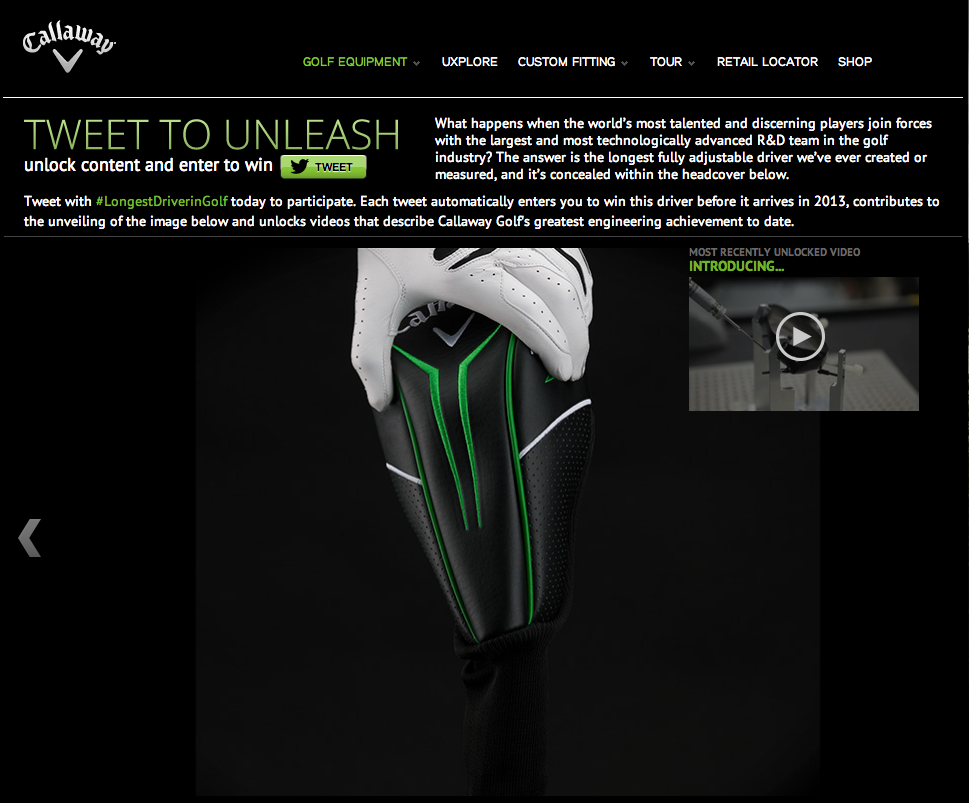
TaylorMade objected to Callaway’s assertion of producing “The Longest Driver in Golf,” the #LongestDriverInGolf Twitter promotion and the usage of “The Longest Driver in Golf” phrase in eight out of nine advertising videos on the Callaway website.
Where the story really gets interesting is how exactly Callaway landed at this rather bold and audacious declaration. See, when testing the Razr Fit Xtreme driver, Callaway tested the 2013 RFX against five other models (all 2012 models) that represented 54 percent of the driver market according to “dollar market share” based on data from September 2012.
Problem: How can you claim to be the best of anything when you only test 54 percent of potential competitors? What if that 54 percent is inflated and the real number is more like 40 percent as the NAD reasonably suggested?
Also, both the Titleist 910 D2 and D3 were included in the 54 percent “figure,” but the D3 was left out of the player testing. Curious, right?
Callaway didn’t provide any rationale for this, which speaks volumes. Also, dollar market share doesn’t account for drivers that may have been purchased on sale (it was September after all) and creates a false assumption than the most expensive drivers are also the longest. Finally, TaylorMade objected to the use of extrapolating conclusive statements using data from a single month (although TaylorMade has done this exact tactic when it served its advertising needs…pot…kettle…you get the idea).
I don’t know that you need to test all 180-some-odd drivers that have appeared in the Golf Digest Hot List since 2004, but if you’re going to be the longest driver in golf in 2013, wouldn’t you want to test your product against other 2013 offerings?

Callaway also used a variety of test groups to test the five drivers against the Razr Fit Xtreme. The random sampling (one group had 13 testers, another eight and another 12) was indicative of either a group of fourth graders running a school science experiment or a company that never thought it would have to defend the validity of its claims. It gets better (or worse): 11 players tested only one driver, two players tested two drivers, eight players tested three drivers and only three players tested all five.
Problem: TaylorMade stated that it would have been more valid to treat each individual comparison of the RFX to one of the other models as an individual test. However, only 20 of the 58 would have shown the type of results Callaway desired and that’s hardly enough to be the “the longest driver in golf,” and probably not enough to even be the longest driver in your neighborhood.
Finally, Callaway didn’t actually fit the adjustable driver to ANY of the test participants, and it only used the 440 cubic centimeter head (which is only available in lower lofts and geared toward better players), failed to use any women as test participants and did I mention, all testers were CALLAWAY EMPLOYEES!
Problem: When your burden of proof is to test the “broadest range of player abilities possible,” it’s probably best to include both males and females and a wide-range of handicaps in your test pool. Looking at the handicaps of the Callaway employees/test subjects, 88 percent were 0-to-15 handicap and 77 percent were 0-to-10. When the average male handicap hovers in the mid-teens, this just doesn’t pass the smell test.
After considering all of the information presented, the NAD stated that Callaway didn’t provide sufficient evidence to declare the Razr Fit Xtreme “the longest driver in golf.” File that in the “duh” pile.
Callaway was disappointed and disagreed with the NAD decision (enter shocked face smiley emoticon here), but said that the company respected the decision and discontinued “The Longest Driver in Golf” campaign.
Translation: We’re really bummed we got caught, but hey, at least this product cycle is over and we can all move on.
Yet another layer to this smelly onion is case #5584, where Callaway asked the NAD to look into TaylorMade’s claims that “The average golfer picked up about 17 yards with the ROCKETBALLZ 3-Wood.”
It shouldn’t be lost on the reader that Callaway filed this complaint after receiving the complaint from TaylorMade regarding the RFX driver. It could be just interesting timing, and I could also be Hulk Hogan.

The NAD ultimately found no cause to ask TaylorMade to do anything more — TaylorMade had already deleted the content from an interview-style video with its CEO and added necessary qualifiers such as “better player”… compared to Burner ’11 fairway and 150 mph ball speed … total distance.”
What maybe gets lost in all of these qualifications is just how ridiculous it still is. In order to gain the supposed “17 yards,” you have to compare the 2012 RBZ fairway wood to the 2011 Burner fairway. OK, that’s simple enough. But now, you need to generate 150 mph of ball speed with a 3 wood. The average consumer is just going to gloss over that and make the unlikely assumption that 150 mph ball speed with a 3 wood is imminently doable. Let’s break that qualification down:
Looking at some PGA Tour stats, we see an average driver swing speed of 113 mph and a carry of 269 yards. This gives the player approximately 2.38 yards of carry for every mile per hour of swing speed. If we use a smash factor (ball speed/swing speed) of 1.47, we see that the average tour ball speed, with a driver, is approximately 166 mph.
To achieve a ball speed of 150 mph with a 3 wood (again, assuming a smash factor of 1.47, even though many amateur players will be closer to 1.4 or lower), a golfer would need a swing speed of approximately 102 mph, or just a couple miles per hour slower than an average PGA Tour player.
The average male driver swing speed is 80-to-85 mph, or some 30 mph slower than the average Tour player. If a 3 wood swing speed is a good 7 mph less than that, then the average player is generating approximately 110 mph of ball speed, or 40 mph less than the requisite amount to experience the “promised” 17 additional yards. At 2.38 yds carry/mph of swing speed, the average golfer is about 95 yards short of being able to realize the full Rocketballz potential.
Like Penny Lane quipped in Almost Famous: “It’s funny. The truth just sounds different.”
And generally, the truth just doesn’t sell as well. The individual consumer might be able to handle the truth, but I’m not sure the market could bear this reality. I don’t know about you, but if I only purchased items using objective, fact-based decisions, I’d probably have a lot less stuff. And if everyone did this, companies couldn’t survive. I’m hard pressed to come up with a solid list of people I know who will drop a couple hundred bucks for a couple yards, yet that is often the reality when an individual “upgrades” to the latest and greatest golf gear.
So instead, OEM’s propose the possible, the theoretical, and the consumer believes it to be the actual. The critical consumer knows that most PGA Tour players use drivers that are 45 inches or shorter, yet they continue to chase more distance with 45.5-inch and 46-inch drivers because they cranked one up on a launch monitor at some indoor big box store and couldn’t believe how far they hit it.
While Callaway and TaylorMade might be making the most noise (or crying) right now, these are hardly isolated incidents.
Some notable examples:
- The recent thread on GolfWRX documenting the industry practice of mis-stamping driver heads. As stated by Callaway, driver heads could be off by as much as 3 degrees. So your 8.5-degree driver could actually be closer to 11 degrees.
Click here to read the discussion about mis-stamped lofts in the forums.
Certainly, there are manufacturing tolerances in all industries, but essentially the OEM’s don’t trust the consumer to make an informed decision. Knowing that machismo and low-lofted drivers can go hand in hand, the OEM’s get the win-win. They sell a driver that fuels the male ego, yet probably fits the player a bit better. The player believes he is playing an 8.5-degree driver and no one is the wiser – that is until a golfer goes to get fit and can’t understand why he’s getting the best numbers from an 11.5-degree driver that is 2-degrees closed. If only he knew.
And lest we forget, it’s still lying. Boldface lying. My doctor doesn’t tell me the blood pressure he wants me to have, and at the end of my round, I sign for the score I shot, not the one I wanted to shoot. If OEM’s are willing to purposely stamp the wrong loft on a club, what else are they willing to do to “protect” us from our savage egos?

- TaylorMade’s current “My R1” campaign: Based on the commercials, any reasonable person would conclude that the driver played by the pros is the same club you can by at your local retail outlet. I mean, what else would you fathom when Dustin Johnson hands you “his R1?” What they don’t tell you is that NO ONE on Tour plays the version that is sold to the public.
Every OEM engages in advertising and marketing campaigns. Some are simply more aggressive than others. There are no fender-benders on the Autobahn, and when a company like TaylorMade or Callaway gets called out for crossing the line, there’s going to be some flames. But don’t you think the OEM’s know this? Aren’t some of these crashes calculated and already accounted for? Maybe they’re even expected.
Think about the recent case with Callaway. By the time the NAD investigated and rendered a decision, information was already leaking about Callaway’s next driver. So how much did the faulty campaign really cost Callaway? Pennies. It’s not like Callaway had to buy back a bunch of recalled products or really do much of anything, other than perhaps apologize and then focus on selling the living daylights out of whatever the next product is.
There might be a bit of public scrutiny, but likely nothing of lasting significance. The campaign was faulty from the onset and Callaway knew this, but the company leadership isn’t dumb. They knew exactly how shady their math was, but they also knew the odds were in its favor.
Nike just performed a similar act with the Roger Federer shoes at Wimbledon. The All England Club (ruling body for Wimbledon) requested, after a short 69-minute match that Federer no longer wear his white shoes with orange soles. See, Wimbledon has a strict “white apparel only” policy that is as much a part of the tradition as the Royal Family and grass courts. Nike offered these limited-edition shoes to the public for $140 and they sold out well before Federer ever took the court. So who won that match?
Who is to blame for this cluster? OEM’s? Retailers? Consumers? The Mayan Calendar? Just like there have to be buyers and sellers, everyone gets a little egg on their face with this debacle.
OEM’s
Ultimately, they produce the products and they have the final say in what lofts get stamped on clubs, what clubs are sold to the public and which are “tour only.” They create the ads and invest millions in marketing campaigns. Their money, their message, their profit. They can be as honest or dishonest as they feel necessary.
- Blame rating: Four stars
Retailers
As the outlets for the OEM’s, they absolutely have to move product. In fact, retailers probably have more pressure to move product than anyone. For them, it really is all about volume. How many of you have been the victim of a juiced-up launch monitor at a big box outlet? How often do we see threads detailing the latest barrage of bullarky from the $8-per-hour sales person? In this case, the consumer gets precisely the level of service and expertise they’re paying for.
- Blame rating: Three stars
Consumers
Actually, consumers have the most power in this conversation, yet the least information. No one has to buy anything, and the maxim about fools and money is far too often accurate.
- Blame rating: Two stars
The sooner golfers realize that OEM’s don’t care that much about helping golfers play better golf, the better off they will be. At the end of the day, a company’s bottom line is the bottom line. They don’t care who is buying their product, as long as someone is buying their product. They need profit, which means they need consumers who believe that whatever they are selling will fulfill some need they have.
I’m not suggesting that all OEM’s are evil villainous creatures that will stoop to any level just to make a buck, but if you are buying a ball, a club or a shaft only because of what a retailer or OEM is telling you, you’re playing right into their hands.
It’s like my uncle used to tell me. If you’ve been sitting at the poker table for 10 minutes and you can’t find the fool. Guess what? It’s you.
So, how long have you been sitting at the table?








Club Junkie
Tour Edge Exotics mini driver review + TaylorMade Spider ZT Max first look – Club Junkie

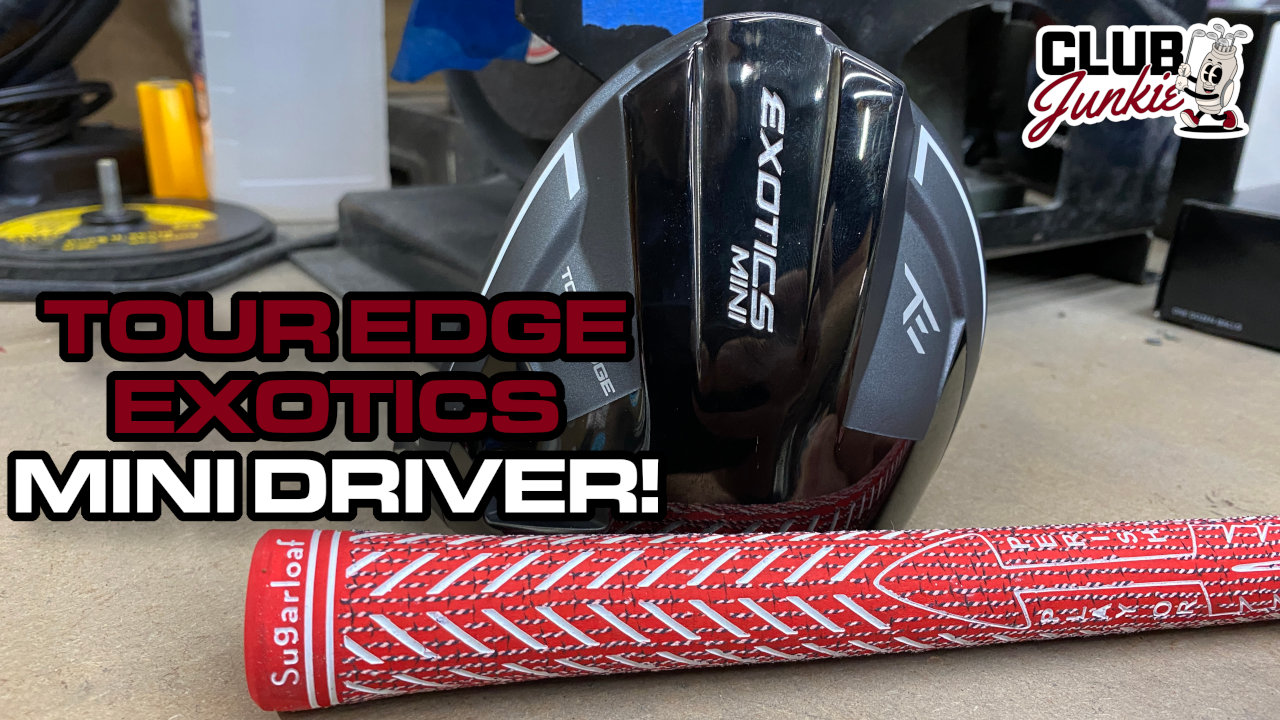
On this episode of Club Junkie, I put the new Tour Edge Exotics Mini Driver to the test and break down the performance, forgiveness, distance, and where it fits compared to a traditional driver or strong fairway wood. If you have been curious about adding a mini driver to the bag, this one is worth a look.
I also dive into the new TaylorMade Spider ZT Max putter that was recently spotted and discuss the growing zero torque putter trend. Plus, there is a closer look at the new Project X Titan Yellow shaft showing up on the PGA Tour and what makes it different from other profiles currently out there.
Opinion & Analysis
AVL: We’re talking about practice! My best tips for taking your game to the course


With the beginning of June on the horizon and courses rounding into peak condition for the season, it’s time to hone the finer skills that often get rusty over the winter. More sunlight also means more time to get out on the course and work on your game.
Whether it’s the practice green or the driving range, there’s always something to improve—whether you’re enjoying the fresh air or preparing for a weekend game or tournament. You can work on drills or freestyle around the green, and friendly competition is a great way to sharpen your skills.
While there are endless ways to get better at golf, I’m going to focus on practicing around the green. Let’s take a look at a few things to keep in mind as we head into the summer months.
Drills
From the driving range to the practice green, it’s important to incorporate drills into your routine. Years ago, I spent a weekend working on my short game with James Sieckmann. He recommended doing drill work for 5–10 minutes, then returning to your main practice.
This way, you create a balance between structured drills and real-world scenarios, so you’re not confined to “perfect” situations. For example, hitting the same three-foot putt over and over is good for repetition, but after a while, it becomes less interactive for your brain.
My approach is to use a putting trainer with a narrow gate for the ball to pass through, or simply place tees just outside the width of the ball. I’ll hit a series of four putts through the gate for three sets. Then, from a similar distance, I’ll hit four putts without the training aid and repeat that sequence three times.
Next, I’ll hit a number of 15–25 foot putts in a random fashion, then circle back to repeat the short putt drills with and without the training aid.
This breaks up the rhythm of hitting short putts with the training aid. When you hit the same short putts over and over, it’s easy to get into a groove—which is great for the drill, but not reflective of actual course play. While finding a rhythm is fundamental for drills, I like to introduce variation with longer putts to keep things realistic.
Game Mode
Once you’ve established a foundation with drills, it’s time to simulate on-course scenarios. This is where a few practice games come in handy.
One that I’ve been enjoying lately involves putting 10- to 15-footers with two balls. If I make the putt, great! If I miss, I pull the missed ball back a putter length. Suddenly, that little tap-in becomes a nerve-wracking three-footer—at least at first. As you get better at this game, those three- and five-footers become much more comfortable and routine.
It may sound cliché, but each shot is just what it is—it’s how we react that makes the difference. I like this game because it blends the pressure of on-course putting with the consequence of leaving yourself a much longer putt than usual.
Another game I like is one I recently learned from Brad Faxon. Place three tees in a line at four different locations around the hole: one at 3 feet, one at 6 feet, and one at 8 feet. The 3- and 6-foot putts count as par, and the 8-footer is for birdie.
This game keeps you focused on scoring and helps you get into a competitive mindset. You can even think about this putting game while you’re on the course. I just started playing it, and last week I couldn’t get better than two under par.
Competition
Competition during practice is when drills and games come to life, and you start to see results. For me, nothing beats a putting contest with a friend or two. In the right setting, these contests can become talking points for the whole season.
Match play, a game of 21, or simply seeing who can make the most one-putts (with a small prize on the line) are all great ways to simulate real on-course pressure. Recently, I played in a putting contest where one competitor made back-to-back 30- and 50-foot putts. As they say, expect your opponent to make every putt—and he nearly did. That’s impressive, and it’s something you see on the course, too: you have to stay committed to your game plan, no matter what.
When it comes to practice, it’s important to blend feedback from recent rounds with the fundamentals you want to reinforce. Drills, games, and competition—from the driving range to the putting green—form the backbone of skills you’ll rely on during actual rounds.
Finding the right balance is something we’re all working on, one practice session at a time. With the beginning of June on the horizon and courses rounding into peak condition for the season, it’s time to hone the finer skills that often get rusty over the winter. More sunlight also means more time to get out on the course and work on your game. Whether it’s the practice green or the driving range, there’s always something to improve—whether you’re enjoying the fresh air or preparing for a weekend game or tournament. You can work on drills or freestyle around the green, and friendly competition is a great way to sharpen your skills. While there are endless ways to get better at golf, I’m going to focus on practicing around the green. Let’s take a look at a few things to keep in mind as we head into the summer months.
Drills
From the driving range to the practice green, it’s important to incorporate drills into your routine. Years ago, I spent a weekend working on my short game with James Sieckmann. He recommended doing drill work for 5–10 minutes, then returning to your main practice. This way, you create a balance between structured drills and real-world scenarios, so you’re not confined to “perfect” situations. For example, hitting the same three-foot putt over and over is good for repetition, but after a while, it becomes less interactive for your brain.
My approach is to use a putting trainer with a narrow gate for the ball to pass through, or simply place tees just outside the width of the ball. I’ll hit a series of four putts through the gate for three sets. Then, from a similar distance, I’ll hit four putts without the training aid and repeat that sequence three times. Next, I’ll hit a number of 15–25 foot putts in a random fashion, then circle back to repeat the short putt drills with and without the training aid.
This breaks up the rhythm of hitting short putts with the training aid. When you hit the same short putts over and over, it’s easy to get into a groove—which is great for the drill, but not reflective of actual course play. While finding a rhythm is fundamental for drills, I like to introduce variation with longer putts to keep things realistic.
Game Mode
Once you’ve established a foundation with drills, it’s time to simulate on-course scenarios. This is where a few practice games come in handy. One that I’ve been enjoying lately involves putting 10- to 15-footers with two balls. If I make the putt, great! If I miss, I pull the missed ball back a putter length.
Suddenly, that little tap-in becomes a nerve-wracking three-footer—at least at first. As you get better at this game, those three- and five-footers become much more comfortable and routine. It may sound cliché, but each shot is just what it is—it’s how we react that makes the difference. I like this game because it blends the pressure of on-course putting with the consequence of leaving yourself a much longer putt than usual.
Another game I like is one I recently learned from Brad Faxon. Place three tees in a line at four different locations around the hole: one at 3 feet, one at 6 feet, and one at 8 feet. The 3- and 6-foot putts count as par, and the 8-footer is for birdie.
This game keeps you focused on scoring and helps you get into a competitive mindset. You can even think about this putting game while you’re on the course. I just started playing it, and last week I couldn’t get better than two under par.
Competition
Competition during practice is when drills and games come to life, and you start to see results. For me, nothing beats a putting contest with a friend or two. In the right setting, these contests can become talking points for the whole season. Match play, a game of 21, or simply seeing who can make the most one-putts (with a small prize on the line) are all great ways to simulate real on-course pressure. Recently, I played in a putting contest where one competitor made back-to-back 30- and 50-foot putts. As they say, expect your opponent to make every putt—and he nearly did. That’s impressive, and it’s something you see on the course, too: you have to stay committed to your game plan, no matter what.
When it comes to practice, it’s important to blend feedback from recent rounds with the fundamentals you want to reinforce. Drills, games, and competition—from the driving range to the putting green—form the backbone of skills you’ll rely on during actual rounds. Finding the right balance is something we’re all working on, one practice session at a time.


For Korean golfers, we always look forward to the last of the kkot-saem-chu-I for the true start of a new golf season. The term refers to a cold snap, but literally translates as “winter being jealous of the flowers beginning to bloom, thus lashing out one final time before surrendering to spring”.
A rather poetic mouthful packed into a short expression.
Koreans can be like that. Understated, yet oddly expressive at the same time. And nowhere is this more true on the golf course and in our golf bags. In fact, I suspect many Korean golfers look forward to new apparel and accessory drops more than they do actual equipment launches each year.

At this point, Korean golf fashion may exist on its own timeline. (courtesy of @seonbi_golfer)
There is ample evidence to support that suspicion. Korea is the world’s third-largest golf market behind the United States and Japan, yet its appetite for golf apparel exceeds that of both countries combined. Recent estimates suggest that Korea accounts for nearly 40 percent of the global golf apparel market, placing it among the world’s most influential golf fashion markets and punching well above its size.
Simply, we care deeply about how new golf clubs look and feel, but enjoy looking good while swinging them even more.
Golfers in the West may laugh and say that golf is played on a course, not a fashion runway. Perhaps. But what’s the harm in trying to look and feel good, if the added self-confidence can help actual performance? It certainly seems to have worked for Jason Day, who may have unlocked a new stats category: dormant strokes gained. Coincidence?

During the COVID-era, estimates placed the market near $9 billion, an astonishing figure for a single country.
As a proud member of Gen X, I’ve witnessed the highs and lows of golf fashion firsthand. The pleated trousers and wing-tipped shoes of Jack Nicklaus, the stylish plus-fours and knickers of Payne Stewart, the baggy black trousers and fitted mock-necks of Tiger Woods, and the thigh-hugging athletic tailoring of Rory McIlroy. Golf fashion, like the golf swing itself, has rarely stood still.
But nowhere have those trends shifted, evolved, and been scrutinized quite as relentlessly as in Korea. Here, golf fashion moves faster than fairway gossip, and consumers dissect brands with a level of discernment that can be both impressive and mildly terrifying. New brands are studied, judged, embraced, or dismissed with startling efficiency.
The result is a consumer base with one of the sharpest eyes for quality and authenticity anywhere in the world. It is difficult to quantify, but easy to recognize. Clean lines without trying too hard. Luxury mixed with utility. Trend awareness balanced by restraint and purpose.
It’s golf fashion shaped by one of the world’s most style-literate cities, something I like to call Seoul Sensibilities, referring to the taste level forged by a uniquely competitive environment.
And increasingly, global brands have noticed.

Many golf brands in Korea have their own flagship shops dedicated to apparel only
Titleist understood this years ago, when its apparel business in Korea took on a life of its own under new ownership and local direction. What had once been a straightforward extension of an iconic equipment giant became something sharper and more premium. By going all in on the serious Tour-player look (I couldn’t even fit into their XL sizes), Titleist struck the right chord with Korean consumers and helped its fledgling apparel business break into the mainstream. Titleist became a household name even for non-golfers who wore its caps, shirts, and windbreakers in daily life. In many ways, it proved that even heritage golf brands could carry real fashion credibility when viewed through a Korean lens.
Several years later, PXG took a page out of Titleist’s playbook and followed suit. Korean consumers helped transform the brand from one known largely for irons and loud commercials into something broader and more stylish. PXG apparel’s growth in Korea was explosive, where it found an early audience and turned the category into something more than mere logo merchandise. It is still hard to walk anywhere in Seoul without seeing its palindrome logo.
Malbon’s meteoric rise in the United States was genuine, but its ascent into a global golf lifestyle brand owes much to Korea, where it was elevated by a market already fluent in modern golf style. Korea did not simply embrace Malbon. It pressure-tested the concept, refined its appeal, and helped push it into the global spotlight.
As such, new brands may arrive from abroad, but more often than not, their sharpest evolution happens here. If a brand can earn credibility in Seoul, it’s deemed to have passed one of the toughest style audits in the game.
That is why the next meaningful chapter may not come from outside, but from a Korean brand moving in the opposite direction, carrying those Seoul Sensibilities outward as K-pop once did.

Play young Stay dope.
From Seoul, With Intent
Khalhon is a label that feels less like a trend-chasing newcomer and more like the product of a market that has already seen everything. Golfers here have long been surrounded by luxury logos, technical fabrics, and tour uniforms disguised as lifestyle wear and vice-versa. In other words, novelty alone rarely lasts here, and the Koreans seems to understand that instinctively.
Its style language leans into clean silhouettes, relaxed but tailored proportions, muted palettes, and premium materials that speak quietly but confidently. There is a modern city aesthetic running through it all, with strong layering pieces, thoughtful textures, and subtle branding that suggests sophistication rather than demanding attention.

“Built for the course. Designed beyond it.”
Most importantly, the garments seem designed to blur the line between golfwear and everyday style. Shirts, trousers, knitwear, and outer layers move comfortably between a game of screen golf, a lunch reservation, an airport gate, or an afternoon coffee in Gangnam with friends.
It raises the question of whether this is golfwear that happens to look good off the course, or everyday clothing that performs beautifully on the fairways.
Personally, I have long appreciated Nike Golf for its clean, athletic modernization of golf attire. It also has the useful side effect of making me look like a more serious golfer than I probably am. But off the course, there are times when being instantly identified as the golf guy in a crowd of non-golfers can feel a touch self-conscious.

“Built for the course. Designed beyond it.”
That is part of what drew me to Khalhon, which seemed to blend golf and everyday wear naturally. While some of the outfits may be slightly beyond my personal confidence level, the brand also offers tasteful options for older guys like me who still want to express a little personality without regretting the decision later.
These are not simply flashy outfits worn on the course and then banished to the closet until the next tee time. They work surprisingly well off the course too, and I suspect many of the pieces will still look right a couple of years from now, which would certainly be kinder to my wallet than most golf fashion trends tend to be.
And perhaps that broader lifestyle positioning also helps explain why someone like Sean Wotherspoon would find Khalhon creatively interesting in the first place.

“Built for the course. Designed beyond it.”
“Korea is not only one of the most fashion-forward golf markets in the world, but one of the most fashion-forward markets globally. Korea is ahead, and I love to watch and try to catch up.” – Sean Wotherspoon, Creative Director at Khalhon
Seoul and Beyond
If Khalhon’s rise says something about where Korean golf fashion is today, its relationship with Sean Wotherspoon says even more about where it is heading.
For readers less familiar with Sean Wotherspoon, his arrival at Khalhon is not some routine celebrity endorsement or influencer collaboration. In design and streetwear circles, Wotherspoon is regarded as one of the more influential creative voices of his generation, particularly when it comes to blending nostalgia, storytelling, and contemporary culture into products that people can connect with.
He first gained widespread attention through his now-famous Nike sneaker collaborations, where his vintage-inspired designs and instinct for color helped turn him into one of the defining artists of the late-2010s sneaker era. His work gradually expanded beyond footwear into apparel, automotive collaborations, collectibles, and broader lifestyle design.
Modern golf style now extends well beyond the fairways, where performance and functionality are largely expected by default. And while plenty of brands already make technically competent golfwear, Khalhon seems more focused on designing clothes people would genuinely want to wear even after the round ends.
And when guys at Wotherspoon’s level show genuine interest in working with a Korean golf brand as its new Creative Director, fashion circles tend to sit up and pay attention. There’s already a huge buzz among the fashion-conscious here about upcoming collabs with iconic sports stars and brands.

“My creative direction for Khalhon is disruptive, colorful, nostalgic, and modern. My goal is to blend these avenues seamlessly within each collection.” – Sean Wotherspoon
In chatting with Sean, what stood out most to me was how genuinely energized he sounded about the project itself. Despite having already worked across and countless other creative spaces, he described golf as a completely fresh category for him, saying that Khalhon “will be an amazing vehicle for my design work.”
At the same time, his enthusiasm seemed tied just as much to Korea itself. He spoke openly about admiring Korea’s fashion culture while repeatedly insisting he is still a terrible golfer.
There was something oddly refreshing about that humility. Rather than sounding like a celebrity parachuting into golf simply because the category suddenly became fashionable, Sean sounded genuinely curious about what Korea might do with the category next.
And perhaps that is what makes Khalhon feel interesting right now. The brand feels less like a trend-chaser and more like the natural result of a market now confident enough to export its own point of view.
For years, global brands came to Korea to sharpen their image against one of the most discerning audiences anywhere. Now, a Korean label appears ready to send those Seoul Sensibilities outward instead.
Which brings us back to kkot-saem-chu-i.
That final cold snap before spring always arrives with a reminder that seasons are changing, whether we notice it immediately or not. Golf fashion feels a little like that right now as well, as the old boundaries between sport, streetwear, luxury, and everyday style continue to soften.
And somewhere in Seoul, a Korean golf label already seems prepared for whatever season comes next. I just hope they have everything in my size.

Justin Rose WITB 2026 (April): Full WITB breakdown with new McLaren irons

What’s the story behind Webb Simpson’s custom-stamped irons?

Cadillac Championship Tour Report: Spieth’s sizable changes, McLaren Golf launches, and more

Kristoffer Reitan’s winning WITB: 2026 Truist Championship

Russell Henley’s winning WITB: 2026 Charles Schwab Challenge

Cameron Young’s winning WITB: 2026 Cadillac Championship

Aaron Rai’s winning WITB: 2026 PGA Championship

Nelly Korda WITB 2026 (April)

Justin Rose on the switch to McLaren Golf, learnings from previous equipment moves

Photos from the 2026 CJ Cup Byron Nelson

Chris Gotterup WITB 2026 (June)
Chris Gotterup had >14 clubs in his bag when photographed prior to the Memorial Tournament. Drivers: TaylorMade Qi4D (8 degrees), Ping...


Jason Day WITB 2026 (June)
Jason Day had >14 clubs in his bag when photographed prior to the Memorial Tournament. Driver: Ping G430 LST (10.5 degrees...


Nastasia Nadaud WITB 2026 (June)
Driver: Titleist TSR4 (9 Degrees) Shaft: Project X EvenFlow Riptide CB 6.0 S 3-wood: Titleist GTS2 (15 degrees) Shaft: Graphite Design Tour AD DI...

Keith Mitchell WITB 2026 (June)
Driver: TaylorMade Qi4D LS Shaft: Project X Titan Yellow 6 X 3-wood: TaylorMade Qi10 (16.5 degrees) Shaft: Mitsubishi Tensei 1K Blue 90...
-
 News3 days ago
Russell Henley’s winning WITB: 2026 Charles Schwab Challenge
-
 Whats in the Bag2 weeks ago
Aaron Rai’s winning WITB: 2026 PGA Championship
-
 Tour Photo Galleries2 weeks ago
Photos from the 2026 CJ Cup Byron Nelson
-

 Equipment2 weeks ago
CJ Cup Byron Nelson Tour Report: Koepka and Kim’s newest putters finally get hot
-
 News5 days ago
Charles Schwab Challenge Tour Report: MacIntyre, Åberg and Spaun all switch putters, TaylorMade launches new Spider
-
Equipment10 hours ago
Details on Jason Day’s latest prototype Avoda iron setup
-
 Equipment1 week ago
Details on J.J. Spaun’s surprise putter switch
-
 Popular Photo Galleries1 week ago
Photos from the 2026 Charles Schwab Challenge


Bill
Jul 13, 2013 at 2:12 pm
But, but , but….the Razr Fit Xtreme IS the longest driver I’ve ever hit. Stock shaft and all. Tremendously longer than my previous gamer.
Exaggerating in advertising is a time honored tradition in golf. “You’ll play better” doesn’t sound nearly as exciting as “Longest Driver in Golf” to an ad man. So guess what WE get to read?
Common sense here. If you are a good golfer and are considering a club then get to a demo day and hit it alongside your current gamer and then hit the top of the line competition. I read all the web sites and golf mags too. But I take everything in print with a grain of salt.
Clubs that are universally raved about often don’t work for me. Same with balls. We all like tweaking our game a step at a time with better technology. It’s part of the fun. Not every car is the best and most advanced. Not every new bill being voted into passage is what’s best for its constituents. Why would I think golf evaluations would be any different? But I was looking at Scotty Cameron’s top line putters for $3000-$4500 and they MUST be amazing, right?
R
Jul 12, 2013 at 10:38 pm
Fantastic article.
pine
Jul 3, 2013 at 12:06 pm
Then where do I look to for honest recommendations for buying my next club/s???
RCM1301
Jul 3, 2013 at 1:59 pm
GolfWRX. Read user forums, not what Golf Digest or that guy at Dick’s says.
FatRick
Jul 1, 2013 at 10:19 am
I don’t seem how you can blame the consumer less than the OEMs or retailers. Your job as a consumer is to cut through all the BS, which really is not hard to do in golf since you can actually test out the products before you by them. You don’t do that and end up with something that doesn’t fit you, thats on you and only you.
digsnola
Jul 2, 2013 at 11:23 am
While I agree that consumers should try to educate themselves before buying any product, the golf OEMs have for so long purposely perpetuated these lies and aggressive tactics that most of the golfing public take it as truth. Callaway says they’re the longest most forgiving ever nearly every year. TM states yardage gains each year that would have us driving the ball 450 yards compared to our 2000 driver.
While golf is only a game, it was a game that many on this forum were drawn to because of its difficulty and integrity. Questionable advertising and mis-stamping of loft flies in the face of these precepts. This is why I’m bothered. It’s slimey gamesmanship in a game of honor.
To ask the consumer to either look behind the veil and be cool with it, or don’t look in the first place but still fork over 500 bucks or more, is insulting. The golf industry is eating its young.
J C
Jul 1, 2013 at 1:32 am
I HAVE THE LONGEST DRIVER IN GOLF, IT’S SHAFT IS 48 INCHES.
Double Mocha Man
Jun 30, 2013 at 9:38 pm
I have the longest driver in golf.
I read all the hype, didn’t believe it. Tried it twice over the course of two different demo days. Bought it.
Set out to play all my favorite courses from my usual tees. Gained 15 to 20 yards with no swing changes. It’s the only driver I’ve ever bought that was true to its word.
I’ve had it almost 3 years and constantly compare it to other brands at different demo days. This driver is still in my bag.
naflack
Jun 30, 2013 at 7:21 pm
very informative, not very surprising information.
another validation for my mute button usage during the golf coverage commercials.
Jason
Jun 30, 2013 at 10:28 am
Mellow out bro……it’s just golf. I don’t understand why people get worked into a lather about things like this. What I really don’t get is why people care so much about getting tour issue TaylorMade equipment. So your R1 isn’t the same as Dustin Johnson’s…..who cares? 99.9% of the world wouldn’t benefit from his driver. But good news! You can buy tour issue equipment from some dude on the Internet and guess what, he can fit you for a shaft also!!!! All over the phone!!!! For $1500.00 you can have Dustin Johnson’s driver! You obviously only watch golf commercials on tv, but guess what there are many other industries which bend the truth in their commercials.
Chris b
Jun 30, 2013 at 7:26 am
Hands down one of the most informative golf articles I’ve ever written. Neatly and accurately sums up a lot of the informative threads floating around, every golfer should read this. This article is WHAT WRX is about. Hats off to Mr Nickel
Chris b
Jun 30, 2013 at 7:27 am
Should have said “read” not written
Edward Brumby
Jun 30, 2013 at 6:39 am
While your have written an excellent article that makes many good points, if we are going to be assigning blame isn’t it fair to look also to the major golf magazines. Both test a lot of product, but they disguise the results of their testing with vague phrases rather than raw numbers or a more exact ranking. Plus Golf Digest includes expected demand as a criteria for giving out their “Gold” award. This means a better performing club from a small manufacturer may be ranked below a club from a big manufacturer. Isn’t this just a reward for advertising? So I give the golf magazines three stars in the blame game.
chris
Jul 2, 2013 at 9:52 pm
Right on the button edward
downtoo
Jul 3, 2013 at 12:36 pm
Great article, thanks for taking the time to go into such detail. Basic marketing teaches companies to sell the sizzle not the steak. Shame on us as consumers for falling prey to OEMs and their age old ruse.
Ken
Jul 11, 2013 at 5:08 pm
I have been an on and off golfer for 50 years. I have been a fanatical skier for 35 of those 50 years. Both are sports that use equipment where the pro version is radically different than the public version. The way to hold OEM’s feet to the fire is to develop hard core measurement methods and publishing the results. Defined parameters would not be as pretty but they sure would be a lot more informative.
Example: Take golf shafts and measure the deflection and rebound with actual weights. Measure how much the shaft bends and publish the information. Soft shafts will bend more than stiff shafts. Use the swing robot to measure how far the golf club hits the golf ball. Use different golf balls with a single golf club to measure how far golf balls go. Use tests that can be verified over and over again. Will there be unaccountable differences in some cases? Absolutely becuase there are different quality control issues.
Lets get out of the imagination world and get into the reality world.