
Equipment
Why your golf clubs keep snapping (and how to stop it)


A long, long time ago, in the glory days of minimum wage and perpetual verbal abuse, I landed a job as a club builder. Well, that’s a bit generous — I was really just a teenager tasked with pulling off 25-year-old Golf Pride Tour Velvets, scraping tape residue with the finesse of a bricklayer, and regripping clubs for hours on end. The black stains on my hands and the acrid stench of the chemicals still linger in my memory.
But through the blisters and solvents, I learned a thing or two about club repair — and even got to meet some fascinating people along the way.
Like most stories worth telling, this one starts on the course. I was playing with a guy who was on the verge of giving up golf altogether. His clubs were snapping at the hosel with alarming frequency. He was frustrated, convinced he was cursed, and ready to quit the game entirely.
Quit golf? What? It was like a bat signal calling me into action. I had to figure out what was going on.
To get some expert insight, I enlisted my friends at KBS Golf Shafts, including Kim Braly himself. Kim is the director of research and development at the company that bears his name. I am so lucky to call him a friend since he is one of the leading experts in shaft design and craftsmanship, and his team produces some of the finest shafts in the game. With their help, I uncovered the most common reasons clubs snap — and how you can prevent it from happening.
Sanding: Less Is More
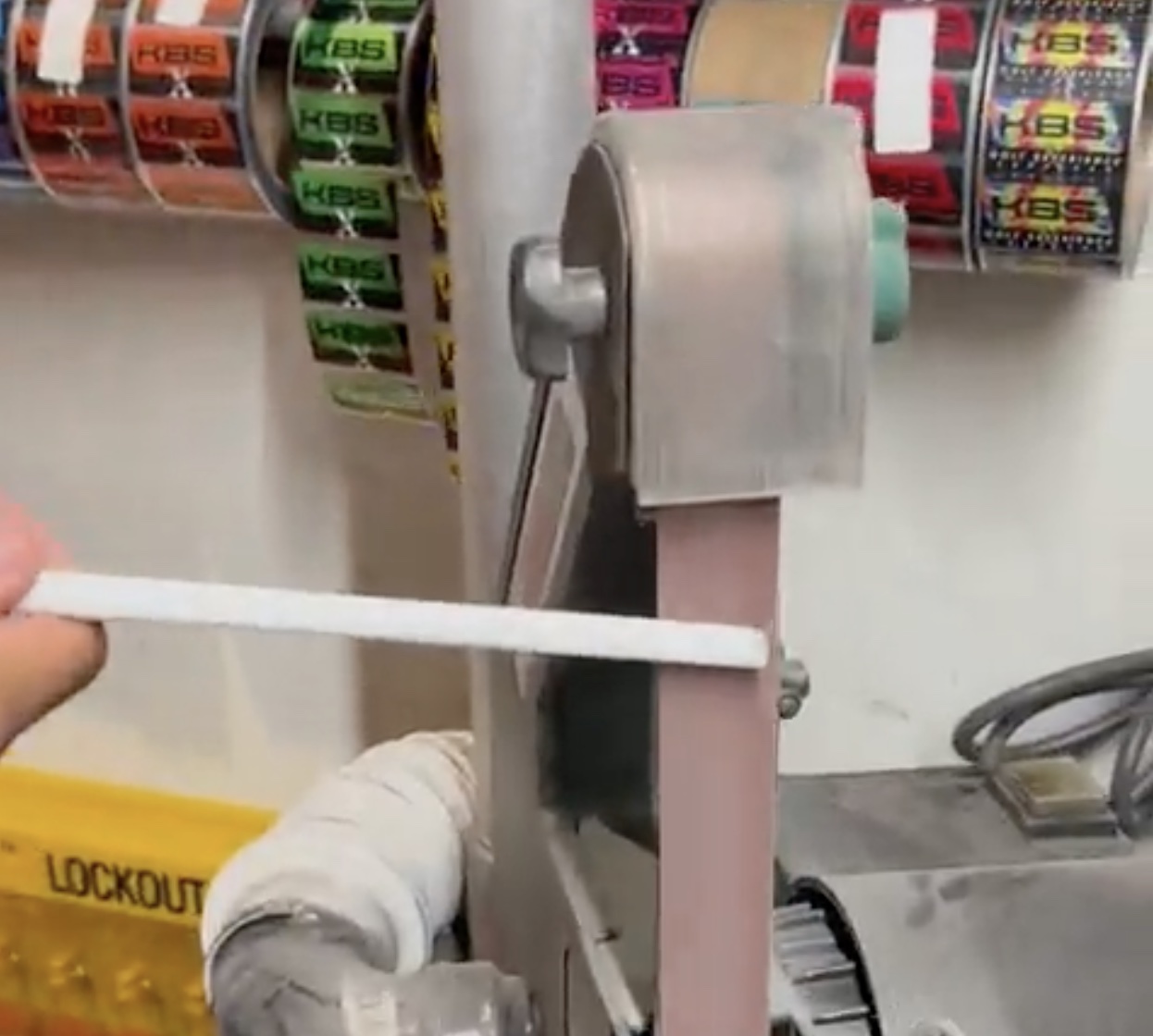
When installing graphite shafts, club builders sand the tips to ensure a proper fit in the hosel. This step is crucial, but it’s also where a lot of damage can be done.
Too much sanding — especially over multiple pulls and re-installs — gradually weakens the graphite fibers. Over time, the shaft becomes brittle, prone to cracking or breaking under normal swing stress. Kim pointed out that frequent reshafting without proper care can significantly shorten a shaft’s lifespan.
If you frequently tinker with your clubs, be aware that each reshafting slightly reduces the shaft’s durability. If you’re working with a fitter, make sure they’re sanding only as much as necessary to avoid unnecessary wear.
Epoxy Overflow: The Silent Shaft Killer
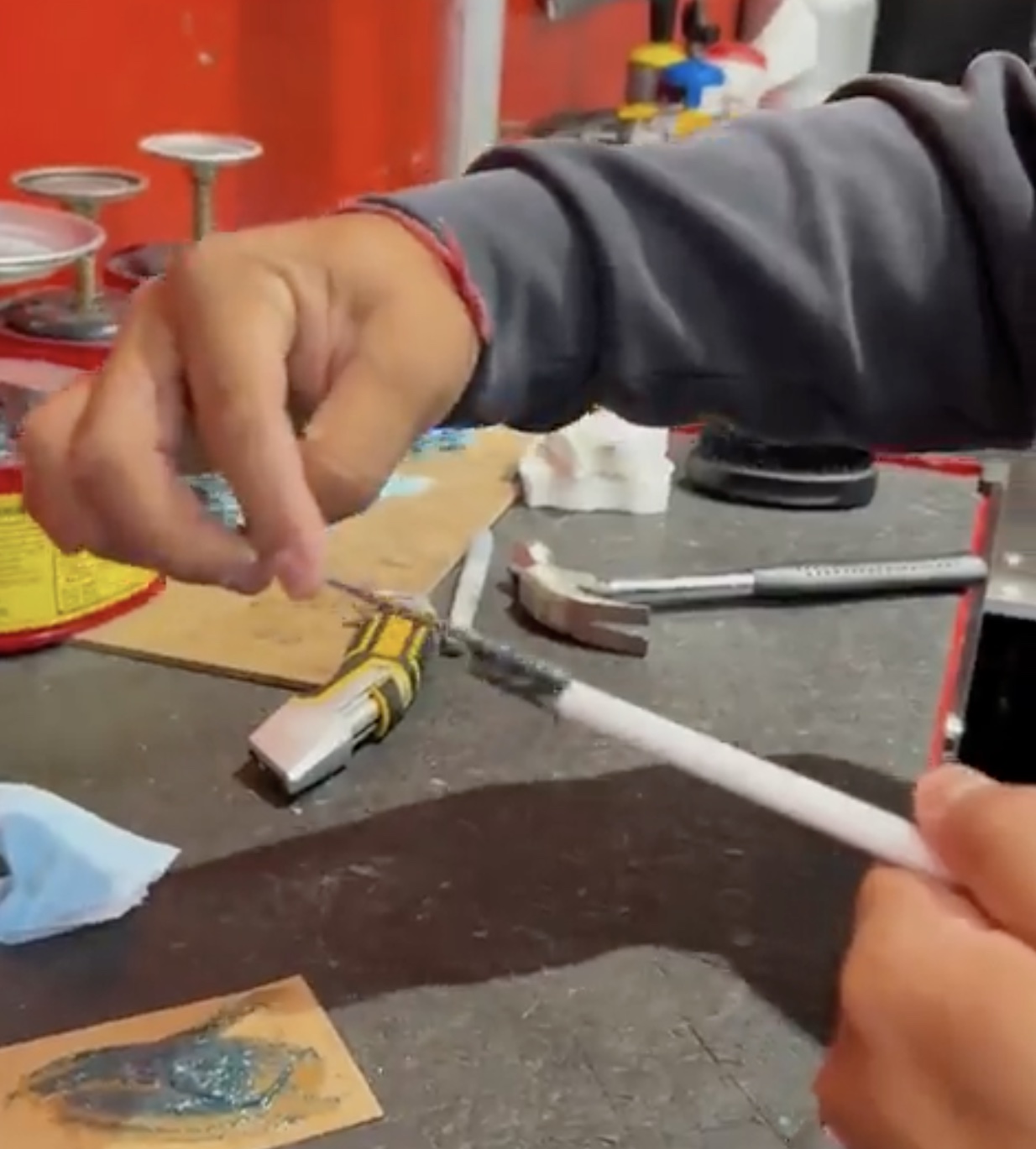
When installing a shaft, club builders use epoxy to secure it in the hosel. This adhesive is essential for stability, but if too much is applied, it can seep up the shaft.
Why is that a problem? Because golf shafts — especially graphite ones — are designed to be hollow, allowing energy to dissipate and the shaft to flex properly. When epoxy clogs the inner diameter, it creates a solid core at the tip, which increases the stress on the shaft during impact. Over time, this extra trauma weakens the shaft, making it more susceptible to breakage.
How to spot it: If you’ve had a club suddenly snap near the hosel, pull out the broken piece and check for hardened epoxy inside the shaft. If you see it, that could be your culprit.
Coning: The Overlooked Step That Matters
Before installing a graphite shaft, the hosel of the clubhead needs to be properly prepared — a process called coning. This involves removing any roughness, burrs, or slivers of metal inside the hosel that could grind against the shaft during play.
Skipping this step creates a hidden hazard. Even tiny bits of metal can act like sandpaper, gradually chewing away at the graphite fibers with each swing. Over time, this micro-abrasion weakens the shaft from the inside out, leading to unexpected snapping.
When having clubs reshafted, ask your builder if they cone the hosels. It’s a small step that can significantly extend the life of your shafts.
Bonus Tip: Temperature Matters
One more thing Kim and the team at KBS emphasized: temperature fluctuations can wreak havoc on club durability. Leaving your clubs in a hot car or exposing them to freezing temperatures can cause the epoxy to degrade and the shaft materials to weaken.
Treat your clubs like a decent bottle of wine—store them in a temperate environment.
Final Thoughts
Clubs snapping at the hosel might seem like bad luck or poor-quality gear, but more often than not, it’s the result of overlooked craftsmanship issues. With insights from Kim Braly and the team at KBS, it’s clear that proper sanding, avoiding epoxy overflow, and ensuring coned hosels are key to preventing shaft breakage.
So, if you’re tired of watching your clubs snap like dry twigs, consult with a trusted club builder. Your clubs—and your handicap—will thank you.
*Featured image via Reddit
*Additional images via KBS


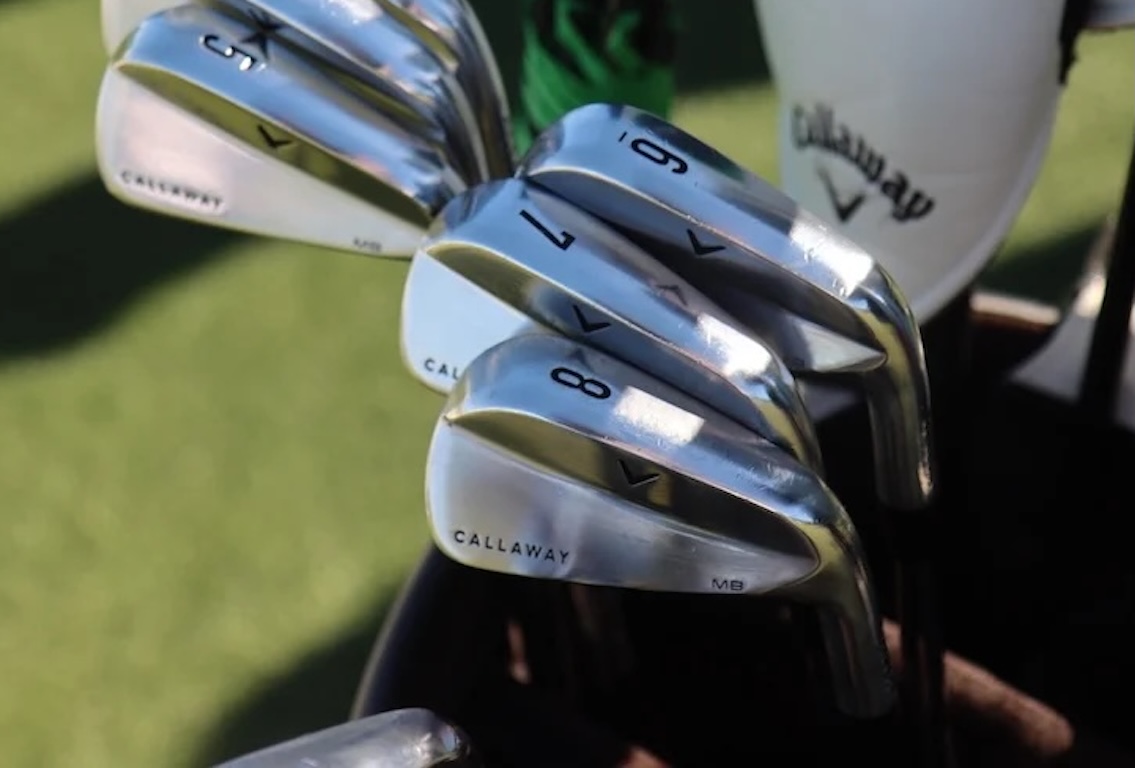
Driver: Callaway Quantum Triple Diamond (8.5 degrees)
Shaft: Fujikura Ventus Black 6 X
Mini driver: Callaway Paradym Ai Smoke Mini (11.5 degrees)
Shafts: Fujikura Ventus Black 7 X
5-wood: Cobra OPTM LS (18 degrees)
Shafts: Fujikura Ventus Black 8 X
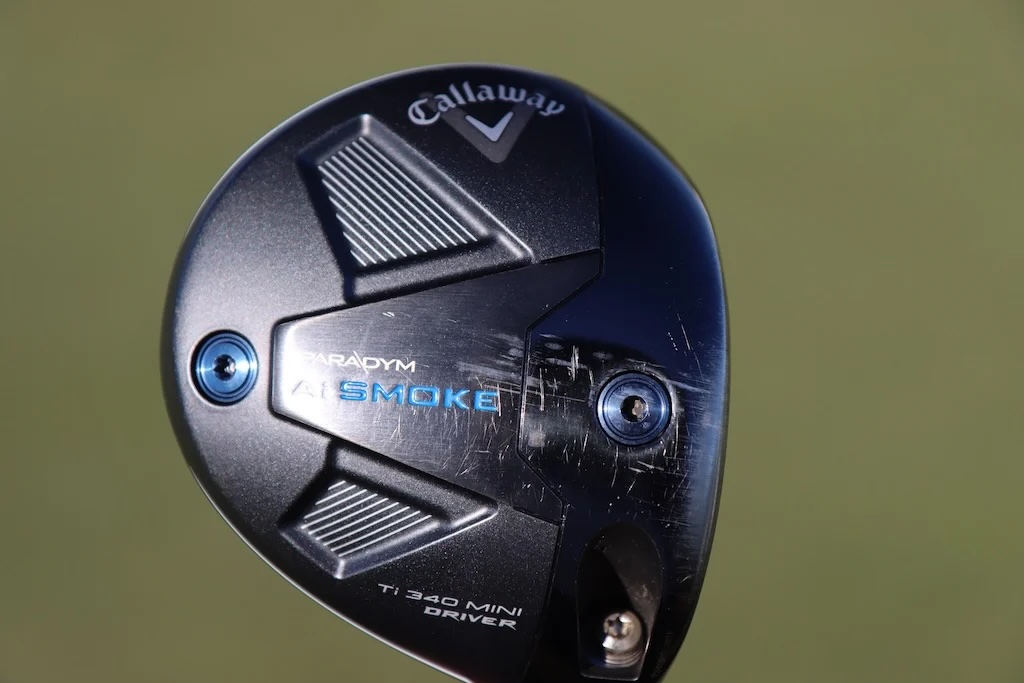
Irons: Callaway X Forged (4), Callaway Apex MB (5-PW)
Shafts: KBS Tour V 125

Wedges: Callaway Opus SP Wedges (52, 56, 60)
Shafts: KBS Tour V 125

Putter: Odyssey Prototype

Ball: Callaway Chrome Tour

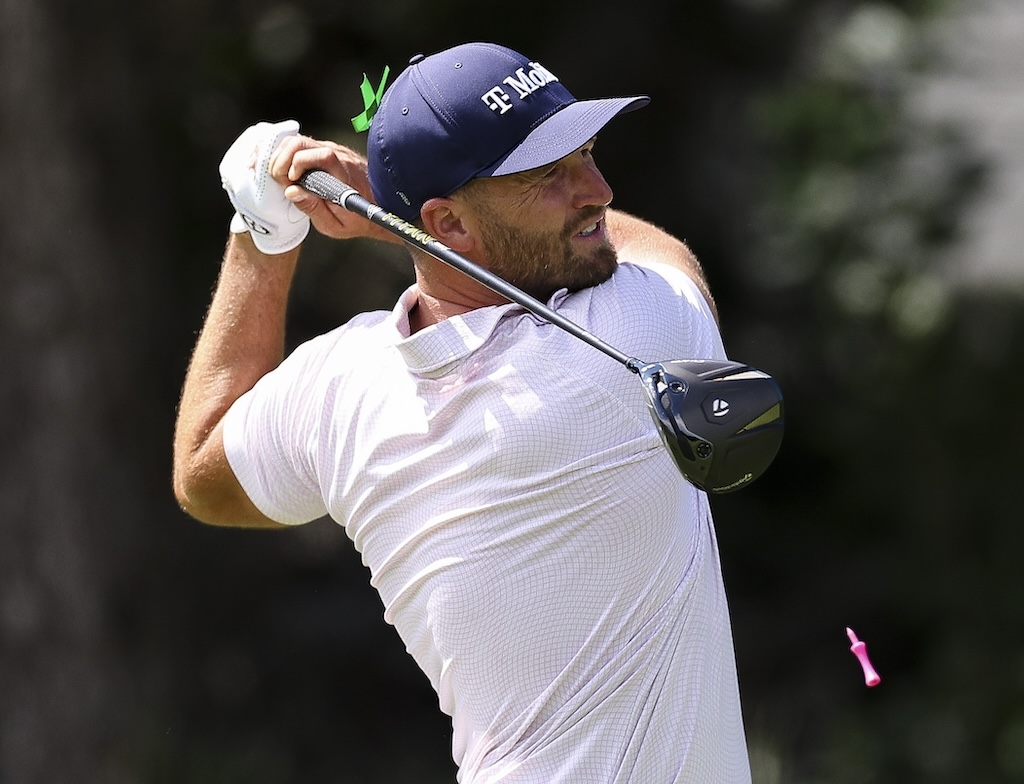
Wyndham Clark made a pretty significant change ahead of his CJ Cup Byron Nelson victory. A change in driver shaft helped the 2023 U.S. Open champion return to the winner’s circle on the PGA Tour Sunday in Dallas.
Clark was one of the first players on Tour to try out and game the new Project X Titan Black shaft. He added it earlier this season on the TaylorMade Qi4D driver as he was able to consistently hit the spin numbers he was looking for.
But entering TPC Craig Ranch, Clark wanted even more performance off the tee, more specifically with his accuracy.
Step up, Titan Yellow.
Built with a specialized counterbalanced design (a higher balance point), Titan Yellow is engineered for modern driver builds, helping offset heavier heads and giving players more room to dial in swing weight, head mass and overlength setups.
The result is a low-launch, low-spin profile designed for clubhead control, speed, and stability for the more aggressive swinger. The Titan Yellow delivers a responsive feel in the hands with the tip stability needed for the faster swingers on tour.
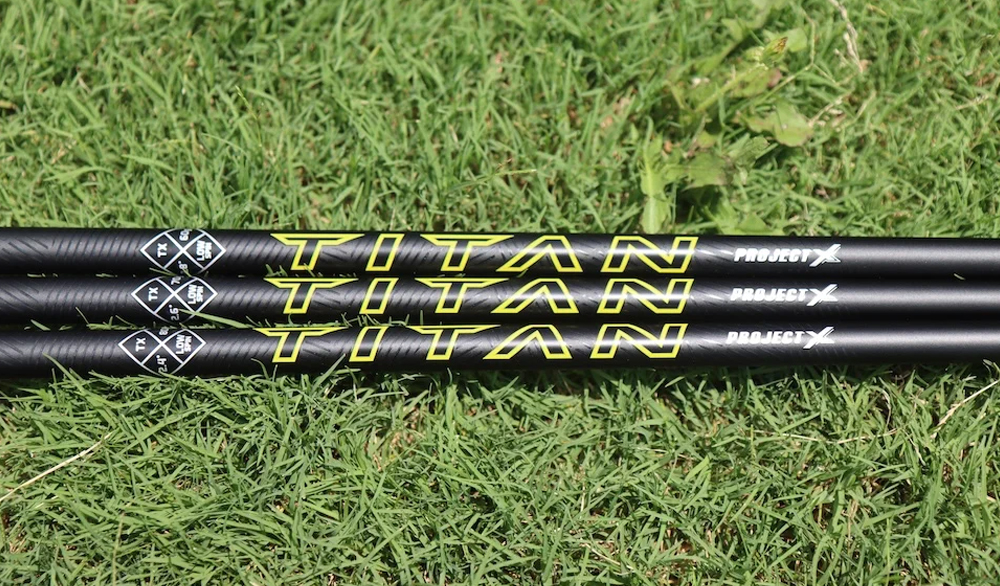
“With the balance point change, we may see a little bit in higher launch, a little bit more spin, but these are still definitely a low, low profile all the way through,” Bragg added. “Biggest difference is that balance point change from Yellow. So potentially the builder last week wanted to optimize ball flight a little bit more, maybe a little bit more spin to hold the start line.”
Titan was engineered right in Project X’s headquarters in San Diego, California, and uses a unique EI profile as well as a new Synex Technology to provide Tour-level performance to those players who need it.
The EI profile features a handle section that is more flexible to give players the feel of the shaft loading during the swing. The mid and tip sections are firmer to add stability to the shaft for better dispersion.
Project X created a new Synex Technology to reinforce the shaft’s outer layers. Synex is a multi-axial carbon fiber that is used in the handle and mid-section to increase hoop stiffness and reduce deflection. This new carbon technology improves energy transfer and should help generate additional ball speed.
Available on Tour, the Titan Yellow comes in 60, 70, 80 TX flexes.


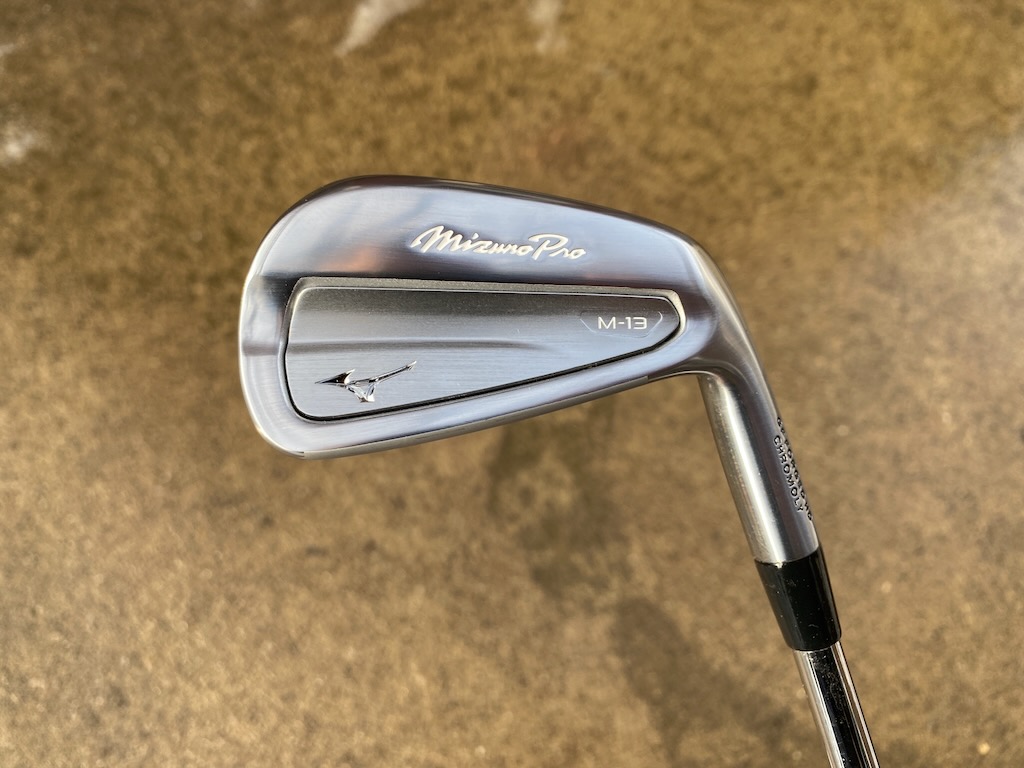
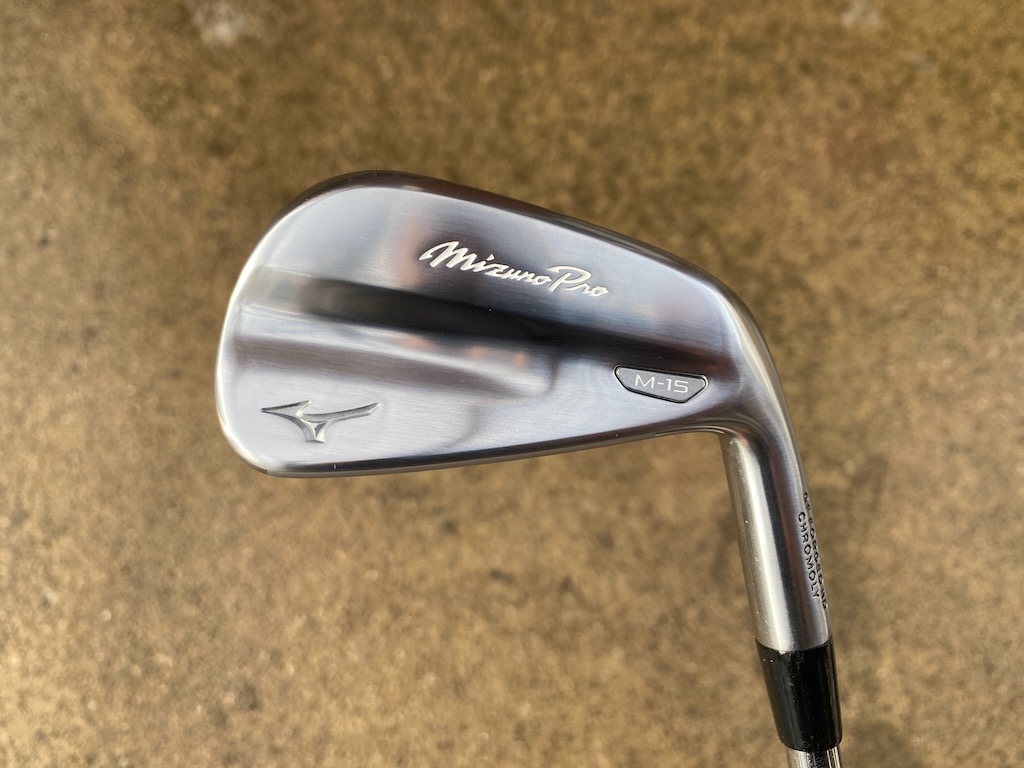
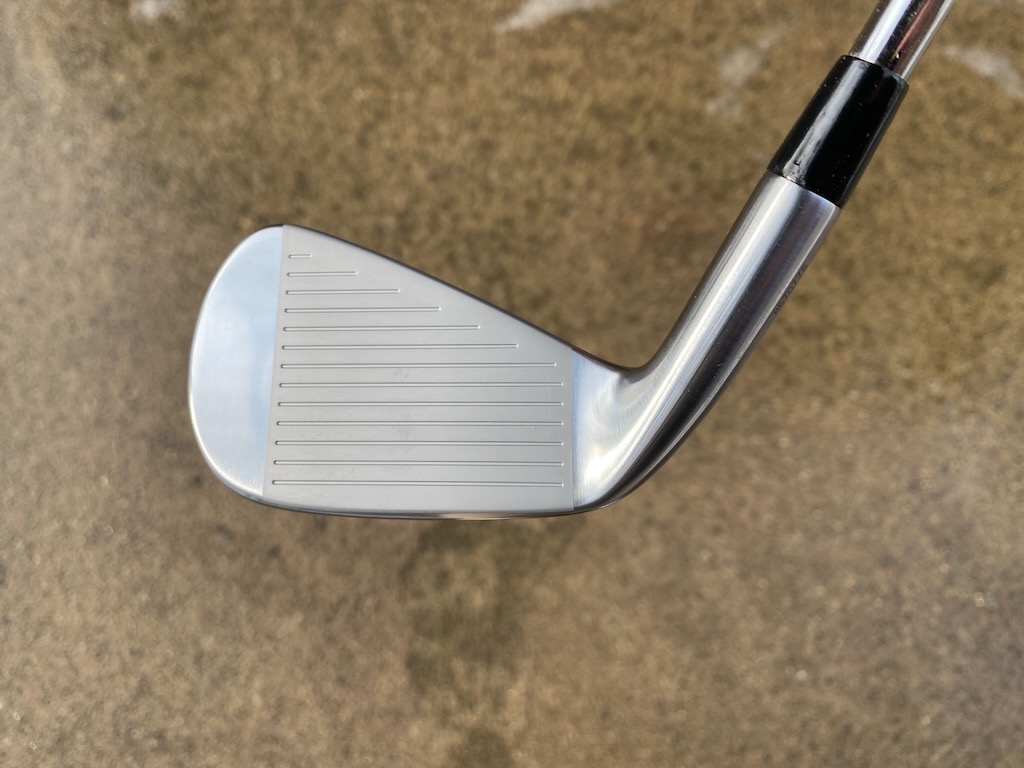
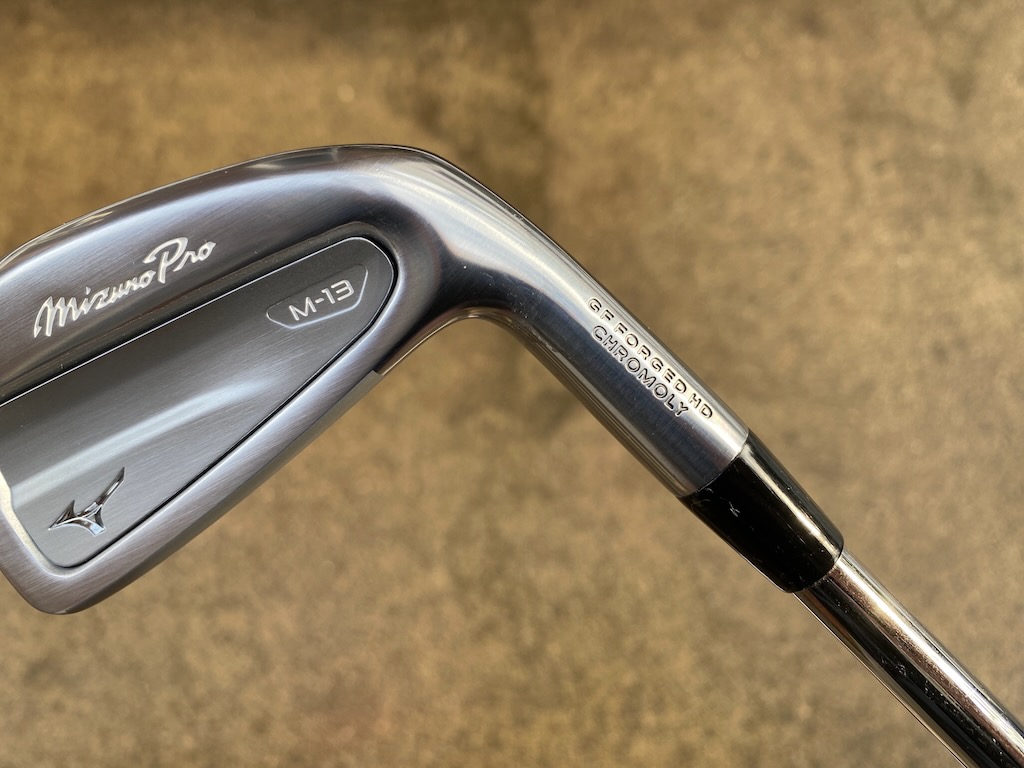
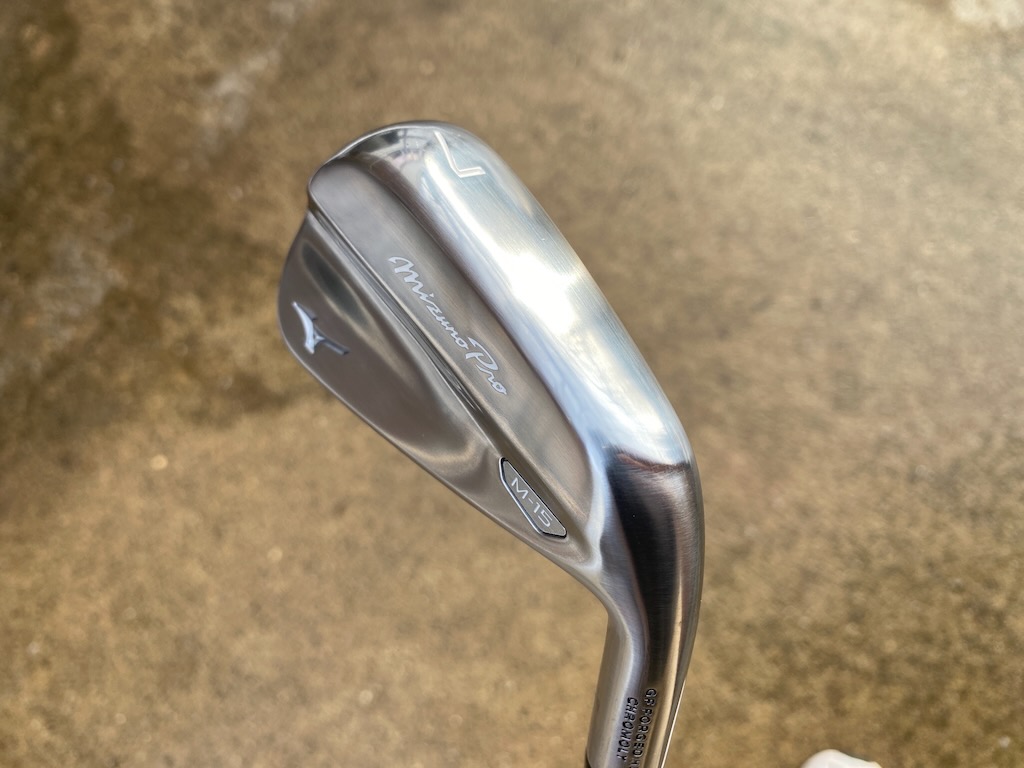
The iron line from Mizuno Golf has recently evolved to maximize its offerings for golfers of all levels. This new Mizuno Pro Modern series sits between the classic Mizuno Pro Signature Series and the technology-packed Mizuno JPX925 lines. Mizuno engineers took some DNA from each side to create the Pro M-13 and Pro M-15 irons, so you can get a lot of everything without compromise!
When you look at the refreshed Mizuno iron line, the Pro Signature Series is made up of the S-1 and S-3 irons that show off the traditional side of Mizuno iron creation. Both models are designed and crafted for feel and precision with shot makers in mind. Players who cherish that classic Mizuno forged feel with love the feeling of being more connected to the iron for impact feedback and precise ball control. Shaping and consistency from shot to shot are what the Mizuno Pro Signature Series does so well, like a finely tuned sports car on the track.
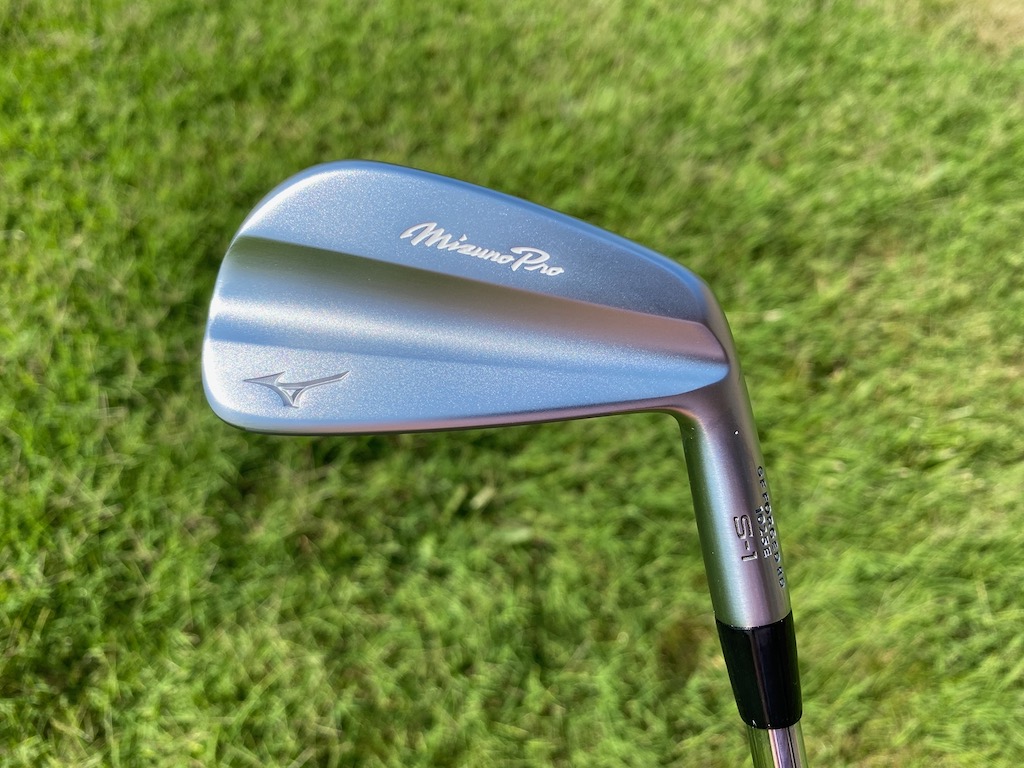
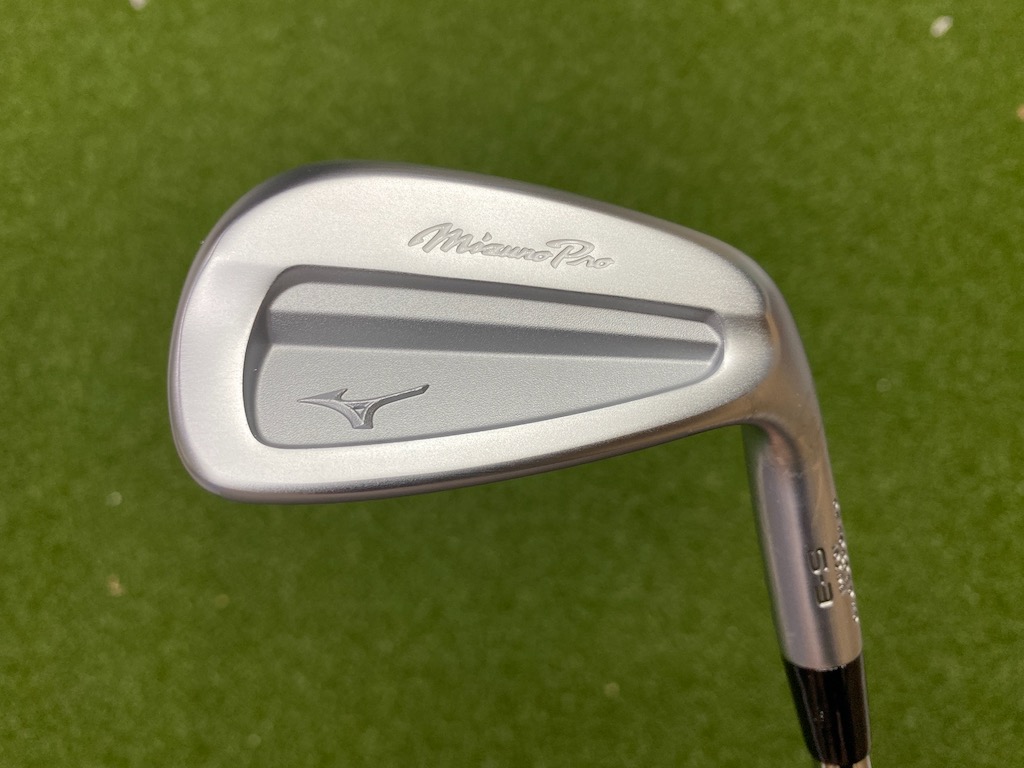
Mizuno took the traditions from the Pro Signature Series and added a good dose of performance to create the new Pro Modern Series with the M-13 and M-15 irons. Golfers will get, as they expect, the soft, forged feel that Mizuno’s Grainflow Forged HD process provides, but will also experience a more distance-driven design. Both the Mizuno Pro M-13 and M-15 will offer higher flight, more forgiveness, and, of course, more ball speed. Mizuno used multi-piece designs to create thinner faces and move weight in the head for added performance and stability. These more progressive irons combine that traditional feel and look with technology packed under the hood to fit a wide range of golfers.
Distance
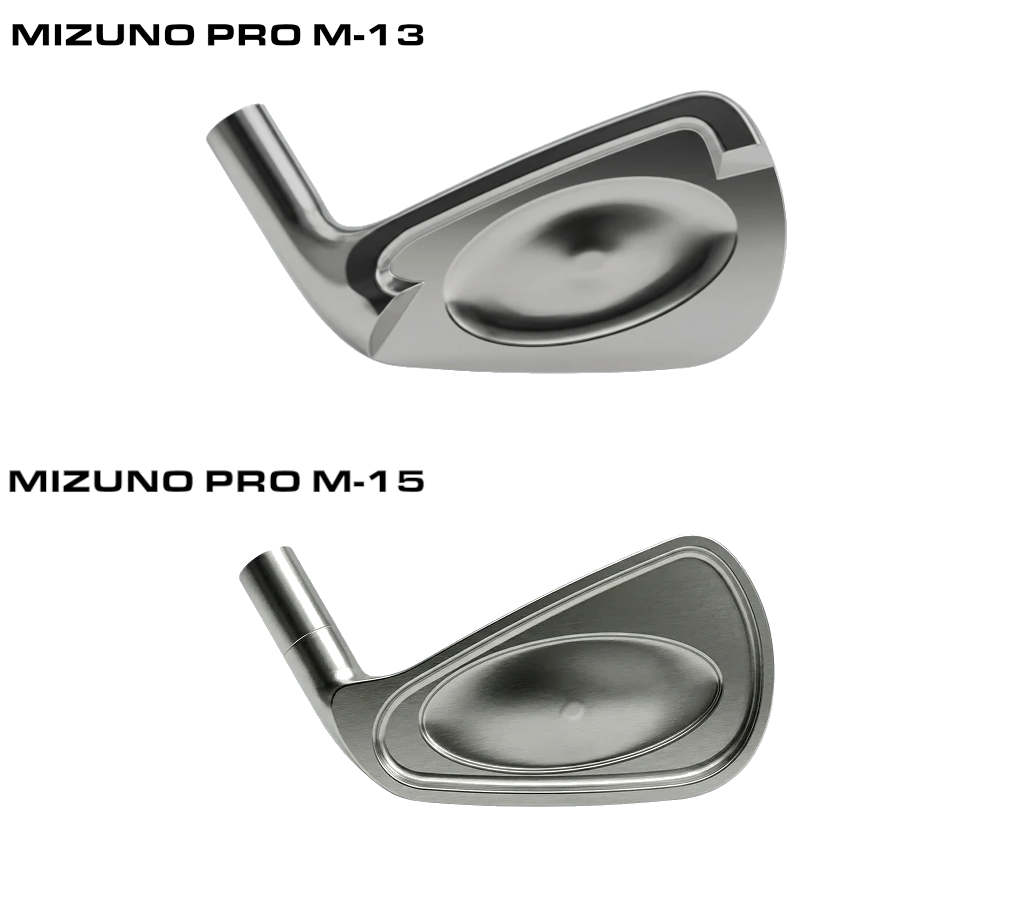
Both the Pro M-13 and Pro M-15 are engineered with distance in mind. The M-15 is, of course, the leader in this group for ball speed and distance, thanks to its Contoured Ellipse face with Cortech technology. This multi-thickness face not only increases ball speed but keeps that speed consistent and removes hot spots from the face. Players will continue to maintain control of their shots while hitting less club into the greens. With the M-13, Mizuno engineers also used Contour Ellipse technology on a face that is 35 percent thinner than the Pro 243 irons. The M-13 delivers a great feel and responsiveness while producing a faster ball speed. Players looking to improve their length while maintaining control over their shots will gravitate toward the Pro M-13.
Forgiveness
When you pick up the Pro M-13, you appreciate the classic Mizuno shaping and compact look, but you don’t think it will be as easy to hit as it is. Off-center shots retain more ball speed than you would expect from a players looking iron. This consistent speed will allow you to still get the ball on the green when you don’t make perfect contact. Mizuno’s use of a Pocket Cavity in the long irons (4-5) and a Micro-Slot cavity in the mid irons (6-8) gives the set a lot of playability and precision. I figured the Pro M-15 was going to be an easy iron to hit, and I was not disappointed at all. A Multi-Material Hollow Construction in the longer irons (4-8) combines heavy tungsten weighting for optimal launch and stability. You can make contact farther out on the toe or near the heel and still see a shot with good launch and very little curve to it. Like the M-13, you can expect consistent ball speed across the entire face that will help you hit more greens.
Sound & Feel
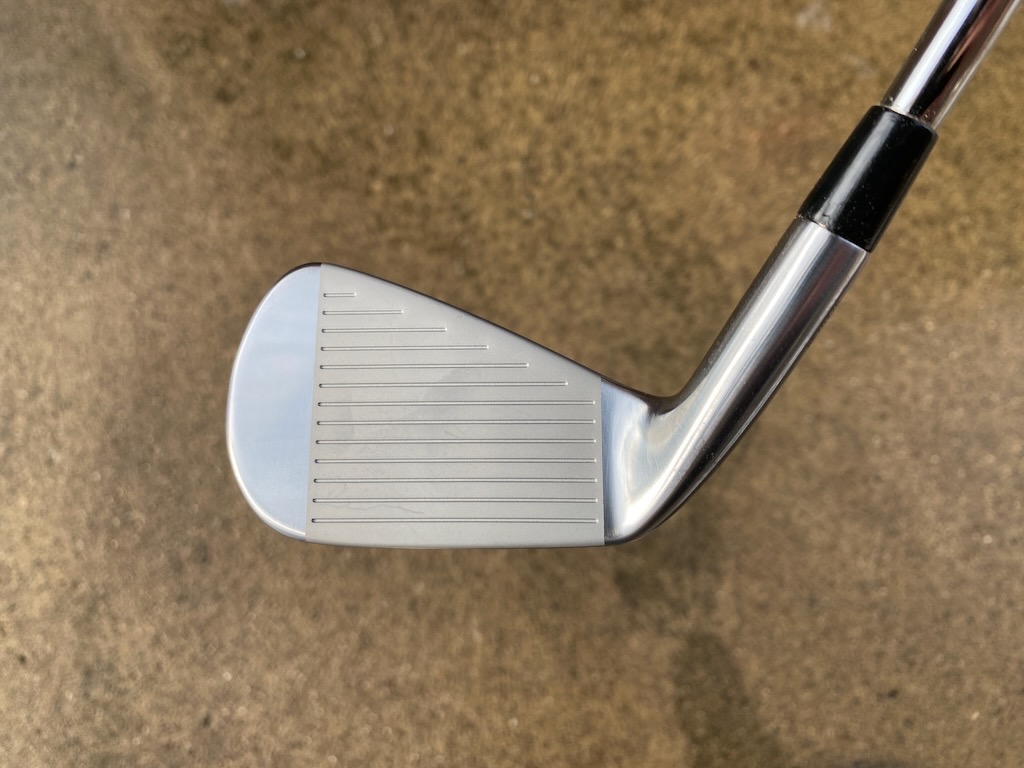
When you hit a Mizuno iron, you expect a level of feel and sound that is pleasing to your senses. Both of these irons embody the attention to detail that Mizuno has demonstrated over decades of clubmaking. Both irons are soft due to the Grain Flow Forging process and offer a solid sound at impact. The Pro M-13 is a touch softer to my hands, but not by much, and I think most players who have hit distance irons will be impressed with how good these are. Even misses that are out in the toe or low on the face don’t generate harsh sounds or feel in your hands and ears. Solid strikes give you that swoosh and thud that make you love golf and playing forged irons.

RBC Heritage Tour Report: More minis, course-specific setups, Spider & GTS launches

Justin Rose WITB 2026 (April): Full WITB breakdown with new McLaren irons

What’s the story behind Webb Simpson’s custom-stamped irons?

Cadillac Championship Tour Report: Spieth’s sizable changes, McLaren Golf launches, and more

Rory McIlroy’s winning WITB: 2026 Masters

Kristoffer Reitan’s winning WITB: 2026 Truist Championship

Cameron Young’s winning WITB: 2026 Cadillac Championship

Aaron Rai’s winning WITB: 2026 PGA Championship

Nelly Korda WITB 2026 (April)

Photos from the 2026 RBC Heritage

Si Woo Kim WITB 2026 (May)
Driver: Callaway Quantum Triple Diamond (8.5 degrees) Shaft: Fujikura Ventus Black 6 X Mini driver: Callaway Paradym Ai Smoke Mini...


Wyndham Clark’s winning WITB: 2026 CJ Cup Byron Nelson
Driver: TaylorMade Qi4D (10.5 degrees) Shaft: Project X Titan Yellow 60 TX 3-wood: TaylorMade Qi4D Tour (15 degrees) Shaft: Project...

Cameron Smith WITB 2026 (May)
Driver: Titleist GTS3 (10 degrees, D1 SureFit setting) Shaft: Fujikura Ventus TR Blue 6 X 3-wood: Titleist GTS2 (16.5 degrees,...

Club Junkie WITB, week 17: Some underrated irons!
This week in my league, we are going with a rather interesting setup with old and new clubs. The PXG...
-
 Equipment3 weeks ago
What’s the story behind Webb Simpson’s custom-stamped irons?
-
 Whats in the Bag2 weeks ago
Kristoffer Reitan’s winning WITB: 2026 Truist Championship
-
 Whats in the Bag1 week ago
Aaron Rai’s winning WITB: 2026 PGA Championship
-
 Tour Photo Galleries1 week ago
Photos from the 2026 CJ Cup Byron Nelson
-

 Tour Photo Galleries2 weeks ago
Photos from the 2026 PGA Championship
-

 Equipment5 days ago
CJ Cup Byron Nelson Tour Report: Koepka and Kim’s newest putters finally get hot
-
 News3 weeks ago
Lead Tape Report: Finau, Simpson’s slabs at the Truist Championship
-

 Equipment2 weeks ago
PGA Championship Tour Report: Fitzpatrick, Koepka among big-name putter switches for Aronimink

