
Opinion & Analysis
My Take: The good, the bad, and the ugly of technology in golf and life

As I approach my 50th birthday in just about two months, I find myself reflecting more frequently on how much has changed since growing up in Central New York. The world today is remarkably different. Technological advancements have transformed life in countless ways—from everyday activities like meals, shopping, and entertainment to business, manufacturing, and education. Anything imaginable can now be delivered right to your door. You no longer need to visit a movie theater for blockbusters or browse your local video rental store in the grocery store basement to find something interesting to watch at home. Calling friends or family happens from anywhere, without being tethered to a cord attached to the wall phone. And those phones we all carry now are far more than communication devices; for younger generations, the “phone” is everything except something to actually call someone on. Education and business increasingly rely on artificial intelligence—a trend many fear will only accelerate.

Golf team, my Junior Year, fall 1991. A much simpler time.
One of the best things about growing up in the ’80s and ’90s was genuine human connection. If someone disagreed with you, they had to express it directly to your face—no keyboard warriors to worry about back then, no comments section where people could bash someone without knowing them or fully hearing their perspective. Respect for others and their opinions was far more the norm.
As a preteen and teenager in the ’80s and ’90s, I became a golf fanatic. I played whenever possible, even finding ways to play during winter. I vividly remember splicing open golf whiffle balls, stuffing them with newspaper pieces, and taping them back up along the seams so they would stay atop the snow as we played a makeshift backyard course in boots and gloves. I was addicted and knew as early as middle school that I wanted to work in the golf business.

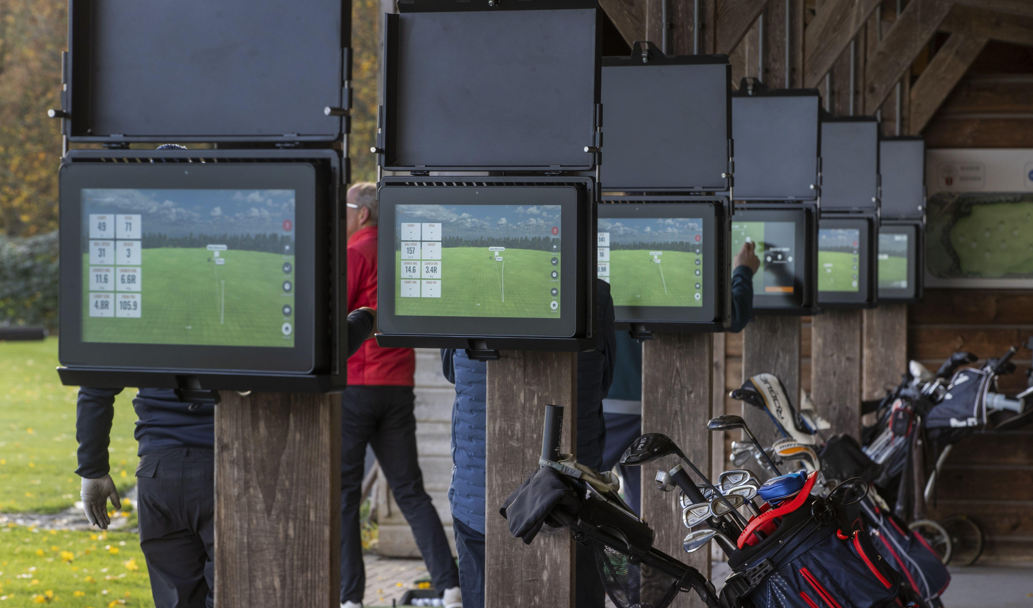
During those years, golf was simply about a set of clubs, balls, tees, the course, and your local PGA Professional. Driving ranges often had you retrieving your own golf balls, and concepts like a TopTracer Range setup seemed like science fiction from “The Jetsons.” Golf instruction happened between a student and a PGA Pro, in-person and without training aids, video capture, slow-motion swing analysis systems, or various apps. If you even said “apps,” people would think you meant appetizers like nachos or cheese fries. Those were the good old days—when persimmon woods still filled golf bags and equipment advancements came maybe once a year, not seemingly weekly as they do today.
A golf “celebrity” was a PGA or LPGA Tour star, not someone performing trick shots or filming themselves with buddies playing a nine-hole scramble. Doing that would have been pointless because there wasn’t yet a platform to showcase your videos to the masses. Instruction beyond lessons with the pro came from books or magazines and occasionally videos like Jack Nicklaus’s “Golf My Way,” Wally Armstrong’s “Gator Golf.” or “Bob Mann’s Automatic Golf.” Of course, these were all enjoyed on VHS or DVD…remember those?
Having worked in the game for nearly 30 years, I sincerely appreciate what once was. Simultaneously, I’ve fully embraced all the advancements in the game. As a coach, I’ve witnessed how technology helps guide my students toward their goals and how improvements in equipment, practice facilities, home simulators, and more have made golf more accessible. I appreciate golf YouTubers and influencers. I value forums like GolfWRX. I embrace social media that allows people to share their love of the game, celebrate triumphs, process tournament heartbreaks, and offer advice they believe might help others.

What I miss most about the past—and dislike most about our modern world—is the genuine human interaction and respect for others that once prevailed, not just in golf but in life generally. I intentionally work with fewer students in my coaching practice to provide that personal connection that seems increasingly rare. I love writing and sharing experiences on forums like GolfWRX and other outlets to help fellow golf enthusiasts. It’s disappointing, however, when some feel compelled to criticize others’ perspectives rather than offering thoughtful counterpoints civilly.
It’s often said that golf is a microcosm of life itself—something I still believe. As our world continues advancing at its rapid pace, my hope is that we can learn—or perhaps relearn—how to be more human to one another, both on and off the golf course. Only then will we recapture the ability to live simpler, less stressful lives, all while enjoying the advantages of today’s technology.
Reader, please support me by checking out my three weekly columns on RG.org. On Mondays, I present “The Starter,” which recaps the week gone by in golf. On Thursdays, I give you “Fairway Focus,” which previews the week to come in golf. And on Saturdays, I dish up the “Weekend Fore-cast,” a look at what’s on tap for the upcoming weekend.
Editor’s note: “My Take” will be an ongoing weekly series where Brendon shares his thoughts and opinions on various aspects of the game and industry. These are Brendon’s opinions and do not necessarily reflect those of GolfWRX, its staff, and its affiliates.















This past Monday, I played in the U.S. Amateur local qualifier at Rock Creek Country Club in Portland, Oregon. A full tee sheet from 7:30 a.m. to 1:55 p.m., the top 11 scores would make it to the U.S. Amateur final qualifying.
I teed off at 10:48 a.m.. With the 7:30 am tee time, you can get a feel for the leaders’ pace, and they were off and running on the challenging setup at Rock Creek.
View this post on Instagram
Getting to the highlight of the round on the par five 17th, a drive up the left side and 212 yards left to the front hole location. I took out a 5-iron with plans of middle of the green. The ball ended up 8 feet left of the hole, pin high. A slight downhill putt dropped in for an eagle 3 on the 17th. With the cut line looking to be anywhere from -2 to even par. This was the boost I had been waiting for all day.
With making par from the trees on 18, it was time to wait for a potential playoff with a posted score of one under par 71.
Three hours later, it was playoff time. 8 players for 6 spots. I made par on the playoff hole, which was good enough to advance to the U.S. Amateur final qualifying in July. USGA qualifiers sure deliver on all of the emotions in golf!
Club Junkie
Building my 2026 gamer WITB: Ranking the contenders and new putter projects – Club Junkie Podcast

The annual What’s In The Bag build is underway, and on this episode of Club Junkie, Brian breaks down the clubs currently leading the race for a spot in his 2026 gamer setup. From drivers and fairway woods to irons, wedges, and shafts, he ranks the equipment that’s performing best and explains what’s separating the front runners from the rest of the field.
Brian also heads into the workshop to discuss several putter projects currently on the bench. From head options and shaft choices to build ideas and testing plans, he shares what he’s working on and which putters could become serious contenders for the bag this season.
If you’re a gear junkie who loves equipment testing, club building, and the never-ending pursuit of the perfect setup, this episode is for you.
Follow Club Junkie:
Instagram: @clubjunkiepod
TikTok: @clubjunkiepod
Threads: @clubjunkiepod
X: @ClubJunkiePod
Club Junkie
Tour Edge Exotics mini driver review + TaylorMade Spider ZT Max first look – Club Junkie

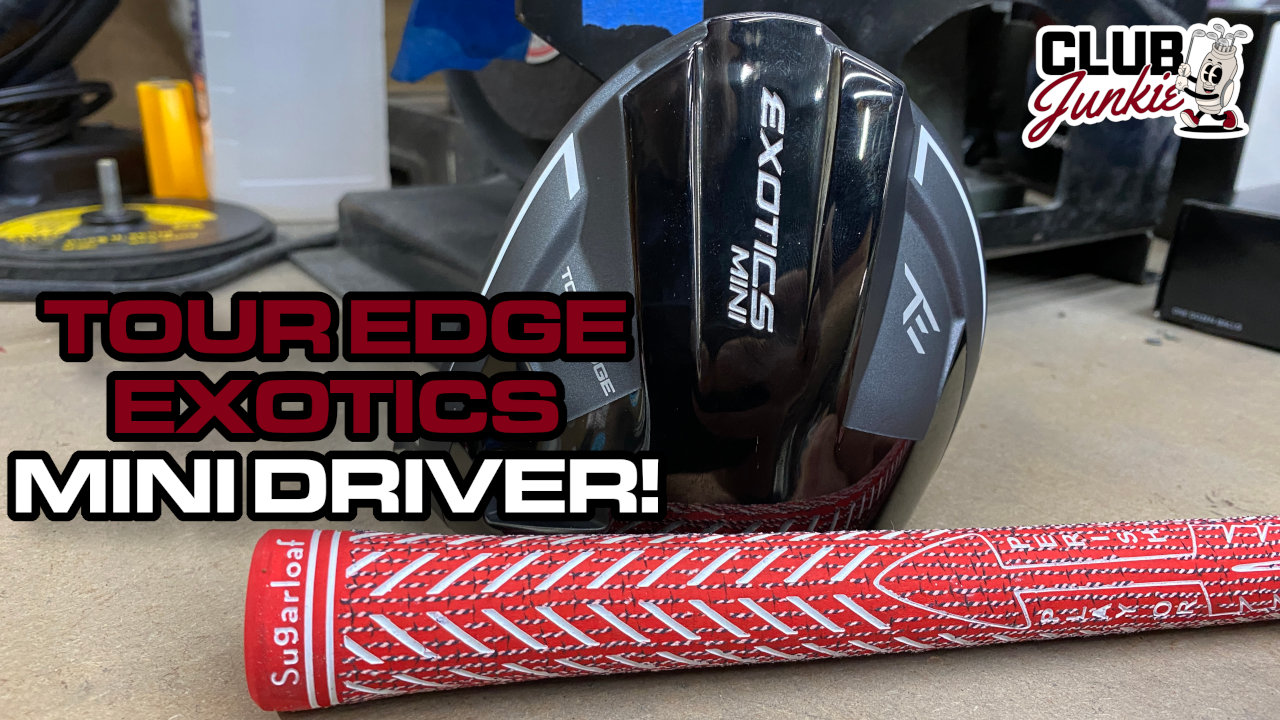
On this episode of Club Junkie, I put the new Tour Edge Exotics Mini Driver to the test and break down the performance, forgiveness, distance, and where it fits compared to a traditional driver or strong fairway wood. If you have been curious about adding a mini driver to the bag, this one is worth a look.
I also dive into the new TaylorMade Spider ZT Max putter that was recently spotted and discuss the growing zero torque putter trend. Plus, there is a closer look at the new Project X Titan Yellow shaft showing up on the PGA Tour and what makes it different from other profiles currently out there.

Justin Rose WITB 2026 (April): Full WITB breakdown with new McLaren irons

What’s the story behind Webb Simpson’s custom-stamped irons?

Cadillac Championship Tour Report: Spieth’s sizable changes, McLaren Golf launches, and more

Memorial Tournament Tour Report: Rory McIlroy, Cameron Young switch up drivers, and more

Russell Henley’s winning WITB: 2026 Charles Schwab Challenge

Kristoffer Reitan’s winning WITB: 2026 Truist Championship

Aaron Rai’s winning WITB: 2026 PGA Championship

Cameron Young’s winning WITB: 2026 Cadillac Championship

Details on Jason Day’s latest prototype Avoda iron setup

Justin Rose on the switch to McLaren Golf, learnings from previous equipment moves
Brianna Do WITB (June 2026)
Driver: Callaway Quantum Triple Diamond (9 degrees) Shaft: KBS PGW 3-wood: Callaway Elyte Titanium (15 degrees) Shaft: KBS PGW 5-wood:...


Athena Singh WITB 2026 (June)
Driver: TaylorMade Qi4D (10.5 Degrees) Shaft: Fujikura Ventus Blue 6 S 3-wood: TaylorMade Qi10 Max (16 Degrees) Shaft: Fujikura Ventus Red 6...


J.T. Poston’s winning WITB: 2026 Memorial Tournament
Driver: Titleist GTS3 (9 degrees) Shaft: Mitsubishi Diamana BF 60 TX 3-wood: Titleist TS2 (15 degrees) Shaft: Graphite Design Tour...


Alex Noren WITB 2026 (June)
Driver: Callaway Paradym Ai Smoke Max D (9 degrees @7, draw setting) Shaft: Graphite Design Tour AD VF 6 X 3-wood: Callaway...
-
 Equipment3 days ago
Memorial Tournament Tour Report: Rory McIlroy, Cameron Young switch up drivers, and more
-
 News1 week ago
Russell Henley’s winning WITB: 2026 Charles Schwab Challenge
-
 Equipment5 days ago
Details on Jason Day’s latest prototype Avoda iron setup
-
Whats in the Bag1 day ago
J.T. Poston’s winning WITB: 2026 Memorial Tournament
-

 Equipment11 hours ago
Best irons 2026: Best irons overall, most forgiving irons, and more
-

 Equipment2 weeks ago
CJ Cup Byron Nelson Tour Report: Koepka and Kim’s newest putters finally get hot
-

 News2 weeks ago
Charles Schwab Challenge Tour Report: MacIntyre, Åberg and Spaun all switch putters, TaylorMade launches new Spider
-

 Equipment2 weeks ago
Details on J.J. Spaun’s surprise putter switch


Prime21
Mar 23, 2025 at 6:12 pm
“What I miss most about the past—and dislike most about our modern world—is the genuine human interaction and respect for others that once prevailed, not just in golf but in life generally.
Followed immediately by…..
“Reader, please support me by checking out my three weekly columns on RG.org.”
Personally, I would like to live somewhere between both realities and reap the benefits of both.
??????????????????
M
Mar 23, 2025 at 10:10 am
It’s your conceit to want to have to speak and talk and talk and talk is your own downfall into that pit of loneliness if you don’t talk relentlessly thinking people are listening
Go meditate for years like a Buddhist monk without speaking, you won’t worry about any of this stuff
Donnie Baker
Mar 22, 2025 at 10:26 pm
Come on, you write terrible takes like “Elliott: If you can’t embrace golf YouTube and social influencers by now…” then you deserve getting dragged in the comments. And you have to be retarded to not understand the real reason a pro athlete has a charity.
Chuck
Mar 22, 2025 at 7:52 pm
There’s good technology and bad technology. Good technology makes the game more accessible, more affordable, more small-d democratic. Bad technology is not exactly “everything else,” but close.
GOOD TECHNOLOGY:
1. Steel shafts. (Hickory was horribly expensive, breakable, and extremely difficult for clubmakers. Also difficult to know what you were getting.
2. Metal heads. (A sorry loss of romanticism with persimmon, and the wonderful sound, but see above; all the benefits of steel shafts.)
3. Epoxy joinery. (Nobody even remembers pinned and whipped heads.)
4. Compund rubber grips. (Just try to purchase a custom-wrapped Neumann leather grip like Nicklaus used his entire career.)
5. Modern greens mowers. (Bobby Jones himself said it was the most important technological advance in his golfing life.)
6. Adjustable hosel sleeves on drivers and fairway clubs. (Making shaft interchangeability a doable option, in addition to the adjustment factor. Tour Van capabilities, brought to the masses.)
7. Uncuttable plastic golf ball covers. Here I am thinking about Surlyn and Ionomers. I’ll get to urethane in Bad Technology. Who remembers cutting wound balata balls? I do.
8. Computers, in the form of a universal world handicap system.
9. A variety of technological gizmos to help physically handicapped players play.
10. Dual-strap/backpack golf bags. (This wasn’t high on my own list; I like single strap bags. But a number of USGA officials are firmly behind 2-strap golf bags as a big benefit to more walking golfers.)
BAD TECHNOLOGY:
1. Multilayer urethane balls. (They are of great benefit to elite players. The cost is such that many recreational players don’t even buy them. There’s nothing inherently wrong with urethane, of course. And nothing inherently wrong with multilayer technology. But all together, it has gone way too far.)
2. Composite material shafts. (Expensive. Yes, they certainly perform better. But to what end? If you could make a case that some group of recreational players could not play the game without them, I might listen. I don’t think anyone can do that.)
3. Exotic alloy large-volume driver heads. (Expensive. The USGA let this one get away from them, as they did with balls. I’m a little less strident on this one than with balls. But $700 drivers are not advancing golf.)
4. Golf carts for healthy golfers. (Killing caddy programs all over America. “Cartball,” as Sandy Tatum derisively called it.)
Again, my principles in what separates good and bad technology; it isn’t simply whatever helps you hit the ball farther and straighter, or score lower. How many people think those are the simple criteria for good technology? No; it is how to create a more affordable, more acessible, more small-d democratic game. A game where super expensive equipment doesn’t give a competitive advantage. A game where equipment technology does not provide exceptional advantages to elites.