
Opinion & Analysis
Ways to Win: Taking V1 Game’s Virtual Caddie live on the LPGA Tour

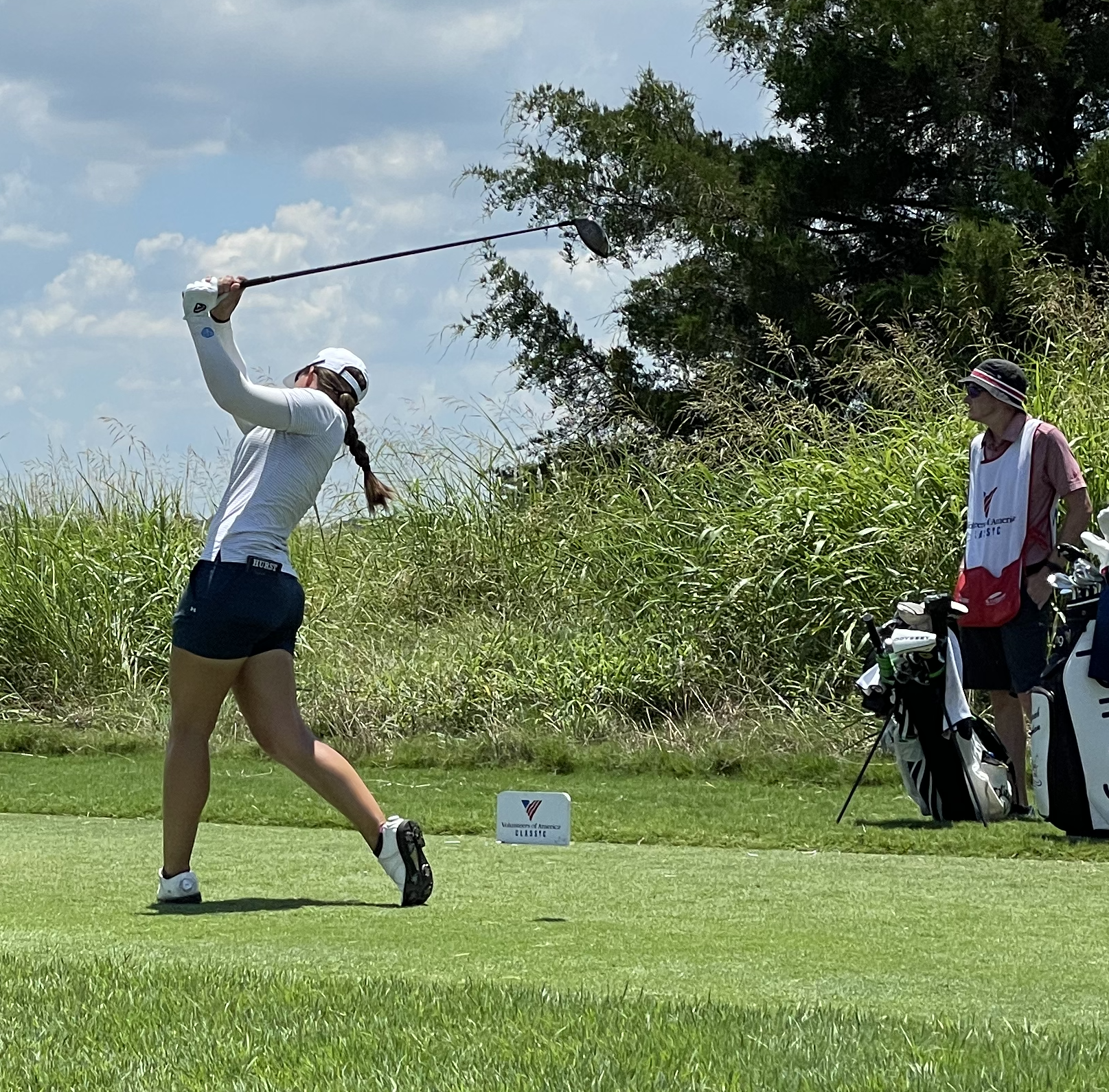
Recently, I was invited to caddie for LPGA Tour player Vicky Hurst at the tour stop at Old American Golf Club just outside of Dallas, Texas. As the developer of the V1 Game app, it was a chance to put my Virtual Caddie skills to the test in a live environment with some of the world’s best. Realistically, Vicky is a phenomenal player and did not need a ton of help out there, but I could not pass up the opportunity to walk inside the ropes and observe professional golf at the highest level to see what I could learn.
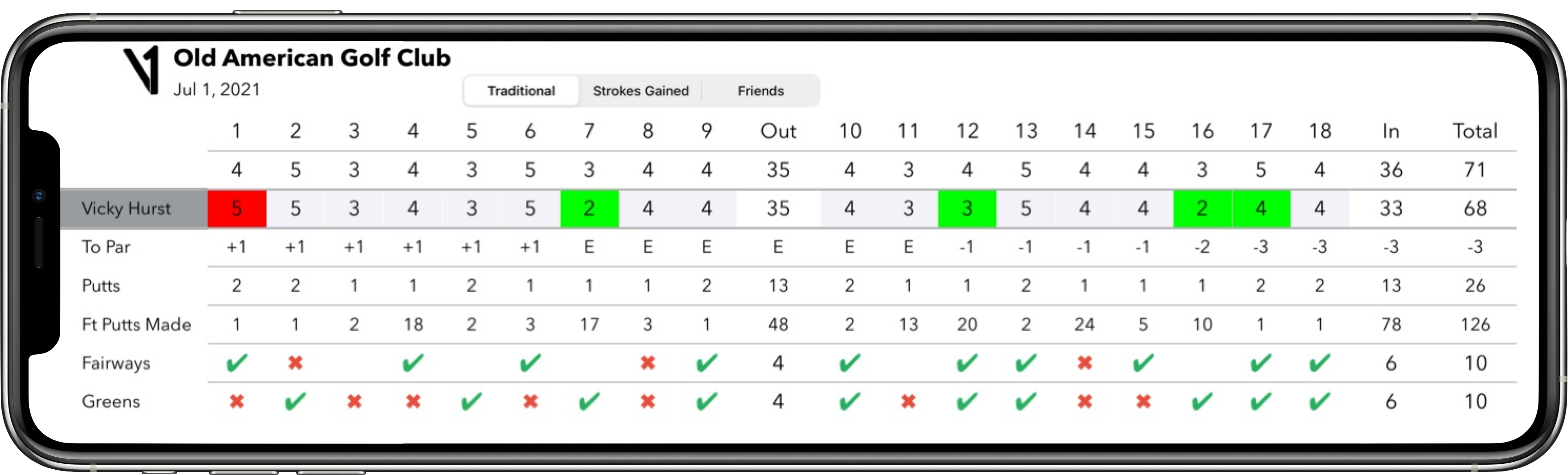
As a scratch golfer myself, I’ve always had that curiosity of how my game might stack up on the LPGA. The short answer is — they would smoke me. While I was able to caddie for three days in total, I was only able to caddie for a single tournament day due to prior obligations. On that tournament day, Vicky was super impressive, firing a 68 (-3) and finishing in a tie for 16th.
These are my main takeaways from a fantastic experience over the course of a few days.
Phenomenal Short Games
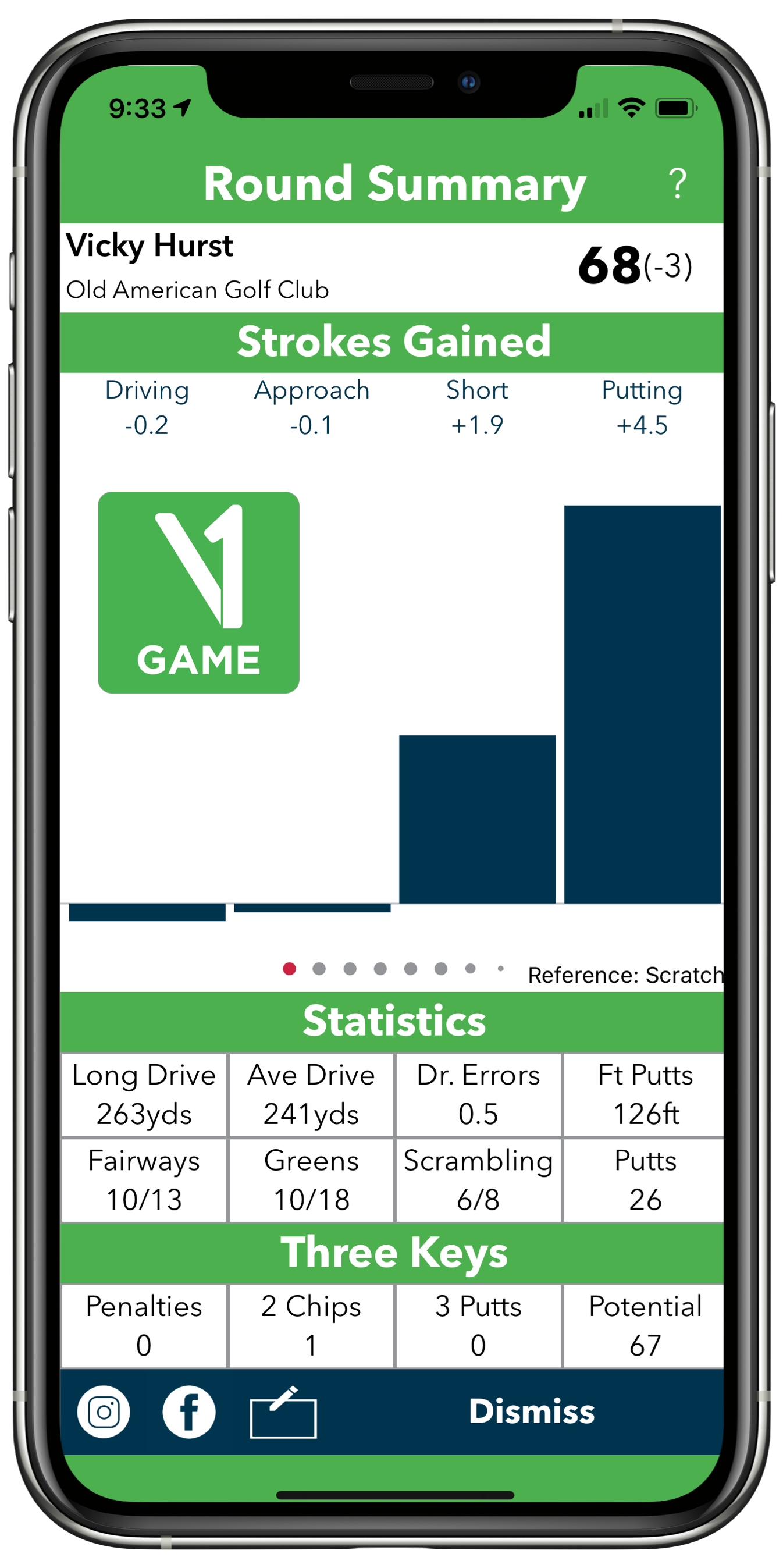
Whether it was during practice rounds, the pro-ams, or even in competition, I was blown away by the short games of all the tour players I witnessed. They would casually throw balls down on super tight lies, open the clubface, and hit shots I do not have. The confidence, the technique, the touch…all of it. Perfected through years of practice and dedication, it’s something you cannot fake while working a desk job and casually practicing once a month. The variety of shots and the ease of which they hit them made me jealous. On Thursday, Vicky was able to get up and down six times out of eight opportunities inside 75 yards (keep in mind that V1 Game counts all opportunities inside 75 yards as a scrambling opportunity). A short game like that has to free up the rest of the game with confidence that you can get out of a jam if needed. It wasn’t just the short range shots either. All of her wedges inside 100 yards were just on another level. Distance control was paramount. This is also where the majority of her practice time was spent in the practice rounds.
Putt for Dough
It’s hard to score without putting well, and Vicky did exactly that. From the Round Summary above, we see she gained +4.5 strokes on a Scratch with the flatstick. Easy to do when you make 126 feet on just 26 putts! Now, Vicky was by no means perfect. On the first hole, she left an eight-foot putt short and in the jaws, dropping a shot for her only bogey of the day and not helping my nerves that I was going to mess this up! However, she did not miss any short putts until a five-foot eagle try on the 17th hole. The ball just didn’t take the break and caught the edge. Outside of that, she made putts from 10, 13, 17, 18, 20, and 24 feet. A mid-range putting display that reminded me of Jordan Spieth. While some of those were clutch par saves, she also made four birdies on the day with three of them coming from mid-range putts.

Vicky only lost strokes to a male Scratch handicap from two distance buckets. Based on what I witnessed over the couple of days, this was no outlier for Vicky. She made bomb after bomb in the 9-hole pro-am as well. It definitely looked like her recent change to an armlock grip was paying off on the greens, even if I tried to sabotage her performance by dropping her putter after the 12th hole. After two bombs, it was just too hot to handle properly!
Playing it Safe
Probably the biggest surprise watching Vicky play was the conservative nature in decision making. Vicky only hit six drivers in 13 holes, often hitting 3-wood off the tee and relying on mid-irons for her approach shots into the greens. She is fantastic with her mid-irons so, on the surface, this made sense. She routinely hit her driving, 5, and 6-irons tight throughout the week. On Thursday, this strategy paid off as she hit 10 of 13 fairways.
She was also conservative (and smart) the one time she drove into trouble. On the 14th hole, Vicky smoked a 3W that ran through the fairway and into the hazard. The ball was playable, but sitting on the muddy lake shore. To hit the green she would have to navigate chest-high grass on a more aggressive line. This is a situation where the average amateur (myself included) is probably going to take it on and try to carry the grass to aim at the green. This fails to take into account all the risk. A shot online with the green would have to carry 40 yards and elevate quickly to avoid going into the lake using roughly a 9-iron.
Rough calculations would say one out of five times that would lead to a par, two out of five times you miss the green anyway and make bogey, and two out of five times you chunk it into the lake and make double or worse for an overall average of 5.2 with that strategy.
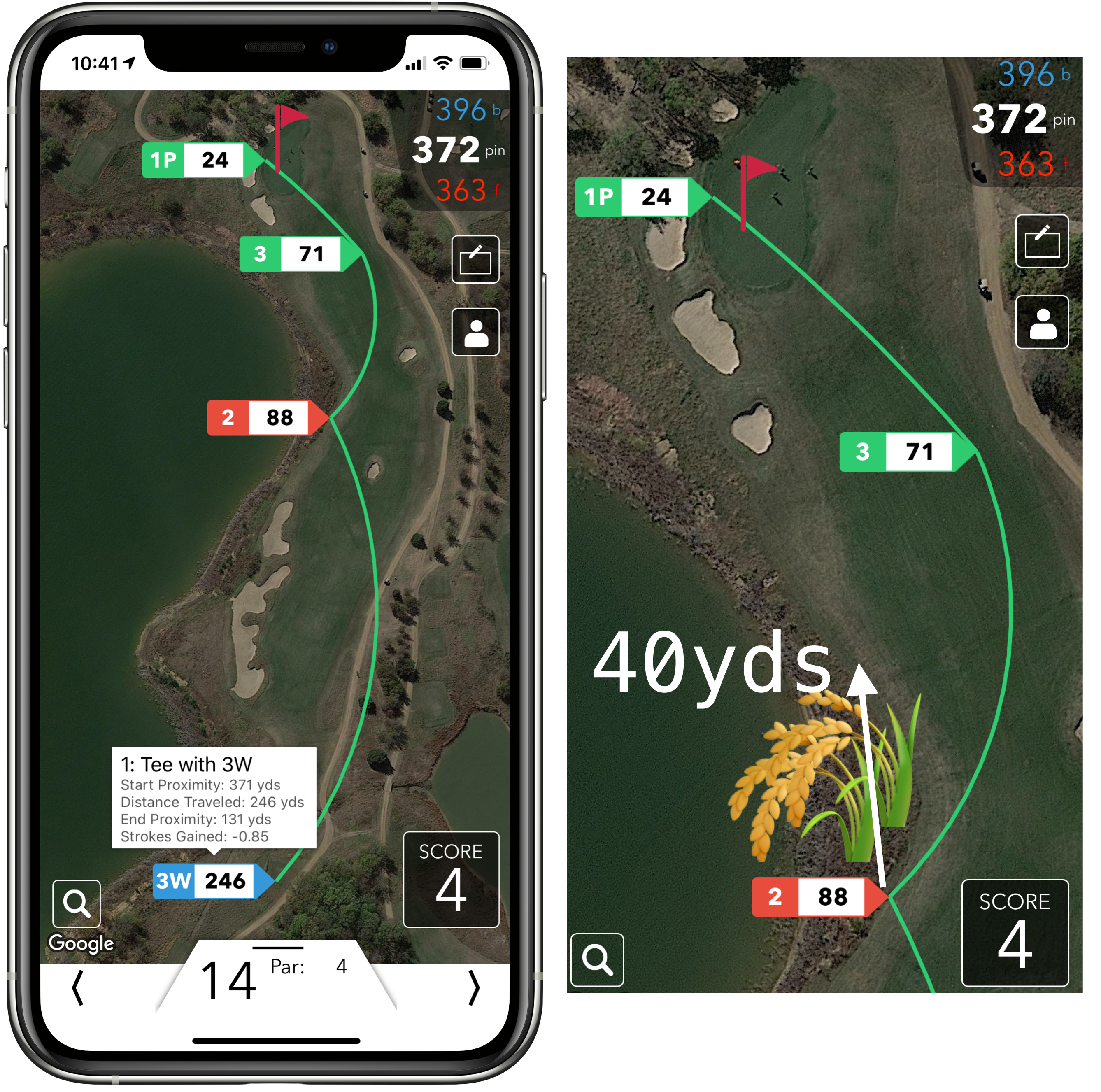
Laying up is safer, but does it pay off? Let’s say one out of five times, it leads to a par, four out of five times, it leads to a bogey, and it eliminates double bogey. That comes out to an average of 4.8 with that strategy.
Clearly, over the long run, Option Two is the better decision in this case. Vicky knew this and made the right decision. To top it off, after an average wedge into the green, she made the 24-footer to save par!
This is one takeaway that I will likely take into my own game. After watching Vicky play, I reflected on my own decisions and it became clear to me that I often try to force shots and hit the ball too far or bring in unnecessary risk because I don’t trust other parts of my game. For shorter holes with risky landing areas, it makes sense to just get the ball in play. Make sure to avoid big pitfalls like bunkers or penalty areas. Statistically, you want to get as short a club in your hand as possible going into the greens, but that doesn’t always require bashing a driver. Most of us can live with bogeys: Let’s eliminate the big numbers.
Sometimes Too Safe
I am in no position to be critical of Vicky’s golf game, but taking a statistical point of view, there were times when in my opinion she was too safe. The 10th hole at Old American is the best example. I saw Vicky play this hole three times and all three times, she hit 3-wood off the tee. The challenge is a bunker that divides the fairway. Using the V1 Game Course Explorer, we can measure distances between any three points on the course. In the leftmost image below, it is roughly 207 yards to cover the fairway bunker. This yardage is at the edge of how far Vicky was carrying her 3W. The effective width of the fairway is only 40 yards at this location as to the left of a bunker is a severe slope that will repel balls into some nasty rough. To hit 3W, she should aim well right of the bunker. In the three attempts I saw, Vicky hit the bunker, pulled it left where it bounced down into the rough, and missed the bunker by one yard! Clearly it was a problem spot for her. On this hole, I would have loved to have seen her hit her driver. I never saw her hit a poor driver and she has more than enough carry distance to cover the bunker.
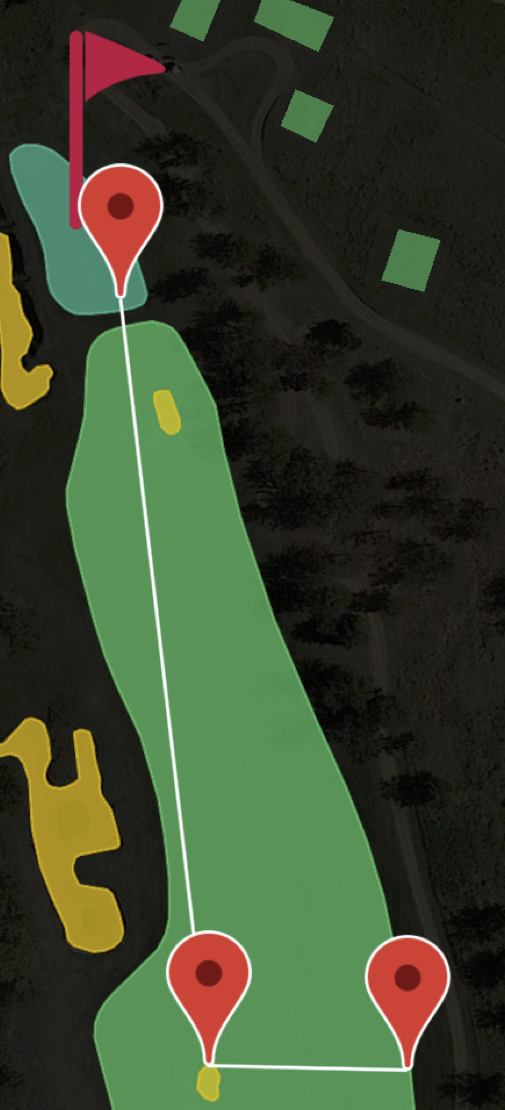
Hitting driver actually moves her landing spot to a wider and flatter portion of the fairway as shown in the rightmost image above. It also significantly shortens the distance she would have into the hole from roughly 160 yards to less than 140. If she were to hit into the rough or into trouble, she would still have a higher percentage of being able to reach the green.
It was definitely educational to observe the way Vicky manages the course. There was a lot that us amateurs could learn from her decision making and club selection as she routinely made the right moves.
Enjoy the Ride
Probably the biggest takeaway I had while caddying for Vicky was how stress-free she seemed to be. She was friendly to everyone, she never seemed rushed before, during, or after the round. She was thoughtful. She took a picture with my son, signed a golf ball for him, and the volunteers walking with us. A true professional. Nothing seemed to bother her and she legitimately seemed to enjoy the golf. She would make long putts and just give a little shrug and a fist bump as if to say ‘how about that?’ Never too high or low emotionally, always a smile.

I contrast that with myself, and I definitely over-stress. When playing in a tournament, if I don’t get there an hour early, I feel rushed. I do things too quickly. I think too much about my score. I am fist pumping birdies and dog cussing myself for several minutes after a bad shot or hole. I can let the golf affect my mood. I get too wrapped up in my golf. Vicky seemed perfectly balanced. There is no doubt she cares just as much if not more. There is no doubt that situations were stressful. She didn’t show it. It was probably the most impressive thing I saw that week. I definitely want to be more like Vicky.
Deep down I think we all know that thinking about score or obsessing over the previous shot does not help, but it was liberating to see a player on the big stage that legitimately seemed to enjoy what she was doing.
A quick example: Thursday was the first day of the tournament and Vicky had a 12:30 tee time. We agreed to meet at 11:10. I showed up way in advance of her tee time, at around 9:30. It was a chance for me to watch some of the other players and to make sure I did not hit traffic. 11 rolled around and no word from Vicky. Then 11:10 and still no word. I sent her a text to make sure that I hadn’t missed her arrival to which she replied “on my way.”
I was already nervous to caddie on the bigger stage, but I figured she’d be rushed to get to the course, eat something, warm up, and make it to the tee on time so I was even more nervous. When Vicky showed up, she casually asked if I was ready for lunch. We moseyed into player dining, sat down and took our time eating lunch with small talk, leaving just under an hour to warm up for the day’s round.
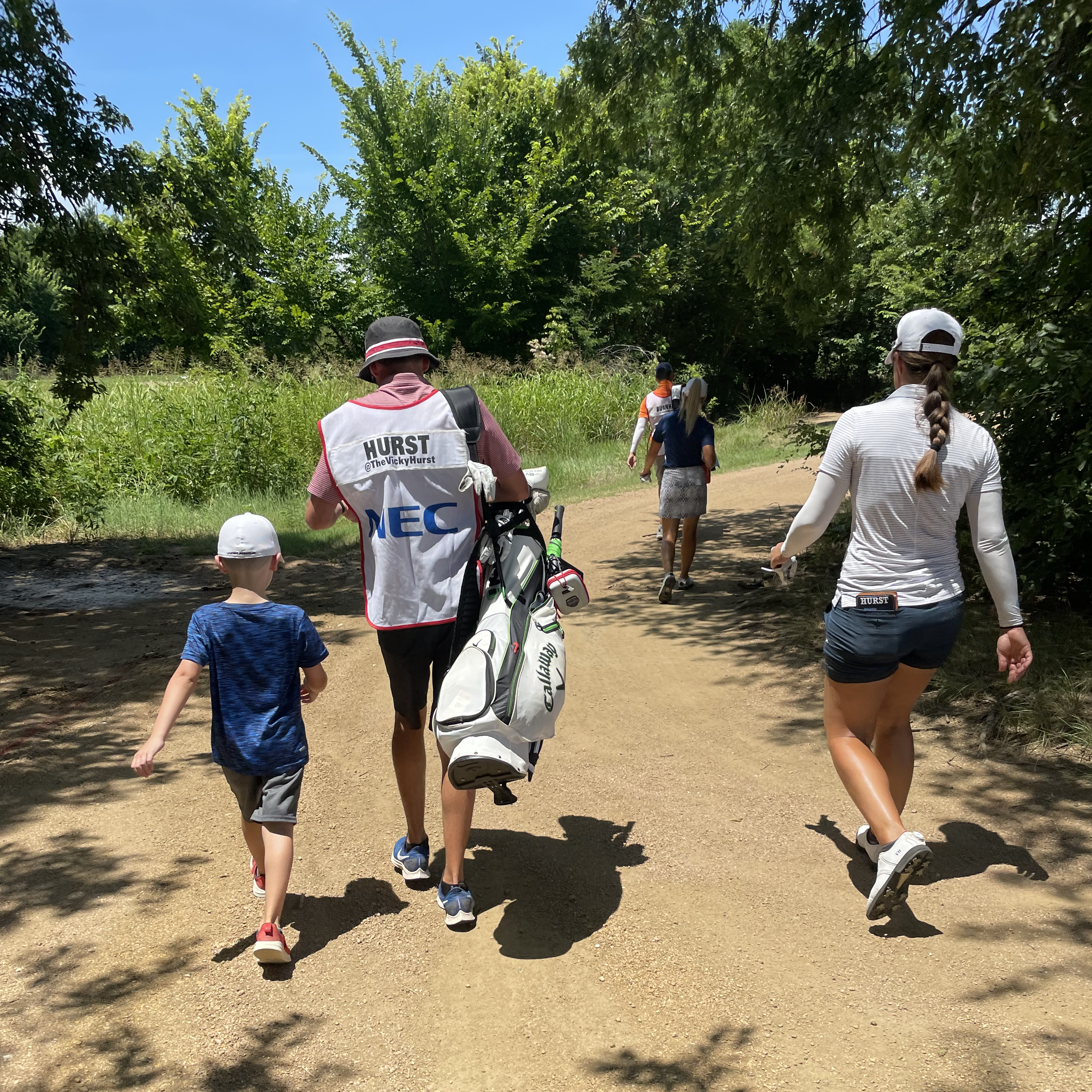
In my head, I’m thinking “Okay, it’s a 10 minute cart ride to the range, a 10 minute cart ride to the first tee, we should probably be at the tee box roughly 10 minutes early… That leaves 30 minutes to hit balls, putt, put on sunscreen, etc…” I’m nervous. She is as cool as the other side of the pillow.
We get to the range, where she works through her bag, hitting maybe 20ish shots.
“Should we go putt?” she asked and we walked coolly over to the putting green where she rolled 10 to 15 putts.
Looking at my watch we had 15 minutes until our tee time and she was already ready to go. So much for being rushed!
My big takeaway here is if you’ve already put the work in, then your warm-up is exactly that. It’s a warm-up. Too many times I’m searching for that right feeling or trying to hit each shot cleanly to go into the round with confidence. Right before your round is the wrong time to be searching for something. Use the time to get your body right, trust your swing and ability, and enjoy the ride.
Wrapping Up
I had a blast caddying for Vicky. I think I was more nervous than she was as it’s always hard to let go of the steering wheel. I kept waiting for the moment I was going to drop her bag at the wrong time or stand in the wrong place. Luckily, I escaped unscathed, and she even said I “passed the caddie test.” It was an eye-opening experience and a ton of fun. I definitely picked up a few areas where I need to work on after following her around for a few days and, hopefully, a few ideas to roll into V1 Game to help others. If she is ever back in town, I hope I get the call. I’d gladly go for another loop!


Club Junkie
Building my 2026 gamer WITB: Ranking the contenders and new putter projects – Club Junkie Podcast

The annual What’s In The Bag build is underway, and on this episode of Club Junkie, Brian breaks down the clubs currently leading the race for a spot in his 2026 gamer setup. From drivers and fairway woods to irons, wedges, and shafts, he ranks the equipment that’s performing best and explains what’s separating the front runners from the rest of the field.
Brian also heads into the workshop to discuss several putter projects currently on the bench. From head options and shaft choices to build ideas and testing plans, he shares what he’s working on and which putters could become serious contenders for the bag this season.
If you’re a gear junkie who loves equipment testing, club building, and the never-ending pursuit of the perfect setup, this episode is for you.
Follow Club Junkie:
Instagram: @clubjunkiepod
TikTok: @clubjunkiepod
Threads: @clubjunkiepod
X: @ClubJunkiePod
Club Junkie
Tour Edge Exotics mini driver review + TaylorMade Spider ZT Max first look – Club Junkie

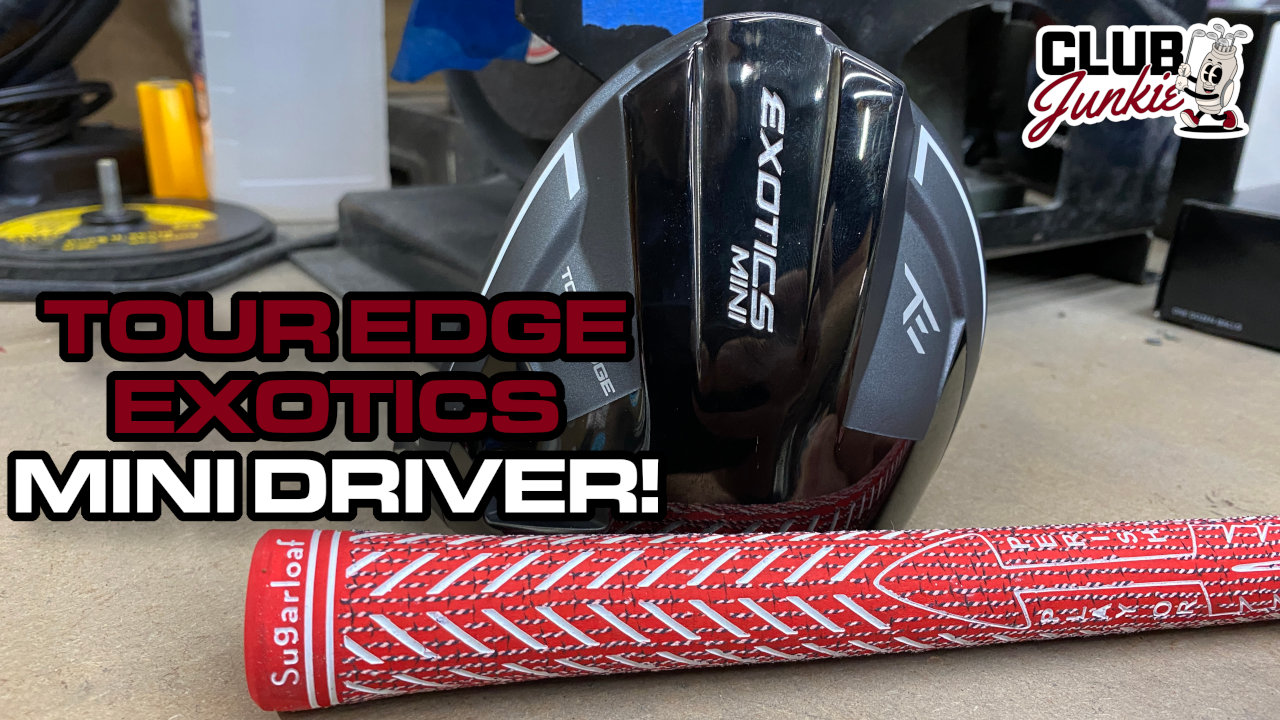
On this episode of Club Junkie, I put the new Tour Edge Exotics Mini Driver to the test and break down the performance, forgiveness, distance, and where it fits compared to a traditional driver or strong fairway wood. If you have been curious about adding a mini driver to the bag, this one is worth a look.
I also dive into the new TaylorMade Spider ZT Max putter that was recently spotted and discuss the growing zero torque putter trend. Plus, there is a closer look at the new Project X Titan Yellow shaft showing up on the PGA Tour and what makes it different from other profiles currently out there.
Opinion & Analysis
AVL: We’re talking about practice! My best tips for taking your game to the course

With the beginning of June on the horizon and courses rounding into peak condition for the season, it’s time to hone the finer skills that often get rusty over the winter. More sunlight also means more time to get out on the course and work on your game.
Whether it’s the practice green or the driving range, there’s always something to improve—whether you’re enjoying the fresh air or preparing for a weekend game or tournament. You can work on drills or freestyle around the green, and friendly competition is a great way to sharpen your skills.
While there are endless ways to get better at golf, I’m going to focus on practicing around the green. Let’s take a look at a few things to keep in mind as we head into the summer months.
Drills
From the driving range to the practice green, it’s important to incorporate drills into your routine. Years ago, I spent a weekend working on my short game with James Sieckmann. He recommended doing drill work for 5–10 minutes, then returning to your main practice.
This way, you create a balance between structured drills and real-world scenarios, so you’re not confined to “perfect” situations. For example, hitting the same three-foot putt over and over is good for repetition, but after a while, it becomes less interactive for your brain.
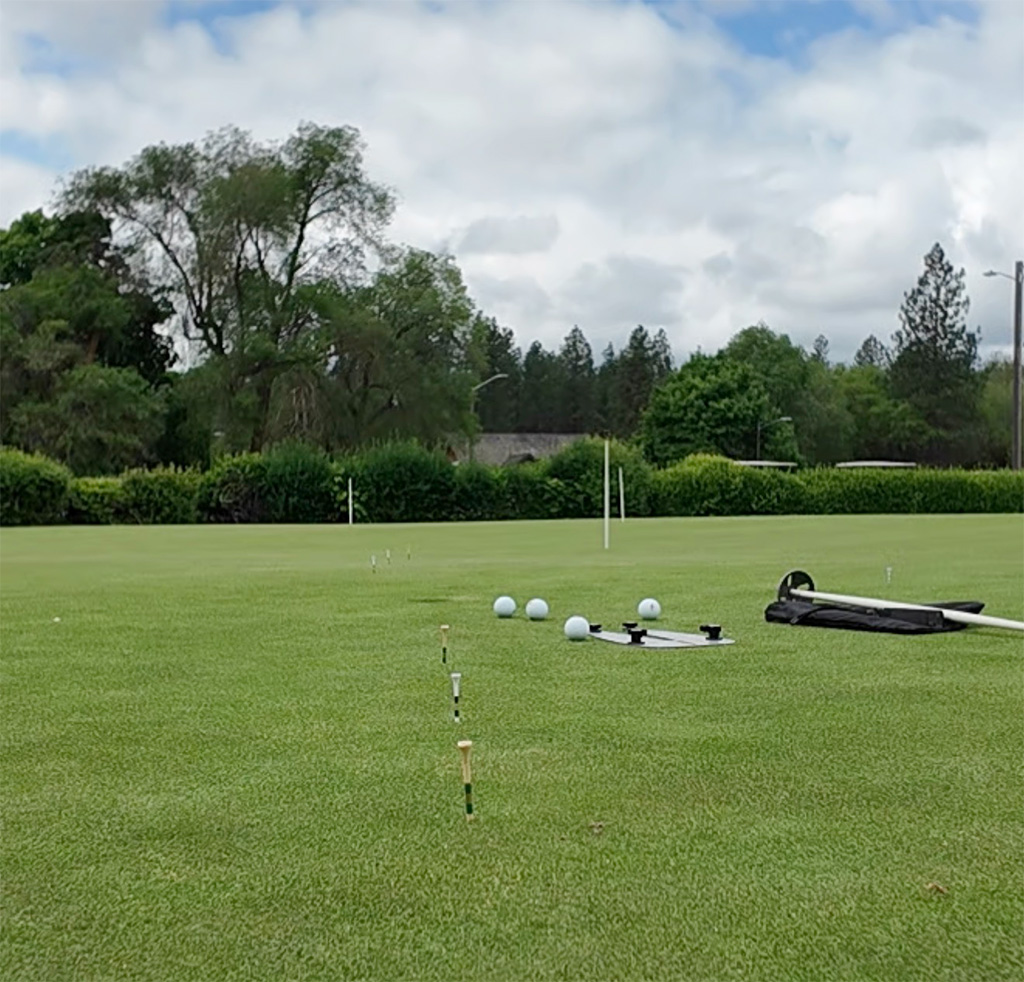
My approach is to use a putting trainer with a narrow gate for the ball to pass through, or simply place tees just outside the width of the ball. I’ll hit a series of four putts through the gate for three sets. Then, from a similar distance, I’ll hit four putts without the training aid and repeat that sequence three times.
Next, I’ll hit a number of 15–25 foot putts in a random fashion, then circle back to repeat the short putt drills with and without the training aid.
This breaks up the rhythm of hitting short putts with the training aid. When you hit the same short putts over and over, it’s easy to get into a groove—which is great for the drill, but not reflective of actual course play. While finding a rhythm is fundamental for drills, I like to introduce variation with longer putts to keep things realistic.
Game Mode
Once you’ve established a foundation with drills, it’s time to simulate on-course scenarios. This is where a few practice games come in handy.
One that I’ve been enjoying lately involves putting 10- to 15-footers with two balls. If I make the putt, great! If I miss, I pull the missed ball back a putter length. Suddenly, that little tap-in becomes a nerve-wracking three-footer—at least at first. As you get better at this game, those three- and five-footers become much more comfortable and routine.
It may sound cliché, but each shot is just what it is—it’s how we react that makes the difference. I like this game because it blends the pressure of on-course putting with the consequence of leaving yourself a much longer putt than usual.
Another game I like is one I recently learned from Brad Faxon. Place three tees in a line at four different locations around the hole: one at 3 feet, one at 6 feet, and one at 8 feet. The 3- and 6-foot putts count as par, and the 8-footer is for birdie.
This game keeps you focused on scoring and helps you get into a competitive mindset. You can even think about this putting game while you’re on the course. I just started playing it, and last week I couldn’t get better than two under par.
Competition
Competition during practice is when drills and games come to life, and you start to see results. For me, nothing beats a putting contest with a friend or two. In the right setting, these contests can become talking points for the whole season.
Match play, a game of 21, or simply seeing who can make the most one-putts (with a small prize on the line) are all great ways to simulate real on-course pressure. Recently, I played in a putting contest where one competitor made back-to-back 30- and 50-foot putts. As they say, expect your opponent to make every putt—and he nearly did. That’s impressive, and it’s something you see on the course, too: you have to stay committed to your game plan, no matter what.
When it comes to practice, it’s important to blend feedback from recent rounds with the fundamentals you want to reinforce. Drills, games, and competition—from the driving range to the putting green—form the backbone of skills you’ll rely on during actual rounds.
Finding the right balance is something we’re all working on, one practice session at a time. With the beginning of June on the horizon and courses rounding into peak condition for the season, it’s time to hone the finer skills that often get rusty over the winter. More sunlight also means more time to get out on the course and work on your game. Whether it’s the practice green or the driving range, there’s always something to improve—whether you’re enjoying the fresh air or preparing for a weekend game or tournament. You can work on drills or freestyle around the green, and friendly competition is a great way to sharpen your skills. While there are endless ways to get better at golf, I’m going to focus on practicing around the green. Let’s take a look at a few things to keep in mind as we head into the summer months.
Drills
From the driving range to the practice green, it’s important to incorporate drills into your routine. Years ago, I spent a weekend working on my short game with James Sieckmann. He recommended doing drill work for 5–10 minutes, then returning to your main practice. This way, you create a balance between structured drills and real-world scenarios, so you’re not confined to “perfect” situations. For example, hitting the same three-foot putt over and over is good for repetition, but after a while, it becomes less interactive for your brain.
My approach is to use a putting trainer with a narrow gate for the ball to pass through, or simply place tees just outside the width of the ball. I’ll hit a series of four putts through the gate for three sets. Then, from a similar distance, I’ll hit four putts without the training aid and repeat that sequence three times. Next, I’ll hit a number of 15–25 foot putts in a random fashion, then circle back to repeat the short putt drills with and without the training aid.
This breaks up the rhythm of hitting short putts with the training aid. When you hit the same short putts over and over, it’s easy to get into a groove—which is great for the drill, but not reflective of actual course play. While finding a rhythm is fundamental for drills, I like to introduce variation with longer putts to keep things realistic.
Game Mode
Once you’ve established a foundation with drills, it’s time to simulate on-course scenarios. This is where a few practice games come in handy. One that I’ve been enjoying lately involves putting 10- to 15-footers with two balls. If I make the putt, great! If I miss, I pull the missed ball back a putter length.
Suddenly, that little tap-in becomes a nerve-wracking three-footer—at least at first. As you get better at this game, those three- and five-footers become much more comfortable and routine. It may sound cliché, but each shot is just what it is—it’s how we react that makes the difference. I like this game because it blends the pressure of on-course putting with the consequence of leaving yourself a much longer putt than usual.
Another game I like is one I recently learned from Brad Faxon. Place three tees in a line at four different locations around the hole: one at 3 feet, one at 6 feet, and one at 8 feet. The 3- and 6-foot putts count as par, and the 8-footer is for birdie.
This game keeps you focused on scoring and helps you get into a competitive mindset. You can even think about this putting game while you’re on the course. I just started playing it, and last week I couldn’t get better than two under par.
Competition
Competition during practice is when drills and games come to life, and you start to see results. For me, nothing beats a putting contest with a friend or two. In the right setting, these contests can become talking points for the whole season. Match play, a game of 21, or simply seeing who can make the most one-putts (with a small prize on the line) are all great ways to simulate real on-course pressure. Recently, I played in a putting contest where one competitor made back-to-back 30- and 50-foot putts. As they say, expect your opponent to make every putt—and he nearly did. That’s impressive, and it’s something you see on the course, too: you have to stay committed to your game plan, no matter what.
When it comes to practice, it’s important to blend feedback from recent rounds with the fundamentals you want to reinforce. Drills, games, and competition—from the driving range to the putting green—form the backbone of skills you’ll rely on during actual rounds. Finding the right balance is something we’re all working on, one practice session at a time.

Justin Rose WITB 2026 (April): Full WITB breakdown with new McLaren irons

What’s the story behind Webb Simpson’s custom-stamped irons?

Cadillac Championship Tour Report: Spieth’s sizable changes, McLaren Golf launches, and more

Russell Henley’s winning WITB: 2026 Charles Schwab Challenge

Kristoffer Reitan’s winning WITB: 2026 Truist Championship

Aaron Rai’s winning WITB: 2026 PGA Championship

Cameron Young’s winning WITB: 2026 Cadillac Championship

Details on Jason Day’s latest prototype Avoda iron setup

Nelly Korda WITB 2026 (April)

Justin Rose on the switch to McLaren Golf, learnings from previous equipment moves


Sungjae Im WITB 2026 (June)
Sungjae Im had >14 clubs in his bag when photographed prior to the Memorial Tournament. Driver: Titleist TSi2 (8 degrees, B1...


Lucas Glover WITB 2026 (June)
Lucas Glover had >14 clubs in his bag when photographed prior to the Memorial Tournament. Driver: Titleist GTS2 (10 degrees, B2 SureFit...

Chris Gotterup WITB 2026 (June)
Chris Gotterup had >14 clubs in his bag when photographed prior to the Memorial Tournament. Drivers: TaylorMade Qi4D (8 degrees), Ping...

Jason Day WITB 2026 (June)
Jason Day had >14 clubs in his bag when photographed prior to the Memorial Tournament. Driver: Ping G430 LST (10.5 degrees...
-
 News4 days ago
Russell Henley’s winning WITB: 2026 Charles Schwab Challenge
-
 Whats in the Bag3 weeks ago
Aaron Rai’s winning WITB: 2026 PGA Championship
-
Equipment2 days ago
Details on Jason Day’s latest prototype Avoda iron setup
-
 Tour Photo Galleries2 weeks ago
Photos from the 2026 CJ Cup Byron Nelson
-

 Equipment2 weeks ago
CJ Cup Byron Nelson Tour Report: Koepka and Kim’s newest putters finally get hot
-
 News7 days ago
Charles Schwab Challenge Tour Report: MacIntyre, Åberg and Spaun all switch putters, TaylorMade launches new Spider
-
 Equipment1 week ago
Details on J.J. Spaun’s surprise putter switch
-
 Popular Photo Galleries2 weeks ago
Photos from the 2026 Charles Schwab Challenge


L
Aug 22, 2021 at 3:50 pm
She has a super swing