
Opinion & Analysis
Distance for dinner: Have OEM distance claims gone too far?


Bigger, faster, stronger….longer. That might as well be our adopted cultural motto. This doesn’t just apply to sports, mind you. People have always been very quick to pull out the measuring tape to compete with others in most ways, shapes and forms.
The measure of a person always seems to be measurable, doesn’t it? Or at the very least, more about the catchy sizzle then the substantive steak. This isn’t even a very recent phenomena. Our desire to reduce ourselves to this dates back to our origins. Not that we need to go back that far, but one certainly doesn’t need to think hard to come up with a few examples.
Baseball fans might remember Tom Glavine and Greg Maddux telling us that “chicks dig the long ball” in a famous 1990s commercial that spoofed on the popularity of the home-run-hitting Mark McGuire, as oppose to their brand of crafty pitching. How about the Cadillac CTS-V commercials in 2010 detailing the exact times its car was able to circle the famous Nurburgring circuit in Germany in order to call it the world’s fastest production sedan? To this day, I wonder how many CTS-V owners drive their car in such a manner, or if it would have mattered if their car had come up a few seconds short of a BMW M5 in the commercial. Would they still have bought it?
Want to go back further? How about the railroad and mining tycoons of the Guilded Age, trying to outdo each other by building the world’s biggest houses. Or before that, European and American naturalists and archeologists arguing over which side of the pond was more manly by comparing how big the respective fossils they found were (yes this actually happened, and actually involved Thomas Jefferson). Golfers want to hit the ball further then their friends. They just do. Original equipment manufacturers (OEM) know this, and for the past few years, they have been selling clubs to us has been like shooting fish in a barrel.
But the questions we want to ask, or should be asking ourselves is: Why do we believe we are going to hit the ball longer? And are distances really increasing to back up OEMs claims and promises?

First, why do we believe the claims? Well, we believe because we want to believe, and because what we see on TV can be a bit confusing. With a drive, the average golfer hits the ball roughly a bit longer than the length of two football fields. If we are to focus more closely on males between the ages of 18 to 49, which for many markets is the target consumer, I’m going to guess that would go up a little bit. I don’t have exact facts to back this up but I’d certainly think 220 yards is reasonable to guess.
If you were to ask the average golfer from that bracket, he would probably tell you that pros hit the ball 300 yards regularly, and based on that they’d probably think he is way behind their potential for how far they can hit. Naturally, he’d be wrong. Pros don’t hit the ball 300 yards regularly, in fact my colleague just printed that the average PGA pros carry distance carry the ball roughly 269 yards. Think about that for a second. Joe Couch-Potato hits the ball within 82 percent of the average pro. Ummm, isn’t that pretty good?
If I can humor you for a second with tales from my youth, I could tell you that I was a fairly athletic teenager. I ran track for my high school team, and was a decent junior baseball player. The fastest I ever threw a baseball when clocked was 73 mph, and the fastest I ever ran the 100-meter dash was in (if I remember correctly) 12 seconds. Neither is that terrible. I’d venture a guess that most people couldn’t top either, and both those marks are about the same percentage off the average pro as your average drive compared to a golfing pro. What would you tell your friend if he told you he was going to buy new shoes so he could get closer to the 10-second 100-meter dash? You’d probably tell him he’s crazy.
Further diluting things is total distance, which is completely irrelevant. The courses amateurs play are completely different then the ones pros play, and total distance is all but meaningless. Every 340-yard drive you see is suspect, because the fairways the pros play are similar to the greens the average golfer plays. Again, if I can tell you tales of my own exploits, my carry distance with driver is very similar to the average pro, roughly 265 yards. I can tell you that I have had days where I’ve averaged more than 300 yards off the tee when playing hard and fast courses, and days where I’ve hit balls that have stuck in the ground. Carry distance is all that matters really. Next time you play your local municipal, imagine how much further you’d hit it if the fairways were as hard as the greens. Pros can get 50-plus yards of roll, remember that.
Iron shots aren’t much more reliable, because not a tournament goes by where the casual fan will see a pro line up a shot and hear the announcer say, “Here’s Kuchar, hitting 7-iron from 195,” and naturally the thought process is that pros absolutely murder their irons. This again is a bit of a misnomer, as all announcers really have to go by is the word of the players caddy, or an educated guess. And it’s not like caddies are always going to tell the truth; why not make his pro seem superhuman?
Another important data point is the release the pros get on greens, so be sure to pay attention to where the ball lands. It’s not uncommon for a pro to hit 5-iron to a 225 yard par 3. Notice that a lot of times, the ball lands on the front of the green rolls to the back. The pro might be carrying it 200 yards as oppose to 225. Still long, but not ridiculous. Chances are that you hit the ball further comparatively then you believe you do, and new clubs might not really change that.
The second question is: Are people really hitting it longer then they did? OEMs definitely want you to think so. It would be easy to pick on TaylorMade or Callaway, who seem to be at the forefront of the cold war of distance, and I will try to minimize the finger pointing. But both are engaged in campaigns of convincing players there are several yards to be found. TaylorMade in 2012 had its much publicized (and successful) “17” campaign, based on the premise that players would gain 17 yards by switching to its Rocketballz 3-wood. TaylorMade even had its players wear soccer-style jerseys on the course during last year’s WGC event at Doral promoting this, truly a first in golf marketing (note: the campaign was nixed mid round by the PGA Tour).
Callaway has responded by signing every big hitter this side of Art Sellinger to its staff, and airing ads where Alvaro Quiros smacks balls over the Bellagio fountains in Las Vegas. I can only imagine what they have in store for uber-driver Jamie Sadlowski! But the question really is, despite the theatrics, are players really hitting it further?
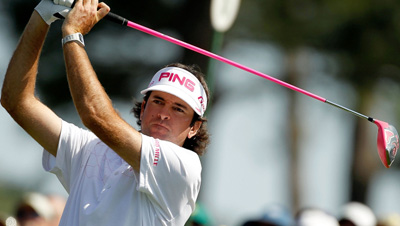
Distance numbers for amateurs are tough to come by. But not so much on the PGA Tour, where one would think technology would be just as beneficial. In 2012, Bubba Watson led the Tour in driving distance at 315 yards, Charlie Beljan was second at 311. In 2010, Robert Garrigus led the tour at 315 yards, and Watson was second at 309. In. 2008 Watson led the tour at 315 yards. Garrigus was second at 311. What about 2006? The one and only Watson led at 319 yards and J.B. Holmes was second at 318. Wait? Were people longer in 2006? Or what about in 2004, when Hank Kuehne set the still standing record of 321 yards and John Daly was second at 314 yards, a number that would have still ranked second in 2012?
This is before adjustable-lofted drivers, full acceptance of 460cc heads, speed slots and most other features you see listed as performance attributes of 2013 drivers. With all the supposed advancements, why aren’t we seeing evidence on the tour? Sure, more people are hitting it further these days and averaging 300 yards, but you could just as easily argue that is a case of simple Darwinism than equipment, as a result of the “Tiger Proofing” of courses (think about it, if all food in the world was on 10-foot shelves, chances are humans would have a higher vertical leap 100 years from now right?). But the longest guys don’t seem to be driving it further. To take it even a step further, in Jack Nicklaus’ “Golf my Way,” he says his driving distance was “250 and up.” This was with a sub-43-inch steel-shafted driver, wound balls and wooden heads.
How far would Nicklaus carry the ball with a 45-inch graphite-shaft, a modern titanium driver head and a Pro V1X? Probably Watson long, and these are all advancements that are a decade old right now. Fact is, Nicklaus could’ve probably changed nothing other than his golf ball and he would’ve carried as far as the average pro does today, or at least very close. So how far have we really come?
Irons are another fun discussion. I recently bought a set of refurbished Ping Eye2 irons and plan on using them in the 2013 season. The pitching wedge is 50.5 degrees. Read that again! My new pitching wedge is almost two-degrees weaker than my Mizuno JPX-800 gap wedge! When I started playing golf roughly eight years ago, most pitching wedges were around 46 to 47 degrees, and now in 2013, it is common for them to be 44 to 45 degrees. The loft of my first ever 7-iron (a Tommy Armour 845 Silver Scot) was 36 degrees, as compared to my last 7-iron, a Mizuno JPX-800 which was 32 degrees. That’s over a 10 percent difference in lofts! Taking that a step further: I could hit my last 7-iron 165 yards and my original 7-iron 150 yards with the exact same swing!
These are important things to remember when considering an iron purchase. Next time you hit clubs in the store further than your original set, make sure to check the specs. To come back to Jack Nicklaus’ yardages, in “Golf my Way,” he claimed he hit his 7-iron 140 to 155 yards, which doesn’t sound like a lot. But remember his 7-iron was really a modern 8-iron at least, and at worst relatively close to a 9-iron! Suddenly his yardages with a wound ball don’t seem so bad! So again, how far have we come with technology? Or really, is it more a clever way of selling?
Another random thing I remember from my youth was a Fox Network special where a masked magician revealed many of magic’s secrets. At the relatively anticlimactic end, he said that he did it not to shame anyone, or make himself famous. He did it to push other magicians to come up with new material, to force them to come up with new tricks. I wish we as consumers would force that upon golf manufacturers. I wish all golf publications and reviewers would mention things like loft and shaft length in their reviews, but many do not currently do that.
Golfers everywhere have spent $799 for new irons under pretenses they might not understand, and ended up with a 4-GW set that performs the exact same as their previous 3-PW set. It’s time we stopped whipping out the measuring stick and forced golf manufacturers to come up with something that really benefits us. This will not happen until golfers out there truly understand what is being sold to them and how flawed their basis of comparison is. Until then, OEMs will continue to feed us distance promises that don’t quite jive. I hope, in my most ambitious sense of optimism, that this can start us along that path.


Club Junkie
Tour Edge Exotics mini driver review + TaylorMade Spider ZT Max first look – Club Junkie

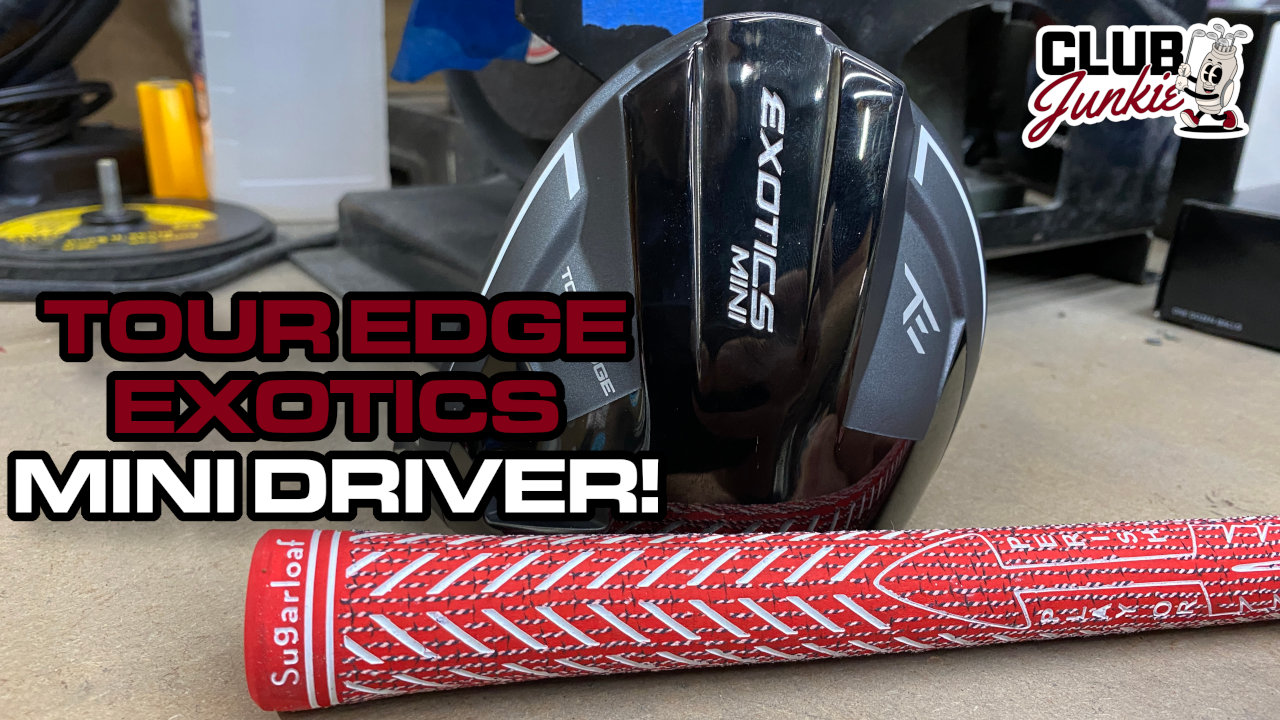
On this episode of Club Junkie, I put the new Tour Edge Exotics Mini Driver to the test and break down the performance, forgiveness, distance, and where it fits compared to a traditional driver or strong fairway wood. If you have been curious about adding a mini driver to the bag, this one is worth a look.
I also dive into the new TaylorMade Spider ZT Max putter that was recently spotted and discuss the growing zero torque putter trend. Plus, there is a closer look at the new Project X Titan Yellow shaft showing up on the PGA Tour and what makes it different from other profiles currently out there.
Opinion & Analysis
AVL: We’re talking about practice! My best tips for taking your game to the course

With the beginning of June on the horizon and courses rounding into peak condition for the season, it’s time to hone the finer skills that often get rusty over the winter. More sunlight also means more time to get out on the course and work on your game.
Whether it’s the practice green or the driving range, there’s always something to improve—whether you’re enjoying the fresh air or preparing for a weekend game or tournament. You can work on drills or freestyle around the green, and friendly competition is a great way to sharpen your skills.
While there are endless ways to get better at golf, I’m going to focus on practicing around the green. Let’s take a look at a few things to keep in mind as we head into the summer months.
Drills
From the driving range to the practice green, it’s important to incorporate drills into your routine. Years ago, I spent a weekend working on my short game with James Sieckmann. He recommended doing drill work for 5–10 minutes, then returning to your main practice.
This way, you create a balance between structured drills and real-world scenarios, so you’re not confined to “perfect” situations. For example, hitting the same three-foot putt over and over is good for repetition, but after a while, it becomes less interactive for your brain.
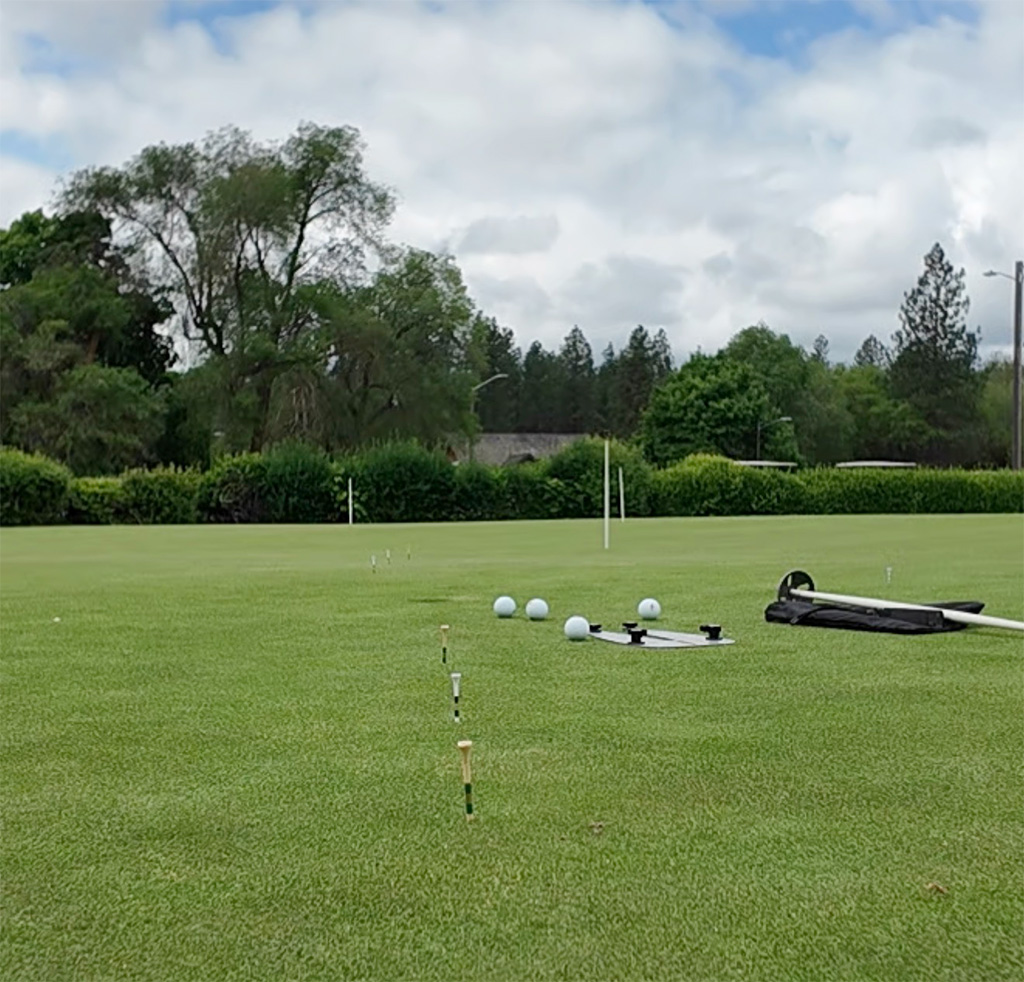
My approach is to use a putting trainer with a narrow gate for the ball to pass through, or simply place tees just outside the width of the ball. I’ll hit a series of four putts through the gate for three sets. Then, from a similar distance, I’ll hit four putts without the training aid and repeat that sequence three times.
Next, I’ll hit a number of 15–25 foot putts in a random fashion, then circle back to repeat the short putt drills with and without the training aid.
This breaks up the rhythm of hitting short putts with the training aid. When you hit the same short putts over and over, it’s easy to get into a groove—which is great for the drill, but not reflective of actual course play. While finding a rhythm is fundamental for drills, I like to introduce variation with longer putts to keep things realistic.
Game Mode
Once you’ve established a foundation with drills, it’s time to simulate on-course scenarios. This is where a few practice games come in handy.
One that I’ve been enjoying lately involves putting 10- to 15-footers with two balls. If I make the putt, great! If I miss, I pull the missed ball back a putter length. Suddenly, that little tap-in becomes a nerve-wracking three-footer—at least at first. As you get better at this game, those three- and five-footers become much more comfortable and routine.
It may sound cliché, but each shot is just what it is—it’s how we react that makes the difference. I like this game because it blends the pressure of on-course putting with the consequence of leaving yourself a much longer putt than usual.
Another game I like is one I recently learned from Brad Faxon. Place three tees in a line at four different locations around the hole: one at 3 feet, one at 6 feet, and one at 8 feet. The 3- and 6-foot putts count as par, and the 8-footer is for birdie.
This game keeps you focused on scoring and helps you get into a competitive mindset. You can even think about this putting game while you’re on the course. I just started playing it, and last week I couldn’t get better than two under par.
Competition
Competition during practice is when drills and games come to life, and you start to see results. For me, nothing beats a putting contest with a friend or two. In the right setting, these contests can become talking points for the whole season.
Match play, a game of 21, or simply seeing who can make the most one-putts (with a small prize on the line) are all great ways to simulate real on-course pressure. Recently, I played in a putting contest where one competitor made back-to-back 30- and 50-foot putts. As they say, expect your opponent to make every putt—and he nearly did. That’s impressive, and it’s something you see on the course, too: you have to stay committed to your game plan, no matter what.
When it comes to practice, it’s important to blend feedback from recent rounds with the fundamentals you want to reinforce. Drills, games, and competition—from the driving range to the putting green—form the backbone of skills you’ll rely on during actual rounds.
Finding the right balance is something we’re all working on, one practice session at a time. With the beginning of June on the horizon and courses rounding into peak condition for the season, it’s time to hone the finer skills that often get rusty over the winter. More sunlight also means more time to get out on the course and work on your game. Whether it’s the practice green or the driving range, there’s always something to improve—whether you’re enjoying the fresh air or preparing for a weekend game or tournament. You can work on drills or freestyle around the green, and friendly competition is a great way to sharpen your skills. While there are endless ways to get better at golf, I’m going to focus on practicing around the green. Let’s take a look at a few things to keep in mind as we head into the summer months.
Drills
From the driving range to the practice green, it’s important to incorporate drills into your routine. Years ago, I spent a weekend working on my short game with James Sieckmann. He recommended doing drill work for 5–10 minutes, then returning to your main practice. This way, you create a balance between structured drills and real-world scenarios, so you’re not confined to “perfect” situations. For example, hitting the same three-foot putt over and over is good for repetition, but after a while, it becomes less interactive for your brain.
My approach is to use a putting trainer with a narrow gate for the ball to pass through, or simply place tees just outside the width of the ball. I’ll hit a series of four putts through the gate for three sets. Then, from a similar distance, I’ll hit four putts without the training aid and repeat that sequence three times. Next, I’ll hit a number of 15–25 foot putts in a random fashion, then circle back to repeat the short putt drills with and without the training aid.
This breaks up the rhythm of hitting short putts with the training aid. When you hit the same short putts over and over, it’s easy to get into a groove—which is great for the drill, but not reflective of actual course play. While finding a rhythm is fundamental for drills, I like to introduce variation with longer putts to keep things realistic.
Game Mode
Once you’ve established a foundation with drills, it’s time to simulate on-course scenarios. This is where a few practice games come in handy. One that I’ve been enjoying lately involves putting 10- to 15-footers with two balls. If I make the putt, great! If I miss, I pull the missed ball back a putter length.
Suddenly, that little tap-in becomes a nerve-wracking three-footer—at least at first. As you get better at this game, those three- and five-footers become much more comfortable and routine. It may sound cliché, but each shot is just what it is—it’s how we react that makes the difference. I like this game because it blends the pressure of on-course putting with the consequence of leaving yourself a much longer putt than usual.
Another game I like is one I recently learned from Brad Faxon. Place three tees in a line at four different locations around the hole: one at 3 feet, one at 6 feet, and one at 8 feet. The 3- and 6-foot putts count as par, and the 8-footer is for birdie.
This game keeps you focused on scoring and helps you get into a competitive mindset. You can even think about this putting game while you’re on the course. I just started playing it, and last week I couldn’t get better than two under par.
Competition
Competition during practice is when drills and games come to life, and you start to see results. For me, nothing beats a putting contest with a friend or two. In the right setting, these contests can become talking points for the whole season. Match play, a game of 21, or simply seeing who can make the most one-putts (with a small prize on the line) are all great ways to simulate real on-course pressure. Recently, I played in a putting contest where one competitor made back-to-back 30- and 50-foot putts. As they say, expect your opponent to make every putt—and he nearly did. That’s impressive, and it’s something you see on the course, too: you have to stay committed to your game plan, no matter what.
When it comes to practice, it’s important to blend feedback from recent rounds with the fundamentals you want to reinforce. Drills, games, and competition—from the driving range to the putting green—form the backbone of skills you’ll rely on during actual rounds. Finding the right balance is something we’re all working on, one practice session at a time.


For Korean golfers, we always look forward to the last of the kkot-saem-chu-I for the true start of a new golf season. The term refers to a cold snap, but literally translates as “winter being jealous of the flowers beginning to bloom, thus lashing out one final time before surrendering to spring”.
A rather poetic mouthful packed into a short expression.
Koreans can be like that. Understated, yet oddly expressive at the same time. And nowhere is this more true on the golf course and in our golf bags. In fact, I suspect many Korean golfers look forward to new apparel and accessory drops more than they do actual equipment launches each year.

At this point, Korean golf fashion may exist on its own timeline. (courtesy of @seonbi_golfer)
There is ample evidence to support that suspicion. Korea is the world’s third-largest golf market behind the United States and Japan, yet its appetite for golf apparel exceeds that of both countries combined. Recent estimates suggest that Korea accounts for nearly 40 percent of the global golf apparel market, placing it among the world’s most influential golf fashion markets and punching well above its size.
Simply, we care deeply about how new golf clubs look and feel, but enjoy looking good while swinging them even more.
Golfers in the West may laugh and say that golf is played on a course, not a fashion runway. Perhaps. But what’s the harm in trying to look and feel good, if the added self-confidence can help actual performance? It certainly seems to have worked for Jason Day, who may have unlocked a new stats category: dormant strokes gained. Coincidence?

During the COVID-era, estimates placed the market near $9 billion, an astonishing figure for a single country.
As a proud member of Gen X, I’ve witnessed the highs and lows of golf fashion firsthand. The pleated trousers and wing-tipped shoes of Jack Nicklaus, the stylish plus-fours and knickers of Payne Stewart, the baggy black trousers and fitted mock-necks of Tiger Woods, and the thigh-hugging athletic tailoring of Rory McIlroy. Golf fashion, like the golf swing itself, has rarely stood still.
But nowhere have those trends shifted, evolved, and been scrutinized quite as relentlessly as in Korea. Here, golf fashion moves faster than fairway gossip, and consumers dissect brands with a level of discernment that can be both impressive and mildly terrifying. New brands are studied, judged, embraced, or dismissed with startling efficiency.
The result is a consumer base with one of the sharpest eyes for quality and authenticity anywhere in the world. It is difficult to quantify, but easy to recognize. Clean lines without trying too hard. Luxury mixed with utility. Trend awareness balanced by restraint and purpose.
It’s golf fashion shaped by one of the world’s most style-literate cities, something I like to call Seoul Sensibilities, referring to the taste level forged by a uniquely competitive environment.
And increasingly, global brands have noticed.

Many golf brands in Korea have their own flagship shops dedicated to apparel only
Titleist understood this years ago, when its apparel business in Korea took on a life of its own under new ownership and local direction. What had once been a straightforward extension of an iconic equipment giant became something sharper and more premium. By going all in on the serious Tour-player look (I couldn’t even fit into their XL sizes), Titleist struck the right chord with Korean consumers and helped its fledgling apparel business break into the mainstream. Titleist became a household name even for non-golfers who wore its caps, shirts, and windbreakers in daily life. In many ways, it proved that even heritage golf brands could carry real fashion credibility when viewed through a Korean lens.
Several years later, PXG took a page out of Titleist’s playbook and followed suit. Korean consumers helped transform the brand from one known largely for irons and loud commercials into something broader and more stylish. PXG apparel’s growth in Korea was explosive, where it found an early audience and turned the category into something more than mere logo merchandise. It is still hard to walk anywhere in Seoul without seeing its palindrome logo.
Malbon’s meteoric rise in the United States was genuine, but its ascent into a global golf lifestyle brand owes much to Korea, where it was elevated by a market already fluent in modern golf style. Korea did not simply embrace Malbon. It pressure-tested the concept, refined its appeal, and helped push it into the global spotlight.
As such, new brands may arrive from abroad, but more often than not, their sharpest evolution happens here. If a brand can earn credibility in Seoul, it’s deemed to have passed one of the toughest style audits in the game.
That is why the next meaningful chapter may not come from outside, but from a Korean brand moving in the opposite direction, carrying those Seoul Sensibilities outward as K-pop once did.

Play young Stay dope.
From Seoul, With Intent
Khalhon is a label that feels less like a trend-chasing newcomer and more like the product of a market that has already seen everything. Golfers here have long been surrounded by luxury logos, technical fabrics, and tour uniforms disguised as lifestyle wear and vice-versa. In other words, novelty alone rarely lasts here, and the Koreans seems to understand that instinctively.
Its style language leans into clean silhouettes, relaxed but tailored proportions, muted palettes, and premium materials that speak quietly but confidently. There is a modern city aesthetic running through it all, with strong layering pieces, thoughtful textures, and subtle branding that suggests sophistication rather than demanding attention.

“Built for the course. Designed beyond it.”
Most importantly, the garments seem designed to blur the line between golfwear and everyday style. Shirts, trousers, knitwear, and outer layers move comfortably between a game of screen golf, a lunch reservation, an airport gate, or an afternoon coffee in Gangnam with friends.
It raises the question of whether this is golfwear that happens to look good off the course, or everyday clothing that performs beautifully on the fairways.
Personally, I have long appreciated Nike Golf for its clean, athletic modernization of golf attire. It also has the useful side effect of making me look like a more serious golfer than I probably am. But off the course, there are times when being instantly identified as the golf guy in a crowd of non-golfers can feel a touch self-conscious.

“Built for the course. Designed beyond it.”
That is part of what drew me to Khalhon, which seemed to blend golf and everyday wear naturally. While some of the outfits may be slightly beyond my personal confidence level, the brand also offers tasteful options for older guys like me who still want to express a little personality without regretting the decision later.
These are not simply flashy outfits worn on the course and then banished to the closet until the next tee time. They work surprisingly well off the course too, and I suspect many of the pieces will still look right a couple of years from now, which would certainly be kinder to my wallet than most golf fashion trends tend to be.
And perhaps that broader lifestyle positioning also helps explain why someone like Sean Wotherspoon would find Khalhon creatively interesting in the first place.

“Built for the course. Designed beyond it.”
“Korea is not only one of the most fashion-forward golf markets in the world, but one of the most fashion-forward markets globally. Korea is ahead, and I love to watch and try to catch up.” – Sean Wotherspoon, Creative Director at Khalhon
Seoul and Beyond
If Khalhon’s rise says something about where Korean golf fashion is today, its relationship with Sean Wotherspoon says even more about where it is heading.
For readers less familiar with Sean Wotherspoon, his arrival at Khalhon is not some routine celebrity endorsement or influencer collaboration. In design and streetwear circles, Wotherspoon is regarded as one of the more influential creative voices of his generation, particularly when it comes to blending nostalgia, storytelling, and contemporary culture into products that people can connect with.
He first gained widespread attention through his now-famous Nike sneaker collaborations, where his vintage-inspired designs and instinct for color helped turn him into one of the defining artists of the late-2010s sneaker era. His work gradually expanded beyond footwear into apparel, automotive collaborations, collectibles, and broader lifestyle design.
Modern golf style now extends well beyond the fairways, where performance and functionality are largely expected by default. And while plenty of brands already make technically competent golfwear, Khalhon seems more focused on designing clothes people would genuinely want to wear even after the round ends.
And when guys at Wotherspoon’s level show genuine interest in working with a Korean golf brand as its new Creative Director, fashion circles tend to sit up and pay attention. There’s already a huge buzz among the fashion-conscious here about upcoming collabs with iconic sports stars and brands.

“My creative direction for Khalhon is disruptive, colorful, nostalgic, and modern. My goal is to blend these avenues seamlessly within each collection.” – Sean Wotherspoon
In chatting with Sean, what stood out most to me was how genuinely energized he sounded about the project itself. Despite having already worked across and countless other creative spaces, he described golf as a completely fresh category for him, saying that Khalhon “will be an amazing vehicle for my design work.”
At the same time, his enthusiasm seemed tied just as much to Korea itself. He spoke openly about admiring Korea’s fashion culture while repeatedly insisting he is still a terrible golfer.
There was something oddly refreshing about that humility. Rather than sounding like a celebrity parachuting into golf simply because the category suddenly became fashionable, Sean sounded genuinely curious about what Korea might do with the category next.
And perhaps that is what makes Khalhon feel interesting right now. The brand feels less like a trend-chaser and more like the natural result of a market now confident enough to export its own point of view.
For years, global brands came to Korea to sharpen their image against one of the most discerning audiences anywhere. Now, a Korean label appears ready to send those Seoul Sensibilities outward instead.
Which brings us back to kkot-saem-chu-i.
That final cold snap before spring always arrives with a reminder that seasons are changing, whether we notice it immediately or not. Golf fashion feels a little like that right now as well, as the old boundaries between sport, streetwear, luxury, and everyday style continue to soften.
And somewhere in Seoul, a Korean golf label already seems prepared for whatever season comes next. I just hope they have everything in my size.

Justin Rose WITB 2026 (April): Full WITB breakdown with new McLaren irons

What’s the story behind Webb Simpson’s custom-stamped irons?

Cadillac Championship Tour Report: Spieth’s sizable changes, McLaren Golf launches, and more

Kristoffer Reitan’s winning WITB: 2026 Truist Championship

Russell Henley’s winning WITB: 2026 Charles Schwab Challenge

Cameron Young’s winning WITB: 2026 Cadillac Championship

Aaron Rai’s winning WITB: 2026 PGA Championship

Nelly Korda WITB 2026 (April)

Justin Rose on the switch to McLaren Golf, learnings from previous equipment moves

Photos from the 2026 CJ Cup Byron Nelson

Chris Gotterup WITB 2026 (June)
Chris Gotterup had >14 clubs in his bag when photographed prior to the Memorial Tournament. Drivers: TaylorMade Qi4D (8 degrees), Ping...


Jason Day WITB 2026 (June)
Jason Day had >14 clubs in his bag when photographed prior to the Memorial Tournament. Driver: Ping G430 LST (10.5 degrees...

Nastasia Nadaud WITB 2026 (June)
Driver: Titleist TSR4 (9 Degrees) Shaft: Project X EvenFlow Riptide CB 6.0 S 3-wood: Titleist GTS2 (15 degrees) Shaft: Graphite Design Tour AD DI...

Keith Mitchell WITB 2026 (June)
Driver: TaylorMade Qi4D LS Shaft: Project X Titan Yellow 6 X 3-wood: TaylorMade Qi10 (16.5 degrees) Shaft: Mitsubishi Tensei 1K Blue 90...
-
 News3 days ago
Russell Henley’s winning WITB: 2026 Charles Schwab Challenge
-
 Whats in the Bag2 weeks ago
Aaron Rai’s winning WITB: 2026 PGA Championship
-
 Tour Photo Galleries2 weeks ago
Photos from the 2026 CJ Cup Byron Nelson
-
Equipment12 hours ago
Details on Jason Day’s latest prototype Avoda iron setup
-

 Equipment2 weeks ago
CJ Cup Byron Nelson Tour Report: Koepka and Kim’s newest putters finally get hot
-
 News6 days ago
Charles Schwab Challenge Tour Report: MacIntyre, Åberg and Spaun all switch putters, TaylorMade launches new Spider
-
 Equipment1 week ago
Details on J.J. Spaun’s surprise putter switch
-
 Popular Photo Galleries1 week ago
Photos from the 2026 Charles Schwab Challenge


Paul
Feb 18, 2013 at 12:44 pm
With so many options out there, it takes way more testing to find equipment that works with one’s own swing dynamics. One thing that is certain, is that for those who ignore the short game (Wedges & Putter)… And ignore the fact that this is where realistic gains can be made in keeping the total score down to as low as possible… Those same individuals will also ignore how important properly spaced wedge lofts are – in contributing to keeping the score down. 150 yards and in, is where the game is won and lost.
Eric
Feb 4, 2013 at 4:17 pm
I enjoyed reading the article and wish that the general public would understand the same things about club manufacturers and how they market.
However, I would interested to know whether equipment today helps a player who has lower swing speeds distance. Clubs with more advanced technology and better materials that allow for low centers of gravity, high MOI, etc, are really beneficial to bad players. Like you said there are not really statistics for the average amateur or bad players, but I wonder what effect, if any, these newer clubs have for these players.
Along the same lines, don’t you think today’s iron technology allows the clubs to have lower lofts and go farther? A 7 iron today can have 3 degrees less loft than a 7 irons from 10 years, but still have the same ball flight characteristics (height, spin, etc.) and also go farther. Though I agree that it is misleading when a company says that their 7 iron will go farther than yours, when their 7 iron is more like your 6, as long it has the ball flight that you want out of a 7 iron, I am fine with that.
lbj273
Feb 2, 2013 at 3:44 am
the average distances is just that, an average. it fails to take into account anytime something less than a driver is hit off the tee, which skews the distance averages
Jeff Singer
Feb 3, 2013 at 9:05 pm
yes, but that was also the case in 2004, which is the earliest averages that are referenced in the article.
Charlie
Feb 6, 2013 at 4:58 pm
Could you not argue that, because of advances in overall distance since 2004, players are able to hit driver less often but still hit it as far?
trapp120
Feb 1, 2013 at 8:39 pm
I really liked the article. I do have one problem with it…no mention of shafts! A lot of progress has been made in this area and we all know the right shaft can transform even the crappiest iron or driver head into the right tool for you, so this should really be addressed when blasting all of the marketing.
I agree that it’s gone a little overboard, but these companies have to sell every year to meet rev goals. There’s no way they can do that by saying “The New TMAG R1…just as good as last year!”.
Instead of ripping the marketing distance claims, maybe you should rail against the practice of “perceived obscurity” that they’re all very guilty of pushing in hopes of creating a product lifecycle closer to 12 months instead of 3+ years.
GMatt
Feb 1, 2013 at 12:11 pm
It’s a case of the sheep being led to the slaughter or in buzz word terms “marketing”
The majority of folks on here may not believe in the hype but I’d bet you a $100 bill, they’ve inquired about it at their local golf shop. and the gentlman who stated most golfers would improve from lessons, you make absolutely too much sense to be on this forum
moses
Feb 1, 2013 at 12:45 am
I still havn’t found a modern driver that was as long as my old 300cc Titleist 983E. Look at the driving distance averages on PGATOUR.COM. Average distances of the purest ball strikers on earth really hasn’t changed in the last 7-8 years. Everything is maxed out. Want more distance? Go get properly fit for launch angle and spin rates.
S
Feb 2, 2013 at 12:30 pm
None of what you said means anything at all to anyone.
When you had that 983E, you were younger, probably stronger. Played more.
Your 983E may have been an anomaly club, which could have been at, or over, the average COR of an average consumer club (that sounds like a fluke, but it happens), with a very good shaft, also at an excellent spec. Unless you had the club tested we will never know.
Did you actually tally up your driving stats of those days with the 983E and compare it to the one you’re using now? What kind of courses did you play on, with what kind of weather conditions? How hard or soft were the courses and how much wind was there?
You say last 7 to 8 years – do you have the data to back that up? I bet you’d be surprised.
Golflaw
Jan 31, 2013 at 10:10 pm
As someone who has had to defend companies in court against false advertising claims, I find it strange that these arge, publicly traded golf equipment companies would knowingly be making claims without verifiable claims support.
S
Feb 2, 2013 at 12:25 pm
They only need ONE player to get that result ONE TIME from a test hit on a machine.
mark
Jan 31, 2013 at 6:36 pm
From 35 years of experience my best scores all come when 1 club works better than usual. My trusty 17 year old Anser Scotsdale. The worst modern trend is 46 and longer driver shafts. The Pro’s dont use them so why should we? I recall a quote from Davis Love where he said he knew in 3 swings whether or not a club would work for him….
Roger
Jan 31, 2013 at 1:06 pm
My goal has been to land in regulation on the 7th at my course and par it, the number 1 stroke hole…did it yesterday from 185m
with a 16.5 Tee i love….
Just upgraded to newer 588 wedges,love them…
Next step is a Driver that helps me hit 12 fairways per round…..250 yards total distance, in the fairway will make me happy. Set realistic expectations of your bag, stay fit and flexible, and practice putts,chipnruns and pitch shots a lot more!!! Great article !
Bill Gabbert
Jan 31, 2013 at 12:45 pm
I used to be the same way, beleiving all the stuff manufactures were putting on TV. Then one day I took my bag full of TM products to the course along with a bag of clubs I played 2 years ago. Played 2 rounds, one with each set, and I actually played better with my old set. Bottom line is if you have something that works and your happy with it, leave it alone. Like someone said early here take some lessons, and make some training aids like Michael breed does on the Golf Fix and practice, you will be amazed. Good article Jeff. love this site.
S
Jan 31, 2013 at 2:25 am
Blah blah blah blah blah…… that’s what all that is, above!
You know what?
Bigger, faster, stronger….longer. = AMERICA.
It’s our culture. PERIOD. Nuff said.
Jeff Singer
Jan 31, 2013 at 6:45 pm
my original article was just “bigger, faster, stronger…longer. Nuff said”. But my editor rejected it and asked for like 1800 more words
S
Feb 2, 2013 at 12:22 pm
Hahahahaha! That’s awesome.
The other part of what I was going to say, was:
AMERICA = we’re gullible and love our commercials telling us beautiful lies. We love it.
ABgolfer2
Jan 31, 2013 at 12:37 am
269 +50=319
Sounds like 300+ on tour IS a regular thing.
Jesse
Jan 30, 2013 at 9:45 pm
“First, why do we believe the claims? Well, we believe because we want to believe, and because what we see on TV can be a bit confusing.” – Distance for dinner: Have OEM distance claims gone too far? by Jeff Singer
Secondly – Many people are stupid enough to believe it!
Troy Vayanos
Jan 30, 2013 at 2:30 pm
It makes you wonder what the golf club manufacturers are selling us?
Are they really telling us the truth about distances and so forth?
I think a lot of time it is up to the individual to test new clubs out for themselves and get a better understanding of their own distances and ball flights.
Better to do this than listen to a slick salesman telling you that a new driver is going to instantly get you another 20 yards off the tee.
Cheers
CPP
Jan 30, 2013 at 11:41 am
cool story bro. 🙂
John
Jan 30, 2013 at 10:38 am
Jeff, another great article. Exposing marketing truths is always a risky proposition, and most amateurs don’t want to hear it. It’s a lot more fun to buy new clubs than to take a few lessons. My personal favourite is the strengthening of lofts, and lengthening of shafts. Today’s 4 iron is NOT a 4 iron.
Tim
Jan 30, 2013 at 7:55 am
great article exposing fallacy of distance gains, especially pointing out the course set up for Most PGA tour events, I am reminded of the pictures of the 2006 open at Hoylake where the fairways were almost burnt, and tiger was hitting his 2 iron over 260 off the tee. Move to Hawaii this year into the wind Dustin Johnson was barely hitting driver 200 yards.
Chris
Jan 30, 2013 at 3:47 am
Great article. Here in the UK I just read that Mr King CEO of Taylormade wants to chuck away all the USGA/R&A equipment rules to make the game more enjoyable ( Comments apparently originating at the 2013 show) He wantsthe manufacturers to call time on the USGA.
This of course has absolutley nothing to do with all the Marketing
B******t his company puts out about equipment performance gains that frankly never materialise unless of course you count hitting a 7 iron
further than your 6 iron ( Of course we are talking about the number on the club here not the actual loft or length of the club). Further a test in the UK showed that apart from cosmetics the Rocketbladze irons were no better than the Rocket balls irons To sum up this type of marketing you could miss out the rocket.
Once some one is customfitted ( the best equipment for their current swing and club head speed) the only wayI’ve seen to gain distance is by improving club path ball stricking and clubhead speed.
Jeff
Jan 29, 2013 at 11:31 pm
Great article, I don’t plan on upgrading my clubs until they either fail or the grooves wear out. Most golfers would improve more with lessons over new equipment.
mark
Jan 31, 2013 at 6:31 pm
Damn you’ve let the secret out. Bad swing with good clubs equals bad shot!!
Adrian Apodaca
Jan 29, 2013 at 8:51 pm
Jesus Christ! Mark McGwire and The Gilded Age.
Jeff Singer
Jan 29, 2013 at 9:38 pm
I’ve been really trying to work the gilded age into my artices. Finally an opportunity presented itself…LOL