
Opinion & Analysis
The Frost Delay: Stealing a Round

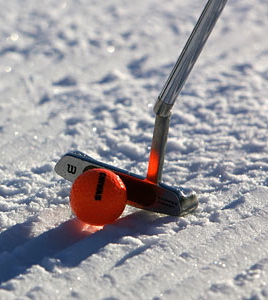
I know, I know. This next column was supposed to be about the joys of playing indoor golf with the help of the OptiShot. Rest assured, I’ll get to it next week. But regardless of the results of that review, one thing is self-evident: It will never be as good as playing actual golf. So with that in mind, when I saw that the sun was going to peak out from behind the clouds for a couple days (and melt the majority of the snow), there was absolutely no chance I was going to pound a worn-out B330 into net.
I was going to steal an actual round of golf.
Back in my competitive golf days, I used to be an expert at stealing winter rounds from Mother Nature. We all were — any time the sun peaked out and you were told it was OK to walk on the greens, you played like it might be months before you’d get the chance again (which it often was). But a lot like drinking warm Milwaukee’s Best Light, listening to the Lightning Seeds or making out with 16 year-olds, I assumed playing golf while there was snow on the ground was something left for high school Dan. Not anymore. As George Costanza (to keep with the early 90s theme) once said, “I’m back, baby.”
Here are the five greatest things I’d forgotten about playing golf in the winter, and a couple new things that make it even better than I’d remembered:
1. Low Expectations.
Yesterday I had to drive 30 miles south to a links course, as my home course still had snow on the greens. I only played 16 holes (as only Nos. 1 though 6 and 15 through 18 were open), and I couldn’t get a tee into the ground on most holes as the tee boxes were still frozen about a quarter-inch below the surface. The fairways were dormant and brown, there was coyote crap everywhere and a couple of the holes looked like they had been last cut to coincide with the VHS release of Caddyshack II. Now I’m a demanding golfer, but unless you’re an unreasonable perfectionist, it’s tough to get too upset about blocking the ball when you’ve just had a mental debate between hitting your driver off the deck or having it teed up two inches higher than normal. You should be happy because:
2. You’re not inside.
You’re not at the office. You’re not in your car. You’re not at the gym. And you’re not on the couch. You’re playing golf in January and it feels great to be outside.
3. The course is empty.
Other than my playing partner, there were three other people out there yesterday. I’m not a math wizard, but that’s about 25 acres a dude. Awesome.
4. When you hit a bad shot, you drop another ball.
I don’t play new balls in the winter. To my eyes, winter golf gives you a perfect chance to use all those balls that you took out of play during the season because they had a little scuff on them. If you hit a loose shot, drop another and leave it — that old ball was just taking up space in your garage anyways. Here in Kansas City, it’s all but impossible to play the ball down this time of year, and even if you could, the USGA doesn’t allow you to turn in scores from Nov. 15 to March 1. Therefore, just write off the random loose shot to rust and play the good one.
5. The random birdie.
I had a couple birdies yesterday. One was on a majestic 4 iron that carried 209 up a hill in gnarly cross wind and stuck 1.5 feet from the pin for a kick-in. The other was on a chunked 8 iron that landed 25 yards short of the green, bounced off a frozen lake and ended up a few feet from the fringe (I chipped it in). I’m not sure which one was cooler.
Things that make winter golf better than I remember
How much better is winter golf clothing now than before? I’m sure for most of the folks on this site, the transition from cotton and wool (with a bit of gore-tex) to the amazing clothes we have now was so gradual it was unnoticeable. But as someone who was outside the game for a while, I can tell you that the clothes I played golf in yesterday were every bit as warm, technical and functional than some of my high-end ski clothing.
I had four light layers at my disposal: a Puma quarter-zip long sleeve dry cell shirt, a Callaway taped seam long-sleeve polo, a Callaway pullover and a Mizuno ImpermaLite jacket. On top of it all, I had a pair of the Footjoy WinterSof gloves. We were on top of a hill on a 40-degree day in 20-plus mph wind and my biggest concern was being too warm — that’s super cool.
The other thing that blew me away was the way the modern golf ball performs in the cold. The old liquid center balata balls we used to play were so erratic in the winter that I prepped for the worst, grabbing a bunch of the random low compression balls I had found over the year out of my shag bag. Just for the heck of it, I pulled out a Pro V1X off the first tee (my normal gamer) expecting it to feel like a rock. I was wrong. I played the same distances I would have played on a 60-degree day in October.
Honestly, I’m so excited about my round yesterday that I could probably go on for another 2000 words. However, it’s looking like it might snow Sunday, so I’m getting out of here for one more round. It might be mid-March until I can play outside again.
Click here to see all the articles in Dan’s “Frost Delay” series.


Club Junkie
Building my 2026 gamer WITB: Ranking the contenders and new putter projects – Club Junkie Podcast

The annual What’s In The Bag build is underway, and on this episode of Club Junkie, Brian breaks down the clubs currently leading the race for a spot in his 2026 gamer setup. From drivers and fairway woods to irons, wedges, and shafts, he ranks the equipment that’s performing best and explains what’s separating the front runners from the rest of the field.
Brian also heads into the workshop to discuss several putter projects currently on the bench. From head options and shaft choices to build ideas and testing plans, he shares what he’s working on and which putters could become serious contenders for the bag this season.
If you’re a gear junkie who loves equipment testing, club building, and the never-ending pursuit of the perfect setup, this episode is for you.
Follow Club Junkie:
Instagram: @clubjunkiepod
TikTok: @clubjunkiepod
Threads: @clubjunkiepod
X: @ClubJunkiePod
Club Junkie
Tour Edge Exotics mini driver review + TaylorMade Spider ZT Max first look – Club Junkie

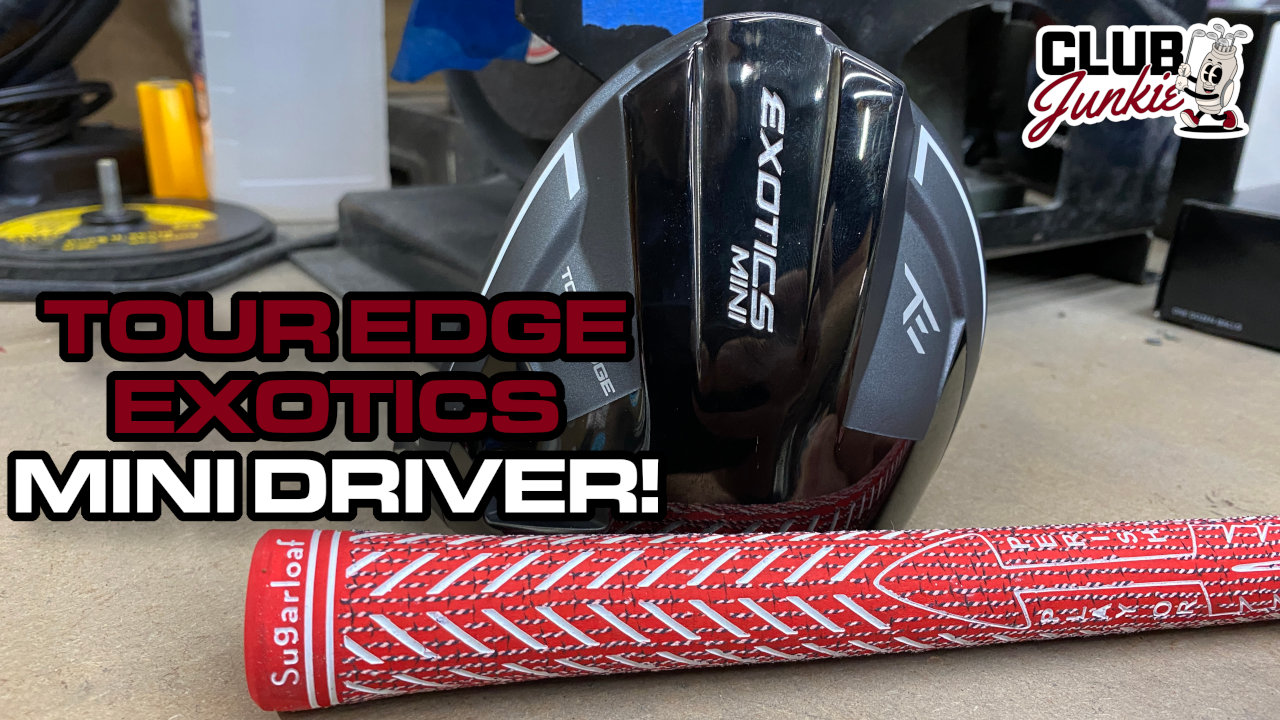
On this episode of Club Junkie, I put the new Tour Edge Exotics Mini Driver to the test and break down the performance, forgiveness, distance, and where it fits compared to a traditional driver or strong fairway wood. If you have been curious about adding a mini driver to the bag, this one is worth a look.
I also dive into the new TaylorMade Spider ZT Max putter that was recently spotted and discuss the growing zero torque putter trend. Plus, there is a closer look at the new Project X Titan Yellow shaft showing up on the PGA Tour and what makes it different from other profiles currently out there.
Opinion & Analysis
AVL: We’re talking about practice! My best tips for taking your game to the course

With the beginning of June on the horizon and courses rounding into peak condition for the season, it’s time to hone the finer skills that often get rusty over the winter. More sunlight also means more time to get out on the course and work on your game.
Whether it’s the practice green or the driving range, there’s always something to improve—whether you’re enjoying the fresh air or preparing for a weekend game or tournament. You can work on drills or freestyle around the green, and friendly competition is a great way to sharpen your skills.
While there are endless ways to get better at golf, I’m going to focus on practicing around the green. Let’s take a look at a few things to keep in mind as we head into the summer months.
Drills
From the driving range to the practice green, it’s important to incorporate drills into your routine. Years ago, I spent a weekend working on my short game with James Sieckmann. He recommended doing drill work for 5–10 minutes, then returning to your main practice.
This way, you create a balance between structured drills and real-world scenarios, so you’re not confined to “perfect” situations. For example, hitting the same three-foot putt over and over is good for repetition, but after a while, it becomes less interactive for your brain.
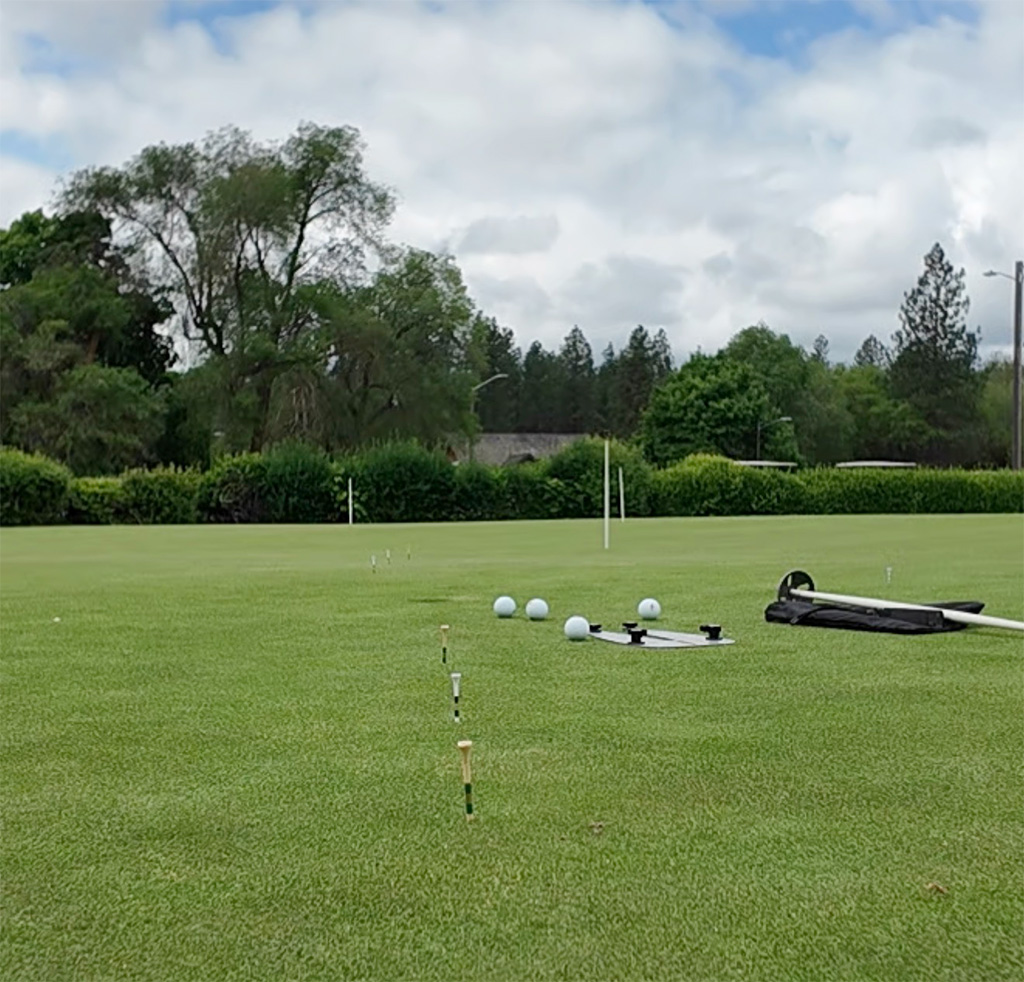
My approach is to use a putting trainer with a narrow gate for the ball to pass through, or simply place tees just outside the width of the ball. I’ll hit a series of four putts through the gate for three sets. Then, from a similar distance, I’ll hit four putts without the training aid and repeat that sequence three times.
Next, I’ll hit a number of 15–25 foot putts in a random fashion, then circle back to repeat the short putt drills with and without the training aid.
This breaks up the rhythm of hitting short putts with the training aid. When you hit the same short putts over and over, it’s easy to get into a groove—which is great for the drill, but not reflective of actual course play. While finding a rhythm is fundamental for drills, I like to introduce variation with longer putts to keep things realistic.
Game Mode
Once you’ve established a foundation with drills, it’s time to simulate on-course scenarios. This is where a few practice games come in handy.
One that I’ve been enjoying lately involves putting 10- to 15-footers with two balls. If I make the putt, great! If I miss, I pull the missed ball back a putter length. Suddenly, that little tap-in becomes a nerve-wracking three-footer—at least at first. As you get better at this game, those three- and five-footers become much more comfortable and routine.
It may sound cliché, but each shot is just what it is—it’s how we react that makes the difference. I like this game because it blends the pressure of on-course putting with the consequence of leaving yourself a much longer putt than usual.
Another game I like is one I recently learned from Brad Faxon. Place three tees in a line at four different locations around the hole: one at 3 feet, one at 6 feet, and one at 8 feet. The 3- and 6-foot putts count as par, and the 8-footer is for birdie.
This game keeps you focused on scoring and helps you get into a competitive mindset. You can even think about this putting game while you’re on the course. I just started playing it, and last week I couldn’t get better than two under par.
Competition
Competition during practice is when drills and games come to life, and you start to see results. For me, nothing beats a putting contest with a friend or two. In the right setting, these contests can become talking points for the whole season.
Match play, a game of 21, or simply seeing who can make the most one-putts (with a small prize on the line) are all great ways to simulate real on-course pressure. Recently, I played in a putting contest where one competitor made back-to-back 30- and 50-foot putts. As they say, expect your opponent to make every putt—and he nearly did. That’s impressive, and it’s something you see on the course, too: you have to stay committed to your game plan, no matter what.
When it comes to practice, it’s important to blend feedback from recent rounds with the fundamentals you want to reinforce. Drills, games, and competition—from the driving range to the putting green—form the backbone of skills you’ll rely on during actual rounds.
Finding the right balance is something we’re all working on, one practice session at a time. With the beginning of June on the horizon and courses rounding into peak condition for the season, it’s time to hone the finer skills that often get rusty over the winter. More sunlight also means more time to get out on the course and work on your game. Whether it’s the practice green or the driving range, there’s always something to improve—whether you’re enjoying the fresh air or preparing for a weekend game or tournament. You can work on drills or freestyle around the green, and friendly competition is a great way to sharpen your skills. While there are endless ways to get better at golf, I’m going to focus on practicing around the green. Let’s take a look at a few things to keep in mind as we head into the summer months.
Drills
From the driving range to the practice green, it’s important to incorporate drills into your routine. Years ago, I spent a weekend working on my short game with James Sieckmann. He recommended doing drill work for 5–10 minutes, then returning to your main practice. This way, you create a balance between structured drills and real-world scenarios, so you’re not confined to “perfect” situations. For example, hitting the same three-foot putt over and over is good for repetition, but after a while, it becomes less interactive for your brain.
My approach is to use a putting trainer with a narrow gate for the ball to pass through, or simply place tees just outside the width of the ball. I’ll hit a series of four putts through the gate for three sets. Then, from a similar distance, I’ll hit four putts without the training aid and repeat that sequence three times. Next, I’ll hit a number of 15–25 foot putts in a random fashion, then circle back to repeat the short putt drills with and without the training aid.
This breaks up the rhythm of hitting short putts with the training aid. When you hit the same short putts over and over, it’s easy to get into a groove—which is great for the drill, but not reflective of actual course play. While finding a rhythm is fundamental for drills, I like to introduce variation with longer putts to keep things realistic.
Game Mode
Once you’ve established a foundation with drills, it’s time to simulate on-course scenarios. This is where a few practice games come in handy. One that I’ve been enjoying lately involves putting 10- to 15-footers with two balls. If I make the putt, great! If I miss, I pull the missed ball back a putter length.
Suddenly, that little tap-in becomes a nerve-wracking three-footer—at least at first. As you get better at this game, those three- and five-footers become much more comfortable and routine. It may sound cliché, but each shot is just what it is—it’s how we react that makes the difference. I like this game because it blends the pressure of on-course putting with the consequence of leaving yourself a much longer putt than usual.
Another game I like is one I recently learned from Brad Faxon. Place three tees in a line at four different locations around the hole: one at 3 feet, one at 6 feet, and one at 8 feet. The 3- and 6-foot putts count as par, and the 8-footer is for birdie.
This game keeps you focused on scoring and helps you get into a competitive mindset. You can even think about this putting game while you’re on the course. I just started playing it, and last week I couldn’t get better than two under par.
Competition
Competition during practice is when drills and games come to life, and you start to see results. For me, nothing beats a putting contest with a friend or two. In the right setting, these contests can become talking points for the whole season. Match play, a game of 21, or simply seeing who can make the most one-putts (with a small prize on the line) are all great ways to simulate real on-course pressure. Recently, I played in a putting contest where one competitor made back-to-back 30- and 50-foot putts. As they say, expect your opponent to make every putt—and he nearly did. That’s impressive, and it’s something you see on the course, too: you have to stay committed to your game plan, no matter what.
When it comes to practice, it’s important to blend feedback from recent rounds with the fundamentals you want to reinforce. Drills, games, and competition—from the driving range to the putting green—form the backbone of skills you’ll rely on during actual rounds. Finding the right balance is something we’re all working on, one practice session at a time.

Justin Rose WITB 2026 (April): Full WITB breakdown with new McLaren irons

What’s the story behind Webb Simpson’s custom-stamped irons?

Cadillac Championship Tour Report: Spieth’s sizable changes, McLaren Golf launches, and more

Russell Henley’s winning WITB: 2026 Charles Schwab Challenge

Kristoffer Reitan’s winning WITB: 2026 Truist Championship

Cameron Young’s winning WITB: 2026 Cadillac Championship

Aaron Rai’s winning WITB: 2026 PGA Championship

Nelly Korda WITB 2026 (April)

Details on Jason Day’s latest prototype Avoda iron setup

Justin Rose on the switch to McLaren Golf, learnings from previous equipment moves
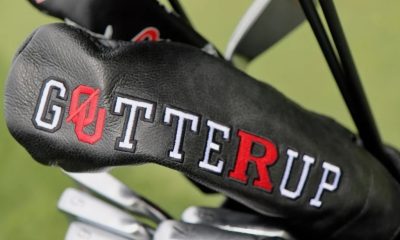

Chris Gotterup WITB 2026 (June)
Chris Gotterup had >14 clubs in his bag when photographed prior to the Memorial Tournament. Drivers: TaylorMade Qi4D (8 degrees), Ping...

Jason Day WITB 2026 (June)
Jason Day had >14 clubs in his bag when photographed prior to the Memorial Tournament. Driver: Ping G430 LST (10.5 degrees...
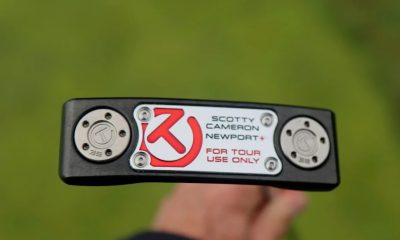

Nastasia Nadaud WITB 2026 (June)
Driver: Titleist TSR4 (9 Degrees) Shaft: Project X EvenFlow Riptide CB 6.0 S 3-wood: Titleist GTS2 (15 degrees) Shaft: Graphite Design Tour AD DI...


Keith Mitchell WITB 2026 (June)
Driver: TaylorMade Qi4D LS Shaft: Project X Titan Yellow 6 X 3-wood: TaylorMade Qi10 (16.5 degrees) Shaft: Mitsubishi Tensei 1K Blue 90...
-
 News4 days ago
Russell Henley’s winning WITB: 2026 Charles Schwab Challenge
-
 Whats in the Bag3 weeks ago
Aaron Rai’s winning WITB: 2026 PGA Championship
-
Equipment1 day ago
Details on Jason Day’s latest prototype Avoda iron setup
-
 Tour Photo Galleries2 weeks ago
Photos from the 2026 CJ Cup Byron Nelson
-

 Equipment2 weeks ago
CJ Cup Byron Nelson Tour Report: Koepka and Kim’s newest putters finally get hot
-
 News6 days ago
Charles Schwab Challenge Tour Report: MacIntyre, Åberg and Spaun all switch putters, TaylorMade launches new Spider
-
 Equipment1 week ago
Details on J.J. Spaun’s surprise putter switch
-
 Popular Photo Galleries1 week ago
Photos from the 2026 Charles Schwab Challenge

