
Opinion & Analysis
No fans, no caddies: How will PGA Tour pros do on their own?

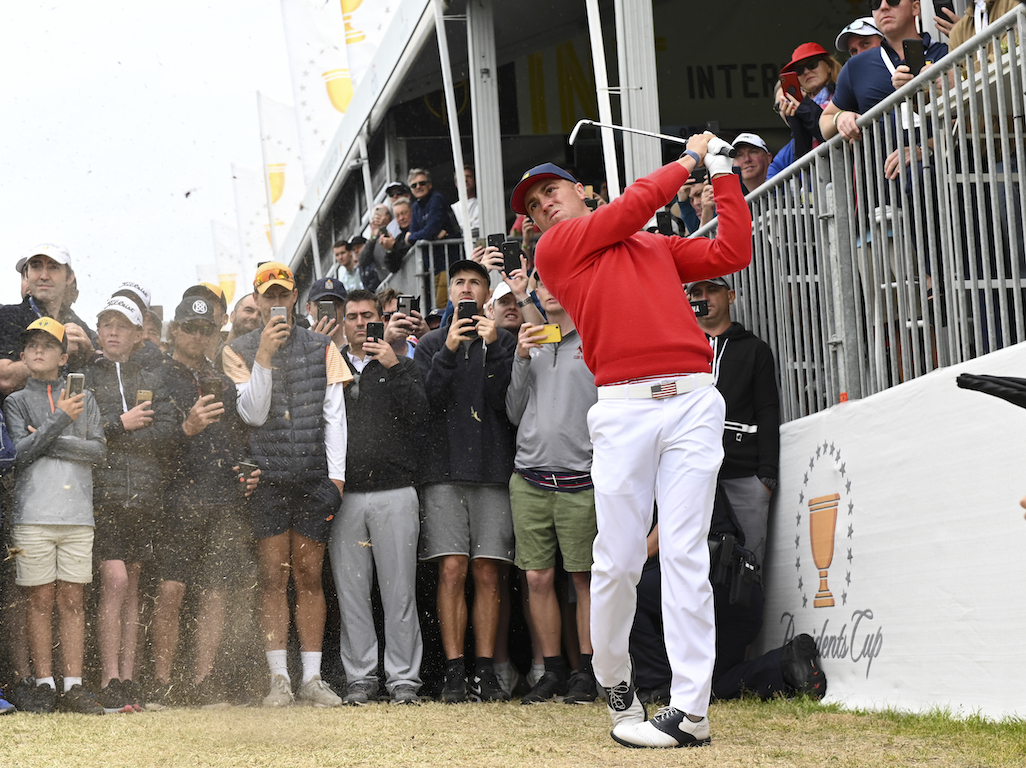
How many of you have ever wondered just how many strokes the gallery and the caddie save a tour pro? Well, we may get an answer to that soon. The PGA Tour has already announced that the first four (at least) events will be played without a gallery, and they are also considering whether or not to allow the players to use a caddie!
Let’s take the disease factor out of this discussion; the human suffering we are all feeling is not what I’m discussing here. I’m more than a little curious to see just how many shots per round, or per four-day event the gallery and the caddie help the score of a player. We can be sure of this: they never hurt. The combination of the crowd and the advice of a caddie clearly serve to help a player. The question is: how much? Perhaps it’s considerable, maybe it’s marginal; but it will be fun to watch to see.
We have all hit errant tee shots or approach shots that end up hitting, say, hardpan or a cart path and gone out of bounds, into someone’s yard, into a pond, or that could not be found at all. When a tour pro hits the occasional foul ball, the five-deep crowd lining the fairway or the green will stop that shot from getting into a deeper hole. So will hospitality tents, TV towers and anything else constructed for the event. The late, great Arnold Palmer was one of the first to recognize this: when in doubt, over-club…somebody is bound to stop the shot.
How often do we see a lost ball on tour? Just think about playing in your weekend four-ball, and you are pretty much out there on your own. You certainly do not have a huge chunk of golfdom or a marshall on every hole running over to look for your slice or hook. At best, you may get a player in the group on the adjacent hole to offer some guidance, but even that is rare.
How about the physical toll on the professionals of toting their own bag? I know they are young and in great shape but it has to have some effect. At 70-plus years, I am well past my physical prime, but I walk and carry as often as I can, and it is a serious five-mile hike that the players likely have not done for many years.
What about club selection, green reading, wind direction, etc.? And remember, the loopers on tour are not just bag toters. They are the creme de la creme of caddies. They may even play the role of swing coach and psychological adviser. Can you imagine a tour pro raking is/her own bunker? Personal rake? No rakes at all? Playing out footprints in the bunkers?
How many have ever had a six-footer and just could not decide on the break or the speed, and therefore missed it? How many have over-clubbed and lost the ball or had an impossible downhill chip off a bare lie (happened to me in Pinehurst twice just today)?
Of course in all fairness, we must admit this: Professional players deserve these advantages. They have all played their way to the top. It is the purest form of competition in that sense. It matters not who one knows, or how fortunate in life one may be, what circumstances he/she were born into…the only thing that matters is the score!
Consider that perhaps 50 million people in the world play golf and less than 500 are making a good living at it! Do that math. No, I’m not questioning the advantages, I’m just wondering how the big guys will fare playing the same game as the rest of us?
What do you think, GolfWRXers?








Club Junkie
Building my 2026 gamer WITB: Ranking the contenders and new putter projects – Club Junkie Podcast

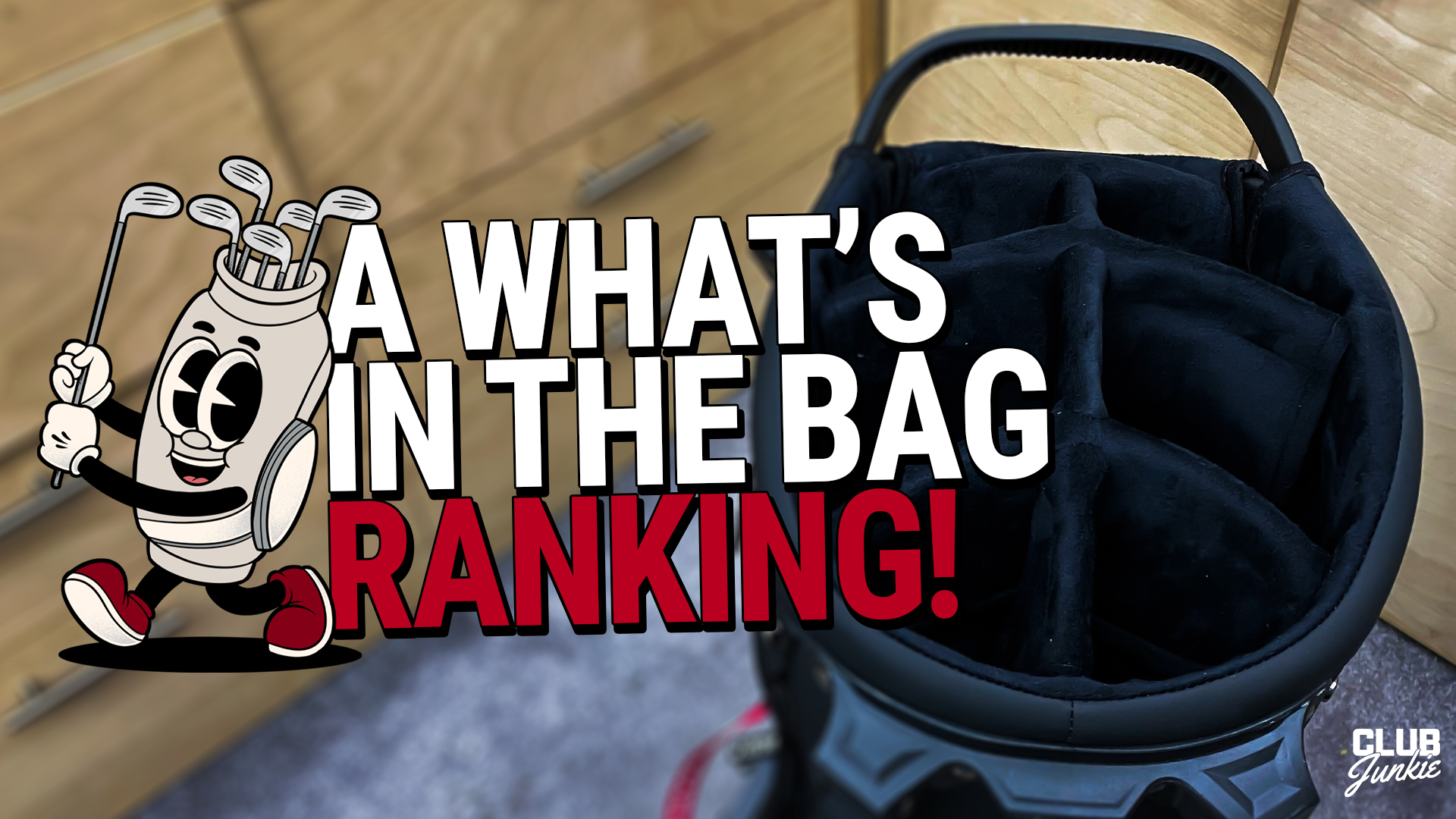
The annual What’s In The Bag build is underway, and on this episode of Club Junkie, Brian breaks down the clubs currently leading the race for a spot in his 2026 gamer setup. From drivers and fairway woods to irons, wedges, and shafts, he ranks the equipment that’s performing best and explains what’s separating the front runners from the rest of the field.
Brian also heads into the workshop to discuss several putter projects currently on the bench. From head options and shaft choices to build ideas and testing plans, he shares what he’s working on and which putters could become serious contenders for the bag this season.
If you’re a gear junkie who loves equipment testing, club building, and the never-ending pursuit of the perfect setup, this episode is for you.
Follow Club Junkie:
Instagram: @clubjunkiepod
TikTok: @clubjunkiepod
Threads: @clubjunkiepod
X: @ClubJunkiePod
Club Junkie
Tour Edge Exotics mini driver review + TaylorMade Spider ZT Max first look – Club Junkie

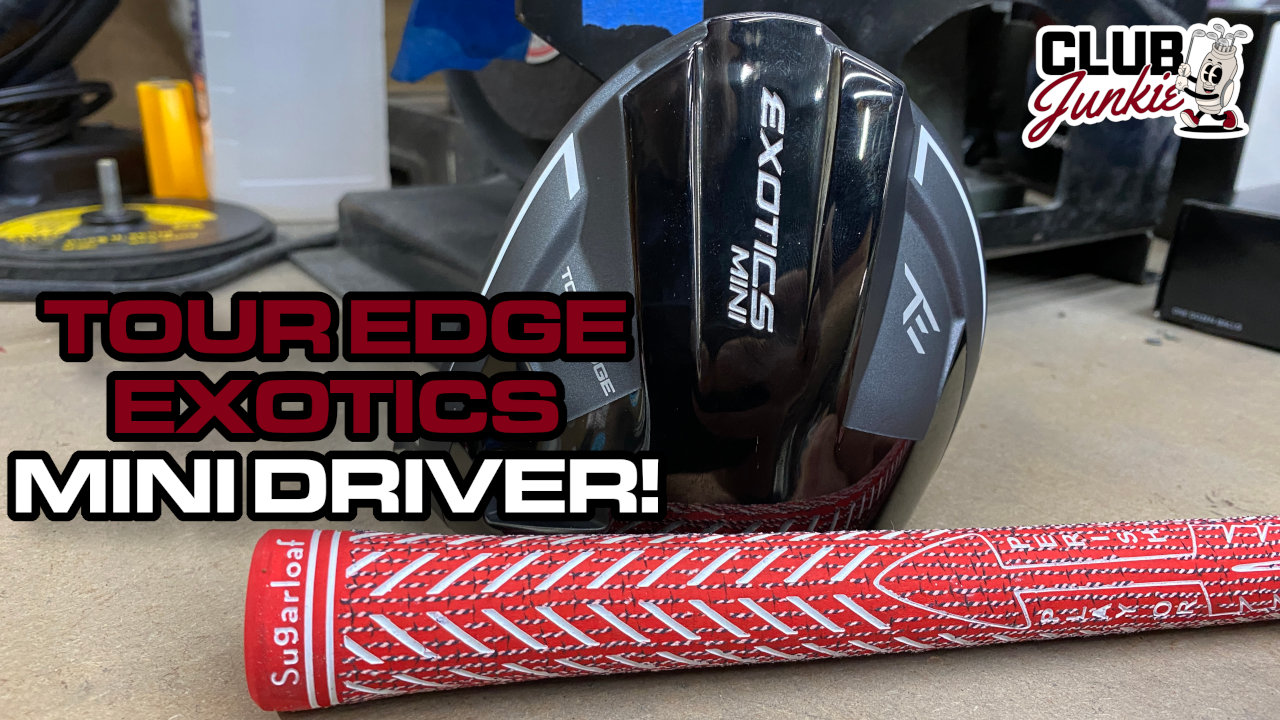
On this episode of Club Junkie, I put the new Tour Edge Exotics Mini Driver to the test and break down the performance, forgiveness, distance, and where it fits compared to a traditional driver or strong fairway wood. If you have been curious about adding a mini driver to the bag, this one is worth a look.
I also dive into the new TaylorMade Spider ZT Max putter that was recently spotted and discuss the growing zero torque putter trend. Plus, there is a closer look at the new Project X Titan Yellow shaft showing up on the PGA Tour and what makes it different from other profiles currently out there.
Opinion & Analysis
AVL: We’re talking about practice! My best tips for taking your game to the course

With the beginning of June on the horizon and courses rounding into peak condition for the season, it’s time to hone the finer skills that often get rusty over the winter. More sunlight also means more time to get out on the course and work on your game.
Whether it’s the practice green or the driving range, there’s always something to improve—whether you’re enjoying the fresh air or preparing for a weekend game or tournament. You can work on drills or freestyle around the green, and friendly competition is a great way to sharpen your skills.
While there are endless ways to get better at golf, I’m going to focus on practicing around the green. Let’s take a look at a few things to keep in mind as we head into the summer months.
Drills
From the driving range to the practice green, it’s important to incorporate drills into your routine. Years ago, I spent a weekend working on my short game with James Sieckmann. He recommended doing drill work for 5–10 minutes, then returning to your main practice.
This way, you create a balance between structured drills and real-world scenarios, so you’re not confined to “perfect” situations. For example, hitting the same three-foot putt over and over is good for repetition, but after a while, it becomes less interactive for your brain.
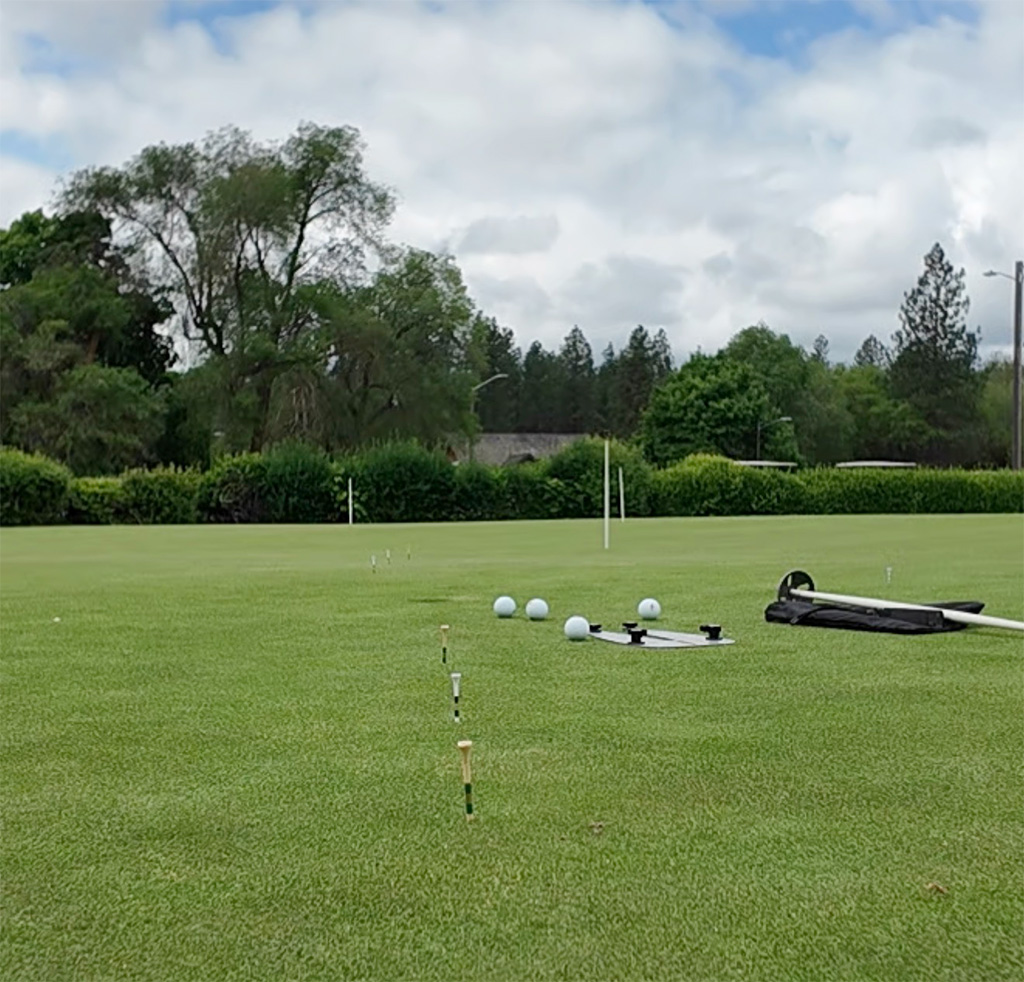
My approach is to use a putting trainer with a narrow gate for the ball to pass through, or simply place tees just outside the width of the ball. I’ll hit a series of four putts through the gate for three sets. Then, from a similar distance, I’ll hit four putts without the training aid and repeat that sequence three times.
Next, I’ll hit a number of 15–25 foot putts in a random fashion, then circle back to repeat the short putt drills with and without the training aid.
This breaks up the rhythm of hitting short putts with the training aid. When you hit the same short putts over and over, it’s easy to get into a groove—which is great for the drill, but not reflective of actual course play. While finding a rhythm is fundamental for drills, I like to introduce variation with longer putts to keep things realistic.
Game Mode
Once you’ve established a foundation with drills, it’s time to simulate on-course scenarios. This is where a few practice games come in handy.
One that I’ve been enjoying lately involves putting 10- to 15-footers with two balls. If I make the putt, great! If I miss, I pull the missed ball back a putter length. Suddenly, that little tap-in becomes a nerve-wracking three-footer—at least at first. As you get better at this game, those three- and five-footers become much more comfortable and routine.
It may sound cliché, but each shot is just what it is—it’s how we react that makes the difference. I like this game because it blends the pressure of on-course putting with the consequence of leaving yourself a much longer putt than usual.
Another game I like is one I recently learned from Brad Faxon. Place three tees in a line at four different locations around the hole: one at 3 feet, one at 6 feet, and one at 8 feet. The 3- and 6-foot putts count as par, and the 8-footer is for birdie.
This game keeps you focused on scoring and helps you get into a competitive mindset. You can even think about this putting game while you’re on the course. I just started playing it, and last week I couldn’t get better than two under par.
Competition
Competition during practice is when drills and games come to life, and you start to see results. For me, nothing beats a putting contest with a friend or two. In the right setting, these contests can become talking points for the whole season.
Match play, a game of 21, or simply seeing who can make the most one-putts (with a small prize on the line) are all great ways to simulate real on-course pressure. Recently, I played in a putting contest where one competitor made back-to-back 30- and 50-foot putts. As they say, expect your opponent to make every putt—and he nearly did. That’s impressive, and it’s something you see on the course, too: you have to stay committed to your game plan, no matter what.
When it comes to practice, it’s important to blend feedback from recent rounds with the fundamentals you want to reinforce. Drills, games, and competition—from the driving range to the putting green—form the backbone of skills you’ll rely on during actual rounds.
Finding the right balance is something we’re all working on, one practice session at a time. With the beginning of June on the horizon and courses rounding into peak condition for the season, it’s time to hone the finer skills that often get rusty over the winter. More sunlight also means more time to get out on the course and work on your game. Whether it’s the practice green or the driving range, there’s always something to improve—whether you’re enjoying the fresh air or preparing for a weekend game or tournament. You can work on drills or freestyle around the green, and friendly competition is a great way to sharpen your skills. While there are endless ways to get better at golf, I’m going to focus on practicing around the green. Let’s take a look at a few things to keep in mind as we head into the summer months.
Drills
From the driving range to the practice green, it’s important to incorporate drills into your routine. Years ago, I spent a weekend working on my short game with James Sieckmann. He recommended doing drill work for 5–10 minutes, then returning to your main practice. This way, you create a balance between structured drills and real-world scenarios, so you’re not confined to “perfect” situations. For example, hitting the same three-foot putt over and over is good for repetition, but after a while, it becomes less interactive for your brain.
My approach is to use a putting trainer with a narrow gate for the ball to pass through, or simply place tees just outside the width of the ball. I’ll hit a series of four putts through the gate for three sets. Then, from a similar distance, I’ll hit four putts without the training aid and repeat that sequence three times. Next, I’ll hit a number of 15–25 foot putts in a random fashion, then circle back to repeat the short putt drills with and without the training aid.
This breaks up the rhythm of hitting short putts with the training aid. When you hit the same short putts over and over, it’s easy to get into a groove—which is great for the drill, but not reflective of actual course play. While finding a rhythm is fundamental for drills, I like to introduce variation with longer putts to keep things realistic.
Game Mode
Once you’ve established a foundation with drills, it’s time to simulate on-course scenarios. This is where a few practice games come in handy. One that I’ve been enjoying lately involves putting 10- to 15-footers with two balls. If I make the putt, great! If I miss, I pull the missed ball back a putter length.
Suddenly, that little tap-in becomes a nerve-wracking three-footer—at least at first. As you get better at this game, those three- and five-footers become much more comfortable and routine. It may sound cliché, but each shot is just what it is—it’s how we react that makes the difference. I like this game because it blends the pressure of on-course putting with the consequence of leaving yourself a much longer putt than usual.
Another game I like is one I recently learned from Brad Faxon. Place three tees in a line at four different locations around the hole: one at 3 feet, one at 6 feet, and one at 8 feet. The 3- and 6-foot putts count as par, and the 8-footer is for birdie.
This game keeps you focused on scoring and helps you get into a competitive mindset. You can even think about this putting game while you’re on the course. I just started playing it, and last week I couldn’t get better than two under par.
Competition
Competition during practice is when drills and games come to life, and you start to see results. For me, nothing beats a putting contest with a friend or two. In the right setting, these contests can become talking points for the whole season. Match play, a game of 21, or simply seeing who can make the most one-putts (with a small prize on the line) are all great ways to simulate real on-course pressure. Recently, I played in a putting contest where one competitor made back-to-back 30- and 50-foot putts. As they say, expect your opponent to make every putt—and he nearly did. That’s impressive, and it’s something you see on the course, too: you have to stay committed to your game plan, no matter what.
When it comes to practice, it’s important to blend feedback from recent rounds with the fundamentals you want to reinforce. Drills, games, and competition—from the driving range to the putting green—form the backbone of skills you’ll rely on during actual rounds. Finding the right balance is something we’re all working on, one practice session at a time.

Justin Rose WITB 2026 (April): Full WITB breakdown with new McLaren irons

What’s the story behind Webb Simpson’s custom-stamped irons?

Cadillac Championship Tour Report: Spieth’s sizable changes, McLaren Golf launches, and more

Russell Henley’s winning WITB: 2026 Charles Schwab Challenge

Kristoffer Reitan’s winning WITB: 2026 Truist Championship

Aaron Rai’s winning WITB: 2026 PGA Championship

Cameron Young’s winning WITB: 2026 Cadillac Championship

Details on Jason Day’s latest prototype Avoda iron setup

Nelly Korda WITB 2026 (April)

Justin Rose on the switch to McLaren Golf, learnings from previous equipment moves


Sungjae Im WITB 2026 (June)
Sungjae Im had >14 clubs in his bag when photographed prior to the Memorial Tournament. Driver: Titleist TSi2 (8 degrees, B1...


Lucas Glover WITB 2026 (June)
Lucas Glover had >14 clubs in his bag when photographed prior to the Memorial Tournament. Driver: Titleist GTS2 (10 degrees, B2 SureFit...

Chris Gotterup WITB 2026 (June)
Chris Gotterup had >14 clubs in his bag when photographed prior to the Memorial Tournament. Drivers: TaylorMade Qi4D (8 degrees), Ping...

Jason Day WITB 2026 (June)
Jason Day had >14 clubs in his bag when photographed prior to the Memorial Tournament. Driver: Ping G430 LST (10.5 degrees...
-
 News5 days ago
Russell Henley’s winning WITB: 2026 Charles Schwab Challenge
-
 Whats in the Bag3 weeks ago
Aaron Rai’s winning WITB: 2026 PGA Championship
-
Equipment2 days ago
Details on Jason Day’s latest prototype Avoda iron setup
-
 Tour Photo Galleries3 weeks ago
Photos from the 2026 CJ Cup Byron Nelson
-

 Equipment2 weeks ago
CJ Cup Byron Nelson Tour Report: Koepka and Kim’s newest putters finally get hot
-
 News1 week ago
Charles Schwab Challenge Tour Report: MacIntyre, Åberg and Spaun all switch putters, TaylorMade launches new Spider
-
 Equipment1 week ago
Details on J.J. Spaun’s surprise putter switch
-
 Popular Photo Galleries2 weeks ago
Photos from the 2026 Charles Schwab Challenge


John Shaw
Apr 11, 2021 at 4:12 pm
I think it would be a truer, estimation of the golfer’s, own skill and prowess at the game; without intervention or, help from a caddie. Though, I think they should be afforded an electric conveyance.
John
May 6, 2020 at 11:35 am
I get a chuckle at the modern day sports fan, head buried in the phone..
Kinda sad..
Edward C
May 5, 2020 at 12:47 am
They always say “these guys are good”, maybe we can just find out how good. It will be interesting.
Dennis Clark
May 6, 2020 at 3:25 pm
Yes and it would be great for the game! Huge TV audience IMO. Thx for reading
Aztec
May 4, 2020 at 12:17 pm
Without caddies, will the players be allowed to use rangefinders for yardage? I think this is probably more important than the other considerations.
Dennis Clark
May 6, 2020 at 3:26 pm
Id say yes because, again, we want them to be playing the same game as everyone else.
Dave Teesdale
Apr 2, 2022 at 9:46 pm
We aren’t allowed to use rangefinders in our club matches. What club are you playing at?…
WhoaNe11ie
May 4, 2020 at 10:24 am
I wonder who ClicGear will sign up for endorsements?
#enjoythewalk #trolleyfordollars #morelogos
ChipNRun
May 3, 2020 at 10:43 pm
How much do fans help?
Reminds me of our course marshal meeting with the head pro before the 2014 Walker Cup matches at St. Louis CC. (Amateur women: USA vs. British/Irish)
I asked if any holes were especially challenging for tracking offline shots.
The pro smiled and said if it was a men’s tournament, there were four landing areas that needed extra watching. For a women’s tournament, however, don’t worry.
“If the women miss a shot, it’s probably in the first cut of rough. If the men miss a shot, it goes into never-neverland.”
If Mickelson or McIlroy has a wild tee shot, we’ll see how well they do with the 2-minute search limit.
Jeremy Thompson
May 4, 2020 at 9:33 am
Walker cup is men’s Am, Curtis Cup is women’s Am
Dennis Clark
May 6, 2020 at 3:28 pm
Yep, it WILL be interesting huh?
Martin Barrier
May 3, 2020 at 7:15 pm
The top players will continue to score well maybe even better and players toward the bottom that well be a different store
MadMax
May 3, 2020 at 7:01 pm
Why stop there? They don’t play the same courses we play, every less than perfect area in the fairway is a “ground under repair”. Let’s see how they do in these conditions:
1) Greens: Every green is a different speed, some are wet others dry.
2) Tee boxes: Uneven, some with grass 2 inches long some with none, unfilled divots all over
3) Bunkers: Some with 1/2 inch of what can be considered sand, other with dirt and pebbles, some wet.
4) Fairways: Some cut some not, some soaked some dry, unfilled divots, all rough different depth
5) NO ground under repair
Dennis Clark
May 6, 2020 at 3:30 pm
I agree, send them out to play the local muni-AS IS!!!
Fergie
May 3, 2020 at 6:36 pm
I think not having a caddy is a bit extreme. Social distancing is still possible when you’re passing a club, and caddies could use anti-viral spray when wiping a club. What about spectator-less MLB games? Eliminate the catcher because he’s close to the batter? That would be interesting.
Dr. Fauci
May 5, 2020 at 12:43 pm
Would be a bit rough on the home plate ump, don’t you think?
Dennis Clark
May 6, 2020 at 3:33 pm
Let’s take the Corona factor out of this for a minute…how about we play one of these “on their own” events every year? I’ve like this idea for a long time even pre-COVID. I wrote to PGA Tour about it a while back.
csc
May 3, 2020 at 6:12 pm
I agree that the guys that are near the top of the leaderboard in these tournaments will be playing well that particular week and these circumstances may not be effecting them much at all. However, there will be several players that are not having a good week near the lower end of the scoreboard and those players may very well be effected by these differences. Especially if one of them is having a bad driving week-lost ball penalties will start adding up fast.
Dan
May 3, 2020 at 4:33 pm
The only factor is being very slightly more tired. Caddies barely help score at all.
Also, I’ve gone for 20 rounds in a row with out losing a ball other then in a water hazard. These guys are not exactly 20 cappers out there guys.
John Agel
May 3, 2020 at 11:05 pm
Caddies make a monumental difference and how you play. One way in which this is clearly obvious is that if a player and Caddie are on the verge of divorce, the caddy suddenly becomes an object of great attention as the top players start to jockey around picking up that top caddy. Don’t kid yourself they take care of everything before the shot. Then they lay it all out for the player suggest a shot-which club draw or fade, high low, even picking something to aim at. Player will make a choice knowing that his caddy was on the course at sunup to walk the course, to see how it will play on a given day, where the pins are, you fade when to, because your caddy is look at the hole and the ground surrounding it what is the high part what is the low part, where is the danger, how to play the mounds in and around the green. The player takes all of this as givens he knows the guy has been doing job will then decide, he may with the caddy agree just execute the shot. Talk about it if the player has a different idea for playing the shot you may go with what the guy suggested or what he wants to hit. But the caddy has laid it all out for his man to just chooses idea for the cavities
another really huge part is keeping his man’s head in the game and energized and help him little competitor arrogance. That’s all. Just Carrie the clubs, keep them and golf balls clean. Rake The Bunker you just completely made a mess of then exchange your putter for a
rake…
Stanley
May 3, 2020 at 4:10 pm
I can guarantee that the players in top 10 will not see any difference in their scores. When they are on, nothing can stop them from going low.
chris agel
May 3, 2020 at 2:42 pm
Again, remind me why they cant bifurcate the rules of golf for Tour players. Anyone with any sense knows they play by different “rules” and do not play the same game we play. It would be fun to see them play on their own out there.
Acemandrake
May 3, 2020 at 2:38 pm
My guess is that players that need/want the money will always show up. With or with out a caddy.
They will play well. I’d think that the field scoring average may be a couple of strokes higher than usual.
The wealthier players may take a more casual approach and play less often. Especially the older ones.
NOTE: Brandt Snedeker has said he walks & carries his clubs to get in shape after a layoff.
EJ
May 3, 2020 at 10:58 am
I think you’re missing the point as it’s easy to shoot that number on a home course. Turn up at a tournament and with practice rounds and you’re playing 6 days in a row. You see all the guys out there carrying their own bags 6 days in a row and shooting 20 under par? Some will for sure, but a lot of those guys won’t be able to.
Taylor
May 3, 2020 at 11:35 am
I totally get it but there’s not going to be a huge upshot in scoring. You’re still going to have five six guys that have a chance to win (they’re playing well enough and more importantly putting well enough to win) they’ll still 10 under or better. My point is you’re not going to see Rory, Dustin, Brooks, Jim Herman, Joel Dahmen or whoever struggle to break par. Look at scoring from nationwide events (granted they have loopers) but there’s hardly fans and some aren’t televised (which means no tv and hardly any grandstands) guys going 20 under. My overall point is guys will still play extremely well, some players will struggle without a caddie some might not.
Taylor
May 3, 2020 at 10:51 am
FYI Tiger and Rickie hold the course record of 62 at Medalist. Luke Donald holds (held?) the course record of 64 at Bear’s Club, and 65 at Jupiter Hills. Granted those were in carts, but there was no caddie, no fans, no tv, no grandstands. I think tour players will be just fine