
Opinion & Analysis
Do you actually understand “Strokes Gained” stats? Here’s a breakdown


In 2011, the PGA Tour introduced ShotLink, which is a real-time scoring system that captures data points on all shots taken during PGA Tour events. ShotLink measures the distance from the hole, as well as categorizing shot types like tee, fairway, rough, sand, and green.
Mark Broadie, a professor at Columbia Business School, took the data from ShotLink and helped develop a new way to analyze putting performance. This new statistic was called “strokes gained: putting,” and it measures the number of putts a golfer takes relative to the PGA Tour average from that same distance. Strokes gained putting recognizes that sinking a 20-foot putt represents a better performance than sinking a three-foot putt, even though they both count as a single putt and a single stroke on the scorecard.
This was revolutionary because golfers no longer had to rely on the number of putts per round to understand their putting performance. Strokes gained also provided a unified way to measure an individual golfer against his opponents on the PGA Tour.
In 2016, the same concept used for strokes gained: putting was applied to other areas of the game. The PGA Tour developed new statistics including “strokes gained: off-the-tee,” “strokes gained: approach-the-green,” and “strokes gained: around-the-green.” This expansion allowed a PGA Tour golfer to precisely see where he excels and where he needs to improve.
What is strokes gained
In the most simple terms, “strokes gained” is a way to measure a player’s performance compared to the rest of the field. It also allows you to isolate different parts of a player’s game. In order to understand the statistic, you have to know that the PGA Tour has historical data from ShotLink that has calculated the average number of strokes needed to hole out from every distance and location on a course. Below I have included four scenarios to better illustrate the idea of strokes gained.
The scenarios below show how strokes gained could work on a single hole. Remember most strokes gained statistics are the aggregate of all the holes for a players round.
Scenario No. 1: Driving
You are playing a 450-yard par 4. The PGA Tour scoring average for a par 4 of that length is 4.1 strokes.
You hit a drive that ends up in the fairway, 115 yards from the hole. The PGA Tour scoring average from in the fairway, 115 yards out is 2.825 strokes. In order to calculate strokes gained: off-the-tee you use the formula below
(PGA Tour average for the hole) – (PGA Tour average left after your drive) – 1 = strokes gained: off-the-tee
Next, plug the numbers from the scenario above into this formula to calculate the strokes gained: off-the-tee
4.100 – 2.825 = 1.275 – 1 = 0.275 strokes gained: off-the-tee
Since you hit your drive in the fairway 115 yards from the hole you gained .275 strokes off the tee from the average PGA Tour player.
Scenario No. 2: Approach Shot
Let’s take the same drive from the first scenario. You hit a drive on a par 4 that ends up in the fairway, 115 yards from the hole. The PGA Tour scoring average from in the fairway 115 yards out is 2.825. You hit your approach shot on the green 10 feet from the hole. The PGA Tour scoring average from on the green 10 feet from the hole is 1.61 strokes.
(PGA Tour average from your approach) – (PGA Tour average for your putt) – 1 = strokes gained: approach-the-green
2.825 – 1.61 = 1.215 – 1 = .215 strokes gained: approach-the-green
Since you hit your approach shot to 10 feet you gained .213 strokes from the average PGA Tour player.
Scenario No. 3: Putting
Continuing the scenario from example scenario No. 2. You have a 10-foot putt left for birdie which you make.
(Your # of Putts) – (PGA Tour average from that distance) = strokes gained putting
1 putt – 1.61 = .61 strokes gained putting
Since you made that 10-foot putt you gained .61 strokes from the average PGA Tour player.
Scenario No. 4: Total for the hole:
To calculate strokes gained total use the formula below:
Strokes gained off-the-tee + Strokes gained approach-the-green + strokes gained around-the-green + strokes gained putting= strokes gained total
0.275+.215+0+.61=1.1 Total Strokes Gained on that hole
This makes sense because the PGA Tour average for the hole was 4.1 and you made a 3.
Definitions of Strokes Gained Statistics
- Strokes gained: off-the-tee: Measures player performance off the tee on all par 4s and par 5s. This statistic looks at how much better or worse a player’s drive is then the average PGA Tour player.
- Strokes gained: approach-the-green: Measures player performance on approach shots and other shots that are NOT included in strokes gained: around-the-green and strokes gained: putting. It does include tee shots on par 3s.
- Strokes gained: around-the-green: Measures player performance on any shot within 30 yards of the edge of the green without measuring putting.
- Strokes gained: putting: Measures how many strokes a player gains (or loses) on the greens compared to PGA Tour average.
- Strokes gained: tee-to-green: Strokes gained: off-the-tee + strokes gained: approach-the-green + strokes gained: around-the-green
- Strokes gained: total: Strokes gained: off-the-tee + strokes gained: approach-the-green + strokes gained: around-the-green + strokes gained: putting










This past Monday, I played in the U.S. Amateur local qualifier at Rock Creek Country Club in Portland, Oregon. A full tee sheet from 7:30 a.m. to 1:55 p.m., the top 11 scores would make it to the U.S. Amateur final qualifying.
I teed off at 10:48 a.m.. With the 7:30 am tee time, you can get a feel for the leaders’ pace, and they were off and running on the challenging setup at Rock Creek.
View this post on Instagram
Getting to the highlight of the round on the par five 17th, a drive up the left side and 212 yards left to the front hole location. I took out a 5-iron with plans of middle of the green. The ball ended up 8 feet left of the hole, pin high. A slight downhill putt dropped in for an eagle 3 on the 17th. With the cut line looking to be anywhere from -2 to even par. This was the boost I had been waiting for all day.
With making par from the trees on 18, it was time to wait for a potential playoff with a posted score of one under par 71.
Three hours later, it was playoff time. 8 players for 6 spots. I made par on the playoff hole, which was good enough to advance to the U.S. Amateur final qualifying in July. USGA qualifiers sure deliver on all of the emotions in golf!
Club Junkie
Building my 2026 gamer WITB: Ranking the contenders and new putter projects – Club Junkie Podcast

The annual What’s In The Bag build is underway, and on this episode of Club Junkie, Brian breaks down the clubs currently leading the race for a spot in his 2026 gamer setup. From drivers and fairway woods to irons, wedges, and shafts, he ranks the equipment that’s performing best and explains what’s separating the front runners from the rest of the field.
Brian also heads into the workshop to discuss several putter projects currently on the bench. From head options and shaft choices to build ideas and testing plans, he shares what he’s working on and which putters could become serious contenders for the bag this season.
If you’re a gear junkie who loves equipment testing, club building, and the never-ending pursuit of the perfect setup, this episode is for you.
Follow Club Junkie:
Instagram: @clubjunkiepod
TikTok: @clubjunkiepod
Threads: @clubjunkiepod
X: @ClubJunkiePod
Club Junkie
Tour Edge Exotics mini driver review + TaylorMade Spider ZT Max first look – Club Junkie

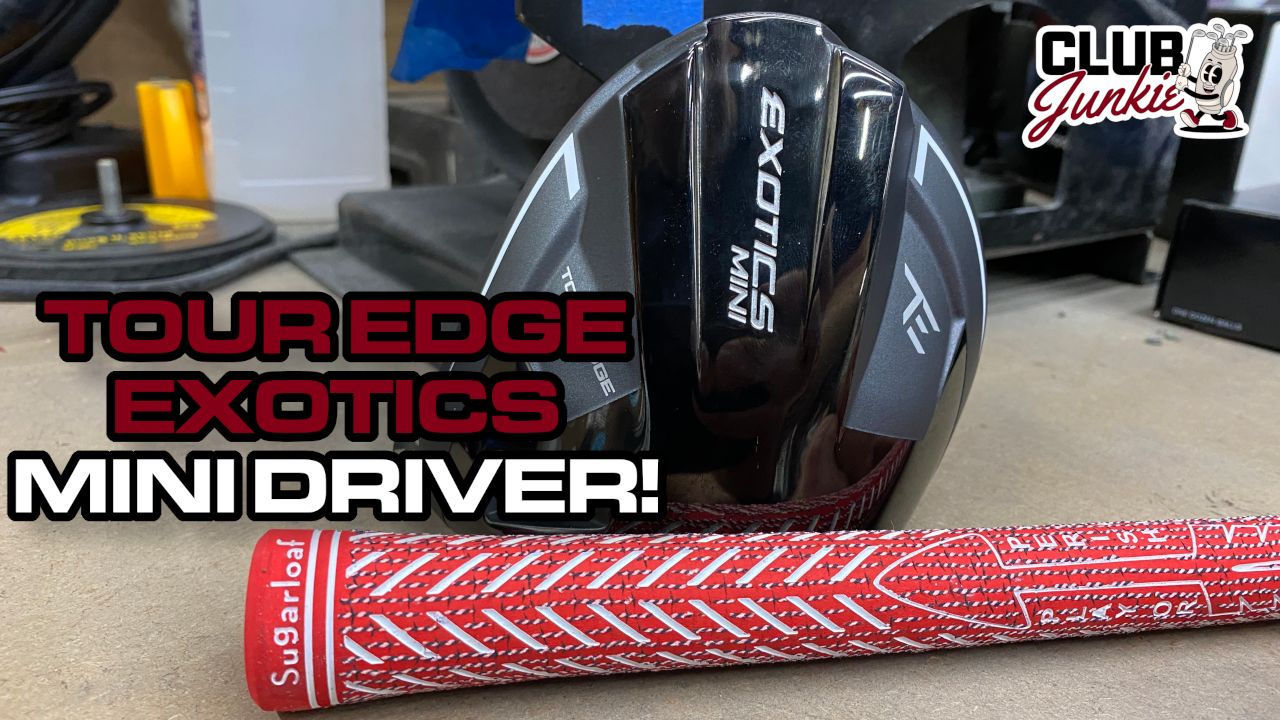
On this episode of Club Junkie, I put the new Tour Edge Exotics Mini Driver to the test and break down the performance, forgiveness, distance, and where it fits compared to a traditional driver or strong fairway wood. If you have been curious about adding a mini driver to the bag, this one is worth a look.
I also dive into the new TaylorMade Spider ZT Max putter that was recently spotted and discuss the growing zero torque putter trend. Plus, there is a closer look at the new Project X Titan Yellow shaft showing up on the PGA Tour and what makes it different from other profiles currently out there.

Justin Rose WITB 2026 (April): Full WITB breakdown with new McLaren irons

What’s the story behind Webb Simpson’s custom-stamped irons?

Memorial Tournament Tour Report: Rory McIlroy, Cameron Young switch up drivers, and more

Cadillac Championship Tour Report: Spieth’s sizable changes, McLaren Golf launches, and more

Russell Henley’s winning WITB: 2026 Charles Schwab Challenge

Kristoffer Reitan’s winning WITB: 2026 Truist Championship

Aaron Rai’s winning WITB: 2026 PGA Championship

J.T. Poston’s winning WITB: 2026 Memorial Tournament

Cameron Young’s winning WITB: 2026 Cadillac Championship

Best irons 2026: Best irons overall, most forgiving irons, and more


Bud Cauley WITB 2026 (June)
Bud Cauley had >14 clubs in his bag when photographed prior to the Memorial Tournament. Driver: Titleist GTS2 (8 degrees) Shaft: Fujikura...


Hannah Green WITB 2026 (June)
Driver: Titleist GTS3 (10 degrees, D4 SureFit setting) Shaft: Mitsubishi Chemical Diamana RB 53 S 3-wood: Titleist GT3 (15 degrees,...


Asterisk Talley WITB 2026 (June)
Driver: TaylorMade Qi4D (9 degrees) Shaft: Fujikura Ventus Blue 6 S 3-wood: TaylorMade Qi4D (16.5 degrees) Shaft: Fujikura Ventus Blue...

Brianna Do WITB 2026 (June)
Driver: Callaway Quantum Triple Diamond (9 degrees) Shaft: KBS PGW 3-wood: Callaway Elyte Titanium (15 degrees) Shaft: KBS PGW 5-wood:...
-
 Equipment6 days ago
Memorial Tournament Tour Report: Rory McIlroy, Cameron Young switch up drivers, and more
-
 News1 week ago
Russell Henley’s winning WITB: 2026 Charles Schwab Challenge
-
 Whats in the Bag3 days ago
J.T. Poston’s winning WITB: 2026 Memorial Tournament
-
 Equipment3 days ago
Best irons 2026: Best irons overall, most forgiving irons, and more
-

 Equipment1 week ago
Details on Jason Day’s latest prototype Avoda iron setup
-

 Equipment3 weeks ago
CJ Cup Byron Nelson Tour Report: Koepka and Kim’s newest putters finally get hot
-

 News2 weeks ago
Charles Schwab Challenge Tour Report: MacIntyre, Åberg and Spaun all switch putters, TaylorMade launches new Spider
-

 Equipment2 weeks ago
Details on J.J. Spaun’s surprise putter switch


Pingback: Managing Putting Expectations! - Game Improvement Golf
Pingback: Improve During The Off Season The Best Winter Training For Golf
Pingback: Memorial Tournament Odds: DeChambeau, Rahm Headline Loaded Field - countryask
Dtrain
Sep 4, 2018 at 12:55 pm
All approach shots 10 feet from the hole aren’t created equal.
Justin Dohnson
Sep 4, 2018 at 12:53 pm
The comment section, a quick reminder of people’s inability to comprehend what they read.
Tom
Sep 3, 2018 at 8:21 pm
All you need to understand is the lowest score in golf wins….the rest of stats is unnecessary.
Ron
Sep 4, 2018 at 12:14 pm
If you understand the concept of Strokes Gained (which based on all the prior comments it seems most do not) it can be very valuable teaching you which areas are costing you strokes in relation to your peers.
Greg B.
Sep 3, 2018 at 9:33 am
I have read similar explanations before this one and none of them register with me. It seems to me that it still all comes down to putting. The driver example given is meaningless if you cannot capitalize on it. Same with approach/around the green. I think Broadie should have stopped with the putting stat and left it at that.
Kevin
Sep 3, 2018 at 11:38 am
Read Mark book, “Every Shot Counts”. It shows that putting isn’t as important for the good players as you think. Wants really more important is being able to drive it far and straighish and being to hit iron shots close to the hole. Look at player like Dustin Johnson who in the past his putting stroke has held him back (this year he is putting really good for him), yet he still won 4 times on tour last year. Why, well he is one the longest on tour and he hit his irons and wedge really tight, his birdie putts are going to be alot easier to make than say a Kevin Kisner. Kisner is one of the better putters on tour, though he is outside the top 150 in both driving and iron play; perfect examples for why he struggling this year; sure he is making alot putts, though those putts are for par, unlike DJ who putts are for birdie. Look Brandt Snedcker, he too has been struggling with his iron play all year, though still being able to putt. The stat that stood out the most when he cruise to a win 3 weeks ago was his ball striking. Sure you cant Putt awful and still win (Vijay did use to do it and Hideki does it know), but it is becoming very difficult to win on tour when you are not hitting iron shots close to the hole. Look at Jason Day, he had 9 wins between 15-16 despite being one the worst iron players on tour, he though was one the best putters from outside 25 feet. Though eventually you can’t keep making those putts, the pressure is going to weigh you down eventually. That is why he has only won since those two great season.
Greg B.
Sep 4, 2018 at 1:28 pm
Back in the ’80s/early ’90s there was a PGA Tour player named Tim Simpson who was a legendary ball-striker. Comparisons to the all-time greats were happening. But his putting skills were absolutely woeful, to the point where jokes were made about it.
When lowest score wins, it all comes down to putting/short game. The rest is an exercise that may be useful to help PGA Tour players work on their weak spots but that is about all it is good for. Strokes gained is getting undue attention as a useful yardstick.
DMG
Sep 3, 2018 at 9:20 am
Your Scenario #3 Putting equation doesn’t work for me. If I took 3 putts to finish from 10 feet strokes gained would = 2.61. What am I missing?
Bob
Sep 3, 2018 at 9:15 pm
The number should read -.61. With your scenario the number should be +1.39. So you were +1.39 from that distance. You want a negative number.
Steve
Apr 12, 2019 at 2:32 am
No.. this is wrong. It’s strokes GAINED. You don’t want a negative number.
Scenario 3 is incorrect because the author wrote it backwards. It should be 1.61 – 1 for the gain of .61 strokes.
Frankie
Sep 2, 2018 at 11:01 pm
This is such an unrealistic example for the average golfer, they are never going to play a 450 yard par 4 and hit it 335 yards in the fairway and hit it to 10 feet from 115 yards afterwards, get out of here.
PG
Sep 3, 2018 at 7:37 pm
There aren’t stroked gained stats for average golfers; when is the last time you’ve seen shotlink out on the muni?
dj
Sep 2, 2018 at 8:48 pm
Game Golf will calculate this for you.
Andy G
Sep 2, 2018 at 5:28 pm
Trey,
I believe the Strokes Gained Putting stat must help certain ball strikers more than others due to their approach shot skills. As an example, Rose, Day, Stenson will hit the right part of the green with his precise irons and their respective 20 foot putt is in a better (possibly easier) position than another player’s 20 foot putt. I think equating all 20 foot putts is where this stat is somewhat flawed or susceptible to its problems. It should factor in the speed and break to really determine what the average pro putter would do. I look at many of the past top 20 SGP players and see many players that you would not want putting for the win. I know this is subjective, but Rose, Day, and Stenson are great ball strikers that I feel their respective SGP stat being higher has ball striking influences due to them leaving the ball in the right place vs the less precise ball strikers. If you subjectively look at the list each year, you can see some really good examples of this. Please don’t take my comments overboard, I think the SGP stat is good, just not 100 % effective at evaluating putting skill (imo).
Johnny Penso
Sep 2, 2018 at 7:20 pm
I think what you’re missing is that it’s not meant to be an accurate statistic from shot to shot but in the aggregate. On a particular hole or putt, yes there will be all kinds of differences in lies, stances, ball position, green undulations etc. but over time, with enough data points, that will all even out as the variation is generally random in nature.
PG
Sep 2, 2018 at 12:35 pm
Is there a place to find average strokes for approach and putt distance for scratch golfers? I loaned my copy of the book out…