
Opinion & Analysis
2018 U.S. Open Preview: The holes at Shinnecock that will make the difference


I have been fascinated by Shinnecock Hills since I was a kid, watching Corey Pavin’s 4-wood curling through space above the golden fescue and landing a few feet from the flag. It was further cemented by the massacre in 2004, where conditions were borderline unfair… except for the fact that everyone had to play under the same unfair conditions. I love the way this unassuming beauty brought the best in the world literally to tears. The Open returns to Shinnecock for 2018, and while all of the holes will obviously count, some will be crucial.
Here’s a breakdown of the holes that just might cause a breakdown for some of the players, and a couple that will give them a break.
Hole No. 1 (Par 4, 399 yards)
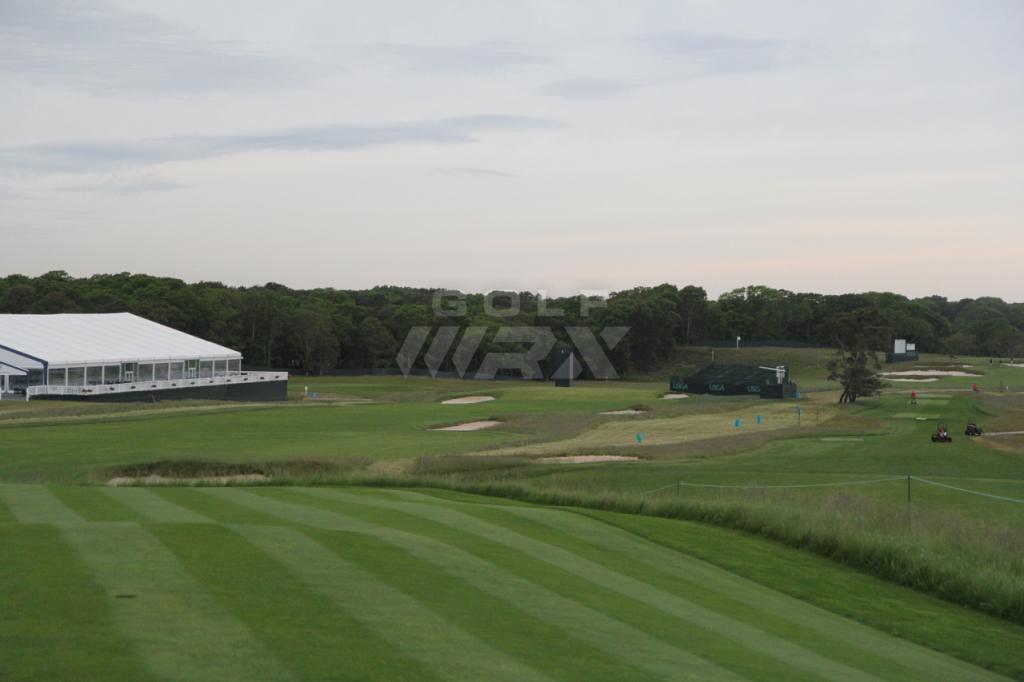
Like Merion and many other classic courses (other than Oakmont where it’s a death march from start to finish), number 1 at Shinnecock is a relatively benign hole. Long hitters will use less than driver and will still have a wedge into one of the most straightforward greens on the course. A rare birdie opportunity that must be taken advantage of.
Hole No. 2 (Par 3, 226 yards)
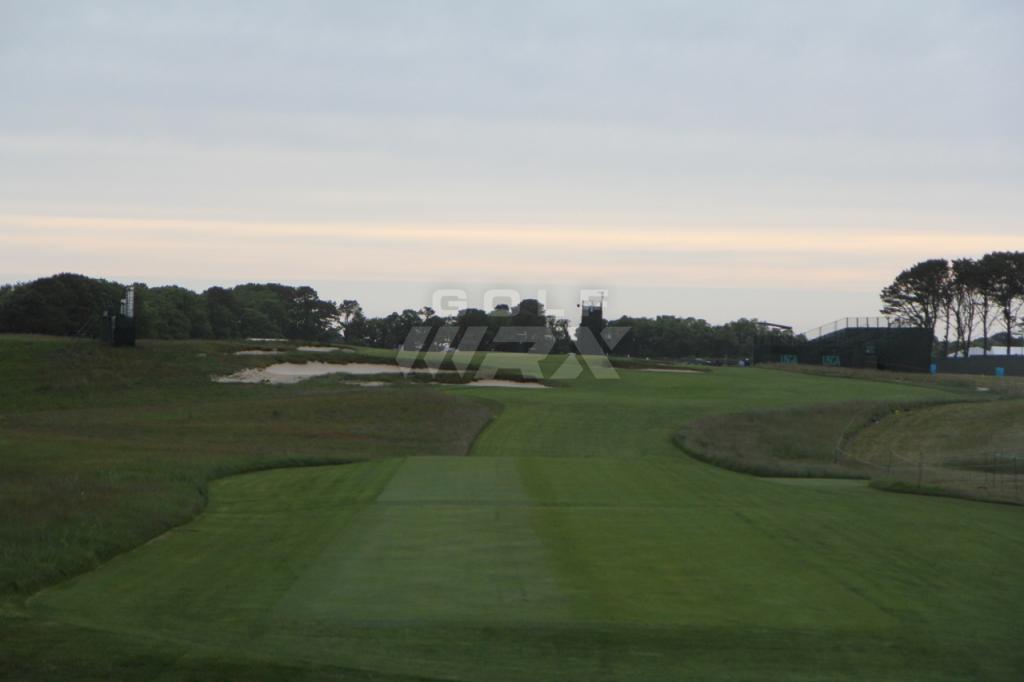
The longest par 3 on the course will hit the players in the face after the opening hole. It’s a long way uphill and if the wind is in their face it could take as much as a pro 3-wood to get to the green. As with most greens, staying below the hole is an imperative as there is a world of hurt behind.
Hole No. 6 (Par 4, 467 yards)

The No. 1 handicap hole on the course is a wolf in sheep’s clothing. Hitting the fairway will not be hard for the pros but he second shot is one of the most demanding in championship golf. Players will have to accurately judge the speed and direction of a cross wind that will be howling on every part of the hole except where they are standing. The only water on the course guards the green along with a cadre of greenside bunkers. Short right will be a popular spot and there are no easy up and downs here. Par will feel like a birdie.
Hole No. 7 (Par 3, 194 yards)

Maybe best known for its conditions in the 2004 open when the green got totally burnt out and was virtually impossible to hit and hold. It was like a watching the Daytona 500 with an oil slick on the second turn and the bitching and moaning of the field immediately made the U.S. Open my favorite major. Even with grass on it, number 7 is no picnic. Nicknamed “The Redan”, a French term for a fortification, the hole defends itself with distance, the wind and a triangular, back-sloping green that as only a couple of reasonable pin placements. More than half the field each day will likely have a wedge in their hands for the second shot and if conditions go south look for numbers that will look like a description of Happy Hour (4 to 6).
Hole No. 9 (Par 4, 460 yards)
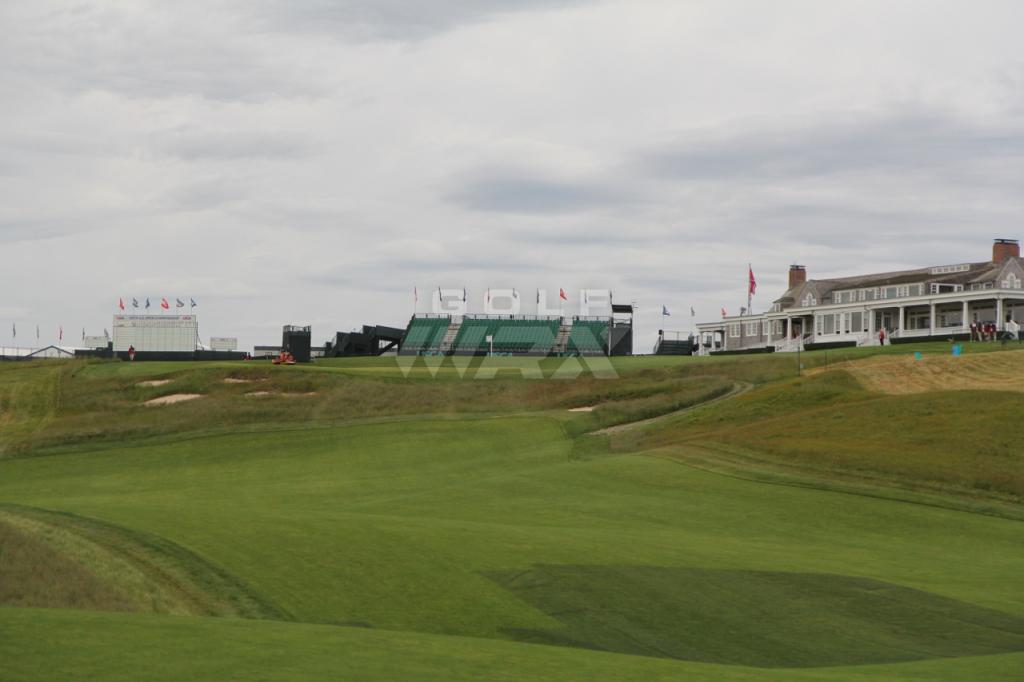
If Augusta has Amen Corner, then 9 through 11 at Shinnecock might be called “Hell’s Belles,” a breathtaking trio with a perfect combination of beauty and danger. The tee shot on nine seems easy, but you have to be in the fairway to be in position to go for the green. As with every hole at Shinnecock, a good sot is rewarded with an opportunity for another, in this instance a good tee shot will leave a short club into a green that is fairly large but perched about 50 feet above the players standing in the fairway and sloped back to front. Players unable to control their spin will find their third shots in waste areas and bunkers guarding the front of the hole, or maybe even back at their feet. Spectators will have a majestic view of the entire course from the green, including the red faces of those who don’t execute on this exacting test.
Hole No. 10 (Par 4, 420 yards)

This might be my favorite hole on the course. The tee shot presents plenty of fairway on the left but players in the know will aim over the fairway bunker on the right. The fairway and approach on 10 are evidence of why the course is called Shinnecock Hills. Finding the fairway on the left leaves a mid-iron into a turtle back green that is canted from back to front. Players who find the fairway right will take advantage of a drop that looks like it inspired a roller-coaster. A 40-foot speed slot means that there is only a wedge into the green and that’s where the fun begins. In 2004 players like Singh and Els saw multiple wedges go up the hill and back again like some sort of sadistic golf nursery rhyme. Singh fumed, “It’s hard to stop a shot on the hood of a VW.” Trying to play safe and hitting the back of the green will send players into a massive steep swale behind the green that will test the skill, imagination and nerve of the unfortunate souls who land there. At least a few will find themselves back in the fairway. This is a hole that, in the hands of the USGA, will humble all and humiliate some.
Hole No. 11 (Par 3, 154 yards)

The shortest par 3 on the course is small but mighty. An uphill tee shot to a green that is relatively large, but if you are on the wrong level of the two-tiered green a two putt will be as rare as finding a taxi in Manhattan rush hour. Players who card a 3 will be running to the next hole with a mix of joy and relief.
Hole No. 15 (Par 4, 430 yards)

This is downwind par 4 is the last of the “easy” birdie opportunities on the back nine. An accurate drive will leave a short iron to the green. If you relax and miss the green, it would be better left 9bunkers) than right close-shaven chipping area.
Hole No. 18 (Par 4, 460 yards)

This majestic closing hole is remembered for Corey Pavin’s heroics in 1995 but with its broad vistas and exacting layout, it is among the quintessential holes at Shinnecock. The ideal tee shot on the sweeping par-4 is to the right side of fairway. From there, a precise shot is needed into the elevated green that is guarded by wind, sand and fescue. Approaches that don’t have enough steam will roll back off of the green. Shots that go long will require a delicate chip or putt back onto the surface. This hole in many ways is what U.S. Open golf is all about: the course, the history, the player and the stage all combing for one magic moment. Worthy, indeed.



This past Monday, I played in the U.S. Amateur local qualifier at Rock Creek Country Club in Portland, Oregon. A full tee sheet from 7:30 a.m. to 1:55 p.m., the top 11 scores would make it to the U.S. Amateur final qualifying.
I teed off at 10:48 a.m.. With the 7:30 am tee time, you can get a feel for the leaders’ pace, and they were off and running on the challenging setup at Rock Creek.
View this post on Instagram
Getting to the highlight of the round on the par five 17th, a drive up the left side and 212 yards left to the front hole location. I took out a 5-iron with plans of middle of the green. The ball ended up 8 feet left of the hole, pin high. A slight downhill putt dropped in for an eagle 3 on the 17th. With the cut line looking to be anywhere from -2 to even par. This was the boost I had been waiting for all day.
With making par from the trees on 18, it was time to wait for a potential playoff with a posted score of one under par 71.
Three hours later, it was playoff time. 8 players for 6 spots. I made par on the playoff hole, which was good enough to advance to the U.S. Amateur final qualifying in July. USGA qualifiers sure deliver on all of the emotions in golf!
Club Junkie
Building my 2026 gamer WITB: Ranking the contenders and new putter projects – Club Junkie Podcast

The annual What’s In The Bag build is underway, and on this episode of Club Junkie, Brian breaks down the clubs currently leading the race for a spot in his 2026 gamer setup. From drivers and fairway woods to irons, wedges, and shafts, he ranks the equipment that’s performing best and explains what’s separating the front runners from the rest of the field.
Brian also heads into the workshop to discuss several putter projects currently on the bench. From head options and shaft choices to build ideas and testing plans, he shares what he’s working on and which putters could become serious contenders for the bag this season.
If you’re a gear junkie who loves equipment testing, club building, and the never-ending pursuit of the perfect setup, this episode is for you.
Follow Club Junkie:
Instagram: @clubjunkiepod
TikTok: @clubjunkiepod
Threads: @clubjunkiepod
X: @ClubJunkiePod
Club Junkie
Tour Edge Exotics mini driver review + TaylorMade Spider ZT Max first look – Club Junkie

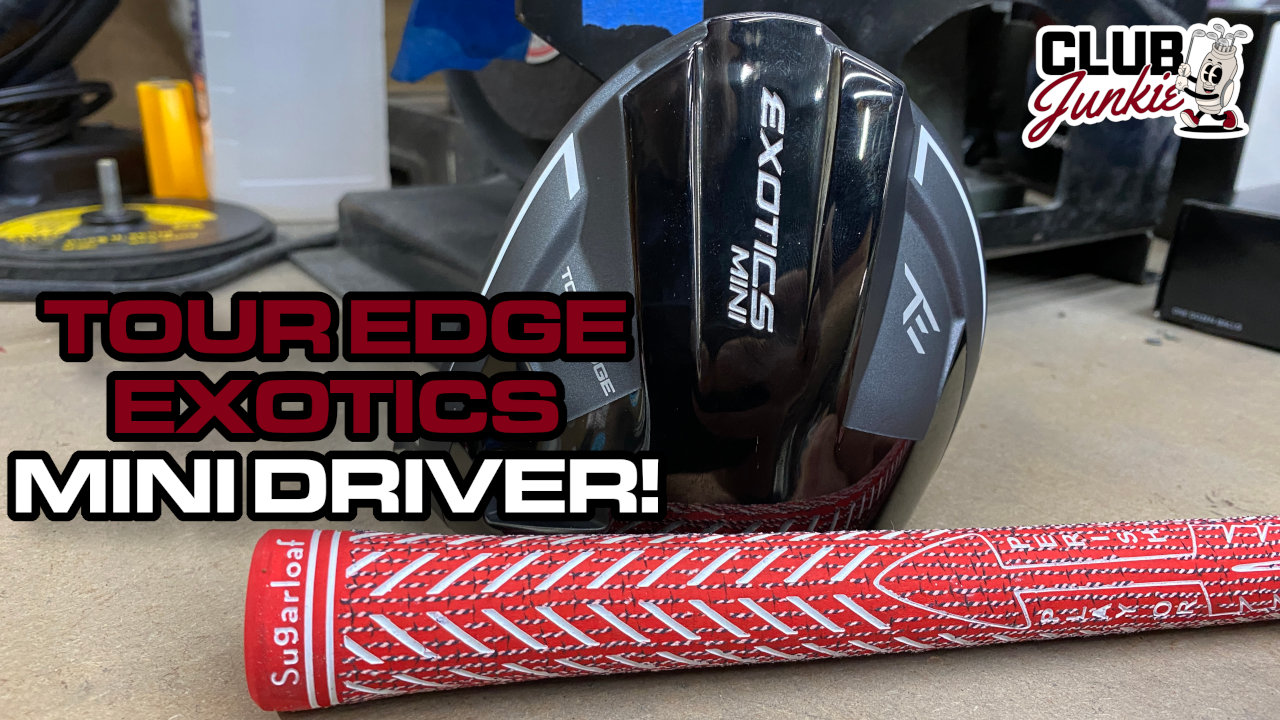
On this episode of Club Junkie, I put the new Tour Edge Exotics Mini Driver to the test and break down the performance, forgiveness, distance, and where it fits compared to a traditional driver or strong fairway wood. If you have been curious about adding a mini driver to the bag, this one is worth a look.
I also dive into the new TaylorMade Spider ZT Max putter that was recently spotted and discuss the growing zero torque putter trend. Plus, there is a closer look at the new Project X Titan Yellow shaft showing up on the PGA Tour and what makes it different from other profiles currently out there.

Justin Rose WITB 2026 (April): Full WITB breakdown with new McLaren irons

What’s the story behind Webb Simpson’s custom-stamped irons?

Cadillac Championship Tour Report: Spieth’s sizable changes, McLaren Golf launches, and more

Russell Henley’s winning WITB: 2026 Charles Schwab Challenge

Kristoffer Reitan’s winning WITB: 2026 Truist Championship

Aaron Rai’s winning WITB: 2026 PGA Championship

Cameron Young’s winning WITB: 2026 Cadillac Championship

Details on Jason Day’s latest prototype Avoda iron setup

Nelly Korda WITB 2026 (April)

Justin Rose on the switch to McLaren Golf, learnings from previous equipment moves


Melanie Green WITB 2026 (June)
Driver: TaylorMade Qi4D (9 degrees) Shaft: Graphite Design Tour AD VF 5 S 3-wood: TaylorMade Qi4D (15 degrees) Shaft: Graphite Design Tour...


Sungjae Im WITB 2026 (June)
Sungjae Im had >14 clubs in his bag when photographed prior to the Memorial Tournament. Driver: Titleist TSi2 (8 degrees, B1...

Lucas Glover WITB 2026 (June)
Lucas Glover had >14 clubs in his bag when photographed prior to the Memorial Tournament. Driver: Titleist GTS2 (10 degrees, B2 SureFit...

Chris Gotterup WITB 2026 (June)
Chris Gotterup had >14 clubs in his bag when photographed prior to the Memorial Tournament. Drivers: TaylorMade Qi4D (8 degrees), Ping...
-
 News5 days ago
Russell Henley’s winning WITB: 2026 Charles Schwab Challenge
-
 Whats in the Bag3 weeks ago
Aaron Rai’s winning WITB: 2026 PGA Championship
-
 Equipment2 days ago
Details on Jason Day’s latest prototype Avoda iron setup
-
 Tour Photo Galleries3 weeks ago
Photos from the 2026 CJ Cup Byron Nelson
-

 Equipment2 weeks ago
CJ Cup Byron Nelson Tour Report: Koepka and Kim’s newest putters finally get hot
-
 News1 week ago
Charles Schwab Challenge Tour Report: MacIntyre, Åberg and Spaun all switch putters, TaylorMade launches new Spider
-

 Equipment1 week ago
Details on J.J. Spaun’s surprise putter switch
-
 Popular Photo Galleries2 weeks ago
Photos from the 2026 Charles Schwab Challenge


juliette91
Jun 12, 2018 at 11:26 pm
I think you can see enough of what you need to see but the point I’d like to make that wasn’t made is that the wider fairways are a bit countered by the way most of the fairways are angled to the teeing ground, effectively making their width that much smaller.
I watched 1995’s Open there and that’s the big impression I got, especially what you call the birdie hole at number 1. Maybe it was the wind but many players ended up left in heavy rough precisely because they tried to cut the angle and shorten the hole.
Anyway, the yardages of the pivotal holes you described seem mostly minuscule by today’s PGA tour standards. If a 467 yard hole is a drive and a PW, and that’s one of the longer par 4s it does seem like the scores will be double digits minus for 3-5 players.
juliette91
Jun 12, 2018 at 11:27 pm
whoops meant players ended up right on number 1…
Jeff
Jun 12, 2018 at 1:45 pm
Why even bother with pictures when you can’t see what’s going on because of watermarks? Worthless article.
3puttPar
Jun 12, 2018 at 4:33 pm
I couldn’t agree more. Its so damn frustrating.