
Opinion & Analysis
Survive and Advance: A step-by-step guide to getting through Q-School


It’s the most nerve-wracking job interview you’ve ever heard of. Except it’s not a job interview, it’s a golf tournament.
The field is made up of players shooting the lowest scores of their lives, and those whose game is in a downward spiral. A notoriously grueling event that goes by a nickname many a hip-hop artist would envy. It is, of course, Q-School.
The event, formally known as the Web.com Tour Qualifying Tournament — a similar process exists to gain status on the LPGA, Champions, Mackenzie, and other tours — is a taxing process, especially for those who must start at the ground level. The Pre-Qualifying stage begins in late summer, comes with a hefty $2,700 entry fee, and like most job interviews brings a great deal of pressure to perform. Unlike most interviews, however, advancing to the next round is quite costly. The top-40 or so players from each of the six Pre-Qualifiers across the country who advance to the First Stage must cough up another $2,500 registration fee to keep their dreams alive.
The list of ways one can skip Pre-Qualifying and jump right into the First Stage in early fall is long. It ranges from exemptions for those who competed in any of the four major championships in the previous two seasons to those who are Nos. 6-25 in the World Amateur Golf Rankings. Skipping straight to the First Stage, however, doesn’t cut down on the cost. The price tag for jumping in at the First Stage is a cool $4,500. Each of the 12 First Stage sites includes a field of about 78 players, give or take, with only about 20 players living (metaphorically) to fight another day.
The cycle continues in the Second Stage. Did you make a cut in one of the last eight majors? Now’s your time to join the party. Are you one of the top-five ranked amateurs in the world? Welcome to the Second Stage. I hope you brought your checkbook, the entry fee for starting here is $4,000.
Many roads lead to Q-School, and some of them require a U-Turn. Matt Bettencourt found himself in the Second Stage despite racking up nearly $3 million in career earnings on the PGA Tour. But 80 percent of his $2.875 million in winnings came from the work he did between 2009-11, and in 2016 Bettencourt earned just one FedEx Cup point in five starts on the big tour. With a shot to gain status on the Web.com Tour via Q-School, Bettencourt had three sub-par rounds, but his third-round 77 cost him the opportunity to advance to the Finals.
For every former PGA Tour player limping back to Q-School there are a dozen hopefuls looking to take their career to the next level, one nerve-wracking shot at a time. That’s the category Aaron Cockerill falls into. Cockerill spent the 2016 season on the Mackenzie (Canadian) Tour and gave this reaction after completing the First Stage.
If you ever want to get your heart rate up and feel some nerves .. just pay a bunch of money and go play four rounds of golf .. ???????? #qschool
— Aaron Cockerill (@A_Cockerill) October 7, 2016
Cockerill earned a T9 finish at Stage One and a spot in the Second Stage, where he found even more success with a T4 finish.
Not every up-and-comer has the fairytale Q-School experience that Cockerill is having. Tyler Gann, another hopeful in search of his Web.com Tour card, almost let nerves cost him the opportunity to land his dream job. He carded a triple-bogey on the 71st hole of the 72-hole First Stage, but back-to-back rounds in the 60s in the second and third rounds kept him one shot clear of heartbreak.
Man, what a week. A stressful ending, but the result I wanted. On to 2nd stage! #SurviveAndAdvance
— Tyler Gann (@Tyler_Gann) October 14, 2016
Stage Two wasn’t quite as forgiving for Gann, whose score of 2-under par for the tournament was nine strokes too many to qualify for the Finals.
Anybody ranked in the top 50 of the Official World Golf Rankings but for some reason is searching for Tour status will join about 80-100 others who are exempt into the Final Stage after the $3,500 entry fee. Regardless of what road they took to get there, those who reach the Q-School Final Stage in Winter Garden, Fla., December 8-11 can breathe a sigh of relief.
The roughly 144 players who reach the Final Stage will assure themselves at least some status on the Web.com Tour in 2017. The number of tournaments they get access to, and some prize money, is the cherry on top they’re competing for. The Final Stage winner gains full exemption on the Web.com Tour in 2017 and $50,000 in prize money. Those finishing in the top-45 also earn some cash and full Web.com Tour exemptions, but are subject to periodic re-order at some point during the season depending on their Final Stage finish. Players finishing below 45th gain conditional status for the following season, sharing tournament spots with those who finished No. 76-100 on the Web.com Tour Regular Season Final Official Money list, and the No. 2-5 finishers from the PGA Tour Latinoamerica, MacKenzie Tour and PGA Tour China Final Official Money Lists.
After nearly four months, the job interview that is Q-School finally comes to an end. The pressure, however, does not. Those who earn Web.com Tour status will undoubtedly chase the ultimate goal of securing one of the 50 PGA Tour cards awarded to Web.com Tour players annually. Those who fall short of that will find themselves battling to simply retain their status on the Web.com Tour. The rest will take a U-turn right back to Q-School
Below is the list of players who will compete in the final stage of the Web.com Tour Qualifying Tournament Dec. 8-11 at Orange County National’s Crooked Cat and Panther Lake Courses in Winter Garden, Fla.
| Frank Adams III | Salisbury, NC |
| Steve Allan | Scottsdale, AZ |
| Abraham Ancer | Mission, TX |
| Mark Anguiano | Whittier, CA |
| Jamie Arnold | Atlanta, GA |
| Paul Barjon | Fort Worth, TX |
| Bryan Bigley | Charlotte, NC |
| Jacques Blaauw | Centurion, Gauteng, South Africa |
| Rohan Blizard | Sydney, Australia |
| Christian Brand | Scott Depot, WV |
| David Branshaw | Tampa, FL |
| Kent Bulle | Nashville, TN |
| Gunn Charoenkul | Bangkok, Thailand |
| Zihao Chen | Guangdong, China |
| John Chin | Temecula, CA |
| Daniel Chopra | Orlando, FL |
| Aaron Cockerill | Gunton, Manitoba, Canada |
| Eric Cole | Tequesta, FL |
| Trevor Cone | Concord, NC |
| Austin Connelly | Irving, TX |
| Corey Conners | Listowel, Ontario, Canada |
| Adam Cornelson | Langley, British Columbia, Canada |
| Vince Covello | Ponte Vedra Beach, FL |
| Josh Creel | Cheyenne, WY |
| Brandon Crick | McCook, NE |
| Nick Cullen | Atlanta, GA |
| Matt Davidson | Greenville, SC |
| Emilio Dominguez | Pacheco, Buenos Aires, Argentina |
| Kevin Dougherty | Murrieta, CA |
| Parker Edens | Greeley, CO |
| Brad Elder | Reston, VA |
| Derek Ernst | Weatherford, TX |
| Seth Fair | Brownsburg, IN |
| Armando Favela | Chula Vista, CA |
| Colin Featherstone | Fallbrook, CA |
| Trevor Fisher, Jr. | Gauteng, South Africa |
| Nick Flanagan | Ponte Vedra Beach, FL |
| Alex Franklin | San Rafael, CA |
| Stephen Gangluff | Carlsbad, CA |
| Brice Garnett | Gallatin, MO |
| Michael Gellerman | Sterling, KS |
| Michael Gligic | Kitchener, Ontario, Canada |
| Talor Gooch | Midwest City, OK |
| Oliver Goss | Knoxville, TN |
| Jeff Gove | LaQuinta, CA |
| Lanto Griffin | Blacksburg, VA |
| Vaita Guillaume | Faquay Varina, NC |
| Luke Guthrie | Jacksonville Beach, FL |
| Chesson Hadley | Raleigh, NC |
| Brandon Harkins | Scottsdale, AZ |
| Seann Harlingten | West Vancouver, British Columbia, Canada |
| Evan Harmeling | Andover, MA |
| Matt Harmon | Hudsonville, MI |
| Adam Hart | Columbia, SC |
| Michael Hebert | Atlanta, GA |
| Mark Hensby | Scottsdale, AZ |
| Bo Hoag | Columbus, OH |
| Jonathan Hodge | Jasper, TN |
| Justin Hueber | Jacksonville, FL |
| Brian Hughes | Centralia, WA |
| Vince India | Deerfield, IL |
| Carter Jenkins | Raleigh, NC |
| Michael Johnson | Birmingham, AL |
| Alex Kang | Las Vegas, NV |
| Billy Kennerly | Alpharetta, GA |
| Chris Killmer | Issaquah, WA |
| John Young Kim | Walnut, CA |
| Lucas Kim | Toronto, Ontario, Canada |
| Alex Kim | Fullerton, CA |
| Taewoo Kim | Gapyeong-gun, Gyeong, South Korea |
| Kurt Kitayama | Henderson, NV |
| Jim Knous | Englewood, CO |
| Ben Kohles | Reston, VA |
| Dustin Korte | Hendersonville, TN |
| Cliff Kresge | Kingsport, TN |
| Will Kropp | Edmond, OK |
| Andrew Landry | Dripping Springs, TX |
| Jesse Larson | Mendon, VT |
| Nate Lashley | Scottsdale, AZ |
| Tain Lee | Irvine, CA |
| D.H. Lee | Cleveland, OH |
| K.H. Lee | Encinitas, CA |
| Richard H. Lee | Scottsdale, AZ |
| Doug Letson | Tampa, FL |
| Michael Letzig | Kansas City, MO |
| Ken Looper | Mandeville, LA |
| Sam Love | Trussville, AL |
| Tom Lovelady | Birmingham, AL |
| Justin Lower | Charlotte, NC |
| Brock Mackenzie | Scottsdale, AZ |
| Sebastian MacLean | Doral, FL |
| Chase Marinell | Cape Coral, FL |
| Max Marsico | Las Vegas, NV |
| Max McCardle | N. Plympton, Australia |
| A.J. McInerney | Henderson, NV |
| Parker McLachlin | Scottsdale, AZ |
| Fernando Mechereffe | Knoxville, TN |
| Eric Meierdierks | Wilmette, IL |
| Daniel Miernicki | Santee, CA |
| Alex Moon | Dallas, TX |
| Taylor Moore | Edmond, OK |
| Trevor Murphy | Scottsdale, AZ |
| Chris Naegel | Wildwood, MO |
| Augusto Nunez | Yerba Buena, Tucuman, Argentina |
| Carlos Ortiz | Addison, TX |
| Chase Parker | Augusta, GA |
| David Pastore | Jupiter, FL |
| Jeremy Paul | Boulder, CO |
| Guillermo Pereira | Santiago, Chile |
| Ben Polland | Manhasset, NY |
| Aron Price | Ponte Vedra Beach, FL |
| Tyler Raber | Davis, CA |
| Seth Reeves | Suwanee, GA |
| Jim Renner | Orlando, FL |
| Wes Roach | Knoxville, TN |
| Max Rottluff | Scottsdale, AZ |
| Nick Rousey | Pensacola, FL |
| Charlie Saxon | Tulsa, OK |
| Mike Schoolcraft | Denver, CO |
| Justin Shin | North York, Ontario, Canada |
| Conrad Shindler | Dallas, TX |
| Trey Shirley | Bowling Green, KY |
| Matthew Short | Hudson, NC |
| Ben Silverman | Greenacres, FL |
| David Skinns | Suwanee, GA |
| Byron Smith | Palm Desert, CA |
| Jesse Speirs | Memphis, TN |
| Eric Steger | Fishers, IN |
| Damon Stephenson | Gold Coast, Queensland, Australia |
| Sepp Straka | Valdosta, GA |
| Ben Taylor | Champions Gate, FL |
| Jarin Todd | Woodinville, WA |
| Peter Tomasulo | McKinney, TX |
| Ethan Tracy | Galloway, OH |
| Martin Trainer | Palo Alto, CA |
| Blake D. Trimble | Houston, TX |
| Marc Turnesa | Jupiter, FL |
| Dawie van der Walt | Kingwood, TX |
| Sebastian Vazquez | Pharr, TX |
| Drew Weaver | Atlanta, GA |
| Fred Wedel | The Woodlands, TX |
| Tom Whitney | Fort Collins, CO |
| Kyle Wilshire | Orlando, FL |
| Cameron Wilson | Rowayton, CT |
| Chris Wilson | Dublin, OH |
| Andy Winings | Fishers, IN |
| Casey Wittenberg | Memphis, TN |
| Daniel Woltman | Beaver Dam, WI |
| Chris Worrell | Jenks, OK |
| Zach Wright | Marion, IA |
| Greg S. Yates | Mansfield, TX |
| Ryan Yip | Phoenix, AZ |
| Andrew Yun | Scottsdale, AZ |
| Xinjun Zhang | Northridge, CA |
| Jordan Zunic | Russell Vale, Australia |


Club Junkie
Building my 2026 gamer WITB: Ranking the contenders and new putter projects – Club Junkie Podcast

The annual What’s In The Bag build is underway, and on this episode of Club Junkie, Brian breaks down the clubs currently leading the race for a spot in his 2026 gamer setup. From drivers and fairway woods to irons, wedges, and shafts, he ranks the equipment that’s performing best and explains what’s separating the front runners from the rest of the field.
Brian also heads into the workshop to discuss several putter projects currently on the bench. From head options and shaft choices to build ideas and testing plans, he shares what he’s working on and which putters could become serious contenders for the bag this season.
If you’re a gear junkie who loves equipment testing, club building, and the never-ending pursuit of the perfect setup, this episode is for you.
Follow Club Junkie:
Instagram: @clubjunkiepod
TikTok: @clubjunkiepod
Threads: @clubjunkiepod
X: @ClubJunkiePod
Club Junkie
Tour Edge Exotics mini driver review + TaylorMade Spider ZT Max first look – Club Junkie

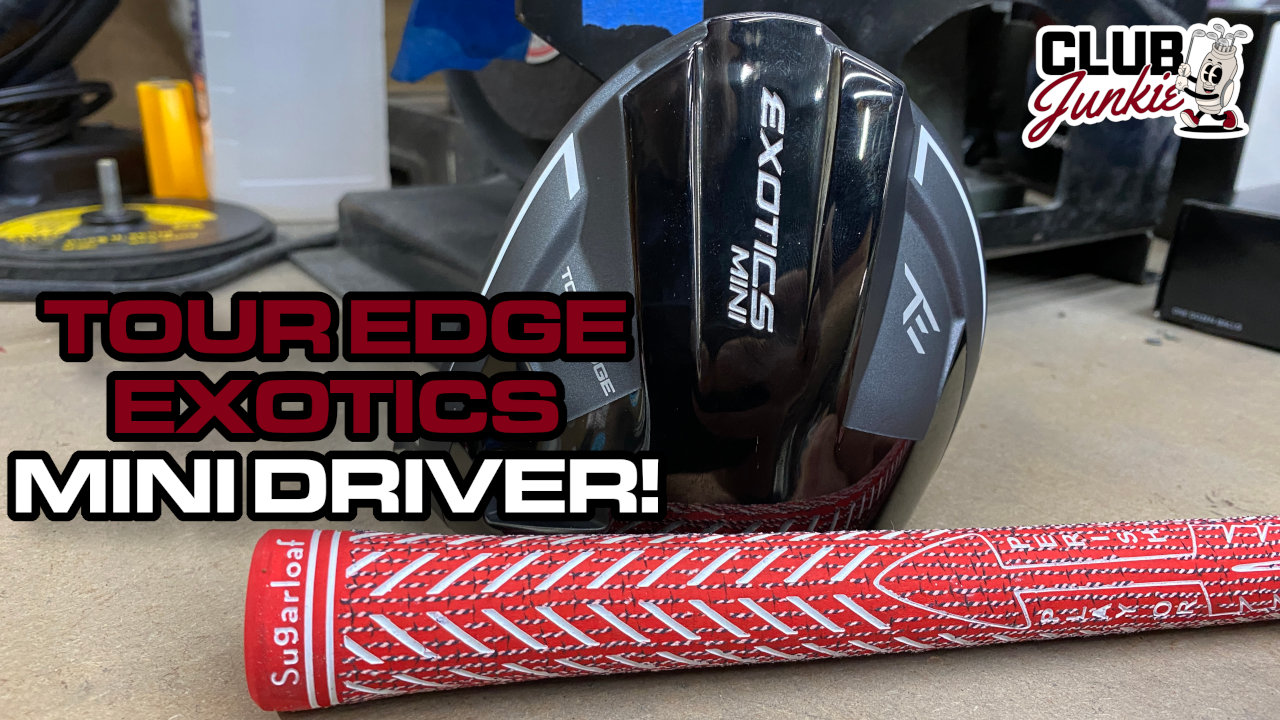
On this episode of Club Junkie, I put the new Tour Edge Exotics Mini Driver to the test and break down the performance, forgiveness, distance, and where it fits compared to a traditional driver or strong fairway wood. If you have been curious about adding a mini driver to the bag, this one is worth a look.
I also dive into the new TaylorMade Spider ZT Max putter that was recently spotted and discuss the growing zero torque putter trend. Plus, there is a closer look at the new Project X Titan Yellow shaft showing up on the PGA Tour and what makes it different from other profiles currently out there.
Opinion & Analysis
AVL: We’re talking about practice! My best tips for taking your game to the course

With the beginning of June on the horizon and courses rounding into peak condition for the season, it’s time to hone the finer skills that often get rusty over the winter. More sunlight also means more time to get out on the course and work on your game.
Whether it’s the practice green or the driving range, there’s always something to improve—whether you’re enjoying the fresh air or preparing for a weekend game or tournament. You can work on drills or freestyle around the green, and friendly competition is a great way to sharpen your skills.
While there are endless ways to get better at golf, I’m going to focus on practicing around the green. Let’s take a look at a few things to keep in mind as we head into the summer months.
Drills
From the driving range to the practice green, it’s important to incorporate drills into your routine. Years ago, I spent a weekend working on my short game with James Sieckmann. He recommended doing drill work for 5–10 minutes, then returning to your main practice.
This way, you create a balance between structured drills and real-world scenarios, so you’re not confined to “perfect” situations. For example, hitting the same three-foot putt over and over is good for repetition, but after a while, it becomes less interactive for your brain.
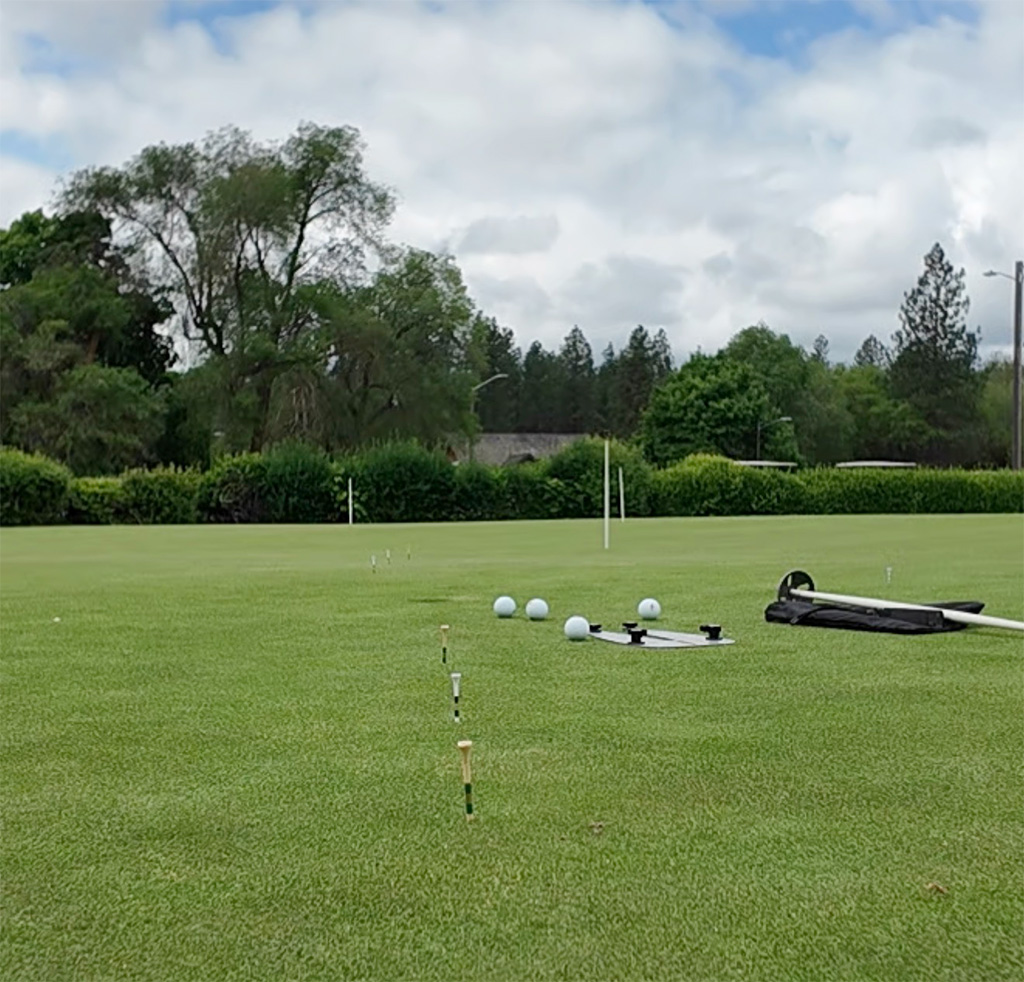
My approach is to use a putting trainer with a narrow gate for the ball to pass through, or simply place tees just outside the width of the ball. I’ll hit a series of four putts through the gate for three sets. Then, from a similar distance, I’ll hit four putts without the training aid and repeat that sequence three times.
Next, I’ll hit a number of 15–25 foot putts in a random fashion, then circle back to repeat the short putt drills with and without the training aid.
This breaks up the rhythm of hitting short putts with the training aid. When you hit the same short putts over and over, it’s easy to get into a groove—which is great for the drill, but not reflective of actual course play. While finding a rhythm is fundamental for drills, I like to introduce variation with longer putts to keep things realistic.
Game Mode
Once you’ve established a foundation with drills, it’s time to simulate on-course scenarios. This is where a few practice games come in handy.
One that I’ve been enjoying lately involves putting 10- to 15-footers with two balls. If I make the putt, great! If I miss, I pull the missed ball back a putter length. Suddenly, that little tap-in becomes a nerve-wracking three-footer—at least at first. As you get better at this game, those three- and five-footers become much more comfortable and routine.
It may sound cliché, but each shot is just what it is—it’s how we react that makes the difference. I like this game because it blends the pressure of on-course putting with the consequence of leaving yourself a much longer putt than usual.
Another game I like is one I recently learned from Brad Faxon. Place three tees in a line at four different locations around the hole: one at 3 feet, one at 6 feet, and one at 8 feet. The 3- and 6-foot putts count as par, and the 8-footer is for birdie.
This game keeps you focused on scoring and helps you get into a competitive mindset. You can even think about this putting game while you’re on the course. I just started playing it, and last week I couldn’t get better than two under par.
Competition
Competition during practice is when drills and games come to life, and you start to see results. For me, nothing beats a putting contest with a friend or two. In the right setting, these contests can become talking points for the whole season.
Match play, a game of 21, or simply seeing who can make the most one-putts (with a small prize on the line) are all great ways to simulate real on-course pressure. Recently, I played in a putting contest where one competitor made back-to-back 30- and 50-foot putts. As they say, expect your opponent to make every putt—and he nearly did. That’s impressive, and it’s something you see on the course, too: you have to stay committed to your game plan, no matter what.
When it comes to practice, it’s important to blend feedback from recent rounds with the fundamentals you want to reinforce. Drills, games, and competition—from the driving range to the putting green—form the backbone of skills you’ll rely on during actual rounds.
Finding the right balance is something we’re all working on, one practice session at a time. With the beginning of June on the horizon and courses rounding into peak condition for the season, it’s time to hone the finer skills that often get rusty over the winter. More sunlight also means more time to get out on the course and work on your game. Whether it’s the practice green or the driving range, there’s always something to improve—whether you’re enjoying the fresh air or preparing for a weekend game or tournament. You can work on drills or freestyle around the green, and friendly competition is a great way to sharpen your skills. While there are endless ways to get better at golf, I’m going to focus on practicing around the green. Let’s take a look at a few things to keep in mind as we head into the summer months.
Drills
From the driving range to the practice green, it’s important to incorporate drills into your routine. Years ago, I spent a weekend working on my short game with James Sieckmann. He recommended doing drill work for 5–10 minutes, then returning to your main practice. This way, you create a balance between structured drills and real-world scenarios, so you’re not confined to “perfect” situations. For example, hitting the same three-foot putt over and over is good for repetition, but after a while, it becomes less interactive for your brain.
My approach is to use a putting trainer with a narrow gate for the ball to pass through, or simply place tees just outside the width of the ball. I’ll hit a series of four putts through the gate for three sets. Then, from a similar distance, I’ll hit four putts without the training aid and repeat that sequence three times. Next, I’ll hit a number of 15–25 foot putts in a random fashion, then circle back to repeat the short putt drills with and without the training aid.
This breaks up the rhythm of hitting short putts with the training aid. When you hit the same short putts over and over, it’s easy to get into a groove—which is great for the drill, but not reflective of actual course play. While finding a rhythm is fundamental for drills, I like to introduce variation with longer putts to keep things realistic.
Game Mode
Once you’ve established a foundation with drills, it’s time to simulate on-course scenarios. This is where a few practice games come in handy. One that I’ve been enjoying lately involves putting 10- to 15-footers with two balls. If I make the putt, great! If I miss, I pull the missed ball back a putter length.
Suddenly, that little tap-in becomes a nerve-wracking three-footer—at least at first. As you get better at this game, those three- and five-footers become much more comfortable and routine. It may sound cliché, but each shot is just what it is—it’s how we react that makes the difference. I like this game because it blends the pressure of on-course putting with the consequence of leaving yourself a much longer putt than usual.
Another game I like is one I recently learned from Brad Faxon. Place three tees in a line at four different locations around the hole: one at 3 feet, one at 6 feet, and one at 8 feet. The 3- and 6-foot putts count as par, and the 8-footer is for birdie.
This game keeps you focused on scoring and helps you get into a competitive mindset. You can even think about this putting game while you’re on the course. I just started playing it, and last week I couldn’t get better than two under par.
Competition
Competition during practice is when drills and games come to life, and you start to see results. For me, nothing beats a putting contest with a friend or two. In the right setting, these contests can become talking points for the whole season. Match play, a game of 21, or simply seeing who can make the most one-putts (with a small prize on the line) are all great ways to simulate real on-course pressure. Recently, I played in a putting contest where one competitor made back-to-back 30- and 50-foot putts. As they say, expect your opponent to make every putt—and he nearly did. That’s impressive, and it’s something you see on the course, too: you have to stay committed to your game plan, no matter what.
When it comes to practice, it’s important to blend feedback from recent rounds with the fundamentals you want to reinforce. Drills, games, and competition—from the driving range to the putting green—form the backbone of skills you’ll rely on during actual rounds. Finding the right balance is something we’re all working on, one practice session at a time.

Justin Rose WITB 2026 (April): Full WITB breakdown with new McLaren irons

What’s the story behind Webb Simpson’s custom-stamped irons?

Cadillac Championship Tour Report: Spieth’s sizable changes, McLaren Golf launches, and more

Russell Henley’s winning WITB: 2026 Charles Schwab Challenge

Kristoffer Reitan’s winning WITB: 2026 Truist Championship

Aaron Rai’s winning WITB: 2026 PGA Championship

Cameron Young’s winning WITB: 2026 Cadillac Championship

Details on Jason Day’s latest prototype Avoda iron setup

Nelly Korda WITB 2026 (April)

Justin Rose on the switch to McLaren Golf, learnings from previous equipment moves


Sungjae Im WITB 2026 (June)
Sungjae Im had >14 clubs in his bag when photographed prior to the Memorial Tournament. Driver: Titleist TSi2 (8 degrees, B1...


Lucas Glover WITB 2026 (June)
Lucas Glover had >14 clubs in his bag when photographed prior to the Memorial Tournament. Driver: Titleist GTS2 (10 degrees, B2 SureFit...

Chris Gotterup WITB 2026 (June)
Chris Gotterup had >14 clubs in his bag when photographed prior to the Memorial Tournament. Drivers: TaylorMade Qi4D (8 degrees), Ping...

Jason Day WITB 2026 (June)
Jason Day had >14 clubs in his bag when photographed prior to the Memorial Tournament. Driver: Ping G430 LST (10.5 degrees...
-
 News5 days ago
Russell Henley’s winning WITB: 2026 Charles Schwab Challenge
-
 Whats in the Bag3 weeks ago
Aaron Rai’s winning WITB: 2026 PGA Championship
-
Equipment2 days ago
Details on Jason Day’s latest prototype Avoda iron setup
-
 Tour Photo Galleries3 weeks ago
Photos from the 2026 CJ Cup Byron Nelson
-

 Equipment2 weeks ago
CJ Cup Byron Nelson Tour Report: Koepka and Kim’s newest putters finally get hot
-
 News1 week ago
Charles Schwab Challenge Tour Report: MacIntyre, Åberg and Spaun all switch putters, TaylorMade launches new Spider
-
 Equipment1 week ago
Details on J.J. Spaun’s surprise putter switch
-
 Popular Photo Galleries2 weeks ago
Photos from the 2026 Charles Schwab Challenge


Dill Pickleson
Dec 12, 2016 at 1:36 am
Sorry my friend didn’t make it although is top 10 on the pga tour in my (very large) country. The level of play is extremely high and I feel for those that make it all the way to the finals and miss out…..
GtownHotBrown
Dec 8, 2016 at 11:56 am
Got some boys competing this week. Good luck fellas. Bring it back to Kentucky!
BeenThere
Dec 6, 2016 at 6:11 pm
Great article but the entry fee information is not correct regarding Stage Two and the Final Stage. Once you have paid the full amount for Pre Qualifying ( if necessary ) and First Stage you do not pay anything else if you advance. The fee structure is broken down like that on the application for those who are exempt to the different stages. For example if you are exempt into the second stage you only pay $4,000 or if you are exempt directly to the final stage by position on the money list or World Ranking, you only pay $3500. How much you pay is also determined by how soon you pay before the deadline with $6,000 being the maximum. Hope this helps.
Nick Heidelberger
Dec 6, 2016 at 6:38 pm
Indeed! I misinterpreted the fee structure. The story has been updated to clarify the costs. Thank you!
Duffer1880
Dec 6, 2016 at 8:38 am
A couple of names I recognise from Feinstein’s ‘Tales from Q School’ of a few years back. There are some very accomplished golfers on that list – just goes to show how high the standard is. These guys are indeed good.
Simz
Dec 6, 2016 at 3:08 am
“…….whose score of 2-under par for the tournament was nine strokes too many to qualify for the Finals”
OK then! Yep, there’s levels to everything. These guys are just too good!
Back to this 9-5 job I guess.
CCshop
Dec 5, 2016 at 7:19 pm
Step by Step guide to advance at Q School
1. Shoot low scores
Think I’ve figured out the secret
birdy
Dec 5, 2016 at 4:32 pm
so you have to have deep pockets or an angel investor to make it in golf…..
Progolfer
Dec 5, 2016 at 11:50 am
I’ve played in Q School a few times and did well in the majority of them (got to 2nd stage a couple years ago), and can tell you from personal experience how ridiculous the entry fees are– even more so since the PGA Tour cut ties with Q School, and now that it’s qualifying only for the Web.com Tour. The PGA Tour wants to keep old, fading veterans around on Tour (who got there from Q School in the first place) and prevent young, exciting up-and-comers from succeeding. Personally, I don’t think that’s the way to grow the game.
Johnnylongballz
Dec 5, 2016 at 6:30 am
Brutal!