
Opinion & Analysis
Where is your game on golf’s seesaw?

“What’s the most important stat in golf?” As a golf statistician, I’m asked that question more than any other. To answer it, I explain that there isn’t a most important stat I can point to for all golfers. We all have our own strengths and weaknesses and find our own special way to reach our number. That being said, the question is still an important one that deserves further study.
Research into my company (ShotbyShot.com) database of 280,000+ rounds reveals that the game is actually a very important balance of different facets of the game, and I have yet to see a player that performed at the same handicap level across all five facets of the game in my 29+ years of golf analysis. Golfers of all levels are balancing the number and frequency of good shots/good results against the frequency of errors.
I refer to this as Golf’s SeeSaw Effect.
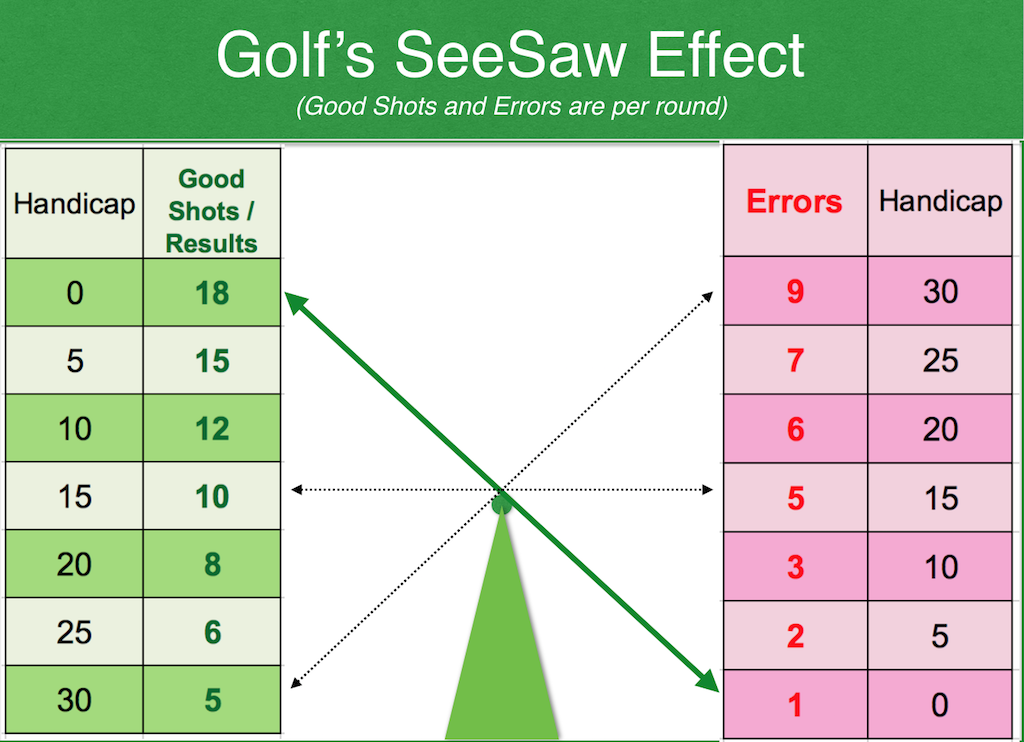
The secret to scoring at every level is much more than the ability to hit good shots. It’s also the skill to manage one’s game and limit the frequency and severity of bad shots or errors.
When I started my company over 29 years ago, I discovered that one of the major deficiencies in golf statistics was that they did not address the negatives in the game. Even today, the PGA Tour produces 650+ stats on each player and only ONE of them addresses a negative: 3 Putt Avoidance. In fact, when I search the Tour’s ShotLink stats for “Penalties,” I get the surprising answer below.

Are we to assume that penalties do not happen on Tour? Believe me, they do!
The significant role that errors play in our games led me to make sure that I built them into my version of Game Analysis (ShotByShot.com). As you can see by the graphic above, the seesaw effect is that the more good shots/results on the left match up with the fewer errors on the right, the lower the one’s handicap will be.
Good Shots/Results Defined
- Greens Hit in Regulation (GIR’s).
- Chip/Pitch shots hit to within 5 feet of the hole (Chip/Pitch = shots from within 50 yards of the hole).
- Sand shots hit to within 8 feet of the hole (Sand = shots from sand within 50 yards of the hole).
- 1-Putts from 4–10 feet (or greater).
Errors Defined
- Tee shots hit out of play (requiring an advancement, or resulting in a penalty).
- Chip/Pitch shots that miss the green either short or long; fringe results are not errors.
- Sand Shots that miss the green either short or long; fringe results are not errors.
- 3-Putts from 30 feet and closer.
The seesaw graphic above is telling us the following about the zero handicap golfer:
Good Shots/Results = 18 (on average per round)
- GIR’s: 12
- Chip/Pitch shots to 5 feet: 2.5
- Sand shots to 8 feet: 0.5
- 1-Putts from 4-10 feet: 3
Errors = 1 (on average per round)
- Tee shots hit out of play: 0.4
- Chip/Pitch shots miss green: 0.2
- Sand Shots miss green: 0.1
- 3-Putts from 30 feet or closer: 0.3
Note: How can a golfer hit a Tee shot out of play 0.4 times per round? Easy. The zero handicap golfer will make one of these driving errors on average every 2.5 rounds or four in every 10 rounds.
Record these simple stats on a separate scorecard for the next 3-5 rounds to see where you fall on Golf’s SeeSaw. This exercise will reveal the true strengths and weaknesses of your game.
For a Complete Strokes Gained analysis of your game, log on to www.shotbyshot.com.




This past Monday, I played in the U.S. Amateur local qualifier at Rock Creek Country Club in Portland, Oregon. A full tee sheet from 7:30 a.m. to 1:55 p.m., the top 11 scores would make it to the U.S. Amateur final qualifying.
I teed off at 10:48 a.m.. With the 7:30 am tee time, you can get a feel for the leaders’ pace, and they were off and running on the challenging setup at Rock Creek.
View this post on Instagram
Getting to the highlight of the round on the par five 17th, a drive up the left side and 212 yards left to the front hole location. I took out a 5-iron with plans of middle of the green. The ball ended up 8 feet left of the hole, pin high. A slight downhill putt dropped in for an eagle 3 on the 17th. With the cut line looking to be anywhere from -2 to even par. This was the boost I had been waiting for all day.
With making par from the trees on 18, it was time to wait for a potential playoff with a posted score of one under par 71.
Three hours later, it was playoff time. 8 players for 6 spots. I made par on the playoff hole, which was good enough to advance to the U.S. Amateur final qualifying in July. USGA qualifiers sure deliver on all of the emotions in golf!
Club Junkie
Building my 2026 gamer WITB: Ranking the contenders and new putter projects – Club Junkie Podcast

The annual What’s In The Bag build is underway, and on this episode of Club Junkie, Brian breaks down the clubs currently leading the race for a spot in his 2026 gamer setup. From drivers and fairway woods to irons, wedges, and shafts, he ranks the equipment that’s performing best and explains what’s separating the front runners from the rest of the field.
Brian also heads into the workshop to discuss several putter projects currently on the bench. From head options and shaft choices to build ideas and testing plans, he shares what he’s working on and which putters could become serious contenders for the bag this season.
If you’re a gear junkie who loves equipment testing, club building, and the never-ending pursuit of the perfect setup, this episode is for you.
Follow Club Junkie:
Instagram: @clubjunkiepod
TikTok: @clubjunkiepod
Threads: @clubjunkiepod
X: @ClubJunkiePod
Club Junkie
Tour Edge Exotics mini driver review + TaylorMade Spider ZT Max first look – Club Junkie

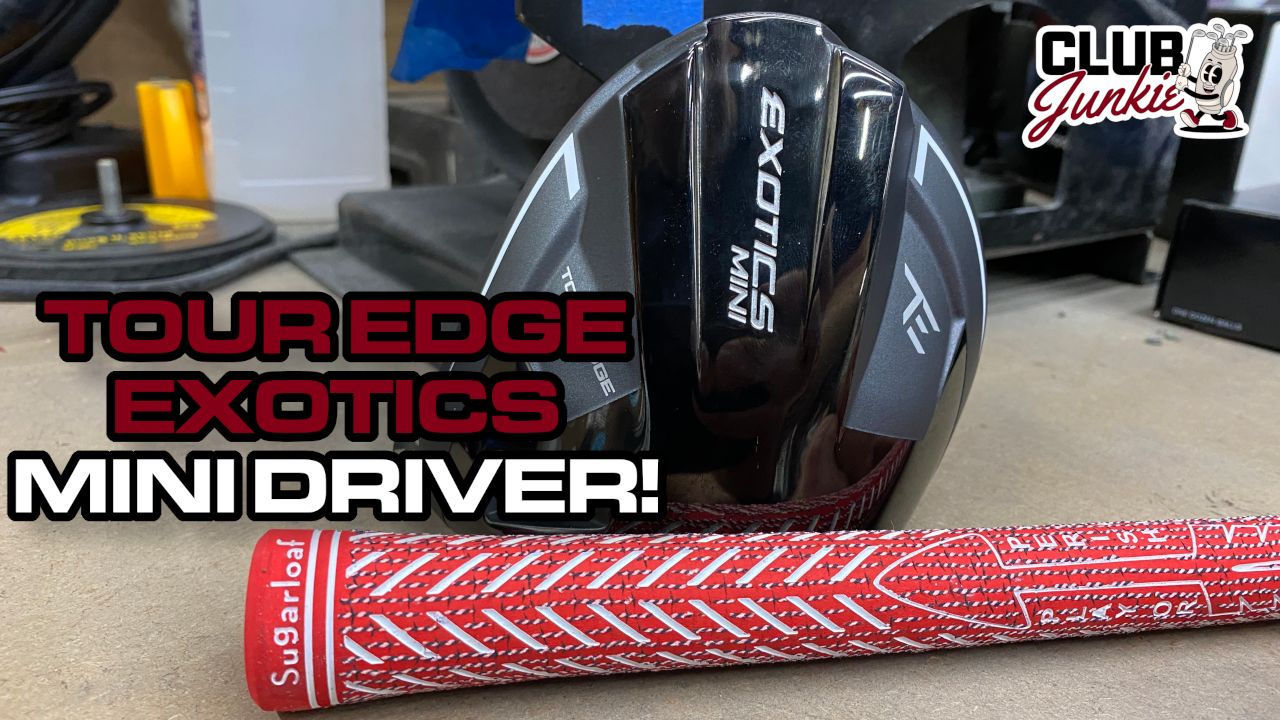
On this episode of Club Junkie, I put the new Tour Edge Exotics Mini Driver to the test and break down the performance, forgiveness, distance, and where it fits compared to a traditional driver or strong fairway wood. If you have been curious about adding a mini driver to the bag, this one is worth a look.
I also dive into the new TaylorMade Spider ZT Max putter that was recently spotted and discuss the growing zero torque putter trend. Plus, there is a closer look at the new Project X Titan Yellow shaft showing up on the PGA Tour and what makes it different from other profiles currently out there.

Justin Rose WITB 2026 (April): Full WITB breakdown with new McLaren irons

What’s the story behind Webb Simpson’s custom-stamped irons?

Cadillac Championship Tour Report: Spieth’s sizable changes, McLaren Golf launches, and more

Memorial Tournament Tour Report: Rory McIlroy, Cameron Young switch up drivers, and more

Russell Henley’s winning WITB: 2026 Charles Schwab Challenge

Kristoffer Reitan’s winning WITB: 2026 Truist Championship

Aaron Rai’s winning WITB: 2026 PGA Championship

Cameron Young’s winning WITB: 2026 Cadillac Championship

J.T. Poston’s winning WITB: 2026 Memorial Tournament

Best irons 2026: Best irons overall, most forgiving irons, and more


Hannah Green WITB 2026 (June)
Driver: Titleist GTS3 (10 degrees, D4 SureFit setting) Shaft: Mitsubishi Chemical Diamana RB 53 S 3-wood: Titleist GT3 (15 degrees,...


Asterisk Talley WITB 2026 (June)
Driver: TaylorMade Qi4D (9 degrees) Shaft: Fujikura Ventus Blue 6 S 3-wood: TaylorMade Qi4D (16.5 degrees) Shaft: Fujikura Ventus Blue...


Brianna Do WITB 2026 (June)
Driver: Callaway Quantum Triple Diamond (9 degrees) Shaft: KBS PGW 3-wood: Callaway Elyte Titanium (15 degrees) Shaft: KBS PGW 5-wood:...


Athena Singh WITB 2026 (June)
Driver: TaylorMade Qi4D (10.5 Degrees) Shaft: Fujikura Ventus Blue 6 S 3-wood: TaylorMade Qi10 Max (16 Degrees) Shaft: Fujikura Ventus Red 6...
-
 Equipment5 days ago
Memorial Tournament Tour Report: Rory McIlroy, Cameron Young switch up drivers, and more
-
 News1 week ago
Russell Henley’s winning WITB: 2026 Charles Schwab Challenge
-
 Whats in the Bag3 days ago
J.T. Poston’s winning WITB: 2026 Memorial Tournament
-
 Equipment2 days ago
Best irons 2026: Best irons overall, most forgiving irons, and more
-

 Equipment1 week ago
Details on Jason Day’s latest prototype Avoda iron setup
-
 Equipment3 weeks ago
CJ Cup Byron Nelson Tour Report: Koepka and Kim’s newest putters finally get hot
-

 News2 weeks ago
Charles Schwab Challenge Tour Report: MacIntyre, Åberg and Spaun all switch putters, TaylorMade launches new Spider
-
 Equipment2 weeks ago
Details on J.J. Spaun’s surprise putter switch


Tom54
Apr 3, 2017 at 3:41 pm
Interesting formula. I know after every round good or bad I always mentally go over the good vs bad shots. The nice shots aren’t always a given but the bad shots that all of us piss away are the ones that always prevent a better score simple shots like missing greens with wedges, 3 putts, etc. eliminating those wasted shots are usually the key to keeping your hdcp in check. That’s the allure of this frustrating game we all love.
McPickens
Apr 4, 2017 at 1:12 pm
nailed it
Bob Jones
Apr 3, 2017 at 10:55 am
Here is how to evaluate EVERY shot (except maybe 1-foot putts):
If I hit every [whatever shot you’re evaluating] like this one, I would:
a. shoot par
b. shoot 80
c. shoot 90
d. shoot 100
e. take up tennis