
Opinion & Analysis
3 Ways to Make Practice Sessions Worthwhile

It’s always interesting to see how golfers go about their practice sessions, especially when they’re implementing what they’ve learned from a recent lesson. Some machine-gun balls, while others make tons of rehearsal motions and only hit a few balls. When it is all said and done, which player is getting the most out of their session? Regardless of which player type you are, it’s obvious that implementing a new skill is as personal as golfers themselves.
My goal as a teacher is to help my students understand HOW to get the most out of their practice time. So if my players only have 45 minutes each week to work on their motion, I want them to get as much out of those 45 minutes as possible. Jack Nicklaus always said he never practiced as much as his contemporaries, because he always went to the range with a specific purpose. He focused on his purpose, worked on it and was done. I want you to be the same way.
Over the last few weeks, fellow GolfWRX Featured Writer Cordie Walker has written some fantastic articles on practice and the implementation of motor learning concepts as it pertains to golf. You’ll find them linked below. I have written this article with Cordie because I wanted to combine his expertise with mine to help you to formulate YOUR best practice plan and skill-implementation strategy so you can play better golf as quickly as possible.
Related
- Two reasons you don’t take your best game to the course
- What you should actually be focusing on while practicing golf
When most people practice golf, they’re merely getting exercise. Little learning or skill acquisition is being done. People are creatures of habit, and most golfers have had poor role models when it comes to practicing the craft. Most of their influencers were either their buddies or professionals at a local Tour event, so they believe that going to the range and beating balls is the best way to get better.
Imagine for a moment you have only one hour per week to hit balls in order to work on your game. How do you go about it? I bet most of you follow the “normal” routine most golfers do:
- You typically go to the same side of the range.
- When hitting balls, you always use the same targets and swing mostly the same clubs.
- When you practice, you make sure you have a good lie on level, fairway grass (and complain when the range isn’t in perfect condition).
That kind of practice doesn’t help you play better on the golf course, and it won’t help you stop hitting the ball in the water on that one hole that doesn’t look good to your eye on the tee box. So how can you practice in a more efficient manner? Below, Cordie and I are going to help you figure out how to practice, and also lessen your time on the range so you can play golf more often!
Give yourself different looks
How often have you seen someone move around to different spots on the tee box of a range? Probably not very often, right. In my opinion, this the most detrimental part of practice: giving yourself the “same look” every time you hit balls. Thus, whenever you find the opposite look on the golf course, you will tend to feel uncomfortable.
In contrast, you should practice different types of shots and give yourself views that simulate the shots you see on the golf course.

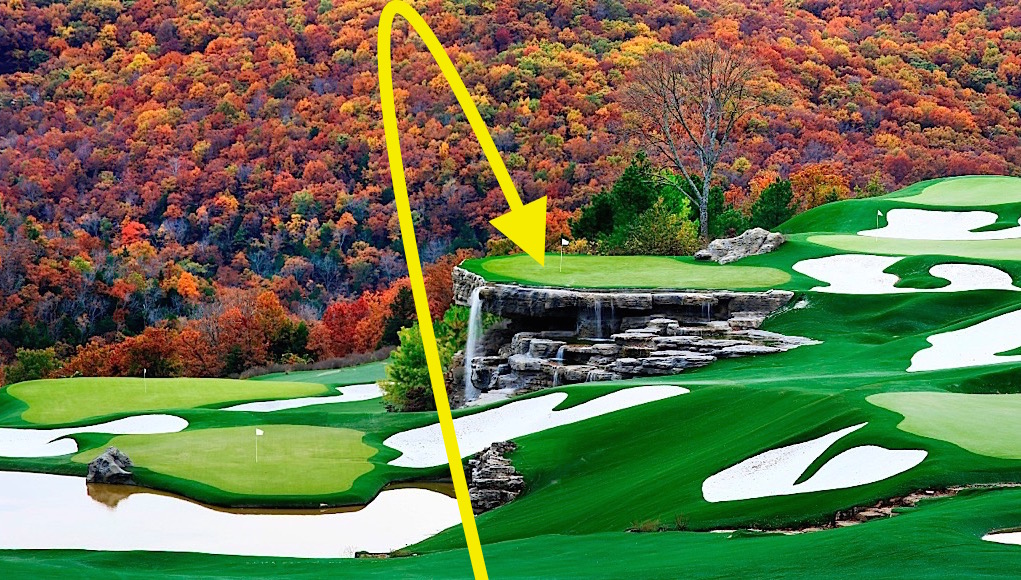
Even if you’re hitting the same club, give yourself two completely different looks with different goals and places to miss. Try setting up two different stations that require opposing shot patterns. For example, at station No. 1, a miss to the left leaves you short sided, so the goal is to hit it at the pin or miss right of it.

Station No. 2 is all about distance control. You must get the ball over the bunker, but can’t miss long because the green is narrow.
Both of these stations test two different areas of your game and push most golfers beyond how they normally practice. Force yourself to hit the correct shot, and see how many times you can avoid the “bail out” shot.
Related: Don’t be so critical! Research shows it pays to be positive
Make sure you set up shots that are demanding, but not unrealistic for your skill level. Be realistic, because it is these challenges that will help you to find ways to score lower on the course. They are not meant to frustrate you and damage your confidence.
Set up the uncomfortable shot
A golfer’s miss (a draw or a slice) usually affects where golfers aim when they’re on the range. So if you slice the ball, it’s doubtful that you choose a spot on the right side of the range and try to hit along that same right side. Why? Because you don’t want to knock balls into the houses on the right of the range and break a window. It adds an element of challenge and pressure, which in all reality you should embrace.
There are many holes out on the golf course that make you line up on the right side of the fairway with houses on the right and left. That’s why it’s important to practice like you play. And if you calm your discomfort during practice, it will be that much easier on the course.
Conditions that induce the most errors during acquisition are often the very conditions that lead to the most learning! See “Learning Versus Performance” by Soderstrom and Bjork.
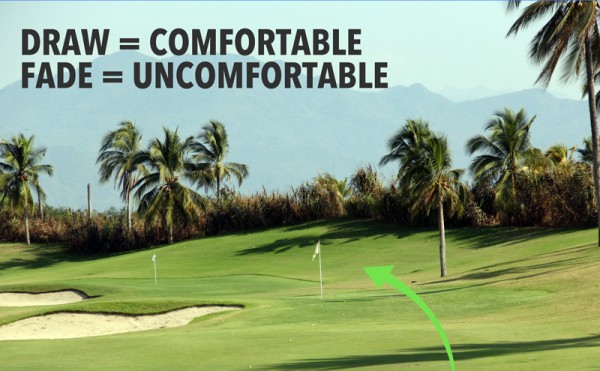
In the image above, you can see a target on the range that most drawers of the golf ball would happily hit balls to. It fits their eye.
However, as a fader, I’d either have to start the ball over the bunker or aim at the hole and try to hit it straight hoping it doesn’t cut. I love to practice this way because it’s easy to bail out, but so hard to commit and start the ball left of the pin with the bunker in the way. On the golf course, you also have to deal with these kinds of situation. So if you practice them, you might make a birdie the next time around, or avoid a double-bogey.
Maybe your nemesis hole at home is a par-3 with water on the right, and as a fader of the ball you tend to miss right in the pond. If possible, go practice out on that hole. Take your nicest Pro V1s and hit shots to the green. If you come out of the shot, the ball is going in the water and you’re losing a $4 golf ball. This type of committed practice will allow you to move to the next level because if you think losing a $4 golf balls is bad, just think how bad you’ll feel when you lose in the final round of the Member Guest with the calcutta on the line.
Add pressure
There is inherent pressure when trying to perform your best. Whether you’re playing for a few bucks on the weekend with friends or trying to win the club championship, you’ll most likely have to deal with pressure, and it’s tough to recreate that feeling during practice or practice rounds.
The problem is most people feel pressure for the first time during performance. And it’s the reason why their tournament scores are usually much worse than their Saturday scores with their buddies.
If you haven’t practiced under pressure, how do you expect perform well when you need to? Most people relegate their practice as simply an activity to hit golf balls and try to groove their swing. The reality is there is far more to practice than just the physical activity itself.
Here’s are three simple steps to add pressure to your practice:
- Step 1: Set a goal for your practice, and create game where you’re trying to hit a specific shot to a specific target.
- Step 2: Set a dollar amount to that game. Succeed and you keep your money; fail and you lose it.
- Step 3: I’m serious. If you don’t meet your goal, leave your money on the range for some lucky soul to find.
The fear of losing money is one of the best ways to simulate pressure. And if you don’t do it during practice, then you won’t be able to understand your tendencies when it matters.
Do you tend to hit the ball thin or fat, long or short when the pressure is on? If you don’t know now, then you might find out what you’re on the last hole of the Club Championship. By then, it’s too late.


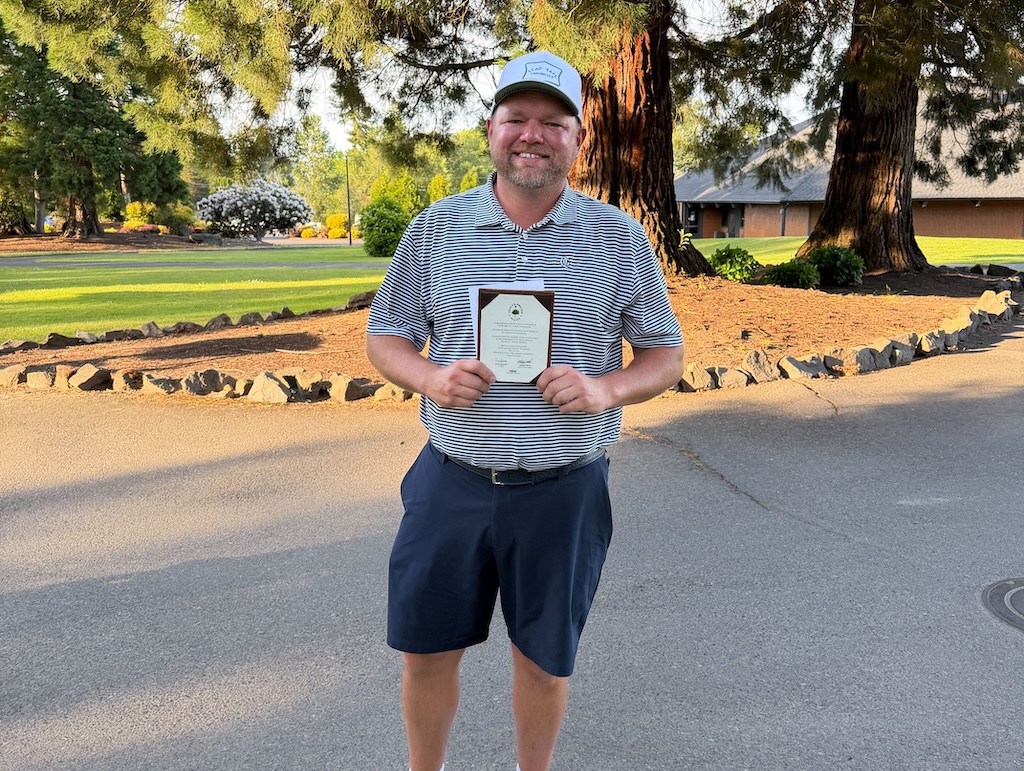
This past Monday, I played in the U.S. Amateur local qualifier at Rock Creek Country Club in Portland, Oregon. A full tee sheet from 7:30 a.m. to 1:55 p.m., the top 11 scores would make it to the U.S. Amateur final qualifying.
I teed off at 10:48 a.m.. With the 7:30 am tee time, you can get a feel for the leaders’ pace, and they were off and running on the challenging setup at Rock Creek.
View this post on Instagram
Getting to the highlight of the round on the par five 17th, a drive up the left side and 212 yards left to the front hole location. I took out a 5-iron with plans of middle of the green. The ball ended up 8 feet left of the hole, pin high. A slight downhill putt dropped in for an eagle 3 on the 17th. With the cut line looking to be anywhere from -2 to even par. This was the boost I had been waiting for all day.
With making par from the trees on 18, it was time to wait for a potential playoff with a posted score of one under par 71.
Three hours later, it was playoff time. 8 players for 6 spots. I made par on the playoff hole, which was good enough to advance to the U.S. Amateur final qualifying in July. USGA qualifiers sure deliver on all of the emotions in golf!
Club Junkie
Building my 2026 gamer WITB: Ranking the contenders and new putter projects – Club Junkie Podcast

The annual What’s In The Bag build is underway, and on this episode of Club Junkie, Brian breaks down the clubs currently leading the race for a spot in his 2026 gamer setup. From drivers and fairway woods to irons, wedges, and shafts, he ranks the equipment that’s performing best and explains what’s separating the front runners from the rest of the field.
Brian also heads into the workshop to discuss several putter projects currently on the bench. From head options and shaft choices to build ideas and testing plans, he shares what he’s working on and which putters could become serious contenders for the bag this season.
If you’re a gear junkie who loves equipment testing, club building, and the never-ending pursuit of the perfect setup, this episode is for you.
Follow Club Junkie:
Instagram: @clubjunkiepod
TikTok: @clubjunkiepod
Threads: @clubjunkiepod
X: @ClubJunkiePod
Club Junkie
Tour Edge Exotics mini driver review + TaylorMade Spider ZT Max first look – Club Junkie

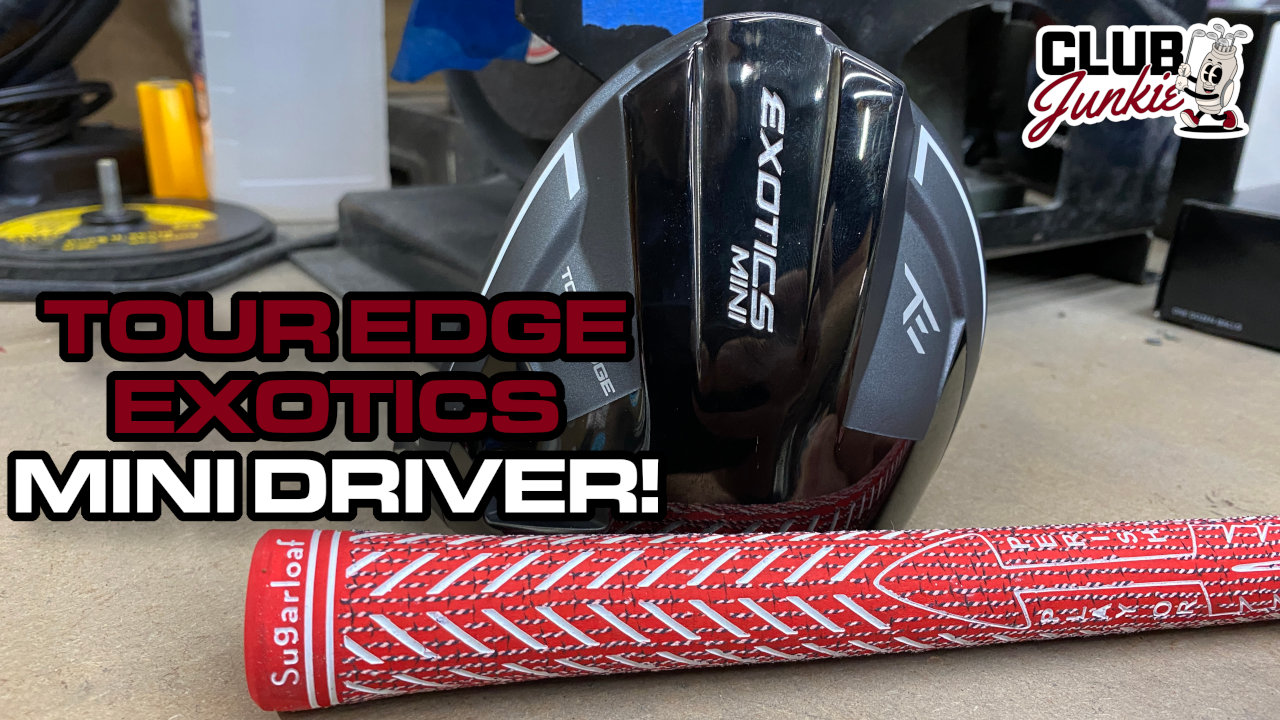
On this episode of Club Junkie, I put the new Tour Edge Exotics Mini Driver to the test and break down the performance, forgiveness, distance, and where it fits compared to a traditional driver or strong fairway wood. If you have been curious about adding a mini driver to the bag, this one is worth a look.
I also dive into the new TaylorMade Spider ZT Max putter that was recently spotted and discuss the growing zero torque putter trend. Plus, there is a closer look at the new Project X Titan Yellow shaft showing up on the PGA Tour and what makes it different from other profiles currently out there.

Justin Rose WITB 2026 (April): Full WITB breakdown with new McLaren irons

What’s the story behind Webb Simpson’s custom-stamped irons?

Cadillac Championship Tour Report: Spieth’s sizable changes, McLaren Golf launches, and more

Memorial Tournament Tour Report: Rory McIlroy, Cameron Young switch up drivers, and more

Russell Henley’s winning WITB: 2026 Charles Schwab Challenge

Kristoffer Reitan’s winning WITB: 2026 Truist Championship

Aaron Rai’s winning WITB: 2026 PGA Championship

Cameron Young’s winning WITB: 2026 Cadillac Championship

Details on Jason Day’s latest prototype Avoda iron setup

Justin Rose on the switch to McLaren Golf, learnings from previous equipment moves
Brianna Do WITB (June 2026)
Driver: Callaway Quantum Triple Diamond (9 degrees) Shaft: KBS PGW 3-wood: Callaway Elyte Titanium (15 degrees) Shaft: KBS PGW 5-wood:...

Athena Singh WITB 2026 (June)
Driver: TaylorMade Qi4D (10.5 Degrees) Shaft: Fujikura Ventus Blue 6 S 3-wood: TaylorMade Qi10 Max (16 Degrees) Shaft: Fujikura Ventus Red 6...

J.T. Poston’s winning WITB: 2026 Memorial Tournament
Driver: Titleist GTS3 (9 degrees) Shaft: Mitsubishi Diamana BF 60 TX 3-wood: Titleist TS2 (15 degrees) Shaft: Graphite Design Tour...


Alex Noren WITB 2026 (June)
Driver: Callaway Paradym Ai Smoke Max D (9 degrees @7, draw setting) Shaft: Graphite Design Tour AD VF 6 X 3-wood: Callaway...
-
 Equipment3 days ago
Memorial Tournament Tour Report: Rory McIlroy, Cameron Young switch up drivers, and more
-
 News1 week ago
Russell Henley’s winning WITB: 2026 Charles Schwab Challenge
-
 Equipment5 days ago
Details on Jason Day’s latest prototype Avoda iron setup
-
 Tour Photo Galleries3 weeks ago
Photos from the 2026 CJ Cup Byron Nelson
-

 Equipment2 weeks ago
CJ Cup Byron Nelson Tour Report: Koepka and Kim’s newest putters finally get hot
-
 News1 week ago
Charles Schwab Challenge Tour Report: MacIntyre, Åberg and Spaun all switch putters, TaylorMade launches new Spider
-
 Equipment2 weeks ago
Details on J.J. Spaun’s surprise putter switch
-
 Popular Photo Galleries2 weeks ago
Photos from the 2026 Charles Schwab Challenge


Troy
Mar 21, 2016 at 2:36 pm
Great article Tom,
This advice is spot on. I see so many golfers just aimlessly smashing their driver every week at the range.
Personally, I try to mix up the targets but more specifically I work on fixing small things one at a time so I am able to implement them successfully on the golf course.
Cheers
Alex
Mar 19, 2016 at 9:40 am
Tom, nice article but I’m a little confused with station 2. The graphic suggests long is good but the explanation is saying long is bad because the green is narrow. Shouldn’t it be can’t miss wide because the green is narrow?
jcorbran
Mar 18, 2016 at 9:35 pm
wonder how they drive the ball picker at that range
Buster Cherry
Mar 24, 2016 at 5:08 pm
Very Carefully
Buster Cherry
Mar 18, 2016 at 1:14 am
When I hit the local public course to practice afterwork I see the entire range full everyday. I would say 100 people hitting range balls but when I walk over to the putting green I might only see a handful of people.
Jon
Mar 18, 2016 at 12:07 am
Another great article by Tom. Thanks
Keith
Mar 17, 2016 at 11:13 am
Beautiful shot of the Arnold Palmer designed driving range at Top of the Rock in Branson, Mo. Fall in the Ozark mountains in the background if stunning. I live about an hour and a half south of Branson and it’s just as beautiful in person. Buffalo Ridge (the former Branson Creeks) is a must play if you find yourself in the area, Tom Fazio design.
mhendon
Mar 18, 2016 at 8:33 pm
You’re telling me that’s a real range, I thought it was photoshopped?
jcorbran
Mar 18, 2016 at 9:34 pm
i thought it was from tiger woods golf
Double Mocha Man
Mar 17, 2016 at 10:30 am
Now I understand why I keep finding money on the range!
Curt
Mar 17, 2016 at 3:07 pm
There must be some really good players at my range, cuz Ive yet to find any……..
Richard
Mar 17, 2016 at 10:11 am
Great article Tom.