
News
GolfWRX Interivew – Dean Snell TaylorMade Golf

 GolfWRX is proud to present an interview with Dean Snell, TaylorMade Golf’s Senior Director of Research and Development of golf balls.
Click here to listen to the audio.
GolfWRX: Today we’re here with Dean Snell from TaylorMade Golf. Dean, how are you going today?
Dean Snell: I’m fine. Thanks for having me.
GolfWRX: Thanks a lot for being on. We appreciate your time. Before we get started can you give us a little bit of background about your history in the golf industry and with TaylorMade and Maxfli?
Dean Snell: I’m probably going to show my age here, but I’ve been actually been working in golf ball R&D for about 18 years now. I think I’m going on my 19th year now and I have been very fortunate to work to with Titleist for quite a while and TaylorMade now. I’ve been fortunate to have spent most of the time that I’ve been in research and development designing top of the line golf balls with tour players. At Titleist I had the chance to work with Tiger, Phil Davis, Ernie Now with TaylorMade I work with Sergio, Justin Retief, and some of the other superstars. I think the transition of starting fresh in golf and being able to start to work on developing products with the best players in the world is time consuming but it has been very beneficial. I’ve been blessed to be able to work with the best players in the world.
GolfWRX: Definitely, I know you have done quite a few impressive things like designing the ProV1 and other such things. We are real excited to hear about stuff like that. Could you tell us about how things have changed at TaylorMade since the inception of the Black Max and last year with the 2007 TP and now going towards the 2008 TP line?
Dean Snell: I think probably the biggest change that we’ve had is that we purchased Maxfli a few years back. The purpose for actually buying them was really to be able to get the cast urethane technology that Maxfli had, which they used to use on the old Revolution and A-10 golf balls. Being able to get that technology allows us to start develop golf balls that can be used on tour. If you take a look at the cast urethane technology out there today it’s really with Callaway, with Titleist and with TaylorMade. Those three companies have that ability to make very thin, tough, durable, soft covered urethane golf balls which change the performance of the ball basically from the driver through the wedge. When we took over Maxfli, we started with the Black Max ball using this urethane technology. But we were extremely restricted with respect to aerodynamics. So we actually went out and purchased a company that made all the dimple cavities and dimple designs for pretty much everyone outside of Top Flite and Titleist. We bought that company ourselves, we hired aerodynamics people into R&D, and we were able to create dimple patterns and aerodynamics that fit the golf ball after the ball is designed. With Black Max and Maxfli we were forced to use a pattern they had. It would probably take us about four or five months to get a one new iteration for aerodynamics. Now that we own this company and we have all the R&D brought in house ourselves we can turn dimple iterations around in less than a week. So that is a big advantage for us. Black Max was our first introduction really with the performance that was used by a few tour players, not many. TP Red was our first design of using urethane in a tour type of golf ball with aerodynamics specifically designed for that ball. Today’s product line at the TP level for me in 19 years of designing golf balls I think is probably a couple of the best balls from overall performance that I have seen in golf.
GolfWRX: That’s really interesting. A couple of people have some questions about exactly what the status was of the Maxfli brand today. It seems to have taken a little bit of a back seat. Can you tell us a bit more information about that?
Dean Snell: When we purchased Maxfli our goal obviously has been to say we want TaylorMade to be able to supply the top performance golf balls for the top players in the world, and until we were able to get to that point we weren’t going to put TaylorMade on the name of the ball. So the validation that we had with the TP Red and TP Black, going from very little Tour usage and very little support out there to a huge shift for us last year, allows us to be very competitive and be in the golf ball business. Now we have limited ourselves by just having two golf balls at $40 at the top of the line using the TaylorMade name. So we’ve expanded that out this year to be able to pull off of our name and pull performance into other price points and categories under TaylorMade. We still have Noodle golf balls and we still have Power Max, Red Max golf balls, but in the price point that we are dealing with today for TaylorMade’s golf balls to be the best products in each category it wasn’t going to happen for us to put TaylorMade on there until we were ready with that product. Today we are ready.
GolfWRX: I think that is very understandable. How else has the golf ball market changed in the past ten years?
Dean Snell: It has changed a lot. Back from some of the paths that I have gotten to work in, I was there for the transition from Tour Balata to Professional. That was a big shift, it was extremely difficult back then to get players to switch with respect of feel for tour balls. If you think about how soft the Tour Balata golf balls use to be just trying to get players to go to a compression or a hardness of the Professional at that time was like pulling teeth. It was very difficult to do. So if you look at tour balls back then even though they said 90 and 100 on the Tour Balata, they were probably closer to 65 or 75 compression. Tour balls were always in the soft range. Today most of the tour balls range from 80 to 100, 110 compression range. So the tour balls have gotten much firmer. Players have accepted the level of firmness to be part of their product, because we have able to design optimum spin and optimum ranges from the driver through the wedge. Thinking back when you look at Tour Balata golfers use to take drivers 8.5 to 9 degree drivers and they would turn the loft down to about 6 or 7 degrees just to try to keep the launch down on the golf ball. That’s not that way any more. We don’t make 6 and 7 degree drivers anymore. With the multi-layer technology and the new designs we’ve brought out in the last few years the spin rate of a tour ball is no different than the spin rate of two piece distance ball. Players used to be afraid of tour balls because a lot of back spin meant a lot of side spin when they would miss. That’s big hooks and slices. If you take a Noodle, or Burner or TP Black, TP Red, or Burner TP and you go on a launch monitor and you hit those, I would challenge somebody to try to find a difference in spin. Now high launch, low spin that’s where your maximum distance comes in, so that is what we have worked hard to do on the driver side. Now the biggest difference in golf balls today is on the short game side. If you are really looking to find where balls are different that should happen from about 100 yards and in and they’ll notice differences. So the players who go out there and try to choose a ball with a launch monitor and a driver, just hitting driver shots is not the way to do it anymore. You’re fooling yourself to try to pick a ball that’s going to be right for you by using a driver. You want to do that, maybe we can get into that a little later on how to fit and work with the golf ball, but there’s the big difference on balls today is tour balls and two piece distance have the same spin with the driver and the same launch, they pretty much go the same distance. If you take a look at the short game and the short iron that’s where the big difference in balls are today.
GolfWRX: That’s really interesting because you hear so much talk about people rolling back the ball and wanting to do that. It is interesting that you think it is the short game that is making quite a big difference too.
Dean Snell: It is. Rolling back the ball is an interesting comment. The USGA has not changed the velocity. We have a maximum initial velocity that we try to meet and we have a maximum distance. The ball today that is used on tour has the same launch conditions as the two piece golf balls that we used 15 years ago when no one complained about distance. We haven’t exceeded the rules of golf balls. They don’t go faster, they’re not illegal by speed. We’ve found a way to make a tour ball fly with launch conditions like the two piece balls that have been there forever.
GolfWRX: Really interesting. Now it has been about a year and a half since the launch of the original TP line, how would you rate its performance in the market place?
Dean Snell: I think for us last year if you take a look at we launched it at The Masters a year and half ago in April and we had zero tour players at the time. I believe last year on tour the ball was used, played on tour world wide tours by over a couple hundred players have used it in tournaments. We have pretty consistent over 120 – 130 players, use it throughout the whole year, very positive results for us. Again for TaylorMade it was a validation year to say that this product is good and when we worked last year with target players with O’Hair, Goosen, Fred Funk, Natalie Gulbis, Darren Clarke, those are our players that go to work. All came on board. When we went over to Europe, we were only able to give a dozen balls of each to our staff players and we had 32 out of 34 players say yes. The Club Pro Championship I think is an interesting thing because those aren’t PGA Tour players. There were 89 TaylorMade golf balls in the Club Pro Championship where the year before there was two. There were actually more TP Reds than there were ProV1. So for me last year it was a defining year of validity. It was a year for us to say is this product going to be accepted by better players, is it competitive against the top parts in the world? That to me was proven by some of that information, some of those statistics. So we didn’t do a lot of advertisement. There wasn’t a lot of information put out there specifically for that reason. Let’s get it on tour, let’s get it in the hands of good players, and let’s try to see if people believe and trust that this golf ball has the performance that we in R&D say it does, and that’s been proven. I think this year you’re going to see a big change in TaylorMade with some of the commercials, some of the advertisements, with some of the successes and some of the players we’ve signed, getting a lot of the top players in the world has been very good for us. I’m excited about this year coming for us as far as market share goes, initial sales for us on the new product launching in right now have been outstanding, to a point where we are almost being put in a back order situation, which is a bad position to be in from a manufacturing side but a good position to be in to show that people who actually believe in trying it once and that they are coming back to buy them again.
GolfWRX: Definitely I know we are all going to be staying tuned to hear more about it and see what you guys have in store. Can you give us a little bit of info about how the design process for golf balls goes?
Dean Snell: R&D is an interesting place to work. When you come in you talk to the people who work designs everyday and if you think about a staff of quite a few people and you spend millions and millions of dollars to try to come up with a couple of products it almost feels like 95% of your job is failure and that 5% is success. Some people joke about it, I would love to go to work and fail 95% of the time, but what I think it turns out to be for us is that it is a process that takes three or four years to be able to develop something at the top level. It was a three and half year deal with the TP Red and the TP Black. The new TP Red, TP Blacks were about two and half to three years in development. We use a rolling three year R&D plan so we are working on stuff today that’s for 2011. It is a patent minefield in golf balls. There is a lot of intellectual property out there. We started with zero patents back ten years ago, so we have been working in R&D to try and find niche pockets and step outside the box to create something that’s a little bit different, have that intellectually property, and you really go through a process where you target something. We use a lot of tour players for feedback but you target something as a performance criteria based on feedback from the public and from the tour and then you start to address it to try to solve it. The ball is 1.680 inches with no moving parts so you can’t get over creative with a lot of things inside. It’s a lot chemistry, it’s a lot size, it’s a lot of material properties matching up chemistry and properties and firmness and modulus, different chemical analysis that we do to try to get specific feel and sound and spin rates with wedges and launch and trajectories. Then when you finish the golf ball design, the last thing you do is aerodynamics. You fit the spinning construction of the golf ball with a dimple pattern that makes that ball the best. If you don’t do that it can have a big affect on performance by having a great design with having dimple patterns that makes your ball one of the worst on the market.
GolfWRX: Definitely. I know that description of “patent minefield” might be the best description of it because the lawsuits have been flying recently. That’s a really interesting way to put it.
Dean Snell: Yeah, it’s a tough place. Some of those lawsuits are very interesting right now.
GolfWRX: Since golf balls must perform differently with different clubs, how do you ensure one design element such as low spin off the driver won’t end up affecting another such as maintaining high spin off a wedge?
Dean Snell: It’s really where multi-layer golf balls have come into play. If you look at a driver through a wedge and you talk about performance, with a two piece golf ball driver spins are usually pretty low. Which is what you want. But your wedge spin is also pretty low which is what better players and tour players don’t want. Wound golf balls are the opposite. The driver is very high which they don’t want but the short game wedges are very high which they do want. So the multi-layer technology allows us to design golf balls with very low driver spin and then based on the construction, the thicknesses, the hardness, and the layers we can control the short game spin to whatever we want it to be. That’s the process we go through today for an R&D project to try and make something that’s lower spin, higher spin, really high spin. That’s the biggest area we can make changes to a ball and have a big impact on the design. From a feedback point of view, we do use the tour quite a bit. We have a home-pro staff and an advisory board here at TaylorMade that we use for prototyping. We also have a test group that’s working every day with average golfers, women, seniors, and recreational players. We’ve developed a database of performance characteristics and we can go back and try and help or design something that would fit that player. I think that’s what you’re going to see in the future. In the future you’re going to see fitting for golf balls step up quite a bit versus today walking into this great wall of balls and everybody’s confused and doesn’t know what to use.
GolfWRX: Definitely, I know I’d like to ask you a couple more questions about that a little bit later on. I’m going to skip around here and ask you how do tour players influence the design process for you?
Dean Snell: Again, from the past I’ve been very fortunate and blessed to work with pretty much all of the top players in the world at one time or another. They’re all different. I think if you look back and see how we used to work with tour players and balls, back in the 1990’s compared to today in the 2000’s, it’s 100% opposite, 180 degrees the other way. I’ll give you an example, I worked with Sergio Garcia quite a bit on the TP Red and flew over to Spain quite a bit to see him with six prototype golf balls to work based on working with him prior and getting his launch conditions. I made prototypes and went over to see him for three days. For the first day and half, we didn’t leave 30 yards from the green. He hit chips, putts, out of through, downhill, side hill, went up to various greens on his home course. All of his testing was done from thirty yards and in. The next time I went to see him was in Westchester, New York. We went on the golf course for an hour and a half and all he had was a wedge. We went from a hundred yards, and eighty, and seventy, and around the green and sand shots. When he found something he was liking with short game performance, he threw it back to me and said, “I expect this to go as far as what I have today.” So the distance part of the ball design wasn’t even part of our conversation until the third time we met. That’s a big swing from what’s happened before. I think players today are really looking at where golf balls are different and that’s in the short game. Then going back and expecting the distance to be there, fitting themselves to drivers to match the ball they think is the best for them from the short game in.
GolfWRX: I know one thing we’ve heard a lot about from TaylorMade is the new MATT Lab. I was wondering if you could tell us how that has affected the way you design golf balls?
Dean Snell: It’s a huge plus for us. We have five or six of them around the world right now. Every time someone hits a shot we can gather the data from them. We’re pulling the data in every day to understand. We’ll monitor the gender, age, handicap, swing speed, even the impacts on the face of the club – where they hit them. To give you an example of how we use that, this was the basis for the LDP, Low Drag Performance technology that we put in all four of the new golf balls we’re launching this year. We actually pulled the data consistently. We started to hear a lot of information and feedback from players. Remember when we talked earlier, we’re lowering that driver spin like a two-piece ball so we’re bringing that spin rate down very low. Drivers today have gotten bigger and bigger again with emphasis toward high launch, low spin. So with the drivers and balls together are dropping the spin rate, we’re trying to fit players into an optimum spin rate range of 2500-2700 rpm. That’s kind of where they get the best carry and roll with a launch of about 12-13 degree launch angle. When players get fit we try to get them in a range of about 2500-2700. Remember, that’s an average. What we started looking at with our MATT system, we got about 82,000 impacts of all players from 0 to 35-40 handicap. We broke it down to four segments 0-5, 6-15, 16-25, and 25 and above. What was interesting about that is if you map the face of a driver the average golfer miss-hits the center of his driver over sixty percent of the time. That’s a lot. So what happens when you miss that driver from the very, very center and I’m talking a one inch diameter which is the true sweet spot of the driver. When you miss the center of the driver because we’re having people tee the ball high, most of the shots are above the centerline of the driver. So when you miss above the centerline of the driver that drops your spin even more. So we started to get a lot players that would say, “Sometimes the ball goes up, looks like it knuckles and falls out of the sky.” Some tour player feedback said the same thing. So we studied that with all golf balls, competitors, our own. We started to see that when you got down in the 1600, 1700 RPM spin rate with a driver the balls would fall out of the sky sometimes 15-20 yards short. What happens is when the ball is in the air, there is lift and drag on the golf ball. If the spin isn’t high enough there’s not enough lift and the drag was knocking the ball down. We went out and developed a new way to try to reduce that drag. By reducing that drag, now when the spin rate drops a lot lower the drag on that ball is a lot less and the ball will continue to carry out. We’ve done some testing here with that and have been able to make up a lot of the distance loss that happens at those low spin conditions. Some tour players would come in and be fit for drivers at 2000 rpm or 2200 and their misses dropped them into the 1500-1600 and a lot of average players would be 2500-2700 average, their misses dropped them down into the 1500-2000 range. The LDP, Low Drag Performance, allows for when you miss-hit it and the spin rate is low, it allows it to continue to carry out without knuckling and falling out of the sky. That technology is something we’ve put on our new Burner, Burner TP, TP Red, and TP Black balls right across the whole line. So it’s something we put in to benefit all players.
GolfWRX: I know we can’t wait to hear more about the new products. I know you gave us a lot of great detail about how you worked with Sergio. Are there other tour players that come to you and say, “I need 15 more yards off the driver, can you help me get it?”
Dean Snell: Yeah, Fred Funk and Paul McGinley. They’re obviously two of the not longest hitters on tour. It’s a little bit of a challenge from a distance point of view. We don’t hear a lot of players – truly if you wanted to make a ball specifically for Fred Funk, just his launch conditions he could be helped, same thing with McGinley. The problem is when you make golf balls and they go on the USGA’s list they have to fit a range of players. Being in the business of making one ball for one player and another ball for another player isn’t lucrative, you won’t make any money trying to tool that up and sell that. You have to fit into ranges. I just spent some time with Justin Rose. These guys are very technical today. We use the Trackman system, which I’m sure most of you guys understand is a radar system that tracks the golf ball in flight and gives you feedback on ball speed, launch angle, and spin rate. Darren Clarke for example actually bought one for his house. He’s using that to find out what his spin, launch, peak trajectory are for his clubs. We use that when we go travel to these players. With Justin we used his whole set. We started off with his wedge and worked all the way back to the driver. The next day we started on course going head to head with the ball he used last year. So these players are understanding the technology, they’re understand what is important with respect to launch and spin, and obviously distance is always part of their game. Same thing with Retief. We did that with Retief in Florida. He is a little bit more quiet than the other guys, he doesn’t say as much but the feedback you get back from them allows us to hear what they say today and start to work on product for tomorrow. Remember there’s fourteen clubs in the bag, there’s 150 tour players using the ball and every one of those tour players has different launch conditions. Somebody’s going to say something about something sooner or later. Can you make it do this? Can you make it do that? We’ll use that feedback in turn on the products to separate them out a little bit more to introduce something different that would address something that’s common with a lot of players.
GolfWRX: What improvements were made in the 2008 TP balls over the 2007 ones?
Dean Snell: LDP Technology, Low Drag Performance is new in both golf balls. It’s a new 360 dimple pattern that again helps players on miss-hits, helps the ball stay in the air longer on lower spinning driver shots which is an advantage for a lot of people. I think if you look back at the TP Red and TP Black, we spoke about “patent minefields.” Because of patents, those balls became very close to each other with respect to feel, spin, and performance. This year we’re really separated them out. We separated Red and Black out considerably. On Tour last year with all our players, it was about a 50/50 split. I think if you listen to what a lot of them said the biggest challenge the highest spinning players have to get to back pins with 8 irons, 9 irons, pitching wedges, and sand wedges – full short iron shots. So we worked pretty hard to create the TP Red as the new four piece ball and the inside mantle layer is very, very soft. So the feel of the Red is much softer than it used to be. We’ve also been able to lower the full iron spin by using this soft mantle layer. So the new Red is now a lower spinning full iron shot. So if players are actually spinning the ball back too much you definitely want to give the Red a try. The Black has been held to the spin rate of a Pro V1, Pro V1X so players looking for a little extra spin on the irons, its TP Black. For players that have trouble controlling spin because it’s too much, it’s TP Red. Big differences between the two this year in feel and short game spin. When you get closer to the green, where the cover and mantle work together, that’s where they get similar. Red is going to be a little softer, have a nice little check on it and Black’s going to be similar to what Pro V1X is.
GolfWRX: That’s a little bit of a departure from what it as last year where they were more similar off the driver and reacted a little differently around the greens right?
Dean Snell: Yes and the difference around the greens last year was subtle. The performance around the greens this year, probably the biggest converters that have gone to Red is they like the way the ball feels, they like the way the ball feels like it stays on the face where they have a little more control, it also comes off the face with a little bit lower flight with the irons. Because it’s a little bit softer, it stays on the face a little bit longer and can come off a little bit lower. Those players feel like they can keep it a little bit lower, less affected by the wind and the spin is not high so they’re controlling the shot a little bit better, less affected by wind. I think that’s probably been some of the best feedback we’ve gotten from tour players – the consistency of the golf ball with the irons has been very, very good into the wind, cross wind, down wind. Tour players have been very happy hitting the ball the same distances every time they play which is good because we worked on that to control spin and with irons that helps control distances.
GolfWRX: Going along that same line, seams in golf balls seem to be a real controversy. Is there any performance loss from the visible seam in the TP line?
Dean Snell: That’s a great question. I think for people to understand – when you submit a golf ball to the USGA, and I think everybody remembers back when Pro V1 first came out this is where the seam issue came from – if you teed it up on the seam it would go a little bit further. If you look today, that issue has been raised to the USGA, has been corrected by Titliest and it’s not that way any more. You can’t do that. The USGA has a symmetry test where they tee the ball up down seam down range and then cross seam. The golf ball has to fly, and it goes about 280 yards. The golf ball has to fly in that test and land within .4 seconds of each other and within four yards of each other. So if something is going to have an advantage on a 280 yard shot it has to land in less than half a second. It’s tough to say that something’s going to be better than that. So in order for it to be on the list it already has to meet that criteria for symmetry. So having something that has a seam or doesn’t have a seam, to make it better than .4 seconds on a 280 yard drive, it’s tough to say it really has a big advantage to it. From a pure consistency point of view I’m not sure if today I’d be able to say something. Remember every golf ball has a seam. There’s two halves that come together and there’s a seam on every ball. That seam has to be removed so no matter if you interlock it or stagger it there’s still a seam on the ball. Now the question becomes is it more consistent seamless because there’s no seam? I would challenge somebody to prove that to me at this point.
GolfWRX: Very interesting. Moving onto the TP Red, why did you move to a 4-piece construction this year versus a 3-piece last year?
Dean Snell: One of the biggest things we did and we actually came up with a new material – over the core layer there are actually two mantle layers on the TP Red. So you have a core inside and then you have a material that’s probably the softest material used in golf that forms this inside mantle layer. What that does is two things: it makes the sound of the ball much softer which is a big part of feel, and it also works with the core to make the core be effectively lower compression. When you have a lower compression core that brings spin rate down. Our goal with that was to try to work to take full 7, 8, 9, PW spin out of the ball to allow us to hit full shots without having to adjust so the ball doesn’t hit and suck back. That’s what that inside layer does. Our challenge on that was to try to make the ball feel softer and reduce that full iron spin. That inside layer accomplished both of that. A lot of players want more spin or need more spin. A lot of players today don’t have enough spin in the golf ball – the TP Black maintains that. So if you’re a lower spinning guy that needs more spin, the TP Black. If you’re a high-spin player that spins too much, I would suggest trying the TP Red. This kind of goes against what players believe in golf. People believe in golf that softer sounding ball spins more. It’s not true any more. It’s a different animal with multi-layer, we’re able to do things differently. So we’re trying to give people with TP Red a feel they used to have back when they used to be in the Titleist Professional range but not a spin that’s out of control. That’s what the design of the golf balls allows us to do.
GolfWRX: That’s interesting, it sounds like the ideal thing everybody wants.
Dean Snell: It’s been well received. Again, speaking with Justin Rose he didn’t believe it at first. He thought if it was going to be softer it was going to spin more and be shorter. We explained the technology to him, we put him on Trackman and showed him the numbers, then we went out on course head to head. When he walked away from the whole thing he said, "You guys have been working pretty hard, this is outstanding." To a point to where he was wondering at first, again this is the number six player in the world right now and one of the top golfers we have. Spending time with him and hearing that from his is validation for us that the design of the product is met and approved by one of the best players in the world.
GolfWRX: Can you tell us the compression numbers of the TP Red and TP Black?
Dean Snell: I can. I’d like to give one comment to some people – I think this is an interesting discussion. For me, compression is probably the most overrated discussion in golf. I’ve done presentations in front of PGA Professionals and a lot of technical presentations with media. One of the things I’ve offered is a box of balls or a case of balls to anyone who can tell me what compression is. I have yet to have someone even tell me what the units are. It’s an old measurement that was used a long time ago that true 90 and 100 compression balls used to be 2-piece golf balls. But you don’t see compression ranting on any golf balls anymore. The reason for it is that probably 70% of the golf balls sold today are 80 or less. Back then if you were to put 80 on a ball, it would have been considered a women’s ball. So the compression number kind of disappeared from packaging because nobody wanted to write 80 and then not be able to sell golf balls. It’s truly a designers tool. We use it in R&D to control sound, to control spin rates, to help obviously with the COR and velocity of the ball. Really, I’ll give you an example. Everybody remembers the old Tour Balata wound golf ball and everybody remembers the old DT which is a hard Surlyn ball. Both of those golf balls had a 75 compression. If you had any player hit them of any caliber, the feel of those golf balls was completely different. So feel is not compression of ball. It’s part of it but it’s not compression. Those two balls have the same compression number but feel completely different. I think today when you look at it, the Tour Balata used to be in the 60’s and 70’s. The Professional came out in the 90’s. The HX Tour golf balls, B330 today are closer to 100, maybe over 100. So the compression of golf balls today is between 80 and 100. The new TP Red is in the low 80’s probably 82 or 83 and the TP Black is in the mid 90’s 96 or 97. Falls similar to the Pro V1 which is also in the 84 – 85 range while the Pro V1 X is in the mid 90’s as well. So the balls are separating themselves out today more than they used to but compression is not all feel. The construction, the layers, the material, the sound, that’s a bigger part of feel than compression. So for players that are choosing balls according to when it’s warm out I’ve got to use 100’s when it’s cold out I’ve got use 90’s – that old story is long gone and not really true any more.
GolfWRX: Now the Tour Fire had quite a few fans on the board is the TP Burner really similar to it? How has it changed?
Dean Snell: You’re right the Tour Fire was actually an introduction to create a 3-piece ball that was very soft, something that would be used on Tour. We did a lot of work with John Daly with this at the time. The Burner TP that we’re launching right now is a similar design construction to Tour Fire. We’ve upgraded the core inside so it helps increase the velocity of the ball but we’ve also added the LDP Technology into the ball. So there’s two technologies put into it to upgrade the ball. But for players that like the Tour Fire from a feel and distance point of view and the full spin irons being a little bit higher, the Burner TP would definitely be a ball for them to try that will be close to it in performance.
GolfWRX: Very interesting. One of the prominent features on the packaging of the ball is "The ability to achieve greater distance on off-center hits." Can you tell us how you were able to do this?
Dean Snell: That’s the technology we were talking about a minute ago – LDP. When you miss the center of the driver face, most of the shots close to sixty percent of them are high on the face. When you tee the ball up higher today and the faces of the drivers are pretty big. The majority of the shots through our MATT System, over 82,000 shots we studied, over sixty percent from tour players right through to high handicaps were missed high on the face. When you miss high on the face your spin rate drops sometimes significantly. When you’re dropping that spin down to that zone the golf ball doesn’t have enough lift to stay in the air and that drag will knock the ball down. So we found a way to create a symmetrical way to change the dimple sizes, dimple depths, the diameters, edge angles, in a symmetrical way around the ball change certain dimples in certain areas to reduce that drag. So now if you do mis-hit the ball and the spin rate drops the golf ball will have a tendency to stay in the air and not get knocked down by the drag allowing it to carry out further. So on miss-hits it doesn’t add spin to the ball, what it does is allow the ball to not be driven down almost knuckle ball kind of fall out of the sky. It allows it to maintain its flight and carry out further. We’ve seen some results that have been 15-20 yards longer than some of our competitors on the market today.
GolfWRX: Now how would you differentiate between the player group aimed at the TP Black versus the TP Burner?
Dean Snell: The TP Black is probably one of the highest performance balls we have along with TP Red that have the cast urethane, soft urethane cover. The Burner TP is a little bit thicker cover, it’s a new chemistry we developed called Iothane. They have different types of performance. With the driver they’re very similar. With full irons it’s a little different feel and spin. When you get close to the green, the biggest difference between the balls is 30-40 yards and in. There are some players who like to pitch the ball up in the air, have it pitch up high and release. There are some that like to nip it so it checks and rolls. The TP Black will give you that nip, check, and roll. Whereas the Burner TP will have a tendency to pitch a little higher and hit and release a bit on those short chip shots. Burner TP is a much softer compression golf ball 75, while the TP Black is 95. So there’s a little bit of a sound and compression difference between the two. Obviously there’s a price difference between the two. Burner TP is going to be an outstanding performance golf ball at the $25 price range. The Burner TP will be used by some tour players this year, but for people who play NXT Tour, try this golf ball. Try the Burner TP, go head to head with it against NXT Tour and I think you’ll be pleasantly surprised.
GolfWRX: Very interesting, I know a lot of people will be trying just that. I know selecting a golf ball can be a very daunting task for most consumers. How would you suggest golfers find the right one for their game.
Dean Snell: That’s a great question, the fitting side of golf balls has changed significantly. Here’s something for people to think about – there’s a lot of money spent on golf $300-400 on drivers, $500-$1000 on irons, everybody’s got to have new wedges, the best putters are $200, even bags everyone’s got to have the best bags, there are lessons, going to the range and hitting drivers. All of those things people try to do to improve their games but no one takes the time to go find what the best ball is for them. If you go out and shoot 75, the ball counts on all 75 shots. The driver may only count on 14, your eight iron may not count at all, but the ball counts on every shot you hit. The recommendation I have is to trust that distance in golf balls is there. If you look at Golf Magazine, they just did a top 54 balls in the industry, they just did a distance test at 140 mph ball speed which is what the average player is today. In the top ten golf balls, the new TaylorMade balls all six were in the top ten. TP Black and TP Red were one and three respectively going against two piece distance balls. So trust that distance is there. Here is what I would recommend people do, spend two hours doing a nine hole test. Take a sleeve of the new Burner, Burner TP, TP Black, and TP Red so you have four balls. Go out 9 holes and start at 100 yards, don’t even start off the tee, hit a few shots to the green, move up to 70, 50 yards, chip and putt with these balls. When the group behind you starts coming up go to the next hole and do the same thing. Somewhere in the test you’re going to find this ball feels good to me, or this ball chips up higher, chips lower, pitches better, spins back, spins too much, not enough. You have to do a lot of shots with this, that’s why I recommend you work your way into the green. Somewhere in that test you’ll find some balls beat some of the other balls out. With Burner you have a two piece, Burner TP is for average players, and the two tour balls for better players. As you do this test for nine holes, when you walk off that ninth green something in that test is going to say that ball is the best one for me. If you can’t do that, buy the cheapest one. There are so many people out there who play golf balls that are $40. I’d love to take $20 of it and say you’re going to play the same with this. Because people don’t understand and they don’t know. There’s a performance difference between two piece balls right to tour balls from 100 yards and in. Here’s your chance to go find what the performance difference is and what you like – some like firm, some like high spin, some like low spin. So you take that time to do that test and when you walk off the green if you found a ball you like, now you go back to your fitting, to your driver and you get your driver launch conditions to be 2500 to 2700 spin and you’ve done the proper way to find the ball for you. You’re going to hit a driver off the tee of about 250 yards, you’re going to have your next 2, 3, 4, or 5 shots from 150 yards and in. That’s where the golf balls are different performance today, that’s where you should spend time finding which one fits your game. Again if you can’t figure it out and you can’t tell the difference which a lot of players will tell you that. Then just buy the cheapest one and keep practicing and keep working on it until you are able to tell the difference.
GolfWRX: That’s great practical advice and it’s very honest so I know a lot of people will appreciate that. Before I let you go, I’m going to throw you one last little loop I just thought of, with the USGA’s proposed groove roll back, what kind of effect do you see that having on your R&D and design of golf balls.
Dean Snell: Again, that’s a nice loop. You guys have good questions. It’s interesting, it’s a situation which I think will really have to be addressed with the players. Players today have taken this high launch, low spin golf ball and a lot of players say today they have trouble working the ball right to left like they used to – yeah they spin a lot less than they used to. Doglegs today are not played around the corner, they’re played over the trees. If you look at it when players played in 2000 and before when players played wound golf balls they had to have driver accuracy as importance. Back in 2000, Tiger, Vijay, Ernie, everyone had 70% driver accuracy. So here they’re playing higher spinning balls and they’re hitting more. In 2004 driver accuracy dropped to 50%. So the golf ball has actually got straighter but the accuracy of fairways hit got worse. That’s because they’re able to hit the ball further and them hitting a wedge out of the rough is as easy as them hitting an eight iron out of the fairway for them. So the interesting question’s going to come more for the tour players to say if the groove situation changed, if what the USGA is proposing is effective and goes through and if the spin – these are a lot of ifs – if the spin does decrease from the rough. Do you want to give up some yardage to gain some spin back in the ball? Or do you not? That’s a question that’s not answered today because of all the ifs in that comment but we’re looking at it. One of the benefits we have here at TaylorMade is our club, ball, iron, and wedge R&D all work together so we do a lot of project interaction with players and any feedback that goes to one director goes to all the directors so everybody gets to see that information every time. It allows us to work in conjunction with our iron and wedge team to be able to anticipate things and test things. We’re in that mode right now to make prototype tests and follow up with the USGA on their testings and conclusions. Obviously a lot of what we do with the USGA is confidential between the two companies but there are things that could be looked at in the future and the outcome of it is dependent on the rules.
GolfWRX: That’s very, very interesting. I know we’re going to be looking for that with eager anticipation. That should do it. Dean, we really appreciate your time today I know everybody really appreciates the time you’ve taken to answer our questions on the new products.
Dean Snell: I appreciate it. Send us back some feedback because we’re always interested in player feedback. I have one comment for your guys. I read a lot of stuff online where people have questions about durability of golf balls. I think there’s one comment that should be made. When I mentioned earlier that Titleist, Callaway, and TaylorMade use a thermoset cast cover process. Nike, Srixon, and Bridgestone use a thermoplastic urethane process. They’re very, very different in material properties and very, very different in how they’re made. One of the key things to remember is Urethane has a tendency to yellow so overtime balls will have a tendency to yellow. What happens is Callaway, TaylorMade, and Titleist typically has to paint over the urethane to protect it. So when players hit wedges and see a little bit of white in the groove, they think they’re tearing the cover. That’s just that little one thousandths of an inch thick paint on the ball. If you see white in thermoplastic golf balls, that’s the cover because they have clear coats of paint on them. So from a durability view, some players that think durability is a risk or issue because they see the white cover, a lot of times that’s only paint with urethane. With new wedges and irons coming out, golf balls are not always able to withstand every shot players hit. But the durability of the cast urethane golf ball is very, very good compared to looking back at wound balls. It’s a big change.
GolfWRX: I can’t remember the last time I had a urethane ball smiling at me like a balata.
Dean Snell: That’s the problem with the balata because a lot of times people would only play two or three holes and no one would say anything about it because it had a big smile on it. With urethane balls people will use them for 54 or 72 holes and we’ll get them back saying they’re too scuffed up and the ball looks like it’s been through a battle.
GolfWRX: Thank you so much for your time and we will be in touch soon.



Despite Colin Jost being so over the expression That was not on my bingo card, so much of what happened on Saturday at Riviera was precisely defined by that 2026 catch-phrase. Seasoned professionals faltered while young amateurs soared. Leaders posted par rounds while afterthoughts amassed birdie after day-three birdie. What transpired set up the potential for the best duels in USWO history. In the mixing bowl are the world’s number one, former champions, former contenders, and a host of the game’s top names.
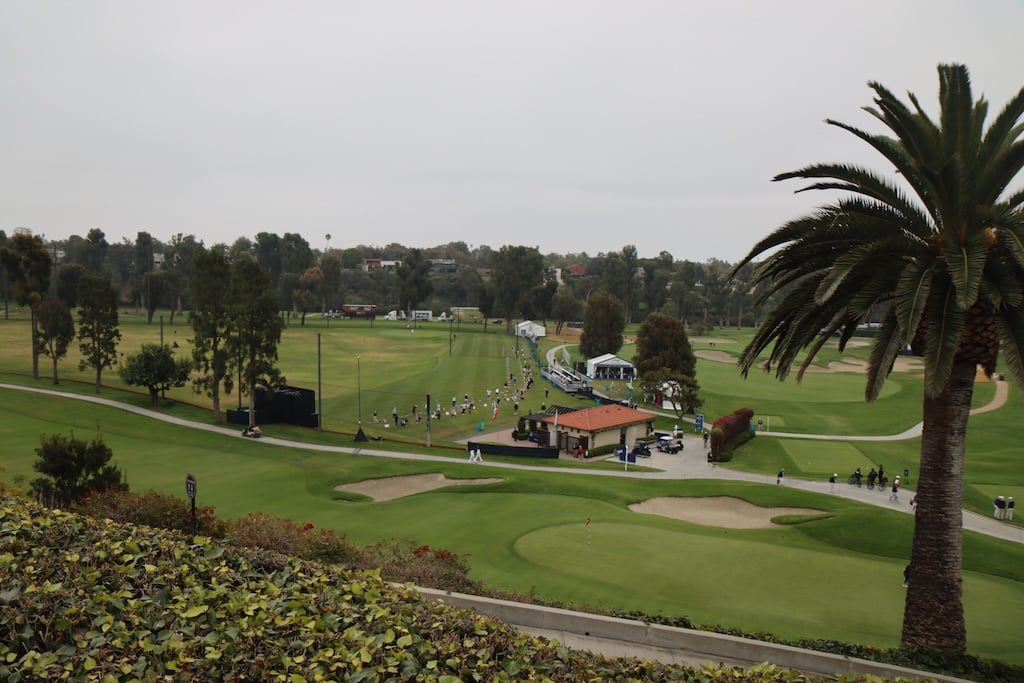
Over the first three days, Riviera has played more like a golden-age gem than it ever has in modern times. Players are using greenside slopes and fairway cambres to propel the ball into proper position. Green speeds are manageable, yet daunting from the absolute worst place (read: above) in relation to the hole location. Nothing is unfair (fingers crossed for the same in two weeks on Long Island) and everything is earned.
Could it be Nelly, or Charley, or Sei Young or In-gee? How about Gaby or Jennifer, Nasa or Ruoning? All have contended before in the U.S. Women’s Open, but only In-gee Chun has raised the Semple trophy in triumph. A Hollywood sound stage is set for a dramatic finish, but prior to the conclusion, let’s revisit the five things that we learned on Saturday at the U.S. Women’s Open.
Saturday Thing One: Nelly Korda is tied at the top
If it were anyone else, after consecutive rounds of 67, the dam would break. That’s not the case with Korda. If anything, we expect that she might go lower on Sunday, to the tune of 65, and walk off with her first U.S. Women’s Open title.
We know that ruling bodies and host clubs adore name champions. They salute all victors, but the success of a current top golfer, a media darling, or a proven veteran serves to legitimate and venerate the event and the venue. The USGA and Riviera would be thrilled to have Nelly Korda as a champion.
What will propel the three-time major titleist to a fourth grand slam victory? Another 67, for starters. Reaching double-digits under par would place the Floridian in a marvelous space. It would require Sei Young to keep pace, and would demand that all the trailers post 66 or better.
Saturday Thing Two: How about those amateurs?
1 2 3 5 6 10 13 16 17 18
Those are the holes that Maria Jose Marin (68), Aphrodite Deng (68), and Asterisk Talley (66) birdied on Saturday. That’s a minus-ten ringer score for the trio. As we sleep one more sleep before the final round, consider that Marin and Deng are four strokes back of the leaders, while Talley is five shots behind. To have three amateur golfers within striking distance of the top ladder rung is heady stuff. Can Talley possibly follow up her minus-five with another one on Sunday? Even that might not be enough. How about Marin and Deng. Can they drop a mid-60s scorecard on the professionals, and throw a scare into them? Our intuition suggests no on both counts, but the potential for a top-five amateur finish is certainly in the cards.
Saturday Thing Three: the Korean Kontingent
Sei Young Kim and In-gee Chun would win any partner event this week, given their current form. Kim will tee off with Nelly Korda in the last game, and she will have a front-row seat to Chun’s performance, as In-gee will play in the game just ahead. Of the two, Sei Young appeared to have less control over her shots, as a substantial number of spproach shots turned inordinately left.. Time and again, her short game bailed her out of the bogeytown prison, although she did miss a fair number of short putts. Dumbo (aka Chun) seemed more in control from tee to green, but will need to channel her early-2020s self to insert herself into the narrative.
Saturday Thing Four: Kupcho’s Komeback
It’s not like she went very far away, but Jennifer Kupcho’s 69 on day three had to be gratifying. The Colorado native and Wake Forest alumna was in fine Friday position to make a statement and expand her lead. She had posted 66 on Thursday, but fell off form on day two with 73. There were 67s and 68s at Riviera that day, but Kupcho’s birdie production fell from seven to two, as her bogey line increased from two to four. She reduced the bogey output on Saturday, and redoubled birdies to four. She finds herself precisely one shot off the lead, in a tie with In-gee Chun, her Sunday walkabout mate.
What will Kupcho need on day four, to provide an opportunity for victory? Fairways and greens always help, but that electric, day-one start of birdies on holes one, two, and three will be massive. Stay on the proper side of the green-center bunker on six, and survive the dautning holes. Kupcho has made bogey on 13 and 15 twice in three days. Should she come to the final stretch in a place of power or hope, those two holes will test her worth and mettle. Kupcho has also played the closing triumvirate of holes in par or better, each of the three days. That sort of clutch-time performance will stand her well on day four.
Saturday Thing Five: How will it all transpire?
No one expects that both of the top two will struggle on Sunday. One of them will shoot 68, to reach nine-under par. That means that the trailers will have to light up the western sky with fireworks, to keep pace. There is a golfer with nine, top-ten finishes in major championships, who has never won a major. That golfer is Nasa Hataoka, and she is poised to break through and make a victory out of her tenth, top ten finish at a major. Hataoka finished T2 and T4 in this event in, respectively, 2021 and 2023. A missed cut in 2025 was a shock to the system, but the Japanese golfer will bounce back in style and claim the title.
Dumbo flies again! There is certainly a half-generation of golf fans without the slightest idea of how well In-gee Chun, aka Dumbo, can golf her ball. The Korean was the It Girl from 2015 to 2018. She won three LPGA events, with two being major championships. She returned to Korea to cure her homesickness, but made the occasional foray back to the Americas. In 2022, she captured a fourth LPGA title and, guess what? It was a third, unique major title.
The halfway cut line was set at four over par. Those at plus-five and beyond had their stay in Tinseltown cut short, at least when it comes to working rounds of golf. Among the 87 who fell on the high side of the cut line, Lydia Ko stood out as the biggest name. Others given a two-day furlough were Lilia Vu, Megha Ganne, Chizzy Iwai, and Leona Maguire. Making the cut on the number are Lottie Woad, Celine Boutier, Mao Saigo, and amateur Asterisk Talley. If you follow world football, imagine the feeling of relegation on a weekly basis. That’s the 36-hole cut in professional golf.
We learned five things on Friday at Riviera Country Club, and we’d love to share them with you. Find a comfy place and brighten the screen on your device. It’s time for Five Things We Learned on day two at the US Women’s Open.
Part One: the biggest movers
A golfer’s feel appears or slips away overnight. Although Saturday is known collectively as Moving Day, it doesn’t come with as sudden and final a feeling as Friday. Move the wrong way on Friday and you’re down the road. Improve in the proper direction and you save your week. Both Mao Saigo and Rio Takeda opened with plus-five rounds of 76, then signed for 70 on day two, and made the cut on the number.
Moving the other way were Stephanie Kyriacou (70-78) and Ina Yoon (68-79). Their respective eight- and eleven-shot declines propelled them from title contention to tournament departure. Minjee Lee and Minji Kang (seven shots higher) along with Rose Zhang (five shots) made the cut, but saw their opportunity for victory take a serious body shot.
Part Two: the leaders
Allison Lee and Ruoning Yin took the conservative path to the 36-hole medal. Lee posted four birdies and a bogey for a total of 68 on day two. Yin had two birdies and sixteen pars for her second consecutive card of 69. Their 138 places them one shot clear of the aforementioned Dumbo Chun, who followed an opening 71 with 68. First-round leader Jennifer Kupcho added seven shots to her total, from an opening-day 66 to a follow-up 73, yet remained within the inner circle of leaders at -3, tied with Chun and four others. Four more golfers sit at minus-two, two shots behind the top duo. An even dozen of golfers sits within two shots of the lead.
The day’s biggest move of gravitas came from Nelly Korda. After a disappointing 73 on Thursday, the world number one improved six shots, thanks to a five-birdie round of 67. Korda slid inside the top ten with her recovery, and certainly reclaimed her place as most frightening chaser at Riviera. No one is likely to shoot in the low 60s at Riviera, but Korda just might post a mid-sixties score on Saturday, to seize the lead on Sunday morning.
Part Three: Ams verse Champs
Five current amateur golfers were among the 68 golfers to reach the weekend. Kiara Romero posted the best non-pro score on Friday, a one-under 70, to move from plus-two to plus-one figures. She is joined there by Aphrodite Deng, who reversed those numbers for her two rounds. Maria Jose Marin (143), Farah O’Keefe (145), and Asteriks Talley (146) joined the #WeDidIt brigade to earn a spot for the final two rounds.
Six former US Open champions, led by In-gee Chun(2015), also punched a ticket for round three. Allison Corpuz (2023), Maja Stark (2025), Ariya Jutanugarn (2018), A Lim Kim (2020), and Minjee Lee (2022) preserved their dream of a second US Open trophy for the mantle. Nineteen amateurs failed to earn a post for the final 36-holes, while five former champions joined them on the sidelines. Yuka Saso, twice a winner in this event in the past half-decade, missed the cut by five shots. 24 amateurs against eleven former titleists suggests that it is easier for the young to qualify, but harder for them to find success.
Part Four: the golf course
Scoring went up by .6 shots per player, from round one to round two. Statistically speaking, it became harder to make the cut as the day wore on. Birdies dropped by 50, while pars remained constant. Both bogeys and doubles increased markedly. The first and the sixth holes played under par on the front nine, while the second and ninth were nearly tied for most difficult traces on the road to the turn.
Coming home, holes ten, twelve, fifteen, and eighteen played as an impregnable quadrilateral. Odds are, you gave a shot back on each of them. Despite number seventeen’s accessibility for birdie, no one got out of the back nine alive. If conditions continue toward the extreme, Riviera will extract a pound of flesh from the contenders over the weekend.
Part Five: what to expect
From my vantage point, the tee times to watch are the 4:55 EST and the 5:05 slots. Nelly Korda pegs her ball in the sixth-last pairing with Sora Kamiya. The little-known Kamiya will get an up close and personal look at the crowds that follow the best in the world. Korda will need to ignore Kamiya’s expected struggles and golf her own ball. Ten minutes later, Lauren Coughlin begins play with Casandra Alexander at her side. It’s a similar situation, with the experienced Coughlin alongside an unseasoned partner.
Both Sei Yong Kim and Gaby Lopez have turned in strong performances, and their 5:15 pairing might produce some explosive numbers. From back in the pack, the tasty duo of Brooke Henderson and Jeeno Thitikul at 4:20, might see double digits in birdies. The unexpected at unknown Riviera is likely, so your guess is as good as mine.
Gone are the days when the U.S. Women’s Open was held at Scenic Hills or Churchill Valley. Fine courses that they are (or were, as Churchill Valley went bankrupt a decade ago) there is something to be said for the venue. Not all Women’s Open playings need to take place on Men’s Open venues, but some should. This week in Los Angeles, the Women’s Open visits Riviera Country Club for the first time. Down the road, we will visit Inverness, Oakmont, Interlachen, Oak Hill, Chicago Golf, and Merion. That is quite the murderer’s row (1927 Yankees reference) of golf clubs.
What can we expect from the 2026 tournament? Greatness and uncertainty. Unlike the PGA Tour, which visits Riviera each February, the LPGA does not, so the women will not have nearly the body of work over the George C. Thomas layout. Maybe that’s a good thing. Maybe they’ll play #10 smarter than the men do. Maybe they’ll figure some things out that their male counterparts can not. For today, we’ll try to find five things to learn, and share them with you.
First, this ain’t your momma’s U.S. Open course
How do we know? Well, so far, only one previous champion currently sits inside the top thirty. That would be Minjee Lee, the 2022 winner at Southern (NC) Pines. Lee made par on her first nine holes, the inward side at Riviera. She dropped birdie putts on the first and ninth holes (ten and eighteen for her day) and tallied another seven pars, for 69. She sits three shots off Jennifer Kupcho’s opening 66. Don’t worry about Kupcho; we’ll get to her. After Lee, defending champion Maja Stark ranks T30 at even par, joined by three other, former winners.
What Minjee did, is the sort of thing that wins U.S. Open titles. She guided her ship safely past swells, and made a move when the waters calmed. The fewer the bogeys, the more likely Minjee figures in the outcome on Sunday evening in Pacific Palisades. Off the tee, Lee was unmatched. She hit 14 of 14 fairways. Her iron play was a bit loose in comparison. She putted for birdie on 12 of 18 holes, which meant that her recovery short game was on point. Lee was ten yards longer on measured driving holes than the field average, and was below the field average (a good thing) in putting.
Second, the amateurs beat a loud drum
Three of the world’s top amateur golfer posted 70, placing them four off the lead, in a tie for 14th place. Canada’s Aphrodite Deng, Spain’s Paula Francisco Llaño, and Colombia’s Maria José Marin, showed the professional world that their game is strong. Both Deng and Francisco Llaño collected five birdies on the day. Should they match that output on day two, and minimize the foozles, they’ll be the topic of conversation on Saturday morning. Marin, the 2026 Augusta National Women’s Amateur champion and an NCAA team semifinalist last week, played a game similar to Minjee Lee: few mistakes and few taken risks.
The last amateur to post the low medal score for 72 holes was Jenny Chuasiriporn in 1998. She lost a playoff to Se Ri Pak, who matched her plus-six effort at Blackwolf Run. The last amateur to win the U.S. Women’s Open was Catherine Lacoste in 1967. The amateurs are stronger than they’ve ever been, but the professionals have not allowed them to close the gap. A victory by one of the college set would be a cannon shot heard round the world. Could it happen? Absolutely. Is it likely? Not at all.
Third, let’s talk Kupcho
Jennifer Kupcho won the inaugural Augusta National Women’s Amateur. She won three times on tour in 2022, including the Chevron, a major title. She won a fourth event in 2025, but has not established the winning credentials projected on her after 2022’s marvelous coming-out.
Kupcho hails from Colorado, and spent four years in the Carolina Piedmont, at Wake Forest Universtiy. Neither of those locales cries out I’ll be at home at Riviera, but here we are, after a seven-birdie performance. Kupcho posted birdie on each of her first three holes, and added four more (against two bogeys) to assume a one-shot advantage over Korea’s Sei Young Kim.
Kupcho drove the ball decently, approached moderately well, but putted lights out on Thursday. Her 26 putts were tied for best in show on day one. There might just be something about the putting surfaces at Riviera that aligns with Kupcho’s vibe. If that is the case, just get the ball on the green, anywhere, and let the flatstick do the lifting.
Fourth, how young is Sei Young?
Sei (pronounced “So”) Young Kim won a dozen times from 2015 to 2020. She took time off from winning until 2025, shen she captured a thirteenth LPGA title. Like Kupcho, Kim has hardware from one major event, the 2020 Women’s PGA Championship. How to explain the five years away from victory? No idea. When Sei Young was in contention during the prime of her career, the outcome was a foregone conclusion.
What to expect over the next three days at Riviera? Anyone’s guess. It might be the 2015-2020 Sei Young, or it could be the 2021-2025 version. Kim began her day with birdies at 10 and 11, then settled into a stretch of pars before her solitary bogey at the 4th (her 13th) hole. Kim regained her composure and reeled in three birdies to close the front nine. Her four-under performance trails Kupcho alone, and there is a real chance that Sei Young will produce a second score in the 60s and take a bit of control of the tournament.
Fifth, we’re giddy for Gaby
Although I cannot place my finger on why, it seems that each year, Gaby Lopez pops up on the U.S. Open leaderboard. She hasn’t figure out how to remain in contention, but here we are, in 2026, and Lopez is once again in the mix. The three-time champion on the LPGA circuit had a stunning first nine holes, turning in minus-five. She reached six deep at her tenth hole, but then gave three shots back coming home. Which Gaby will show up on Friday, and for how long? If back-nine Gaby can somehow channel front-nine Gaby, all outcomes are within reach. If the loose play continues, Lopez’ wiki page will add one more T41 to her majors column.

Justin Rose WITB 2026 (April): Full WITB breakdown with new McLaren irons

What’s the story behind Webb Simpson’s custom-stamped irons?

Cadillac Championship Tour Report: Spieth’s sizable changes, McLaren Golf launches, and more

Memorial Tournament Tour Report: Rory McIlroy, Cameron Young switch up drivers, and more

Russell Henley’s winning WITB: 2026 Charles Schwab Challenge

Kristoffer Reitan’s winning WITB: 2026 Truist Championship

Aaron Rai’s winning WITB: 2026 PGA Championship

Cameron Young’s winning WITB: 2026 Cadillac Championship

Details on Jason Day’s latest prototype Avoda iron setup

Justin Rose on the switch to McLaren Golf, learnings from previous equipment moves

J.T. Poston’s winning WITB: 2026 Memorial Tournament
Driver: Titleist GTS3 (9 degrees) Shaft: Mitsubishi Diamana BF 60 TX 3-wood: Titleist TS2 (15 degrees) Shaft: Graphite Design Tour...


Alex Noren WITB 2026 (June)
Driver: Callaway Paradym Ai Smoke Max D (9 degrees @7, draw setting) Shaft: Graphite Design Tour AD VF 6 X 3-wood: Callaway...


Melanie Green WITB 2026 (June)
Driver: TaylorMade Qi4D (9 degrees) Shaft: Graphite Design Tour AD VF 5 S 3-wood: TaylorMade Qi4D (15 degrees) Shaft: Graphite Design Tour...


Sungjae Im WITB 2026 (June)
Sungjae Im had >14 clubs in his bag when photographed prior to the Memorial Tournament. Driver: Titleist TSi2 (8 degrees, B1...
-
 Equipment3 days ago
Memorial Tournament Tour Report: Rory McIlroy, Cameron Young switch up drivers, and more
-
 News1 week ago
Russell Henley’s winning WITB: 2026 Charles Schwab Challenge
-
 Equipment5 days ago
Details on Jason Day’s latest prototype Avoda iron setup
-
 Tour Photo Galleries3 weeks ago
Photos from the 2026 CJ Cup Byron Nelson
-

 Equipment2 weeks ago
CJ Cup Byron Nelson Tour Report: Koepka and Kim’s newest putters finally get hot
-
 News1 week ago
Charles Schwab Challenge Tour Report: MacIntyre, Åberg and Spaun all switch putters, TaylorMade launches new Spider
-
 Equipment2 weeks ago
Details on J.J. Spaun’s surprise putter switch
-
 Popular Photo Galleries2 weeks ago
Photos from the 2026 Charles Schwab Challenge


Pingback: You Can Golf » Blog Archive » GolfWRX Interivew - Dean Snell TaylorMade Golf
Pingback: GolfWRX Interivew - Dean Snell TaylorMade Golf » golfxing.com