
News
Mizuno MP-600 Driver Review


Mizuno has long been known as one of the better iron manufacturers in the world. They are also innovators in the industry they have been a major part of.
There are a few little known facts about the manufacturer that include being the first company to offer a mobile workshop for the PGA Tour in 1984, and they were also the first company in the world to launch a titanium driver, the Mizuno Pro Ti-110/120. Although Mizuno offers many selections in the game improvement arena, they are known for their equipment in the low handicap area of the market. Their forged irons have been played on all of the tours and have won many majors and even more golf championships.
Their latest offering in the driver market is the MP-600 driver with Fast Track technology. Is this just another driver geared toward the better player or is it a driver that can benefit both the better player and the high handicapper? How does it compare with the other offerings that are currently out in the market right now?
Technology
The MP-600 with Fast Track technology is teeming with up to date modern advances. The CNC milled, plasma welded CORTECH™ face insert will deliver the maximum USGA allowable ball speed across the entire area of the face for explosive distance, according to Mizuno. The size of the club head is 460cc, the largest allowable volume by the USGA. This driver also possesses the classic, traditional head shape which is rare in comparison to some of the other high tech drivers that are out in the market today.
The Fast Track technology has to be the coolest feature of this driver. This 460cc Titanium driver will allow players to quickly tweak their ball flight through the use of the revolutionary Fast Track. It has two adjustable eight gram weights that the player can easily move into 15 ball flight settings to fine tune the center of gravity and achieve their ideal ball flight and shape, for maximum control. This is a twist to the moveable weight technology that is offered by other manufacturers and allows for easier and faster movement of the weight around the perimeter of the golf club.
.jpg)
The stock shaft that is offered with the driver is the Exsar DS3 Driver shaft. It is only offered in stiff, regular, lite, and ladies. There are custom shaft options available and they include Fujikura Fit on 360, Aldila NV and NVS, Graffalloy Pro Launch Blue and Red, UST Proforce V2, Harrison Mugen, and the Tava for the ladies. Despite not being the largest selection offered by a manufacturer today, it covers most of the neccesary bases.
The driver is offered in three lofts, 8.5, 9.5, and 10.5. It is not offered in a left handed version.
Aesthetics
Mizuno has had a history of making aesthetically pleasing golf clubs, and this one is certainly no different. The classic shape of this driver is visually appealing to the discerning golfer. If you appreciate the look of a traditional driver this will be one driver that you should try. At address it sets very square and tall. The face is normal height but appears to be deeper than it actually is. This is a classic, traditional, good looking golf club at address, something that you would come to expect from a company like Mizuno.
.jpg)
The deep black paint on the driver goes perfectly with the traditional shape of the head. The omission of an alignment aide was a plus for me. Just a clean, classic looking head, that sits perfectly behind the golf ball.
Performance
The driver that I received to test was the 9.5 version with the stock Exsar DS3, stiff flex shaft. The shaft weighed in at 59 grams, and had a torque rating of 3.7. This is a mid flight shaft. I was actually quite surprised by this shaft, as it performed better than expected. I am leery about some of the stock shaft offerings from manufacturers, as sometimes they are not exactly what they advertise to be. But this one felt right on. Was not overly stiff, yet not to whippy either. Just a nice comfortable flex, that if need be I could go after on and not feel like the shaft would over-flex and I was going to snipe hook it.
The sound of the driver was great. Unlike many of the offerings today, this driver does not sound like an aluminum baseball bat; it has a more muted sound to it. It took me a few balls to get used to it, as my current driver is quite loud, and ear piercing at times.
.jpg)
Distance from this driver was impressive. The ball flight with this set up was mid to high with fairly low spin. So I was getting a great launch angle, with a good spin rate, and apparently (according to most fitters) this is an ideal combination for maximum distance. Even on the miss hits I had, the results were very good and fairly good distance wise. I would say that it is on par with most of the better drivers on the market today with regard to the potential distance of the driver.
After changing the weights on the fast track to get my desired set up and preferred ball shape, I then started to mess around with the settings to see if I could create some different ball flights and such. This was actually the fun part of the review as I got to mess around a little bit and try and hit some different shots. This did manipulate the spin of the ball a little bit and if you are looking for a driver that will allow you to fine tune your spin rate or desired shot shape, this could be one to check out.
.jpg)
Conclusion
Should you buy this driver or not? That is not really for me to tell you, all I can do is give you my opinion on the driver and hope that helps or answers some of the questions you might have had about it.
If was going to purchase a new driver, this driver would be on, or right near the top of my list. It accomplishes everything that I look for in a driver. It has the adjustability aspect, great distance, appearance, and quality, that as a former professional, I expect from my current golf clubs. This is a forgiving driver, but definitely is a better player’s driver, in my opinion. I am not sure that a higher handicap player would reap the benefits of a driver like this. But if you are a mid to low handicap golfer looking for a quality driver at a reasonable price, this might be the ticket.


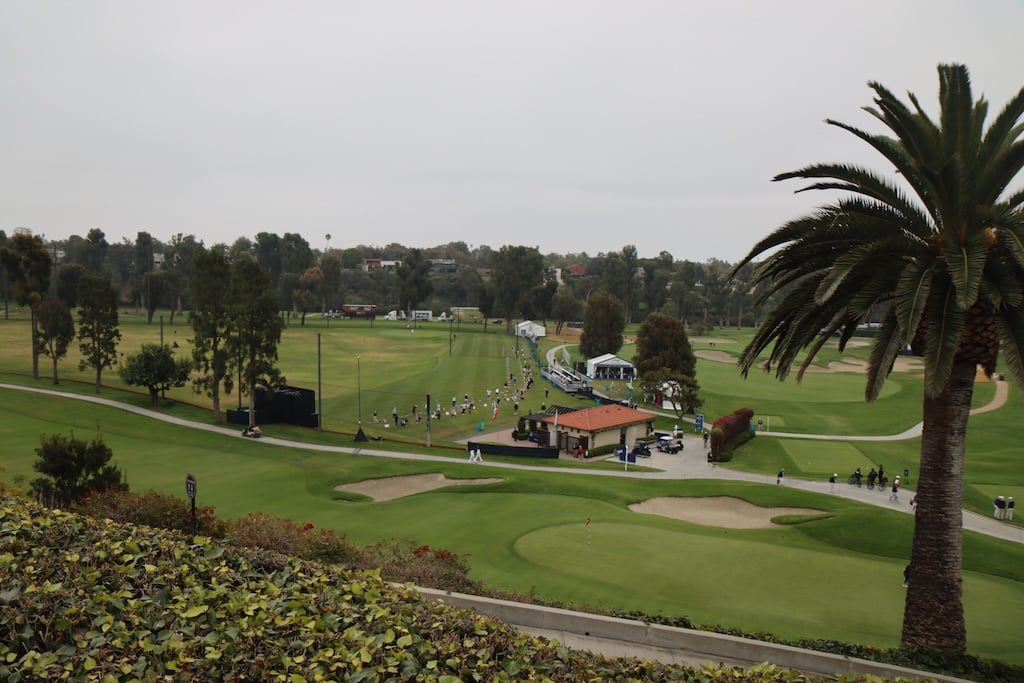
Dumbo flies again! There is certainly a half-generation of golf fans without the slightest idea of how well In-gee Chun, aka Dumbo, can golf her ball. The Korean was the It Girl from 2015 to 2018. She won three LPGA events, with two being major championships. She returned to Korea to cure her homesickness, but made the occasional foray back to the Americas. In 2022, she captured a fourth LPGA title and, guess what? It was a third, unique major title.
The halfway cut line was set at four over par. Those at plus-five and beyond had their stay in Tinseltown cut short, at least when it comes to working rounds of golf. Among the 87 who fell on the high side of the cut line, Lydia Ko stood out as the biggest name. Others given a two-day furlough were Lilia Vu, Megha Ganne, Chizzy Iwai, and Leona Maguire. Making the cut on the number are Lottie Woad, Celine Boutier, Mao Saigo, and amateur Asterisk Talley. If you follow world football, imagine the feeling of relegation on a weekly basis. That’s the 36-hole cut in professional golf.
We learned five things on Friday at Riviera Country Club, and we’d love to share them with you. Find a comfy place and brighten the screen on your device. It’s time for Five Things We Learned on day two at the US Women’s Open.
Part One: the biggest movers
A golfer’s feel appears or slips away overnight. Although Saturday is known collectively as Moving Day, it doesn’t come with as sudden and final a feeling as Friday. Move the wrong way on Friday and you’re down the road. Improve in the proper direction and you save your week. Both Mao Saigo and Rio Takeda opened with plus-five rounds of 76, then signed for 70 on day two, and made the cut on the number.
Moving the other way were Stephanie Kyriacou (70-78) and Ina Yoon (68-79). Their respective eight- and eleven-shot declines propelled them from title contention to tournament departure. Minjee Lee and Minji Kang (seven shots higher) along with Rose Zhang (five shots) made the cut, but saw their opportunity for victory take a serious body shot.
Part Two: the leaders
Allison Lee and Ruoning Yin took the conservative path to the 36-hole medal. Lee posted four birdies and a bogey for a total of 68 on day two. Yin had two birdies and sixteen pars for her second consecutive card of 69. Their 138 places them one shot clear of the aforementioned Dumbo Chun, who followed an opening 71 with 68. First-round leader Jennifer Kupcho added seven shots to her total, from an opening-day 66 to a follow-up 73, yet remained within the inner circle of leaders at -3, tied with Chun and four others. Four more golfers sit at minus-two, two shots behind the top duo. An even dozen of golfers sits within two shots of the lead.
The day’s biggest move of gravitas came from Nelly Korda. After a disappointing 73 on Thursday, the world number one improved six shots, thanks to a five-birdie round of 67. Korda slid inside the top ten with her recovery, and certainly reclaimed her place as most frightening chaser at Riviera. No one is likely to shoot in the low 60s at Riviera, but Korda just might post a mid-sixties score on Saturday, to seize the lead on Sunday morning.
Part Three: Ams verse Champs
Five current amateur golfers were among the 68 golfers to reach the weekend. Kiara Romero posted the best non-pro score on Friday, a one-under 70, to move from plus-two to plus-one figures. She is joined there by Aphrodite Deng, who reversed those numbers for her two rounds. Maria Jose Marin (143), Farah O’Keefe (145), and Asteriks Talley (146) joined the #WeDidIt brigade to earn a spot for the final two rounds.
Six former US Open champions, led by In-gee Chun(2015), also punched a ticket for round three. Allison Corpuz (2023), Maja Stark (2025), Ariya Jutanugarn (2018), A Lim Kim (2020), and Minjee Lee (2022) preserved their dream of a second US Open trophy for the mantle. Nineteen amateurs failed to earn a post for the final 36-holes, while five former champions joined them on the sidelines. Yuka Saso, twice a winner in this event in the past half-decade, missed the cut by five shots. 24 amateurs against eleven former titleists suggests that it is easier for the young to qualify, but harder for them to find success.
Part Four: the golf course
Scoring went up by .6 shots per player, from round one to round two. Statistically speaking, it became harder to make the cut as the day wore on. Birdies dropped by 50, while pars remained constant. Both bogeys and doubles increased markedly. The first and the sixth holes played under par on the front nine, while the second and ninth were nearly tied for most difficult traces on the road to the turn.
Coming home, holes ten, twelve, fifteen, and eighteen played as an impregnable quadrilateral. Odds are, you gave a shot back on each of them. Despite number seventeen’s accessibility for birdie, no one got out of the back nine alive. If conditions continue toward the extreme, Riviera will extract a pound of flesh from the contenders over the weekend.
Part Five: what to expect
From my vantage point, the tee times to watch are the 4:55 EST and the 5:05 slots. Nelly Korda pegs her ball in the sixth-last pairing with Sora Kamiya. The little-known Kamiya will get an up close and personal look at the crowds that follow the best in the world. Korda will need to ignore Kamiya’s expected struggles and golf her own ball. Ten minutes later, Lauren Coughlin begins play with Casandra Alexander at her side. It’s a similar situation, with the experienced Coughlin alongside an unseasoned partner.
Both Sei Yong Kim and Gaby Lopez have turned in strong performances, and their 5:15 pairing might produce some explosive numbers. From back in the pack, the tasty duo of Brooke Henderson and Jeeno Thitikul at 4:20, might see double digits in birdies. The unexpected at unknown Riviera is likely, so your guess is as good as mine.
Gone are the days when the U.S. Women’s Open was held at Scenic Hills or Churchill Valley. Fine courses that they are (or were, as Churchill Valley went bankrupt a decade ago) there is something to be said for the venue. Not all Women’s Open playings need to take place on Men’s Open venues, but some should. This week in Los Angeles, the Women’s Open visits Riviera Country Club for the first time. Down the road, we will visit Inverness, Oakmont, Interlachen, Oak Hill, Chicago Golf, and Merion. That is quite the murderer’s row (1927 Yankees reference) of golf clubs.
What can we expect from the 2026 tournament? Greatness and uncertainty. Unlike the PGA Tour, which visits Riviera each February, the LPGA does not, so the women will not have nearly the body of work over the George C. Thomas layout. Maybe that’s a good thing. Maybe they’ll play #10 smarter than the men do. Maybe they’ll figure some things out that their male counterparts can not. For today, we’ll try to find five things to learn, and share them with you.
First, this ain’t your momma’s U.S. Open course
How do we know? Well, so far, only one previous champion currently sits inside the top thirty. That would be Minjee Lee, the 2022 winner at Southern (NC) Pines. Lee made par on her first nine holes, the inward side at Riviera. She dropped birdie putts on the first and ninth holes (ten and eighteen for her day) and tallied another seven pars, for 69. She sits three shots off Jennifer Kupcho’s opening 66. Don’t worry about Kupcho; we’ll get to her. After Lee, defending champion Maja Stark ranks T30 at even par, joined by three other, former winners.
What Minjee did, is the sort of thing that wins U.S. Open titles. She guided her ship safely past swells, and made a move when the waters calmed. The fewer the bogeys, the more likely Minjee figures in the outcome on Sunday evening in Pacific Palisades. Off the tee, Lee was unmatched. She hit 14 of 14 fairways. Her iron play was a bit loose in comparison. She putted for birdie on 12 of 18 holes, which meant that her recovery short game was on point. Lee was ten yards longer on measured driving holes than the field average, and was below the field average (a good thing) in putting.
Second, the amateurs beat a loud drum
Three of the world’s top amateur golfer posted 70, placing them four off the lead, in a tie for 14th place. Canada’s Aphrodite Deng, Spain’s Paula Francisco Llaño, and Colombia’s Maria José Marin, showed the professional world that their game is strong. Both Deng and Francisco Llaño collected five birdies on the day. Should they match that output on day two, and minimize the foozles, they’ll be the topic of conversation on Saturday morning. Marin, the 2026 Augusta National Women’s Amateur champion and an NCAA team semifinalist last week, played a game similar to Minjee Lee: few mistakes and few taken risks.
The last amateur to post the low medal score for 72 holes was Jenny Chuasiriporn in 1998. She lost a playoff to Se Ri Pak, who matched her plus-six effort at Blackwolf Run. The last amateur to win the U.S. Women’s Open was Catherine Lacoste in 1967. The amateurs are stronger than they’ve ever been, but the professionals have not allowed them to close the gap. A victory by one of the college set would be a cannon shot heard round the world. Could it happen? Absolutely. Is it likely? Not at all.
Third, let’s talk Kupcho
Jennifer Kupcho won the inaugural Augusta National Women’s Amateur. She won three times on tour in 2022, including the Chevron, a major title. She won a fourth event in 2025, but has not established the winning credentials projected on her after 2022’s marvelous coming-out.
Kupcho hails from Colorado, and spent four years in the Carolina Piedmont, at Wake Forest Universtiy. Neither of those locales cries out I’ll be at home at Riviera, but here we are, after a seven-birdie performance. Kupcho posted birdie on each of her first three holes, and added four more (against two bogeys) to assume a one-shot advantage over Korea’s Sei Young Kim.
Kupcho drove the ball decently, approached moderately well, but putted lights out on Thursday. Her 26 putts were tied for best in show on day one. There might just be something about the putting surfaces at Riviera that aligns with Kupcho’s vibe. If that is the case, just get the ball on the green, anywhere, and let the flatstick do the lifting.
Fourth, how young is Sei Young?
Sei (pronounced “So”) Young Kim won a dozen times from 2015 to 2020. She took time off from winning until 2025, shen she captured a thirteenth LPGA title. Like Kupcho, Kim has hardware from one major event, the 2020 Women’s PGA Championship. How to explain the five years away from victory? No idea. When Sei Young was in contention during the prime of her career, the outcome was a foregone conclusion.
What to expect over the next three days at Riviera? Anyone’s guess. It might be the 2015-2020 Sei Young, or it could be the 2021-2025 version. Kim began her day with birdies at 10 and 11, then settled into a stretch of pars before her solitary bogey at the 4th (her 13th) hole. Kim regained her composure and reeled in three birdies to close the front nine. Her four-under performance trails Kupcho alone, and there is a real chance that Sei Young will produce a second score in the 60s and take a bit of control of the tournament.
Fifth, we’re giddy for Gaby
Although I cannot place my finger on why, it seems that each year, Gaby Lopez pops up on the U.S. Open leaderboard. She hasn’t figure out how to remain in contention, but here we are, in 2026, and Lopez is once again in the mix. The three-time champion on the LPGA circuit had a stunning first nine holes, turning in minus-five. She reached six deep at her tenth hole, but then gave three shots back coming home. Which Gaby will show up on Friday, and for how long? If back-nine Gaby can somehow channel front-nine Gaby, all outcomes are within reach. If the loose play continues, Lopez’ wiki page will add one more T41 to her majors column.

GolfWRX Tour Photographer made the trip from the Memorial Tournament across the country to the U.S. Women’s Open at Riviera. Check out links to all the photos below!
General Albums
- 2026 US Women’s Open – Wednesday #1
- 2026 US Women’s Open – Wednesday #2
- 2026 US Women’s Open – Wednesday #3
- 2026 US Women’s Open – Wednesday #4
- 2026 US Women’s Open – Wednesday #5
WITB Albums
- Chloe Kovelesky – WITB – 2026 US Women’s Open
Asterisk Talley – WITB – 2026 US Women’s Open - Sarah Hammett – WITB – 2026 US Women’s Open
- Rio Takeda – WITB – 2026 US Women’s Open
- Hannah Green – WITB – 2026 US Women’s Open
- Amy Yang – WITB – 2026 US Women’s Open
- Auston Kim – WITB – 2026 US Women’s Open
- Paula Francisco – WITB – 2026 US Women’s Open
- Athena Singh – WITB – 2026 US Women’s Open
- Brianna Do – WITB – 2026 US Women’s Open
- Meja Ortengren – WITB – 2026 US Women’s Opens
- A Furue – WITB – 2026 US Women’s Open
- Katelyn Kong – WITB – 2026 US Women’s Open
- Natalia Guseva – WITB – 2026 US Women’s Open
- Cass Alexander – WITB – 2026 US Women’s Open
- Johanna Sjursen – WITB – 2026 US Women’s Open
Pullout Albums
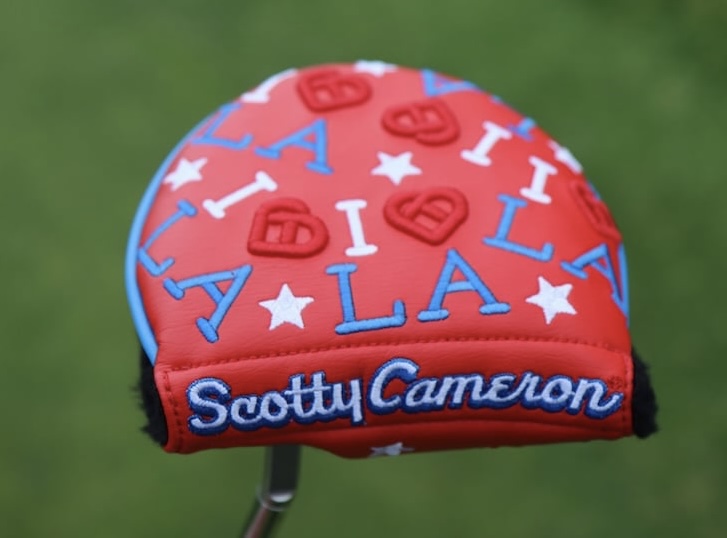
- Scotty Cameron putter covers – 2026 US Women’s Open
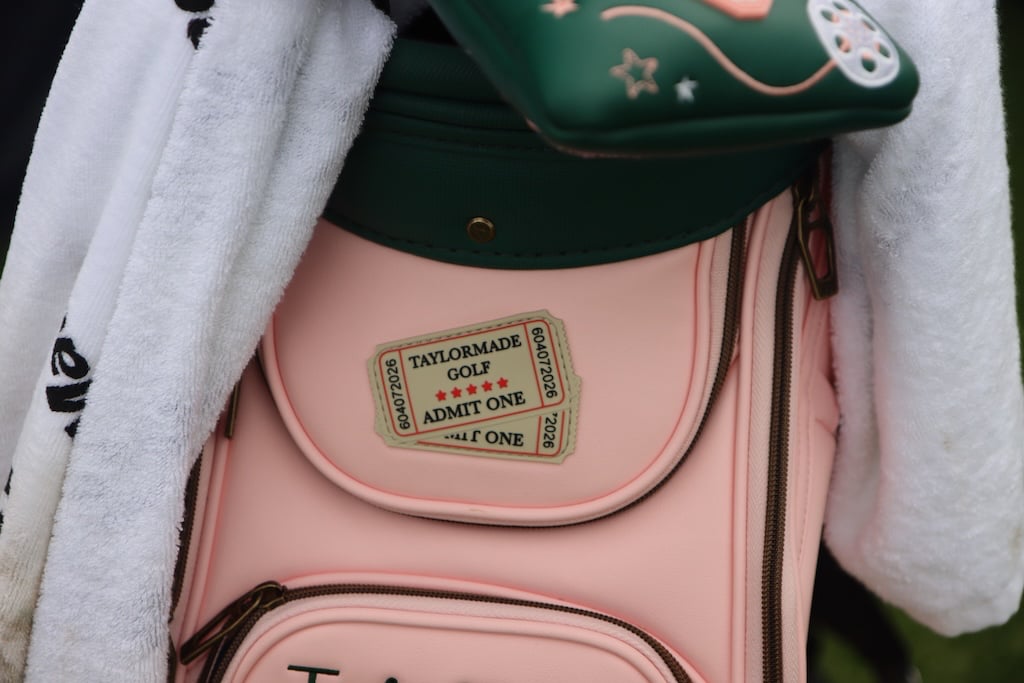
- TaylorMade’s US Women’s Open staff bag & covers – 2026 US Women’s Open

Justin Rose WITB 2026 (April): Full WITB breakdown with new McLaren irons

What’s the story behind Webb Simpson’s custom-stamped irons?

Cadillac Championship Tour Report: Spieth’s sizable changes, McLaren Golf launches, and more

Memorial Tournament Tour Report: Rory McIlroy, Cameron Young switch up drivers, and more

Russell Henley’s winning WITB: 2026 Charles Schwab Challenge

Kristoffer Reitan’s winning WITB: 2026 Truist Championship

Aaron Rai’s winning WITB: 2026 PGA Championship

Cameron Young’s winning WITB: 2026 Cadillac Championship

Details on Jason Day’s latest prototype Avoda iron setup

Nelly Korda WITB 2026 (April)

Alex Noren WITB 2026 (June)
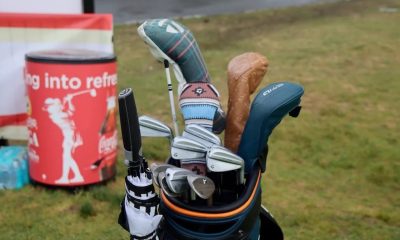
Driver: Callaway Paradym Ai Smoke Max D (9 degrees @7, draw setting) Shaft: Graphite Design Tour AD VF 6 X 3-wood: Callaway...

Melanie Green WITB 2026 (June)
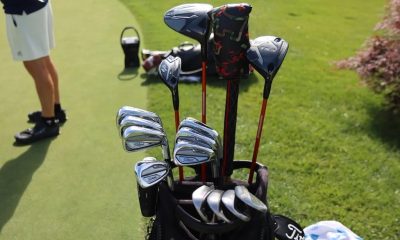
Driver: TaylorMade Qi4D (9 degrees) Shaft: Graphite Design Tour AD VF 5 S 3-wood: TaylorMade Qi4D (15 degrees) Shaft: Graphite Design Tour...

Sungjae Im WITB 2026 (June)
Sungjae Im had >14 clubs in his bag when photographed prior to the Memorial Tournament. Driver: Titleist TSi2 (8 degrees, B1...

Lucas Glover WITB 2026 (June)
Lucas Glover had >14 clubs in his bag when photographed prior to the Memorial Tournament. Driver: Titleist GTS2 (10 degrees, B2 SureFit...
-
 Equipment2 days ago
Memorial Tournament Tour Report: Rory McIlroy, Cameron Young switch up drivers, and more
-
 News6 days ago
Russell Henley’s winning WITB: 2026 Charles Schwab Challenge
-
 Whats in the Bag3 weeks ago
Aaron Rai’s winning WITB: 2026 PGA Championship
-
 Equipment4 days ago
Details on Jason Day’s latest prototype Avoda iron setup
-
 Tour Photo Galleries3 weeks ago
Photos from the 2026 CJ Cup Byron Nelson
-

 Equipment2 weeks ago
CJ Cup Byron Nelson Tour Report: Koepka and Kim’s newest putters finally get hot
-
 News1 week ago
Charles Schwab Challenge Tour Report: MacIntyre, Åberg and Spaun all switch putters, TaylorMade launches new Spider
-
 Equipment2 weeks ago
Details on J.J. Spaun’s surprise putter switch


norberto bajandi
Jun 17, 2009 at 6:47 pm
I have in me Mizuno Ti-110 and I have read it’s the first Titanium Driver ever made.Am I lucky?.Yes sure I am.
Charlie
Dec 22, 2008 at 10:11 pm
It’s helpful when reviewers and especially commenters mention their SS and/or typical driving distance, along with the shaft they choose. I know that custom fitting is ideal, but for most of us it’s nice to know what shaft MIGHT work better for us. Thanks.
Al
Jan 29, 2008 at 2:19 pm
Just got back from the range with the new 10.5. Perfect ball flight for me and very easy to hit. I like the set up and the sound.
Al
Jan 28, 2008 at 7:04 pm
I received my 10.5 today and will be at the range tomorrow. I have hit the 9.5, so I will report on the 10.5 and see how they compare.
Dan G
Jan 24, 2008 at 7:57 pm
I think you will be very pleased with your purchase. Very solid driver.
Dan
Al
Jan 24, 2008 at 6:40 pm
Hit this club today and was very impressed. Great look, sound, and control. I moved the weights and it did have a significant impact on ball flight. I’m buying this one.
james
Jan 22, 2008 at 12:40 pm
i’ve just brought this club and its a fantastic club
RJ
Jan 15, 2008 at 10:05 am
Also thanks for the review, it is very helpful
RJ
Jan 15, 2008 at 10:05 am
I thought that the stock shaft was the Fit-On 360
Dan
Jan 14, 2008 at 2:10 pm
In comparing this driver to other drivers in the similar market, such as the superquad, I feel that it is on par if not better than those drivers. The spin rate was better for me with the MP-600 than the superquad, and the TP460. Very similar spin rates to my tour issued TP 425 that was made for me by the Tour Dept. at TM. So in seeing that the MP-600 is basically off the rack, to have similar spin rates is outstanding.
This driver is geared toward the lower to mid handicap player. It is not a forgiving high MOI driver like the sumo sqaured or the Titleist D1. Those drivers are geared toward the higher handicap player and are much easier to hit and gain better performance results than the MP-600. I am not saying that no high handicapper will enjoy this driver, all I was saying is that they could be better off with something that is designed to help a non-repetitive swing and off center hits (which is what alot of the square and high MOI drivers are aimed at doing).
The weight system is good and one of the neat things about the driver. IF you are looking for the 8 gram weights to massively change your ballflight it is not going to happen. But if you want to slightly modify some spin (reduce a hook, enhance a slight fade…etc.) then they will help. These weights will not dramatically change the ballflight, which is true for most all of the moveable weight technology drivers.
Hope that helps……
ColinMB
Jan 14, 2008 at 12:14 pm
Nice review, I only wish you could have compared it to something else…. anything like perhaps a superquad which is aimed at a similar market.
One thing I like about this driver that I don’t think you mentioned is the standard shaft length! In an age where OEM’s are pushing harder to handle, longer shafts, this one is the standard 45″, is it not?
I’m curious for what reasons did you find the club to not be a higher handicapper’s type of driver. Do the weights not compensate well for a slicer? Or is it simply punishing on misshits?
Also I’ve heard the weighting system might be too insignificant to truly adjust ball flight. You mentioned ‘spin’ adjustments, but did -you- find the weighting system move your ball from draw to fade adequately?
Thanks again for the review.