
Iron Reviews
Titleist AP1 Irons Review

 Titleist has done some drastic spring cleaning. They’ve swept out all of their resident iron designs and restocked with four brand-new ones, three forged and one cast. The lone cast model is the AP1.
Technology
What’s New? For Titleist, just about everything. This reminds me of the ad that appeared in the Washington Post in the 1960’s, I think. The ad stated: “President Abraham Lincoln’s axe up for sale. Handle was replaced 40 years ago. Head was replaced 32 years ago. Best offer!”
So are these all-new irons truly Titleists? In my opinion, the AP1 irons represent what a traditional clubmaker can do when it takes advantage of technology to help the largest possible number of golfers enjoy the game even more. This certainly is a big change for Titleist, but the market has changed, as well.
These are dual-cavity irons, which means the weight is squeezed out to the perimeters. The body of the head is cast #431 steel with an aluminum cavity plate. New for Titleist is a soft elastomer cushion and central cross-member, which translates into a nice, solid feel with muted vibration. Combine all that with a high-density tungsten nickel box and a low center of gravity, and you get a state-of-the-art cast club with excellent feel and control that flies the ball high.
Titleist says that these irons are for “the skilled and aspiring player.” This is a little puzzling, in that the remaining three-quarters of their line is composed of forged clubs for skilled players. After playing the AP1 irons, I think that many truly skilled players will opt instead for one of the more exacting forged offerings from the Titleist, namely the AP2, ZB (Blend), or ZM (Muscle).
AP stands for Advanced Performance. Between the marketing line I quoted above and the name of these irons, I think Titleist is trying to take one giant step away from the game-improvement market, while retaining a better-club appeal for the masses.
Many committed mid-handicappers are asking this question: Should I go with forgiving irons like the AP1s while I’m trying to improve, or should I go for irons that are more challenging? I can only speak for myself, of course. For me, my swing is my biggest challenge, and adding harder-to-strike clubs to the mixture gives me too many things to analyze. I need to keep it simple, one thing at a time. Let me get a better swing, then I’ll work on my feel and shot-making. I guess it can be as complicated or as a simple as a golfer wishes to make it.

Appearance
I liked the colorful look of the AP1 irons in the bag. With the bold lines and slashes of red and black they look cheerful, confident, comfortable, and welcoming, like an old diner with shiny new siding.
Setting a 6-iron down in address position, the first thing I noticed was the thicker-than-I’m-used-to top line. Everybody is talking about thick top lines in the same vein they’d talk about the short bus. Stigma aside, I’ve always had trouble with fat top edges, going way back to my set of Ping Eye-2s that I had for exactly six weeks. To me, when I see a fat top the club is telling me that it also has a fat bottom and is unable to swiftly snick a ball from the turf. For me, it is not a look that inspires confidence. What helps the AP1 irons is that the club head is a normal size and not gigantic. Besides, I’ll tell you this: the more I played these clubs, the thinner the top line seemed.
Lining up the clubface posed no problems at all. Some won’t like the shiny chrome on the toe face. The offset is minimal and that suited my eye. The feel and weight of the club is satisfying, although they feel a bit heavier than my TaylorMade RAC LT2’s, which is fine with me. Also, the sole of the AP1s have virtually no camber from toe to heel, so the club sits relatively flat. My LT2’s have a bit more camber, although the club heads are nearly identical in size. As usual, buyers, club-fitting is essential.

Performance
I took these irons to the range, as well as onto the golf course. The contact of AP1 meeting golf ball at nearly all times was good, solid, soft, and long. With the longer irons particularly, the ball jumped off the face and flew higher than I normally hit them. I enjoyed playing these clubs and was punished less when I hit one of my out-of-nowhere pull-slices.
The feedback I received from the clubface was less felt than it was heard. Normally, if you toe a shot, you feel it from your hands to your hair. The AP1s didn’t provide too much of that kind of sharp feedback, but the sound the ball made hitting the clubface was, as usual, a sound you don’t want to hear.
The lofts on the AP1 irons are strong, two degrees stronger than my LT2 irons from a couple of years ago. Still, the ball gets up in the air and stays there longer than I’m used to, even with the lower loft angles. Could it be the tungsten sole weights in the AP1s? Out of the rough, they’re no better or worse than any other club, but if you toe the ball you might still dig the ball out (and your hair won’t hurt).
I’m not totally sure why, but I had difficulty moving the ball with these irons. After some practice, I could perform baby draws or fades, but nothing drastic. I could, however, still pull, push, top, chunk, thin, and sky, so the rest of my game was just fine.
Conclusion
So, the AP1s are not game-improvement crutches for your game. They will not improve the game of high-handicappers as much as, say, a bag full of seven-woods might. And the AP1s are probably not for low-handicappers who love to slice and dice the ball with forged kitchen cutlery. In my opinion, the AP1s are for weekend mid-handicappers who want to improve but can’t practice enough to master forged or less-forgiving irons. They’d also be great for golfers who are returning to the game and can’t decide what to buy, or if you’re looking to finally get rid of your old rusty MacGregors.
I just love this description from Titleist’s website. I can hear a sexy female announcer saying these words as a dazzling fashion model flaunts these clubs down a long runway…“Titleist AP1 irons offer a contemporary, confidence inspiring appearance in the playing position with soft blends, modern proportions and semi-underslung hosel. The metallic cavity plate tunes sound and feel and provides attractive cosmetics for great bag appeal.”
Bag appeal. That’s what I’m talking about!
Specifications

MSRP $100 per club, steel shaft.
Design: Multi-material, tungsten nickel box, dual cavity irons
Center of gravity: Center, low, and deep
Construction: Cast #431 steel body, tungsten nickel box, elastomer cushion and aluminum cavity plate
Stock grips: Titleist Tour Velvet Rubber (round with logo underneath)
Stock shafts: True Temper Dynamic Gold HL, Titleist VS Proto-T 75
Available Irons: 3, 4 – W (RH & LH)


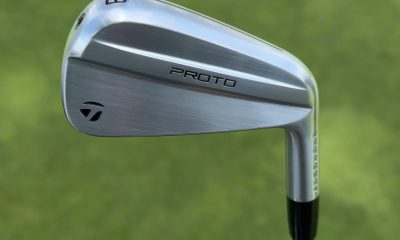





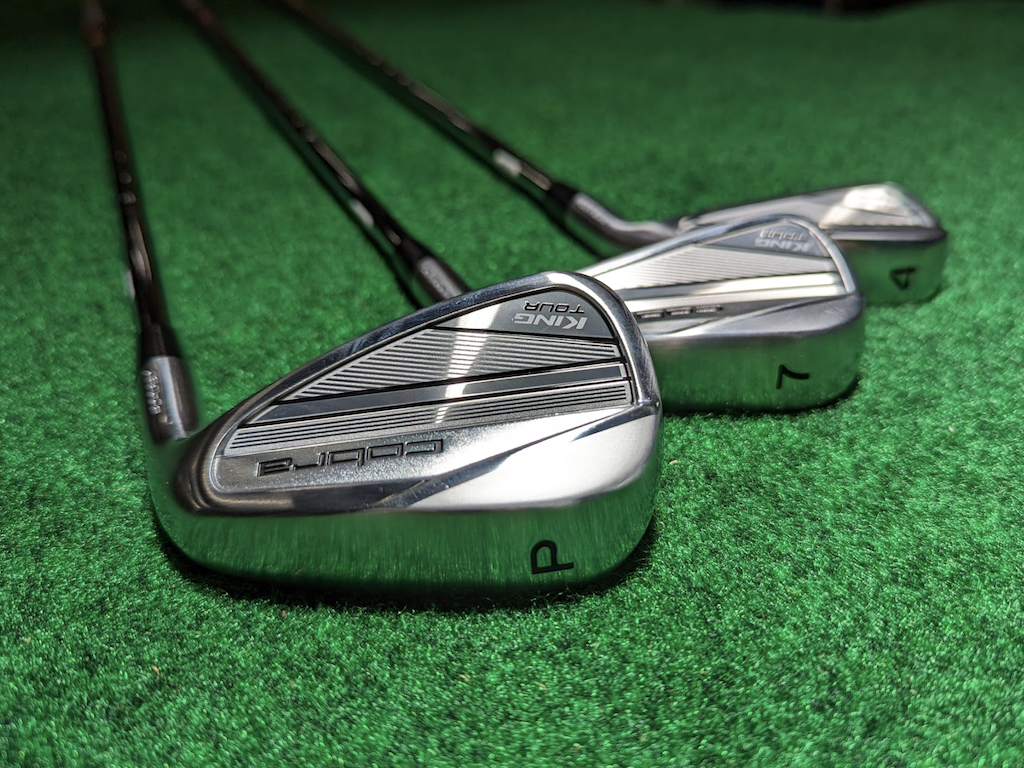
The Cobra King Tour irons have been proven on the PGA Tour already and will be in bags of better amateur players this year. The previous King Tour MIM irons were very underrated and offered great precision with a solid shape that many players liked. Cobra went away from the Metal Injection Molded construction and went with a five-step forging process for soft and solid feel.
Make sure to check out the full podcast review at the links below and search GolfWRX Radio on every podcast platform.
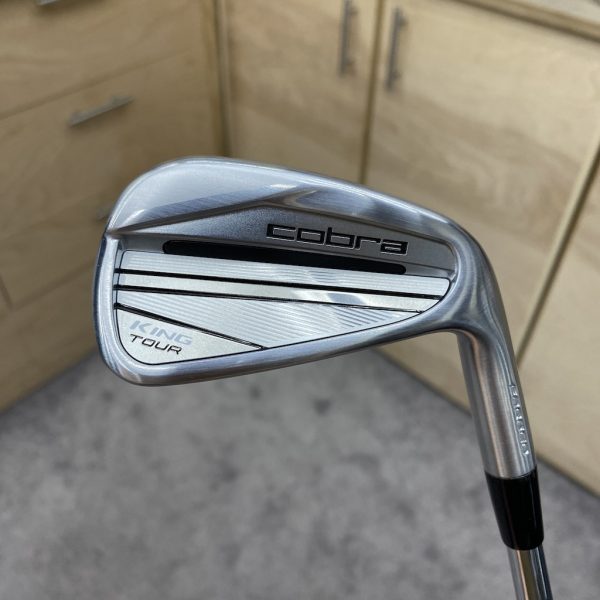
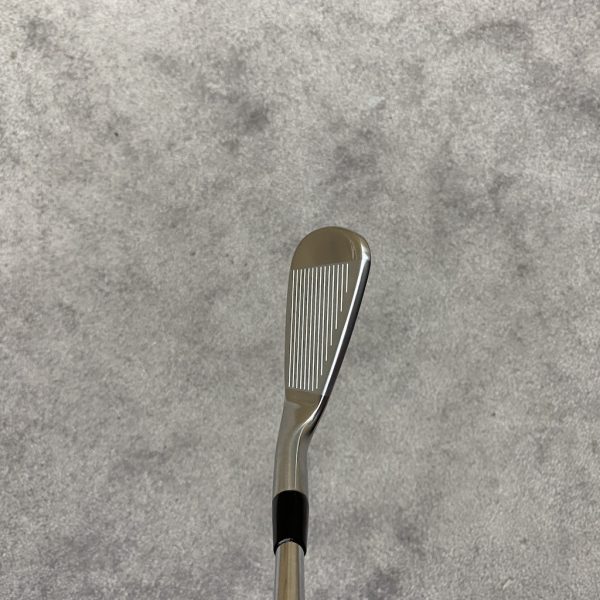
I was a big fan of the previous Tour MIM irons and played them in rotation throughout the last two years. Out of the box, I was impressed with the more simple and clean look of the badging on the new King Tour. Badging is mostly silver with just small black accents that should appeal to even the pickiest golfers. I didn’t notice the shorter blade length in the new irons but did notice that the leading edge is just slightly more rounded. Topline is thin, but not razor thin, but still has enough there to give you the confidence that you don’t have to hit it on the dead center every shot.
Feel is solid and soft with just a slight click to the thud on well struck shots while mishits are met with a little more sound and vibration to the hands.
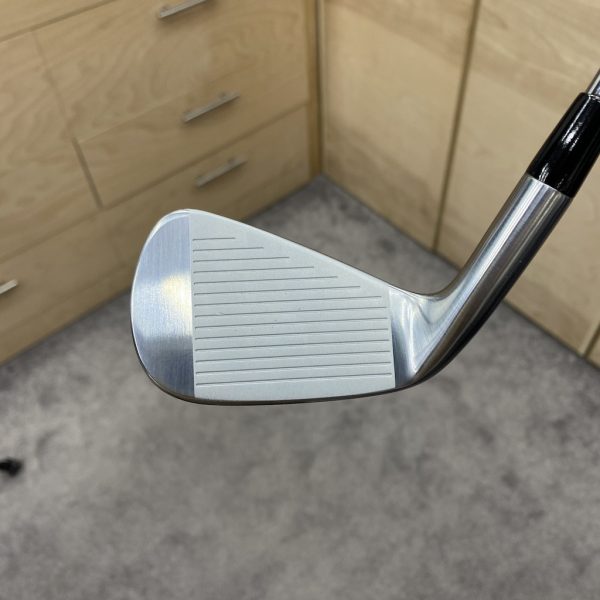
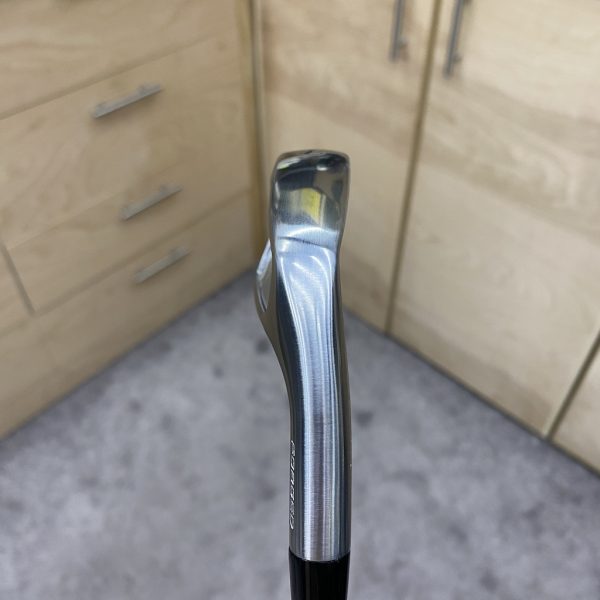
These King Tour irons are built to be cannons and place more emphasis on consistent and precise shots. I also felt like the new irons launch easily and maybe a touch higher than some irons in the same category.
My launch monitor showed my 7 iron with an average launch angle of 22 degrees and spin right around 5,800 with a Project X LZ 6.0 stock shaft. Ball speed isn’t the ultimate focus of this iron but it did well with an average around 108mph and the iron was able to keep the speed up well when you didn’t strike the center. You will still see a drop off in speed and distance when you miss the center, but you don’t have to be Navy SEAL sniper accurate on the face to achieve a good shot. Dispersion was very tight, and while there are bigger irons with more forgiveness, this players cavity still allows good playability when you aren’t bringing your A-plus game to the course.
Cobra lists the King Tour as an iron for a Tour level player up to a 7 handicap and I think this iron could see the bags of more golfers than that. I am a 9.4 handicap, and I felt more than comfortable playing this iron even on less than perfect days.

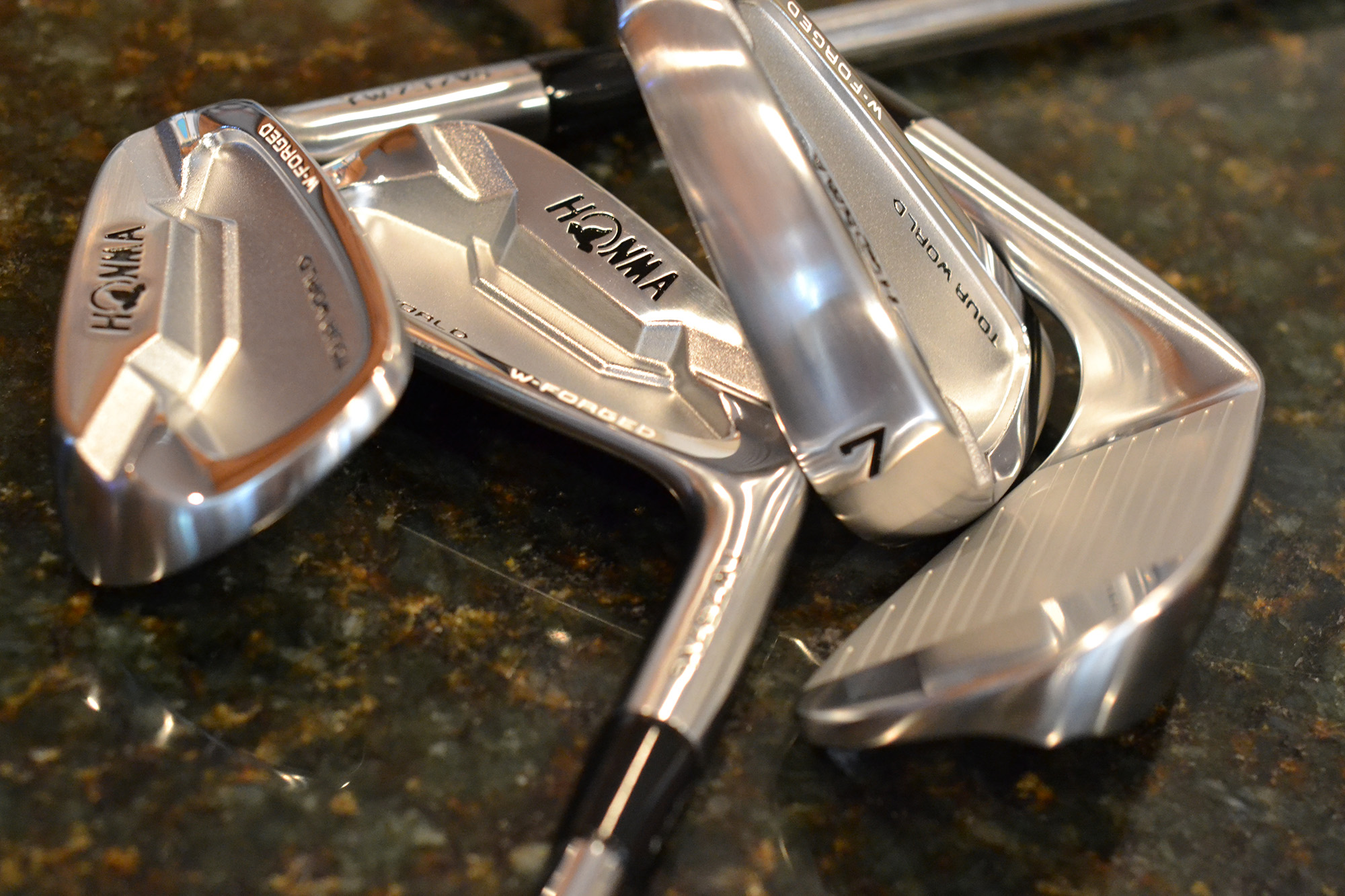
Pros: Incredible feel all the way through the bag. These irons offer considerable forgiveness on mishits, and their slightly stronger lofts generate plenty of distance for a better-player forged iron.
Cons: Some will find the price point ($150 per club) too high to consider.
Bottom Line: The entire TW737 line boasts impressive specs and looks. The TW737-Vs, with their slightly larger shape and stronger lofts, could be perfect for the player ready to move from game-improvement irons to better players irons or for those those looking for more forgiveness in a forged set.
Overview
Many GolfWRX Members will already be familiar with Honma Golf, known for its intricately crafted clubs and as one of the most prestigious, fastest-growing golf brands in the world. For others, this review will be the first time they’ve heard of Honma, or seen their iconic “mole in a hole” cloisonné and wondered, “What’s that?”

That is about to change. Honma, a mainstay in the Japanese Domestic Market for almost 60 years, is making a major push to become a household name in the U.S. and Europe. This year marks the company’s first entry into national “Hot List” competitions, and you can now find and test some of their products, such as the TW737 irons, in big-box golf stores like the PGA Superstore.
While Honma has traditionally been associated with extremely high-end clubs — even gold-plated at times — the Tour World line is priced similarly with other forged irons from domestic manufacturers. Tour World also happens to be the line played by their tour pros like Hideto Tanihara, who has the TW737-Vs in his bag.
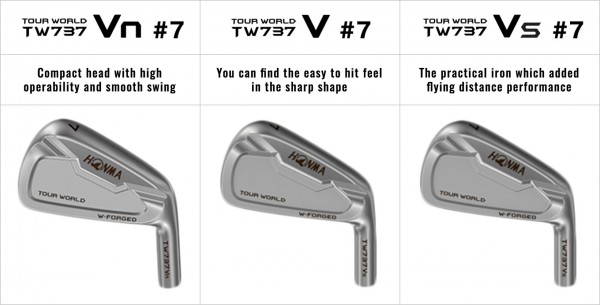
Related: More photos of Honma’s Tour World irons, driving irons and wedges
There are three unique models in the Tour World 737 line, each with slight variations in loft and head shape that are designed to fit the specific needs of forged-iron users. Each model includes Honma’s unified face progression and center of gravity design, which essentially allows for slight changes in sole width, face thickness, and head size based on loft, while keeping the same offset. The design is great in and of itself, and it also makes it easier to play a Tour World combo set.
The entire TW737 iron line is forged from S25C steel using Honma’s proprietary high strength W-Forging, a two-stage forging process that mixes hot and cold forging. According to the company, the process creates more density in the club face, especially high on the face. The extra strength is said to increase ball speed and forgiveness.
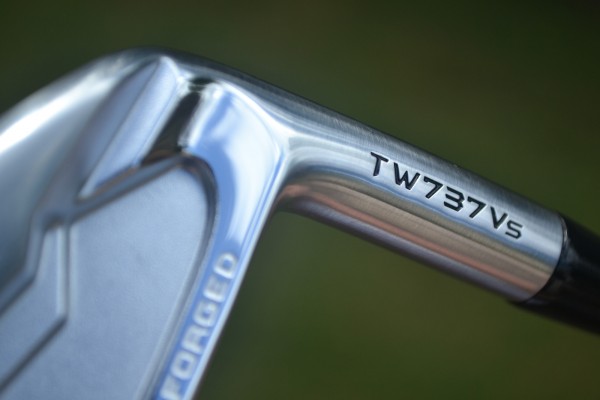
- The TW737-Vn is made particularly for better golfers who like the shape and workability of a blade, but want a little more forgiveness.
- The TW737-V has a small cavity-back head, but adds a little more forgiveness and distance than the Vn.
- The TW737-Vs, the model I tested, has a slightly larger head and strongest lofts, making it the longest and most forgiving of the three forged irons in the TW737 lineup.
You can find all the specs on the Honma site here. The TW737-Vs specs are below.
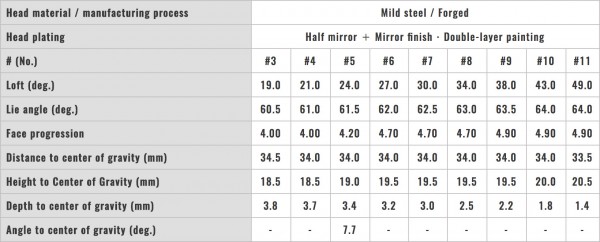
TW737-Vs irons are available now in 3-11 ($150 per club). A variety of stock shafts are available and include the NS Pro 950GH, Dynamic Gold AMT, Modus3 Tour, and Vizard 160. Honma has a retailer search on its site to help you find nearby golf stores where you can check out these clubs for yourself. Of course, custom shaft and grip options are available.
My set of TW737-Vs
I decided on the TW737-Vs because I wanted the extra performance and forgiveness. Honma built a 3-11 iron set, standard length, 0.5-degrees upright with Golf Pride New Decade Multi-Compound grips and two wraps of tape.
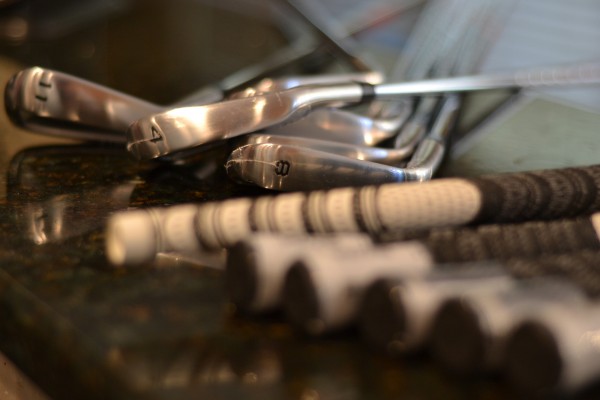
Having played cast, game-improvement irons my entire golfing life, I was anxious to see how these clubs would look at address, feel at impact and most importantly, how they would perform for my swing. In recent years, I have been using a forged Vega wedge, also an iconic Japanese brand. I love the feel, so I was excited for these.
You might be wondering, “Why test against a cast club and not compare Honma to Honma or Honma to Miura?” One reason is that like many of you, I’m precisely who Honma is looking to attract — a US-based consumer who has been playing mostly domestic clubs.
Take it one step further, I’ve also been looking to put forged clubs in the bag and make the move to the better-player iron category, but I was hesitant for a variety of reasons. I mentioned to a few other golfer that I was reviewing this set and their reaction was the same. Are they blades? Are they small? Are they hard to hit? All responses were followed by, “I don’t think I’d be ready for forged clubs.”
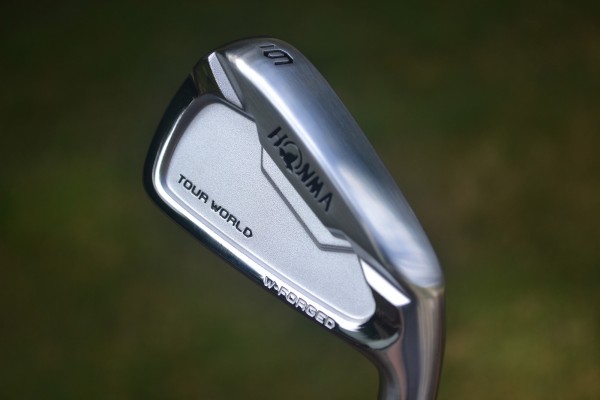
After testing I can tell you the irons are not too small, not too hard to hit, and stack up to anything else I’ve tested.
Performance
I like to start testing outside before getting on a launch monitor so I can focus purely on what I’m seeing and feeling. And with these clubs, my expectations were high, very high.
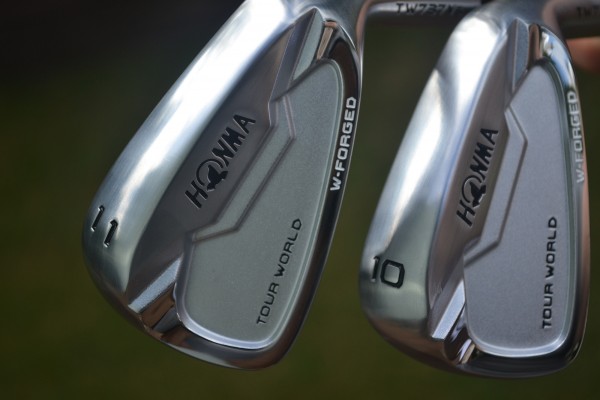
I started with the 11-iron because… how often do you get to hit a club stamped with an 11? I’ve always taken a significant divot with my wedges, but my first swing resulted in a solid, crisp shot with a thinner divot. Everything about the shot felt perfect. This happened to be a center strike and impact felt like almost nothing at all… in a good way. The sound was solid and strong, but the first real feeing I registered was slicing through the turf.
That feeling continued even with the long irons. Hitting a 3 or 4-iron around the middle provided plenty of feedback, but the more pure the strike, the less feeling there was. The ball flight appeared to be slightly lower than my current set, with a straight-to-draw flight and similar distances. Working the ball both ways was not a problem.
On the course, I struggled with distance control at first. This was my own fault for not dialing in the distances, especially with the stronger lofts in the 7-iron and shorter clubs. My expectation was that these clubs would not fly as far as my current clubs, but I couldn’t have been more wrong.
The exceptional feel continued. Truly effortless power on center strikes. The ball just jumped off the face and provided plenty of feedback and forgiveness. My divots from fairway lies were thinner than normal, which I don’t mind at all. These clubs cut through the rough nicely as well.

My favorite moment came at an island-green par-3, No. 16 at BridgeMill Athletic Club. I had 160 yards to the pin, with 150 yards covering the water and 175 yards to the water at the back of the green. With my old set, it would have been a smooth 8-iron (a full 9-iron is a reliable 145 yard carry). For me, the TW737-Vs 9-iron is essentially an 8.5-iron, so I went with 9-iron and played to the center with a little draw. I hit one of the most solid shots of the day, and it landed just a few feet away from the pin. Trusting a 9-iron would be enough… now that was fun.
Launch Monitor Data
My expectation going into launch monitor testing was that I’d see a flatter trajectory, lower peak height, similar distance and spin, and a decent amount of help on mishits. I tested the TW737-Vs on SkyTrak against my TaylorMade RSi 2’s using Bridgestone Tour B330 balls. I rotated clubs every 5 shots and went through multiple rounds with each club.
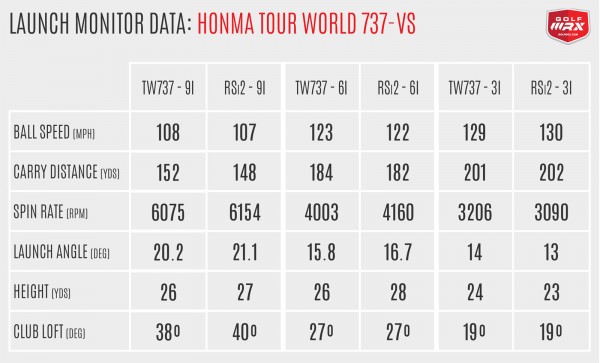
The launch monitor data backed up what I was seeing on the course. For the short and mid irons, the Honmas generated slightly more distance (not less as I expected prior to testing). The 9-iron had the biggest gap, but the TW737-Vs is also 2 degrees stronger.
Spin was lower, but I was also seeing slightly more draw bias to my shots. While the spin looks a little low, on the course I had no issues stopping the ball on approach shots. With the long irons, my flatter trajectory always forces me to play for a little roll, so that won’t change.
I’ve never been a high ball hitter. My swing produces a lower flight and I’m sticking with it. Not surprisingly, my launch angle and peak height with the TW737-Vs was slightly lower across the board.
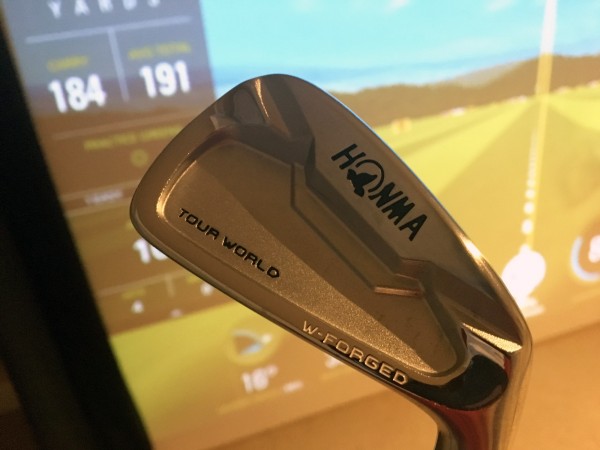
Ball speed on heel and toe side of center dropped about 2 mph on average, but the shots were very playable. With the 3 and 4-irons, toe shots generated quite a bit more left spin, but heel shots didn’t really impact the flight.
For shots higher on the face, I was very surprised and happy to see a minimal loss of distance. All in all, these clubs are very playable and forgiving on shots that miss the dead center of the clubface.
Looks and Feel
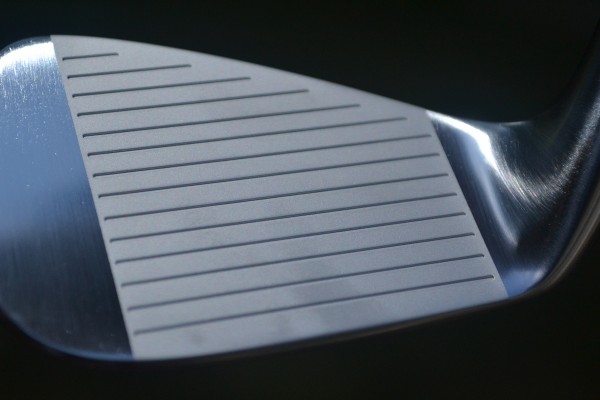
Feel is subjective, but I love the way these clubs feel. There is a nice weight through the swing. The W-Forging process has created a strong face that fires balls off like little rockets. Some other irons have a spring-like feel at impact, but with these, center shots just seemed to melt into my hands.
I spent a lot of time using powder spray on the face to see the exact impact location. With other irons I’ve tested, it is easy to know if I hit the extreme toe or heel side. But with the TW737-Vs, I was able to feel if I was half a ball to the heel or toe side. Same with being low on the face or a few grooves high. Both better players and mid-handicap golfers looking to improve will appreciate the feedback these clubs provide.
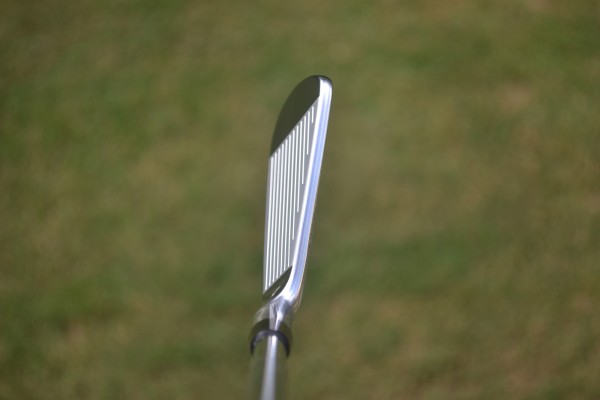
As for looks, “These are beautifully simple” was my first thought when I saw them in person. The lines are clean and sharp in some areas and smooth and rounded in others. The head, while definitely smaller than what I’m used to, doesn’t feel or look too small. I don’t have any confidence issues looking down at the ball.
Each of the TW737 models have the same minimal amount of offset, creating a relatively straight edge from the shaft out to the toe. I find it easier to set up and align clubs with less offset, so I like this a lot. I wouldn’t call the top line thin, but it isn’t thick either. Overall, I just really like how these irons look at address.
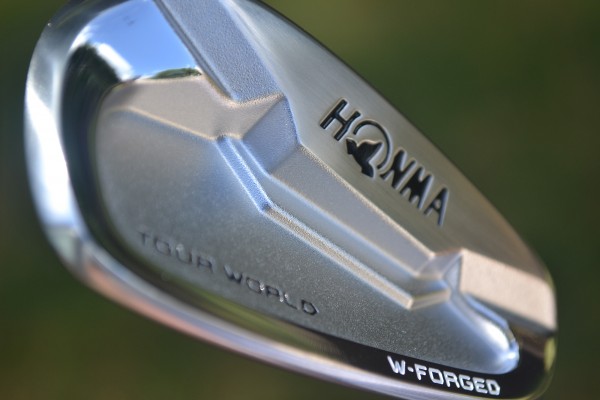 The mass low and right in the middle of the face conveys a sense of power, and the designers left plenty of material on the toe and heel to help minimize mishits. The half-mirror finish on the face and top line cuts down the glare at address. I would rather see the half-mirror finish replace the rough finish on the back — it’s just a personal preference — but the third texture does provide another dimension to the look of the club.
Bottom Line
Honma might not be the first name most Americans think of when they think of forged irons. That is going to change… not just because Honma will be spending more money to reach golfers in North America, but because the company’s Tour World line is both beautifully crafted and packed with performance.
If you’re in the market for forged players irons, make sure the TW737 is on the list of clubs to hit.

One of the many benefits of being a GolfWRX Forum Member is exclusive access to Giveaways and Testing Threads. For Giveaways — we give away everything from golf clubs to golf balls to GPS units — all it takes is a forum name. Enter any Giveaway, and we select winners randomly. You’re then free to enjoy your prize as you wish.
For Testing Threads, the process a bit more involved. GolfWRX Forum Members sign up to test the latest and greatest products in golf, and then they provide in-depth reviews on the equipment. Being the intelligent golf-equipment users they are, GoflWRX Members are able to provide the most-informed and unbiased reviews on the Internet.
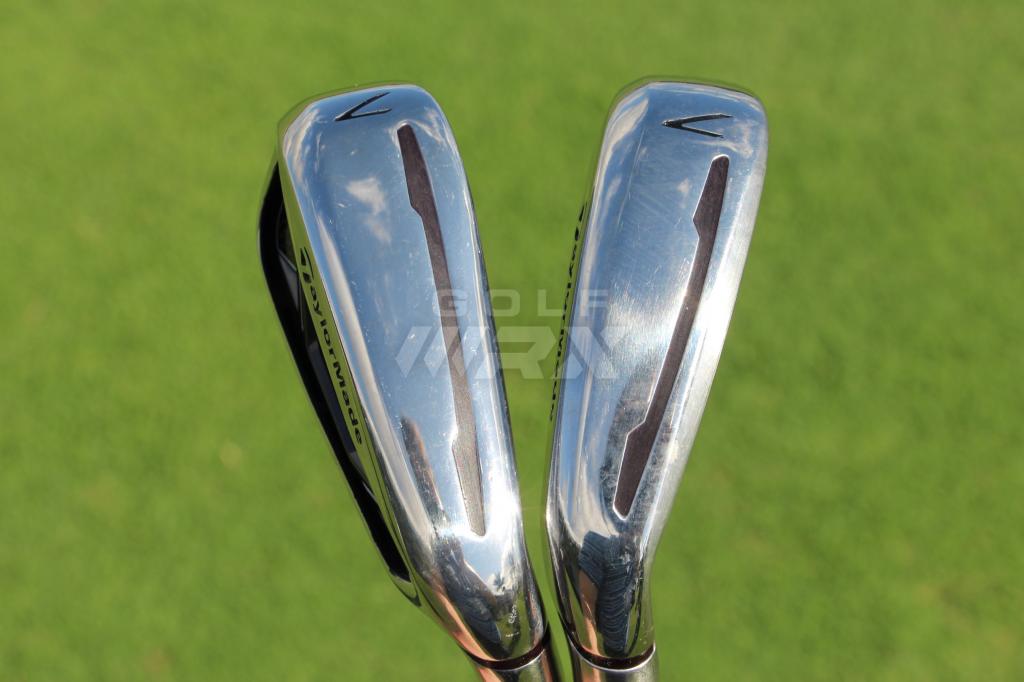
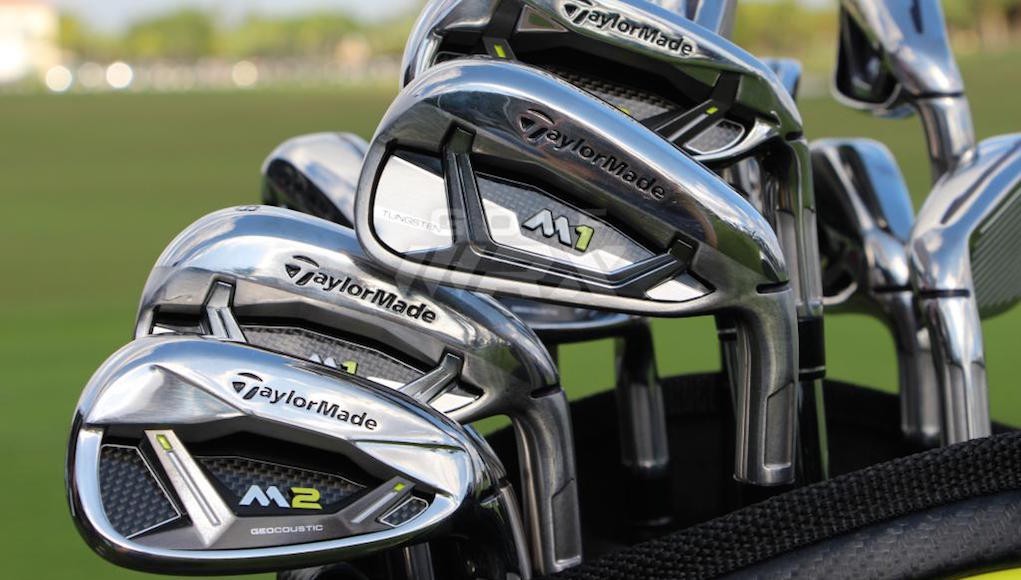
In this Testing Thread, we selected 75 members to test a TaylorMade M1 2017 7-iron and TaylorMade M2 7-iron. Each of the clubs were built with the stock lofts and shafts — M2 2017 (28.5 degrees) with a TaylorMade Reax shaft, and M1 2017 (30.5 degrees) with a True Temper Dynamic Gold S300 shaft — and the testers were instructed to post their review of the clubs here.
Below, we’ve selected what we’ve deemed the most in-depth and educated reviews out of the 75 testers. We have edited each of the posts for brevity, clarity and grammar.
Thanks to all of those involved in the testing!
- All 75 Reviews: TaylorMade M1 and M2 Testing Thread
- Tech Talk: What you need to know about TaylorMade’s M1 and M2 irons
Brock9007
To be honest, looking down on the TaylorMade M1 and M2 irons at address, there is really not much difference. I would have to pick one up to see which is which.
The first 10 balls I hit were with M1 and 6/10 felt great, while the other 4 were toe hits, which I felt and the distance reflected that. Kinda what I expected with a club design for lower-handicap players. Distance was about 1/2 longer than my Srixon iron and dispersion was close, as well. I will say they did not feel as good as the Srixon on center hits.
Next 10 (ok, 15) balls were with the M2. Wow, can you say “up, up and away? The ball really popped of the club face, but wasn’t a ballon flight. Waited for the ball to come down and WTH, with the roll out it was 5-8 yards longer than balls hit with M1, and that is with a few toe shots. I did some smooth swings and then very aggressive swings and was a little amazed at this iron. Just like the M1, it does not have the forged feeling and does have a clicky sound (which I hate).
Bottom line: M2 is the longest iron I have ever hit. I love my 545s, but I could see myself playing M2 very easily. Matter of fact, I will be taking this M2 7 iron in my bag and play it more head-to-head against my Srixon 545 on the course.
deathbymuffin
These are both beautiful clubs. What surprised me the most is how much alike the two clubs look at address. I was expecting a chunky topline and significant offset in the M2, but it’s footprint looked almost exactly the same as the M1, outside of the chrome finish on the M2 versus the frosted finish of the M1. The M2 could almost pass as a player’s iron to my eye at address. These clubs both get A’s from me in the looks department.
The M1 felt a tad thicker than most player’s irons I’m used to, but it seemed to come with a bit of added forgiveness too. Well-struck shots felt good, with a nice mid-trajectory and with the workability that I’ve come to expect from a player’s iron. But true to TaylorMade’s claims, the M1 seemed more forgiving than a traditional player’s iron. Had a nice soft feel at impact, mishits didn’t sting and left you with a more playable result. A really nice combination of the better attributes of both player’s and game improvement irons. I’ve been playing with an old set of Tommy Armour blades, but I’ve been recently wanting more forgiveness for when I’m stuck with my B or C swing. Based on the early returns, I could definitely see myself bagging these.
I’m not sure if it’s the shaft, the design of the clubhead, or a combination of both, but the M2 is definitely a different animal than the M1 at impact. This club launches the ball high, arguably ridiculously so. I was hitting Jason Day moonbombs with this bad boy. Didn’t seem to matter what kind of swing I put on it, the ball launched high, flat and dead straight. The club was super forgiving and if not for the insanely high ball flight, I would love to have a set of these for when my swing is out of sorts. I didn’t really try to flight it at all, so I’m not sure what it’s capable of at this point. One other note was that the M2 had a clicky feel at impact. It didn’t bother me since it still felt so sweet… so strange as it sounds, clicky, but smooth and sweet at the same time. I think these clubs will be big winners with the mid-to-high handicap set.
The M1 is a fine iron, but doesn’t really stand out in any way from other irons of its class.
The M2, on the other hand, is an iron on steroids. I’m really starting to love this thing. It’s super forgiving and just goes and goes. According to my laser, flush shots were going 195 yards (my usual blade 5 iron distance) and very high. I can’t help but think golf would be a whole lot easier, particularly longer courses with long par 3s, with a full set of these in my bag.
poppyhillsguy
M1 feels softer than the M2 and I felt the ball flight was more consistent and what I want in an iron. The M1 did have a harsher feeling in my hands than I typically like, but I’m going to credit a lot of that to the range balls.
M2 flies very high. It was a windy afternoon and about 100 degrees. I love the high ball flight on the range, but I have a concern what that ball flight would be like on the course. I like to hit the ball different heights for different shots and I don’t think I could do that confidently with the M2, but I could with the M1. I don’t like the sound of the M2. It sounded “clicky” to me.
Fourpar18
Initially on the range I was scared because the M1 had a regular flex in it, so I took it easy for my initial 10-15 swings with it. Ball SHOT off the face, loud crack (didn’t care for it, but not too bad) and ball just kept rising and rising but didn’t balloon. I thought, “whoa,” that’s not what I expected…did it again…another CRACK and the ball just flew. I set another down and I paid attention to how it looked behind the ball, not much offset for a game improvement and I thought…”I could actually play this club!” The 5-7 were EASY swings, aimed at a target of 170 yards away (my normal 7 iron distance) and with a EASY swing I was flying it by 20 yards or so. The next 5-10 I really went after it, same CRACK and ball just flew but to my surprise it was a nice draw, harder draw than the first but it was a nice 10-yard draw. This time the balls were landing just short of the 200 yard marker. Damn, 200 yards with a 7 iron! I know they are jacked lofts but it feels good to say “my 7 irons just few 190-200 yards!”
P.S. LOVE the Lamkin UTX grip!
Now, this was interesting, the M2 was quieter then the M1… weird! Now, there is more carbon fiber added to this one and there is a “Geocoustic” label on the back. I am sure that it has something to do with all that carbon fiber but it does have a better sound. Other than the sound, it played exactly like the M1: long and straight. The REAX shaft felt a little weaker than the True Temper shaft and it flew a little higher but nothing else I could pick up.
noahdavis_7
Finally got out to the range after getting these bad boys in on Friday. My first impression of them is that they look really sharp. The graphics and design really stand out and really give these clubs a cool, modern look.
They were both a little to big IMO, as I am currently bagging Mizuno MP-68s. The M2 isa definite “game improvement iron”, while the M1 was similar in size and shape to my previous irons, Titleist AP1s.
They both really launch it, high and far. Ridiculous for 7 irons. I don’t have access to a launch monitor, but it was about a 20-yard difference between my gamer 7 iron and these (stronger lofts, as well).
The M1 definitely was more suited for my eye, and produced more consistent ball flights. It felt much more smooth and solid as the M2 had a clicky, cheap feel.
The M2 just isn’t for me. I felt like it was launching too high and ballooning, which could be due to the shaft (the M1 had the S300, while the M2 just had a stock “Reax” shaft). The feel off the face of the M2 just turned me off, to be honest.
While I don’t think I’ll be putting either model in play, I can definitely see the appeal for mid-to-high handicaps. Both irons were super forgiving, and they should be a dream to the average weekend golfer who has trouble with ball striking consistently.
golfnut5438
Looks: As expected, I preferred the M1 with less offset, slightly smaller sole and a smoother finish. Less glare looking down on the iron. I must say the M2 did not look as bulky, or have as much offset as I thought it might have.
Feel: This was a close race, probably due to the shafts as much as the heads. The M1 was just a slight bit smoother feeling on solid shots. But the M2 was not bad at all, just not quite as smooth.
Distance and performance: Our range has a slight incline up the length of the range, so specific yardage gains or losses were difficult to measure. Both irons had a higher trajectory than my gamer 7 iron. Neither sole dug onto the turf either. The lofts for both irons are a degree or two stronger than mine, so I would think they probably flew a little further than my gamers. Neither iron flew “too” high, however. Might be a little harder to hit knock down shots, though.
Final thoughts: I had hit both the M1 and M2 irons last year during a fitting day, but did not like either. This year’s model were both better in my eyes. I asked a fellow member at our club to hit both and he felt the M1 was his preferred model, and he is a 20-index player. So coming from both a single digit, and a high double-digit, the M1 won this battle of wills. I will try and see if I can locate both a 5 iron and 9 iron to see if a full set might be a winner for me.
DblEgl
I was surprised that the M2 was the winner in this brief session. It felt better, flew higher, easier to hit and about 1/2 club longer that my gamer Apex CF16. The feel/sound was better than I thought it might be, but really not up to the CF16. I could, however, easily game the M2’s.
Bstein74
Feel: I hit the M2 first, and found it to be very solid when hit on the screws. There was almost no feel off the club face at all. When I mishit it, you knew it was, but it wasn’t harsh at all. Hit the M1 next, and same type of feel when hit solid. Much more harsh when mishit though, but I knew that was coming.
Distance and performance: This is was where I was curious to see how they would play. The M2 went out high in the air, and just kept going forever. Now granted my eyesight isn’t that great anymore, but it looked like I got about 10-15 yards more from the M2 compared to my Wilson D300. The only thing I didn’t like about the M2 was how much I was able to turn it over. Got a lot more hook compared to my D300. Don’t know if that was from the REAX shaft, but would love to find a less spinning shaft to correct that.
The M1 wasn’t a great performer for me. Same height as the M2, but much straighter off the club face. Didn’t get any great distance advantage as compared to my D300. Can’t game a player’s iron anymore, and testing this one just reaffirmed that.
Final thoughts: Was very happy with the distance I gained with the M2 compared to my current gamer. Very good-performing iron for me, and something I would definitely consider changing them out if I could reduce the spin off the face. If you’re looking for more distance, you need to try these out. The M1 just wasn’t for me, but as a player’s iron, I can see it as a great option.
Bobcat271
Like the other testers, I found the M2 to launch the ball much higher and is 10-to-15 yards longer than my Adams XTD forged 7 iron. Of the two 7 irons I prefer the M1. I like the design of the M1 and its visual appearance at address. I feel more confident in trying to work the ball with the M1. The M1 gave me more feedback as to where the club head was in relation to my swing plane. If I had my druthers I would put the M1 in the bag as it stands now. Will continue to test, what a treat to compare the two irons.
myurick2
Once I started making solid contact with a decent shoulder turn, the M2 really came alive in my hands. Towering flat height, for me, and very long. No more clacky hollow feel, just a very mild pleasant sensation… then zoom. Once I started making better swings, back to the M1, which was a very nice iron. Shorter than the M2 (though not short) and a little lower ball flight. Felt nice and substantial without being heavy. Very forgiving on slight mishits.
But the M2 was the star for me. High trajectory and very long. Club felt lively and fun. Frankly, unless a player wanted a lower trajectory, or likes to hit a lot of knock downs or feel shots, I don’t know why anyone wouldn’t choose the M2. They are very attractive and a very fun iron. I think folks who say that the M2 feels and/or sounds clicky, clacky or hollow may be mishitting the iron toward the toe. I am not judging — I mishit a lot of shots at first. I agree on toe mishits the iron did not feel great. It almost felt like plastic. The ball still flew pretty well, but it wasn’t a very enjoyable experience. Not painful, just felt very dead. But when hit nearer the center, the iron felt fantastic. Light, springy and very lively.
hammergolf
They are both good-looking clubs. Not too long heel to toe and toplines were not that distracting. M1 is more what I like to see shape wise, but M2 was not bad at all. Personally, not a fan of seeing the face slots. But I could see how some people may like how they frame the ball.
Ace2000
M1
– Has a very odd sound on contact, almost sounds a tad like a fairway wood “ting. Not a fan
– Looks very good at address with the brushed finish
– Most shots I hit with it seemed to fall out of the sky (very likely a lack of spin). Ball flight was much lower than I would have expected (not super low, just not much different than my 7 iron)
– Inconsistent misses. Next to no distance gains vs RocketBladez Tour 7 iron
M2
– Doesn’t look as good at address as the M1. Chrome finish at address is not an issue in even direct sunlight for me
– Feels and sounds quite nice to my ears at impact. Not a classic sound but very good considering what type of club it is
– Ball flight is very strong (comes off hot). Ball stays high in the air for awhile. Very high and lands soft
– 10-12 yards longer on average vs my 7 iron, it even had the horsepower to hang with my 6 iron
– VERY forgiving on thin strikes. Couldn’t believe how a near-top still traveled to nearly the front edge in the air and still went as far as the M1 did on a good strike
– Shaft is too light
Even though I’m a 2-handicap and don’t fit the M2 “mold,” I could see myself playing this club from 4-6 iron (although gapping would be a major issue mixing these with almost anything else) if it had a heavier shaft in it (I can only imagine how far this 4 iron must go… yikes)
M1 = 2.5/5 stars
M2 = 4.5/5 stars
tpeterson
Visual first impressions: The M1 7-iron is visually appealing to me as far as the finish and overall look. Even though it is classified as a player’s iron, it doesn’t seem so tiny that it would be tough to hit. I am not a huge fan of the bright-yellow badging, but I probably could get over it. The iron inspires confidence with its topline and a little bit of offset. The “rubber” piece on the hosel is a little bit funky to me.
I thought the M2 7-iron would look clunkier than it really is. Besides the finish being a little bit different, the difference between the M1 and M2 is actually pretty small. The M2’s topline and sole are a touch wider, but not by much. Not a huge fan of the fluted hosel since it can be seen at address. The M1’s fluting is only on the rear of the club.
I did notice that the sole’s finish did scratch pretty easily. Overall, I thought the M1 and M2 are pretty good looking, but I would definitely give the edge to the M1. I also preferred the stock Lamkin grip on the M1 vs. the ribbed M2 grip.
On course action: They both feel solid. I tried hitting both irons in all different types of on-course situations over a two week period. Both clubs launch the ball high but I would not say they balloon. For me, the M2 was about 10 yards longer and higher than the M1. Compared to my Cleveland irons, they are 1 to 1.5 clubs longer.
M1 loft = 30.5
M2 loft = 28.5
Cleveland TA7 loft = 33.5
I know this accounts for the distance gain but the ball definitely comes off hot compared to my set. I was hoping I would hit the M1 better since I like the appearance better, but that was not the case. The M2 definitely felt better for me and I felt more confident with it in my hands.
Discussion: Read all 75 reviews and the responses in our Testing Thread

Justin Rose WITB 2026 (April): Full WITB breakdown with new McLaren irons

What’s the story behind Webb Simpson’s custom-stamped irons?

Cadillac Championship Tour Report: Spieth’s sizable changes, McLaren Golf launches, and more

Memorial Tournament Tour Report: Rory McIlroy, Cameron Young switch up drivers, and more

Russell Henley’s winning WITB: 2026 Charles Schwab Challenge

Kristoffer Reitan’s winning WITB: 2026 Truist Championship

Aaron Rai’s winning WITB: 2026 PGA Championship

Cameron Young’s winning WITB: 2026 Cadillac Championship

Details on Jason Day’s latest prototype Avoda iron setup

Nelly Korda WITB 2026 (April)

Alex Noren WITB 2026 (June)
Driver: Callaway Paradym Ai Smoke Max D (9 degrees @7, draw setting) Shaft: Graphite Design Tour AD VF 6 X 3-wood: Callaway...


Melanie Green WITB 2026 (June)
Driver: TaylorMade Qi4D (9 degrees) Shaft: Graphite Design Tour AD VF 5 S 3-wood: TaylorMade Qi4D (15 degrees) Shaft: Graphite Design Tour...

Sungjae Im WITB 2026 (June)
Sungjae Im had >14 clubs in his bag when photographed prior to the Memorial Tournament. Driver: Titleist TSi2 (8 degrees, B1...

Lucas Glover WITB 2026 (June)
Lucas Glover had >14 clubs in his bag when photographed prior to the Memorial Tournament. Driver: Titleist GTS2 (10 degrees, B2 SureFit...
-
 Equipment2 days ago
Memorial Tournament Tour Report: Rory McIlroy, Cameron Young switch up drivers, and more
-
 News6 days ago
Russell Henley’s winning WITB: 2026 Charles Schwab Challenge
-
 Whats in the Bag3 weeks ago
Aaron Rai’s winning WITB: 2026 PGA Championship
-
 Equipment4 days ago
Details on Jason Day’s latest prototype Avoda iron setup
-
 Tour Photo Galleries3 weeks ago
Photos from the 2026 CJ Cup Byron Nelson
-

 Equipment2 weeks ago
CJ Cup Byron Nelson Tour Report: Koepka and Kim’s newest putters finally get hot
-
 News1 week ago
Charles Schwab Challenge Tour Report: MacIntyre, Åberg and Spaun all switch putters, TaylorMade launches new Spider
-
 Equipment2 weeks ago
Details on J.J. Spaun’s surprise putter switch


showtime
Dec 17, 2011 at 10:57 pm
LMAO Im a 7 handicap and I love these irons, don’t tell me there not for the better player, I can work either way, easier to draw the ball, there long, soft, and versatile, I don’t care about the topline Im not staring at it during the swing
Jordan G
Jul 28, 2009 at 1:03 pm
I have a newly purchased set of AP1 irons. Im a 15 hdcp so the clubs are really working out for me. The only thing I can tell you that I dont like is the feel. These clubs hit very solid all the time, and there in lies the problem. Often on off center hits it becomes very difficult to know exactly where I contacted the ball so the feedback is diminished a bit. On the plus side when I do hit the ball perfectly it actually feels perfect. I switched from taylormade RAC os. I have hit the Z blends on the range and I really like the feedback Im getting. I will probably play these clubs for abotu 3 years then switch to a “players” iron. I definitley would like a little more feedback on my swings. Also the look of the AP1 is big and bulky not much different then my taylormades. The weight is very low and at times it feels as if the club is too bulky. (almost as if you are trying to strike the ball with a hockey stick.) They are very forgiving and provide enough workability to get by. But I would definitley not recommend the club for single digit handicappers.
Tim Schoch
Jul 19, 2009 at 8:24 am
Jake, obviously, go hit the clubs. They are certainly worth your serious consideration.
jake
Jul 16, 2009 at 3:38 pm
I am 15 years old, and i am about a 8 or a 9 handicap (deffinitly single didgit) I have been upgrading all of my clubs in the past couple of months. The only thing left is irons. I have Ping Zings irons. I hit them very well, but i am starting to work the ball left to right on shots. I like the price of these clubs, but am not sure if i will hti them long enough becuase i am improving alot. i have heard that single didgit handicapers shouldnt play these clubs, but i normally thinks that stuff is false. Tell me if is should get these clubs or not
Paul T
Nov 28, 2008 at 3:54 pm
I arrived at my club yesterday having forgotten to bring my bag and shoes with me following a (rare) away day at another club last week. My stuff lives in my club locker about 350 days per year. I borrowed some shoes from the locker room lost and found and my pro shop lent me a set of hire-out AP1’s. My irons are Ping I3’s (I make no apology for the fact that I am a mid handicapper) and I wasn’t looking forward to playing with the AP1’s – the look was so fundamentally different from what I am used to. However, I am now looking to persuade my pro shop to take my Pings in PX for a set of AP1’s. With these clubs, I barely put a ball anywhere I wasn’t aiming, the main problem was getting used to clubbing down – I kept over-hitting because these irons played so well. And I should also mention that the driver is brilliant, I’m getting one of those, too. Get over the looks and stop obsessing about the other clubs that Titleist make for other people; these are really, really good.
Declan
Jul 22, 2008 at 7:28 pm
Hi
I am playing DCI 990 ( for the last 8 years) but no longer get to play as often as I used to. At the time of purchasing my 990’s I was playing 3-5 times per week.
Ive demo these AP 1’s and hit them pure each time..Lovely feel off these sticks IMO….
Im now in the market for new titleists but not too sure what to do….ie..Do I go with AP 2 or do I swallow my ego and go with AP1?
Size of clubhead and offset on AP1 put me off a little but as I have a tendency lately to thin a lot of shots maybe this would help me…
Any thoughts???
bobsuruncle
Jul 22, 2008 at 12:53 pm
Does anyone have any experience in comparing the AP1 to the 775CB that it replaced?
Unless the technology in a new iron is so compelling, I believe there’s always better $ value in the “older” model. Would this be true of the AP1 vs 775CB? Thanks
Dizzle
Jul 4, 2008 at 3:42 pm
HAha….I went from Titleist 735 Chromes to these…Sure they are a little bit bigger and a touch of offset but it’s the player not the club….I can do everything with these that I could with my 735’s and you wanna know what….the only reason I didn’t get the AP2’s was becaue I liked the red of the 1’s Sure these are a little forgiving and can be used by players with a higher index but I think it is great that Titty is giving those players another chance to use a truly life long classic brand and the confidence that comes with having these in your bag..THATS RIGHT I said ANOTHER CHANCE you idiots act like this is the first time that Titleist has come out with a more “game improvment style club” wake up look back a few years and do your homework….oh and all you others that love the fact you can hit these 15 yars longer than you rold clubs..I think it’s great but check the specs thay are also stronger then your old clubs Pedro.
John
Jun 20, 2008 at 6:33 pm
Titleist went to these irons to stay competitive in the market. I still play 990b irons and won’t change until they are devoid of any grooves. But…..I can see why higher handicappers, who have heard of Titleists performance, feel and accuracy, would want to give these new irons a whirl.
No, they’re not for better golfers but even better golfers are going to more forgiving irons and Titleist can’t make a profit by remaining in a niche that has fewer and fewer golfers. Lots of companies offer players clubs and having a small following won’t keep them in business.
They will remain true to the “player” but at the same time, will be able to help mid to high hdcp golfers.
The company’s expansion to this type of club doesn’t hurt me a bit and I don’t see why anyone else would care either. They still make great players clubs and for me, that’s what counts. (or will when I finally buy new clubs).
James L
May 13, 2008 at 3:52 am
Not sure why Titleist want to go down this road. The AP1’s do not do anything better than the equivalent Callaway or Ping models (especially the G10). Recently I looked at them for a few seconds (honestly I could only bare a few seconds) in a shop and was horrified at the chunkiness and shiny/tacky finish (very un-Titleist). I am a good ball striker currently playing TM RAC TP forged, but do love Titleist equipment (play 905R, vokey wedges and Scotty C putter), so I admit to being a bit biased against the new AP line from Titleist.
I have hit the AP2’s and they are ok, but only ok. While they are solid the short irons are a bit chunky and the sole a bit thick. They are a little difficult off a tight lie and not to easy to work.
The ZM’s and ZB’s look beautiful and are much more traditional Titleist and I will change to the ZB’s later in the year.
I think Titleist should have kept the game improvement line in the Cobra range and stayed faithful to “serious clubs for serious golfers”