
Opinion & Analysis
My battle with bipolar golf


By Matt Stansfield
GolfWRX Contributor
When we as golfers first hear someone describe their round by saying, “I played a little bipolar golf today,” we generally associate that with the ups and downs we all experience during a typical round of golf. It’s common expression that for others has a different meaning altogether having been diagnosed with bipolar disorder.
I played round-after-round of what people refer to as “bipolar golf,” but I didn’t know until recently that the ups and downs I was experiencing mentally on the golf course were actually caused due to my being bipolar. It was a diagnosis that came recently, but it gave me an opportunity to look back on my golf career and see where the challenges I’ve faced mentally on the golf course would be looked upon differently. In the moment, I had blamed it on whatever negative event that was happening in my life at the time and tried to brush it off in order to prevent myself from letting my round spiral out of control. I didn’t realize that I needed to go through the necessary treatment to put me in a position to regain my mental focus both on the range and on the course.
A Google search of ‘golfers and bipolar disorder’ will give you hundreds of success stories of golfers who have been able to overcome their bipolar disorder and achieve their golfing goals whatever they were for each respective individual. After reading a number of them, I started to see how valuable a tool these stories are not only to people that are suffering from bipolar disorder but for every golfer that’s struggling with the mental side of their game.
Golfers need to have the ability to shift their focus during a round. They do this by maintaining their routine on every shot and while visualizing every aspect of their shots. It helps to visualize how’s the wind going to change the flight of this ball, how’s the lie going to change the trajectory, how’s the slope going to change the yardage of the shot, etc. If you start putting this into practice on the range, you may be surprised when you take that same approach onto the course.
It may give a whole new meaning to describing your round by saying, “I played a little bipolar golf today” as the tools discussed in these stories could be what’s needed within your own game to take it to the next level.
Click here for more discussion in the “General Golf Talk” forum.
- LIKE2
- LEGIT0
- WOW1
- LOL0
- IDHT0
- FLOP0
- OB0
- SHANK0




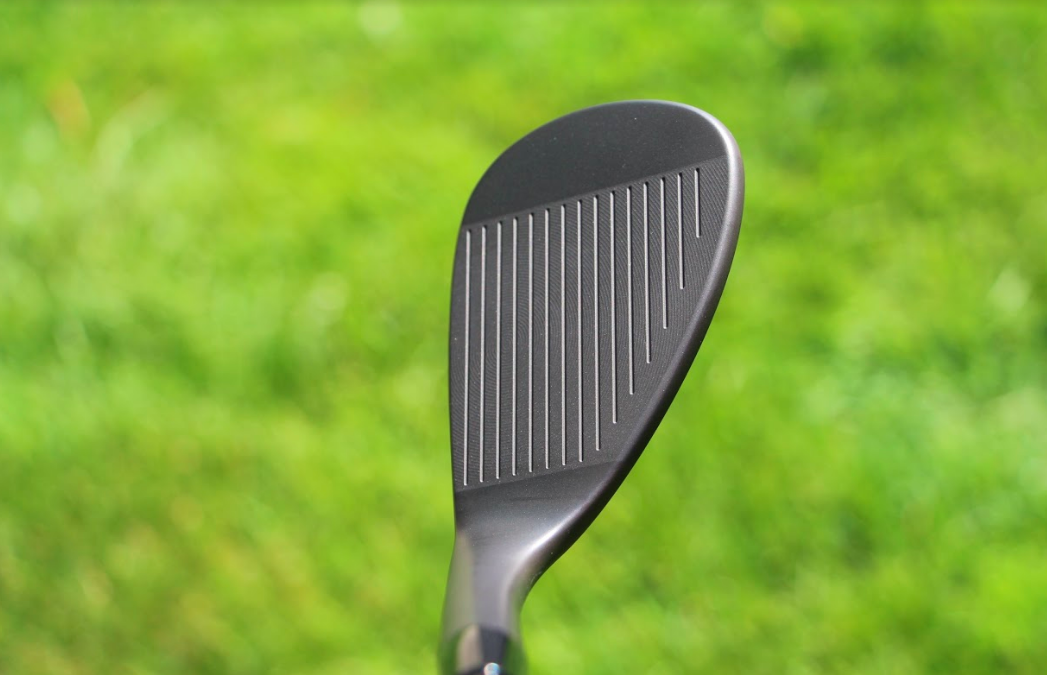
In my last post, I explained the basic performance dynamics of “smash factor” and “gear effect” as they apply to your wedges and your wedge play success. If you missed that post, you can read it here.
At the end of that post, I promised “part 2” of this discussion of what makes a wedge work the way it does. So, let’s dive into the other two components of any wedge – the shaft and the grip.
It’s long been said that the shaft is “the engine of the golf club.” The shaft (and grip) are your only connection to all the technologies that are packed into the head of any golf club, whether it be a driver, fairway, hybrid, iron, wedge or even putter.
And you cannot ignore those two components of your wedges if your goal is optimizing your performance.
I’ve long been an advocate of what I call a “seamless transition” from your irons into your wedges, so that the feel and performance do not disconnect when you choose a gap wedge, for example, instead of your iron-set-matching “P-club.” In today’s golf equipment marketplace, more and more golfers are making the investment of time and money to experience an iron fitting, going through trial and error and launch monitor measuring to get just the right shaft in their irons.
But then so many of those same golfers just go into a store and choose wedges off the retail display, with no similar science involved at all. And that’s why I see so many golfers with a huge disconnect between their custom-fitted irons, often with lighter and/or softer graphite or light steel shafts . . . and their off-the-rack wedges with the stock stiff steel ‘wedge flex’ shaft common to those stock offerings.
If your wedge shafts are significantly heavier and stiffer than the shafts in your irons, it is physically impossible for you to make the same swing. Period.
To quickly improve your wedge play, one of the first things you can do is have your wedges re-shafted with the same or similar shaft that is in your irons.
There’s another side of that shaft weight equation; if you don’t have the forearm and hand strength of a PGA Tour professional, you simply cannot “handle” the same weight shaft that those guys play to master the myriad of ‘touch shots’ around the greens.
Now, let’s move on to the third and other key component of your wedges – the grips. If those are not similar in shape and feel to the grips on your irons, you have another disconnect. Have your grips checked by a qualified golf club professionals to make sure you are in sync there.
The one caveat to that advice is that I am a proponent of a reduced taper in your wedge grips – putting two to four more layers of tape under the lower hand, or selecting one of the many reduced taper grips on the market. That accomplishes two goals for your scoring.
First, it helps reduce overactive hands in your full and near-full wedge swings. Quiet hands are key to good wedge shots.
And secondly, it provides a more consistent feel of the wedge in your hands as you grip down for those shorter and more delicate shots around the greens. And you should always grip down as you get into those touch shots. I call it “getting closer to your work.”
So, if you will spend as much time selecting the shafts and grips for your wedges as you do choosing the brand, model, and loft of them, your scoring range performance will get better.
More from the Wedge Guy
- The Wedge Guy: What really makes a wedge work? Part 1
- The Wedge Guy: The easiest-to-learn golf basic
- The Wedge Guy: Golf mastery begins with your wedge game
- LIKE5
- LEGIT3
- WOW0
- LOL1
- IDHT1
- FLOP0
- OB0
- SHANK4
19th Hole
Vincenzi’s 2024 Wells Fargo Championship betting preview: Tommy Fleetwood ready to finally land maiden PGA Tour title

The PGA Tour season ramps back up this week for another “signature event,” as golf fans look forward to the year’s second major championship next week.
After two weaker-field events in the Zurich Classic and the CJ Cup Byron Nelson, most of the best players in the world will head to historic Quail Hollow for one of the best non-major tournaments of the year.
Last season, Wyndham Clark won the event by four shots.
Quail Hollow is a par-71 measuring 7,521 yards that features Bermudagrass greens. The tree-lined, parkland style course can play quite difficult and features one of the most difficult three-hole stretches in golf known as “The Green Mile,” which makes up holes 16-18: two mammoth par 4s and a 221-yard par 3. All three holes have an average score over par, and water is in play in each of the last five holes on the course.
The field is excellent this week with 68 golfers teeing it up without a cut. All of the golfers who’ve qualified are set to tee it up, with the exception of Scottie Scheffler, who is expecting the birth of his first child.
Past Winners at Quail Hollow
- 2023: Wyndham Clark (-19)
- 2022: Max Homa (-8)
- 2021: Rory McIlroy (-10)
- 2019: Max Homa (-15)
- 2018: Jason Day (-12)
- 2017: Justin Thomas (-8) (PGA Championship)
- 2016: James Hahn (-9)
- 2015: Rory McIlroy (-21)
Key Stats For Quail Hollow
Strokes Gained: Approach
Strokes gained: Approach will be extremely important this week as second shots at Quail Hollow can be very difficult.
Total SG: Approach Over Past 24 Rounds
- Akshay Bhatia (+1.16)
- Tom Hoge (+1.12)
- Corey Conners (+1.01)
- Shane Lowry (+0.93)
- Austin Eckroat (+0.82)
Strokes Gained: Off the Tee
Quail Hollow is a long course on which it is important to play from the fairway. Both distance and accuracy are important, as shorter tee shots will result in approach shots from 200 or more yards. With most of the holes heavily tree lined, errant drives will create some real trouble for the players.
Strokes Gained: Off the Tee Past 24 Rounds:
- Ludvig Aberg (+0.73)
- Rory McIlroy (+0.69)
- Xander Schauffele (+0.62)
- Viktor Hovland (+0.58)
- Chris Kirk (+0.52)
Proximity: 175-200
The 175-200 range is key at Quail Hollow. Players who can hit their long irons well will rise to the top of the leaderboard.
Proximity: 175-200+ over past 24 rounds:
- Cameron Young (28’2″)
- Akshay Bhatia (29’6″)
- Ludvig Aberg (+30’6″)
- Sam Burns (+30’6″)
- Collin Morikawa (+30’9″)
SG: Total on Tom Fazio Designs
Players who thrive on Tom Fazio designs get a bump for me at Quail Hollow this week.
SG: Total on Tom Fazio Designs over past 36 rounds:
- Patrick Cantlay (+2.10)
- Rory McIlroy (+1.95)
- Tommy Fleetwood (+1.68)
- Austin Eckroat (+1.60)
- Will Zalatoris (+1.57)
Strokes Gained: Putting (Bermudagrass)
Strokes Gained: Putting has historically graded out as the most important statistic at Quail Hollow. While it isn’t always predictable, I do want to have it in the model to bump up golfers who prefer to putt on Bermudagrass.
Strokes Gained: Putting (Bermudagrass) Over Past 24 Rounds:
- Taylor Moore (+0.82)
- Nick Dunlap (+.76)
- Wyndham Clark (+.69)
- Emiliano Grillo (+.64)
- Cam Davis (+.61)
Course History
This stat will incorporate players that have played well in the past at Quail Hollow.
Course History over past 36 rounds (per round):
- Rory McIlroy (+2.50)
- Justin Thomas (+1.96)
- Jason Day (+1.92)
- Rickie Fowler (+1.83)
- Viktor Hovland (+1.78)
Wells Fargo Championship Model Rankings
Below, I’ve compiled overall model rankings using a combination of the five key statistical categories previously discussed — SG: Approach (27%), SG: Off the Tee (23%), SG: Total on Fazio designs (12%), Proximity: 175-200 (12%), SG: Putting Bermuda grass (12%), and Course History (14%).
- Wyndham Clark
- Rory McIlroy
- Xander Schauffele
- Shane Lowry
- Hideki Matsuyama
- Viktor Hovland
- Cameron Young
- Austin Eckroat
- Byeong Hun An
- Justin Thomas
2024 Wells Fargo Championship Picks
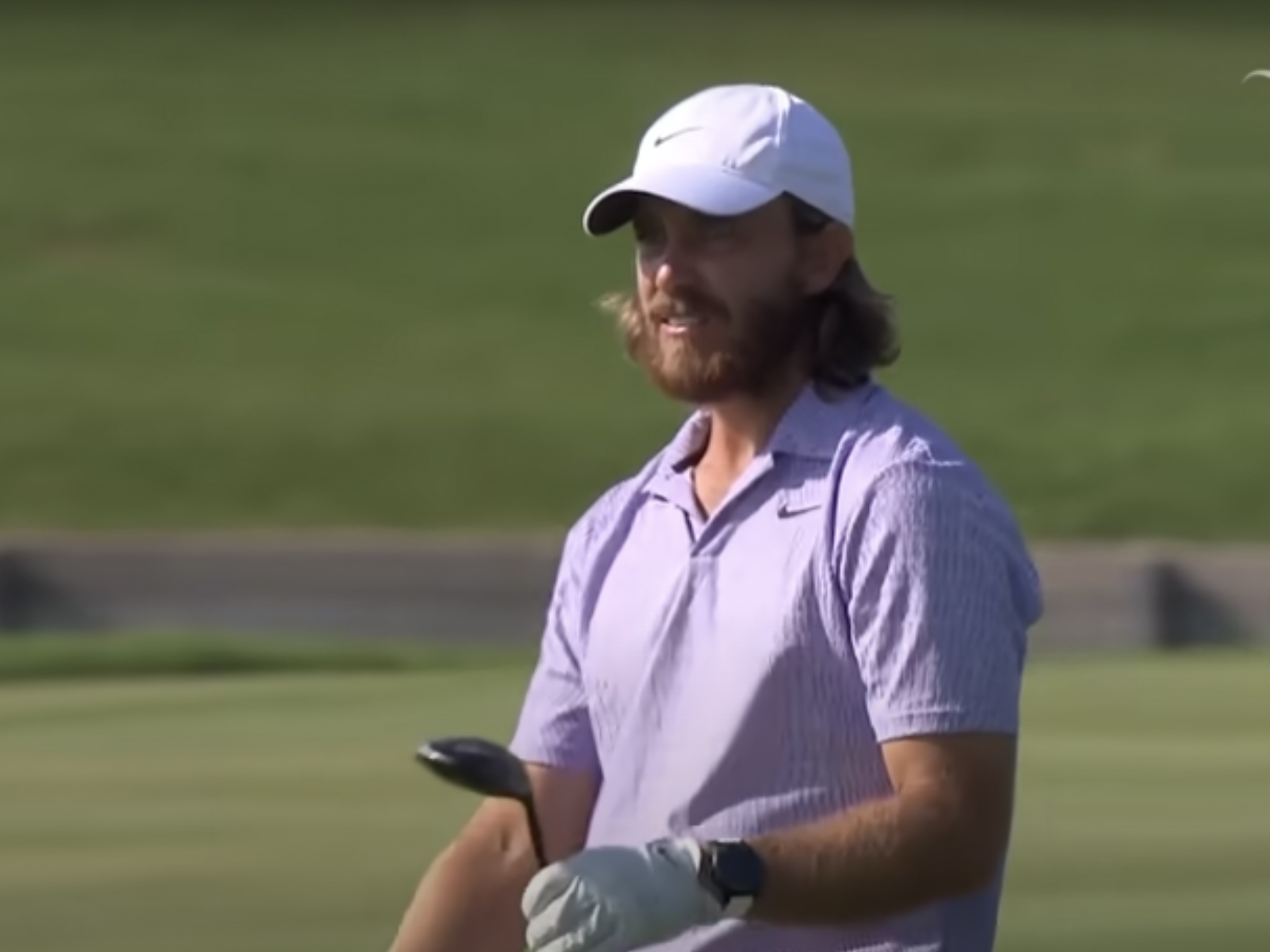
Tommy Fleetwood +2500 (DraftKings)
I know many out there have Tommy fatigue when it comes to betting, which is completely understandable given his lack of ability to win on the PGA Tour thus far in his career. However, history has shown us that players with Fleetwood’s talent eventually break though, and I believe for Tommy, it’s just a matter of time.
Fleetwood has been excellent on Tom Fazio designs. Over his past 36 rounds, he ranks 3rd in the field in Strokes Gained: Total on Fazio tracks. He’s also been incredibly reliable off the tee this season. He’s gained strokes in the category in eight of his past nine starts, including at The Masters, the PLAYERS and the three “signature events” of the season. Tommy is a golfer built for tougher courses and can grind it out in difficult conditions.
Last year, Fleetwood was the first-round leader at this event, firing a Thursday 65. He finished the event in a tie for 5th place.
For those worried about Fleetwood’s disappointing start his last time out at Harbour Town, he’s bounced back nicely after plenty of poor outings this season. His T7 at the Valero Texas Open was after a MC and T35 in his prior two starts and his win at the Dubai Invitational came after a T47 at the Sentry.
I expect Tommy to bounce back this week and contend at Quail Hollow.
Justin Thomas +3000 (DraftKings)
It’s been a rough couple of years for Justin Thomas, but I don’t believe things are quite as bad as they seem for JT. He got caught in the bad side of the draw at Augusta for last month’s Masters and has gained strokes on approach in seven of his nine starts in 2024.
Thomas may have found something in his most recent start at the RBC Heritage. He finished T5 at a course that he isn’t the best fit for on paper. He also finally got the putter working and ranked 15th in Strokes Gained: Putting for the week.
The two-time PGA champion captured the first of his two major championships at Quail Hollow back in 2017, and some good vibes from the course may be enough to get JT out of his slump.
Thomas hasn’t won an event in just about two years. However, I still believe that will change soon as he’s been one of the most prolific winners throughout his PGA Tour career. Since 2015, he has 15 PGA Tour wins.
Course history is pretty sticky at Quail Hollow, with players who like the course playing well there on a regular basis. In addition to JT’s PGA Championship win in 2017, he went 4-1 at the 2022 Presidents Cup and finished T14 at the event last year despite being in poor form. Thomas can return as one of the top players on the PGA Tour with a win at a “signature event” this week.
Cameron Young +3500 (DraftKings)
For many golf bettors, it’s been frustrating backing Cam Young this season. His talent is undeniable, and one of the best and most consistent performers on the PGA Tour. He just hasn’t broken through with a victory yet. Quail Hollow has been a great place for elite players to get their first victory. Rory McIlroy, Anthony Kim, Rickie Fowler and Wyndham Clark all notched their first PGA Tour win at Quail.
Throughout Cam Young’s career, he has thrived at tougher courses with strong fields. This season, he finished T16 at Riviera and T9 at Augusta National, demonstrating his preference of a tough test. His ability to hit the ball long and straight off the tee make him an ideal fit for Quail Hollow, despite playing pretty poorly his first time out in 2023 (T59). Young should be comfortable playing in the region as he played his college golf at Wake Forest, which is about an hour’s drive from Quail Hollow.
The 26-year-old has played well at Tom Fazio designs in the past and ranks 8th in the field in Strokes Gained: Total on those courses in his last 36 rounds. Perhaps most importantly, this season, Young is the best player on the PGA Tour in terms of proximity from 175-200 in the fairway, which is where a plurality and many crucial shots will come from this week.
Young is an elite talent and Quail Hollow has been kind to players of his ilk who’ve yet to win on Tour.
Byeong Hun An +5000 (FanDuel)
Byeong Hun An missed some opportunities last weekend at the CJ Cup Byron Nelson. He finished T4 and played some outstanding golf, but a couple of missed short putts prevented him from getting to the winning score of -23. Despite not getting the win, it’s hard to view An’s performance as anything other than an overwhelming success. It was An’s fourth top-ten finish of the season.
Last week, An gained 6.5 strokes ball striking, which was 7th in the field. He also ranked 12th for Strokes Gained: Approach and 13th for Strokes Gained: Off the Tee. The South Korean has been hitting the ball so well from tee to green all season long and he now heads to a golf course that should reward his precision.
An’s driver and long irons are absolute weapons. At Quail Hollow, players will see plenty of approach shots from the 175-200 range as well as some from 200+. In his past 24 rounds, Ben ranks 3rd in the field in proximity from 175-200 and 12th in proximity from 200+. Playing in an event that will not end up being a “birdie” fest should help An, who can separate from the field with his strong tee to green play. The putter may not always cooperate but getting to -15 is much easier than getting to -23 for elite ball strikers who tend to struggle on the greens.
Winning a “signature event” feels like a tall task for An this week with so many elite players in the field. However, he’s finished T16 at the Genesis Invitational, T16 at The Masters and T8 at the Arnold Palmer Invitational. The 32-year-old’s game has improved drastically this season and I believe he’s ready to get the biggest win of his career.
- LIKE9
- LEGIT4
- WOW1
- LOL1
- IDHT0
- FLOP0
- OB0
- SHANK1
19th Hole
Vincenzi’s LIV Golf Singapore betting preview: Course specialist ready to thrive once again

After another strong showing in Australia, LIV Golf will head to Sentosa Golf Club in Singapore looking to build off of what was undoubtedly their best event to date.
Sentosa Golf Club sits on the southern tip of Singapore and is one of the most beautiful courses in the world. The course is more than just incredible scenically; it was also rated 55th in Golf Digest’s top-100 courses in 2022-2023 and has been consistently regarded as one of the best courses in Asia. Prior to being part of the LIV rotation, the course hosted the Singapore Open every year since 2005.
Sentosa Golf Club is a par 71 measuring 7,406 yards. The course will require precise ball striking and some length off the tee. It’s possible to go low due to the pristine conditions, but there are also plenty of hazards and difficult spots on the course that can bring double bogey into play in a hurry. The Bermudagrass greens are perfectly manicured, and the course has spent millions on the sub-air system to keep the greens rolling fast. I spoke to Asian Tour player, Travis Smyth, who described the greens as “the best [he’s] ever played.”
Davis Love III, who competed in a Singapore Open in 2019, also gushed over the condition of the golf course.
“I love the greens. They are fabulous,” the 21-time PGA Tour winner said.
Love III also spoke about other aspects of the golf course.
“The greens are great; the fairways are perfect. It is a wonderful course, and it’s tricky off the tee.”
“It’s a long golf course, and you get some long iron shots. It takes somebody hitting it great to hit every green even though they are big.”
As Love III said, the course can be difficult off the tee due to the length of the course and the trouble looming around every corner. It will take a terrific ball striking week to win at Sentosa Golf Club.
In his pre-tournament press conference last season, Phil Mickelson echoed many of the same sentiments.
“To play Sentosa effectively, you’re going to have a lot of shots from 160 to 210, a lot of full 6-, 7-, 8-iron shots, and you need to hit those really well and you need to drive the ball well.”
Golfers who excel from tee to green and can dial in their longer irons will have a massive advantage this week.
Stat Leaders at LIV Golf Adelaide:
Fairways Hit
1.) Louis Oosthuizen
2.) Anirban Lahiri
3.) Jon Rahm
4.) Brendan Steele
5.) Cameron Tringale
Greens in Regulation
1.) Brooks Koepka
2.) Brendan Steele
3.) Dean Burmester
4.) Cameron Tringale
5.) Anirban Lahiri
Birdies Made
1.) Brendan Steele
2.) Dean Burmester
3.) Thomas Pieters
4.) Patrick Reed
5.) Carlos Ortiz
LIV Golf Individual Standings:
1.) Joaquin Niemann
2.) Jon Rahm
3.) Dean Burmester
4.) Louis Oosthuizen
5.) Abraham Ancer
LIV Golf Team Standings:
1.) Crushers
2.) Legion XIII
3.) Torque
4.) Stinger GC
5.) Ripper GC
LIV Golf Singapore Picks
Sergio Garcia +3000 (DraftKings)
Sergio Garcia is no stranger to Sentosa Golf Club. The Spaniard won the Singapore Open in 2018 by five strokes and lost in a playoff at LIV Singapore last year to scorching hot Talor Gooch. Looking at the course setup, it’s no surprise that a player like Sergio has played incredible golf here. He’s long off the tee and is one of the better long iron players in the world when he’s in form. Garcia is also statistically a much better putter on Bermudagrass than he is on other putting surfaces. He’s putt extremely well on Sentosa’s incredibly pure green complexes.
This season, Garcia has two runner-up finishes, both of them being playoff losses. Both El Camaleon and Doral are courses he’s had success at in his career. The Spaniard is a player who plays well at his tracks, and Sentosa is one of them. I believe Sergio will get himself in the mix this week. Hopefully the third time is a charm in Singapore.
Paul Casey +3300 (FanDuel)
Paul Casey is in the midst of one of his best seasons in the five years or so. The results recently have been up and down, but he’s shown that when he’s on a golf course that suits his game, he’s amongst the contenders.
This season, Casey has finishes of T5 (LIV Las Vegas), T2 (LIV Hong Kong), and a 6th at the Singapore Classic on the DP World Tour. At his best, the Englishman is one of the best long iron players in the world, which makes him a strong fit for Sentosa. Despite being in poor form last season, he was able to fire a Sunday 63, which shows he can low here at the course.
It’s been three years since Casey has won a tournament (Omega Dubai Desert Classic in 2021), but he’s been one of the top players on LIV this season and I think he can get it done at some point this season.
Mito Pereira +5000 (Bet365)
Since Mito Pereira’s unfortunate demise at the 2022 PGA Championship, he’s been extremely inconsistent. However, over the past few months, the Chilean has played well on the International Series as well as his most recent LIV start. Mito finished 8th at LIV Adelaide, which was his best LIV finish this season.
Last year, Pereira finished 5th at LIV Singapore, shooting fantastic rounds of 67-66-66. It makes sense why Mito would like Sentosa, as preeminent ball strikers tend to rise to the challenge of the golf course. He’s a great long iron player who is long and straight off the tee.
Mito has some experience playing in Asia and is one of the most talented players on LIV who’s yet to get in the winner’s circle. I have questions about whether or not he can come through once in contention, but if he gets there, I’m happy to roll the dice.
Andy Ogletree +15000 (DraftKings)
Andy Ogletree is a player I expected to have a strong 2024 but struggled early in his first full season on LIV. After failing to crack the top-25 in any LIV event this year, the former U.S. Amateur champion finally figured things out, finished in a tie for 3rd at LIV Adelaide.
Ogletree should be incredible comfortable playing in Singapore. He won the International Series Qatar last year and finished T3 at the International Series Singapore. The 26-year-old was arguably the best player on the Asian Tour in 2023 and has been fantastic in the continent over the past 18 months.
If Ogletree has indeed found form, he looks to be an amazing value at triple-digit odds.
- LIKE3
- LEGIT3
- WOW1
- LOL2
- IDHT0
- FLOP2
- OB0
- SHANK0


Dave Portnoy places monstrous outright bet for the 2024 Masters

Things got heated at the Houston Open between Tony Finau and Alejandro Tosti. Here’s why

Justin Thomas on the equipment choice of Scottie Scheffler that he thinks is ‘weird’

Tiger Woods arrives at 2024 Masters equipped with a putter that may surprise you

‘Absolutely crazy’ – Major champ lays into Patrick Cantlay over his decision on final hole of RBC Heritage

Report: Tiger Woods has ‘eliminated sex’ in preparation for the 2024 Masters

Two star names reportedly blanked Jon Rahm all week at the Masters

Report: LIV Golf identifies latest star name they hope to sign to breakaway tour

Neal Shipley presser ends in awkward fashion after reporter claims Tiger handed him note on 8th fairway

What we know about Bryson DeChambeau’s 3D-printed Avoda irons

Kevin Tway WITB 2024 (May)
Kevin Tway what’s in the bag accurate as of the Wells Fargo Championship. More photos from the event here. Driver:...

Matthieu Pavon WITB 2024 (May)
Pavon’s WITB accurate as of the Wells Fargo Championship. More photos from the event here. Driver: Ping G430 Max (9...


WITB Time Machine: Rory McIlroy’s winning WITB, 2015 Wells Fargo Championship
Then-No. 1 player in the world Rory McIlroy began the week at the Wells Fargo Championship at 3-1 odds, if...

Akshay Bhatia WITB 2024 (May)
Akshay Bhatia what’s in the bag accurate as of the Wells Fargo Championship. Bhatia is deciding between drivers. More photos...
-
 19th Hole3 weeks ago
Justin Thomas on the equipment choice of Scottie Scheffler that he thinks is ‘weird’
-
 19th Hole3 weeks ago
‘Absolutely crazy’ – Major champ lays into Patrick Cantlay over his decision on final hole of RBC Heritage
-

 19th Hole2 weeks ago
LET pro gives detailed financial breakdown of first week on tour…and the net result may shock you
-
 19th Hole5 days ago
Report: LIV star turns down PGA Championship invite due to ‘personal commitments’
-
 19th Hole2 weeks ago
Gary Player claims this is what ‘completely ruined’ Tiger Woods’ career
-
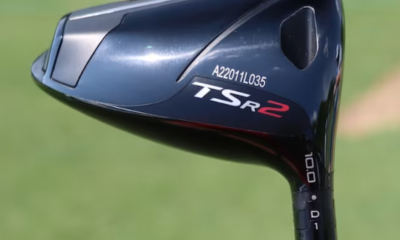
 Equipment4 days ago
Details on Justin Thomas’ driver switch at the Wells Fargo Championship
-
 Whats in the Bag2 weeks ago
Team McIlowry (Rory McIlroy, Shane Lowry) winning WITBs: 2024 Zurich Classic
-
 Whats in the Bag5 days ago
Keegan Bradley WITB 2024 (May)


Pingback: My Battle with Bipolar Golf | Stansfield Golf