
Opinion & Analysis
Is Tiger playing his best golf ever?


Whoa… whoa… whoa… is Tiger playing his best golf ever? The very mention of it probably incites John McEnroe-esque howls from golf enthusiasts coast to coast, “You cannot be serious!”
Yes, Tiger’s win Monday at the Arnold Palmer Invitational gave him 77 career Tour victories and moved him to within five wins of all-time leader Sam Snead’s 82 victories. And yes, the win also propelled him to the top spot in the Official World Golf Rankings for the first time since October 2010.
But we haven’t even reached the Tour’s first major. Talk about drinking the Tiger “Kool-Aid.” He’s only played five events so far in 2013.
And should we just ignore Woods’ legendary 2000 reign (nine wins with three majors)? Brush aside his breathtaking 2006 campaign (eight wins, ripping off seven consecutive, including two more majors)?
When you think of Tiger’s dominating run in the 2000s, you think of Woods bombing it unfairly past everyone else in the field. You think of Woods seemingly making just about every impossible putt when he had to make it. You think of Tiger intimidating other players into basically handing him titles.
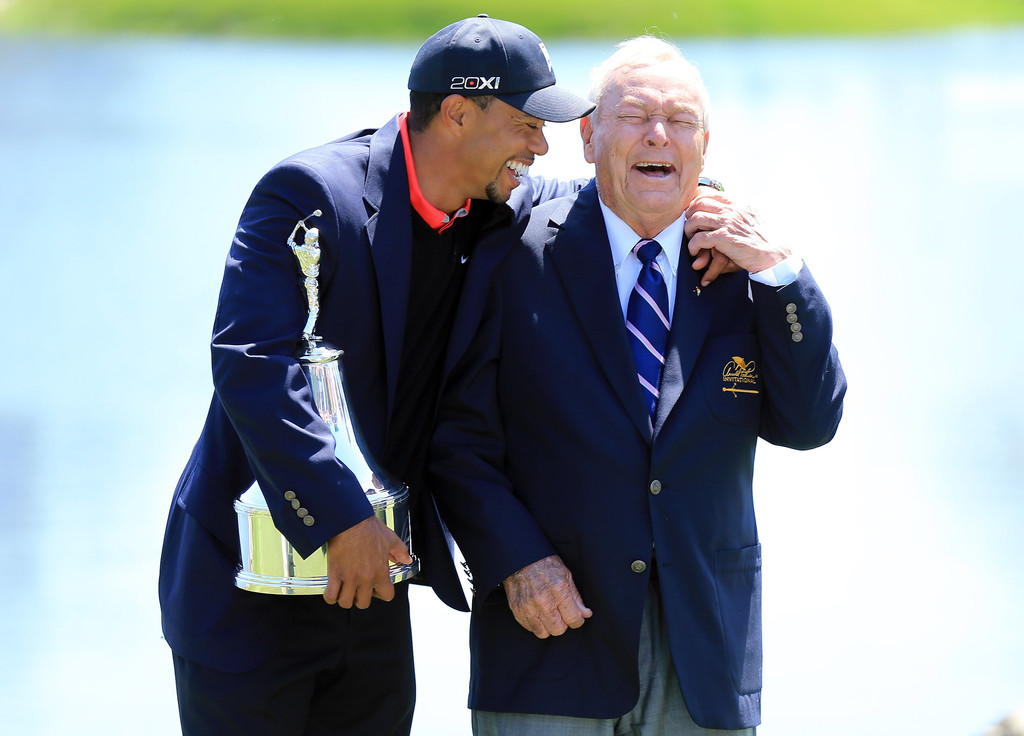
And those days are long gone. Everyone else on Tour can breathe a collective sigh of relief. Right?
“I don’t want to become as good as I once was, [no] I don’t,” Woods said this weekend before capturing his record eighth victory at Bay Hill. “I want to become better.”
Uh-oh.
Tiger averaged 298 yards off the tee in 2000. That was good enough for the No. 2 spot on Tour. But in 2013 Woods’ nearly identical 295-yard average only puts him at 24th best.
Woods’ driving accuracy has progressively gone down as well, he hit 71.2 percent of fairways in 2000, 60.7 percent in 2006, 59.8 percent in 2007 and so far only 55.8 percent in 2013.
But he’s hitting more greens, right? Wrong. His greens-in-regulation percentage has also declined from 75.1 percent in 2000, 74.1 percent in 2006, to 71.0 percent in 2007, and 67.0 percent in 2013.
Since Tiger became a professional in 1996, he’s used four different swings. The only swing Woods he hasn’t won a major with is the current one he is working on with Sean Foley, who became Woods’ instructor in August 2010. He’s won only six times in 38 events with this swing, a 16 percent rate that is by far the lowest with any of his swings. That doesn’t sound like someone playing his best golf ever.
But in three decisive areas, Woods has never been better than now.
1. Putting
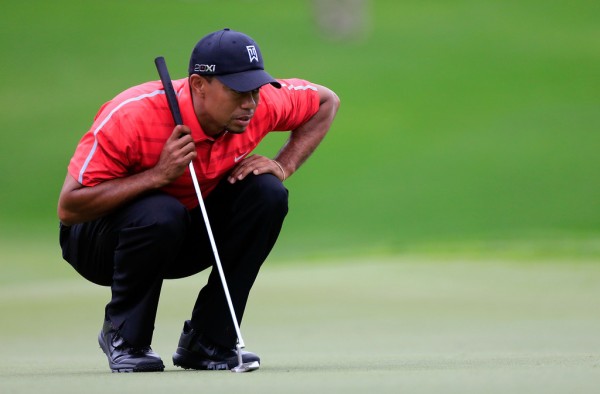
From 15 to 25 feet, Woods is sinking putts at a ridiculous rate of 28.6 percent in 2013, a career best. And from 5 to 15 feet, Tiger’s dropping it 55.7 percent of the time this year, a stat he only bettered in 2002.
And Woods really went bonkers with the putter at Bay Hill, leading the field with a 1.63 stroke putting average, needing only 110 strokes on the greens. And his 11.2 strokes gained-putting average, which measures the number of putts a golfer takes relative to the Tour average from the initial distance of a putt, was the best performance of his career
2. Par-5 Scoring
Woods is also converting birdie or better on par-5’s at a career best clip of 64.3 percent. That’s nearly 10 points above Tiger’s career average, and a conversion percentage he’s been nowhere near since the 2000 and 2001 seasons.
Like he has done all season, Woods dominated the par-5s at Bay Hill this weekend with nine birdies and three eagles, going 14-under with four of those birdies coming on the final day.
3. Resilient Mentality
Putting success inside 25 feet and scoring on par-5’s will be essential to win at Augusta. But perhaps most crucial to Woods winning his fifth green jacket and first since 2005 is Tiger’s state of mind. All indications are that his greatest competitive advantage is back with a vengeance. And nowhere was it on display more than Saturday at Bay Hill.
Even after bogeying his last three holes in Round 2 to fall four shots behind 36-hole co-leader Justin Rose, Woods surged into the lead in Round 3 with a 6-under 66 that included an eagle at the par-5 No. 16, which gave him three eagles for the week — one less than he had the entire 2012 season.
Recent years have witnessed Woods, for the first time, unable to close two-day and 36-hole leads at major championships. We’ve seen Woods kick clubs after a bad shot, curse in frustration when something didn’t go his way and come unglued as things crumbled around him.
That appears to have changed now.
“I just understand how to fix my game,” Woods said after the win at Bay Hill. “It’s taken me a while. I hit a bad shot here and there, and that’s easy to fix [now]. I know what my fix is going to be and that makes a big difference.”
This is the fourth time in Woods’ career he’s entered the Masters with three wins. In two of those three seasons Tiger went on to win a major. And by Tiger’s own admission, it’s all about the majors. His comeback won’t be complete until he wins that elusive No. 15.













Club Junkie
Building my 2026 gamer WITB: Ranking the contenders and new putter projects – Club Junkie Podcast

The annual What’s In The Bag build is underway, and on this episode of Club Junkie, Brian breaks down the clubs currently leading the race for a spot in his 2026 gamer setup. From drivers and fairway woods to irons, wedges, and shafts, he ranks the equipment that’s performing best and explains what’s separating the front runners from the rest of the field.
Brian also heads into the workshop to discuss several putter projects currently on the bench. From head options and shaft choices to build ideas and testing plans, he shares what he’s working on and which putters could become serious contenders for the bag this season.
If you’re a gear junkie who loves equipment testing, club building, and the never-ending pursuit of the perfect setup, this episode is for you.
Follow Club Junkie:
Instagram: @clubjunkiepod
TikTok: @clubjunkiepod
Threads: @clubjunkiepod
X: @ClubJunkiePod
Club Junkie
Tour Edge Exotics mini driver review + TaylorMade Spider ZT Max first look – Club Junkie

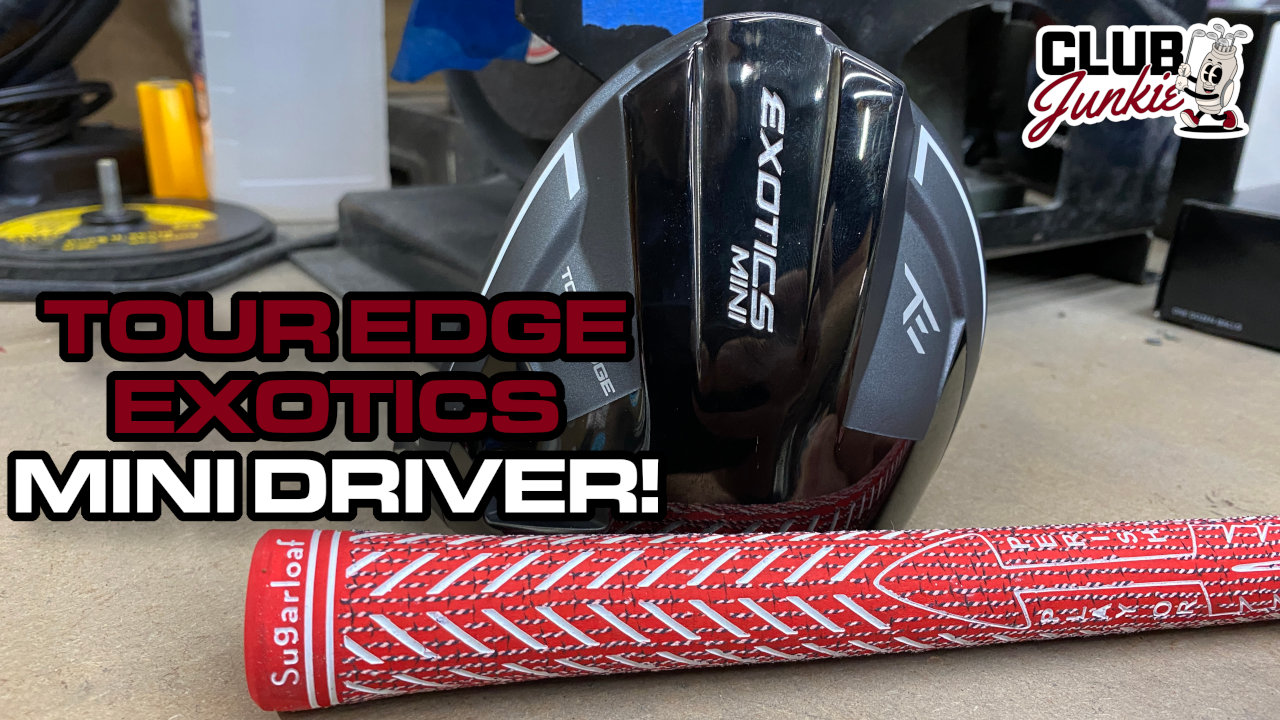
On this episode of Club Junkie, I put the new Tour Edge Exotics Mini Driver to the test and break down the performance, forgiveness, distance, and where it fits compared to a traditional driver or strong fairway wood. If you have been curious about adding a mini driver to the bag, this one is worth a look.
I also dive into the new TaylorMade Spider ZT Max putter that was recently spotted and discuss the growing zero torque putter trend. Plus, there is a closer look at the new Project X Titan Yellow shaft showing up on the PGA Tour and what makes it different from other profiles currently out there.
Opinion & Analysis
AVL: We’re talking about practice! My best tips for taking your game to the course

With the beginning of June on the horizon and courses rounding into peak condition for the season, it’s time to hone the finer skills that often get rusty over the winter. More sunlight also means more time to get out on the course and work on your game.
Whether it’s the practice green or the driving range, there’s always something to improve—whether you’re enjoying the fresh air or preparing for a weekend game or tournament. You can work on drills or freestyle around the green, and friendly competition is a great way to sharpen your skills.
While there are endless ways to get better at golf, I’m going to focus on practicing around the green. Let’s take a look at a few things to keep in mind as we head into the summer months.
Drills
From the driving range to the practice green, it’s important to incorporate drills into your routine. Years ago, I spent a weekend working on my short game with James Sieckmann. He recommended doing drill work for 5–10 minutes, then returning to your main practice.
This way, you create a balance between structured drills and real-world scenarios, so you’re not confined to “perfect” situations. For example, hitting the same three-foot putt over and over is good for repetition, but after a while, it becomes less interactive for your brain.
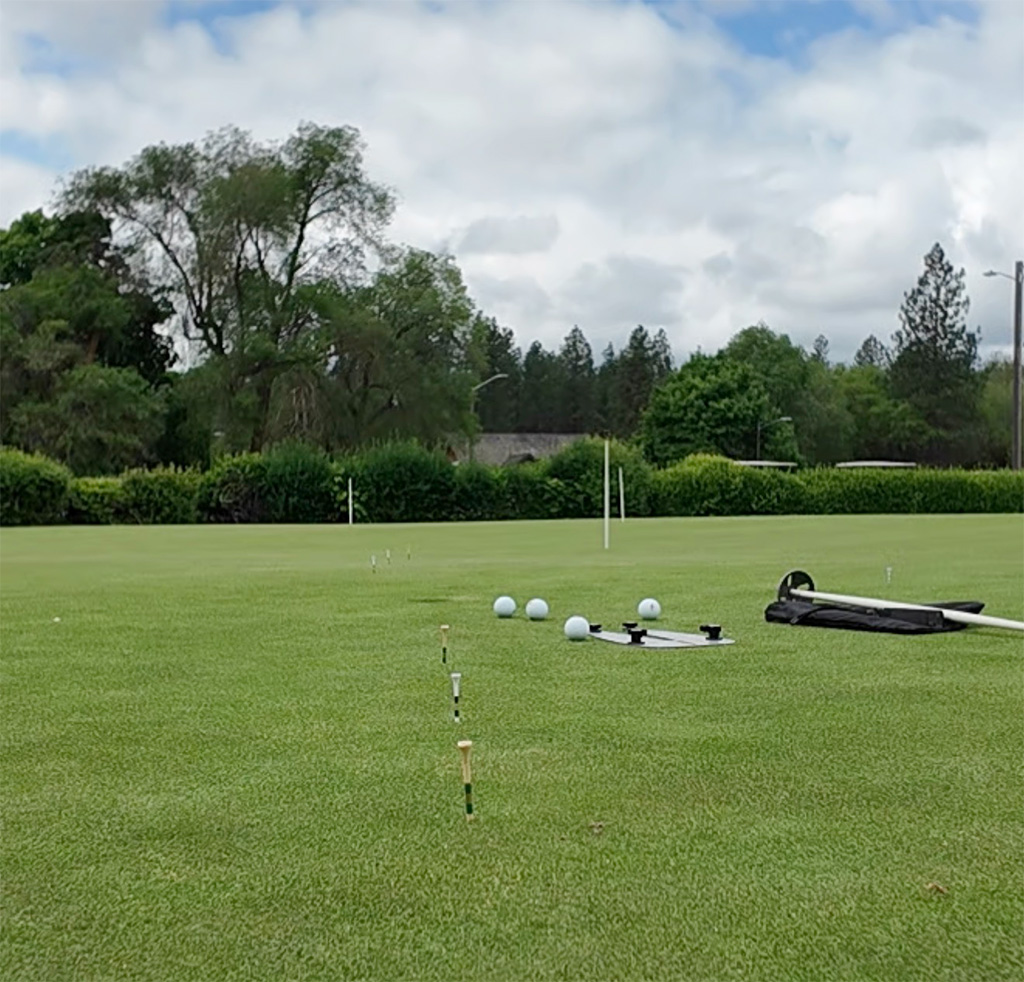
My approach is to use a putting trainer with a narrow gate for the ball to pass through, or simply place tees just outside the width of the ball. I’ll hit a series of four putts through the gate for three sets. Then, from a similar distance, I’ll hit four putts without the training aid and repeat that sequence three times.
Next, I’ll hit a number of 15–25 foot putts in a random fashion, then circle back to repeat the short putt drills with and without the training aid.
This breaks up the rhythm of hitting short putts with the training aid. When you hit the same short putts over and over, it’s easy to get into a groove—which is great for the drill, but not reflective of actual course play. While finding a rhythm is fundamental for drills, I like to introduce variation with longer putts to keep things realistic.
Game Mode
Once you’ve established a foundation with drills, it’s time to simulate on-course scenarios. This is where a few practice games come in handy.
One that I’ve been enjoying lately involves putting 10- to 15-footers with two balls. If I make the putt, great! If I miss, I pull the missed ball back a putter length. Suddenly, that little tap-in becomes a nerve-wracking three-footer—at least at first. As you get better at this game, those three- and five-footers become much more comfortable and routine.
It may sound cliché, but each shot is just what it is—it’s how we react that makes the difference. I like this game because it blends the pressure of on-course putting with the consequence of leaving yourself a much longer putt than usual.
Another game I like is one I recently learned from Brad Faxon. Place three tees in a line at four different locations around the hole: one at 3 feet, one at 6 feet, and one at 8 feet. The 3- and 6-foot putts count as par, and the 8-footer is for birdie.
This game keeps you focused on scoring and helps you get into a competitive mindset. You can even think about this putting game while you’re on the course. I just started playing it, and last week I couldn’t get better than two under par.
Competition
Competition during practice is when drills and games come to life, and you start to see results. For me, nothing beats a putting contest with a friend or two. In the right setting, these contests can become talking points for the whole season.
Match play, a game of 21, or simply seeing who can make the most one-putts (with a small prize on the line) are all great ways to simulate real on-course pressure. Recently, I played in a putting contest where one competitor made back-to-back 30- and 50-foot putts. As they say, expect your opponent to make every putt—and he nearly did. That’s impressive, and it’s something you see on the course, too: you have to stay committed to your game plan, no matter what.
When it comes to practice, it’s important to blend feedback from recent rounds with the fundamentals you want to reinforce. Drills, games, and competition—from the driving range to the putting green—form the backbone of skills you’ll rely on during actual rounds.
Finding the right balance is something we’re all working on, one practice session at a time. With the beginning of June on the horizon and courses rounding into peak condition for the season, it’s time to hone the finer skills that often get rusty over the winter. More sunlight also means more time to get out on the course and work on your game. Whether it’s the practice green or the driving range, there’s always something to improve—whether you’re enjoying the fresh air or preparing for a weekend game or tournament. You can work on drills or freestyle around the green, and friendly competition is a great way to sharpen your skills. While there are endless ways to get better at golf, I’m going to focus on practicing around the green. Let’s take a look at a few things to keep in mind as we head into the summer months.
Drills
From the driving range to the practice green, it’s important to incorporate drills into your routine. Years ago, I spent a weekend working on my short game with James Sieckmann. He recommended doing drill work for 5–10 minutes, then returning to your main practice. This way, you create a balance between structured drills and real-world scenarios, so you’re not confined to “perfect” situations. For example, hitting the same three-foot putt over and over is good for repetition, but after a while, it becomes less interactive for your brain.
My approach is to use a putting trainer with a narrow gate for the ball to pass through, or simply place tees just outside the width of the ball. I’ll hit a series of four putts through the gate for three sets. Then, from a similar distance, I’ll hit four putts without the training aid and repeat that sequence three times. Next, I’ll hit a number of 15–25 foot putts in a random fashion, then circle back to repeat the short putt drills with and without the training aid.
This breaks up the rhythm of hitting short putts with the training aid. When you hit the same short putts over and over, it’s easy to get into a groove—which is great for the drill, but not reflective of actual course play. While finding a rhythm is fundamental for drills, I like to introduce variation with longer putts to keep things realistic.
Game Mode
Once you’ve established a foundation with drills, it’s time to simulate on-course scenarios. This is where a few practice games come in handy. One that I’ve been enjoying lately involves putting 10- to 15-footers with two balls. If I make the putt, great! If I miss, I pull the missed ball back a putter length.
Suddenly, that little tap-in becomes a nerve-wracking three-footer—at least at first. As you get better at this game, those three- and five-footers become much more comfortable and routine. It may sound cliché, but each shot is just what it is—it’s how we react that makes the difference. I like this game because it blends the pressure of on-course putting with the consequence of leaving yourself a much longer putt than usual.
Another game I like is one I recently learned from Brad Faxon. Place three tees in a line at four different locations around the hole: one at 3 feet, one at 6 feet, and one at 8 feet. The 3- and 6-foot putts count as par, and the 8-footer is for birdie.
This game keeps you focused on scoring and helps you get into a competitive mindset. You can even think about this putting game while you’re on the course. I just started playing it, and last week I couldn’t get better than two under par.
Competition
Competition during practice is when drills and games come to life, and you start to see results. For me, nothing beats a putting contest with a friend or two. In the right setting, these contests can become talking points for the whole season. Match play, a game of 21, or simply seeing who can make the most one-putts (with a small prize on the line) are all great ways to simulate real on-course pressure. Recently, I played in a putting contest where one competitor made back-to-back 30- and 50-foot putts. As they say, expect your opponent to make every putt—and he nearly did. That’s impressive, and it’s something you see on the course, too: you have to stay committed to your game plan, no matter what.
When it comes to practice, it’s important to blend feedback from recent rounds with the fundamentals you want to reinforce. Drills, games, and competition—from the driving range to the putting green—form the backbone of skills you’ll rely on during actual rounds. Finding the right balance is something we’re all working on, one practice session at a time.

Justin Rose WITB 2026 (April): Full WITB breakdown with new McLaren irons

What’s the story behind Webb Simpson’s custom-stamped irons?

Cadillac Championship Tour Report: Spieth’s sizable changes, McLaren Golf launches, and more

Russell Henley’s winning WITB: 2026 Charles Schwab Challenge

Kristoffer Reitan’s winning WITB: 2026 Truist Championship

Aaron Rai’s winning WITB: 2026 PGA Championship

Cameron Young’s winning WITB: 2026 Cadillac Championship

Details on Jason Day’s latest prototype Avoda iron setup

Nelly Korda WITB 2026 (April)

Justin Rose on the switch to McLaren Golf, learnings from previous equipment moves


Sungjae Im WITB 2026 (June)
Sungjae Im had >14 clubs in his bag when photographed prior to the Memorial Tournament. Driver: Titleist TSi2 (8 degrees, B1...


Lucas Glover WITB 2026 (June)
Lucas Glover had >14 clubs in his bag when photographed prior to the Memorial Tournament. Driver: Titleist GTS2 (10 degrees, B2 SureFit...

Chris Gotterup WITB 2026 (June)
Chris Gotterup had >14 clubs in his bag when photographed prior to the Memorial Tournament. Drivers: TaylorMade Qi4D (8 degrees), Ping...

Jason Day WITB 2026 (June)
Jason Day had >14 clubs in his bag when photographed prior to the Memorial Tournament. Driver: Ping G430 LST (10.5 degrees...
-
 News5 days ago
Russell Henley’s winning WITB: 2026 Charles Schwab Challenge
-
 Whats in the Bag3 weeks ago
Aaron Rai’s winning WITB: 2026 PGA Championship
-
Equipment2 days ago
Details on Jason Day’s latest prototype Avoda iron setup
-
 Tour Photo Galleries3 weeks ago
Photos from the 2026 CJ Cup Byron Nelson
-

 Equipment2 weeks ago
CJ Cup Byron Nelson Tour Report: Koepka and Kim’s newest putters finally get hot
-
 News1 week ago
Charles Schwab Challenge Tour Report: MacIntyre, Åberg and Spaun all switch putters, TaylorMade launches new Spider
-
 Equipment1 week ago
Details on J.J. Spaun’s surprise putter switch
-
 Popular Photo Galleries2 weeks ago
Photos from the 2026 Charles Schwab Challenge


paul
Mar 28, 2013 at 1:52 pm
He has owned lots of swings.
ABgolfer2
Mar 28, 2013 at 10:38 am
Sounds like a guy who never truly “owned his swing”. jmho
Brian
Mar 28, 2013 at 1:55 pm
Sounds like a perfectionist who feels he hasn’t reached it yet.
Desmond
Mar 26, 2013 at 1:39 pm
The winning percentage under Foley’s guidance is misleading. Tiger was injured, experienced post-divorce issues, working on the swing, and changing caddies. The relevant question is whether Tiger will hit a consistent draw with the driver to win Majors. Foley’s tutelage will start showing now as Tiger focuses more on his short game.
purkjason
Mar 26, 2013 at 11:35 am
The only weakness I have ever seen out of Tiger’s game has always been his driver. Why doesn’t he cut his driver down to his 3 wood shaft length. He might lose a few yards off the Tee but he would be in the fairway almost every time. Or just get rid of his driver all together, Tee off with his 3 Wood, and add a third wedge or 2 hybrid. Seems like it wouldn’t hurt to try at least in the off season.
Cyd
Mar 26, 2013 at 11:14 am
Woods is mentally tougher on the course then the rest of todays so called pros. In life outside of golf woods is truly a mental midget.
Anyone not named eldrick is mentally weak on the course and scared of their own shadows, therefore when woods is in the hunt the rest of the field will fold like a cheap suit.