
Opinion & Analysis
The Wedge Guy: A visit with Dr. Bob Rotella


As I was thinking about some “gremlins” that have snuck into my own game the past few weeks, I recalled a visit I had with Dr. Bob Rotella some 10 years ago. That morning was one of the standout days of my 30-year golf industry career, getting to spend several hours with one of golf’s pre-eminent sports psychologists.
So, that brought me to my “Wedge Guy” archives to recall what I shared with my readers way back then, just to refresh my own memories and takeaways from that very interesting and enlightening session.
Dr. Rotella, as you probably know, has worked with dozens of tour professionals, and has authored numerous books on the subject of performance psychology, most notably “Golf Is Not A Game of Perfect.” If you haven’t read any of his works, I highly recommend it.
Anyway, we spent two hours talking about the performance challenges all of us golfers face, which led into a deep dive into the technologies I had built into the SCOR4161 precision scoring clubs (the forerunners of my work on Ben Hogan wedges and now the Edison Forged line). What I want to share with you today are some of the real “pearls of wisdom” that I gleaned from that very enjoyable visit:
Scoring is all about short range performance.
Dr. Rotella first enlightened me to the fact that tour players hit “10 and a half to 12 and a half” approach shots a round with an 8-iron or less (now even more than that!). For the modern tour players, that accounts for almost all the par fours and threes, because the par fives are two-shot holes. He went on to express his advice that you just try to not hurt yourself when you have a seven-iron or longer into the green, and you fire at flags with the short irons and wedges. In his words, “if you don’t feel like you can knock flags down with those scoring clubs this week, you might as well stay home.” I think we can all apply that wisdom by spending the vast majority of our range time working to improve our work with those high-lofted scoring clubs.
The tight fairways scare the pros, too
Over the past few decades, the mower heights on fairways have been moved closer and closer, so that the pros play tighter and tighter lies all the time. Back then I had just read where the fairway height at Merion, for example, was at one inch when David Graham won the U.S. Open there in 1981 but was increased from one quarter to on half inch for the 2013 U.S. Open. That’s a huge difference. Because the ball is sitting tighter, shots are hit lower on the clubface, which robotic testing reveals, produces lower and hotter flight with more spin. And it makes short range pitch and chip shots scary even for the pros. That’s because they play low bounce wedges to deal with the bunkers on tour. (Which I’m getting to in just a moment.) Watch TV and you’ll see tour pros putting from off the green more often than you used to, and now we know why. There’s a tip in there for all of us.
Those tour bunkers.
Did you know the PGA Tour had a standard for bunker sand. They like them firm and moist, so the players can hit those miraculous bunker shots with lots of spin, and they very rarely get a “down” or plugged lie. As I’ve written before, the PGA Tour appreciates that their “customer” is the television viewer – over 50% of which don’t even play golf – and they like to see these things. But I have a problem with the best players in the world enjoying bunkers that are not nearly as tough as the ones we all play every week. For most all of us, any bunker shot that gets out and leaves a putt of even 20 to 30 feet is not bad.
There’s a lot more I took away, but not enough room here. I strongly suggest that you add a few of Dr. Rotella’s books to your golf reading list.









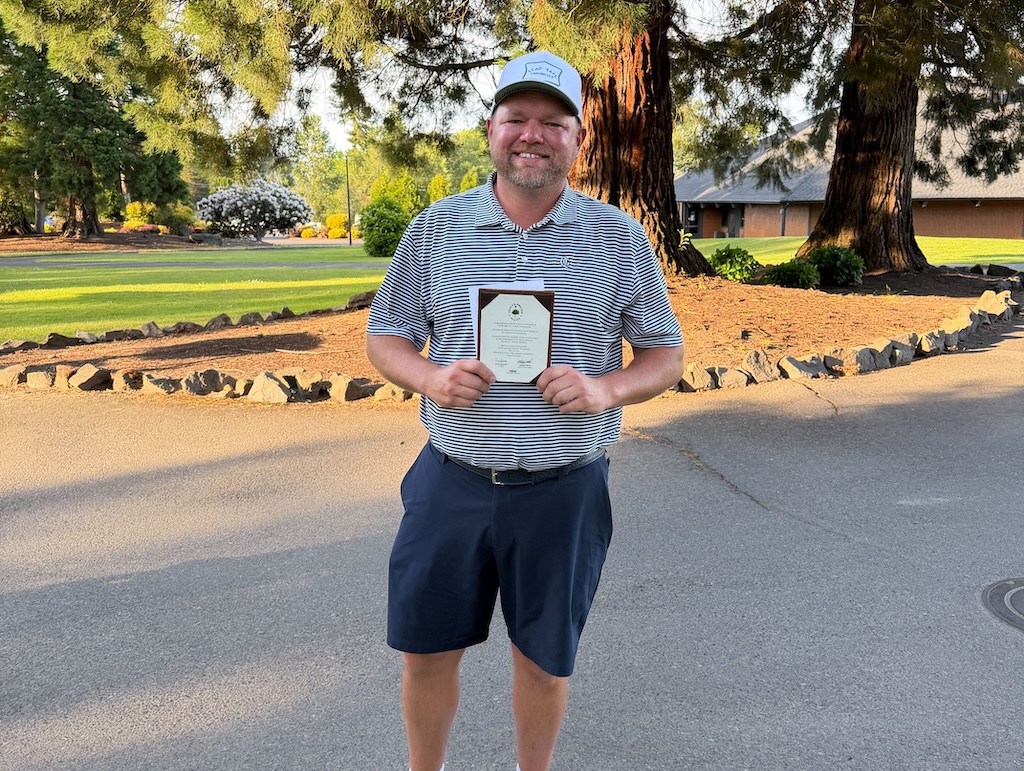
This past Monday, I played in the U.S. Amateur local qualifier at Rock Creek Country Club in Portland, Oregon. A full tee sheet from 7:30 a.m. to 1:55 p.m., the top 11 scores would make it to the U.S. Amateur final qualifying.
I teed off at 10:48 a.m.. With the 7:30 am tee time, you can get a feel for the leaders’ pace, and they were off and running on the challenging setup at Rock Creek.
View this post on Instagram
Getting to the highlight of the round on the par five 17th, a drive up the left side and 212 yards left to the front hole location. I took out a 5-iron with plans of middle of the green. The ball ended up 8 feet left of the hole, pin high. A slight downhill putt dropped in for an eagle 3 on the 17th. With the cut line looking to be anywhere from -2 to even par. This was the boost I had been waiting for all day.
With making par from the trees on 18, it was time to wait for a potential playoff with a posted score of one under par 71.
Three hours later, it was playoff time. 8 players for 6 spots. I made par on the playoff hole, which was good enough to advance to the U.S. Amateur final qualifying in July. USGA qualifiers sure deliver on all of the emotions in golf!
Club Junkie
Building my 2026 gamer WITB: Ranking the contenders and new putter projects – Club Junkie Podcast

The annual What’s In The Bag build is underway, and on this episode of Club Junkie, Brian breaks down the clubs currently leading the race for a spot in his 2026 gamer setup. From drivers and fairway woods to irons, wedges, and shafts, he ranks the equipment that’s performing best and explains what’s separating the front runners from the rest of the field.
Brian also heads into the workshop to discuss several putter projects currently on the bench. From head options and shaft choices to build ideas and testing plans, he shares what he’s working on and which putters could become serious contenders for the bag this season.
If you’re a gear junkie who loves equipment testing, club building, and the never-ending pursuit of the perfect setup, this episode is for you.
Follow Club Junkie:
Instagram: @clubjunkiepod
TikTok: @clubjunkiepod
Threads: @clubjunkiepod
X: @ClubJunkiePod
Club Junkie
Tour Edge Exotics mini driver review + TaylorMade Spider ZT Max first look – Club Junkie

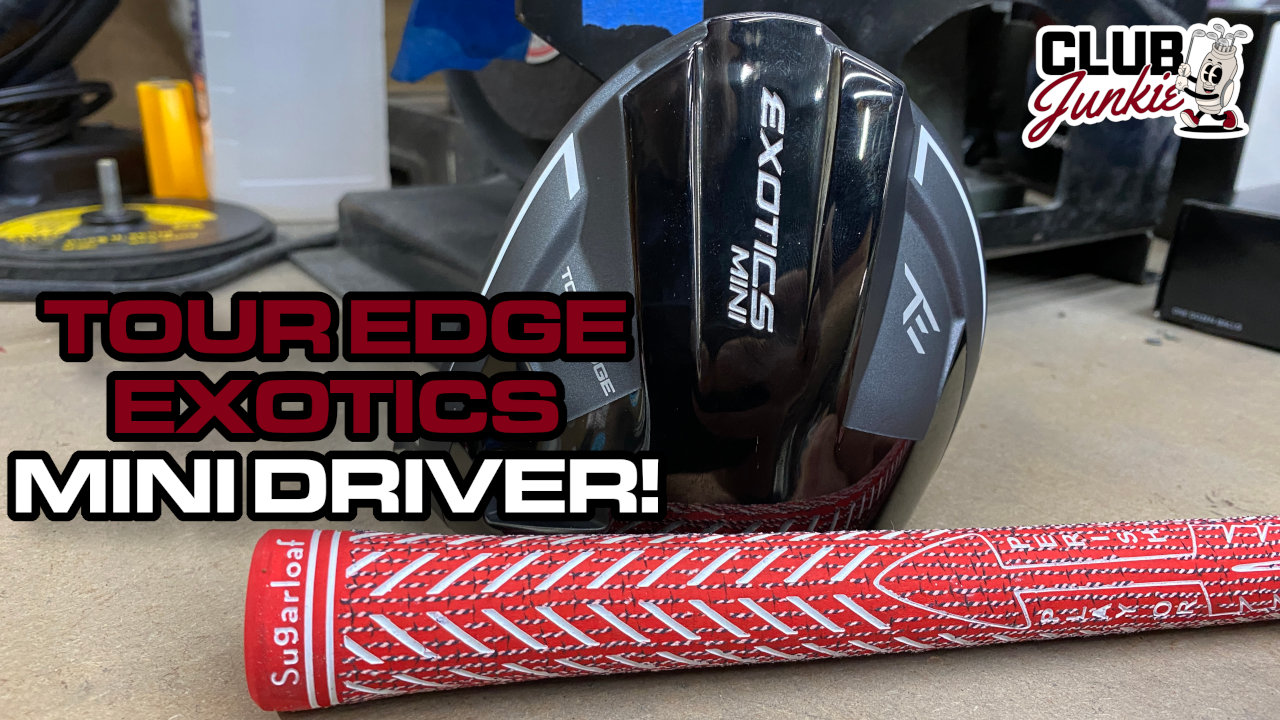
On this episode of Club Junkie, I put the new Tour Edge Exotics Mini Driver to the test and break down the performance, forgiveness, distance, and where it fits compared to a traditional driver or strong fairway wood. If you have been curious about adding a mini driver to the bag, this one is worth a look.
I also dive into the new TaylorMade Spider ZT Max putter that was recently spotted and discuss the growing zero torque putter trend. Plus, there is a closer look at the new Project X Titan Yellow shaft showing up on the PGA Tour and what makes it different from other profiles currently out there.

Justin Rose WITB 2026 (April): Full WITB breakdown with new McLaren irons

What’s the story behind Webb Simpson’s custom-stamped irons?

Cadillac Championship Tour Report: Spieth’s sizable changes, McLaren Golf launches, and more

Memorial Tournament Tour Report: Rory McIlroy, Cameron Young switch up drivers, and more

Russell Henley’s winning WITB: 2026 Charles Schwab Challenge

Kristoffer Reitan’s winning WITB: 2026 Truist Championship

Aaron Rai’s winning WITB: 2026 PGA Championship

Cameron Young’s winning WITB: 2026 Cadillac Championship

Details on Jason Day’s latest prototype Avoda iron setup

J.T. Poston’s winning WITB: 2026 Memorial Tournament
Brianna Do WITB (June 2026)
Driver: Callaway Quantum Triple Diamond (9 degrees) Shaft: KBS PGW 3-wood: Callaway Elyte Titanium (15 degrees) Shaft: KBS PGW 5-wood:...

Athena Singh WITB 2026 (June)
Driver: TaylorMade Qi4D (10.5 Degrees) Shaft: Fujikura Ventus Blue 6 S 3-wood: TaylorMade Qi10 Max (16 Degrees) Shaft: Fujikura Ventus Red 6...
J.T. Poston’s winning WITB: 2026 Memorial Tournament
Driver: Titleist GTS3 (9 degrees) Shaft: Mitsubishi Diamana BF 60 TX 3-wood: Titleist TS2 (15 degrees) Shaft: Graphite Design Tour...


Alex Noren WITB 2026 (June)
Driver: Callaway Paradym Ai Smoke Max D (9 degrees @7, draw setting) Shaft: Graphite Design Tour AD VF 6 X 3-wood: Callaway...
-
 Equipment3 days ago
Memorial Tournament Tour Report: Rory McIlroy, Cameron Young switch up drivers, and more
-
 News1 week ago
Russell Henley’s winning WITB: 2026 Charles Schwab Challenge
-
 Equipment5 days ago
Details on Jason Day’s latest prototype Avoda iron setup
-
Whats in the Bag1 day ago
J.T. Poston’s winning WITB: 2026 Memorial Tournament
-

 Equipment12 hours ago
Best irons 2026: Best irons overall, most forgiving irons, and more
-

 Equipment2 weeks ago
CJ Cup Byron Nelson Tour Report: Koepka and Kim’s newest putters finally get hot
-
 News2 weeks ago
Charles Schwab Challenge Tour Report: MacIntyre, Åberg and Spaun all switch putters, TaylorMade launches new Spider
-
 Equipment2 weeks ago
Details on J.J. Spaun’s surprise putter switch


Daniel
Jun 22, 2022 at 9:38 pm
Send some of this info to the Distance Debate thread. Especially the remarks about the approach clubs the pros are using most of the time.