
Opinion & Analysis
Winter golf: Breaking the monotony

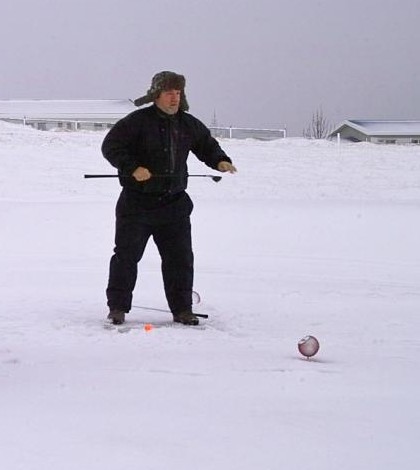
Let me paint a picture of my New Year’s Eve for you: The snow is gently falling outside of my window and a small but lively group of close friends are gathered around a raging fire. Tunes are in the air, cocktails are in hand, and the roughly 1,300 children that seem to be in my house have finally settled into a movie on a different floor. Sounds delightful, right?
Wrong.
All we kept talking about is how much we wanted to play golf. Last year Kansas City was on the verge of becoming Dallas, with an average December temp north of 45 degrees and highs in the mid 60s — I had friends who played five times between Christmas and New Years. This yea,r we were all monitoring the forecast with December 30th as our only hope for a round (with a high of 42). Even though we hit our high, the inch of snow we’d gotten on the 20th hadn’t yet melted from the fairways. No golf during a week off work = a bunch of unhappy dudes.
Even more frustrating for me is that I left the season playing as well as I had in 15 years. Other than the last three holes of my last round (still trying to erase the memory of my drives on the Nos. 16 and 18), I’d been no more than six over on 18 for a couple months on my “real” rounds, and been dancing around par on every nine I’d had the chance to play. Now I’m pounding balls into a net and looking for a decent set of rock skis on eBay.
The horror.
Which brings us neatly to the point of our column: How do I keep what is an inherently boring activity (hitting golf balls into a net), into an experience that holds my attention span for more than six swings.
I’ve mentioned in the past that I’m working on a swing change over the winter (sometime between a back surgery and a couple years of ignoring golf I stopped clearing my hips), and by all logic that alone should keep me interested. But as I’ve already made the major changes, my instructor and I are now working on more minor tweaks (our emphasis this last time was largely on ball flight and trusting my ability to work the ball left to right) that require the visual feedback of watching a ball head towards a target to be effective.
So what do I work on when hitting the ball into a net?
1. Tempo
The first thing that I’ve been focusing on is tempo. In my 30+ years of playing golf (as largely a feel player), nothing, other than maybe jarring a bunch of putts, affects my day-to-day golf scores like good (or bad) tempo. This year, I dove headfirst into John Novosel’s Tour Tempo system, buying the app for my iPhone and working with it pretty extensively.
In the interest of full disclosure, I feel I’d better mention that John is a KC guy, and his sons were in my fraternity at KU (I still see Scott, his youngest son, occasionally out and around KC. He’s a rock-solid dude who walked on to my beloved Jayhawk basketball team his senior yeah and unexplainably become a momentary Japanese rap phenom a few years after that). I’d been hearing about his Tour Tempo book for years and never really looked into it because I wasn’t really playing much (let alone practicing). But this year, as I was struggling to reclaim my game, it really helped.
In 20 words or less, it’s a series of tones that lock you into a proper tempo ratio. One thing that has to be said, though, is it’s kind of an all-in app. If you’re listening to it, it’s almost impossible to work on something else in you swing, because it takes over your head. Therefore, my tempo drills have taken a back burner during my swing change, and I’m finding it very helpful to get back to them to cement my “new” swing.
2. Making “perfect” contact
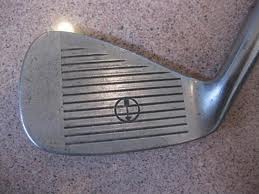
I’ve approached this in a couple different ways. The first is through tracking my impact with my clubs with either impact tape or a dry erase marker. I play Ping i20s with Aerotech Steelfiber shafts, and I’d be lying if I told you I haven’t hit a few shots on the course that I though I pured, watched fly perfectly through the air and land a couple feet short of the stick for a kick-in birdie, only to look down to see I missed the ball quite a ways on the toe. While the technology that allows this to happen is awesome (especially when a gentleman’s wager is on the line), the lack of feedback on mis-hits can be detrimental to an indoor practice session.
Obviously, using impact tape doesn’t require much explanation. Buy some impact tape, put it on your club, and track where you’re making contact. If you don’t have any impact tape, however, similar results can be faked with a dry erase marker. Color the face of your club and hit the ball. The ball will take the marker off your club where it makes impact. Recolor the club and repeat. Now granted, this can lead to a bunch of colored practice balls (insert joke here), tends to lead to marker all over the hands, and is slightly ridiculous to explain if your wife walks by when you’re doing it, but it definitely works.
The second way to track contact is by hitting clubs other than your gamers. Let’s be honest, I’m probably not going to pull out my dad’s old Kenneth Smiths for a July money game, but when you’re pounding balls into a net, they’ll give you some pretty rock solid feedback as to whether you’ve hit the sweetspot or not. I can’t look you in the face and tell you that messing around with an old Staff Tour Blade or a Macgregor Tourney is going to help you come spring, but it has helped me break up the monotony of hitting the same Ping 7 iron over and over. Plus, it’s kind of cool in a golf-hipster sort of way.
3. Cheating
Just kidding (kind of). I’ve hit enough of a wall that I’ve decided to start cheating my practice sessions with a simulator. As I’m not independently wealthy (or single), the idea of investing in a Trackman or FlightScope was a no-go, which put me firmly in the Optishot camp. It’s barely out of its packaging and has been a fun little toy thus far, but I’ll hold out on a full review for our next column.
Click here for more discussion in the “Instruction & Academy” forum.



This past Monday, I played in the U.S. Amateur local qualifier at Rock Creek Country Club in Portland, Oregon. A full tee sheet from 7:30 a.m. to 1:55 p.m., the top 11 scores would make it to the U.S. Amateur final qualifying.
I teed off at 10:48 a.m.. With the 7:30 am tee time, you can get a feel for the leaders’ pace, and they were off and running on the challenging setup at Rock Creek.
View this post on Instagram
Getting to the highlight of the round on the par five 17th, a drive up the left side and 212 yards left to the front hole location. I took out a 5-iron with plans of middle of the green. The ball ended up 8 feet left of the hole, pin high. A slight downhill putt dropped in for an eagle 3 on the 17th. With the cut line looking to be anywhere from -2 to even par. This was the boost I had been waiting for all day.
With making par from the trees on 18, it was time to wait for a potential playoff with a posted score of one under par 71.
Three hours later, it was playoff time. 8 players for 6 spots. I made par on the playoff hole, which was good enough to advance to the U.S. Amateur final qualifying in July. USGA qualifiers sure deliver on all of the emotions in golf!
Club Junkie
Building my 2026 gamer WITB: Ranking the contenders and new putter projects – Club Junkie Podcast

The annual What’s In The Bag build is underway, and on this episode of Club Junkie, Brian breaks down the clubs currently leading the race for a spot in his 2026 gamer setup. From drivers and fairway woods to irons, wedges, and shafts, he ranks the equipment that’s performing best and explains what’s separating the front runners from the rest of the field.
Brian also heads into the workshop to discuss several putter projects currently on the bench. From head options and shaft choices to build ideas and testing plans, he shares what he’s working on and which putters could become serious contenders for the bag this season.
If you’re a gear junkie who loves equipment testing, club building, and the never-ending pursuit of the perfect setup, this episode is for you.
Follow Club Junkie:
Instagram: @clubjunkiepod
TikTok: @clubjunkiepod
Threads: @clubjunkiepod
X: @ClubJunkiePod
Club Junkie
Tour Edge Exotics mini driver review + TaylorMade Spider ZT Max first look – Club Junkie

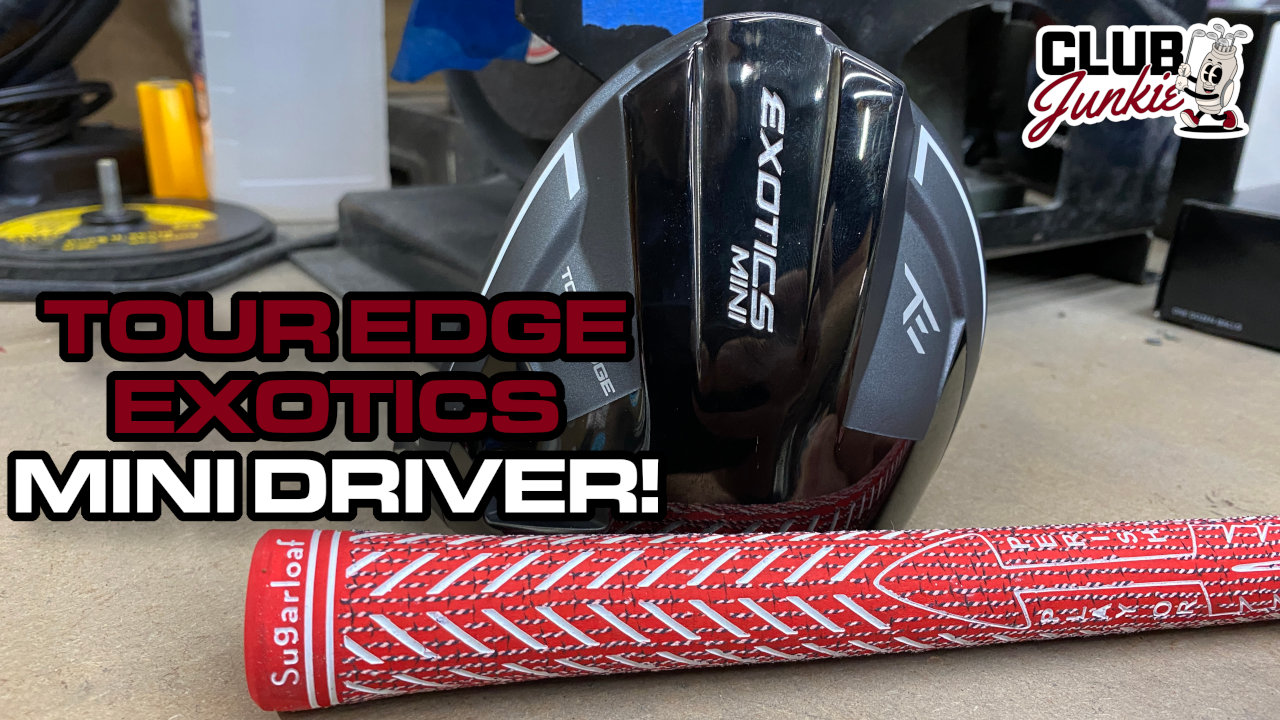
On this episode of Club Junkie, I put the new Tour Edge Exotics Mini Driver to the test and break down the performance, forgiveness, distance, and where it fits compared to a traditional driver or strong fairway wood. If you have been curious about adding a mini driver to the bag, this one is worth a look.
I also dive into the new TaylorMade Spider ZT Max putter that was recently spotted and discuss the growing zero torque putter trend. Plus, there is a closer look at the new Project X Titan Yellow shaft showing up on the PGA Tour and what makes it different from other profiles currently out there.

Justin Rose WITB 2026 (April): Full WITB breakdown with new McLaren irons

What’s the story behind Webb Simpson’s custom-stamped irons?

Cadillac Championship Tour Report: Spieth’s sizable changes, McLaren Golf launches, and more

Russell Henley’s winning WITB: 2026 Charles Schwab Challenge

Kristoffer Reitan’s winning WITB: 2026 Truist Championship

Aaron Rai’s winning WITB: 2026 PGA Championship

Cameron Young’s winning WITB: 2026 Cadillac Championship

Details on Jason Day’s latest prototype Avoda iron setup

Nelly Korda WITB 2026 (April)

Justin Rose on the switch to McLaren Golf, learnings from previous equipment moves
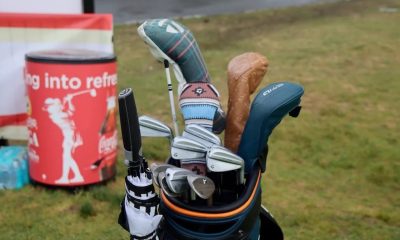

Melanie Green WITB 2026 (June)
Driver: TaylorMade Qi4D (9 degrees) Shaft: Graphite Design Tour AD VF 5 S 3-wood: TaylorMade Qi4D (15 degrees) Shaft: Graphite Design Tour...


Sungjae Im WITB 2026 (June)
Sungjae Im had >14 clubs in his bag when photographed prior to the Memorial Tournament. Driver: Titleist TSi2 (8 degrees, B1...


Lucas Glover WITB 2026 (June)
Lucas Glover had >14 clubs in his bag when photographed prior to the Memorial Tournament. Driver: Titleist GTS2 (10 degrees, B2 SureFit...


Chris Gotterup WITB 2026 (June)
Chris Gotterup had >14 clubs in his bag when photographed prior to the Memorial Tournament. Drivers: TaylorMade Qi4D (8 degrees), Ping...
-
 News5 days ago
Russell Henley’s winning WITB: 2026 Charles Schwab Challenge
-
 Whats in the Bag3 weeks ago
Aaron Rai’s winning WITB: 2026 PGA Championship
-
 Equipment2 days ago
Details on Jason Day’s latest prototype Avoda iron setup
-
 Tour Photo Galleries3 weeks ago
Photos from the 2026 CJ Cup Byron Nelson
-

 Equipment2 weeks ago
CJ Cup Byron Nelson Tour Report: Koepka and Kim’s newest putters finally get hot
-
 News1 week ago
Charles Schwab Challenge Tour Report: MacIntyre, Åberg and Spaun all switch putters, TaylorMade launches new Spider
-
 Equipment1 week ago
Details on J.J. Spaun’s surprise putter switch
-
 Popular Photo Galleries2 weeks ago
Photos from the 2026 Charles Schwab Challenge

