
News
An interview with Keith Cutten, author of “The Evolution of Golf Course Design”


This interview is with Keith Cutten, author of “The Evolution of Golf Course Design,” which is a new book he is releasing to the public. This is an unbelievably well-researched and all-encompassing look at golf course architecture, how it has changed throughout history, and all of the variables in play that have shaped it over the course of time.
Let’s start with the easy stuff. What’s your personal background? How did you get into all of this?
Well, my passion for golf architecture started back in high school. I took a drafting and design curriculum all through high school, which was hugely beneficial. I was getting into golf around 15-16 years old and I lost my grandfather, who was the primary golf influence in my life. When he died, he left me his golf clubs, and I missed him so much I just dove completely head first into golf.
When I finished high school, I sat down with my dad to try to hash out a game plan to get into the golf industry. My dad was an environmental scientist for 40 years with the Ministry of Environment in Ontario, so he helped me a great deal in understanding the policy system here in Canada. I started by getting my bachelor’s degree from the University of Waterloo in Planning and Environmental Design. In my last coop term, I went for broke and I reached out to Rod Whitman in Canada, who invited me to do a 5-month coop with him during the construction of Sagebrush Golf & Sporting Club in British Columbia. The pay was paltry and I ran a shovel and a rake for most of the summer, but I fell in love with it instantly.
I later went back for my master’s in Landscape Architecture at the University of Guelph, which I finished in 2016. The culmination of that was my thesis, which has now become this book. Nowadays, I have my own company, Cutten Golf, Inc., which allows me to partner with people like Rod and Dave Axland, who has been Coore and Crenshaw’s chief project manager for 30 years. I couldn’t have walked into a better situation as a young, aspiring architect. To have the opportunity to work with these guys is incredible.
Having had the opportunity to peek at an advanced copy, I can say the book is completely fascinating. Talk a little bit about what compelled you to devote so much of yourself to this pursuit in the first place.
I’m the type of person that needs to answer my own questions to be satisfied. I’m not comfortable with just accepting things as fact without knowing the story behind them. I was sitting in one of my first master’s classes, which was basically a history of the landscape architecture profession. I’m learning how everything is influenced by society and wars and economy and I thought, “This has to be true for golf, but no one’s ever talked about it.”
At the time, I was also batting around ideas for my thesis. I was thinking a lot about the renovations that had recently been done to Pinehurst No. 2 and I was particularly curious about how Donald Ross’s original design was so much more environmentally sound than what it had been allowed to become over the course of time.
One of the key quotes that I got from Bill [Coore] about that project was that they were not trying to be “environmental crusaders” so much as they were just trying to put the course back to the way Donald Ross had originally intended it. So the question I kept asking in my head was, “How did this happen?” I sort of went on a fact finding mission to uncover how golf course architecture changed and it kept snowballing. I just kept following leads in different directions that began to connect all the dots for me. I went a little deeper down the rabbit hole every day, and ended up with a 600+ page thesis to turn in.
Just to paint a quick picture for the readers as to what’s going on in the book, there’s two main sections to it. The first section is going through history decade by decade starting with the early origins of golf, then 1830s, 1840s, and so on. I don’t want you to give too much of your book away, but give people a taste for what’s going on there.
Essentially, there’s a lot of short little blurbs about historical context that I try to quickly tie into golf. I suppose you’d have to start with the Victorian era, which was the first attempt at going away from the “links” style of architecture. When people from urban areas (say London) found golf and wanted to play it, they wanted to create their own courses so they wouldn’t have to travel over to St Andrews. So, the professional golfers of the time built what they could. The only people that were doing construction of the landscape at that time were the crews that were building state homes for the ultra-wealthy in the Victorian style. So they wound up with golf courses that were built much the same way with features that were geometric and square. They looked nothing like the links courses of Scotland.
After that, there was then a shift into what’s called the Arts and Crafts movement that takes you into the 1910’s. WWI had a huge impact at that time. Britain was basically devastated after WWI, so a lot of architects fled to the US, the land of opportunity, which led to what we now call the Golden Age of golf course architecture.
Shortly after that period, you have the Great Depression and WWII, where all of this knowledge that had been built really just comes to a halt. After going through the Great Depression and WWII, society really didn’t want to think about the past. There was no fondness for what had been done, so modernism became the way of life for basically everyone at that point, including golf course architecture.
Most of the big name architects (Ross, Mackenzie, etc) started their careers back in England before WWI, so when you get to WWII, those guys are all either dead or retired. It was a perfect storm which basically took golf in a completely different direction.
The second part of the book is profiles on golf course architects, authors, and visionaries. So you go from Old Tom Morris to Geoff Shackelford and everywhere in between. Given how much time you’ve invested in this, I’m curious to know who you would put on the Mount Rushmore of architects and why?
I’m going to flavor this with my own personal bias, but for me number one has to be Harry Colt. He’s so brushed over in North America it’s crazy. He pioneered what golf course architecture is, which is combining strategy and naturalness. Colt’s influence can be seen in work of Dr. Alister MacKenzie (Australia and America), Hugh Alison (Japan), Stanley Thompson (Canada) and Donald Ross (America). His influence just can’t be overstated in my opinion.
Stanley Thompson would have to be my next choice. Especially since I’m Canadian. His projects have defined great golf here, and his influence on me was immense.
Third would be Bill Coore. Without Sand Hills, I don’t think we are where we are today when it comes to golf course architecture. I don’t think anyone is reading my book and I doubt I’m even writing if it wasn’t for Bill. I think he’s the Alister Mackenzie of our time.
Last would be Rod Whitman. He just doesn’t get the notoriety or the acclaim that he deserves in my opinion. Bill Coore sings Rod’s praises all the time. He even gives Rod credit for figuring out how to make his routing work at Friar’s Head. I’ve learned so much from Rod and a lot of my passion for architecture comes from him.
If you had the opportunity to sit down with one of these people (dead or alive) you profiled over dinner, who would it be and what questions would you ask them?
I think it’d have to be Stanley Thompson. He was the type of guy that was notoriously larger than life. It’s rumored that he made and spent multiple fortunes in his lifetime according to his biography. He’s the type of guy that could sell the Canadian rail lines on the idea that they should build a golf course up here in the middle of nowhere because it’d be good for their business. I just think if he’s anything at all like what those stories would lead you to believe, that’d be a hell of a dinner.
I do want to ask about one specific aspect if you don’t mind because I personally find it super interesting and I think our readership would as well. Can you talk a little bit about the relationship between golf course equipment and architecture? Let’s kind of go down that rabbit hole for a minute.
I think the biggest misconception is that Golden Age architects never saw these kinds of advances in equipment coming. They did. They experienced their own advancements with equipment. The Golden Age didn’t start in the US in the 20s and 30s. Those same guys were designing courses in England in 1910 and prior to that, so they had already seen advancements of their own. They did react to them very differently than what has been done up until the last 10 years, however. They used the contour of the ground and width and angles in such a way that if you didn’t play to the right area of the fairway, you didn’t have a shot. The way they combated length is to put an emphasis on placing your shot in the right location instead of just pounding it down there as far as you can.
Even back then, there were some instances where people could hit 300-yard drives because you have to remember this was before irrigation. This brought the ground game into play. It wasn’t lawn darts where you hit every shot a certain distance and stopped it on a dime. Even though a long hitter might be able to get a drive out there 300 yards, that shot likely wound up in a pot bunker if you weren’t super precise with it. Back then, it was so much more a three dimensional game where you had to think about all the little humps and bumps and what they might do to the golf ball after it landed. The Golden Age architects were already thinking about this stuff when they designed their courses.
For a long time, we basically forgot our own history. Everyone after WWII just tried to reinvent the wheel by pinching landing areas and growing the rough taller, which was terrible for golf. We’re relearning, though, that combating length isn’t done by making courses longer and narrower; it’s done by making them shorter and wider. I think we need to start showing a bigger variety of golf courses on television. I think the tour is doing that with places like Trinity Forest, but they need to stop listening to the whining of players. That cannot be our measuring stick for whether or not a course is good.
Right or wrong, what gets shown on TV is what gets exported everywhere. One of the messages with my book is that that has to stop. Every course should not aim to be Augusta. They should aim to be what they are, and that requires completely understanding and committing to what that is.
Lastly, give us a call to action. Tell us how to get in touch with you and learn more.
Sure! To learn more about me, my business, or my book, the best way to do that is to visit my website www.cuttengolf.com. @cuttengolf is my handle for both twitter and Instagram.

Keith Cutten, author of The Evolution of Golf Course Design












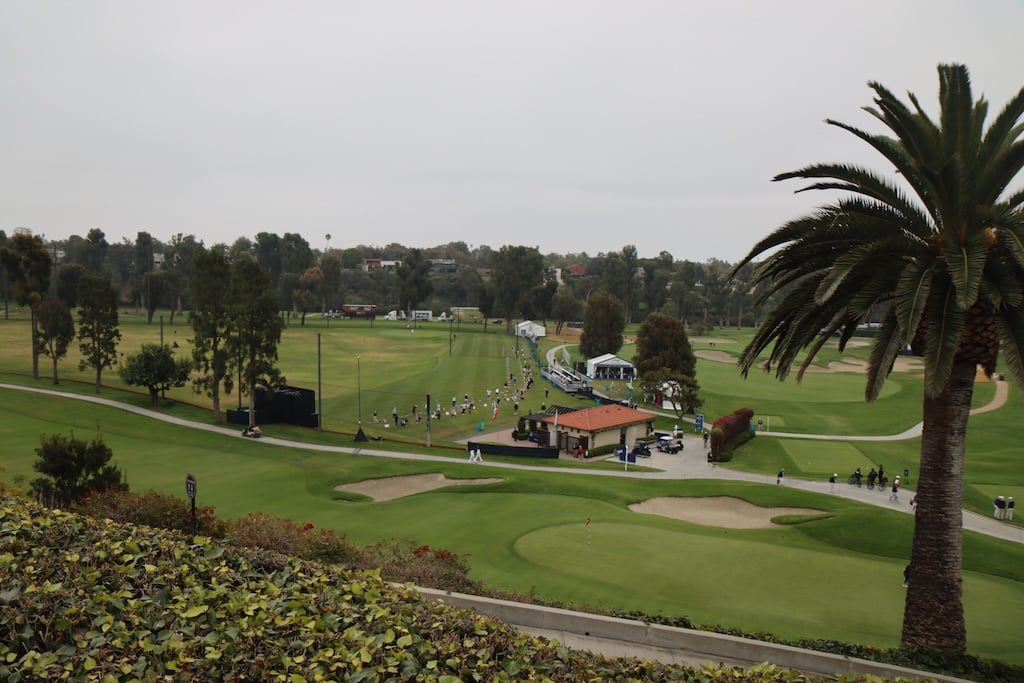
GolfWRX Tour Photographer made the trip from the Memorial Tournament across the country to the U.S. Women’s Open at Riviera. Check out links to all the photos below!
General Albums
- 2026 US Women’s Open – Wednesday #1
- 2026 US Women’s Open – Wednesday #2
- 2026 US Women’s Open – Wednesday #3
- 2026 US Women’s Open – Wednesday #4
- 2026 US Women’s Open – Wednesday #5
WITB Albums
- Chloe Kovelesky – WITB – 2026 US Women’s Open
Asterisk Talley – WITB – 2026 US Women’s Open - Sarah Hammett – WITB – 2026 US Women’s Open
- Rio Takeda – WITB – 2026 US Women’s Open
- Hannah Green – WITB – 2026 US Women’s Open
- Amy Yang – WITB – 2026 US Women’s Open
- Auston Kim – WITB – 2026 US Women’s Open
- Paula Francisco – WITB – 2026 US Women’s Open
- Athena Singh – WITB – 2026 US Women’s Open
- Brianna Do – WITB – 2026 US Women’s Open
- Meja Ortengren – WITB – 2026 US Women’s Opens
- A Furue – WITB – 2026 US Women’s Open
- Katelyn Kong – WITB – 2026 US Women’s Open
- Natalia Guseva – WITB – 2026 US Women’s Open
- Cass Alexander – WITB – 2026 US Women’s Open
- Johanna Sjursen – WITB – 2026 US Women’s Open
Pullout Albums
- Scotty Cameron putter covers – 2026 US Women’s Open
- TaylorMade’s US Women’s Open staff bag & covers – 2026 US Women’s Open

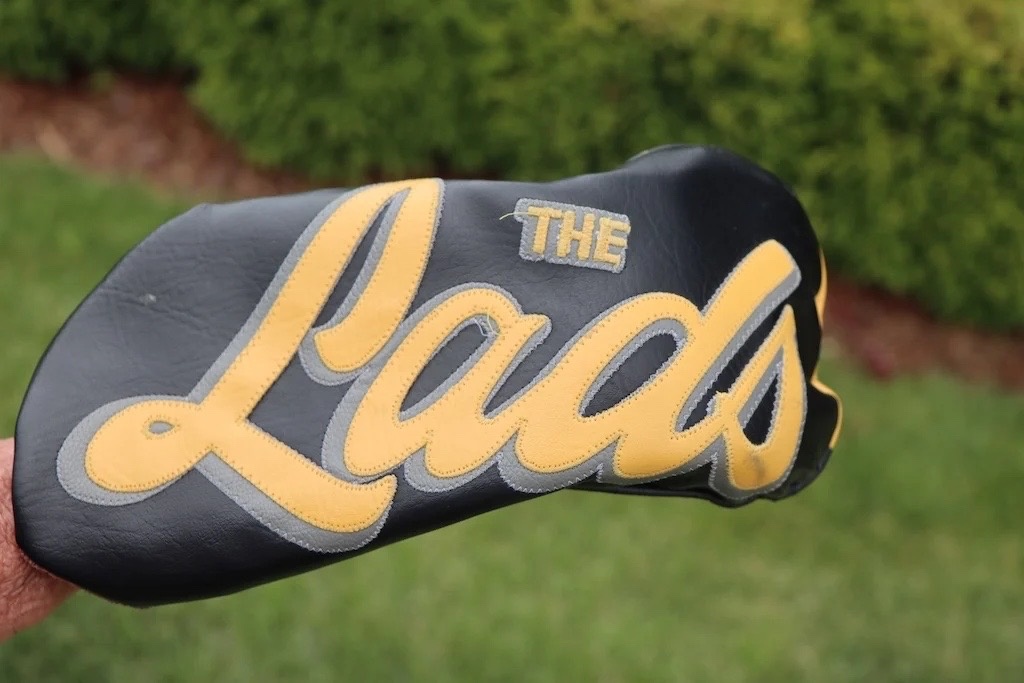
GolfWRX is on site this week at the Memorial Tournament, with both Alistair Cameron and Tour Photographer Greg Moore on the ground in Dublin, Ohio, where a strong field is assembled to pay homage to the Golden Bear.
In addition to WITB galleries, we’ve already been treated to an in-hand look at Tommy Fleetwood’s new TaylorMade Spider putters.
Check out links to all our photos below.
General Albums
- 2026 The Memorial – Monday #1
- 2026 The Memorial – Tuesday #1
- 2026 The Memorial – Tuesday #2
- 2026 The Memorial – Tuesday #3
WITB Albums
- Jason Day – WITB – 2026 The Memorial
- Chris Gotterup – WITB – 2026 The Memorial
- SungJae Im – WITB – 2026 The Memorial
- Alex Noren – WITB – 2026 The Memorial
- Jacob Bridgeman – WITB – 2026 The Memorial
- Lucas Glover – WITB – 2026 The Memorial
- Bud Cauley – WITB – 2026 The Memorial
- Alex Smalley – WITB – 2026 The Memorial
Pullout Albums
- Jason Day’s 1off Payntr golf shoes – 2026 The Memorial
- JT Poston’s TaylorMade Spider – 2026 The Memorial
- Cameron putter – 2026 The Memorial
- Tommy Fleetwood’s TM Spider putters – 2026 The Memorial
- New Mitsubishi Chemical 1K Pro Orange shaft – 2026 The Memorial
- Bettinardi putter – 2026 The Memorial
- Min Woo Lee’s Callaway Apex 18* UT iron – 2026 The Memorial
- Wyndham Clark’s putter – 2026 The Memorial
- Lucas Glover putters – 2026 The Memorial
- Nicolai Hojgaard’s new Callaway 4 iron – 2026 The Memorial
- Adam Scott’s L.A.B. Golf putter – 2026 The Memorial
- Scotty Cameron Xperimental Prototype 11+ putter – 2026 The Memorial
- JJ Spaun’s updated/newest L.A.B. Golf putter – 2026 The Memorial

Around the world, the golf wheel spun this final week in May of 2026. From New Jersey to Austria, with stops in Korea, Texas, and North Carolina (don’t let me route your next trip) the world’s finest put their golf games on display. There were three playoffs, some known commodities and some new talent. It was the sort of week that we hope to have at this point in the seasons. June and July afford double-digit major events, and perhaps, one of this week’s champions will use this success as a springboard to new heights. Time to run it all down, tech style, in this week’s Tour Tech Rundown.
Thanks to WITBHub, Today’s Golfer, GolfWRX, and Inside Tour Golf for initial research into equipment.
PGA Tour @ Charles Schwab Challenge: Heroic Henley denies Cole
Eric Cole did nearly everything that a fellow can do, to secure a first PGA Tour title. He stayed one shot clear of Ryder Cup player Ben Griffin. He kept US Open champion Gary Woodland and wunderkind Michael Brennan two shots distant. He posted 70 on day four to reach twelve under par. And then, Russell Henley revealed his Dr. Strange cloak. Henley made 47 feet of birdie putts on holes 16, 17, and 18, to jump from minus-nine to twelve-deep, and secured a spot in a playoff with Cole. The duo returned to the final tee, and put on a stripe show.
Both golfers found the fairway off the tee, and Henley improved on his regulation play with an approach to four feet. Cole did himself proud, tucking an iron to a dozen feet, but he was unable to convert the putt for three. Henley is one of the best putters on tour, and he proved it once more by draining a putt for a fourth consecutive birdie, and a sixth PGA Tour title. For Eric Cole, that first victory should come, and soon. He has done everything necessary to earn the chalice lift.
Henley’s Suitcase
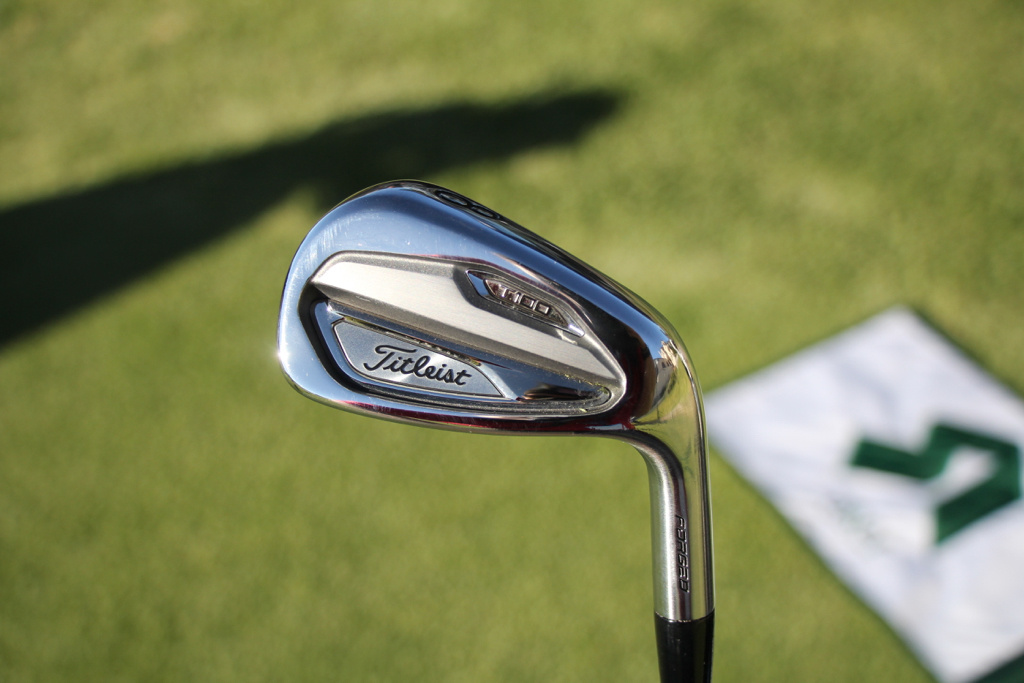
- Driver: Titleist TSi3 at 10 degrees. Shaft: Project X HZRDUS Smoke Black 70g 6.5 TX
- Metal: Titleist TS3 at 16.5 degrees. Shaft: Project X HZRDUS Smoke Black 80 TX
- Hybrid: Titleist TSi2 at 21 degrees. Shaft: Mitsubishi MMT hybrid 100 TX
- Iron: Titleist T250 4-iron. Shaft: True Temper Dynamic Golf AMT Tour White X100
- Irons: Titleist T100 5-6 irons. Shaft: True Temper Dynamic Golf AMT Tour White X100
- Irons: Titleist T100 7-9 irons. Shaft: True Temper Dynamic Gold Tour Issue X100
- Wedges: Titleist Vokey Design SM11 at 48 and 50 degrees. Shaft: True Temper Dynamic Golf Tour Issue X100
- Wedges: Titleist Vokey Design SM11 at 54 and 60 degrees. Shaft: rue Temper Dynamic Golf Tour Issue S400
- Putter: Titleist Scotty Cameron T5 Tour Prototype
LPGA @ Shoprite LPGA: Welcome back, Celine!
Soo Bin Joo had her eyes on a maiden LPGA title. She held the lead after two rounds, then hit a red light at the intersection of can-I and how-To. Joo posted plus-two on day three in New Jersey, and dropped to a T4 finish, which was still a career-best for the young Korean golfer. Instead of a new face, a familiar face returned to the top of the podium.
Celine Boutier was the It Girl in 2023. She collected four victories, including a major title at Evian. Boutier reached world number one status, then simply faded into the background. No wins came her way over the next 30 months. On Sunday, she collected LPGA victory number seven, at the same trace as LPGA victory number two.
Day three saw Boutier manage the windswept Seaview Bay course with six birdies and a bogey. She was challenged in the end by Thailand’s Arpichaya Yubol, who signed for a 66 of her own. Yubol came up one shot shy of the top ladder rung. Finishing in third place at -7, two back of the winner, was Ireland’s Lauren Walsh.
Celine’s Suitcase
- Driver: PXG 0311 Black Ops Tour-1 at 9 degrees. Shaft: Graphite Design AD IZ-5
- Hybrid: PXG 0311 Black Ops at 19 and 22 degrees. Shaft: KBS Hybrid Prototype
- Hybrid: PXG 0311 Gen5.
- Iron: PXG 0311 P Gen 4 5-9 irons
- Wedge: PXG 0311 T Gen 4 PW
- Wedges: PXG 0311 Sugar Daddy II at 50, 54, 58 degrees
- Putter: Bettinardi Studio Stock 3 DASS
DP World Tour @ Austrian Alpine: KK? KK!
Kota Kaneko has a rhythmic name. It has strong vowels and a run of voiceless stops in its crunchy K sounds. On Sunday in Austria, Kaneko put a stop to a challenge from Portugal’s Ricardo Gouveia and everyone else, and claimed a first-ever title on the DP World Tour. Gouveia did well to reach 16-under par over four days, but Kaneko held firm, two shots in the clear.
Davis Bryant of the USA also forged a strong challenge for the win. He ended in a tie with Gouveia for second place. Kaneko began and finished his final round in a bit of a malaise, but he caught fire midway through. Birdies at 10, 12, and 13 provided the necessary cushion to cruise to the finish line without breaking a serious sweat.
Kaneko’s Suitcase
- Driver: Ping Max G440
- Metals: TaylorMade Qi4D at 15, 16.5, 21, and 24 degrees
- Irons: TaylorMade P760 5 and 6 irons
- Irons: TaylorMade P7TW 7-9 irons
- Wedges: Titleist Vokey Design at 46, 52, 56, and 60 degrees
- Putter: Odyssey Ai-One Cruiser Arm Lock #7
Korn Ferry Tour @ UNC Health Championship: Improbably Alvaro
Alvaro Ortiz may have had a bit of scare on the outward nine on Sunday, but he came through in clutch fashion in the end. Ortiz began the day bogey-double, and added another double bogey at the 11th hole. He was mired in a downward trend, spiraling away from the top of the leader’s board. Ortiz found hope at the 14th, where his first birdie of the day tumbled home. Inspired, he closed with birdies and 17 and 18 to catch Ross Steelman at 10-under par, and the duo returned to the 18th deck for overtime.
The extra session concluded in brief time. Ortiz, buoyed by his newly-retrieved confidence, hit the fairway with driver, then approached to six feet and drained the putt. Gobsmacked, Steelman could do little more than smile and applaud, as his run at the top came to a close. The victory was the first for Ortiz on the KFT, and will implant him squarely in the chase for a PGA Tour promotion.
Alvaro’s Suitcase
- Driver: Ping G430 MAX driver at 9 degrees loft
- Metal: Ping G430 MAX 3W
- Iron: Ping iDi Driving Iron
- Irons: Ping Blueprint S irons
- Wedges
- Putter: Scottsdale TR Piper C
A party on the green!
Alvaro’s time comes in Raleigh with his first win @UNCHealthChamp ? pic.twitter.com/2dmtZdbSzk
— Korn Ferry Tour (@KornFerryTour) May 31, 2026
LIV @ Korea: Me llamo Joaquin
Chile’s Joaquin Niemann had been away from the LIV winner’s circle throughout all of 2026. This week in Korea, he reminded us that he is still a force to consider. Niemann chased down Taylor Gooch over the closing holes at Asiad Country Club, then claimed victory with a hole-one birdie in extra time. Bryson DeChambeau claimed solo third, one shot in arrears at minus-eleven. Dustin Johnson finished on fourth, one putt farther back.
Niemann’s Suitcase
- Driver: Ping 440 LST
- Metal: Ping G440 Max at 15 degrees
- Metal: Ping G425 Max at 21 degrees
- Hybrid: Ping G430 at 25 degrees
- Irons: Ping Blueprint S 5 through PW
- Wedges: Ping S159 at 52, 56, and 60 degrees
- Putter: Ping PLD Anser

Justin Rose WITB 2026 (April): Full WITB breakdown with new McLaren irons

What’s the story behind Webb Simpson’s custom-stamped irons?

Cadillac Championship Tour Report: Spieth’s sizable changes, McLaren Golf launches, and more

Kristoffer Reitan’s winning WITB: 2026 Truist Championship

Russell Henley’s winning WITB: 2026 Charles Schwab Challenge

Cameron Young’s winning WITB: 2026 Cadillac Championship

Aaron Rai’s winning WITB: 2026 PGA Championship

Nelly Korda WITB 2026 (April)

Justin Rose on the switch to McLaren Golf, learnings from previous equipment moves

Photos from the 2026 CJ Cup Byron Nelson


Chris Gotterup WITB 2026 (June)
Chris Gotterup had >14 clubs in his bag when photographed prior to the Memorial Tournament. Drivers: TaylorMade Qi4D (8 degrees), Ping...


Jason Day WITB 2026 (June)
Jason Day had >14 clubs in his bag when photographed prior to the Memorial Tournament. Driver: Ping G430 LST (10.5 degrees...


Nastasia Nadaud WITB 2026 (June)
Driver: Titleist TSR4 (9 Degrees) Shaft: Project X EvenFlow Riptide CB 6.0 S 3-wood: Titleist GTS2 (15 degrees) Shaft: Graphite Design Tour AD DI...


Keith Mitchell WITB 2026 (June)
Driver: TaylorMade Qi4D LS Shaft: Project X Titan Yellow 6 X 3-wood: TaylorMade Qi10 (16.5 degrees) Shaft: Mitsubishi Tensei 1K Blue 90...
-
 News3 days ago
Russell Henley’s winning WITB: 2026 Charles Schwab Challenge
-
 Whats in the Bag2 weeks ago
Aaron Rai’s winning WITB: 2026 PGA Championship
-
 Tour Photo Galleries2 weeks ago
Photos from the 2026 CJ Cup Byron Nelson
-
Equipment13 hours ago
Details on Jason Day’s latest prototype Avoda iron setup
-

 Equipment2 weeks ago
CJ Cup Byron Nelson Tour Report: Koepka and Kim’s newest putters finally get hot
-

 News6 days ago
Charles Schwab Challenge Tour Report: MacIntyre, Åberg and Spaun all switch putters, TaylorMade launches new Spider
-

 Equipment1 week ago
Details on J.J. Spaun’s surprise putter switch
-

 Popular Photo Galleries1 week ago
Photos from the 2026 Charles Schwab Challenge


Chuck
Dec 27, 2018 at 4:00 pm
Well those are sure some interesting comments about advances in equipment technology and architecture.
15th Club
Fuggedabooitit
Dec 24, 2018 at 8:25 pm
Would you call the Extreme 19th Hole in South Africa an evolution? How about some of the Dye-abolical Pete type courses? Are they evolution or just mickey-mousing the silliness and taking it to stupid places that the terrain and the game itself can provide?
Dolla
Dec 23, 2018 at 8:34 pm
The last bit about the whining of players has nothing to do with it.
It’s to do with how many grandstands and concession stands and TV camera towers and positions can they fit on a course, along with the spectators they need to bring in to pay for a lot of things.
Space for all that stuff and a system to generate moneys is why you see a lot of the courses that you do.
Don’t just blame it on the course designs, don’t just blame it on what the players say.
Yes the Tour does set up courses for better scoring, and even the USGA has caved into that with all the rules changes to make it easier to do so.
But course designs you see on TV is mostly due to the amount of room the equipment needs to live and make room for the fans to be there, so they can support with their money
ogo
Dec 23, 2018 at 2:54 pm
Did the 19th and early 20th golf course architects deliberately create many water hazards into their designs?
I can see a water pond reservoir being part of a golf course, but to fill the course with water hazards seems psychologically masochistic and too punishing on the golfer losing expensive golf balls.
This also include dense undergrowth that is impossible to find errant golf balls. Why is punishing water and weeds included in golf course design?