
Videos
How much bounce should you have on your irons? David Edel explains

David Edel explains how much bounce different types of golfers should have on their irons. Enjoy the video below!
Related







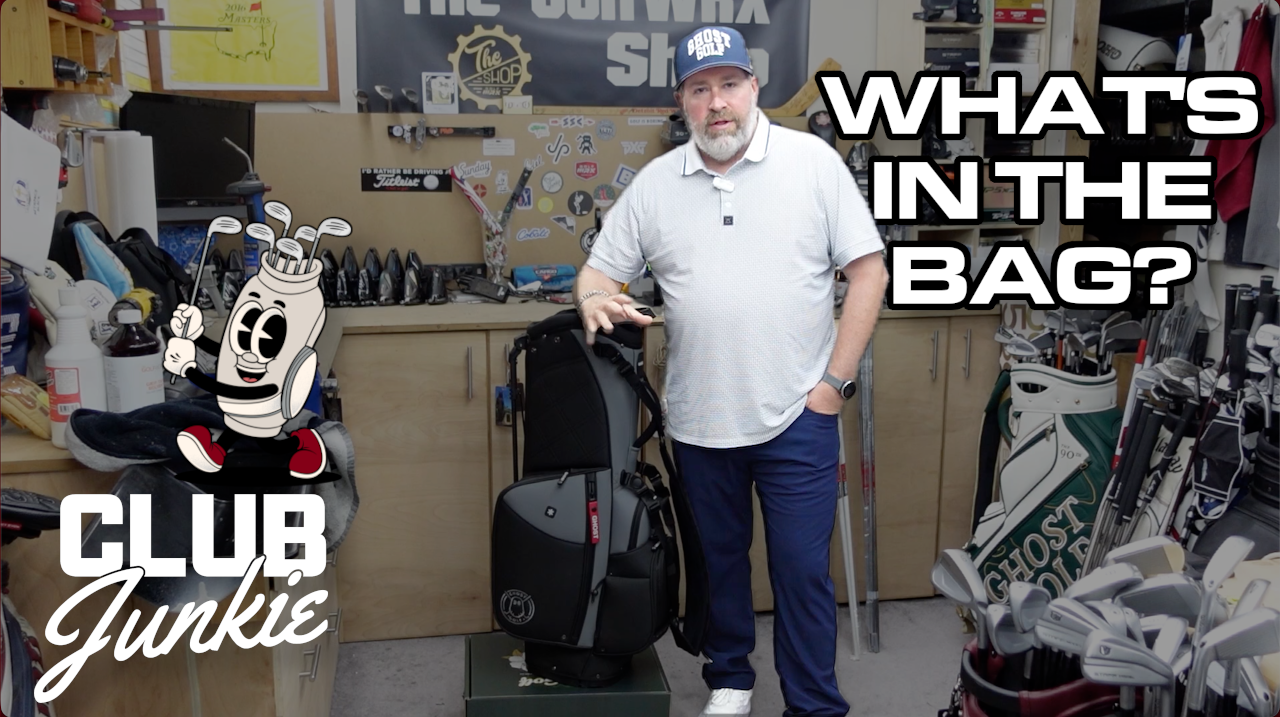
Breaking out another set of sleeper irons that people tend to forget about. The Ben Hogan PTx Tour irons feature a progressive hollow body that turns into the Icon blade in the short irons and a really nice sole design! I am also bringing the wild JP Golf Premier wedges that I built into a crazy colorway because they not only look awesome but really perform well.
Driver: Tour Edge Exotics LS (10.5 degrees)
Shaft: Mitsubishi Diamana RB 63x
3-wood: Titleist GTS2 (15 degrees)
Shaft: Graphite Design Tour AD CQ-7s
7-Wood: Callaway Quantum Triple Diamond (21 degrees)
Shaft: UST Mamiya Lin-Q PowerCore Blue 7s
Irons: Ben Hogan PTx Tour (4-PW)
Shafts: KBS Tour V 110 S
Wedge: JP Golf Premier (50 MID)
Shafts: VA Composites Synyster 120 Stiff
Wedge: JP Golf Premier (56 MID)
Shafts: VA Composites Synyster 120 Stiff
Wedge: JP Golf Premier (60 MID)
Shafts: VA Composites Synyster 120 Stiff
Putter: ?
Grip:
Ball: Bridgestone Tour B XS
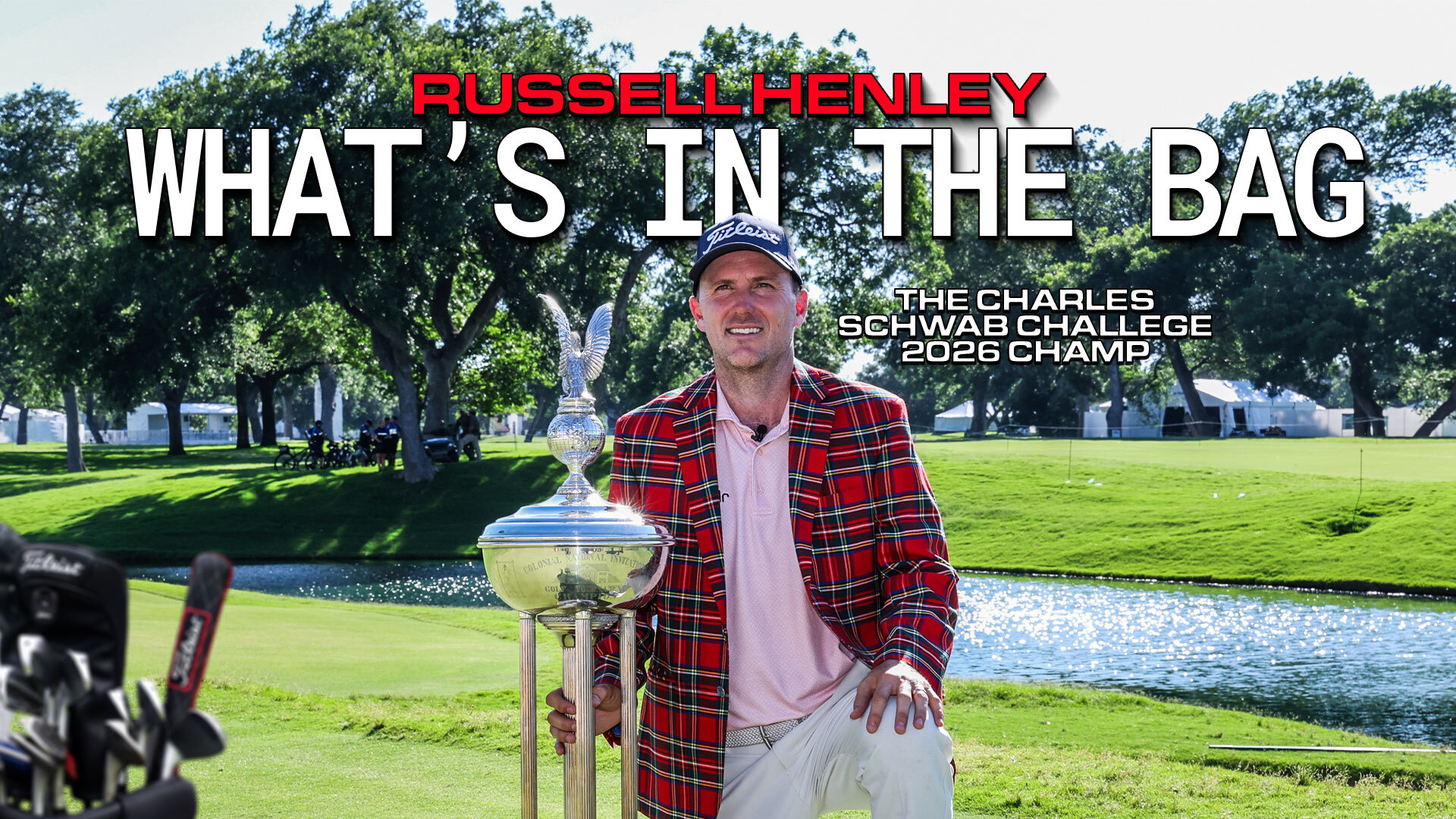
Russell made a massive charge on the last 3 holes of the 2026 Charles Schwab Challenge this weekend to force a playoff with Eric Cole. Henley drained another putt on the first playoff hole to win his 6th PGA Tour event! While he is a Titleist staff member, his WITB is far from a simple blend of the latest gear. He mixes brand new with some very old clubs in order to play his best.
Driver: Titleist TSi3 (10 degrees)
Shaft: Project X HZRDUS Smoke Black 70 6.5 TX
3-wood: Titleist TS3 (16.5 degrees)
Shaft: Project X HZRDUS Smoke Black 80 TX
7-wood: Titleist GTS3 (21 degrees)
Shaft: Project X Denali Black 80 TX
Irons: Titleist T250 (4), Titleist T100 (5-9)
Shafts: True Temper Dynamic Gold AMT (4-6)
True Temper Dynamic Gold Tour Issue S400 (7-9)
Wedges: Titleist Vokey Design SM11
48-10F @47
True Temper Dynamic Gold Tour Issue X100
50-08F @51
54-10S @55
60-04T
Shafts: True Temper Dynamic Gold Tour Issue S400
Putter: Scotty Cameron Phantom X5 Tour Prototype
Grips: Golf Pride Tour Velvet
Ball: Titleist Pro V1x
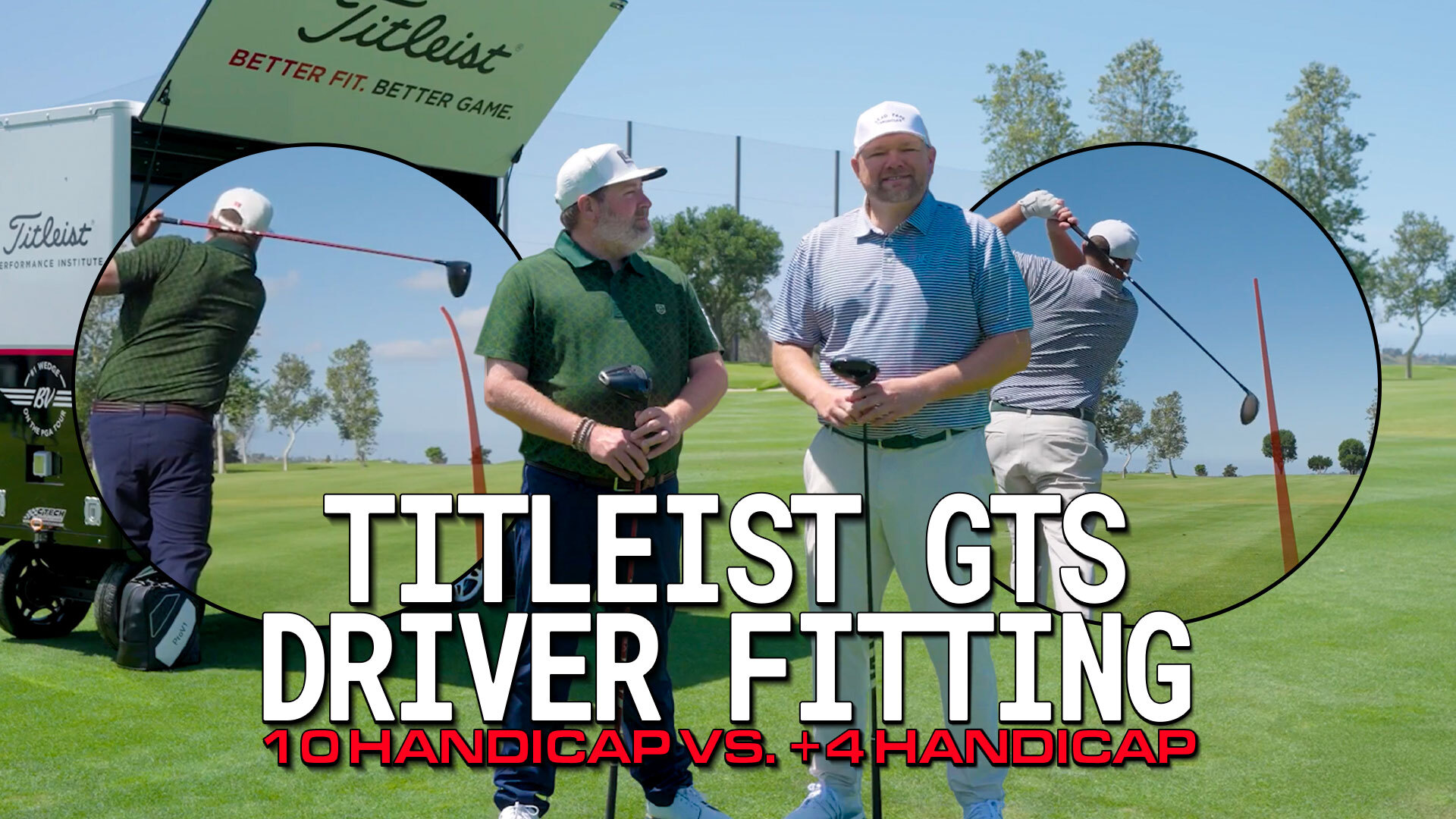
What happens when a 10 handicap and a +4 handicap go through a full driver fitting at one of the most advanced golf performance centers in the world? Brian Knudson and Andrew Von Lossow headed to the Titleist Performance Institute in Oceanside, California, to find out.
Both players go through a complete Titleist GTS driver fitting with the Titleist fitting team to see how swing speed, launch conditions, strike location, shaft profile, and head setup can completely change performance off the tee. Even though the golfers have very different games, the fitting process reveals just how important proper equipment can be for maximizing distance, tightening dispersion, and improving consistency.
You will see how Titleist fitters analyze every part of the driver setup including loft, weighting, shaft selection, and head model to build a driver specifically for each player’s swing. While the skill levels, club head speeds, and desired outcomes are different both players show how deep and versatile the new Titleist GTS driver lineup is.

Justin Rose WITB 2026 (April): Full WITB breakdown with new McLaren irons

What’s the story behind Webb Simpson’s custom-stamped irons?

Cadillac Championship Tour Report: Spieth’s sizable changes, McLaren Golf launches, and more

Kristoffer Reitan’s winning WITB: 2026 Truist Championship

Russell Henley’s winning WITB: 2026 Charles Schwab Challenge

Cameron Young’s winning WITB: 2026 Cadillac Championship

Aaron Rai’s winning WITB: 2026 PGA Championship

Nelly Korda WITB 2026 (April)

Justin Rose on the switch to McLaren Golf, learnings from previous equipment moves

Photos from the 2026 CJ Cup Byron Nelson

Chris Gotterup WITB 2026 (June)
Chris Gotterup had >14 clubs in his bag when photographed prior to the Memorial Tournament. Drivers: TaylorMade Qi4D (8 degrees), Ping...

Jason Day WITB 2026 (June)
Jason Day had >14 clubs in his bag when photographed prior to the Memorial Tournament. Driver: Ping G430 LST (10.5 degrees...

Nastasia Nadaud WITB 2026 (June)
Driver: Titleist TSR4 (9 Degrees) Shaft: Project X EvenFlow Riptide CB 6.0 S 3-wood: Titleist GTS2 (15 degrees) Shaft: Graphite Design Tour AD DI...

Keith Mitchell WITB 2026 (June)
Driver: TaylorMade Qi4D LS Shaft: Project X Titan Yellow 6 X 3-wood: TaylorMade Qi10 (16.5 degrees) Shaft: Mitsubishi Tensei 1K Blue 90...
-
 News3 days ago
Russell Henley’s winning WITB: 2026 Charles Schwab Challenge
-
 Whats in the Bag2 weeks ago
Aaron Rai’s winning WITB: 2026 PGA Championship
-
 Tour Photo Galleries2 weeks ago
Photos from the 2026 CJ Cup Byron Nelson
-
Equipment12 hours ago
Details on Jason Day’s latest prototype Avoda iron setup
-

 Equipment2 weeks ago
CJ Cup Byron Nelson Tour Report: Koepka and Kim’s newest putters finally get hot
-
 News6 days ago
Charles Schwab Challenge Tour Report: MacIntyre, Åberg and Spaun all switch putters, TaylorMade launches new Spider
-
 Equipment1 week ago
Details on J.J. Spaun’s surprise putter switch
-
 Popular Photo Galleries1 week ago
Photos from the 2026 Charles Schwab Challenge


Sharkhark
Jul 9, 2018 at 10:07 am
No real discussion on turf? My course is Rock hard.
Others are lush and soft.
Also…I couldn’t hear the guy speaking. It was like hushed talking in church.
Even at top volume
Sharkhark
Jul 9, 2018 at 10:09 am
Ps and what about those that hit thin like me? Vs my playing buddy taking divots that are humongous. Me nothing. He could use bounce and me not so much.
Tony
Jul 7, 2018 at 6:23 pm
No mention of types of turf you play on or turf interaction?
geohogan
Jul 7, 2018 at 8:51 am
Forward lean is a result of LAG. Trajectory is dependent upon COR. The sole touches the ground
after impact ie after 5 ten thousandths of a second of iron face and ball.
So how important is bounce in a properly hit iron?
Wiger Toods
Jul 6, 2018 at 6:11 pm
This doesn’t make sense. If an iron loft is x, and the ball departure angle is y, x-y=bounce? While not suggesting that’s wrong because it may actually work out… but it doesn’t exactly work as described. You can’t ignore dynamics, and while he goes on to talk about that with the “fold pattern”, neutral still doesn’t work that way.
If as an example, you have a beach ball. You take a board at 45º and whack the ball, what’s the departure angle going to be? How about a bowling ball? With enough force, the departure angle varies wildly. Thus, the bounce angle seems to be a terrible thing to leave up to that.
Of course, that doesn’t mean it’s wrong. It might accidentally correlate just fine, but it’s, shall we say, spurious. Like, Divorce rate in Maine correlates with Per capita consumption of margarine – Correlation: 99.26% (r=0.992558).
It’s possible, but if that’s not actually why, that’s how misinformation starts.
John Scott
Jul 6, 2018 at 2:41 pm
So with an early release and my iron shafts having only a very slight forward angle of attack at impact what type of bounce should I be looking for? A v-sole like the Srixon 565 or something more standard like a Callaway Rogue or Epic iron?
Sharkhark
Jul 9, 2018 at 10:11 am
I’m like you so however I ask do you take divots or hit fat often or are you more often hitting thin?
Thin equals less bounce more often and bigger divots require more bounce to enter and exit turf efficiently.
A Srixon v sole grind is best of both worlds.
John Scott
Jul 9, 2018 at 11:50 am
I’ll hit more thin shots that fat ones. I’m currently gaming The BenHogan PTx but going to start looking for something more forgiving as my ball striking is not too consistent.