
Does Shaft Flex Make a Difference?
-


Inside the Ropes, the Memorial Tournament: Wyndham Clark talks gear + Jason Day’s irons
-

Building my 2026 gamer WITB: Ranking the contenders and new putter projects – Club Junkie Podcast
-

Club Junkie WITB, week 19: Sleeper irons + wild wedges
-


BK’s Breakdowns: Russell Henley’s winning WITB from the 2026 Charles Schwab Challenge

Shaft flex is one of those topics that can be quite confusing for many golfers. It seems that there are as many opinions on the topic as there are different shafts. Does shaft flex really matter? We wanted to approach the question a little bit differently.
In this video, we explain how the shaft in your driver can either be helping or hurting one key element of your drives.



This past Monday, I played in the U.S. Amateur local qualifier at Rock Creek Country Club in Portland, Oregon. A full tee sheet from 7:30 a.m. to 1:55 p.m., the top 11 scores would make it to the U.S. Amateur final qualifying.
I teed off at 10:48 a.m.. With the 7:30 am tee time, you can get a feel for the leaders’ pace, and they were off and running on the challenging setup at Rock Creek.
View this post on Instagram
Getting to the highlight of the round on the par five 17th, a drive up the left side and 212 yards left to the front hole location. I took out a 5-iron with plans of middle of the green. The ball ended up 8 feet left of the hole, pin high. A slight downhill putt dropped in for an eagle 3 on the 17th. With the cut line looking to be anywhere from -2 to even par. This was the boost I had been waiting for all day.
With making par from the trees on 18, it was time to wait for a potential playoff with a posted score of one under par 71.
Three hours later, it was playoff time. 8 players for 6 spots. I made par on the playoff hole, which was good enough to advance to the U.S. Amateur final qualifying in July. USGA qualifiers sure deliver on all of the emotions in golf!
Club Junkie
Building my 2026 gamer WITB: Ranking the contenders and new putter projects – Club Junkie Podcast

The annual What’s In The Bag build is underway, and on this episode of Club Junkie, Brian breaks down the clubs currently leading the race for a spot in his 2026 gamer setup. From drivers and fairway woods to irons, wedges, and shafts, he ranks the equipment that’s performing best and explains what’s separating the front runners from the rest of the field.
Brian also heads into the workshop to discuss several putter projects currently on the bench. From head options and shaft choices to build ideas and testing plans, he shares what he’s working on and which putters could become serious contenders for the bag this season.
If you’re a gear junkie who loves equipment testing, club building, and the never-ending pursuit of the perfect setup, this episode is for you.
Follow Club Junkie:
Instagram: @clubjunkiepod
TikTok: @clubjunkiepod
Threads: @clubjunkiepod
X: @ClubJunkiePod
Club Junkie
Tour Edge Exotics mini driver review + TaylorMade Spider ZT Max first look – Club Junkie

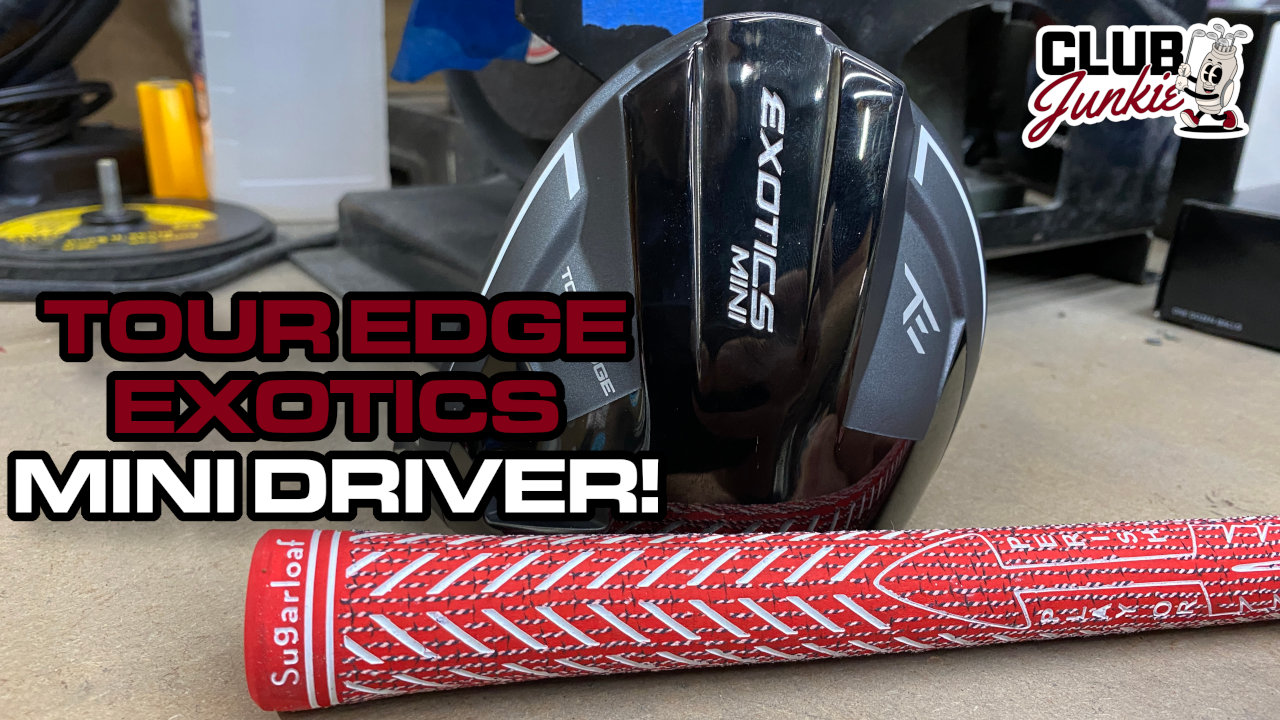
On this episode of Club Junkie, I put the new Tour Edge Exotics Mini Driver to the test and break down the performance, forgiveness, distance, and where it fits compared to a traditional driver or strong fairway wood. If you have been curious about adding a mini driver to the bag, this one is worth a look.
I also dive into the new TaylorMade Spider ZT Max putter that was recently spotted and discuss the growing zero torque putter trend. Plus, there is a closer look at the new Project X Titan Yellow shaft showing up on the PGA Tour and what makes it different from other profiles currently out there.
-

 Equipment2 days ago
Memorial Tournament Tour Report: Rory McIlroy, Cameron Young switch up drivers, and more
-
 News7 days ago
Russell Henley’s winning WITB: 2026 Charles Schwab Challenge
-

 Whats in the Bag3 weeks ago
Aaron Rai’s winning WITB: 2026 PGA Championship
-
 Equipment4 days ago
Details on Jason Day’s latest prototype Avoda iron setup
-
 Tour Photo Galleries3 weeks ago
Photos from the 2026 CJ Cup Byron Nelson
-

 Equipment2 weeks ago
CJ Cup Byron Nelson Tour Report: Koepka and Kim’s newest putters finally get hot
-
 News1 week ago
Charles Schwab Challenge Tour Report: MacIntyre, Åberg and Spaun all switch putters, TaylorMade launches new Spider
-
 Equipment2 weeks ago
Details on J.J. Spaun’s surprise putter switch


Dr. Golf
Feb 13, 2018 at 7:00 pm
Seven Dreams $1200 autoclave cured driver shafts are superior to the oven cured shafts because they suck out the excessive epoxy plastic that causes graphite shafts to be floppy and soggy in tip dynamic action and recovery.
Steel shafts are still the gold standard for shaft consistency. Soon the debates about current graphite shafts will be moot as they are made obsolete by Seven Dreams graphite shafts.
Adam
Feb 12, 2018 at 1:17 pm
A little defined problem has to do with the radial consistency of a shaft. I would never use one that varies more than 1% hard to soft plane. Yet, I have wondered, even if I position the head so that it moves exactly along the soft plane at impact, it moved through other planes on its way to impact. So, the head is twisting and turning in odd ways before impact. That can’t be good.
AMG
Feb 12, 2018 at 8:08 pm
You’re right on the money, it’s not bending in a consistent plane. Not comforting, lol
Dr. Golf
Feb 13, 2018 at 6:53 pm
The radial consistency of steel shafts is uniform, whereas it’s all over the place for floppy soggy graphite shafts…. all because of the excessive epoxy plastic and arbitrary layering that compromises radial action.
$1200 Seven Dreams autoclave cured graphite shafts has superior radial consistency when compare to all the oven-cured shafts on the market now.
Josh
Feb 12, 2018 at 12:50 pm
The video achieved what it was meant to. It showed us that the shaft is not straight at impact, and flex has an effect on speed. We learned that having the right flex matters. The question posed, “Does shaft flex make a difference?” was answered. Thank you AMG.
AMG
Feb 12, 2018 at 7:15 pm
Thanks for watching!
Joro
Feb 12, 2018 at 12:46 pm
Having been in this business for over 60 yrs as a player, club maker and repairman, plus teaching I have found out no, not as much as the ego thinks.. Weight, flex, and length are not that much, of course the difference tween xx and R or reg.. is there, but between X and S, not much and of course the heavier the stiffer also. Knowing shafts, what the do and why is complicated, but not that difficult.
Now Graphite is a different matter because there are not standards, one makers reg flex is another makers s and it has to be tried to be sure you get what you want. Weight is also a bug factor that too light can be too fast and hard to control. So with Graphite you have to careful and get fitted, although the shaft you hit well may not be the same they put in your clubs. Like I said, it varies and not as consistent as steel, and that is just part of it.
AMG
Feb 12, 2018 at 7:14 pm
Great points, Joro. Always good to leave the fitting with what you just hit the best.
joe virdone
Feb 12, 2018 at 11:59 am
What were the clubhead speeds for the reg, stuff and X stiff demos…thanks.
AMG
Feb 12, 2018 at 7:12 pm
99, 106, 110, respectively.
Reeves
Feb 12, 2018 at 1:03 am
I find at my level (15) that shaft flex can make a lot of difference..went from stiff metal iron shafts to regular iron shaft (same brand on Ping irons) can now get 4 and 5 irons up in the air…also with the driver I went from a regular graphite shaft to a tour stiff (Wilson Triton driver) and picked up 20 yards and a small draw where the regular shaft was a constant baby fade….
TeeBone
Feb 10, 2018 at 11:24 am
I would like to have seen the final clubhead speed at impact numbers. There is other research that found that shaft flex had no significant impact on clubhead speed. Isn’t it possible to have different kick speeds with the same total speed?
AMG
Feb 10, 2018 at 4:10 pm
We posted the final head speeds in the comments section of the video. I don’t recall exactly what they were, but they’re in the comments if you’d like to see them.
Do you have a link you could share for that research? Would like to see how they did their tests.
I don’t think it would be possible to only vary kick speed while keeping total head speed the same. It would be possible to do if the other variables changed. BUT… we haven’t tested it, just a hunch.
TeeBone
Feb 11, 2018 at 11:37 am
Sasho MacKenzie has several papers on this. See also Milne and Davis. And David Williams’ book. And probably others as well.
AMG
Feb 11, 2018 at 4:47 pm
Thanks, TeeBone????
CB
Feb 10, 2018 at 9:13 am
Really informative stuff! Very clearly explained and simplified for anybody to understand. Thank you very much!
AMG
Feb 10, 2018 at 4:11 pm
Thanks for watching!
JE
Feb 10, 2018 at 6:00 am
Damn interesting stuff. Thank you!
AMG
Feb 10, 2018 at 4:12 pm
Thanks for watching, JE.
Chris
Feb 9, 2018 at 10:28 pm
If I knew nothing about golf and was trying to learn, this video would tell me that if I wanted to not lose Club Head speed with my 86mph driver swing, I need an x flex shaft.
OB
Feb 9, 2018 at 3:44 pm
True Temper scientist-engineers determined three distinct shaft loading profiles. Double peak, single peak and ramp-up swing-shaft loading. TT designed 5-iron and driver devices that monitored the stresses in the shaft, called ShaftLab. It worked well until one of the many internal load sensors failed and it malfunctioned. It was discontinued.
Nevertheless, ShaftLab defined swing loading profiles and shaft recommendations. What is shown in the video is slightly visually misleading because what we see as “deflection” is actually shaft tip droop and tip torque.
Face-on “dead straight” does not show full shaft droop and torque twist. What we see is the dynamic alignment of the shaft axis to the clubhead eccentric sweet spot location.
Shaft stiffness and droop is a function of swing speed. The clubhead “whipsnaps” through final release and into impact. If your swing speed is too low and your shaft is too stiff, it won’t droop and the reaction forces into your hands and arms are excessive.
95% of golfers worldwide should be playing a woman’s A-flex shaft to get adequate droop and whipsnap… something most golfers never feel because their swing isn’t synchronized to the dynamic action of the shaft tip section and clubhead.
It’s also why Tour and LD players have problems with inconsistent soggy floppy epoxy plastic graphite shafts. Steel shafts have the most consistent flex dynamics.
AMG
Feb 9, 2018 at 4:39 pm
GEARS captures both shaft deflection and droop separately. We show both sets of numbers for each shaft looked at in the video. These are not tip numbers, but overall numbers from the length of the shaft. But because the tip is the softest section of the shaft, more movement happens the closer down the shaft you look.
The purpose of this video was not to show anything other than shafts do not all produce the same results, and that shafts are not straight at impact.
If you really want to take a deep dive into all things deflection, drooping, and torque you would love the info from Fujikura’s Enso system. There is nothing else out there like it.
george
Feb 10, 2018 at 1:50 pm
When then there is a golf shaft for irons and woods that eliminates droop, twist
and kick at impact; why would we ask golfers to synchronize their golf swings to each shaft in their bag?
More droop, more twist and more kick make it impossible to time a solid impact on sweet spot, consistently.
When there isn’t a solid impact and ball flight is erratic, should the golfer change his swing or change his shaft or clubhead?
Its no wonder so many golfers quit this game.
Moe Norman and Ben Hogan would not play with ‘licorice’ sticks. No one should.
farmer
Feb 9, 2018 at 2:39 pm
There is no baseline information, other than the LD swing. Would be more informative if it was done on an Iron Byron, and captioned by various SS’s. Does not take into account the different flex patterns in shafts. So, nicely produced, but worthless.
AMG
Feb 9, 2018 at 4:47 pm
The problem for us using Iron Byron type robotics is that we work with real golfers and are much more interested in the human variances/influences on equipment. The OEM’s do a great job going down the robot testing road, we’re more interested in how the equipment works in the hands of a wide skill range of actual golfers.
We didn’t include the baseline info because it really wasn’t necessary to answer the questions of does shaft flex make a difference and are shafts straight at impact.
Steg0726
Feb 9, 2018 at 12:13 pm
Knowing the swing speeds and the other variables that involve the shaft loading and unloading needs to be present. Maybe adding info from a GC quad or even mizuno shaft optimizer would give some outlook on swing tendencies. Adding shaft specs as well.
AMG
Feb 9, 2018 at 4:52 pm
That information would absolutely be necessary to match a golfer to an optimally fit shaft. The questions we wanted to answer with this short video were way less ambitious.
Is there anything specifically regarding shafts that you’d like to see looked at?
george
Feb 10, 2018 at 11:43 am
I would like to see how much each type of shaft decelerates at impact (Newtons Third Law)
Jeff
Feb 9, 2018 at 11:03 am
How much does the golfer/ swing speed etc affect the results. Is the golfer that is swinging the x flex shaft more efficient??
Just curious how the golfer affected the results
Jack
Feb 9, 2018 at 11:20 am
different golfers, good/bad techniques, hard to come away with anything from this video
Skip
Feb 9, 2018 at 11:53 am
agreed. there’s too many variables to really come away with anything definitive. Is there an ideal reaction of the shaft? Watching this, this long drive guy should be playing the X-Flex instead of the XX?
george
Feb 9, 2018 at 3:32 pm
to eliminate some variables such as droop, kick, twist and gear effect
at the same time, try /test Nunchuk shafts
video at, nventix.com
AMG
Feb 9, 2018 at 5:10 pm
I doubt he’d be happy playing the X flex.
We weren’t attempting for optimally match shafts to swings – you’re right, the number of variables for that would be staggering. Instead, we wanted to show how shafts can and do perform differently (many believe they don’t) and that shafts are not straight rigid rods at impact.
Most highly informed golfers are not aware of how much a shaft can or does add/reduces speed to the overall motion. We thought that would be interesting to show as well.
Dan
Feb 9, 2018 at 4:59 pm
Are we to assume it was the same person with each shaft? If so then the video makes sense, if not complete nonsense.
AMG
Feb 9, 2018 at 5:02 pm
Very difficult to define efficient, but all 4 golfers are excellent players in their own class of skill level.
The golfer has a huge affect on any non-robot shaft testing. We have seen swing speeds from high 80’s all the way up produce both positive and negative kick speeds.
It’s interesting watching golfers respond to different shafts with strong feelings of love/hate, but with next to no fluctuations in the actual data. A “good feeling” shaft often trumps everything.