
News
The USGA might have a problem with PGA Tour yardage books


Less than a week after introducing the “Lexi Thompson Rule,” or New Decision 34-3/10, the USGA sent a signal that it has something else on its radar. Namely, defending the art of green reading.
Viewing the issue through the lens of Rule 14-3, the USGA expressed concern over, it seems, the green detail in professional yardage books. Rule 14-3 bars a player from “the use of any artificial device or unusual equipment … for the purpose of gauging or measuring distance or conditions that might affect his play.” Thus, in a roundabout way, the green-mapping technology used to create the highly sophisticated and detailed pro yardage books is troubling to the guardians of the game.
The USGA-R&A’s full joint statement reads:
“The R&A and the USGA believe that a player’s ability to read greens is an essential part of the skill of putting. Rule 14-3 limits the use of equipment and devices that might assist a player in their play, based on the principle that golf is a challenging game in which success should depend on the judgment, skills and abilities of the player. We are concerned about the rapid development of increasingly detailed materials that players are using to help with reading greens during a round. We are reviewing the use of these materials to assess whether any actions need to be taken to protect this important part of the game. We expect to address this matter further in the coming months.”
Reading between the lines, it certainly seems the “concern” is centered around yardage books that show slope and topographical information. You know, like these.
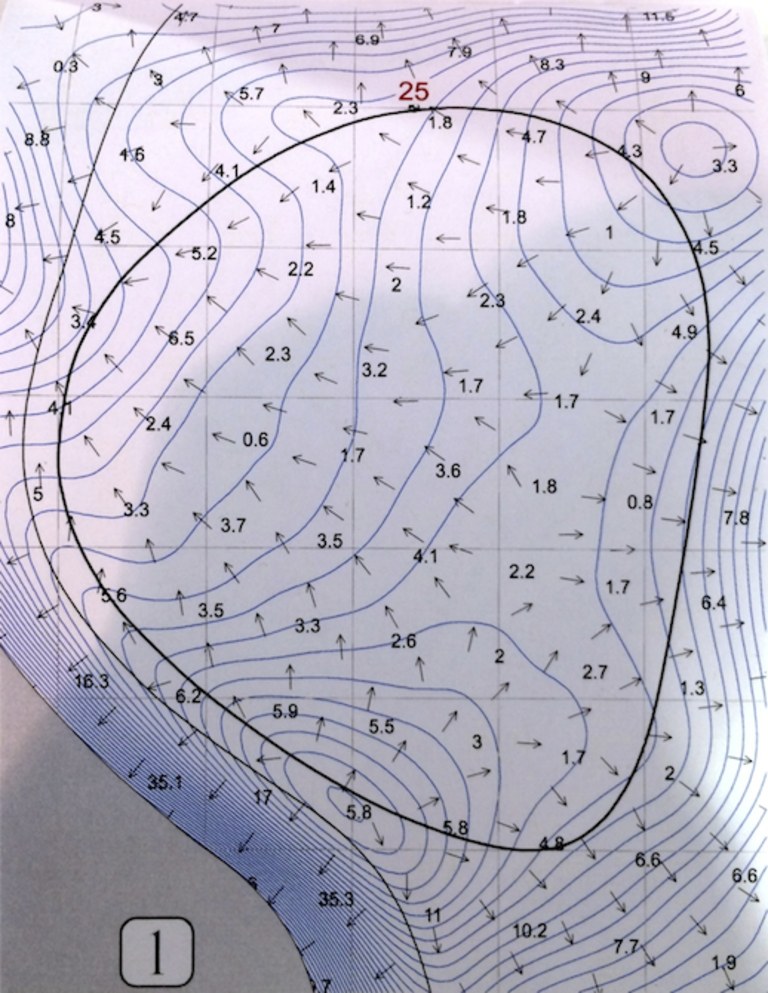
Credit: Golf Digest/Tour Sherpa
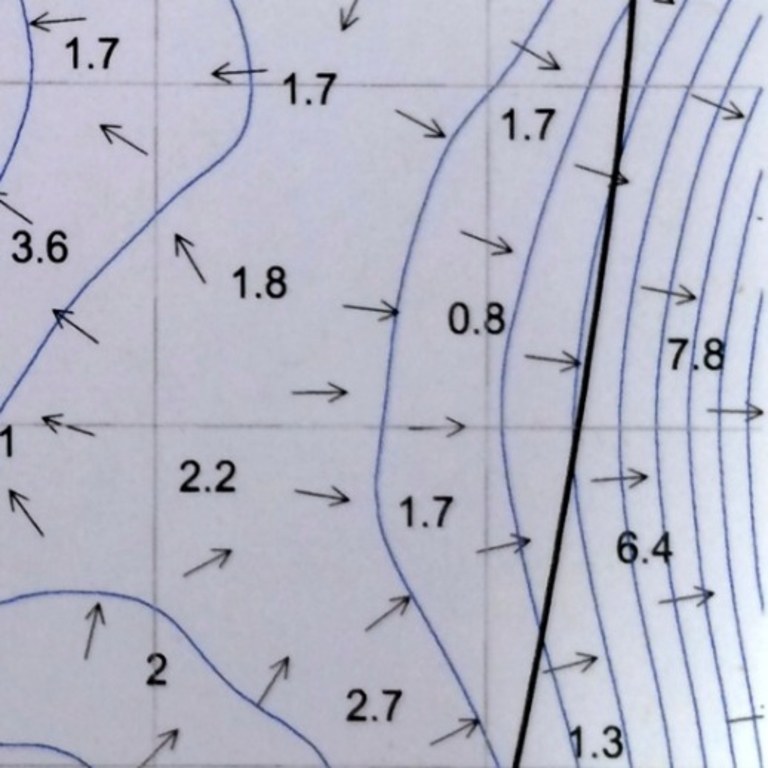
Credit: Golf Digest/Tour Sherpa
Thomas Pagel, the USGA’s senior director of rules and amateur status, told Golf Digest’s Mike Stachura the worry centers around the following:
“The increased level of detail that the USGA and the R&A has seen of late, both in printed and electronic form, that has prompted the study. It is fair to say all materials will be reviewed, but the original intent was not focused on basic printed yardage guides found at most golf courses, but those with an increased level of detail/sophistication.”
This led Stachura to connect the dots, writing, “It seems conceivable that green charts instead of contour lines measuring the percentage of slope…might someday reach a stage where all putting locations might be determined to have a certain break like two feet right or six inches left.”
Yardage books in general have long been contentious on the PGA Tour, but the USGA largely hasn’t had an issue with the pocket course maps until now. It will be interesting to see if the folks in Far Hills ultimately rule on the level of detail in Mark Long’s (and similar) yardage books.
If you ask PGA Tour pro Luke Donald, he seems to agree with the concern.
Totally agree. There is an art to green reading that is getting lost, just like judging the wind & this will help speed up play ???????? https://t.co/epWiq1jUOC
— Luke Donald (@LukeDonald) May 1, 2017


News
Charles Schwab Challenge Tour Report: MacIntyre, Åberg and Spaun all switch putters, TaylorMade launches new Spider


There must be something in the water. Or potentially on the greens. A whole host of big-time players decided that the Charles Schwab Challenge was the perfect place to test out new putters.
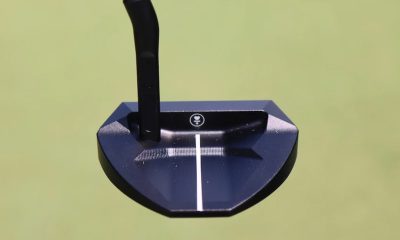
With the 2026 U.S. Open just around the corner, defending champion J.J. Spaun made a surprising switch away from his center-shafted Df3 and into L.A.B. Golf’s OZ.1i HS – the heel-shafted mallet putter.
“Just something I kind of wanted to change the way the putter was looking, just a completely different look than the DF3 that I’ve been using for the last year and a half,” Spaun told GolfWRX about the swap. “So it’s just easier to line up for me with less onset looking design, and it’s just something I felt like switching it up and seeing how it goes.”
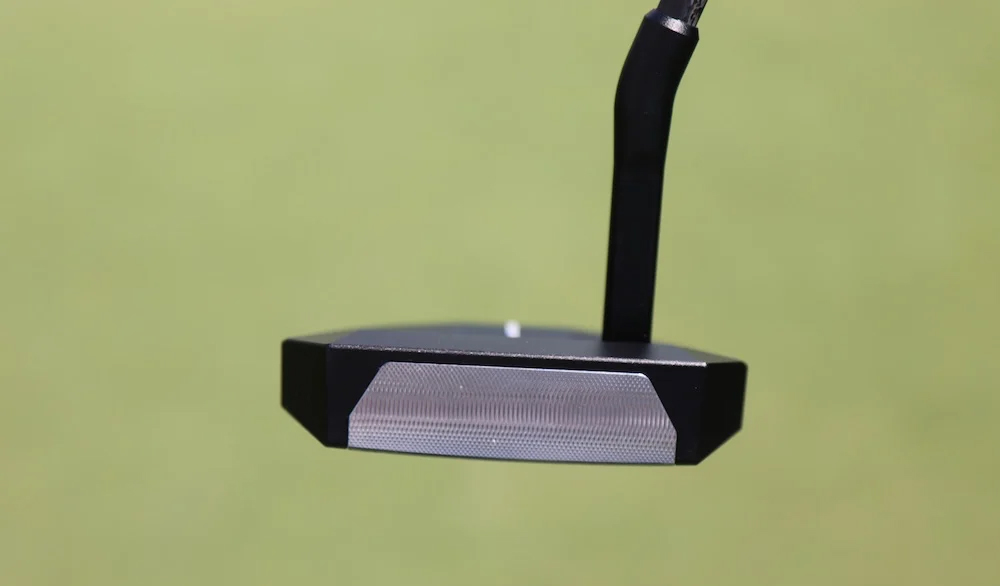
You can find more about the putter and the reasoning behind Spaun’s change here.
Robert MacIntyre also decided to change the flatstick at Colonial Country Club. He’s using a custom Scotty Cameron Phantom 9.5R. The Scotty team created a specially-milled face featuring horizontal grooves and shortened the plumber’s neck to increase toe hang.
Another custom feature of the build is the welded wings added to the rear of the putter, similar to those found on the Phantom 11 head.

It’s potentially part of a major overhaul to his bag. The Scot has recently switched from the Titleist Pro V1 to the Pro V1x golf ball, added the new GTS2 driver, and is currently testing a GTS 3-wood that could replace his ancient TaylorMade AeroBurner 3-wood.
Ludvig Åberg joined the trio of superstars making alterations on the greens. He’s added a Scotty Cameron Phantom 3.2.
It’s not Åberg’s first putter switch of the season. He had been using different versions of his usual Odyssey Versa #1 head to try to get better speed control on the greens.
? Ludvig Åberg is using a new putter! He’s playing a @ScottyCameron Phantom 3 head. First major putter switch, although he has been changing loft and heads in the Odyssey #1 style this season.
Here’s a Phantom 3 built for him earlier in the season https://t.co/oGrNk6p0hz pic.twitter.com/edRbpk22m4— Alistair Cameron (@ACameronWRX) May 28, 2026
Currently, a Tour-only offering, the Phantom 3 head is a half-moon mallet shape. Like the previous version that GolfWRX captured at the Arnold Palmer Invitational, which Åberg never put in play, the current version appears to feature the Studio Carbon Steel face insert and chain-link face milling. Instead of the all-black version one, Åberg’s current flatstick is in the metal finish.
Rico Hoey’s make-shift Jailbird
Some of the best builds on Tour have a certain Frankenstein theme to them.
Odyssey decided to do this when breeding a turtle and a bird together. The result, Rico Hoey’s latest broomstick.
The custom Jailbird S2S Tri-Hot head includes an aluminium-milled insert from the unreleased TRTL head, which the team machined down to fit the face of the Jailbird after removing the usual Ai-Dual insert.

The team also filled the wings of the putter with epoxy to redistribute mass away from the face, with the metal insert weighing more than the original.
Hoey was also spotted with a custom Damascus Milled Jailbird Mini broomstick. Check out the full gallery here.
Brant Snedeker’s full WITB
Arguably, the PGA Tour’s feel-good story of the year so far was 45-year-old Brandt Snedeker returning to the winner’s circle for the first time in nearly 8 years.
His victory didn’t come without some equipment updates, either. The Presidents Cup Captain added the 2016 M2 driver equipped with a Fujikura Speeder Evolution 661. It’s a shaft that’s even older than the driver.
The historic driver setup might have been added because Snedeker was missing some antique vibes. He recently switched out his 2-decade-old Odyssey Rossie White Hot XG for a TaylorMade Spider Tour X.
He first put the Spider in play at the Cognizant Classic. Still, at the Valspar Championship, he tested TaylorMade’s True Path Alignment versus without, and preferred the added aim benefits he was getting. In previous testing, the biggest thing Snedeker noticed was the launch and how quickly the ball got to true roll from the Spider and its Pure Roll insert compared to anything else he had tried.
Everything’s bigger in Texas
TaylorMade Golf chose the second stop of a Texas two-step in Dallas as the spot to launch the tour’s latest Spider putter.
On-site Monday at Colonial Country Club, GolfWRX’s Tour Photographer Greg Moore captured the new Spider ZT Max putter ahead of the Charles Schwab Challenge.
The Max version of TaylorMade’s zero-torque putter style has a larger footprint than the original ZT, which will likely lead to a higher MOI thanks to wider perimeter weighting.

The original ZT is made of high-density 303 stainless steel at the front, and then a lower-density 6061 aerospace aluminum on the back to create a high-MOI foundation, with a center shaft featuring slight forward shaft lean and 25mm onset behind the leading edge.
The Spider ZT Max also appears to use the ZT cambered sole, which is also seen on the recently Tour-launched Spider Tour, Tour X, F and V models, which were first spotted at the RBC Heritage.
Brian Harman gamed the original Spider ZT for his victory last year at the 2025 Valero Texas Open, and the putter also saw victory on the DP World Tour in the hands of Michael Kim for his FedEx Open de France win.
Check out the full gallery here.
Odds and Ends
Project X officially Tour launched the Titan Yellow shaft, just a few days after Wyndham Clark played it for the first time and won The CJ Cup Byron Nelson. The shaft features a smoother feel in the handle compared to past Project X wood shafts, along with a firm midsection and firm tip. The Synex Technology allows a player to feel more load in transition without losing the feel of the clubhead. Titleist launched the GTS300 back at Quail Hollow, and just a few weeks later, it’s in the bag of Justin Thomas. Could this be a test run for Shinnecock?


GolfWRX Tour Photographer Greg Moore was on site in Galloway, New Jersey, ahead of the ShopRite LPGA powered by Wakefern to snap some WITB photos and more.
Check out links to all the photos below!
General Albums
WITB Albums
- Mimi Rhodes – WITB – 2026 ShopRite
- Aline Krauter – WITB – 2026 ShopRite(LPGA)
- Olivia Cowan – WITB – 2026 ShopRite
- Leah John – WITB – 2026 ShopRite(LPGA)
- Melanie Green – WITB – 2026 ShopRite
- Nastasia Nadaud – WITB – 2026 ShopRite(LPGA)
- Maria Torres – WITB – 2026 ShopRite(LPGA)
- Ana Belac – WITB – 2026 ShopRite(LPGA)
- Carolina Melgrati – WITB – 2026 ShopRite(LPGA)
- Sofia Garcia – WITB – 2026 ShopRite(LPGA)
Pullout Albums


Back again for week 18 with another new bag for this week’s league night! Last week I played well but lost so hoping to get back on the winning side of things. I am pretty excited to get this driver out on the course as I think it is a legit sleeper in the category. It is also time to break out some newly built irons from JP Golf that look awesome and hopefully play just as good! Here is what is in the bag this week.
Driver: PXG Lighting Tour-Mid (10.5 degrees)
Shaft: Fujikura Ventus TR Red 6s
4-wood: Wilson Dynapwr Carbon (16.5 degrees @ 16)
Shaft: Fujikura Ventus Red 7s
Hybrid: Callaway Apex Ti Super Hybrid (21 degrees @ 20)
Shaft: Fujikura Ventus HB Red 9x
Utility: Mizuno JPX One (22 degrees @ 23)
Shaft: Mitsubishi Tensei 1K Black 85s
Irons: JP Prime (5-PW)
Shafts: UST Mamiya Dart V 105 F5
Wedge: Cleveland RTZ (50-10 MID)
Shafts: KBS C-Taper Lite 110 s
Wedge: Cleveland RTZ (56-10 MID)
Shafts: KBS C-Taper Lite 110 s
Wedge: Cleveland RTZ (50-8 ADAPT)
Shafts: KBS C-Taper Lite 110 s
Putter: Mizuno M.Craft City Osaka
Shaft: TPT Pulse 50
Ball: PXG Xtreme Tour

RBC Heritage Tour Report: More minis, course-specific setups, Spider & GTS launches

Justin Rose WITB 2026 (April): Full WITB breakdown with new McLaren irons

What’s the story behind Webb Simpson’s custom-stamped irons?

Cadillac Championship Tour Report: Spieth’s sizable changes, McLaren Golf launches, and more

Kristoffer Reitan’s winning WITB: 2026 Truist Championship

Cameron Young’s winning WITB: 2026 Cadillac Championship

Aaron Rai’s winning WITB: 2026 PGA Championship

Nelly Korda WITB 2026 (April)

Justin Rose on the switch to McLaren Golf, learnings from previous equipment moves

Photos from the 2026 CJ Cup Byron Nelson

Si Woo Kim WITB 2026 (May)
Driver: Callaway Quantum Triple Diamond (8.5 degrees) Shaft: Fujikura Ventus Black 6 X Mini driver: Callaway Paradym Ai Smoke Mini...


Wyndham Clark’s winning WITB: 2026 CJ Cup Byron Nelson
Driver: TaylorMade Qi4D (10.5 degrees) Shaft: Project X Titan Yellow 60 TX 3-wood: TaylorMade Qi4D Tour (15 degrees) Shaft: Project...

Cameron Smith WITB 2026 (May)
Driver: Titleist GTS3 (10 degrees, D1 SureFit setting) Shaft: Fujikura Ventus TR Blue 6 X 3-wood: Titleist GTS2 (16.5 degrees,...


Club Junkie WITB, week 17: Some underrated irons!
This week in my league, we are going with a rather interesting setup with old and new clubs. The PXG...
-
 Whats in the Bag3 weeks ago
Kristoffer Reitan’s winning WITB: 2026 Truist Championship
-
 Whats in the Bag2 weeks ago
Aaron Rai’s winning WITB: 2026 PGA Championship
-
 Tour Photo Galleries2 weeks ago
Photos from the 2026 CJ Cup Byron Nelson
-

 Tour Photo Galleries3 weeks ago
Photos from the 2026 PGA Championship
-

 Equipment1 week ago
CJ Cup Byron Nelson Tour Report: Koepka and Kim’s newest putters finally get hot
-
 Equipment4 days ago
Details on J.J. Spaun’s surprise putter switch
-
 Equipment3 weeks ago
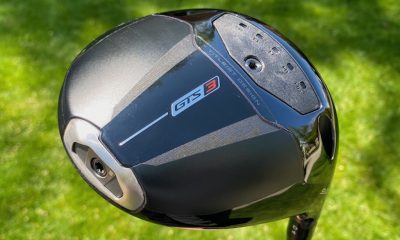
GolfWRX Launch Report: 2026 Titleist GTS drivers
-

 Equipment2 weeks ago
PGA Championship Tour Report: Fitzpatrick, Koepka among big-name putter switches for Aronimink


Don
Jun 1, 2017 at 8:46 am
Give them lasers for yardage use only. let them carry there own bags read there own greens. Spoilt children these pros are.
Mat
May 30, 2017 at 2:25 am
So, here’s a question… if the USGA generally allow rangefinders that don’t allow slope, how is it they’re being provided with slope information? How has that been allowed to become a cottage industry?
Personally, I think this is all a waste. I think the slope algorithm in the current rangefinders aren’t a big deal. Frankly, whatever speeds play is good, and those books don’t sink putts. But this type of grandstanding just annoys players. But please start making the pros play like we have to. Let them have a laser, but take their books. Or don’t, and clarify that slope information is ok. What drives me batty about the USGA is they approach it as if it’s this new thing. It’s not.
Kyle
May 21, 2017 at 1:02 pm
But they want to allow range finders? i don’t understand
drkviol801
May 29, 2017 at 7:40 pm
Right? #logic
Dave R
May 8, 2017 at 9:03 pm
Personally I think you would have to have studies in rocket science to even read this thing. I would not know which way to turn the thing up down or sideways. But then I never went far in college never got to map reading.
GH
May 3, 2017 at 12:26 pm
The game has gotten too concerned with low scores and records. We also should go back to not allowing to mark the ball on the green and play stymie. It’s about who navigates the situations to win the tournament, not about just getting low scores
PG
May 4, 2017 at 5:18 pm
Stymie is awesome for match play. It would be fun to watch. During stroke play it could be abused and would be unfortunate if it affected the outcome.
Dace
May 3, 2017 at 11:53 am
I would like to see this stopped.
Along with that I would also like to see caddies actually just caddy.
Carry the bag, give distance from the ball to the pin and little else.
Keep them off the greens and lets see the pros use their own skills to navigate the contours.
Simplify the rules also, ball on tee not to be touched again until it is on the green.
Any unplayable/lost/hazard ball, drop at the original point of strike with a shot penalty.
Remove all line of sight relief.
As mentioned above remove all grandstands from the green area.
Also in agreement with Brandon … Brandon May 3, 2017 at 10:05 am
Actually I would like to see a 90 second shot clock with 3 60 second extensions per round, but that is me personally.
The game is too slow and the rules too complex.
We are losing a generation to the game, almost no one understands the rules now .
Bob Jones
May 3, 2017 at 11:39 am
Why not go all the way and make the pros play like the rest of us do? Ban yardage books (except for notes they personally make during practice rounds), ban daily pin sheets, ban caddies. Make them pull their clubs around on a cart and hunt for sprinkler heads to get their distances. Really! I’m not kidding. Once a year I would like to see a tournament played like this.
Duncan Castles
May 3, 2017 at 9:30 am
Fully agree that the governing bodies should ban the use of detailed green charts during competitive rounds. They both slow down the game and reduce the need to develop and deploy one of golf’s key skills.
JLBIII
May 3, 2017 at 8:35 am
For the last 15 years, I’ve used my feet to read greens. I would never use a mapped chart because it would change my trust and confidence in what I feel.
Ron
May 3, 2017 at 8:29 am
Good idea! Caddies should also not be able to give players any information other than distances and wind direction. The player ought to be able to figure out what club to hit and how to hit it. That goes for alignment too.
And, USGA, address the ball in motion rule, where the wind moves the ball on the green. The player who doesn’t cause the ball to move should be able to replace it in its original spot without penalty.
Jack Nash
May 3, 2017 at 8:05 am
Great idea. Let’s make a 6 hr round 6 1/2 while watching a pro do laps on a green before they decide to get over the ball. Next thing you know there’ll be a 24 sec. clock.
Brandon
May 3, 2017 at 10:05 am
Actually I would like to see a 90 second shot clock with 3 60 second extensions per round, but that is me personally.
Ron
May 3, 2017 at 1:24 am
I’m curious who and what kind of tech creates these topographical green maps? Must be already in the yardage books given to the players before the tournament.
Gordy
May 2, 2017 at 8:48 pm
I wish they’d ban the grand stands behind every green that stops the ball from going 30 yards past the hole on a bad shot.
Adam P Smith
May 3, 2017 at 8:54 am
Agree 100%. In fact last week in China at the European Tour event the 18th hole had water cutting in to the green on the right side with the flag (for round 4) inaccessible some 6 paces from the water. Immediately left of the green was a stand, the closest to a green I’ve ever seen. What happens? More than one pro took dead aim at the lower portion of this stand from 150-180 yards away and bounced the ball onto the green and close to the flag; closer than could have been achieved by a normal shot. Utter madness on the part of the tournament director and officials…those guys need sacked. It’s golf not billiards!
larrybud
May 2, 2017 at 6:24 pm
Yeah, I can see how this is a problem since nobody seems to miss any putts…. lol I mean, who cares? You better ban all yardage books then, and sprinkler heads with numbers on them, since those numbers were derived from laser range finders.
Stupid is as stupid does, sums up the USGA nicely.
avg_joseph
May 2, 2017 at 5:14 pm
If all players have access to this same information what does it matter? If the information is out their and they are banned during tournament play, all you are doing is giving a leg up to players with better memory/photographic memory…
Access to this information speeds up play as well. Do you really want to have these guys(and gals) with millions of dollars on the line taking longer to read putts on their own? If pace of play is such an important issue to the USGA why would they take detailed information out of a players hand that is going to make the pros take longer to do their job? If anything, Courses that have this information should give these to any player with the knowledge to use them to help speed up play!
Adam P Smith
May 3, 2017 at 8:57 am
Nonsense, use of these green-reading books slows play down; are you Stevie Wonder? But slow play isn’t the real issue in this: skill and judgment is what golf is founded upon not having fancy, cheat-bibles like these.
drkviol801
May 29, 2017 at 7:45 pm
I don’t see a problem either, nobody has an advantage over one another with these technological breakthroughs, and it results in better quality golf
chinchbugs
May 2, 2017 at 1:47 pm
About Time! This game was getting too easy!
Taylor
May 2, 2017 at 1:42 pm
I thought the yardage books just had blank green shapes and the pros filled them out as they read the greens. The advantage to the more veteran guys whom have played the greens more and have had many different looks. I didn’t know they were given how the topography of the greens were.
Adam P Smith
May 3, 2017 at 8:58 am
Oh dear, do try to keep up grandpa.
Mark
May 2, 2017 at 1:29 pm
Good grief. I had no idea they were that detailed. Let us get back to the player and only the player lining up his putts. And these maps should be banned. The club player uses his own eyes so why not someone supposedly more skilled?
ROY
May 2, 2017 at 9:40 am
So if I can bring a topographical map why not a wind gauge?? Could extend my 18 foot ball retriever, stick it on the top of that and be a little more certain about what the winds speed and direction is.
John
May 2, 2017 at 11:55 am
you might be the only guy who knows some rules of golf AND carries an 18 foot ball retriever.
Anthony
May 3, 2017 at 6:58 pm
he’s that guy that holds people up behind while he retrieves 15 balls from the lake instead of just his own 😉
Anthony
May 3, 2017 at 7:00 pm
he’s that guy who holds up play while retrieving 15 balls from the lake instead of just his own hahaha
DB
May 2, 2017 at 9:33 am
I believe the charts get even more complicated/detailed than what is pictured.
And I think they should be restricted at some point. Laser rangefinders that calculate slope are banned from tournament use. What’s the basic difference between that and a fold-out chart that details every little slope in the green?
RG
May 2, 2017 at 7:03 am
More ridiculousness from the USGA. Graphite shafts, titanium golf clubs, range finders and four piece multi material golf balls are good, topographical maps bad! ridiculous! the toothpaste is out of the tube.
H
May 2, 2017 at 3:07 am
Lemur?
Matt Gates
May 2, 2017 at 1:18 am
Seriously USGA….
This is completely ridiculous. These guys talk about growing the game but yet have zero clue as to what it takes to actually pulls off what current PGA tour pros do. Its actually a little disgusting that these dinosaurs are guiding a sport that so desperately needs an injection of life.
This still comes down to execution. You HAVE to be able to execute exactly what it says on the books, whether its yardage or the slopes on a green.
Pathetic…..
Brian
May 2, 2017 at 9:22 am
What does the use of detailed topographical maps by Tour Pros have to do with growing the game?
Joey5Picks
May 2, 2017 at 3:55 pm
My question, as well. The two are not related in the slightest.
Aaron
May 2, 2017 at 11:00 am
ya dumb response, nobody else has access to these charts and even if they did talk about slowing the F out of the game….I can’t stand the USGA but 100% agree with this concern. Putting at all levels is fun to be a part of and the art of the “guess” is great at all levels……
Judge Smells
May 2, 2017 at 12:03 pm
cant wait till you see kids at Junior tournaments making topographically maps of the green during their practice round so they can be like Dustin Johnson referring to their green map
DMACK
May 1, 2017 at 9:43 pm
I have been playing the same courses for years and am still trying to figure out and remember all the breaks. I definitely think green reading is a big part of the art of putting. The green contour map like shown above can be viewed as equipment that aides the golfer. It’s at least worth a debate. (Can I order such a map for my home course, surely could eliminate some 3 putts.)
Scott
May 2, 2017 at 7:57 am
DMACK, I was told by a guy at Golf Galaxy that there are highly detailed yardage books out there now (or on their way), but I was told they are a bit pricey. Might be worth it for a few courses though.
Zach
May 7, 2017 at 8:25 am
We can provide you one…www.flaghunting.com
Or email us at [email protected]. Not nearly as expensive as people think
Daniel
May 1, 2017 at 6:53 pm
If reading a green is an integral part of the game to be preserved where does that leave us with rangefinders? If judgement of a putt is a skill to be preserved and rewarded why not yardage estimation?
But, I don’t need a thing to make the game harder and I’d wager the bulk of golfers don’t either. Furthers the argument that rules bifurcation is needed in some degree.
H
May 2, 2017 at 3:06 am
You can’t use rangefinders in professional competition. So that’s what this is implying, that perhaps during play, these contour-Aimpoint maps will be banned, only to be used during practice rounds, as the rangefinders are.
Adam
May 1, 2017 at 6:40 pm
I assume, then, that these things are why pros look COMPLETELY AND UTTERLY BEWILDERED when they miss something inside 10 feet? They look at these sheets, it tells them one things, they go with it, they miss, they curse the world. How much reliance is on these books and how much of it is actual green reading?
Double Mocha Man
May 1, 2017 at 4:45 pm
It is an interesting sort of “give an inch, take a foot” quandary for the USGA. A topographic map for backpacking is good, a topographic map for reading greens is cheating. Unless you’re camping out on the steep ridge on #14 green at Pebble Beach.
Adam P Smith
May 3, 2017 at 9:00 am
You are funny but you are 100% correct!
Paul G
May 1, 2017 at 4:28 pm
seems like luke donald needs to heed some advice from Kendrick Lamar – sit down, be humble.
wow, players doing what they can while adhering to the rules to help gain information about a course? crazy talk. USGA, stop screwing things up every chance you get. Let your DVR-committee do your bidding to get your rulings right. USGA puts out that they want to allow rangefinders or measuring devices but want to dial back the information you can put in your yardage book? smh.
TR1PTIK
May 1, 2017 at 5:08 pm
I don’t think their issue is necessarily the level of detail within a yardage book as much as it is how that information is obtained. However, you could not achieve the same level of detail by simply walking a green and rolling a few putts. I agree with the USGA and with Luke Donald though. Green reading is an acquired skill and a bit of an art. Players should be allowed to record slope information in their yardage book, but without the assistance of special equipment. They should only be allowed to make note of the things they can visibly see and physically feel. They should not be able to use any type of technology to help them measure the various contours of a green. Plain and simple. And no, I don’t believe this is in any way similar to using a rangefinder that ONLY measures yardage. Yardage is a far easier measurement to obtain through other means and I believe the use of rangefinders can only help pace of play.
Kim
May 2, 2017 at 10:59 am
These contour maps are made by digital mapping of the greens. It would be impossible to enforce a rule banning the maps as players could review in privacy off the course. They should be banned on the course during play, including practice and tournament rounds.
TR1PTIK
May 2, 2017 at 1:51 pm
I think that kind of goes without saying which is why it wasn’t said. Lol. Anyone can do whatever they want off the course.
H
May 1, 2017 at 6:40 pm
Who the F is Kendrick Lamer
Poetic Justice
May 1, 2017 at 7:00 pm
I thinks he’s the guy who emailed the usga regarding his disdain for these pga tour yardage books and started this whole quandary.
Judge Smells
May 2, 2017 at 12:05 pm
hes lexi thompson’s caddy