
Opinion & Analysis
Statistics on how short hitters can conquer Par-5’s

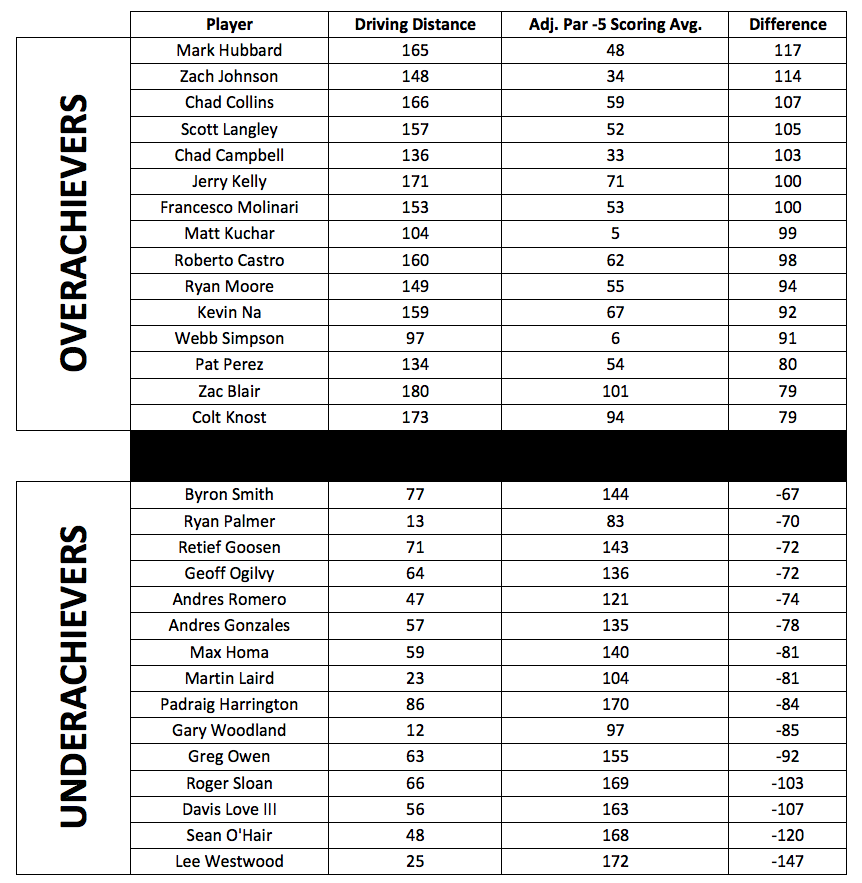
One of the least surprising parts of analytics in golf is that there is a strong statistical correlation on the PGA Tour between Driving Distance and Par-5 performance. Driving Distance and Par-4 performance does not have nearly the same correlation, which makes it obvious how important power is to performing on the Par-5’s.
I wanted to look at the exceptions to the rule, however: short hitters who performed well on Par-5’s. Conversely, I wanted to examine long hitters who did not perform well on Par-5’s. Then I wanted to see what these groups of players had in common with their game in hopes of explaining why they overachieved or underachieved on Par-5’s.
I decided to take the top-15 Overachievers (nearly the top 10 percent) and the top-15 Underachievers and examine their metrics.
Click to enlarge
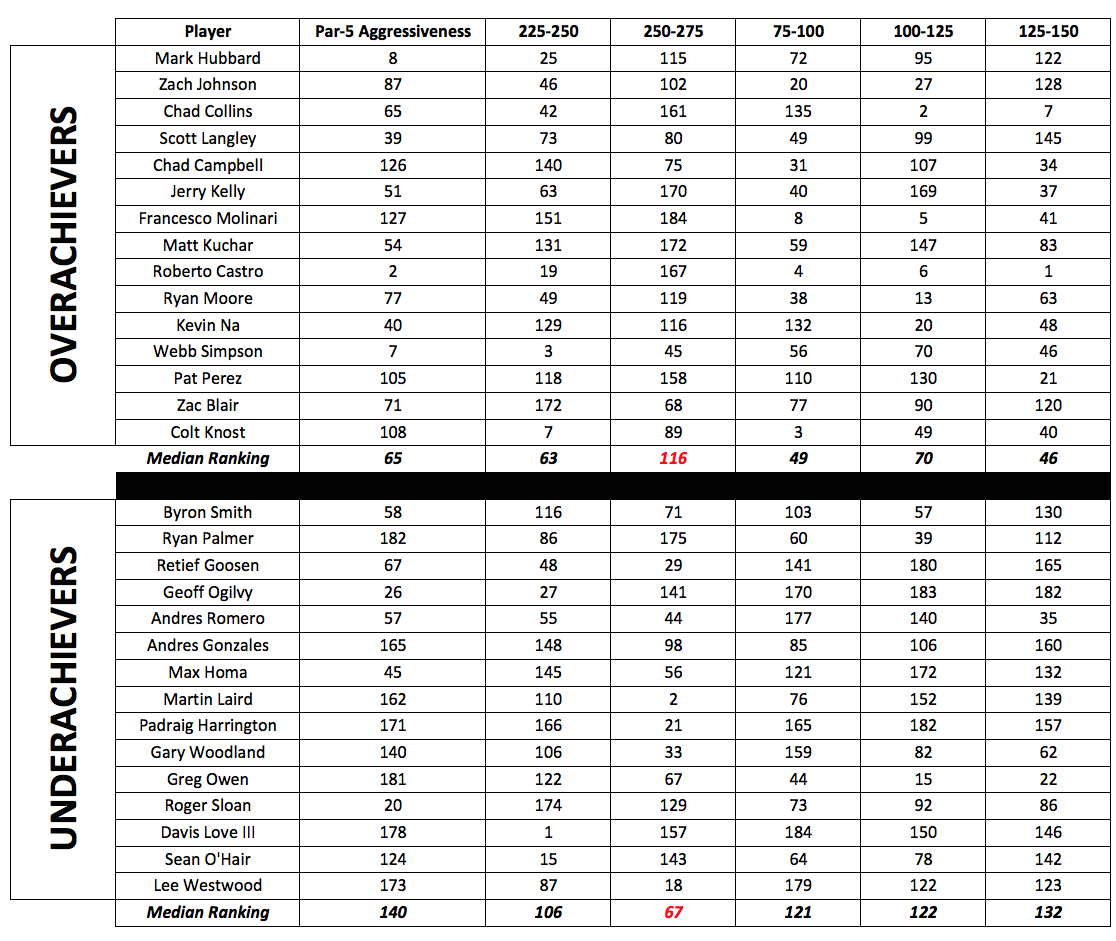
First, I wanted to see how these groups of golfers performed on approach shots, not only the range from which they are likely to hit a fairway wood (225-275 yards), but also on short approach shots where they end up if they decide to lay up on Par-5’s.
Click to enlarge
What’s interesting is that the Overachievers have a much better ranking in each of the categories except one: shots from 250-275 yards. That area is where the 3-wood is almost exclusively used by Tour players, and yet the Overachievers were significantly worse performers than the Underachievers.
This is one of the key points in the difference between the Overachievers and the Underachievers. Obviously, performing better from 75-150 yards is helpful to performing better on the Par-5’s. But despite the Overachievers being worse with the 3-wood and better from 75-150 yards than the Underachievers, they were significantly more aggressive on the par-5’s.
Par-5 aggressiveness is a proprietary formula that I use to determine how “aggressive” a player is in going for par-5’s in two shots based on their percentage of Par-5 “Go For It’s,” their distance off the tee, their club speed and the percentage of “Go For It’s” for the field on the par-5’s they have played.
For example, Mark Hubbard ranked 114th in actual Par-5 “Go For It” percentage. But he was 165th in Driving distance, which means he has a less likely chance to go for Par-5’s in two shots. Hubbard did it anyway, and therefore was very aggressive on the Par-5’s.
The difference in Overachievers being much more aggressive on the Par-5’s, despite being inferior 3-wood players and superior from 75-150 yards, indicates that it is far more beneficial to be aggressive than conservative on the Par-5’s.
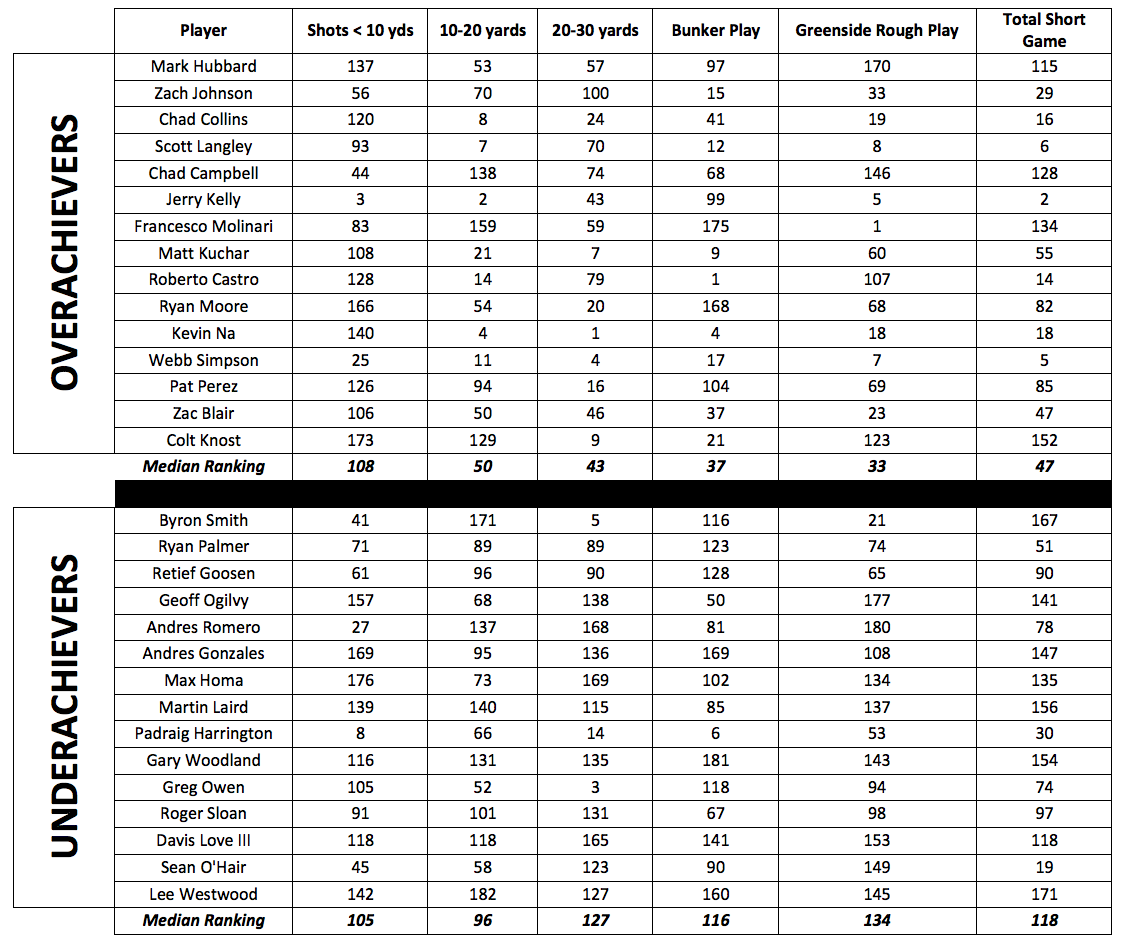
Next, let’s look at Short Game shots around the green data for both groups.
Click to enlarge
Once again, this is not all that revelatory in general, but the details are a bit more informative. The Overachievers had better short games than the Underachievers. However, the data shows that the larger discrepancy is on shots from 20-30 yards. On Par-4’s, it is far more important to perform well from 10-20 yards and from less than 10 yards than it is to perform well from 20-30 yards. But on par-5 shots, 20-30 yards is a more important distance range.
Here’s how the two groups fared on the greens.
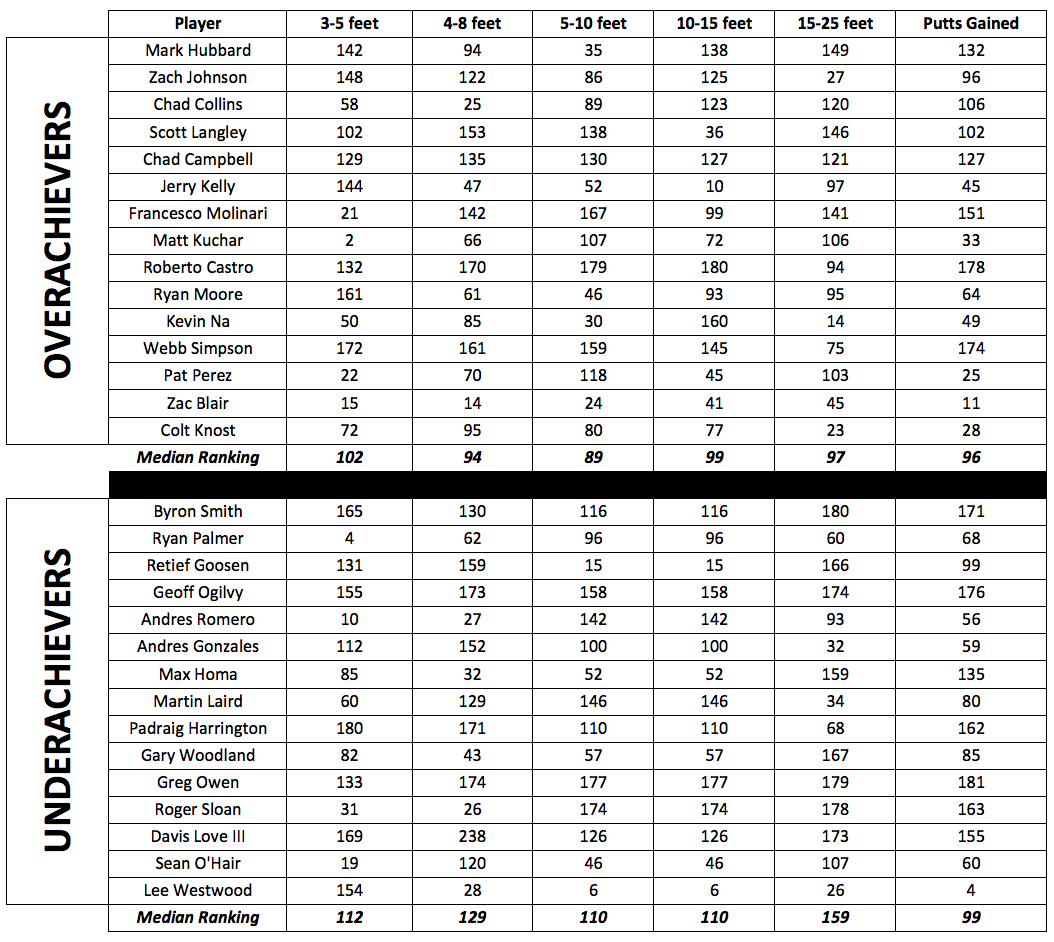
Click to enlarge
This was a bit more surprising for the most part, as he Overachievers did not putt significantly better than the Underachievers. This indicates that getting the ball close to the green in the first two shots is more important than actual putting performance on the green for Tour players.
Lastly, I wanted to compare the two groups with some driving metrics.

Click to enlarge
Tee Shot Aggressiveness is a proprietary measurement I use to determine the amount of times a player is laying-up off the tee. Players like Mark Hubbard and Roberto Castro rarely lay up off the tee, while Martin Laird and Lee Westwood were frequently laying up off the tee.
While there is a huge discrepancy in the Tee Shot Aggressiveness rankings for the Overachievers versus the Underachievers and the Overachievers were more effective off the tee in general, the more telling metrics are the ones that indicate a player’s accuracy and precision off the tee.
Despite the Overachievers being much more aggressive off the tee, they were still far more accurate (hit fairway percentage) and much more precise off the tee (Distance to Edge of Fairway, Hit Fairway Bunker Percentage and Missed Fairway – Other Percentage). This goes back to one of the major strategic keys that I stress to all golfers:
If you’re likely to have a long club in your hand (5-iron or longer) on your 2nd shot, it is best to focus on making good contact and finding the fairway rather than swinging for the fences in hopes of gaining an extra 20-30 yards off the tee.
That includes Par-5’s and Par-4’s. For Tour players, the variance in scores on shots from the fairway versus the rough rise dramatically once the second shot is from 175 yards or more. For amateurs who play shorter courses, I recommend looking at it from the club you are using. The general rule of thumb is a 5 iron or longer. I still recommend hitting driver off the tee. As the Overachievers show, they are not laying up off the tee that often. But, it is better to take your “stock swing” and focus on making good contact and finding the fairway than to swing harder in hopes of gaining more yards at the risk of finding the rough.
To summarize, here’s what amateurs can learn from the pros.
- Hit driver off the tee, but focus on good contact and finding the fairway instead of swinging harder in hopes of hitting it farther.
- Three wood performance is not as critical to par-5 performance as one may think. However, it’s still important to try and get the ball as close as you can to the hole when feasible rather than playing for your “money yardage.”
- Short Game performance is fairly important, but it’s more about long-range short game shots (20-30 yards) than shorter range Short Game shots (<15 yards).
- Par-5 performance is more about the first two shots than it is about performance with the putter.


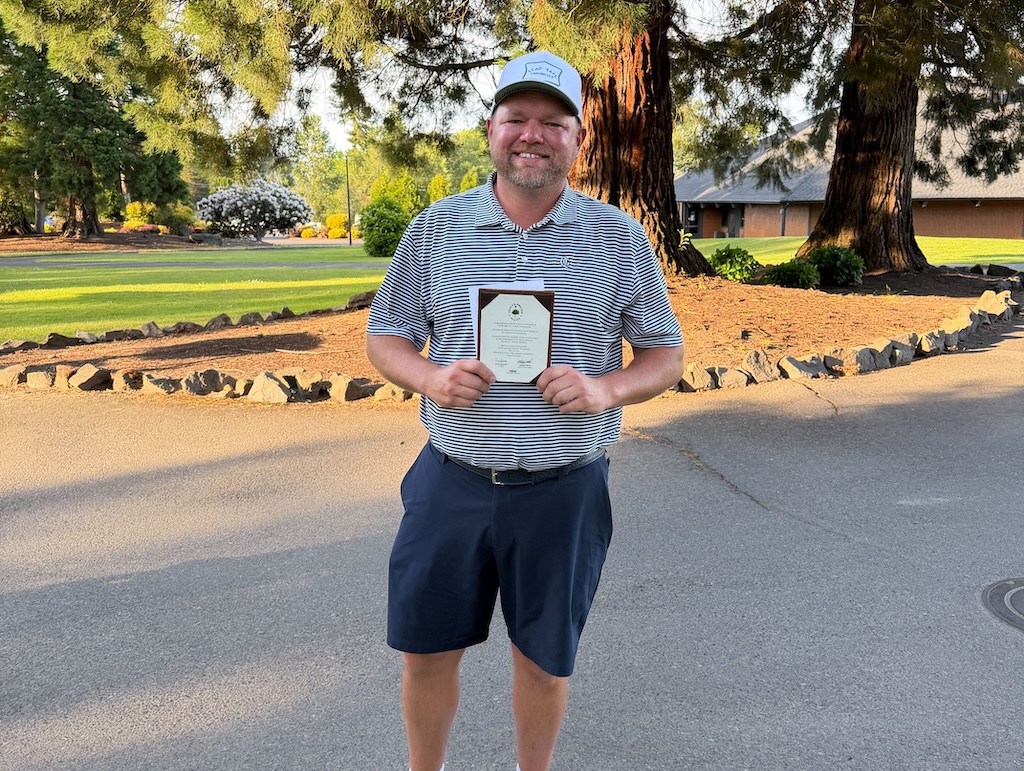
This past Monday, I played in the U.S. Amateur local qualifier at Rock Creek Country Club in Portland, Oregon. A full tee sheet from 7:30 a.m. to 1:55 p.m., the top 11 scores would make it to the U.S. Amateur final qualifying.
I teed off at 10:48 a.m.. With the 7:30 am tee time, you can get a feel for the leaders’ pace, and they were off and running on the challenging setup at Rock Creek.
View this post on Instagram
Getting to the highlight of the round on the par five 17th, a drive up the left side and 212 yards left to the front hole location. I took out a 5-iron with plans of middle of the green. The ball ended up 8 feet left of the hole, pin high. A slight downhill putt dropped in for an eagle 3 on the 17th. With the cut line looking to be anywhere from -2 to even par. This was the boost I had been waiting for all day.
With making par from the trees on 18, it was time to wait for a potential playoff with a posted score of one under par 71.
Three hours later, it was playoff time. 8 players for 6 spots. I made par on the playoff hole, which was good enough to advance to the U.S. Amateur final qualifying in July. USGA qualifiers sure deliver on all of the emotions in golf!
Club Junkie
Building my 2026 gamer WITB: Ranking the contenders and new putter projects – Club Junkie Podcast

The annual What’s In The Bag build is underway, and on this episode of Club Junkie, Brian breaks down the clubs currently leading the race for a spot in his 2026 gamer setup. From drivers and fairway woods to irons, wedges, and shafts, he ranks the equipment that’s performing best and explains what’s separating the front runners from the rest of the field.
Brian also heads into the workshop to discuss several putter projects currently on the bench. From head options and shaft choices to build ideas and testing plans, he shares what he’s working on and which putters could become serious contenders for the bag this season.
If you’re a gear junkie who loves equipment testing, club building, and the never-ending pursuit of the perfect setup, this episode is for you.
Follow Club Junkie:
Instagram: @clubjunkiepod
TikTok: @clubjunkiepod
Threads: @clubjunkiepod
X: @ClubJunkiePod
Club Junkie
Tour Edge Exotics mini driver review + TaylorMade Spider ZT Max first look – Club Junkie

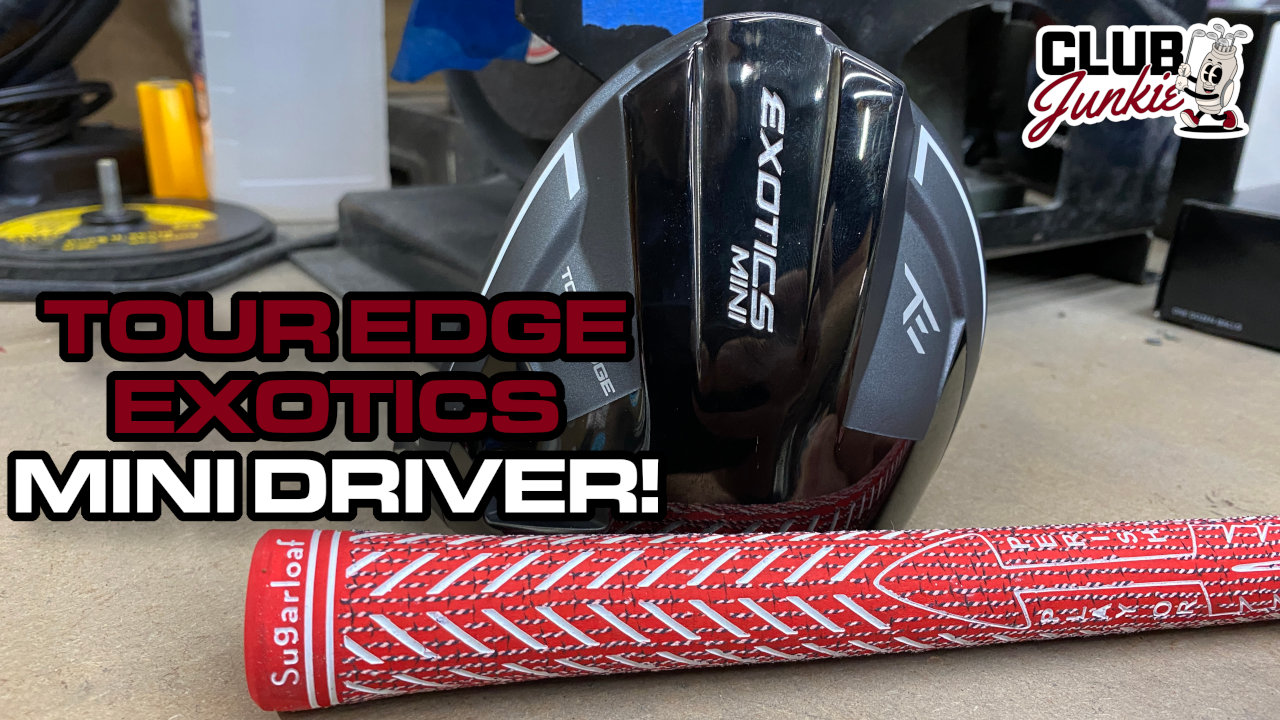
On this episode of Club Junkie, I put the new Tour Edge Exotics Mini Driver to the test and break down the performance, forgiveness, distance, and where it fits compared to a traditional driver or strong fairway wood. If you have been curious about adding a mini driver to the bag, this one is worth a look.
I also dive into the new TaylorMade Spider ZT Max putter that was recently spotted and discuss the growing zero torque putter trend. Plus, there is a closer look at the new Project X Titan Yellow shaft showing up on the PGA Tour and what makes it different from other profiles currently out there.

Justin Rose WITB 2026 (April): Full WITB breakdown with new McLaren irons

What’s the story behind Webb Simpson’s custom-stamped irons?

Cadillac Championship Tour Report: Spieth’s sizable changes, McLaren Golf launches, and more

Memorial Tournament Tour Report: Rory McIlroy, Cameron Young switch up drivers, and more

Russell Henley’s winning WITB: 2026 Charles Schwab Challenge

Kristoffer Reitan’s winning WITB: 2026 Truist Championship

Aaron Rai’s winning WITB: 2026 PGA Championship

Cameron Young’s winning WITB: 2026 Cadillac Championship

Details on Jason Day’s latest prototype Avoda iron setup

Nelly Korda WITB 2026 (April)


Alex Noren WITB 2026 (June)
Driver: Callaway Paradym Ai Smoke Max D (9 degrees @7, draw setting) Shaft: Graphite Design Tour AD VF 6 X 3-wood: Callaway...

Melanie Green WITB 2026 (June)
Driver: TaylorMade Qi4D (9 degrees) Shaft: Graphite Design Tour AD VF 5 S 3-wood: TaylorMade Qi4D (15 degrees) Shaft: Graphite Design Tour...


Sungjae Im WITB 2026 (June)
Sungjae Im had >14 clubs in his bag when photographed prior to the Memorial Tournament. Driver: Titleist TSi2 (8 degrees, B1...

Lucas Glover WITB 2026 (June)
Lucas Glover had >14 clubs in his bag when photographed prior to the Memorial Tournament. Driver: Titleist GTS2 (10 degrees, B2 SureFit...
-
 Equipment2 days ago
Memorial Tournament Tour Report: Rory McIlroy, Cameron Young switch up drivers, and more
-
 News7 days ago
Russell Henley’s winning WITB: 2026 Charles Schwab Challenge
-
 Whats in the Bag3 weeks ago
Aaron Rai’s winning WITB: 2026 PGA Championship
-
 Equipment4 days ago
Details on Jason Day’s latest prototype Avoda iron setup
-
 Tour Photo Galleries3 weeks ago
Photos from the 2026 CJ Cup Byron Nelson
-

 Equipment2 weeks ago
CJ Cup Byron Nelson Tour Report: Koepka and Kim’s newest putters finally get hot
-
 News1 week ago
Charles Schwab Challenge Tour Report: MacIntyre, Åberg and Spaun all switch putters, TaylorMade launches new Spider
-
 Equipment2 weeks ago
Details on J.J. Spaun’s surprise putter switch


Ron
Mar 7, 2016 at 1:50 pm
Great article. Love the statistical analysis and how that plays into strategy.
At 75 (with an index of about 4), I legitimately qualify as a short hitter (although probably fairly long for my age group). I can rarely reach par-5s in two – only on short ones probably playing from the ‘whites’. So my approach to par-5s is to think of them as par-3s in the sense that with a decent in-play drive, and a decent in-play second shot, most par-5s I play then just become a short iron or wedge to the green. (And with a wedge in my hands, I will always think “no worse than three more shots”, although it doesn’t always work out that way.) So par-5s are scoring holes even when they are not usually eagle opportunities. My strategy? Make that third shot as short as possible – unless getting into that position involves some risk like carrying a hazard or flirting with a bunker complex. But the key for me is putting the driver in play – doesn’t have to be long, but I want a doable second shot. The second shot strategy is then dictated by the lie and the risk – a fairway wood gets me as close to the green as possible without taking on undo risk, a hybrid or other ‘lay-up’ might be a safer shot and result in a longer third, but that’s okay. My scoring average on par-5s last year – in 140 rounds on 17 different courses? 5.0 (a little under that on my home course).
I played a recent on-course practice by dropping a ball 50-100 yards from each green and playing in. Great fun, by the way – and a great way to hone par-5 scoring skills.
Davo
Feb 25, 2016 at 3:43 pm
Zac Johnson won his masters jacket by laying up on every par 5 each day a few years back.
Rich Hunt
Feb 26, 2016 at 10:59 am
Yes, it was record freezing temperatures with high winds. Everybody was having to lay-up because it wasn’t feasible to get over the water in two shots. That left Zach in a wedge competition against the rest of the field which played to his strengths. Since then, Zach has not played all that well in the Masters outside of last season and goes for the par-5’s at Augusta whenever he can.
Gob
Feb 25, 2016 at 12:07 am
What are the driving distance numbers in the first chart?
Richie Hunt
Feb 25, 2016 at 8:19 am
All of the numbers in each of the charts are the rankings. So instead of saying a player ranked 165th, I just put down he ranked 165.
Mark
Feb 24, 2016 at 9:25 am
I’m not sure if the stats for tour players apply the same to the games of amateurs. The big difference I see is in the partial swing shots to get on the green. Pros spend endless hours dialing in their distances for these types of shots; amateurs, not so much. So I believe it IS actually better for the amateur to layup to their “money shot” because it’s a distance that they know and have practiced. Getting it as close as possible and leaving yourself a shot that requires a partial swing just doesn’t play out as well for amateurs as it does for pros.
aJerry
Feb 24, 2016 at 2:02 pm
!00% correct short game of 100 yards and in yields great results BUT very few amateurs with limited income have any where they can spend a hour or two hitting from a hundred yards and in to a playable green and get real descent results. What your talking about is Country Club level amateurs that have the money to belong to a course with quality practice facilities…..you get very little value out of practicing 100 yard shots off beat up old mats hitting in to dirt or near dirt driving range practice areas…and least anyone forget pros are hitting into real greens for practice with balls, like proV1’s they use in tournaments…. Every time we pay $48 bucks for a dozen ball a chunk of that change goes to supply tournament pros with endless supplies of that ball to play and practice with……..
Richie Hunt
Feb 25, 2016 at 8:24 am
The general concepts apply, but things are scaled down for the amateurs because they hit it shorter and play shorter courses. Most amateurs can’t hit their 3-wood 250-275 yards, so that is why I discussed the actual club more than the actual yardage. With the studies we’ve done on amateurs on par-5’s, the principles are almost identical to what we saw in the numbers for the pros. The only real exception is that some amateurs are far worse with the 3-wood off the deck than any other club in their bag. However, I believe one can draw the reasonable conclusion that if you’re an amateur that really struggles with the 3-wood, par-5’s are going to be an issue for you until you figure out how to hit a 3-wood with some level of competence.
Steve
Feb 24, 2016 at 12:39 am
Driving distances of PGA pros and LPGA pros is amazing but the second shots are the unbelievable shots….PGA guys hitting 3 irons 240 yards and stopping them on the green and LPGA gals hitting hybrids 230 yards and stopping on the greens. Insane…
Jack
Feb 25, 2016 at 1:47 am
Yup. The more you look at those performances, the more you realize the immense gap between top amateurs and pros. Not only are they more accurate, the distance they are covering is much greater too.
Magnus
Feb 23, 2016 at 10:15 pm
I actually have a very good shortgame, and my putting is alright, but I break 80 only when I find the fairway consistently from the tee, thats always the key to a good round. But anyway a lot of people talk about how you win tournaments because of your putter or your good shortgame. “you drive for show and putt for dough” is not true, and never has been.
Bob Jones
Feb 24, 2016 at 1:19 pm
Lee Trevino said, “They say you drive for show and putt for dough, but if you can’t drive, you won’t be putting for very much dough.”
Peter
Feb 24, 2016 at 2:23 pm
The “drive for show” is referring to the longest drive, it’s nothing to do with hitting or missing fairways. You can’t compete at any decent level if you can’t putt!
Mat
Feb 23, 2016 at 4:48 pm
This deserves one more step…
“Overachievers” are doing what the “Every Shot Counts” stat book says… essentially, you’re going to score better at a pro level from 40 yards out in the rough than you are 90 in the fairway.
You can essentially stack these stats backwards; overachievers are the guys playing to the stats. Gain the most distance within reason and within your ability every shot, as the lie allows.
Bump Fuzz
Feb 23, 2016 at 1:55 pm
I remember hearing on a golf telecast that Webb Simpson will try to get it as close to the hole as possible when hitting his 2nd shot on par 5s instead of laying up to a favorite wedge yardage.
Rich Hunt
Feb 24, 2016 at 9:38 am
Funny you mention Webb. When I analyze players and their strategy, Webb is one of the very best strategists on Tour. Not only on par-5’s, but on tee shots where there are players laying up or going for it. Whatever is the best play statistically, Webb is usually making that play.
Fahgdat
Feb 23, 2016 at 12:13 pm
Wow. Thanks for putting that together. Great article.
Goes to show you smart course management and timely scoring is what it’s all about.
You can play to your strengths and still do well.
Scott
Feb 23, 2016 at 11:42 am
Are you suggesting that the longer hitters are not being aggressive enough off the tee? I have often thought that there was way too much laying up on tour.
Richie Hunt
Feb 25, 2016 at 8:29 am
I wasn’t really suggesting that in this particular article. But often times that is the case. One of the things I preach to Tour players I work with is that I do not treat every player the same and fit them into 1 way of doing things. Bubba Watson shouldn’t try to play like Tim Clark and vice versa. Much of that has to do with how far they hit the ball. But, I see a lot of long hitters on Tour that try to play more like the shorter hitters. They concentrate on finding fairways at the expense of their length off the tee by laying up and focus too much on their wedge games. Instead, they have prodigious length off the tee….use it to your advantage. If you have the ability to be a power player…be a power player.
davemac
Feb 23, 2016 at 11:37 am
I really like this type of analysis, am I correct in assuming the value in each column is the player’s positional ranking for that given skill?
Psychology has to play a major impact on the result, Lee Westwood is poor from the ‘important’ target short game areas, but is this a poor short game or excessive shot pressure due to putting weakness?
The other possibility is perhaps under achievers are in the habit of short siding their approach miss, making the short game shot more difficult.
Bobby Pingstein
Feb 23, 2016 at 11:01 am
Just hit the gym and take testosterone
[email protected]
Feb 23, 2016 at 4:35 pm
Do you even lift, Bro?