
Opinion & Analysis
Why you shouldn’t start a golf equipment business


If I had to use one word that applies to the people in the golf industry, and specifically the golf equipment, it would be passion. These people love the game and want to be involved in some fashion. I was one of them, and still have letters I wrote to the major equipment companies seeking employment in the early 60’s. Suffice that the response was consistent throughout. No!
I mention my personal background to clarify that I’m no different than the folks out there today with product ideas looking for a way to bring them to market. Since I’ve retired, I’ve received dozens of emails with the same theme:
“Barney, I have this great [insert type of golf club] and if you could help me bring it to market I know it would be a great success.”
My philosophy is simple. These people took the time to contact me and deserve the best answer I can provide. Unfortunately, the answer isn’t always what they want to hear. Given their passion, I sometimes get a message back that goes something like this:
“You arrogant jerk! Who are you to respond that way? Just because you had some success…”
I understand their frustration. I suppose that “no” would be an easier answer to accept, but if you want to get in the golf equipment industry you have to consider the facts.
The metal woods and iron business is pretty simple. It’s a big boys game, and unless you have (many) tens of millions of dollars behind you don’t get involved. Remember, technology has plateaued and you are essentially entering a business that is tantamount to a fashion business — you’re up against established brands with hundreds of millions of dollars invested.
“I have great clubs and I’m going to sell them very inexpensively and compete that way,” you might say. My response would still be negative. Now you’re putting yourself up against discounted lines of major brands and that experiment has been done and failed.
The annual PGA Merchandise Show is where the equipment companies go to show their products. It’s a national show, so by going a company is announcing that it is ready to compete in that arena. I attended for more than 40 years and out of curiosity tracked equipment companies that attended the show between 1990 and 2000 — arguably some of the industry’s best years. I counted 129 equipment-only companies that attended the show during those years that are out of business, or at best, selling a little over the Internet.
Some of those companies were underfinanced, some had huge backers, some had good products and some products were closer to borderline. “Those who ignore the past are condemned to repeat it,” said philosopher George Santayana, and that’s my advice when I counsel people who are looking to get in the business of making and selling woods and irons. One caveat that could be a game changer: a clear, measurable, breakthrough technology as defined by improved ball flight. Oh, and with USGA approval!
OK, how about a swing training device? There are garages and back rooms full of partially used training devices. Once again, look at history; the success rate is in the 1 percent category. Look, I’m a golfer and I’d love to find a training device that would transport my swing back to an earlier era. In fact, I know how to do it. It’s called exercise and I’m holding out for the magic pill.
Your golf pro who likes your idea isn’t the market; it’s people like me. Does your training devices look weird? That’s a killer. Straps, hinges… anything that’s an easy target for teasing and a tough sell just got a whole lot harder. Given the hundreds of practice aids over the years, how many have you actually seen someone use on the range? One way to overcome that is educating the golfing public on the merits of the device and that’s media and big bucks. Success means sales of not thousands but hundreds of thousands; then issues like buying and storing inventory, shipping, billing — all the ” things” that accompany a business operation.
You say your idea is so good that an equipment company will want to pick it up and sell it? I say name one instance when that’s ever happened with a training device? Equipment companies concentrate on selling their clubs. My tip? Try developing a website and selling there. If the product is truly a breakthrough, it will be noticed. At least you get the experience of selling golf-related products.
OK then, how about wedges and putters? Everyone has different models, so that must be an opportunity. It’s a worthwhile discussion, and rather than use up several pages in this story, I’ll talk about it in my next story.


Club Junkie
Tour Edge Exotics mini driver review + TaylorMade Spider ZT Max first look – Club Junkie

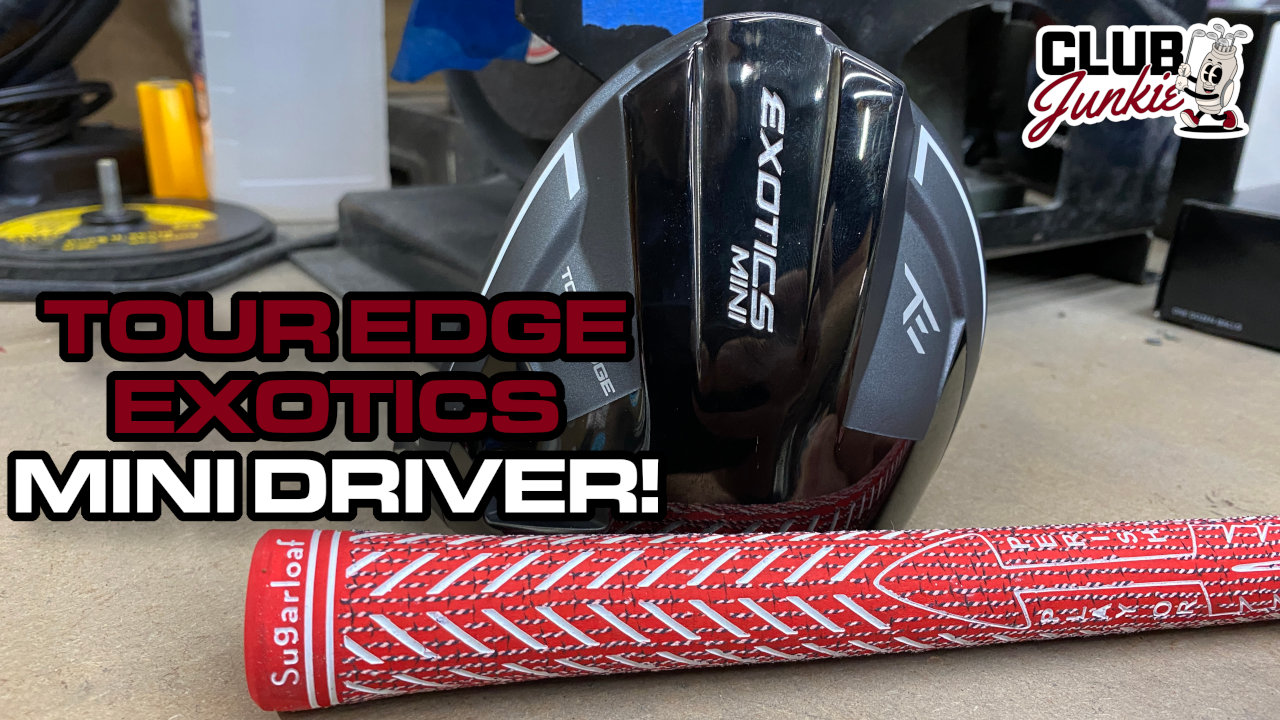
On this episode of Club Junkie, I put the new Tour Edge Exotics Mini Driver to the test and break down the performance, forgiveness, distance, and where it fits compared to a traditional driver or strong fairway wood. If you have been curious about adding a mini driver to the bag, this one is worth a look.
I also dive into the new TaylorMade Spider ZT Max putter that was recently spotted and discuss the growing zero torque putter trend. Plus, there is a closer look at the new Project X Titan Yellow shaft showing up on the PGA Tour and what makes it different from other profiles currently out there.
Opinion & Analysis
AVL: We’re talking about practice! My best tips for taking your game to the course


With the beginning of June on the horizon and courses rounding into peak condition for the season, it’s time to hone the finer skills that often get rusty over the winter. More sunlight also means more time to get out on the course and work on your game.
Whether it’s the practice green or the driving range, there’s always something to improve—whether you’re enjoying the fresh air or preparing for a weekend game or tournament. You can work on drills or freestyle around the green, and friendly competition is a great way to sharpen your skills.
While there are endless ways to get better at golf, I’m going to focus on practicing around the green. Let’s take a look at a few things to keep in mind as we head into the summer months.
Drills
From the driving range to the practice green, it’s important to incorporate drills into your routine. Years ago, I spent a weekend working on my short game with James Sieckmann. He recommended doing drill work for 5–10 minutes, then returning to your main practice.
This way, you create a balance between structured drills and real-world scenarios, so you’re not confined to “perfect” situations. For example, hitting the same three-foot putt over and over is good for repetition, but after a while, it becomes less interactive for your brain.
My approach is to use a putting trainer with a narrow gate for the ball to pass through, or simply place tees just outside the width of the ball. I’ll hit a series of four putts through the gate for three sets. Then, from a similar distance, I’ll hit four putts without the training aid and repeat that sequence three times.
Next, I’ll hit a number of 15–25 foot putts in a random fashion, then circle back to repeat the short putt drills with and without the training aid.
This breaks up the rhythm of hitting short putts with the training aid. When you hit the same short putts over and over, it’s easy to get into a groove—which is great for the drill, but not reflective of actual course play. While finding a rhythm is fundamental for drills, I like to introduce variation with longer putts to keep things realistic.
Game Mode
Once you’ve established a foundation with drills, it’s time to simulate on-course scenarios. This is where a few practice games come in handy.
One that I’ve been enjoying lately involves putting 10- to 15-footers with two balls. If I make the putt, great! If I miss, I pull the missed ball back a putter length. Suddenly, that little tap-in becomes a nerve-wracking three-footer—at least at first. As you get better at this game, those three- and five-footers become much more comfortable and routine.
It may sound cliché, but each shot is just what it is—it’s how we react that makes the difference. I like this game because it blends the pressure of on-course putting with the consequence of leaving yourself a much longer putt than usual.
Another game I like is one I recently learned from Brad Faxon. Place three tees in a line at four different locations around the hole: one at 3 feet, one at 6 feet, and one at 8 feet. The 3- and 6-foot putts count as par, and the 8-footer is for birdie.
This game keeps you focused on scoring and helps you get into a competitive mindset. You can even think about this putting game while you’re on the course. I just started playing it, and last week I couldn’t get better than two under par.
Competition
Competition during practice is when drills and games come to life, and you start to see results. For me, nothing beats a putting contest with a friend or two. In the right setting, these contests can become talking points for the whole season.
Match play, a game of 21, or simply seeing who can make the most one-putts (with a small prize on the line) are all great ways to simulate real on-course pressure. Recently, I played in a putting contest where one competitor made back-to-back 30- and 50-foot putts. As they say, expect your opponent to make every putt—and he nearly did. That’s impressive, and it’s something you see on the course, too: you have to stay committed to your game plan, no matter what.
When it comes to practice, it’s important to blend feedback from recent rounds with the fundamentals you want to reinforce. Drills, games, and competition—from the driving range to the putting green—form the backbone of skills you’ll rely on during actual rounds.
Finding the right balance is something we’re all working on, one practice session at a time. With the beginning of June on the horizon and courses rounding into peak condition for the season, it’s time to hone the finer skills that often get rusty over the winter. More sunlight also means more time to get out on the course and work on your game. Whether it’s the practice green or the driving range, there’s always something to improve—whether you’re enjoying the fresh air or preparing for a weekend game or tournament. You can work on drills or freestyle around the green, and friendly competition is a great way to sharpen your skills. While there are endless ways to get better at golf, I’m going to focus on practicing around the green. Let’s take a look at a few things to keep in mind as we head into the summer months.
Drills
From the driving range to the practice green, it’s important to incorporate drills into your routine. Years ago, I spent a weekend working on my short game with James Sieckmann. He recommended doing drill work for 5–10 minutes, then returning to your main practice. This way, you create a balance between structured drills and real-world scenarios, so you’re not confined to “perfect” situations. For example, hitting the same three-foot putt over and over is good for repetition, but after a while, it becomes less interactive for your brain.
My approach is to use a putting trainer with a narrow gate for the ball to pass through, or simply place tees just outside the width of the ball. I’ll hit a series of four putts through the gate for three sets. Then, from a similar distance, I’ll hit four putts without the training aid and repeat that sequence three times. Next, I’ll hit a number of 15–25 foot putts in a random fashion, then circle back to repeat the short putt drills with and without the training aid.
This breaks up the rhythm of hitting short putts with the training aid. When you hit the same short putts over and over, it’s easy to get into a groove—which is great for the drill, but not reflective of actual course play. While finding a rhythm is fundamental for drills, I like to introduce variation with longer putts to keep things realistic.
Game Mode
Once you’ve established a foundation with drills, it’s time to simulate on-course scenarios. This is where a few practice games come in handy. One that I’ve been enjoying lately involves putting 10- to 15-footers with two balls. If I make the putt, great! If I miss, I pull the missed ball back a putter length.
Suddenly, that little tap-in becomes a nerve-wracking three-footer—at least at first. As you get better at this game, those three- and five-footers become much more comfortable and routine. It may sound cliché, but each shot is just what it is—it’s how we react that makes the difference. I like this game because it blends the pressure of on-course putting with the consequence of leaving yourself a much longer putt than usual.
Another game I like is one I recently learned from Brad Faxon. Place three tees in a line at four different locations around the hole: one at 3 feet, one at 6 feet, and one at 8 feet. The 3- and 6-foot putts count as par, and the 8-footer is for birdie.
This game keeps you focused on scoring and helps you get into a competitive mindset. You can even think about this putting game while you’re on the course. I just started playing it, and last week I couldn’t get better than two under par.
Competition
Competition during practice is when drills and games come to life, and you start to see results. For me, nothing beats a putting contest with a friend or two. In the right setting, these contests can become talking points for the whole season. Match play, a game of 21, or simply seeing who can make the most one-putts (with a small prize on the line) are all great ways to simulate real on-course pressure. Recently, I played in a putting contest where one competitor made back-to-back 30- and 50-foot putts. As they say, expect your opponent to make every putt—and he nearly did. That’s impressive, and it’s something you see on the course, too: you have to stay committed to your game plan, no matter what.
When it comes to practice, it’s important to blend feedback from recent rounds with the fundamentals you want to reinforce. Drills, games, and competition—from the driving range to the putting green—form the backbone of skills you’ll rely on during actual rounds. Finding the right balance is something we’re all working on, one practice session at a time.


For Korean golfers, we always look forward to the last of the kkot-saem-chu-I for the true start of a new golf season. The term refers to a cold snap, but literally translates as “winter being jealous of the flowers beginning to bloom, thus lashing out one final time before surrendering to spring”.
A rather poetic mouthful packed into a short expression.
Koreans can be like that. Understated, yet oddly expressive at the same time. And nowhere is this more true on the golf course and in our golf bags. In fact, I suspect many Korean golfers look forward to new apparel and accessory drops more than they do actual equipment launches each year.

At this point, Korean golf fashion may exist on its own timeline. (courtesy of @seonbi_golfer)
There is ample evidence to support that suspicion. Korea is the world’s third-largest golf market behind the United States and Japan, yet its appetite for golf apparel exceeds that of both countries combined. Recent estimates suggest that Korea accounts for nearly 40 percent of the global golf apparel market, placing it among the world’s most influential golf fashion markets and punching well above its size.
Simply, we care deeply about how new golf clubs look and feel, but enjoy looking good while swinging them even more.
Golfers in the West may laugh and say that golf is played on a course, not a fashion runway. Perhaps. But what’s the harm in trying to look and feel good, if the added self-confidence can help actual performance? It certainly seems to have worked for Jason Day, who may have unlocked a new stats category: dormant strokes gained. Coincidence?

During the COVID-era, estimates placed the market near $9 billion, an astonishing figure for a single country.
As a proud member of Gen X, I’ve witnessed the highs and lows of golf fashion firsthand. The pleated trousers and wing-tipped shoes of Jack Nicklaus, the stylish plus-fours and knickers of Payne Stewart, the baggy black trousers and fitted mock-necks of Tiger Woods, and the thigh-hugging athletic tailoring of Rory McIlroy. Golf fashion, like the golf swing itself, has rarely stood still.
But nowhere have those trends shifted, evolved, and been scrutinized quite as relentlessly as in Korea. Here, golf fashion moves faster than fairway gossip, and consumers dissect brands with a level of discernment that can be both impressive and mildly terrifying. New brands are studied, judged, embraced, or dismissed with startling efficiency.
The result is a consumer base with one of the sharpest eyes for quality and authenticity anywhere in the world. It is difficult to quantify, but easy to recognize. Clean lines without trying too hard. Luxury mixed with utility. Trend awareness balanced by restraint and purpose.
It’s golf fashion shaped by one of the world’s most style-literate cities, something I like to call Seoul Sensibilities, referring to the taste level forged by a uniquely competitive environment.
And increasingly, global brands have noticed.

Many golf brands in Korea have their own flagship shops dedicated to apparel only
Titleist understood this years ago, when its apparel business in Korea took on a life of its own under new ownership and local direction. What had once been a straightforward extension of an iconic equipment giant became something sharper and more premium. By going all in on the serious Tour-player look (I couldn’t even fit into their XL sizes), Titleist struck the right chord with Korean consumers and helped its fledgling apparel business break into the mainstream. Titleist became a household name even for non-golfers who wore its caps, shirts, and windbreakers in daily life. In many ways, it proved that even heritage golf brands could carry real fashion credibility when viewed through a Korean lens.
Several years later, PXG took a page out of Titleist’s playbook and followed suit. Korean consumers helped transform the brand from one known largely for irons and loud commercials into something broader and more stylish. PXG apparel’s growth in Korea was explosive, where it found an early audience and turned the category into something more than mere logo merchandise. It is still hard to walk anywhere in Seoul without seeing its palindrome logo.
Malbon’s meteoric rise in the United States was genuine, but its ascent into a global golf lifestyle brand owes much to Korea, where it was elevated by a market already fluent in modern golf style. Korea did not simply embrace Malbon. It pressure-tested the concept, refined its appeal, and helped push it into the global spotlight.
As such, new brands may arrive from abroad, but more often than not, their sharpest evolution happens here. If a brand can earn credibility in Seoul, it’s deemed to have passed one of the toughest style audits in the game.
That is why the next meaningful chapter may not come from outside, but from a Korean brand moving in the opposite direction, carrying those Seoul Sensibilities outward as K-pop once did.

Play young Stay dope.
From Seoul, With Intent
Khalhon is a label that feels less like a trend-chasing newcomer and more like the product of a market that has already seen everything. Golfers here have long been surrounded by luxury logos, technical fabrics, and tour uniforms disguised as lifestyle wear and vice-versa. In other words, novelty alone rarely lasts here, and the Koreans seems to understand that instinctively.
Its style language leans into clean silhouettes, relaxed but tailored proportions, muted palettes, and premium materials that speak quietly but confidently. There is a modern city aesthetic running through it all, with strong layering pieces, thoughtful textures, and subtle branding that suggests sophistication rather than demanding attention.

“Built for the course. Designed beyond it.”
Most importantly, the garments seem designed to blur the line between golfwear and everyday style. Shirts, trousers, knitwear, and outer layers move comfortably between a game of screen golf, a lunch reservation, an airport gate, or an afternoon coffee in Gangnam with friends.
It raises the question of whether this is golfwear that happens to look good off the course, or everyday clothing that performs beautifully on the fairways.
Personally, I have long appreciated Nike Golf for its clean, athletic modernization of golf attire. It also has the useful side effect of making me look like a more serious golfer than I probably am. But off the course, there are times when being instantly identified as the golf guy in a crowd of non-golfers can feel a touch self-conscious.

“Built for the course. Designed beyond it.”
That is part of what drew me to Khalhon, which seemed to blend golf and everyday wear naturally. While some of the outfits may be slightly beyond my personal confidence level, the brand also offers tasteful options for older guys like me who still want to express a little personality without regretting the decision later.
These are not simply flashy outfits worn on the course and then banished to the closet until the next tee time. They work surprisingly well off the course too, and I suspect many of the pieces will still look right a couple of years from now, which would certainly be kinder to my wallet than most golf fashion trends tend to be.
And perhaps that broader lifestyle positioning also helps explain why someone like Sean Wotherspoon would find Khalhon creatively interesting in the first place.

“Built for the course. Designed beyond it.”
“Korea is not only one of the most fashion-forward golf markets in the world, but one of the most fashion-forward markets globally. Korea is ahead, and I love to watch and try to catch up.” – Sean Wotherspoon, Creative Director at Khalhon
Seoul and Beyond
If Khalhon’s rise says something about where Korean golf fashion is today, its relationship with Sean Wotherspoon says even more about where it is heading.
For readers less familiar with Sean Wotherspoon, his arrival at Khalhon is not some routine celebrity endorsement or influencer collaboration. In design and streetwear circles, Wotherspoon is regarded as one of the more influential creative voices of his generation, particularly when it comes to blending nostalgia, storytelling, and contemporary culture into products that people can connect with.
He first gained widespread attention through his now-famous Nike sneaker collaborations, where his vintage-inspired designs and instinct for color helped turn him into one of the defining artists of the late-2010s sneaker era. His work gradually expanded beyond footwear into apparel, automotive collaborations, collectibles, and broader lifestyle design.
Modern golf style now extends well beyond the fairways, where performance and functionality are largely expected by default. And while plenty of brands already make technically competent golfwear, Khalhon seems more focused on designing clothes people would genuinely want to wear even after the round ends.
And when guys at Wotherspoon’s level show genuine interest in working with a Korean golf brand as its new Creative Director, fashion circles tend to sit up and pay attention. There’s already a huge buzz among the fashion-conscious here about upcoming collabs with iconic sports stars and brands.

“My creative direction for Khalhon is disruptive, colorful, nostalgic, and modern. My goal is to blend these avenues seamlessly within each collection.” – Sean Wotherspoon
In chatting with Sean, what stood out most to me was how genuinely energized he sounded about the project itself. Despite having already worked across and countless other creative spaces, he described golf as a completely fresh category for him, saying that Khalhon “will be an amazing vehicle for my design work.”
At the same time, his enthusiasm seemed tied just as much to Korea itself. He spoke openly about admiring Korea’s fashion culture while repeatedly insisting he is still a terrible golfer.
There was something oddly refreshing about that humility. Rather than sounding like a celebrity parachuting into golf simply because the category suddenly became fashionable, Sean sounded genuinely curious about what Korea might do with the category next.
And perhaps that is what makes Khalhon feel interesting right now. The brand feels less like a trend-chaser and more like the natural result of a market now confident enough to export its own point of view.
For years, global brands came to Korea to sharpen their image against one of the most discerning audiences anywhere. Now, a Korean label appears ready to send those Seoul Sensibilities outward instead.
Which brings us back to kkot-saem-chu-i.
That final cold snap before spring always arrives with a reminder that seasons are changing, whether we notice it immediately or not. Golf fashion feels a little like that right now as well, as the old boundaries between sport, streetwear, luxury, and everyday style continue to soften.
And somewhere in Seoul, a Korean golf label already seems prepared for whatever season comes next. I just hope they have everything in my size.

Justin Rose WITB 2026 (April): Full WITB breakdown with new McLaren irons

What’s the story behind Webb Simpson’s custom-stamped irons?

Cadillac Championship Tour Report: Spieth’s sizable changes, McLaren Golf launches, and more

Russell Henley’s winning WITB: 2026 Charles Schwab Challenge

Kristoffer Reitan’s winning WITB: 2026 Truist Championship

Cameron Young’s winning WITB: 2026 Cadillac Championship

Aaron Rai’s winning WITB: 2026 PGA Championship

Nelly Korda WITB 2026 (April)

Justin Rose on the switch to McLaren Golf, learnings from previous equipment moves

Photos from the 2026 CJ Cup Byron Nelson

Chris Gotterup WITB 2026 (June)
Chris Gotterup had >14 clubs in his bag when photographed prior to the Memorial Tournament. Drivers: TaylorMade Qi4D (8 degrees), Ping...


Jason Day WITB 2026 (June)
Jason Day had >14 clubs in his bag when photographed prior to the Memorial Tournament. Driver: Ping G430 LST (10.5 degrees...


Nastasia Nadaud WITB 2026 (June)
Driver: Titleist TSR4 (9 Degrees) Shaft: Project X EvenFlow Riptide CB 6.0 S 3-wood: Titleist GTS2 (15 degrees) Shaft: Graphite Design Tour AD DI...


Keith Mitchell WITB 2026 (June)
Driver: TaylorMade Qi4D LS Shaft: Project X Titan Yellow 6 X 3-wood: TaylorMade Qi10 (16.5 degrees) Shaft: Mitsubishi Tensei 1K Blue 90...
-
 News3 days ago
Russell Henley’s winning WITB: 2026 Charles Schwab Challenge
-
 Whats in the Bag2 weeks ago
Aaron Rai’s winning WITB: 2026 PGA Championship
-
 Tour Photo Galleries2 weeks ago
Photos from the 2026 CJ Cup Byron Nelson
-
Equipment14 hours ago
Details on Jason Day’s latest prototype Avoda iron setup
-

 Equipment2 weeks ago
CJ Cup Byron Nelson Tour Report: Koepka and Kim’s newest putters finally get hot
-

 News6 days ago
Charles Schwab Challenge Tour Report: MacIntyre, Åberg and Spaun all switch putters, TaylorMade launches new Spider
-
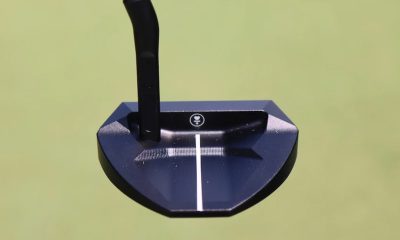
 Equipment1 week ago
Details on J.J. Spaun’s surprise putter switch
-

 Popular Photo Galleries1 week ago
Photos from the 2026 Charles Schwab Challenge


Tom WIshon
Nov 14, 2014 at 12:01 pm
Having been in the equipment industry for 30+ yrs, Barney’s right about much of what he says. I too have had many of the letters, emails and phone calls from golfers who have the next greatest design idea. And it is tough to handle these in a nice way that won’t leave the person angry. Used to be back in the 80s you actually could look at what the person had and then offer a proper comment about why their idea wasn’t the next best thing.
But then in the 90s and onward, the trend toward a much more litigious society began to come on and from that point, any company’s lawyers would tell those who would get these solicitations to just say no. If you looked at someone’s idea and you happened to be working on a similar, now your concept was potentially hosed legally for fear of litigation if you did go forward with it.
So the “no I can’t look at what you have and don’t tell me what you have” response is very much prompted from a legal protection standpoint.
As to the cost to get on the dance floor of the equipment industry, Barney is right. If you want to build a $20, $50, $100 million company, you better have $10 mill a year to spend in marketing to even have a shot. And even then there is no guarantee. I remember the former Burroughs Golf company from the late 90s or early 00s as an example.
Backed by a wealthy shopping mall magnate from Indiana, they spent $35 mill in 3 yrs and failed miserably. They had name pros, they had tons of two page ads in every mag, and they were poof, gone.
Shoot, in picking up the recent Golf Digest with Johnny Football on the cover, right on the inside front cover is a 6 page foldout ad from Callaway. That’s at least $400 grand for that and its ONE ad in ONE issue. Not to mention they have other ads in the same issue and TV ads and all sorts of other paid exposure. And there are 4 other OEMs doing the same thing. VERY tough to compete with that if you want to be even a small 8 figure company to follow a passion to be in the business.
Guys, today, 5 companies control some 80% of the premium golf club market. Their combined revenues is in the $4 billion area and they each spend around $40-50 mill a year in marketing and promotion. So if you want to play in that arena, it’s not cheap.
Yes, it is possible to be a small company and survive as long as you have good product and are in a niche area. But you’ll have to be happy with beans and franks and a real pride of ownership instead of expecting to live on steaks and get glowing attention from the media if you do that.
Mark Kaloustian
Nov 14, 2014 at 7:40 pm
Got any other insights you wanna share with the punters Tom? I’d really love to hear them, keep up the good work! 🙂
Mark
Mtek VersaSpeed
Drew
Nov 13, 2014 at 10:40 am
Assuming you really knew you could be successful, you’d MUCH rather sell apparel or golf balls, because the margins are WAY higher.
Mark
Nov 12, 2014 at 1:25 pm
Problem is Golf, like the electronics industry has become obsessed with the next year’s product before the current model year can even get a foothold. TM are part of Adidas who are now more of a fashion brand than a sports manufacturer. A good Golf club is a 5 year old Mercedes or 10 year old Rolex…still relevant and still effective. Anyone trying to take on the marketing might of TM and Nike is wasting their time and investors money.
JOEL GOODMAN
Nov 12, 2014 at 8:48 pm
10 YEAR OLD ROLEX? HECK, I AM WEARING EVERY DAY A 1967 ROLEX EXPLORER-II,THAT I BOUGHT NEW FOR $650, AND IT IS A GOOD AS THE DAY IT WAS MADE, EXCEPT FOR A FEW SCRATCHES. YES, I WEAR IT EVERY DAY, PLAY GOLF, SWIM, FISH WHATEVER AND IT STAYS ON MY WRIST WHERE IT HAS BEEN ALL THESE YEARS. I TAKE IT OFF TO SLEEP AND THAT’S IT.
Dave C.
Nov 12, 2014 at 11:02 am
I don’t think the public, golfing and non golfing alike, will ever understand that golf is a difficult game. Equipment has very little to do with it. All clubs, from department store box sets to the finest individually fitted clubs are not going to make much difference in most peoples’ golf game. Practice and natural skills are the factors.
The pros and top amateurs could scour Goodwill and make up a $10 kit and play well. The manufacturers don’t want the people to realize this. If they did, the equipment industry would be history. Clubs would be replaced when broken or too shabby for use.
Jack
Nov 14, 2014 at 2:52 am
People know it’s difficult, but they like to think they are better than they really are. Thus the constant denial and repeated buying of golf equipment. That and it looks nice.
Justin
Dec 16, 2014 at 7:51 pm
Coming to this thread late, but I have something interesting to add.
In Jeff Sheets’ book “The Perfect Fit”, he talks about building a set of clubs for Lee Trevino. The thing of it was, Trevino wanted his iron set to be made from clubs he used before, each one having its own happy memory. That means the 3, 4, 5, etc., were all from different sets, and each individual club had its own memory.
It came down to gauging hosel bores, BBGM measurements and cutting the shaft set Trevino picked to match up with each measurement. Difficult task, but not impossible.
Long and short is, What Dave C’s saying isn’t some kind of blasphemy. Golf is golf; would buying a new mitt every 6 months make you catch a baseball better? Would buying this year’s shoe instead of saving money on a pair from 1, 2, or even 3 years ago make you run faster and jump higher? No. If you want to buy a new driver every 6 months, that’s a personal choice, nothing more. Whether we’re using a $10 Goodwill set or a $3000 brand new set of ‘s, we’re still golfing either way.
renoaz
Nov 12, 2014 at 10:11 am
Here’s a concept…
Let’s start a business collecting as many lost golf balls we can find. Sort them, clean them and sell them on Ebay. It’s not the equipment.. it’s YOU!!!
Keep ’em where the mowers go!
Chris Downing
Nov 12, 2014 at 2:45 am
I think Barney Adams was trying to write a piece that took us all inside the way the golf industry runs right now and share his insights with those who sit in the clubhouse over a beer and ‘hold court’ on what shouldbe happening or what could be happening with golf equipment. We are all guilty of doing that at some time. But as he says, there are some basic business models in play that make entry for new businesses difficult.
There’s basic busines models that everyone uses, developed by people like Theodore Levitt, Michael Porter, and W. Edwards Deming for example. When one applies these models it becomes obvious how many barriers to entry there are. That’s why we see new entrants around the niche, peripheral markets, producing new carry bags, new milled putters, and new pitchmark repairers. A new club or set of irons is too difficult to get to market. This year’s demise of the TaylorMade financial results is all about how crowded the maket is and how difficult it is to get market acceptance for so many new product launches.
What Barney Adams has shown us is why dreaming about becoming the next Eli Callaway is more nightmare than fulfilling a passion.
A friend in the business said of my idea to start a little vineyard ,”Why don’t you get a big box of £50 notes, open the window, and throw handfuls of them out until they are all gone – it’s quicker, it’s little effort – but has the same end result!” Barney is telling us the same is true of golf.
My prediction is golf will return to most players getting their clubs fitted properly and we will stop buying clubs off the shelf as we are now. Club fitting is a rising market. That means as a player, I use what the fitter (club professional?) recommends. If that happens it sidelines discounts, online purchases, club launches, what tour players using becomes irrelevant – the marketing target in this new model becomes the club pro and the fitter. In that new World, you can market balls, bags, gloves, and trollies to me – but not wedges, irons, and woods. Can you imagine how hard the big five manufactures of clubs will work to stop that vision of the future?
marcel
Nov 11, 2014 at 10:53 pm
Barney – great article and great truth based on great knowledge. Arthur Honegger great composer of last century was asked many times to give lessons to young composers. He spend 1st meeting to deter youngsters from this “lifelong curse”… only strongest survived but hardly anyone heard of them…
KK
Nov 11, 2014 at 8:55 pm
If the golf equipment industry is indeed like the fashion industry, that should actually give people hope, albeit with an entirely different mindset.
Steve
Nov 11, 2014 at 8:32 pm
You arrogant jerk! Who are you to write this way? Just because you had some success. That’s hilarious…thanks for the insightful article and the dose of reality. Can’t wait to read the next article.
markb
Nov 11, 2014 at 7:47 pm
Reminds me of the old joke.
How do you make a small fortune in the golf industry?
Start with a big fortune.
markb
Nov 11, 2014 at 7:53 pm
And many of the comments remind me of the other old joke from Dumb and Dumber.
Lloyd: “I came a long way just to see you, Mary. The least you can do is level with me. What are my chances?”
Mary Swanson: “Not good.”
Lloyd Christmas: “You mean, not good like one out of a hundred?”
Mary Swanson: “I’d say more like one out of a million.”
Lloyd Christmas: “So you’re telling me there’s a chance… YEAH!”
Sully
Nov 11, 2014 at 7:17 pm
Barney,
I would love to set up a call with you! Could we be the 1 percent? Thanks to all that have supported us! But I agree with you, unless you have a product that really outperforms or a brand that is truly unique it is tough…
As always, pull the pin!
Sully
Dave
Nov 11, 2014 at 6:49 pm
Barney,
An interesting question to be sure. However, I have a few questions for you.
I think that there is a reason why the golf industry has “plateaued” and that is the rules for equipment. How can you explain the rules changes that has limited experimental clubs and heads and held development to a stand still?
And how can you explain to us why the rules for the collision of the club with the golf ball has been held constant for the last fifteen years, thus limiting the ability of any golfer to improve. TIA MH
Evad
Nov 11, 2014 at 8:23 pm
Pompous prrrrick
Barney Adams
Nov 11, 2014 at 8:29 pm
At the risk of passing the buck you are in USGA territory and if I were to answer I would be speculating
Jack
Nov 14, 2014 at 3:37 am
Would a pin hole seeking golf ball help improve your game?
Andrew
Nov 11, 2014 at 6:29 pm
Barney, Thanks, for contributing to the site. Please, come on to the instruction forum!
Mark Kaloustian
Nov 11, 2014 at 5:41 pm
Hi Barney, i’m looking forward to reading what you’ve got to say about putters & wedges in your next installment. cant wait! Always loved your passion & insight for the good game of golf, theses articles are very informative for me! Keep up the good work!
Mark
Mtek VersaSpeed
Gorden
Nov 11, 2014 at 4:45 pm
on training aids Klasy swing magic came out over 15 years ago when the Golf Channel was fairly new, has now come back as a training aid pitched by Hank Hanny??? Klasys started with a iron swing magic, then came the driver which Hanny is pitching….I wonder if Klasy went broke with his idea, which had to be fairly good or Hank Hanny would not back it now??
Adam
Nov 17, 2014 at 4:17 pm
Hank, like all the anointed teachers, is paid to market this stuff.
You can buy any teacher, and any player. All it takes is a big check and they’ll be slinging your wares as well.
Product is irrelevant as these guys are true shills. They’ll assign their name to any product as long as the check clears
Manolo Carr
Nov 11, 2014 at 4:10 pm
As a year-round weekly senior golfer playing with 12 other like-minded fellows, I (we) like to fantasize playing like the pros, and getting some pars and rare birdies are what keep me (us) playing. That fantasy, mystic and challenge will get lost if rules and equipment are changed.
So what can be changed to make it more challenging for the pros?
How about changing golf courses? Or making design changes where there are not as very many straight fairways or limiting the straights to fewer than 300 yards? This will challenge drives towards accuracy rather than distance and the course can be adjusted to the non-pro by moving the teebox 40-50 yards closer so that we aren’t looking at a 500-yard par 4s or 200+yard par 3s! And I don’t think it will change the game of the amateur too much at all, especially with limited adjustments I suggest below:
Los Angeles Municipal golf courses (owned by the county, senior green fee rates) already make adjustments like this by marking five TEE BOXES (some of them): black for professionals, blue for the young ‘uns, gray for us seniors, red for ladies, and orange for the kids.
The key to universal enjoyment of the game is making the playing field ACCOMMODATE age groups and muscle strength for parameters over 150-180 yards, NOT by changing the rules, balls, or equipment, as it stands today. The rules that govern at this time are evolutionary and acceptable to most and, with just a FEW adjustments in catastrophic stroke penalties, as you mentioned (ex: OB, or lost balls), should not be changed too often so as not to alter the nature of the game and kept the same for all players, young and old, men and women, amateur and pros alike.
Another issue I advocate for are SENIOR rates. Some L.A. county-owned municipal golf courses have five tee boxes marked off: Black for pros, blue for many men, gray for seniors, red for ladies, orange for kids. Look around at the senior market. Most can play on weekdays. Many play after 10:00 a.m. If a golf club has sunset rates, they should start them at 10:oo a.m.
Chris Downing
Nov 11, 2014 at 3:44 pm
A lot of you guys sound just like the sorts who write to Barney and then don’t like his reply because it squash your ‘dream’. Business is business and having worked for major companies all my life until I retired, I can tell you they do whateverit takes to keep the shreholders happy, and trying to start up a company to displace the big boys or steal some market share just isn’t going to happen. You’d have to be just as big – like Nike -,or just eat scraps from the table like Giannini, Piretti, and the niche builders.
The big breakthroughs in golf have been few – the Anser putter, the move to steel heads from woods, the sand wedge, and wide fairway woods like Adams Tightlies. Only a mojor game changer got these products widely accepted and that competitive edge didn’t last long unless there was something that could be copyrighted. For a one man band none of this is ever going to happen aginst the big five companies – and if someone does have a great idea, its way easier to sell it to a big five company than trying to develop it yourself.
Barney Adams is just saying it as itis in the golf industry. It is not sour grapes, I know I’ve worked for big brands, it is just the way it is.
eric
Nov 11, 2014 at 6:53 pm
its better to fight for those “scraps” than not fight at all. any btw, those scraps are nothing to laugh about. look at brands like byron morgan, or scratch, or even hopkins. i agree, most big companies are held to their shareholders. but people don’t start companies because they are planning on displacing the “big boys”, they do it because they think they have a cool idea that might sell and they are passionate enough to take a risk and put themselves out there. many of these people reach out to Barney to get some advice on how to make it from someone who was once in their shoes and basically he’s telling them to not even try. yes, the likelihood of a small startup succeeding is small. but as the great wayne gretzky once said, “you miss 100% of the shots you don’t take.”
golfing
Nov 11, 2014 at 3:41 pm
People say here this is business not passion, well there is no business
without passion that is sustainable or “healthy”.
You could take a businesses model that put millions on advertizing and endorsements and another in marketing staff, sales, engineers, cad programers like never seen before, make monthly orders in the China factory of a new line of irons or woods like it was a par of socks, the result in the short time maybe nice, but in a couple of years the market
is chocked with 500$ drivers and 1500$ irons that stores try to stuff it
in you, at any cost(smaller company’s).
Also this “business” plan is making players numbers swamp, with nice
manicured Trump courses that are 50 miles long and the only propose
is real state sales, and cost 5000 to play at the cost of other.
Golfraven
Nov 11, 2014 at 2:21 pm
I would rather agree just looking at myself and which brands I am buying and would try in the future – mail OEM. What about the childrens/kids golf equipment market? Still very untouched and no great day offering on what is already out there. I found new kids clubs from Scottland that really excited me. http://golphinforkids.com Those guys just started going into the market this year.
ParHunter
Nov 12, 2014 at 12:17 pm
Yes seen them as well. I think I know what my little boy will get for his birthday 😉
T-MAC
Nov 11, 2014 at 1:44 pm
I went through Titleist, TM, Mizuno, and Callaway forged irons over the past several years and wound up with a set of Adams CB2’s with KBS shafts. Best irons I’ve ever hit. Liked them so much I bought a set of forged Pro a12’s in the same dark finish as the CB2’s, so I’ll be ready to replace my irons when my CB2’s finally wear out.
Sorry to see what has happened with Adams after they were purchased by TM. They stole the slot technology from Adams and I guess they figured it would be easier/cheaper to buy the company than to go through legal action. Never should have sold out Barney!
Rick Norton
Nov 11, 2014 at 12:54 pm
Golf companies & people who get into this business are in it for the business. It takes a great idea to be evolved into something for the masses. But what’s the real driving factor? Is it really to help golfers out there to score better? No, it’s giving people what they think they need. People get in this business & any other business, & that’s to make money. To get rich & make life “easier” for them financially. If you’re trying to stay in the business with your passion….the business may eventually fail, but do you ride it to the end or do you sell out to a bigger boy? The latter tends to let walk away with a thicker wallet. And you don’t have to continue having to work for a living.
Ryan Buzelli
Nov 11, 2014 at 12:03 pm
I recently started a milled putter business, with divot tools. All milled in the USA. Shafts by true temper, grips by PURE grips. In light of the hardest path I have ever endured, it is a wonderful experience . With 100% made in USA putters and divot tools and attention to customer service, I do think eventually Buzelli Golf will be noticed. It seems it will be a long journey just to get my name out there, but i wouldn’t have it any other way. Wonderful reviews thus far from online forums and others. Being a regular guy that just plainly loves golf, I feel Buzelli Golf will prove to be slightly different then the others. I am at many disadvantages then the big dogs, but personally I’m ready to go head on and show people, it doesn’t have to be a certain way. Let’s buy American, let’s get personal attention, let’s have customized options with no upcharge. I still work my day job, is it possible to do putters for a living? I don’t know. At least I am giving it a go. Hope passion will prevail.
West
Nov 11, 2014 at 12:43 pm
Please email me at: [email protected]
Mickyg
Nov 11, 2014 at 4:17 pm
Hi Ryan,
could you drop me an email. would love to discuss this with you.
Thanks
Michael
Ryan Buzelli
Nov 11, 2014 at 6:07 pm
My email is [email protected]
West
Nov 11, 2014 at 12:02 pm
Worst advice…EVER!!!
If people didn’t try new things because they were hard, or the odds were stacked against them, or because there were already other big fish in the pond, we wouldn’t have companies like Apple, and Steve Jobs would either be stuck in a cubicle writing software for some other big company, or still in India seeking “enlightenment.”
It’s no wonder Adams Golf is a thing of the past. No gusto, no determination, no grit, no innovation, nothing more than a thing of the past…Sorry Barney, but the lesson to learn in your piece is not what you advise, but to ignore it full heartedly.
Dustdevil
Nov 11, 2014 at 12:18 pm
Here’s the problem though…
What if someone told Steve Jobs you can only build a computer that can only go so fast and work only as well as everybody else’s? Back in the glory days of the components, companies like Integra, Bang, Golfsmith (SnakeEyes), etc. could be innovative. They brought the modern 460cc head to the consumer before the big guys. But the playing field has been leveled in so many ways, I do see Mr. Adams’ point.
Now putters, that might be a different story…
West
Nov 11, 2014 at 12:39 pm
Have to disagree.
Even in the world of tech, things are still limited/constrained by the laws of physics and material availability. And while tech is still climbing to meet its “plateau,” there will always be ways to innovate and compete.
I just find it so distasteful for Barney to basically say: “He kid, you got a great idea? Forget it. There’s no reason to fight, the bigger fish will eat you alive.”
And while this might be the case 90 out of 100 times, philosophically this is a principle I can never abide by. It goes against the entrepreneurial spirit, and what makes this country great.
West
Nov 11, 2014 at 12:48 pm
Barney could still learn a thing or two…
http://www.entrepreneur.com/article/238960
John
Nov 11, 2014 at 12:54 pm
The bigger fish actually win more like 99,999 times out of 100,000. Most small fish are dead after Year 1. Nothing at all distasteful about what Barney Adams wrote. “Entrepreneurial spirit” means being realistic, not dreaming up scenarios that don’t make sense fiscally or blind optimism. I would take it from somebody who has actually been there….
bradford
Nov 11, 2014 at 2:19 pm
What if someone told Steve jobs he could make a slower, but prettier computer and sell it for 3 times the price? or rather a simplified version of a smartphone for 3 times the price? Clearly some did tell Steve jobs this…
Your logic is good, but you chose a bad example.
Simon Max
Nov 13, 2014 at 6:18 am
Do you really think Barney’s article would stop a committed entrepreneur from following his dreams. Come on.
Barney Adams
Nov 11, 2014 at 12:55 pm
Since there are several comments that fall into the “arrogant jerk” category or that I’m bitter, mean spirited , broke , shorter off the tee, etc…..this is a universal response. I do not try to crush , discourage I make them aware of history and offer suggestions on a path where they can follow their dream and not go broke. . When you compare golf innovation to computers remember that golf is essentially technically restrained.
Manolo Carr
Nov 11, 2014 at 4:24 pm
Adams golf clubs, to me, were always innovative but affordable.
I loved the A-series irons OVERSIZED which were very forgiving, and the Tight Lies fairway woods. As an engineer, I wasn’t swayed by what’s popular or “hot” but what I thought were designs which make sense.
Thanks for getting me back into golf, Barney!
Joe
Nov 11, 2014 at 1:09 pm
West from your post I would gather that you’re only experience with golf is from the consumer side. You have no idea what you are talking about in terms of golf, as evidenced by your baseless acuzations about how Adams Golf was ran. You obviously know nothing about the game or Adams Golfs reputation within that game. Good luck leading the blind.
Pat
Nov 11, 2014 at 3:21 pm
+1 Joe. I think Adams made some wonderful clubs, especially their hybrids and forged irons. Barney is truly a genius in the golf world and ran his business the right way and still managed to succeed financially. It’s a shame that TM bought out his company, but that’s the way business goes. I was once interested in starting my own line of clubs back in the day, but after I talked to some the biggest executives in the golf equipment business, I decided not to go that route. The risk versus the reward gap is just too great and the chance of failing is astronomical unless you have tons of capital as Barney suggested. Kudos for Barney for telling it like it is and not sugar coating anything.
Adam
Nov 11, 2014 at 11:59 am
Very true Barney but its best to encourage entrepreneurship rather than deter. Not too many professions or successful business people actually encourage participation. If you ask any great writer or business person for advice on entering and succeeding in their trade, almost all will say the same thing. Don’t do it! But as we know, success is neither easy or quick but it takes participation and often times, blind faith.
As someone who does have a golf training product business that has seen success, I can state that it is without exception the failings of the person to understand the market rather than the failings of a product or gadget. Most golf entrepreneurs either fall in love with the idea of being involved in the business or their product itself. They know very little about marketing, sales, manufacturing and partner management and fail miserably to heed any advice on such. Visions of grandeur fill their dreams even when the actual numbers fail to impress.
The biggest challenge to any new product today is gaining shelf space and attention. The equipment guys have the retail channels locked up and they are fierce in their defense of shelf space. The big retailers make it next to impossible for any small guy to break through because of obfuscated buying processes, expensive vendor requirements and a slew of other onerous and challenging rules and compliance rules. It’s hard, its expensive and the end of the rainbow isn’t loaded with a pot of gold. Lots of golf and the ability to be in a business that you love. That’s what is at the end of the rainbow.
But it can be done and we should encourage folks to tackle their dreams and give it a shot. But perhaps we should just offer them more realistic advice instead of just a loud no. Jerry Seinfeld said that the people who are most successful in show business are the people who wanted it more than anyone else. There is a lot of truth to that statement when it comes to golf as well… but you can’t ignore the numbers for even though golf is a religion to many, it’s still a business.
eric
Nov 11, 2014 at 7:00 pm
couldn’t agree with you anymore. encouragement, not criticism.
Barney Adams
Nov 11, 2014 at 7:43 pm
All of which is exactly why I give a business / history lesson. Not to shut them down but to get them thinking about how specifically to have a chance of survival
Eric
Nov 12, 2014 at 2:57 pm
and i believe that isn’t the right thing to do. most realistic people know that their chances are slim to none and yet they are still willing to take a chance and put themselves out there. they probably already have tons of naysayers telling them they are going to fail and they shouldn’t even try. but they come to you as someone who once was in their shoes. someone with an idea and a dream. and most importantly, someone who managed to defy the odds and actually succeed. they are hoping you can provide some insight and wisdom on how to succeed, not a history lesson on the fact that their journey will be difficult and more than likely will result in failure.
i liken someone approaching you about a business idea to to someone asking you advice on climbing a mountain. yes, its hard and yes you probably will fail. but people don’t want to hear you talk about all the shitty parts of the climb and the frostbite you got and the sherpa that died on the way. they want to hear about how awesome the journey was and the beautiful stuff you saw on the way and the sense of accomplishment you felt when you reached the summit.
clearly you’e entitled to respond in any way you desire since these people are reaching out to you and not vice versa. and its unreasonable to think you’re going to be the mentor for any random Joe that emails you with his idea. but I believe that providing constructive criticism while providing encouragement and advice is the way to go.
D.S. Graybeal
Nov 11, 2014 at 11:53 am
I spent 36 years in the equipment business and retired on Jan 1, 2009. Every year since then at the PGA Show old friends still in that end of the business come up to me and say, “you are so lucky you retired when you did.”
Barney Adams
Nov 11, 2014 at 8:31 pm
Scudder?
D.S. Graybeal
Nov 13, 2014 at 7:12 pm
Yep. It’s me Barney. Scudder
Chris Downing
Nov 11, 2014 at 11:51 am
I think Barney has been though enough to have learnt how the golf industry works. Having said that, there is nothing to stop anyone making their own putters, bags, trollies, and stuff. It’s probably in those areas you see most new names. Trouble is, golf is no longer a developing market, its plateaued with the dominant brands. Look how hard it has been for Nike to break in and establish some market share worth having. Secondly passion is a very poor guide to a career. Although the idea of following your passion is almost mythical, the facts show it to be a very risky way to choose how to make a living. The practical approach is to identify what people want to pay for and start working in that area. In that way you immediately identify that your fellow golfers are not thirsting for yet another brand of irons and woods. Although someone who can produce an inexpensive, light weight, trolley battery would get lots of votes. Of course the budding putter maker doesn’t want to hear that everyone wants cheap, reliable batteries – his passion is putters (which is not what golfers are asking for).
The new products and services in the golf market will probably come from those who listen most carefully to players. When enough players are looking for the answer to the same problem, then the person who solves the problem is the one who will have a new product that everyone will want. Of course approaching it that way and waiting to identify the golf problems isn’t what a budding golf entrepreneur wants to hear. They want to get started on their new club design and then out sell, out market, the competition. And you know what, if you raise the money to get started there will be plenty of people willing to help you spend it on marketing and selling and never tell you that you are stupid.
Just read Cal Newport’s book, “So Good They Can’t Ignore You”, and sit back and have another think about following your passion.
Pat
Nov 11, 2014 at 3:27 pm
Nike is doing just fine now with the golf line. They had inferior equipment when they first came out but learned to keep up technology wise and invested more capital in their products. Now with all their marketing and technology, they still manage to rake in high revenues annually. They also had more than enough start up capital to begin with which gave them a huge advantage. The average start up company doesn’t have the resources Nike had, so their chance of failure is astronomical.
Bradley
Nov 11, 2014 at 11:44 am
Barney, I recall being in the Carolinas PGA and spending much time in the Pinehurst area. Circa -91-92. There was a big guy, pro from the area. Cannot for the life of me remember his name. Apparently you had brought him in as area/territory manager for the Carolinas. Knowing my sales experience, he courted me hard for your company to come in and sell. Lynx was after me at the same time. I just wanted to play and teach. In hindsight, perhaps the biggest mistake I ever made not coming on board with Adams. Congrats on all your success. It would have been a fabulous ride!
EBeaudry
Nov 11, 2014 at 11:39 am
Considering Barney sold the business off to TM – it’s not the demise of the brand he pioneered. It’s the consolidation of the brand from a costing standpoint.
Signs of the times for golf…..
MHendon
Nov 11, 2014 at 11:38 am
Yeah it will be interesting to see if Hopkins golf can make it through this mine field.
bradford
Nov 11, 2014 at 11:52 am
Well, have you actually looked into their “factory direct pricing”? By the time you have customized the wedge to your liking, it’s identical if not considerably higher than current offerings. And if guys can’t thump it on the ground (for whatever reason) at the shop, it’s a hard sell…
Gorden
Nov 11, 2014 at 4:36 pm
Trying to grab on with the “Custom” idea….Pros make a living with thier clubs and the big boys will make them anything they need (most of the time right now in a tour van) I think Hopkins is trying to bring a “Pro” moment to the wedge and iron buyer, tuff row to follow.
psygolf
Nov 11, 2014 at 11:32 am
Other things to consider…one, if you make a splash and start taking market share from the big boys, the lawyers you’ll need to battle theirs will kust about bankrupt you…Adams, Orlimar. Secondly, these companies that find initial success & followings start to think they can reinvent every club category…Adams, Orlimar, Scratch. Hubris run wild, even the Izzo bag company came out with a set if irons-lol.
Eric
Nov 11, 2014 at 11:30 am
as someone who has found great success in this industry, an industry that we are all PASSIONATE about, i think Barney should be spending his time encouraging young entrepreneurs and providing constructive criticism rather than telling them “the best answer he can provide” which seems to be him crapping on their ideas based on responses he is getting.
yes, i agree that he doesn’t need to sugarcoat his thoughts or blow smoke up someone’s butt, and of course of course there are thousands of cautionary tales to tell. but there are plenty of success stories within the market as well including his very own which makes it even more odd that he doesn’t seem to encourage these people rather than give it to them straight. its understandable to give people a healthy dose of reality however whats the point of shutting down their ideas? you’re basically telling people their ideas suck and don’t even try to pursue your dreams and instead play it safe.
call me a dreamer or out of touch with reality but i think we should encourage more people to take risks. in an industry that is declining, we need MORE people who are passionate about the sport and committed to making it better, not LESS.
West
Nov 11, 2014 at 11:52 am
I think you are spot on…Barney is just bitter he never made it into the “Big 3” and had to sell out to stay above water.
bradford
Nov 11, 2014 at 11:56 am
I would look on that from the other side. If I had technology so slick that the big “one” bought my company for the patents, I’d call that a success.
Joe
Nov 11, 2014 at 1:21 pm
Wow West!! What’s your hard-on for Barney all about? Are you his stalker? Did he not hire you for a job? Are you jealous of his extraordinary success and reputation in his chosen profession? Seriously man, you come across jilted and jealous, what gives?
Adam
Nov 11, 2014 at 12:05 pm
Agreed but as I said in my post, its pretty normal for the old guard to discourage the new kids in almost every profession and industry. Golf is no different but its one heck of a tough market. People are woefully ignorant on basic business and marketing knowledge and enter into the market blinded by their love of their product and/or the game itself. Any trip to the PGA Merchandising show will leave you scratching your head and wondering “what were they thinking?”
AJ Jensen
Nov 12, 2014 at 10:43 pm
Here’s the thing; business is cutthroat and the golf business is especially so. Does that mean success is impossible for the right product or startup company? Of course not. But the next Karsten Solheim will face a lot more crap than Karsten himself did, and have to be a shrewd businessman as well as inventor of a game-changer product.
Jafar
Nov 11, 2014 at 11:05 am
That’s funny. More marketing and money are spent on drivers and slick new irons, but the most important and coveted clubs in the bag are still wedges and putters.
Mike Belkin
Nov 11, 2014 at 10:59 am
I have many ideas for golf products and services, but golf clubs are certainly not on the list! The amount of crap one sees at the PGA show is phenomenal. I hope people read this article and think twice before they invest their time and money into poor concepts.
AJ Jensen
Nov 11, 2014 at 10:47 am
The XTD hybrid is the finest golf club ever made. I have one in every loft, and load up for my rounds depending on how I’m swinging that day.
The second finest club of all time is the Adams Proto mini-hybrid, which serves only to disgust me for the years I wasted in trying to hit long irons when I could have been landing greens with my Proto. No club requires less effort for distance, and I have hit almost everything on the popular market.
Mr. Adams I hope you read this, and accept my sincere thanks for putting a golf club in my bag that actually made a difference in my entire game.
Kdubbs
Nov 11, 2014 at 12:02 pm
Thank Tmag for those hybrids, B Adams had nothing to do with it…
bradford
Nov 11, 2014 at 2:25 pm
Are you serious? I hope you’re not serious…
wow. Really? Jeez…I’m not sure where to begin with this one
Pat
Nov 11, 2014 at 3:49 pm
Kdubbs, you are clearly either a Tmag slurper or just ignorant. Adams was the first company to find success in the hybrid, NOT TM. They were the first ones to implement slot technology into hybrids as well. TM decided to buy Adams and copy their technology. Next time, before you say anything that is false, do some research, little boy.
Regis
Nov 11, 2014 at 4:21 pm
Actually the first “hybrid” was in fact the TM “Rescue”. Taylor Made (which also invented the “Pittsburgh Persimmon”-now called the Metal Wood) was owned by a man named Gary Adams. That is why it is still called the “Rescue” to this day and every one else calls theirs a “Hybrid” Oh and I am neither a TMAG slurper or ignorant.
Barney Adams
Nov 11, 2014 at 7:50 pm
Actually the first hybrid was the Troon clubs a mixed bag of hybrids and irons. Came out about 1870 Hard for me to remember I was still in grade school
bunnyfoofoo
Nov 12, 2014 at 9:17 am
Hahaha. Gotta love Barney.
Adam
Nov 12, 2014 at 11:50 am
I thought it was the Ginty. I have my grandfathers in the garage, looks just like a modern hybrid and slightly wider than the TM rescue club.
Joe
Nov 11, 2014 at 3:53 pm
Kdubbs, I play a lot of TM equipment, and I can tell you that you don’t know what you’re talking about! TM has almost never had an original Hybrid idea. One of the major reasons TM bought Adams was because they kept running into Adams patents! You may be too young to know this but Adams invented the modern hybrid. Adams took one club and turned it into an equipment manufacturing company! I doubt that will ever happen again in golf. Thank TM for an Adams hybrid, you’re so funny!
Manolo Carr
Nov 11, 2014 at 4:13 pm
Who cares who did what? I think we should care that technology is moving forward and that benefits all.
AJ Jensen
Nov 12, 2014 at 10:37 pm
Y’all are going on about who invented the hybrid first, and completely beside my point here about the sheer perfection that is the XTD Super Hybrid and the Proto mini hybrid. I can hit those clubs on my worst day, when everything in my bag fails in my hands, and on a good day the XTD hits like a Barrett rifle. I can get on in two where I never could before, all because of a golf club. In a world where companies are full of crap the XTD and Proto stand alone as the real deal. Regardless of who invented the hybrid first.
DP
Nov 11, 2014 at 10:38 am
Kind of a funny article as Adams is currently be shut down in Plano, TX.
charlie
Nov 11, 2014 at 11:37 am
That is because Taylor Made bought them and has moved the operation to their Carlsbad headquarters. Besides, Barney has not been involved with them for years have sold out long ago.