
Opinion & Analysis
Carney: Who will win the Ryder Cup? It’s all about the BIG GUYS

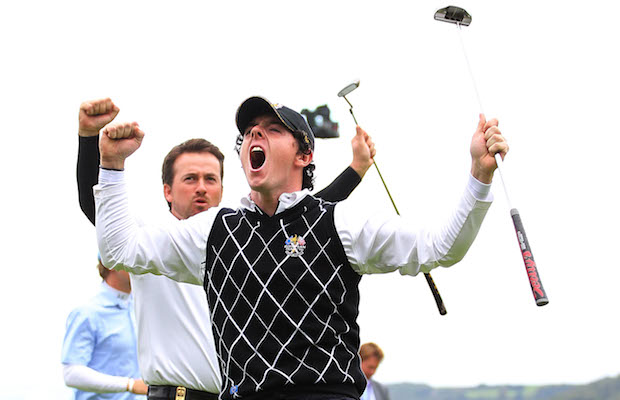
Come Friday, when the U.S. faces Europe in the 40th Ryder Cup, I’ll be watching through Irish eyes. Paul McGinley’s eyes.
I won’t be worried about how the captain’s picks are doing.
I won’t be thinking, What if we only had Billy Horschel!
I won’t be trying to figure out what “pods” Watson is putting together or how his rookies are faring.
That’s not how McGinley will be judging things. He’ll be looking at “the big guys.”
A while back I had a chance to talk to the European captain at length about the matches. One thing he said then has stuck with me.
Why, I asked, had the Europeans had been so successful of late against the Americans, winning 7 of 9 and 5 of the last 6 Matches. They have won, or tied to retain the Cup 10 of the last 14 Matches!
McGinley answered quickly. The reason, he said, is because “our big guys” — he mentioned Poulter — are playing better than “your big guys”— no names. The top Europeans players, McGinley said, were scoring 3, 3.5, sometimes 4 points. The top Americans averaging only 1 or 1.5 points.
It’s not quite that cut and dried. If we count the “big guys” as major winners and those who have played the Ryder Cup as if it were a major (such as Lee Westwood, Poulter and Steve Stricker), not all of the Europeans scored that well in Chicago. Westwood, Luke Donald and Sergio Garcia were just 2-2-0, and Graeme McDowell was 1-3, but Poulter (4-0) Justin Rose (3-2) and Rory McIlroy (3-2) carried the day. On the U.S. side, “big guy” Mickelson was 3-1, but Jim Furyk (1-2-0), Tiger Woods (0-3-1) and Stricker (0-4-0) undermined the strong showing by Jason Dufner, Keegan Bradley and the Johnsons, Zach and Dustin. (Zach has been an exceptional “big guy” on the U.S. side).
In 2010, Woods and Stricker were good (3-1), but veterans Mickelson (1-3) and Furyk (0-2-1) were not. On the other side, Poulter and Donald were 3-1, McDowell and Miguel Angel Jimenez both 2-1. Mickelson became the “losingest” American in the Ryder Cup. He’s now 14-18-6. Woods is 13-17-3. Those are big guys with little records.
Look at these averages from the last four Ryder Cups matches for veterans on this year’s sides. For the Cups they’ve played in, here are European “big guy” point averages:
- Poulter: 3.7
- Rose: 3.0
- McIlroy: 2.5
- Westwood: 2.4
- Garcia: 2.3
- McDowell: 2.0
And for the U.S.:
- Z Johnson: 2.2
- Mickelson: 1.6
- Furyk: 1.5
- Stricker: 1.2
If you add Hunter Mahan, his average over two sessions is 2.3.
We had very close finishes in the last two Cups (14.5 to 13.5 in 2010 and 2012), but I have no doubt that McGinley believes that in the end, his “studs” made the difference. The “A” flight has to lead the “B” flight. Not the other way around.
The Americans don’t talk that way.
“The Ryder Cup is getting desperate for the United States,” former captain Paul Azinger said this month. “Tom Watson is going to have to pull a rabbit out of the hat.”
The rabbit Azinger would have pulled, he made clear, the one Watson did not, was Chris Kirk.
“He is hot and I like hot players.”
In 2008, when Azinger’s squad punished the Euros 16.5 to 11.5, I remember someone pointing out that American rookies scored 4.5 of the 5.5 needed on the final day.
“Maybe going with rookies over experience is not such a bad idea,” posted one happy American fan.
Not for McGinley. I’m sure he wants all the hot players he can get and if they’re rookies, that’s fine. But his view of captain Nick Faldo’s 2008 debacle would be the play of Padraig Harrington (0-3-1), Garcia (0-2-2) and Jimenez (0-2-1), undoing the good that Poulter (4-1-0) McDowell (2-1-1) and Rose (3-1-0) had done. (He told me that a captain’s motivational ability was a second key factor and praised Sam Torrance energetically. He didn’t mention Faldo).
This year, the European big guys may be feeling just a bit more pressure, and the Americans less, because finally the Euros are favored. It’s the best thing that could happen to the U.S. side, especially under Watson, who I think adds to the weight the Americans carry — he’s not the loosest guy in the world — and American players tend to put awful pressure on themselves when they’re favored.
I think McGinley senses this could be a problem. His recent reference during a press conference to a great Dublin football team losing inexplicably to a lousy one reminded me of Lou Holtz, when he coached at Notre Dame, reminding the press how good that Akron team could be, before the Irish beat them 52 to 6.
“That’s just an illustration when you are talking about top-level sport, these things happen. And that’s always a worry.”
But McGinley is betting that if Poulter, Rose, Westwood, McDowell and McIlroy play with the their usual Ryder Cup passion, it won’t.
McGinley will do all he can to keep the mood light; no one has a lighter touch when necessary. But his approach won’t change.
No rabbits, no hats for the European captain.
It’s all about the big guys.
TV Times for the Ryder Cup
Thursday, Sept. 25
9 a.m. – 1 p.m. (Golf Channel)
Friday, Sept. 26
Session 1 (Four-ball): 2:35 a.m. (Golf Channel)
Session 2 (Foursomes): 8:15 a.m. (Golf Channel)
Saturday, Sept. 27
Session 1 (Four-ball): 3 a.m. (NBC)
Session 2 (Foursomes): 8:15 a.m. (NBC)
Sunday, Sept. 28
Singles: 6:36 a.m. (NBC)


Club Junkie
Building my 2026 gamer WITB: Ranking the contenders and new putter projects – Club Junkie Podcast

The annual What’s In The Bag build is underway, and on this episode of Club Junkie, Brian breaks down the clubs currently leading the race for a spot in his 2026 gamer setup. From drivers and fairway woods to irons, wedges, and shafts, he ranks the equipment that’s performing best and explains what’s separating the front runners from the rest of the field.
Brian also heads into the workshop to discuss several putter projects currently on the bench. From head options and shaft choices to build ideas and testing plans, he shares what he’s working on and which putters could become serious contenders for the bag this season.
If you’re a gear junkie who loves equipment testing, club building, and the never-ending pursuit of the perfect setup, this episode is for you.
Follow Club Junkie:
Instagram: @clubjunkiepod
TikTok: @clubjunkiepod
Threads: @clubjunkiepod
X: @ClubJunkiePod
Club Junkie
Tour Edge Exotics mini driver review + TaylorMade Spider ZT Max first look – Club Junkie

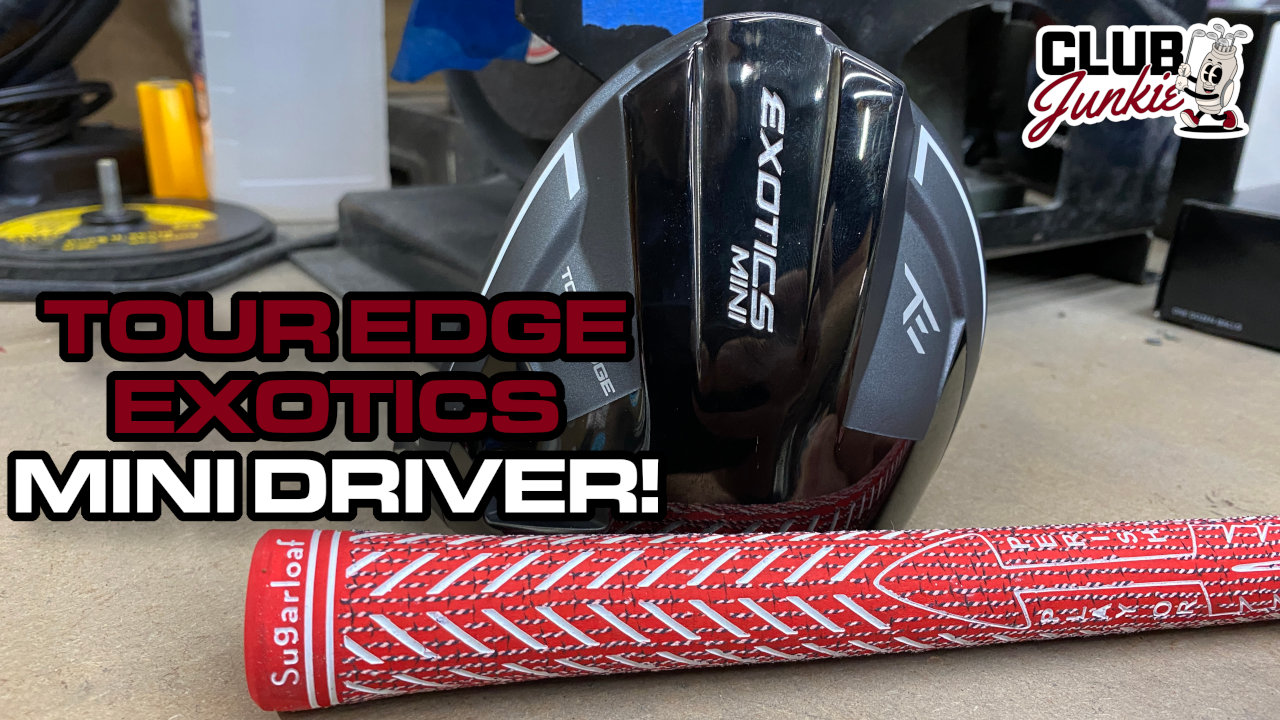
On this episode of Club Junkie, I put the new Tour Edge Exotics Mini Driver to the test and break down the performance, forgiveness, distance, and where it fits compared to a traditional driver or strong fairway wood. If you have been curious about adding a mini driver to the bag, this one is worth a look.
I also dive into the new TaylorMade Spider ZT Max putter that was recently spotted and discuss the growing zero torque putter trend. Plus, there is a closer look at the new Project X Titan Yellow shaft showing up on the PGA Tour and what makes it different from other profiles currently out there.
Opinion & Analysis
AVL: We’re talking about practice! My best tips for taking your game to the course

With the beginning of June on the horizon and courses rounding into peak condition for the season, it’s time to hone the finer skills that often get rusty over the winter. More sunlight also means more time to get out on the course and work on your game.
Whether it’s the practice green or the driving range, there’s always something to improve—whether you’re enjoying the fresh air or preparing for a weekend game or tournament. You can work on drills or freestyle around the green, and friendly competition is a great way to sharpen your skills.
While there are endless ways to get better at golf, I’m going to focus on practicing around the green. Let’s take a look at a few things to keep in mind as we head into the summer months.
Drills
From the driving range to the practice green, it’s important to incorporate drills into your routine. Years ago, I spent a weekend working on my short game with James Sieckmann. He recommended doing drill work for 5–10 minutes, then returning to your main practice.
This way, you create a balance between structured drills and real-world scenarios, so you’re not confined to “perfect” situations. For example, hitting the same three-foot putt over and over is good for repetition, but after a while, it becomes less interactive for your brain.
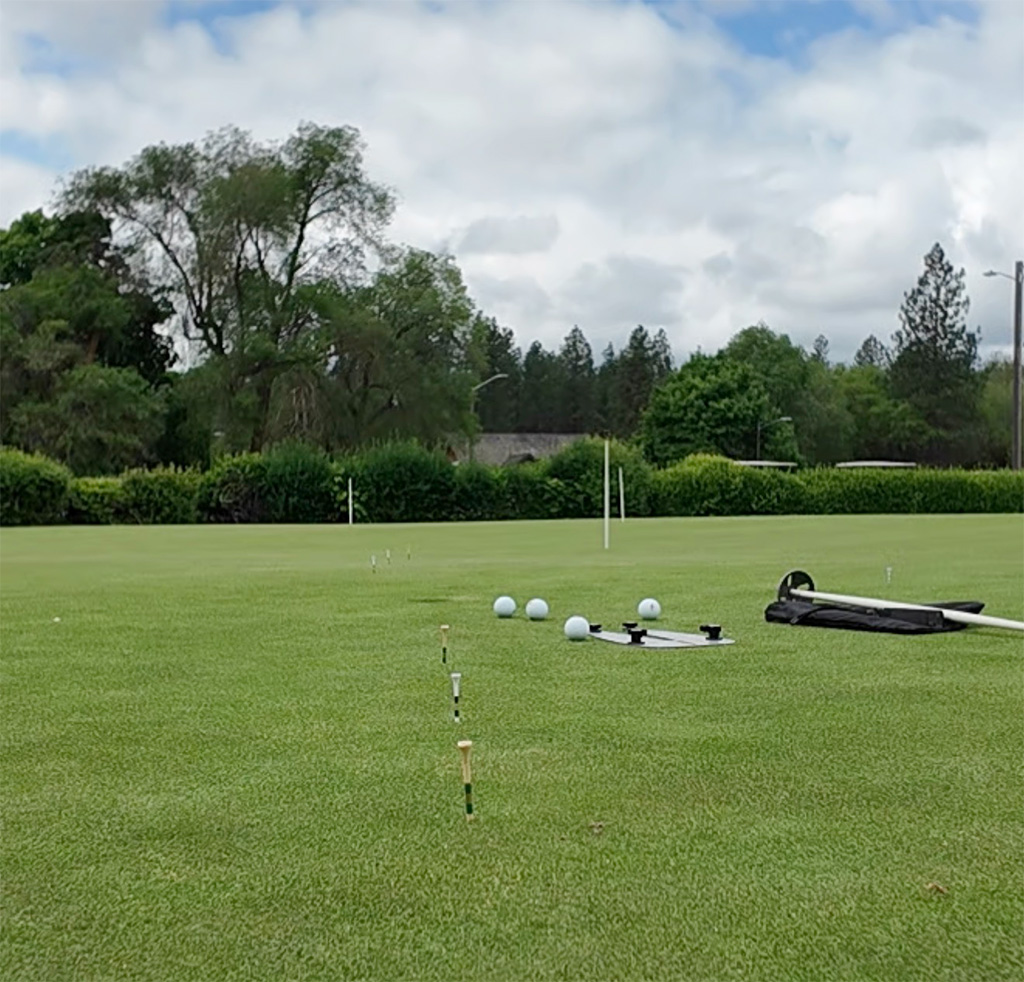
My approach is to use a putting trainer with a narrow gate for the ball to pass through, or simply place tees just outside the width of the ball. I’ll hit a series of four putts through the gate for three sets. Then, from a similar distance, I’ll hit four putts without the training aid and repeat that sequence three times.
Next, I’ll hit a number of 15–25 foot putts in a random fashion, then circle back to repeat the short putt drills with and without the training aid.
This breaks up the rhythm of hitting short putts with the training aid. When you hit the same short putts over and over, it’s easy to get into a groove—which is great for the drill, but not reflective of actual course play. While finding a rhythm is fundamental for drills, I like to introduce variation with longer putts to keep things realistic.
Game Mode
Once you’ve established a foundation with drills, it’s time to simulate on-course scenarios. This is where a few practice games come in handy.
One that I’ve been enjoying lately involves putting 10- to 15-footers with two balls. If I make the putt, great! If I miss, I pull the missed ball back a putter length. Suddenly, that little tap-in becomes a nerve-wracking three-footer—at least at first. As you get better at this game, those three- and five-footers become much more comfortable and routine.
It may sound cliché, but each shot is just what it is—it’s how we react that makes the difference. I like this game because it blends the pressure of on-course putting with the consequence of leaving yourself a much longer putt than usual.
Another game I like is one I recently learned from Brad Faxon. Place three tees in a line at four different locations around the hole: one at 3 feet, one at 6 feet, and one at 8 feet. The 3- and 6-foot putts count as par, and the 8-footer is for birdie.
This game keeps you focused on scoring and helps you get into a competitive mindset. You can even think about this putting game while you’re on the course. I just started playing it, and last week I couldn’t get better than two under par.
Competition
Competition during practice is when drills and games come to life, and you start to see results. For me, nothing beats a putting contest with a friend or two. In the right setting, these contests can become talking points for the whole season.
Match play, a game of 21, or simply seeing who can make the most one-putts (with a small prize on the line) are all great ways to simulate real on-course pressure. Recently, I played in a putting contest where one competitor made back-to-back 30- and 50-foot putts. As they say, expect your opponent to make every putt—and he nearly did. That’s impressive, and it’s something you see on the course, too: you have to stay committed to your game plan, no matter what.
When it comes to practice, it’s important to blend feedback from recent rounds with the fundamentals you want to reinforce. Drills, games, and competition—from the driving range to the putting green—form the backbone of skills you’ll rely on during actual rounds.
Finding the right balance is something we’re all working on, one practice session at a time. With the beginning of June on the horizon and courses rounding into peak condition for the season, it’s time to hone the finer skills that often get rusty over the winter. More sunlight also means more time to get out on the course and work on your game. Whether it’s the practice green or the driving range, there’s always something to improve—whether you’re enjoying the fresh air or preparing for a weekend game or tournament. You can work on drills or freestyle around the green, and friendly competition is a great way to sharpen your skills. While there are endless ways to get better at golf, I’m going to focus on practicing around the green. Let’s take a look at a few things to keep in mind as we head into the summer months.
Drills
From the driving range to the practice green, it’s important to incorporate drills into your routine. Years ago, I spent a weekend working on my short game with James Sieckmann. He recommended doing drill work for 5–10 minutes, then returning to your main practice. This way, you create a balance between structured drills and real-world scenarios, so you’re not confined to “perfect” situations. For example, hitting the same three-foot putt over and over is good for repetition, but after a while, it becomes less interactive for your brain.
My approach is to use a putting trainer with a narrow gate for the ball to pass through, or simply place tees just outside the width of the ball. I’ll hit a series of four putts through the gate for three sets. Then, from a similar distance, I’ll hit four putts without the training aid and repeat that sequence three times. Next, I’ll hit a number of 15–25 foot putts in a random fashion, then circle back to repeat the short putt drills with and without the training aid.
This breaks up the rhythm of hitting short putts with the training aid. When you hit the same short putts over and over, it’s easy to get into a groove—which is great for the drill, but not reflective of actual course play. While finding a rhythm is fundamental for drills, I like to introduce variation with longer putts to keep things realistic.
Game Mode
Once you’ve established a foundation with drills, it’s time to simulate on-course scenarios. This is where a few practice games come in handy. One that I’ve been enjoying lately involves putting 10- to 15-footers with two balls. If I make the putt, great! If I miss, I pull the missed ball back a putter length.
Suddenly, that little tap-in becomes a nerve-wracking three-footer—at least at first. As you get better at this game, those three- and five-footers become much more comfortable and routine. It may sound cliché, but each shot is just what it is—it’s how we react that makes the difference. I like this game because it blends the pressure of on-course putting with the consequence of leaving yourself a much longer putt than usual.
Another game I like is one I recently learned from Brad Faxon. Place three tees in a line at four different locations around the hole: one at 3 feet, one at 6 feet, and one at 8 feet. The 3- and 6-foot putts count as par, and the 8-footer is for birdie.
This game keeps you focused on scoring and helps you get into a competitive mindset. You can even think about this putting game while you’re on the course. I just started playing it, and last week I couldn’t get better than two under par.
Competition
Competition during practice is when drills and games come to life, and you start to see results. For me, nothing beats a putting contest with a friend or two. In the right setting, these contests can become talking points for the whole season. Match play, a game of 21, or simply seeing who can make the most one-putts (with a small prize on the line) are all great ways to simulate real on-course pressure. Recently, I played in a putting contest where one competitor made back-to-back 30- and 50-foot putts. As they say, expect your opponent to make every putt—and he nearly did. That’s impressive, and it’s something you see on the course, too: you have to stay committed to your game plan, no matter what.
When it comes to practice, it’s important to blend feedback from recent rounds with the fundamentals you want to reinforce. Drills, games, and competition—from the driving range to the putting green—form the backbone of skills you’ll rely on during actual rounds. Finding the right balance is something we’re all working on, one practice session at a time.

Justin Rose WITB 2026 (April): Full WITB breakdown with new McLaren irons

What’s the story behind Webb Simpson’s custom-stamped irons?

Cadillac Championship Tour Report: Spieth’s sizable changes, McLaren Golf launches, and more

Russell Henley’s winning WITB: 2026 Charles Schwab Challenge

Kristoffer Reitan’s winning WITB: 2026 Truist Championship

Aaron Rai’s winning WITB: 2026 PGA Championship

Cameron Young’s winning WITB: 2026 Cadillac Championship

Details on Jason Day’s latest prototype Avoda iron setup

Nelly Korda WITB 2026 (April)

Justin Rose on the switch to McLaren Golf, learnings from previous equipment moves
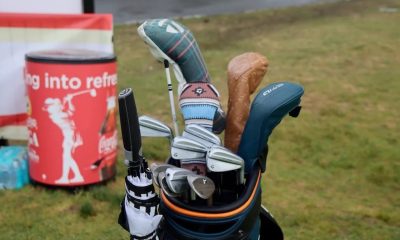

Melanie Green WITB 2026 (June)
Driver: TaylorMade Qi4D (9 degrees) Shaft: Graphite Design Tour AD VF 5 S 3-wood: TaylorMade Qi4D (15 degrees) Shaft: Graphite Design Tour...


Sungjae Im WITB 2026 (June)
Sungjae Im had >14 clubs in his bag when photographed prior to the Memorial Tournament. Driver: Titleist TSi2 (8 degrees, B1...
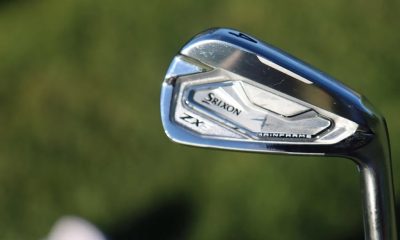

Lucas Glover WITB 2026 (June)
Lucas Glover had >14 clubs in his bag when photographed prior to the Memorial Tournament. Driver: Titleist GTS2 (10 degrees, B2 SureFit...
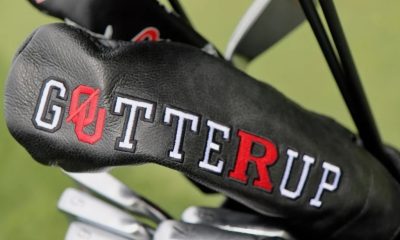

Chris Gotterup WITB 2026 (June)
Chris Gotterup had >14 clubs in his bag when photographed prior to the Memorial Tournament. Drivers: TaylorMade Qi4D (8 degrees), Ping...
-
 News5 days ago
Russell Henley’s winning WITB: 2026 Charles Schwab Challenge
-
 Whats in the Bag3 weeks ago
Aaron Rai’s winning WITB: 2026 PGA Championship
-
 Equipment2 days ago
Details on Jason Day’s latest prototype Avoda iron setup
-
 Tour Photo Galleries3 weeks ago
Photos from the 2026 CJ Cup Byron Nelson
-

 Equipment2 weeks ago
CJ Cup Byron Nelson Tour Report: Koepka and Kim’s newest putters finally get hot
-
 News1 week ago
Charles Schwab Challenge Tour Report: MacIntyre, Åberg and Spaun all switch putters, TaylorMade launches new Spider
-
 Equipment1 week ago
Details on J.J. Spaun’s surprise putter switch
-
 Popular Photo Galleries2 weeks ago
Photos from the 2026 Charles Schwab Challenge


Jafar
Sep 25, 2014 at 3:22 pm
Europe will choke. They’re filled with a bunch of pansies 😛
And there’s no extra incentive to beat a team with Tiger Woods. Instead the USA has the underdog role of beating the #1 in the world.
Bollix
Sep 23, 2014 at 3:18 am
The US might steal this one, I reckons
Bill
Sep 22, 2014 at 9:16 am
The Ryder Cup is the best display of world golf competition..It’s great viewing and every match means something. Love the passion that goes into it from both sides. Names don’t mean all that much, the hot hand can turn it around. The Europeans have the name talent this time but we had it the last two Ryders and we know what happened.
Knalleich
Sep 22, 2014 at 4:42 am
If you are watching through McGinley’s eyes, why would the thougth “What if we had Billy Horschel” ever even cross your mind?
Also the players on each side you call “Big Guys”, the U.S. big guys at the moment are for example Stricker and Mickelson. Both are getting old, one even plays a limited amount of events, the other hasnt really played well all year and on the other side you have McIlroy and Garcia who play great all year.
Why does it matter how many majors any of these players won 5 years ago?
Right now McIlroy is big, Mickelson isnt in my oppinion.
And how is McDowell or Rose an european big guy right now and kaymer isnt???
Dave
Sep 21, 2014 at 7:04 pm
Come on people this is ryder cup! It’s not about who you think will win its about backing YOUR country/team ! Let’s go USA!!!!!!
Rwj
Sep 21, 2014 at 10:06 pm
…and fantasy football players should only choose players from their state or city
Carl truitt
Sep 21, 2014 at 4:50 pm
Mods….why delete all the previous comments?
Rich
Sep 22, 2014 at 4:18 am
Because they might have hurt everybodies feelings. Plus they finally decided to edit the first line of the article because it was wrong so most of the comments wouldn’t have made sense.
Joseph
Sep 21, 2014 at 10:54 am
Come on. Horschel chunked a shot on the last hole to lose the tourney the day before Watson had to make his picks. Kirk arguably might have been a solid pick. I’m so tired of hearing about how much the Europeans love this event and play more as a team than the US. There is no magic formula. To me it’s simple, just play better golf over a 3 day day period than your opponent.
James Brown
Sep 21, 2014 at 7:29 pm
You and captain watson share the same philosophy. I believe it is that simple but I also believe that team USA shows up with all stars and gets beat by a TEAM of players with far less major wins or total tour wins. I think the USA needs to approach the Ryder cup like Herb Brooks did for the 1980 Olympics. Azingers adjustments were a start in the right direction. It’s not about getting the best players, it’s about getting the right players for the different formats.
Dan
Sep 21, 2014 at 10:21 am
I want America to win but Europe seems to have the better team. Plus the European players seem to enjoy the team event much more than the Americans. I think that’s a huge advantage.
Christosterone
Sep 21, 2014 at 9:58 am
My captains picks wouldve been:
Kirk
Horschel
Moore
John
Sep 21, 2014 at 5:12 pm
Completely agree, was surprised with Moore being left out considering he’s had a win, 7 top 10’s and was 39th in fedex cup this year
Dick
Sep 21, 2014 at 8:43 am
It’s over before it even starts.