
Opinion & Analysis
FedEx Cup Playoffs points system still not right?

If we are measuring the FedEx Cup’s major points system overhaul in 2009 by its stated goal—to infuse more drama into the Playoffs finale—the sea change has been a resounding success.
Following a Vijay Singh performance in 2008 that left the Fijian basically a lock to win the Cup with two events to play, the PGA Tour tweaked its points system to put far less emphasis on tournaments prior to the Tour Championship in hopes that the final event’s new disproportionate influence would mean more dramatic conclusions.
The returns?
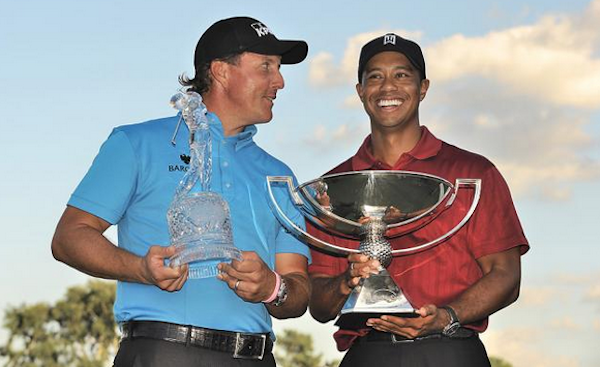
No eventual FedEx Cup champion has moseyed into East Lake needing only a pedestrian finish to cast in the $10 million prize. The three Tour Championships following the Singh yawner produced high-profile, intense battles for the FedEx Cup crown. In 2009, there was Phil and Tiger. The next year, Jim Furyk faced a manageable but pressure-packed up-and-down for the jackpot. In 2011, Bill Haas pulled off one of the most memorable shots in Playoff history to capture the glory.
Really in every sense of that narrowly proscribed objective, the PGA Tour has received its wish. The same Tour Championship that Tiger Woods and Phil Mickelson skipped (voluntarily) in 2006 now serves as the centerpiece for the PGA Tour’s end-of-summer drama.
But has too much been compromised in the process? More and more that seems to be the case.
We’re all pro-drama here and likely nobody wants to see a return to the doldrums of the initial FedEx Cup setup, but the current format has grown stale.
With Billy Horschel’s double-victory in the season finale, the last five winners of the Tour Championship also captured the FedEx Cup in the year of said triumph. Woods is the only FedEx Cup champion under the new scoring format to not also place first at East Lake.
While this sort of result is generally desirable for the Playoffs concept, the lack of diversity here is alarming. Part of the charm of this four-event end-of-season rendezvous is that, in theory, a player can capture the FedEx Cup in several different ways. Maybe eliminating the Singh method is prudent, but there’s something to be said for a guy needing to place second, finish top-five or post a top-10 at East Lake to capture the Playoffs. When a gaggle of players not winning the Tour Championship are jockeying for the position that affords them the FedEx Cup trophy, the dizzying shift from one potential winner to another can get crazy exciting and hectic.
The current format actually allows more players a chance to win it all at East Lake, but, paradoxically, makes it more likely to find just one avenue toward taking the Playoffs crown: winning the Tour Championship.
In the last five tournaments at East Lake, the double winner concept has not only been upheld but rarely challenged. In 2010, Paul Casey had a chance to win the Cup with a solo second and briefly appeared he might do so, but after that fleeting moment Jim Furyk and Luke Donald jockeyed for the victory they needed to take everything home.
A year later, Webb Simpson had a chance for the FedEx trophy down the stretch after a 22nd-place finish at East Lake, but the final action came down to Aaron Baddeley, Hunter Mahan and Bill Haas–three guys who started the tournament outside the top 20 in the standings and three guys who needed to win for FedEx Cup glory.
And the last three iterations really didn’t acknowledge the possibility of a non-Tour Championship winner’s shot at the FedEx Cup crown. To be fair, the last two champions started the Tour Championship second in the standings, but from 2010-2012, the winners started 5th, 11th and 25th respectively.
What’s even the point of having a four-week playoff stretch if the writing on the wall says that for the most part only the Tour Championship is going to matter?
The points resetting prior to East Lake isn’t the issue, but rather its setup is the glaring flaw. The lack of clout for players at the top of the standings makes a non-East Lake winning FedEx Cup champion pretty improbable.
A low FedEx Cup winning total is 3,000 points, something only the top five in the standings can accomplish without winning the Tour Championship. Only the FedEx Cup leader can finish outside the top-five at East Lake and still win it all in this scenario and Nos. 4 and 5 must place at least solo second to have any chance.
Even Bill Haas’ low total of 2,760 is only reachable by non-winners among the top six in the standings, with the Nos. 5 and 6 players requiring solo seconds.
With this information, we should be screaming for a change to the points reset. In the current iteration, so few have a shot as non-winners. Why not tweak the points so that say the top 10 in the standings are significantly separated from the rest of the pack?
We’re not talking a massive overhaul. Give players in the top 10 500 or 1,000 more points after the reset than they currently get, or at least enough to make it quite difficult for the lower ranked players to take the Cup even if they win at East Lake.
In any given Tour Championship, the players vying for the FedEx Cup are those fighting for the tournament win and maybe, maybe the top couple of guys in the standings (of course some fit both categories). A reset more skewed toward the top would go toward eliminating the lower ranked golfers heading toward an East Lake victory.
But this is simple addition by subtraction.
Maybe less people have a chance at the Cup, but if those in the upper echeleon of the standings at East Lake are further advantaged and far less beholden to win or bust for the $10 million, the greater leeway means more names are in the running for the whole prize Sunday at the Tour Championship.
More names means more chaos and more drama.
The Tour Championship’s extreme grip is not the solo issue though. The Playoffs should offer more points than regular season events can and should reward the mediocre season-long performers that turn blazing hot in the postseason. But hasn’t moving up in the Playoffs become a little too easy?
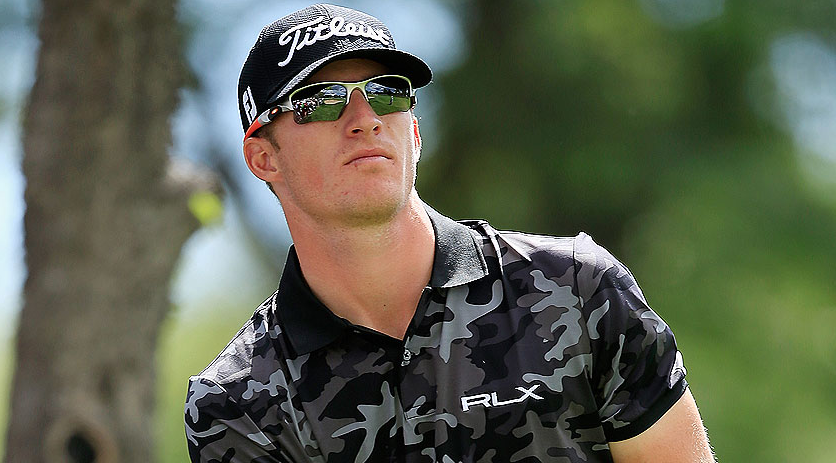
Morgan Hoffmann started the FedEx Cup Playoffs 124th in the standings posted a solid but unspectacular T9 at the Barclays and jumped all the way to 72nd. He moved up 52 spots and basically had a spot at Cherry Hills based on one measly top-10.
That becomes a major issue when it comes to the field at East Lake. One would think the Tour wishes for the strongest group possible at the Tour Championship, its showcase final event.
When Playoff volatility is so large though, that objective suffers. At East Lake, you want a combination of regular season performers and hot postseason golfers. With this system, you sometimes get neither.
Players like Geoff Ogilvy, who moved from 100th to 24th in the standings with a runner-up at the Deutsche Bank, sneak into East Lake. No offense to the former U.S. Open champion, but one week of great play doesn’t a “hot” player make. Instead, you get a guy who played mediocre or poor golf more or less the entire year save one outlier week. Not exactly the type of competitor you want among the final 30.
We don’t intend to rid the system of the “Cinderella” playoff performers. But “Cinderella” should imply a standard of consistently great golf rather than one impressive week. Consequently points in the first three playoff events should be significantly diluted, if still plentiful.
This is not another article bashing the FedEx Cup. Whatever its flaws, the end-of-season extravaganza has infused much more energy into golf’s closing stretch.
Still, Tour brass should understand that the FedEx Cup can be improved. Stepping down the power of the Tour Championship and strengthening the finale’s field by way of more restricted point totals in the first three events can accomplish just that.
Few want to see the 2008 results again, but with the formula once again a cut, dried and somewhat hindering presence, maybe these tweaks are in order.


Club Junkie
Building my 2026 gamer WITB: Ranking the contenders and new putter projects – Club Junkie Podcast

The annual What’s In The Bag build is underway, and on this episode of Club Junkie, Brian breaks down the clubs currently leading the race for a spot in his 2026 gamer setup. From drivers and fairway woods to irons, wedges, and shafts, he ranks the equipment that’s performing best and explains what’s separating the front runners from the rest of the field.
Brian also heads into the workshop to discuss several putter projects currently on the bench. From head options and shaft choices to build ideas and testing plans, he shares what he’s working on and which putters could become serious contenders for the bag this season.
If you’re a gear junkie who loves equipment testing, club building, and the never-ending pursuit of the perfect setup, this episode is for you.
Follow Club Junkie:
Instagram: @clubjunkiepod
TikTok: @clubjunkiepod
Threads: @clubjunkiepod
X: @ClubJunkiePod
Club Junkie
Tour Edge Exotics mini driver review + TaylorMade Spider ZT Max first look – Club Junkie

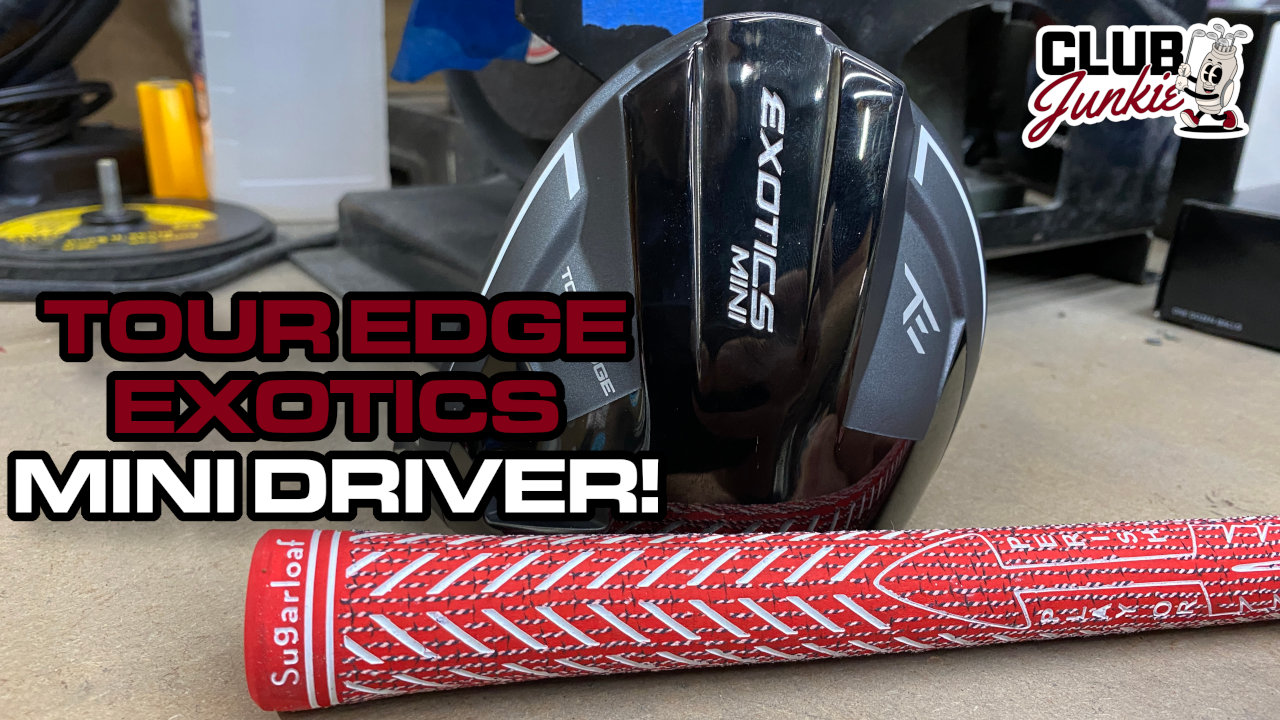
On this episode of Club Junkie, I put the new Tour Edge Exotics Mini Driver to the test and break down the performance, forgiveness, distance, and where it fits compared to a traditional driver or strong fairway wood. If you have been curious about adding a mini driver to the bag, this one is worth a look.
I also dive into the new TaylorMade Spider ZT Max putter that was recently spotted and discuss the growing zero torque putter trend. Plus, there is a closer look at the new Project X Titan Yellow shaft showing up on the PGA Tour and what makes it different from other profiles currently out there.
Opinion & Analysis
AVL: We’re talking about practice! My best tips for taking your game to the course


With the beginning of June on the horizon and courses rounding into peak condition for the season, it’s time to hone the finer skills that often get rusty over the winter. More sunlight also means more time to get out on the course and work on your game.
Whether it’s the practice green or the driving range, there’s always something to improve—whether you’re enjoying the fresh air or preparing for a weekend game or tournament. You can work on drills or freestyle around the green, and friendly competition is a great way to sharpen your skills.
While there are endless ways to get better at golf, I’m going to focus on practicing around the green. Let’s take a look at a few things to keep in mind as we head into the summer months.
Drills
From the driving range to the practice green, it’s important to incorporate drills into your routine. Years ago, I spent a weekend working on my short game with James Sieckmann. He recommended doing drill work for 5–10 minutes, then returning to your main practice.
This way, you create a balance between structured drills and real-world scenarios, so you’re not confined to “perfect” situations. For example, hitting the same three-foot putt over and over is good for repetition, but after a while, it becomes less interactive for your brain.
My approach is to use a putting trainer with a narrow gate for the ball to pass through, or simply place tees just outside the width of the ball. I’ll hit a series of four putts through the gate for three sets. Then, from a similar distance, I’ll hit four putts without the training aid and repeat that sequence three times.
Next, I’ll hit a number of 15–25 foot putts in a random fashion, then circle back to repeat the short putt drills with and without the training aid.
This breaks up the rhythm of hitting short putts with the training aid. When you hit the same short putts over and over, it’s easy to get into a groove—which is great for the drill, but not reflective of actual course play. While finding a rhythm is fundamental for drills, I like to introduce variation with longer putts to keep things realistic.
Game Mode
Once you’ve established a foundation with drills, it’s time to simulate on-course scenarios. This is where a few practice games come in handy.
One that I’ve been enjoying lately involves putting 10- to 15-footers with two balls. If I make the putt, great! If I miss, I pull the missed ball back a putter length. Suddenly, that little tap-in becomes a nerve-wracking three-footer—at least at first. As you get better at this game, those three- and five-footers become much more comfortable and routine.
It may sound cliché, but each shot is just what it is—it’s how we react that makes the difference. I like this game because it blends the pressure of on-course putting with the consequence of leaving yourself a much longer putt than usual.
Another game I like is one I recently learned from Brad Faxon. Place three tees in a line at four different locations around the hole: one at 3 feet, one at 6 feet, and one at 8 feet. The 3- and 6-foot putts count as par, and the 8-footer is for birdie.
This game keeps you focused on scoring and helps you get into a competitive mindset. You can even think about this putting game while you’re on the course. I just started playing it, and last week I couldn’t get better than two under par.
Competition
Competition during practice is when drills and games come to life, and you start to see results. For me, nothing beats a putting contest with a friend or two. In the right setting, these contests can become talking points for the whole season.
Match play, a game of 21, or simply seeing who can make the most one-putts (with a small prize on the line) are all great ways to simulate real on-course pressure. Recently, I played in a putting contest where one competitor made back-to-back 30- and 50-foot putts. As they say, expect your opponent to make every putt—and he nearly did. That’s impressive, and it’s something you see on the course, too: you have to stay committed to your game plan, no matter what.
When it comes to practice, it’s important to blend feedback from recent rounds with the fundamentals you want to reinforce. Drills, games, and competition—from the driving range to the putting green—form the backbone of skills you’ll rely on during actual rounds.
Finding the right balance is something we’re all working on, one practice session at a time. With the beginning of June on the horizon and courses rounding into peak condition for the season, it’s time to hone the finer skills that often get rusty over the winter. More sunlight also means more time to get out on the course and work on your game. Whether it’s the practice green or the driving range, there’s always something to improve—whether you’re enjoying the fresh air or preparing for a weekend game or tournament. You can work on drills or freestyle around the green, and friendly competition is a great way to sharpen your skills. While there are endless ways to get better at golf, I’m going to focus on practicing around the green. Let’s take a look at a few things to keep in mind as we head into the summer months.
Drills
From the driving range to the practice green, it’s important to incorporate drills into your routine. Years ago, I spent a weekend working on my short game with James Sieckmann. He recommended doing drill work for 5–10 minutes, then returning to your main practice. This way, you create a balance between structured drills and real-world scenarios, so you’re not confined to “perfect” situations. For example, hitting the same three-foot putt over and over is good for repetition, but after a while, it becomes less interactive for your brain.
My approach is to use a putting trainer with a narrow gate for the ball to pass through, or simply place tees just outside the width of the ball. I’ll hit a series of four putts through the gate for three sets. Then, from a similar distance, I’ll hit four putts without the training aid and repeat that sequence three times. Next, I’ll hit a number of 15–25 foot putts in a random fashion, then circle back to repeat the short putt drills with and without the training aid.
This breaks up the rhythm of hitting short putts with the training aid. When you hit the same short putts over and over, it’s easy to get into a groove—which is great for the drill, but not reflective of actual course play. While finding a rhythm is fundamental for drills, I like to introduce variation with longer putts to keep things realistic.
Game Mode
Once you’ve established a foundation with drills, it’s time to simulate on-course scenarios. This is where a few practice games come in handy. One that I’ve been enjoying lately involves putting 10- to 15-footers with two balls. If I make the putt, great! If I miss, I pull the missed ball back a putter length.
Suddenly, that little tap-in becomes a nerve-wracking three-footer—at least at first. As you get better at this game, those three- and five-footers become much more comfortable and routine. It may sound cliché, but each shot is just what it is—it’s how we react that makes the difference. I like this game because it blends the pressure of on-course putting with the consequence of leaving yourself a much longer putt than usual.
Another game I like is one I recently learned from Brad Faxon. Place three tees in a line at four different locations around the hole: one at 3 feet, one at 6 feet, and one at 8 feet. The 3- and 6-foot putts count as par, and the 8-footer is for birdie.
This game keeps you focused on scoring and helps you get into a competitive mindset. You can even think about this putting game while you’re on the course. I just started playing it, and last week I couldn’t get better than two under par.
Competition
Competition during practice is when drills and games come to life, and you start to see results. For me, nothing beats a putting contest with a friend or two. In the right setting, these contests can become talking points for the whole season. Match play, a game of 21, or simply seeing who can make the most one-putts (with a small prize on the line) are all great ways to simulate real on-course pressure. Recently, I played in a putting contest where one competitor made back-to-back 30- and 50-foot putts. As they say, expect your opponent to make every putt—and he nearly did. That’s impressive, and it’s something you see on the course, too: you have to stay committed to your game plan, no matter what.
When it comes to practice, it’s important to blend feedback from recent rounds with the fundamentals you want to reinforce. Drills, games, and competition—from the driving range to the putting green—form the backbone of skills you’ll rely on during actual rounds. Finding the right balance is something we’re all working on, one practice session at a time.

Justin Rose WITB 2026 (April): Full WITB breakdown with new McLaren irons

What’s the story behind Webb Simpson’s custom-stamped irons?

Cadillac Championship Tour Report: Spieth’s sizable changes, McLaren Golf launches, and more

Russell Henley’s winning WITB: 2026 Charles Schwab Challenge

Kristoffer Reitan’s winning WITB: 2026 Truist Championship

Cameron Young’s winning WITB: 2026 Cadillac Championship

Aaron Rai’s winning WITB: 2026 PGA Championship

Details on Jason Day’s latest prototype Avoda iron setup

Nelly Korda WITB 2026 (April)

Justin Rose on the switch to McLaren Golf, learnings from previous equipment moves


Sungjae Im WITB 2026 (June)
Sungjae Im had >14 clubs in his bag when photographed prior to the Memorial Tournament. Driver: Titleist TSi2 (8 degrees, B1...


Lucas Glover WITB 2026 (June)
Lucas Glover had >14 clubs in his bag when photographed prior to the Memorial Tournament. Driver: Titleist GTS2 (10 degrees, B2 SureFit...

Chris Gotterup WITB 2026 (June)
Chris Gotterup had >14 clubs in his bag when photographed prior to the Memorial Tournament. Drivers: TaylorMade Qi4D (8 degrees), Ping...

Jason Day WITB 2026 (June)
Jason Day had >14 clubs in his bag when photographed prior to the Memorial Tournament. Driver: Ping G430 LST (10.5 degrees...
-
 News4 days ago
Russell Henley’s winning WITB: 2026 Charles Schwab Challenge
-
 Whats in the Bag3 weeks ago
Aaron Rai’s winning WITB: 2026 PGA Championship
-
Equipment1 day ago
Details on Jason Day’s latest prototype Avoda iron setup
-
 Tour Photo Galleries2 weeks ago
Photos from the 2026 CJ Cup Byron Nelson
-

 Equipment2 weeks ago
CJ Cup Byron Nelson Tour Report: Koepka and Kim’s newest putters finally get hot
-

 News6 days ago
Charles Schwab Challenge Tour Report: MacIntyre, Åberg and Spaun all switch putters, TaylorMade launches new Spider
-
 Equipment1 week ago
Details on J.J. Spaun’s surprise putter switch
-

 Popular Photo Galleries1 week ago
Photos from the 2026 Charles Schwab Challenge


ken
Sep 24, 2014 at 12:59 pm
Increase the number of regular tour event requirement from the current 15 to 18.
Exclude Majors from point consideration.
The first event in the FedEx Cup should remain as it is.
The next event should be cut to 64 players.
Then change to match play. Cut the field to 32 players.
The losers play on day one( Wednesday) in a 36 hole match play format. Those 16 players then are seeded against the 16 in the winners bracket.
On day two, those players meet to cut the field to 16 Then play another 18 to get to 8 players.
On Day three they cut it to 4. Then on Saturday cut it to 2 then on Sunday the final two players go at it for the Trophy and the cash.
If this loosely resembles the US Amateur, correct.
These guys are pros. They can handle the grind.
lakawak
Mar 8, 2016 at 6:49 am
Match play is the WORST way to determine a winner.
Rich
Sep 24, 2014 at 2:03 am
Majors should be worth a lot more than the 600 points given to them. How are they worth less than a quarter of the playoff events? Aren’t they still the pinnacle of golf? Not according to the fedex cup they’re not……….ridiculous
golfpro
Sep 24, 2014 at 12:45 am
Love the idea of no points. Just keep reducing the field! Its pretty much whoever wins the tc wins it all anyhow!
NaBUru38
Sep 23, 2014 at 4:33 pm
The Deutsche Bank, Barclays and BMW should give 1000 points, not 2500.
Instead of resetting points, the FedEx Cup winner should be decided on strokes. The season leader would get a 50-stroke “Wednesday” score for the Tour Championship, the second 60, the third 65, the fourth 68, the fifth 70, the sixth 71, etc. Then the Tour Championship would get a 10-stroke bonus. The player with less FedEx Cup strokes would get the 10 million dollar check.
Philip
Sep 19, 2014 at 7:08 pm
For me the reason for the current points system is to project the PGA Tour by doing the most to ensure the players who where in the limelight and winning all season are protected from leaving before the end for the playoffs. This helps to protect the big stars who try to peak for the majors and can often be burned out by the Fedex cup.
A player winning 1-2 majors and a few other choice tournaments being eliminated in the first cut is a nightmare for the PGA Tour. This is a result of many people watching their favourite player in golf and once that player is eliminated they move on. Whereas in team sports we each have our favourite team, but if they are eliminated we often move on to another remaining team to continue to watch until the end.
A lot of people do not watch golf, but watch a player. For team sports those same people watch the sport first and foremost, they have a favourite team, but they watch the sport till the end.
Philip
Sep 19, 2014 at 7:14 pm
And a big reason for this attitude difference is that in golf we are rooting for an “individual” – this is a lot more personal than rooting for a team.
Show
Sep 19, 2014 at 4:01 am
The problem is, guys like Woods only play 16 or 17 events. Other players like Furyk play 30 or more consistently.
Pure and simple, the points system is flawed. Look at what happened to Dustin Johnson. He got to take home money as he came in dead last to get into the PlayOffs and, to top it off, they didn’t give his place to somebody below who would have showed up!
The points are way too skewed as of now. It should be simply –
in a regular tournament, 70 players make the cut ? Then the winner gets 70, dead last get 1.
Same goes for Majors.
And once the players know this, and the fact that they would also have to play a minimum of 25 events in a season, and to accumulate enough to just to get to the PlayOffs at the end –
if the pressure is on like that – they will show up and try harder.
They coddle the players too much. Too much sponsor money, too much power of the players’ union, too many exemption rules and too many injury exemptions.
Themaddriver
Sep 20, 2014 at 8:43 am
Proclaimer, I do not like NASCAR. However, I do like their “win and your in” theory. The more wins you have during the regular season should have a direct impact on your seed at the Tour Championship. The guy with the most wins gets the number one spot. This puts a significant emphasis on winning and could bring better fields to all tournaments. This could potentially eliminate players like TW from playing in less than half of the events. The nonwinners thusly are jockeying for the last few remaining spots in the Tour Championship. They can keep the points system the same for everything else including the Tour Championship.
Gazza
Sep 19, 2014 at 1:01 am
Winners of the majors should automatically qualify for the final field of 30.
Show
Sep 19, 2014 at 3:56 am
No, they shouldn’t. Because, they could just as easily not play other events as well. Or even turn up!
w
Sep 19, 2014 at 9:18 pm
the Fed Ex cup is suppose to crown the best PGA Tour player. Majors are not pga tour events. they should be kept separate. this would put more importance on regular season events.
MHendon
Sep 19, 2014 at 12:01 am
Damn you write the most long winded articles Kevin. I don’t think I’ve yet to finish reading one of yours.
AJ
Sep 19, 2014 at 2:09 am
Have to say I agree. Kevin, part of being a skilled writer is brevity.
Please can you work on breaking down your articles some more – for the amount of points you eventually raised this article should have been half the length, if not shorter.
Re the FEC, I think the whole contrived playoffs system is a load of bull anyway. It will rarely, if ever, reward the best player over the season but it’s a common feature of American sports so that why we have it.
I don’t follow US sport but the playoffs must drive you mad if you support the most consistent team, albeit there is something to be said for having slightly more unpredictability around the end season.
The football season here in the UK can become pretty dull if a single team is running away with the league or the same few teams are duking it out each season. That said, I would argue that most fans here prefer that to the relative lottery of a play off system to decide our national champions.
Airbender
Sep 18, 2014 at 11:34 pm
I think its fine the way it is.
Even in every other sports, everybody that’s in the playoffs should have a chance to win. My two cents…
bradford
Sep 19, 2014 at 9:31 am
Then it should be harder to get in–Horchel’s season was pretty meager, he shouldn’t have had a shot at it.
Jason
Sep 18, 2014 at 10:04 pm
I like using the points for regular season okay to make the playoffs. After that, the points are gone, and it’s true playoffs. Each tourney, half of the field is eliminated. Now, if you’re looking for drama, that is the formula. I think the PGA Tour got too creative with the point system for the playoffs, and basically over thought such a simple task. To me, it isn’t exciting watching all of these points scenarios play out over the course of the round. It’s far easier and interesting to just say, “Whoever wins this tourney is the champ.”.
I know some folks will say, “Well, what about the guy who played well all year? Shouldn’t he at least get something in the playoffs for that?”. The answers is no. In any other sport, regular season is nearly forgotten once the playoffs come around. The player who played well all year and gets knocked in round one of the playoffs can sit home and count his earnings and watch the drama unfold.
I really hope the PGA Tour chnages this system. It’s far too complicated for such a simple desire. My message to it: Keep it simple stupid!
Billy Joe
Sep 18, 2014 at 9:10 pm
Nothing against Billy Ho, but this FedEx Cup was like watching a car rust. Not sure what needs to be done, but it needs a tweak. Maybe like the Tour de France has various jerseys.
Simples
Sep 18, 2014 at 6:49 pm
If it is going to be Match Play, knock-out stage type set up, then they would have to randomize the next-round players from stage to stage, as they do with the FA Cup in England for their football championship. It would be more fun & exciting that way.
Simples
Sep 18, 2014 at 6:44 pm
Points should be for the regular season to get into the PlayOffs.
Then, no more points.
Once you’re in, it should purely be a cut-down from week to week in the Final 4 events, where you have to make the cut. 125, then 100, then 75, then 30.
Match-Play seems like a good idea, in the style of tennis or any other sport with knock-outs, but would not make real sense, as there’ll be guys sitting around for days doing nothing. Would not be good viewing for the crowd or for TV.
Simples!
Alex
Sep 18, 2014 at 5:09 pm
I think it should be 3 tournaments where all 125 play, then top 32 make it to the finals or top 30 and have it match play. If its top 30 top 2 seeds from the first 3 tournaments get byes. And then it should be match play, however i was thinking instead of match play where by hole, you have 18 hole match play relative to par.
Then every shot would count, and par 3 6th where someone goes into the drink and your opponent gets a birdie its not just 1 up but it could be as much as 3-4 strokes.
Kris
Sep 18, 2014 at 5:01 pm
I’m all for a Match Play in the final. But I think it should be true playoffs. Make the cut to move on. Top 100 plus ties make cut in Rd 1, then top 100 after done move on (playoffs if necessary at end). Same for top 60 in 2nd round. No cut in 3rd Rd so just top 32 into the final match play.
RobG
Sep 18, 2014 at 5:00 pm
I like the idea of using the points during the regular season to determine rankings but once the playoffs start the points should go out the window and the standings should be based on score relative to par.
The playoffs should be 16 rounds – 4 four-round tournaments with cuts to 100, 70, and 30 after 4, 8, and 12 rounds respectively.
The Barclays, Duestche Bank, BMW, and Tour Championship can still crown their own 4 round champion (tournaments within the tournament) but the FEC champion should be the guy who shoots the lowest score over 16 rounds.
This effectively eliminates guys who skip an event and situations where DJ doesn’t tee it up for 3 months and still makes it to the Tour Championship.
Chris
Sep 18, 2014 at 4:42 pm
The Tour Championship should be a match play event of the top 32. Imagine the final match for $10 million! Talk about drama.
Teaj
Sep 18, 2014 at 4:54 pm
I agree, my buddies and I have talked about this at length and we all agree it should be match play once it gets down to the last 32. every shot would have that much more pressure and I feel you would find out who has the right stuff.
Joe
Sep 18, 2014 at 10:20 pm
The PGA wouldn’t do matchplay. Let’s say the first round it’s Phil vs Tiger and right off the start one of the two are out. Bad for business. I’m not gonna lie, this tour championship wasn’t the best and last years was worse. I think the points need to be redone. Rory won 3 of the biggest tournaments of the year. He deserved to win in my opinion. And they need to bring the BMW back to Cog Hill.
bradford
Sep 19, 2014 at 9:35 am
Match play only measures each player against one other player…Perhaps for the final 2, but it just doesn’t ever highlight who’s playing best. It’s a style that particular player excel in, but it’s not appropriate for large groups of players.