
Opinion & Analysis
When golfers create their own reality

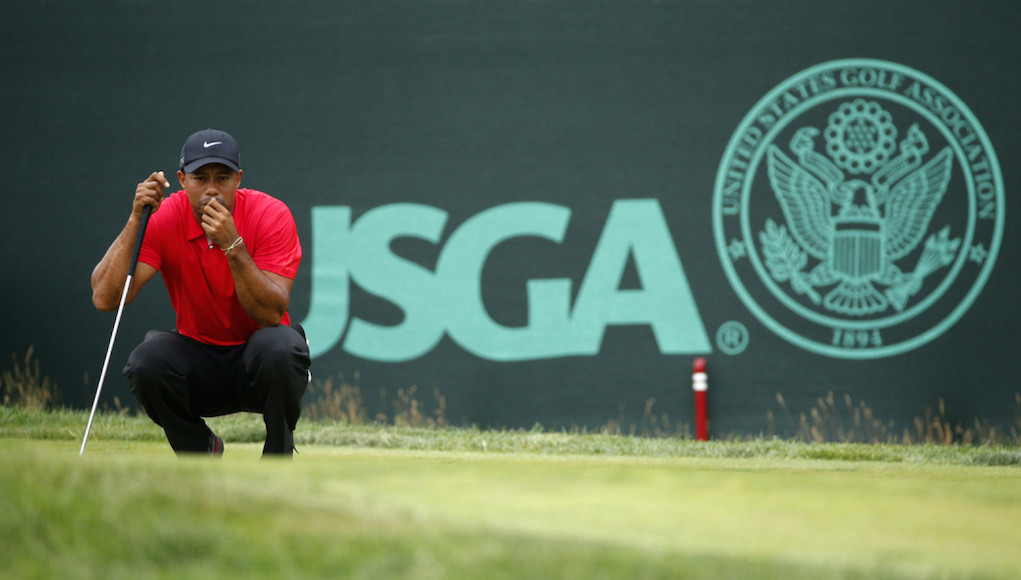
“Great players always deflect it away,” Tom Weiskopf said during the 2015 U.S. Open broadcast.
His quote explains how many professional golfers deal with the difficult realities they face as a part of their job… without going crazy. Everyone wonders what goes on in the mind of the best players as they react to shots and rounds that contain both good and bad results. As a former tour pro, and now a golf instructor, I wanted to share my insights on the topic.
Here are some things great players think and some of the things I coach my students.
It is never their fault

This is a common reaction of a many tour players (and many poor players, too). You’ll see a golfer miss a putt and immediately fix an old ball mark or tap down a spike mark that was supposedly in their line. Sometimes it is legit. Players see their ball do something they did not expect and blame a hidden imperfection on their green for the outcome. It allows golfers to tell themselves that they made the perfect stroke, and only missed the putt because of something outside their control. They can move on with their round without harming their confidence.
The flip side of the coin is when outside influences, such as the spotty greens at the U.S. Open at Chambers Bay, expose the mental insecurities of the player. You saw it with Billy Horschel and his putting. Never known as a really good putter, the green irregularities exposed that mental side of his game that needs everything to be perfect in order for it to succeed both inwardly and outwardly. When it is not perfect, it can lead to some quirky and unprofessional behavior.
Do I recommend this process? No, but I don’t want my golfers thinking about their stroke mechanics in a tournament, either.
Retroactive “wins”
A tour player came to work with me after spending the past two years with different coaches. He was hitting it awful and putting terrible for him. He was exempt on the PGA Tour Latin America circuit, and results from several years ago show he can go super low. We spent a half day together and improved his ball striking, showing him the practice path he needed to dial in his swing in for the long haul, and then tightened up his short game and got the putter hot again.
In his first tournament since we did all that work, his stats were solid with only two missed greens and one missed fairway. So we created our own “reality show” out of the ball striking. Where would he have finished if he had hit the ball that well at a recent PGA Tour LA event?
“I win by eight!” he said immediately.
I agreed, and told him that what we do is we count that as a “retroactive win.” It does not show up in his bio or his bank account as a win, but in his mind he knows that if he hits it like that he wins by a lot. I asked the same question of another tournament he recently played in, and he said if he hit the ball the same way he did in our practice session he would have won that one also. In his mind, he now has two wins. That gives him a jolt of confidence in his game that tells him he can win with what we are working on.
Fixing the bad shots and bad breaks
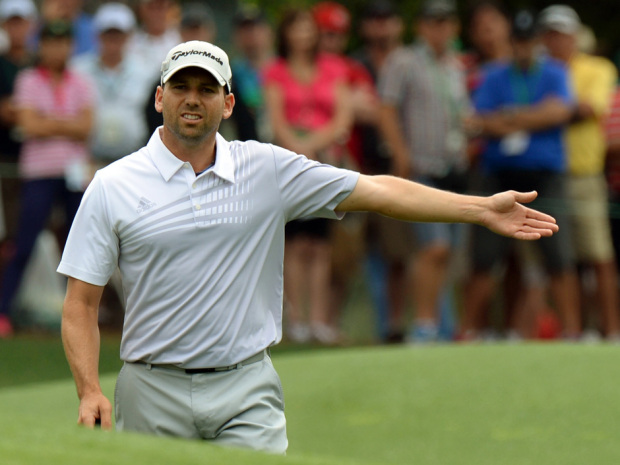
This is the one that my dad struggled with the most to understand. It happens most to elite players, and it is called the “if scenario.” In a tournament practice rounds and casual rounds with him, I would finish and do a review of how I played. It would go something like this:
Dad: “Nice round, son. Your 68 was pretty solid today.”
Me: “Thanks, but if I don’t catch that bad lie on No. 4 and make bogey, and then get that one up and down on the par-5… and make those two 10-foot putts coming in then it is 64!”
Dad: “If ifs and buts were candy and nuts we would all have a Merry Christmas. If, if if.”
Yes, if! Dad didn’t understand that a golfer’s analysis is unreal to the point of creating a separate reality — we were just blink of an eye from three, four, or five shots better. We think we will get all of our shots to go our way, and sometimes they do. And if you only look at the dark side of the game, it will drive you crazy.
Try to look at your bad rounds through a different lens, and expect that things will go your way more often than not. At the very least, believe that the bad breaks will be evened out with good breaks… eventually. You’ll find yourself thinking positively more often, and for that reason you’ll shoot lower scores.
Par is not always par
Here is an example from junior golf. I coach two 9-year-old golfers who are fantastic players. In a recent tournament, both struggled to break 50 for nine holes. Why? Because that tournament setup the course WAY TOO LONG! The juniors could not reach any of the holes in regulation. None of them! So when we discussed the event, we created our own effective par, since the scorecard par of 36 was invalid. What we arrived at was that even par for them was 49. With the new par, both players shot either even par or a couple over. That is much more like how they normally play.
As you look at your course and the tee markers you prefer to play, check and see if you are playing a couple of holes that might make more sense at a different par. Then create your own realistic par and play to that score. You might just find yourself playing those holes better when you remove the stress of trying to make a normal par on a hole that’s too long or especially difficult for you.



This past Monday, I played in the U.S. Amateur local qualifier at Rock Creek Country Club in Portland, Oregon. A full tee sheet from 7:30 a.m. to 1:55 p.m., the top 11 scores would make it to the U.S. Amateur final qualifying.
I teed off at 10:48 a.m.. With the 7:30 am tee time, you can get a feel for the leaders’ pace, and they were off and running on the challenging setup at Rock Creek.
View this post on Instagram
Getting to the highlight of the round on the par five 17th, a drive up the left side and 212 yards left to the front hole location. I took out a 5-iron with plans of middle of the green. The ball ended up 8 feet left of the hole, pin high. A slight downhill putt dropped in for an eagle 3 on the 17th. With the cut line looking to be anywhere from -2 to even par. This was the boost I had been waiting for all day.
With making par from the trees on 18, it was time to wait for a potential playoff with a posted score of one under par 71.
Three hours later, it was playoff time. 8 players for 6 spots. I made par on the playoff hole, which was good enough to advance to the U.S. Amateur final qualifying in July. USGA qualifiers sure deliver on all of the emotions in golf!
Club Junkie
Building my 2026 gamer WITB: Ranking the contenders and new putter projects – Club Junkie Podcast

The annual What’s In The Bag build is underway, and on this episode of Club Junkie, Brian breaks down the clubs currently leading the race for a spot in his 2026 gamer setup. From drivers and fairway woods to irons, wedges, and shafts, he ranks the equipment that’s performing best and explains what’s separating the front runners from the rest of the field.
Brian also heads into the workshop to discuss several putter projects currently on the bench. From head options and shaft choices to build ideas and testing plans, he shares what he’s working on and which putters could become serious contenders for the bag this season.
If you’re a gear junkie who loves equipment testing, club building, and the never-ending pursuit of the perfect setup, this episode is for you.
Follow Club Junkie:
Instagram: @clubjunkiepod
TikTok: @clubjunkiepod
Threads: @clubjunkiepod
X: @ClubJunkiePod
Club Junkie
Tour Edge Exotics mini driver review + TaylorMade Spider ZT Max first look – Club Junkie

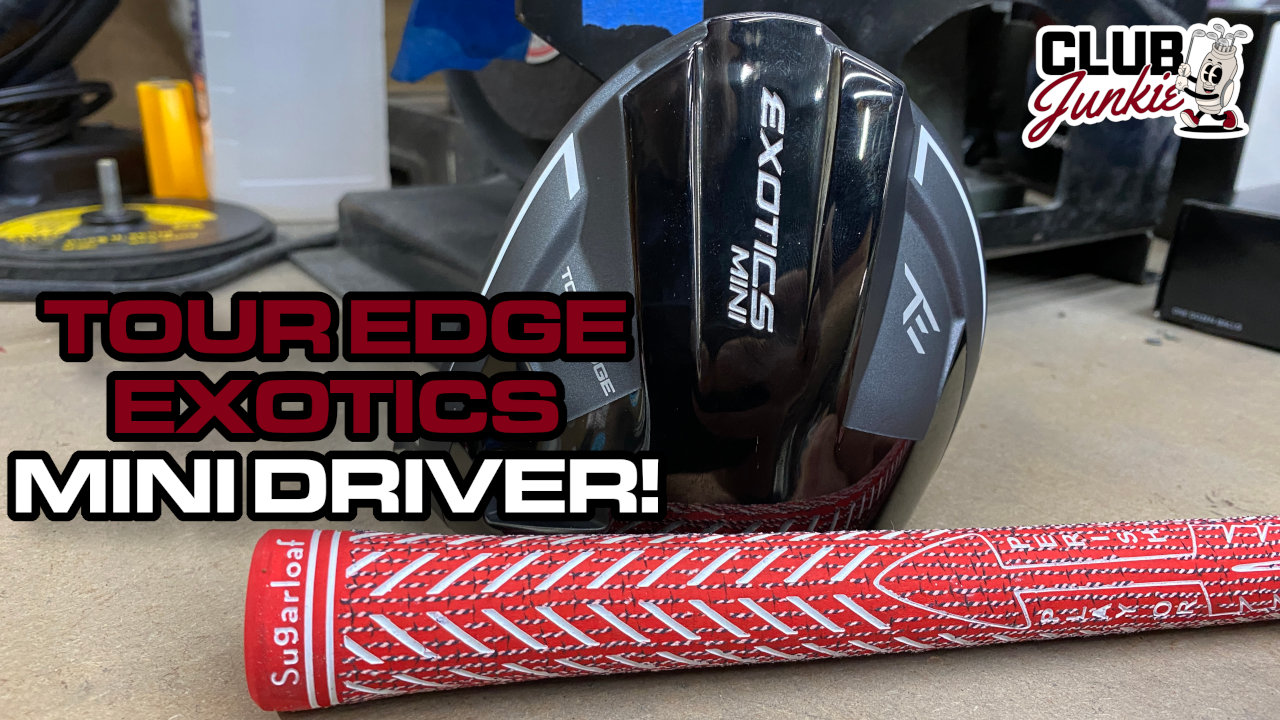
On this episode of Club Junkie, I put the new Tour Edge Exotics Mini Driver to the test and break down the performance, forgiveness, distance, and where it fits compared to a traditional driver or strong fairway wood. If you have been curious about adding a mini driver to the bag, this one is worth a look.
I also dive into the new TaylorMade Spider ZT Max putter that was recently spotted and discuss the growing zero torque putter trend. Plus, there is a closer look at the new Project X Titan Yellow shaft showing up on the PGA Tour and what makes it different from other profiles currently out there.

Justin Rose WITB 2026 (April): Full WITB breakdown with new McLaren irons

What’s the story behind Webb Simpson’s custom-stamped irons?

Cadillac Championship Tour Report: Spieth’s sizable changes, McLaren Golf launches, and more

Memorial Tournament Tour Report: Rory McIlroy, Cameron Young switch up drivers, and more

Russell Henley’s winning WITB: 2026 Charles Schwab Challenge

Kristoffer Reitan’s winning WITB: 2026 Truist Championship

Aaron Rai’s winning WITB: 2026 PGA Championship

Cameron Young’s winning WITB: 2026 Cadillac Championship

Details on Jason Day’s latest prototype Avoda iron setup

Justin Rose on the switch to McLaren Golf, learnings from previous equipment moves


J.T. Poston’s winning WITB: 2026 Memorial Tournament
Driver: Titleist GTS3 (9 degrees) Shaft: Mitsubishi Diamana BF 60 TX 3-wood: Titleist TS2 (15 degrees) Shaft: Graphite Design Tour...


Alex Noren WITB 2026 (June)
Driver: Callaway Paradym Ai Smoke Max D (9 degrees @7, draw setting) Shaft: Graphite Design Tour AD VF 6 X 3-wood: Callaway...


Melanie Green WITB 2026 (June)
Driver: TaylorMade Qi4D (9 degrees) Shaft: Graphite Design Tour AD VF 5 S 3-wood: TaylorMade Qi4D (15 degrees) Shaft: Graphite Design Tour...


Sungjae Im WITB 2026 (June)
Sungjae Im had >14 clubs in his bag when photographed prior to the Memorial Tournament. Driver: Titleist TSi2 (8 degrees, B1...
-
 Equipment3 days ago
Memorial Tournament Tour Report: Rory McIlroy, Cameron Young switch up drivers, and more
-
 News1 week ago
Russell Henley’s winning WITB: 2026 Charles Schwab Challenge
-
 Equipment5 days ago
Details on Jason Day’s latest prototype Avoda iron setup
-
 Tour Photo Galleries3 weeks ago
Photos from the 2026 CJ Cup Byron Nelson
-

 Equipment2 weeks ago
CJ Cup Byron Nelson Tour Report: Koepka and Kim’s newest putters finally get hot
-
 News1 week ago
Charles Schwab Challenge Tour Report: MacIntyre, Åberg and Spaun all switch putters, TaylorMade launches new Spider
-

 Equipment2 weeks ago
Details on J.J. Spaun’s surprise putter switch
-

 Popular Photo Galleries2 weeks ago
Photos from the 2026 Charles Schwab Challenge


mc3jack
Feb 11, 2016 at 3:00 am
Golfers are delusional. Humans are delusional. All the time. When we’re ‘picturing’ that 30 foot downhill, sidehill breaker rolling in the hole, we’re being delusional. It’s 25 to 1 shot, or worse. That’s reality.
Many, many golfers show up at the course delusional. They’re dreaming that ‘today is the day’ they’ll finally play at the level of their delusions…and then reality crushes their delusion and they make themselves mad or sad. It’s dumb. But it’s very human.
Here’s one of my favorite delusions: I’m the World’s Greatest Bogey Golfer. Yes, people line the fairways to watch my exhibitions of flawless bogey golf. I make it look so easy! Know what? WugBug (WGBG) as my legion of fans call me, makes tour-level number of bogey-birdies, and almost never makes a bogey-bogey. He pours on the Tour Sauce thick and rich, and by the end of the day his scorecard isn’t anywhere near 18 over.
Dennis Clark
Feb 10, 2016 at 10:34 pm
i read all your posts on my articles M…
Bob Jones
Feb 10, 2016 at 2:19 pm
I’m a good enough golfer to save my score after a bad shot, and a bad enough golfer to hit bad shots I can’t recover from. I hit good shots that have fabulous outcomes by sheer luck. I hit great shots that don’t turn out well because of bad bounces and the like. At the end of the round, I always get the score I deserved for that day. I have no need to fool myself and live in a false reality. That some touring pros that need to lie to themselves on the course makes me wonder how much that carries over into their personal life.
Obee
Feb 10, 2016 at 10:33 am
Great article. Thank you. As an aging (I’m 48), competitive amateur, anything I can learn about the mental side of the game is helpful. And you’re certainly right about top players “creating their own realities.” I’ve seen it time and time again over the years with top ams — their mental processes are just a bit different than others’….
Brian
Feb 10, 2016 at 10:05 am
Par is never setup for 1 putting. Hence why a par 3 allows for two putts. Par 4s allow for 2 putts. Par 5s allow for 2 putts. What in the world do you mean?
steve
Feb 10, 2016 at 8:32 am
I don’t think they create their own reality. Its a impulse to blame something outside their control at the moment, but in “reality” they know they made a bad read or bad putt. This way of thinking is in all parts of life from sports to business, its never their fault. If you never take ownership of it, you never will learn and grow from it
2Short
Feb 10, 2016 at 4:42 am
Your reality is exactly what you think it is.
Dave
Feb 9, 2016 at 10:11 pm
I understand what your getting at with this article but this is the same logic that 2 handicaps use to brainwash themselves into thinking they can play on tour.
There’s a lot of guys spending 20-30 grand per year playing mini tours and q schools with no hope in hell.
Cez
Feb 9, 2016 at 8:16 pm
Eldrick most certainly created his own reality by ramming ho’s and then ramming his truck into the hydrant and thinking he can appear sorry for doing it all by making a grandiose speech to boast about it on TV.
Rob Strano
Feb 9, 2016 at 8:01 pm
If this comment is directed at the last point of the article I suggest you reread it. The par 5’s were so long these kids could not reach the green with 4 of their best shots back-to-back. So they would hit the green with their 5th or 6th shot and one or two putt. Par was an unattainable number. Kind of like at Torrey Pines last weekend.
steve
Feb 10, 2016 at 8:51 am
who cares what par is? your in a tournament what place you end up in matters. you created a fake reality for the kids, that was a mistake. if you shoot 10 over and win, are you upset because you shoot 10 over on a tough long course. I would have compared their games to where they placed in the tournament, that is what matters nothing else. did you give them a participation trophy?
Scott
Feb 11, 2016 at 10:49 am
Golf is a game of you against the course. All else being equal, when the bounces go your way you can win, and when they don’t you lose. When courses are set up unfairly for the players playing, that is a different story. I help my wife set realistic goal on the course also. Most courses have holes that she can not reach in regulation. She is not fixated on score, but it does make her feel better to “par” a par 4 with a 5.
steve
Feb 11, 2016 at 2:17 pm
I understand what you are saying. But playing in a tournament is different. You compare yourself to the field, not the scorecard. It is hard for me to think of a course being setup unfair if everyone is playing the same course. Will there be bad breaks, like when it is windy and raining in the morning and calm and sunny in the afternoon, yes. But that is not course setup. I rather win ugly then lose pretty. Why would he tell kids to change par and give them a “fake reality”. Why not just look at tournament average score and compare to that?
Dev
Feb 9, 2016 at 4:45 pm
This was seriously one of the best articles I have read on the mental game of serious golf in a long time. It goes well with some tips I read last week about choosing what time of day you are going to have.
I am not a great golfer by any means but things like this can always be helpful to lower scores. I made a decision this year that I want to get good. Most likely not tour good but get down to shooting par or better. Even though deep down I know what I should be thinking its always good to have someone else remind you.
Thanks for a great read.
Rob Strano
Feb 9, 2016 at 7:56 pm
Dev, thanks for your note and comments. Appreciate your decision to want to get good at the game and seeking the information to do it! The mental game is important to improving and you read the article and grasped my points. Many others will read it and still not get it and that puts you ahead of the game. Have a great 2016 working on getting better every day.
Dennis Clark
Feb 9, 2016 at 3:59 pm
It’s always a fine line between positive thinking and denial. And we all walk it. Good job, Rob.
Rob Strano
Feb 9, 2016 at 7:52 pm
Thanks Dennis…You are right, it is a fine line, and those of us who have played the game and posted scores in big tournaments understand where that line is and how to deal with it and improve off of it.
Rob Strano
Feb 9, 2016 at 8:08 pm
Dennis, thanks for the note and the supportive comment. You are right it is a fine line. Those of us that have played and posted scores in big tournaments or coach players that do that easily understand the points of the article and how to walk that line and use it to motivate/improve. Hopefully this will help outsiders get the same insights we know to be true.