
Opinion & Analysis
Bifurcation: Fixing golf’s indigestion

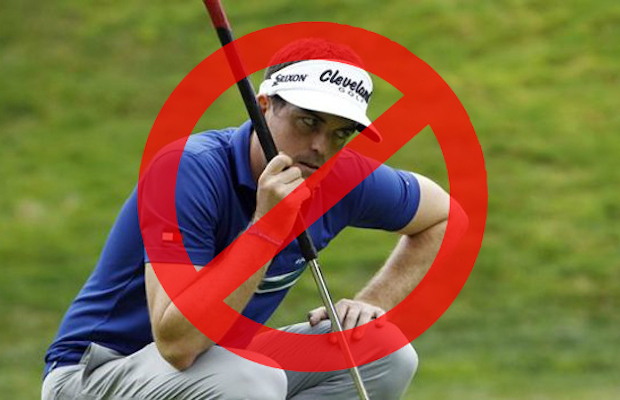
Of the issues that dominated golf’s conversation in 2013—Tiger’s drops, Brandel’s report card’s, Keegan’s belly putter, Sergio’s jokes, and oh, sure, slow play—let me suggest another that will resonate far beyond this season. It speaks directly to the focus of GolfWRX: Bifurcation.
A golfing friend of mine said he didn’t understand Bifurcation. “It sounds like a gastro-intestinal disorder. What are you talking about?”
Bifurcation essentially means: We don’t play the same game as they do. We being recreational golfers, they being very high-level competitors. And since we don’t play the same game we won’t pretend we do. Not in the rules of play, not in the way we set up courses, not in the way we regulate—or don’t—equipment. In short: two games, two sets of rules.
But aren’t we kind of there already? We don’t play the same tees. In fact, we’re encouraged to “Tee it Forward.” We ride carts—pros can’t. We don’t follow the professional “one-ball” rule. And nobody’s standing on the first tee of the local muni measuring our grooves.
Bifurcation means you make this division formal. You declare it. You make it official. Rules of play for amateurs, on the one hand, and pros on the other, are different. And there lies the rub. Though few of us would argue that we play under the same conditions as, say, Rory McIlroy, declaring this formally is like admitting that D-1 college football players really aren’t amateurs; that Britney Spears doesn’t really look like she does on the cover of Elle; that your Chevy is not the one Jeff Gordon drives.
Manufacturers—with a few exceptions– tend to oppose bifurcation because they market their products on the basis of you playing the same game–with the same equipment–as their stars. Buy this driver and hit it like Bubba. Use this wedge and get up and down like Luke. Beyond commercial consideration, they believe—sincerely, I think–that the game loses an important universality when that connection is eroded.
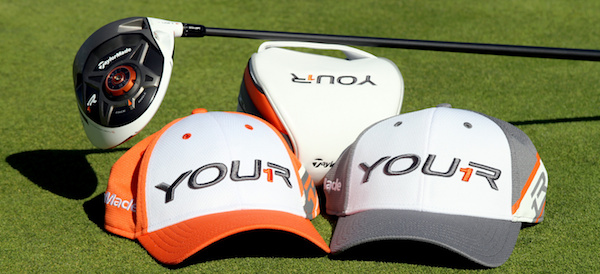
Your R1: TaylorMade’s marketing campaign for its 2013 R1 driver revolved around its use by the company’s tour staff. It was the same driver the pros were using, the ads said, but it could be adjusted to fit any golfer.
Rule-makers tend to oppose bifurcation because to them it represents a slippery slope–and the complicated maintenance of that slope—leading to rules chaos. “Well, if the long putter is okay for you but not the pros, why not a ball that straightens itself out? What about those U grooves. A livelier driver face? Won’t that take all of the challenge out of the game?” OMG!
USGA Executive Director Mike Davis says his organization and the R&A are working on language to simplify the rules. But bifurcation could go well beyond that. It might, for example, lead to what our buddies group called a “Reasonable Man’s Rules of Golf:”
- No out of bounds. Play boundaries as a lateral hazards.
- If the ball moves a little but it makes no difference, so what?
- Tap down a bad spike mark.
- Roll your ball out of a divot.
Any golfer can do this informally, of course, but some important voices are arguing for making it overt. Former PGA Tour Commissioner Deane Beman this fall addressed a pace-of-play meeting at the USGA and made a passionate case for bifurcation of equipment rules.
It was akin to Martin Luther tacking his reforms on the front door of the Vatican.
“Baseball has not been harmed because in the big leagues you cannot use metal bats like in college. And softball, with different rules and field size, has helped millions of girls and women to be interested in baseball,” said Beman. “Is the stance against bifurcation of the rules in golf really protecting the integrity of the game?”
Beman sure doesn’t think so. The upcoming rule against anchored putting, he argued, was a perfect example of reining in the professional game at the expense of amateur play.
“I’d like to see one of my old pals, who can’t eat peas anymore because his hands shake so badly they fall off his fork before he can them to his mouth, keep his anchored putter.”
Conversely, he said, opposing bifurcation also hurts the pro game, because authorities are reluctant to make equipment rules for the best players that would discourage amateurs, the long putter being the exception. Beman would force pros to play with a ball that “spins more and thus curves more, and a driver that if you mishit the ball at 120 mph—would soar off into the unknown.” We could keep our self-correctors.
After his talk he grabbed a reporter in the hall. “Hey, we’re already there,” he said. “We don’t play the same tees!”
Which is where another of the game’s Wise Men, Barney Adams steps in. Adams, who founded Adams Golf and calculated that amateurs play courses that are far longer, relatively speaking, than those the pros play, inspired the Tee it Forward movement. And his “Tour Tees” idea takes that a step further. If you really want to play the way the pros do, says Adams, then set your course up so you’ll hit approach shots like theirs—on average, an 8-iron. In short, for amateurs who hit the ball maybe 220 yards on average say goodbye to 440-yard par 4s on your local public course. Green speeds of 12? Forget about it.
Adams, Beman and many others argue that the game is too hard and too slow and that those two things are related. Play is down not because golf is too expensive, says Adams, but because it’s not fun. He calls it “product rejection.” “It’s like a bad movie,” Adams says. “People don’t go.”
Will allowing amateurs to play by different rules (with different equipment) than pros make a dent in this problem? Maybe not. But Beman and others say we have to try. Industry initiatives to boost play have produced at best modest results. Retirees are playing less frequently than previous generations and Millennials—those sought-after 18-35 year olds—aren’t playing as much as their age group once did.
Golf has a big problem, even if some of us nut cases don’t always feel it.
In such circumstances one tends to listen to one’s elders.


Club Junkie
Tour Edge Exotics mini driver review + TaylorMade Spider ZT Max first look – Club Junkie

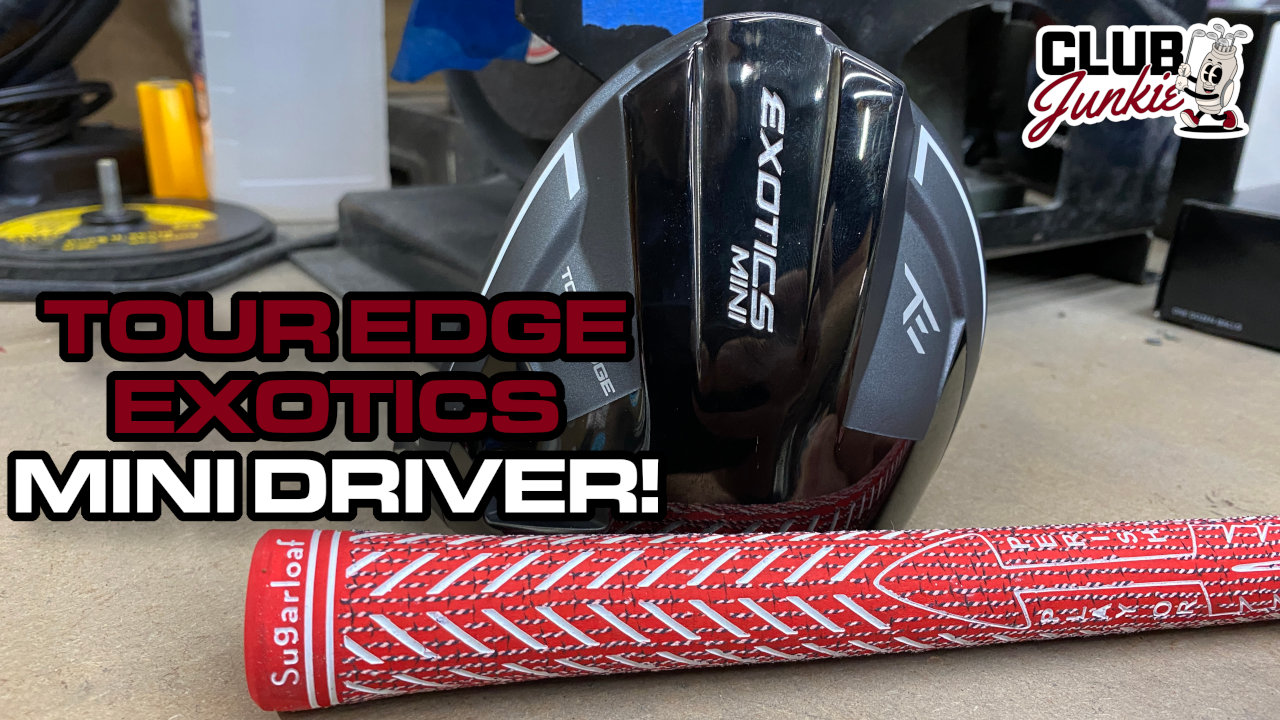
On this episode of Club Junkie, I put the new Tour Edge Exotics Mini Driver to the test and break down the performance, forgiveness, distance, and where it fits compared to a traditional driver or strong fairway wood. If you have been curious about adding a mini driver to the bag, this one is worth a look.
I also dive into the new TaylorMade Spider ZT Max putter that was recently spotted and discuss the growing zero torque putter trend. Plus, there is a closer look at the new Project X Titan Yellow shaft showing up on the PGA Tour and what makes it different from other profiles currently out there.
Opinion & Analysis
AVL: We’re talking about practice! My best tips for taking your game to the course

With the beginning of June on the horizon and courses rounding into peak condition for the season, it’s time to hone the finer skills that often get rusty over the winter. More sunlight also means more time to get out on the course and work on your game.
Whether it’s the practice green or the driving range, there’s always something to improve—whether you’re enjoying the fresh air or preparing for a weekend game or tournament. You can work on drills or freestyle around the green, and friendly competition is a great way to sharpen your skills.
While there are endless ways to get better at golf, I’m going to focus on practicing around the green. Let’s take a look at a few things to keep in mind as we head into the summer months.
Drills
From the driving range to the practice green, it’s important to incorporate drills into your routine. Years ago, I spent a weekend working on my short game with James Sieckmann. He recommended doing drill work for 5–10 minutes, then returning to your main practice.
This way, you create a balance between structured drills and real-world scenarios, so you’re not confined to “perfect” situations. For example, hitting the same three-foot putt over and over is good for repetition, but after a while, it becomes less interactive for your brain.
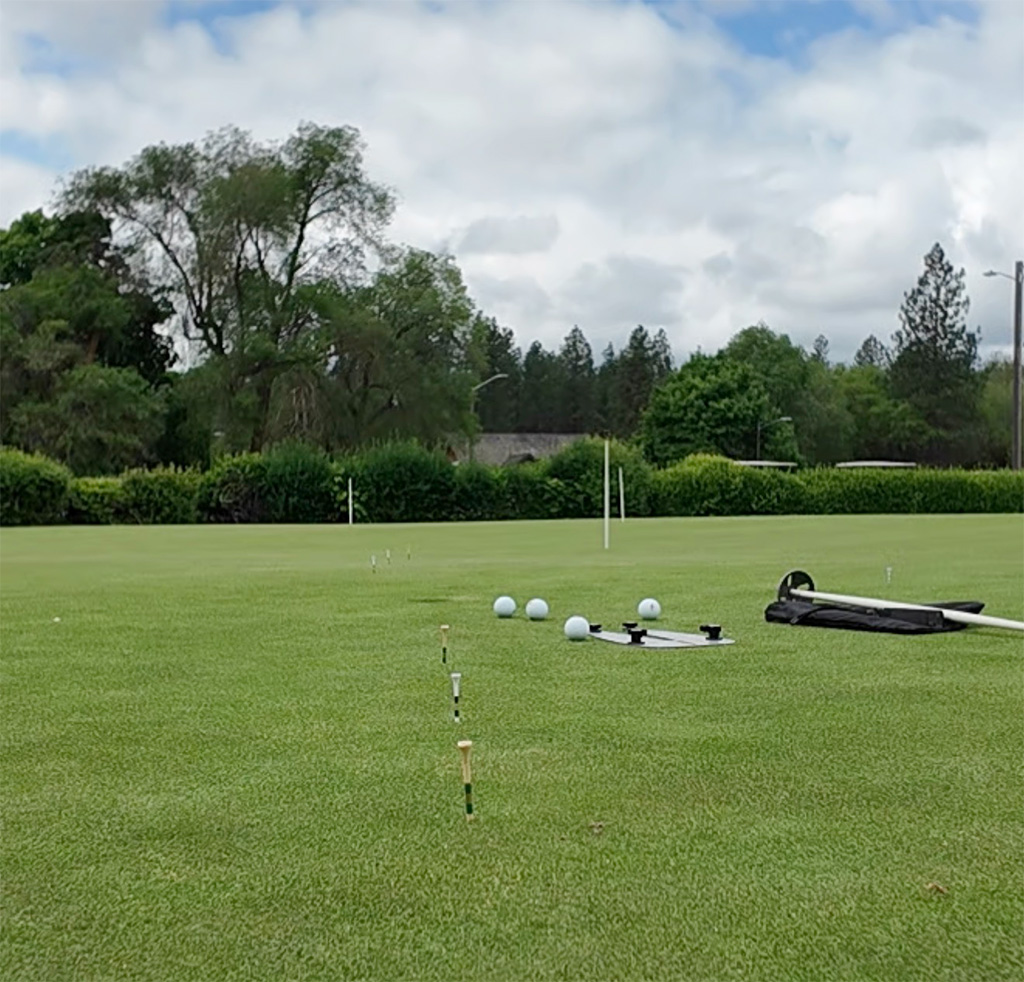
My approach is to use a putting trainer with a narrow gate for the ball to pass through, or simply place tees just outside the width of the ball. I’ll hit a series of four putts through the gate for three sets. Then, from a similar distance, I’ll hit four putts without the training aid and repeat that sequence three times.
Next, I’ll hit a number of 15–25 foot putts in a random fashion, then circle back to repeat the short putt drills with and without the training aid.
This breaks up the rhythm of hitting short putts with the training aid. When you hit the same short putts over and over, it’s easy to get into a groove—which is great for the drill, but not reflective of actual course play. While finding a rhythm is fundamental for drills, I like to introduce variation with longer putts to keep things realistic.
Game Mode
Once you’ve established a foundation with drills, it’s time to simulate on-course scenarios. This is where a few practice games come in handy.
One that I’ve been enjoying lately involves putting 10- to 15-footers with two balls. If I make the putt, great! If I miss, I pull the missed ball back a putter length. Suddenly, that little tap-in becomes a nerve-wracking three-footer—at least at first. As you get better at this game, those three- and five-footers become much more comfortable and routine.
It may sound cliché, but each shot is just what it is—it’s how we react that makes the difference. I like this game because it blends the pressure of on-course putting with the consequence of leaving yourself a much longer putt than usual.
Another game I like is one I recently learned from Brad Faxon. Place three tees in a line at four different locations around the hole: one at 3 feet, one at 6 feet, and one at 8 feet. The 3- and 6-foot putts count as par, and the 8-footer is for birdie.
This game keeps you focused on scoring and helps you get into a competitive mindset. You can even think about this putting game while you’re on the course. I just started playing it, and last week I couldn’t get better than two under par.
Competition
Competition during practice is when drills and games come to life, and you start to see results. For me, nothing beats a putting contest with a friend or two. In the right setting, these contests can become talking points for the whole season.
Match play, a game of 21, or simply seeing who can make the most one-putts (with a small prize on the line) are all great ways to simulate real on-course pressure. Recently, I played in a putting contest where one competitor made back-to-back 30- and 50-foot putts. As they say, expect your opponent to make every putt—and he nearly did. That’s impressive, and it’s something you see on the course, too: you have to stay committed to your game plan, no matter what.
When it comes to practice, it’s important to blend feedback from recent rounds with the fundamentals you want to reinforce. Drills, games, and competition—from the driving range to the putting green—form the backbone of skills you’ll rely on during actual rounds.
Finding the right balance is something we’re all working on, one practice session at a time. With the beginning of June on the horizon and courses rounding into peak condition for the season, it’s time to hone the finer skills that often get rusty over the winter. More sunlight also means more time to get out on the course and work on your game. Whether it’s the practice green or the driving range, there’s always something to improve—whether you’re enjoying the fresh air or preparing for a weekend game or tournament. You can work on drills or freestyle around the green, and friendly competition is a great way to sharpen your skills. While there are endless ways to get better at golf, I’m going to focus on practicing around the green. Let’s take a look at a few things to keep in mind as we head into the summer months.
Drills
From the driving range to the practice green, it’s important to incorporate drills into your routine. Years ago, I spent a weekend working on my short game with James Sieckmann. He recommended doing drill work for 5–10 minutes, then returning to your main practice. This way, you create a balance between structured drills and real-world scenarios, so you’re not confined to “perfect” situations. For example, hitting the same three-foot putt over and over is good for repetition, but after a while, it becomes less interactive for your brain.
My approach is to use a putting trainer with a narrow gate for the ball to pass through, or simply place tees just outside the width of the ball. I’ll hit a series of four putts through the gate for three sets. Then, from a similar distance, I’ll hit four putts without the training aid and repeat that sequence three times. Next, I’ll hit a number of 15–25 foot putts in a random fashion, then circle back to repeat the short putt drills with and without the training aid.
This breaks up the rhythm of hitting short putts with the training aid. When you hit the same short putts over and over, it’s easy to get into a groove—which is great for the drill, but not reflective of actual course play. While finding a rhythm is fundamental for drills, I like to introduce variation with longer putts to keep things realistic.
Game Mode
Once you’ve established a foundation with drills, it’s time to simulate on-course scenarios. This is where a few practice games come in handy. One that I’ve been enjoying lately involves putting 10- to 15-footers with two balls. If I make the putt, great! If I miss, I pull the missed ball back a putter length.
Suddenly, that little tap-in becomes a nerve-wracking three-footer—at least at first. As you get better at this game, those three- and five-footers become much more comfortable and routine. It may sound cliché, but each shot is just what it is—it’s how we react that makes the difference. I like this game because it blends the pressure of on-course putting with the consequence of leaving yourself a much longer putt than usual.
Another game I like is one I recently learned from Brad Faxon. Place three tees in a line at four different locations around the hole: one at 3 feet, one at 6 feet, and one at 8 feet. The 3- and 6-foot putts count as par, and the 8-footer is for birdie.
This game keeps you focused on scoring and helps you get into a competitive mindset. You can even think about this putting game while you’re on the course. I just started playing it, and last week I couldn’t get better than two under par.
Competition
Competition during practice is when drills and games come to life, and you start to see results. For me, nothing beats a putting contest with a friend or two. In the right setting, these contests can become talking points for the whole season. Match play, a game of 21, or simply seeing who can make the most one-putts (with a small prize on the line) are all great ways to simulate real on-course pressure. Recently, I played in a putting contest where one competitor made back-to-back 30- and 50-foot putts. As they say, expect your opponent to make every putt—and he nearly did. That’s impressive, and it’s something you see on the course, too: you have to stay committed to your game plan, no matter what.
When it comes to practice, it’s important to blend feedback from recent rounds with the fundamentals you want to reinforce. Drills, games, and competition—from the driving range to the putting green—form the backbone of skills you’ll rely on during actual rounds. Finding the right balance is something we’re all working on, one practice session at a time.


For Korean golfers, we always look forward to the last of the kkot-saem-chu-I for the true start of a new golf season. The term refers to a cold snap, but literally translates as “winter being jealous of the flowers beginning to bloom, thus lashing out one final time before surrendering to spring”.
A rather poetic mouthful packed into a short expression.
Koreans can be like that. Understated, yet oddly expressive at the same time. And nowhere is this more true on the golf course and in our golf bags. In fact, I suspect many Korean golfers look forward to new apparel and accessory drops more than they do actual equipment launches each year.

At this point, Korean golf fashion may exist on its own timeline. (courtesy of @seonbi_golfer)
There is ample evidence to support that suspicion. Korea is the world’s third-largest golf market behind the United States and Japan, yet its appetite for golf apparel exceeds that of both countries combined. Recent estimates suggest that Korea accounts for nearly 40 percent of the global golf apparel market, placing it among the world’s most influential golf fashion markets and punching well above its size.
Simply, we care deeply about how new golf clubs look and feel, but enjoy looking good while swinging them even more.
Golfers in the West may laugh and say that golf is played on a course, not a fashion runway. Perhaps. But what’s the harm in trying to look and feel good, if the added self-confidence can help actual performance? It certainly seems to have worked for Jason Day, who may have unlocked a new stats category: dormant strokes gained. Coincidence?

During the COVID-era, estimates placed the market near $9 billion, an astonishing figure for a single country.
As a proud member of Gen X, I’ve witnessed the highs and lows of golf fashion firsthand. The pleated trousers and wing-tipped shoes of Jack Nicklaus, the stylish plus-fours and knickers of Payne Stewart, the baggy black trousers and fitted mock-necks of Tiger Woods, and the thigh-hugging athletic tailoring of Rory McIlroy. Golf fashion, like the golf swing itself, has rarely stood still.
But nowhere have those trends shifted, evolved, and been scrutinized quite as relentlessly as in Korea. Here, golf fashion moves faster than fairway gossip, and consumers dissect brands with a level of discernment that can be both impressive and mildly terrifying. New brands are studied, judged, embraced, or dismissed with startling efficiency.
The result is a consumer base with one of the sharpest eyes for quality and authenticity anywhere in the world. It is difficult to quantify, but easy to recognize. Clean lines without trying too hard. Luxury mixed with utility. Trend awareness balanced by restraint and purpose.
It’s golf fashion shaped by one of the world’s most style-literate cities, something I like to call Seoul Sensibilities, referring to the taste level forged by a uniquely competitive environment.
And increasingly, global brands have noticed.

Many golf brands in Korea have their own flagship shops dedicated to apparel only
Titleist understood this years ago, when its apparel business in Korea took on a life of its own under new ownership and local direction. What had once been a straightforward extension of an iconic equipment giant became something sharper and more premium. By going all in on the serious Tour-player look (I couldn’t even fit into their XL sizes), Titleist struck the right chord with Korean consumers and helped its fledgling apparel business break into the mainstream. Titleist became a household name even for non-golfers who wore its caps, shirts, and windbreakers in daily life. In many ways, it proved that even heritage golf brands could carry real fashion credibility when viewed through a Korean lens.
Several years later, PXG took a page out of Titleist’s playbook and followed suit. Korean consumers helped transform the brand from one known largely for irons and loud commercials into something broader and more stylish. PXG apparel’s growth in Korea was explosive, where it found an early audience and turned the category into something more than mere logo merchandise. It is still hard to walk anywhere in Seoul without seeing its palindrome logo.
Malbon’s meteoric rise in the United States was genuine, but its ascent into a global golf lifestyle brand owes much to Korea, where it was elevated by a market already fluent in modern golf style. Korea did not simply embrace Malbon. It pressure-tested the concept, refined its appeal, and helped push it into the global spotlight.
As such, new brands may arrive from abroad, but more often than not, their sharpest evolution happens here. If a brand can earn credibility in Seoul, it’s deemed to have passed one of the toughest style audits in the game.
That is why the next meaningful chapter may not come from outside, but from a Korean brand moving in the opposite direction, carrying those Seoul Sensibilities outward as K-pop once did.

Play young Stay dope.
From Seoul, With Intent
Khalhon is a label that feels less like a trend-chasing newcomer and more like the product of a market that has already seen everything. Golfers here have long been surrounded by luxury logos, technical fabrics, and tour uniforms disguised as lifestyle wear and vice-versa. In other words, novelty alone rarely lasts here, and the Koreans seems to understand that instinctively.
Its style language leans into clean silhouettes, relaxed but tailored proportions, muted palettes, and premium materials that speak quietly but confidently. There is a modern city aesthetic running through it all, with strong layering pieces, thoughtful textures, and subtle branding that suggests sophistication rather than demanding attention.

“Built for the course. Designed beyond it.”
Most importantly, the garments seem designed to blur the line between golfwear and everyday style. Shirts, trousers, knitwear, and outer layers move comfortably between a game of screen golf, a lunch reservation, an airport gate, or an afternoon coffee in Gangnam with friends.
It raises the question of whether this is golfwear that happens to look good off the course, or everyday clothing that performs beautifully on the fairways.
Personally, I have long appreciated Nike Golf for its clean, athletic modernization of golf attire. It also has the useful side effect of making me look like a more serious golfer than I probably am. But off the course, there are times when being instantly identified as the golf guy in a crowd of non-golfers can feel a touch self-conscious.

“Built for the course. Designed beyond it.”
That is part of what drew me to Khalhon, which seemed to blend golf and everyday wear naturally. While some of the outfits may be slightly beyond my personal confidence level, the brand also offers tasteful options for older guys like me who still want to express a little personality without regretting the decision later.
These are not simply flashy outfits worn on the course and then banished to the closet until the next tee time. They work surprisingly well off the course too, and I suspect many of the pieces will still look right a couple of years from now, which would certainly be kinder to my wallet than most golf fashion trends tend to be.
And perhaps that broader lifestyle positioning also helps explain why someone like Sean Wotherspoon would find Khalhon creatively interesting in the first place.

“Built for the course. Designed beyond it.”
“Korea is not only one of the most fashion-forward golf markets in the world, but one of the most fashion-forward markets globally. Korea is ahead, and I love to watch and try to catch up.” – Sean Wotherspoon, Creative Director at Khalhon
Seoul and Beyond
If Khalhon’s rise says something about where Korean golf fashion is today, its relationship with Sean Wotherspoon says even more about where it is heading.
For readers less familiar with Sean Wotherspoon, his arrival at Khalhon is not some routine celebrity endorsement or influencer collaboration. In design and streetwear circles, Wotherspoon is regarded as one of the more influential creative voices of his generation, particularly when it comes to blending nostalgia, storytelling, and contemporary culture into products that people can connect with.
He first gained widespread attention through his now-famous Nike sneaker collaborations, where his vintage-inspired designs and instinct for color helped turn him into one of the defining artists of the late-2010s sneaker era. His work gradually expanded beyond footwear into apparel, automotive collaborations, collectibles, and broader lifestyle design.
Modern golf style now extends well beyond the fairways, where performance and functionality are largely expected by default. And while plenty of brands already make technically competent golfwear, Khalhon seems more focused on designing clothes people would genuinely want to wear even after the round ends.
And when guys at Wotherspoon’s level show genuine interest in working with a Korean golf brand as its new Creative Director, fashion circles tend to sit up and pay attention. There’s already a huge buzz among the fashion-conscious here about upcoming collabs with iconic sports stars and brands.

“My creative direction for Khalhon is disruptive, colorful, nostalgic, and modern. My goal is to blend these avenues seamlessly within each collection.” – Sean Wotherspoon
In chatting with Sean, what stood out most to me was how genuinely energized he sounded about the project itself. Despite having already worked across and countless other creative spaces, he described golf as a completely fresh category for him, saying that Khalhon “will be an amazing vehicle for my design work.”
At the same time, his enthusiasm seemed tied just as much to Korea itself. He spoke openly about admiring Korea’s fashion culture while repeatedly insisting he is still a terrible golfer.
There was something oddly refreshing about that humility. Rather than sounding like a celebrity parachuting into golf simply because the category suddenly became fashionable, Sean sounded genuinely curious about what Korea might do with the category next.
And perhaps that is what makes Khalhon feel interesting right now. The brand feels less like a trend-chaser and more like the natural result of a market now confident enough to export its own point of view.
For years, global brands came to Korea to sharpen their image against one of the most discerning audiences anywhere. Now, a Korean label appears ready to send those Seoul Sensibilities outward instead.
Which brings us back to kkot-saem-chu-i.
That final cold snap before spring always arrives with a reminder that seasons are changing, whether we notice it immediately or not. Golf fashion feels a little like that right now as well, as the old boundaries between sport, streetwear, luxury, and everyday style continue to soften.
And somewhere in Seoul, a Korean golf label already seems prepared for whatever season comes next. I just hope they have everything in my size.

Justin Rose WITB 2026 (April): Full WITB breakdown with new McLaren irons

What’s the story behind Webb Simpson’s custom-stamped irons?

Cadillac Championship Tour Report: Spieth’s sizable changes, McLaren Golf launches, and more

Kristoffer Reitan’s winning WITB: 2026 Truist Championship

Russell Henley’s winning WITB: 2026 Charles Schwab Challenge

Cameron Young’s winning WITB: 2026 Cadillac Championship

Aaron Rai’s winning WITB: 2026 PGA Championship

Nelly Korda WITB 2026 (April)

Justin Rose on the switch to McLaren Golf, learnings from previous equipment moves

Photos from the 2026 CJ Cup Byron Nelson
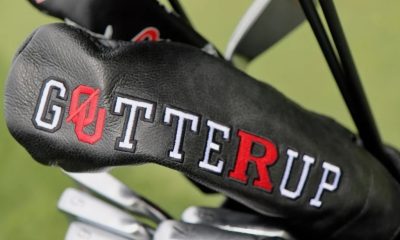

Chris Gotterup WITB 2026 (June)
Chris Gotterup had >14 clubs in his bag when photographed prior to the Memorial Tournament. Drivers: TaylorMade Qi4D (8 degrees), Ping...


Jason Day WITB 2026 (June)
Jason Day had >14 clubs in his bag when photographed prior to the Memorial Tournament. Driver: Ping G430 LST (10.5 degrees...

Nastasia Nadaud WITB 2026 (June)
Driver: Titleist TSR4 (9 Degrees) Shaft: Project X EvenFlow Riptide CB 6.0 S 3-wood: Titleist GTS2 (15 degrees) Shaft: Graphite Design Tour AD DI...


Keith Mitchell WITB 2026 (June)
Driver: TaylorMade Qi4D LS Shaft: Project X Titan Yellow 6 X 3-wood: TaylorMade Qi10 (16.5 degrees) Shaft: Mitsubishi Tensei 1K Blue 90...
-
 News3 days ago
Russell Henley’s winning WITB: 2026 Charles Schwab Challenge
-
 Whats in the Bag2 weeks ago
Aaron Rai’s winning WITB: 2026 PGA Championship
-
 Tour Photo Galleries2 weeks ago
Photos from the 2026 CJ Cup Byron Nelson
-
Equipment12 hours ago
Details on Jason Day’s latest prototype Avoda iron setup
-

 Equipment2 weeks ago
CJ Cup Byron Nelson Tour Report: Koepka and Kim’s newest putters finally get hot
-
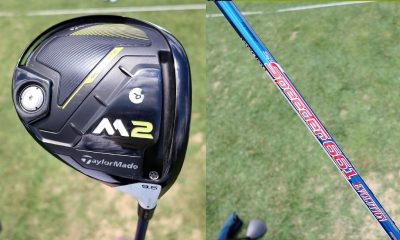
 News6 days ago
Charles Schwab Challenge Tour Report: MacIntyre, Åberg and Spaun all switch putters, TaylorMade launches new Spider
-
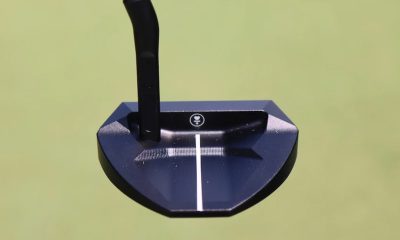
 Equipment1 week ago
Details on J.J. Spaun’s surprise putter switch
-
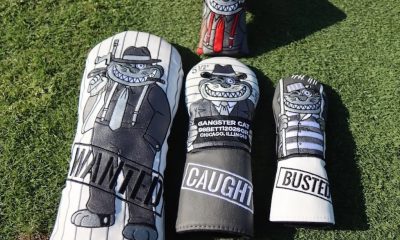
 Popular Photo Galleries1 week ago
Photos from the 2026 Charles Schwab Challenge


HackerDav31
Dec 30, 2013 at 12:05 pm
Bifurcation can only help the game in a much needed way. Rounds played, and I read the reports quarterly, are consistently down. Look at pop-warner football, little league baseball, tee ball, etc. If we want to grow the game it has to start at the amateur level, specifically with kids. Make something so hard and frustrating for a kid and they’ll instantly give it up. That’s a fact! I’m not clear as to why golf is “purifying” its way into obsolescence. We wouldn’t expect 10 year olds to play on regulation NBA 10′ rims, the same way we don’t expect college – as in near pro athletes – to adhere to the same rules of MLB or the NFL. Why is golf so damn insistent on making the game so hard for would-be lovers of the game?
Frankly, without bifurcation golf will continue to die a slow death. I’m not saying bifurcation is THE magic bullet, but its one of many steps the governing bodies need to address and quickly unless they want to see golf go the way of Jai-Alai!
Mark
Jan 2, 2014 at 10:04 pm
The view from Oz. In Australia, we have not introduced the ‘slope system’ which I understand is popular and works well in USA. On a typical golf course there are Social tees up front (social groups, green fee players) ladies tees, Men’s tees (typically measuring the course at the 5900 metre/6400 yards area, and then the Championship tees – 5900-6000 metre plus. Only the above average golfer, say 15 and below, can play the course anything like intended from the Championship tees (and of course the young guns eat it up at that length) Older golfers and lesser players, say 25 handicap and above, need to play out of their socks to get 36 stableford points – forget any achievement in a stroke event, they can’t compete. There is a ‘championship’ course in Sydney that plays via the slope system – designed by ex-tour player Graham Marsh, which is tough – but slope-system inspired tees, staged at areas suitable to handicaps make it navigable for golfers of all standards and an absolute delight to play. ie: 25 marker plays off silver tee, set 30 metres forward of the gold tees that the 15 marker plays from, and so on. The fairway bunkers are in play for everyone, the par threes are reachable for everyone, etc. The game is struggling here as well – membership down, clubs closing, fewer youngsters taking up the game etc. Australian golf also needs to take action to make it more enjoyable for all players – present and future….this needs to be fixed, at grass roots level, before any adjustment to equipment or rules or courses that the pro’s play and entertain.
Mark F
Jan 3, 2014 at 6:08 pm
It sounds like course setup is making the game less enjoyable for you. Maybe get some golfing friends together and forget about the handicap and stableford points and have a hit. Play whatever tee’s you want too. If you want to play for something – put some money in the pot and make your own game up…just a suggestion. It will also save you the “comp” fee…
Mark F
Dec 29, 2013 at 5:21 pm
Just curious, do most of you play competition rounds with the club you’re at or play social golf? Grew up in the states – been playing for 40 years…where I’m at now, nobody plays social only competitions. They run about 5 days a week. I don’t play anymore. I use to love playing social golf – if all of us hit a bad first ball, we just hit another ball. Relaxed rules – it was fun.
GolferX
Dec 26, 2013 at 3:39 pm
Disagree with bifurcation? Then don’t ever buy from the cart-girl.
tim
Dec 18, 2013 at 8:20 pm
That picture of Keegan annoys me.
Regis
Dec 18, 2013 at 2:18 pm
Everyone seems to have their own Ox to gore. I’m 62 been playing for 50 years. Do my own club work .Health issues require me to use a cart and limits my tee shots to 185 yards. Played for 30 years at a private club. I now play fairly difficult public courses to a 15 hcp. Last week played with a good young player who could bomb it. We played in 2 1/2 hours. Round before-course was backed up- 4 1/2 hours. BiFurcation will not grow the game. Nor will it make it more enjoyable for real golfers. Playing conforming equipment with moderate adherence to the rules establishes a benchmark to allow us to know how we really played. Want to lower scores-Give yourself putts-don’t count muffed shots. Enough already play this way.
RG
Dec 22, 2013 at 12:42 am
Regis you make my point. when you say we don’t need to bifurcate and then you say”Give yourself putts-don’t count muffed shots” you are absolutely conflicting yourself, as do the “Rules of Golf.” This needs to stop.
aaron
Dec 17, 2013 at 4:38 am
they buy these clubs with the claims of yardage gains, and when these new players that have only been playing a few years cannot hit these clubs that claim magic without practice, they get discouraged and quit or spend all their expendable income on equipment and nothing left over too play. As i stated before, you wanted 40 yards, either practice and learn how to make a move on the ball, and if you cant practice, TEE IT FORWARD and get your 40 yards that way. Many people dont realize that a majority of the tour players are actually using Versions 2 and 3 of the retail club that are 390 ccs , 400 ccs, 420 and 440 ccs. actually smaller heads, so that they can achieve accuracy . Bigger ccs will only give these weekend hacks longer distance to travel walking into the woods too look for their balls. All this is coming about because equipment is maxed and CEO needs to show profits. all you have to do is look how many releases are coming out , when they used to come out once every 2 years. They killed the pro shops for the golf professionals and now they are going to kill any retail. Retail companies cannot make profits on these clubs when a new one is coming out every six months. Their is too much price drop on “older” six month models when they new ones release. SAVE YOU MONEY AND TEE IF FORWARD< WAYYY FORWARD, if you need distance and enjoyment from the game. Otherwise dig it out in the dirt if you have the time and get your enjoyment that way
aaron
Dec 17, 2013 at 4:25 am
I think that most of you may be missing the big picture here. Taylormades CEO is the one making the push for bifurcation, so that they can manufacture non conforming clubs for the average weekend player. Its purely because they have run out of technology, the equipment is maxed out, and he is pushing the usga to bifurcation. If this happens they can continue to make their claims on distance. Where as most of you have said to play it forward, you are correct. Instead of spending money on 400 dollar new released clubs every six months with claims of more distance, instead just tee it forward and there is your 40 yards if you need 40 more yards to play golf and enjoy the game. Simple, save 400 dollars, and use it to PLAY the game and put the money into the golf ecosystem and we will all be much better for it. These companies are sucking every playing dollar these hacks have with their false claims. You want 40 yards with your driver, tee it up, simple as that. Shorter approach shots, shorter clubs being hit = more fun. As others have stated, the accuracy of the game is how you enjoy it. Not the length.
gticlay
Dec 16, 2013 at 12:53 pm
Bifurcation is a terrible idea. So are we going to let amateurs use different clubs in The Open and at The Masters? The PGA? No? Then you don’t believe in bifurcation for amateurs and don’t pretend you do.
David Sefton
Dec 17, 2013 at 3:38 am
We get bifurcation by results. We score higher. No need to dumb down the game.
wayne defrancesco
Dec 15, 2013 at 7:48 pm
The main reason for having rules is to establish the conditions of play for competition. The Tour is not the only place golfers compete seriously. Amateurs and juniors travel all over the world to compete. Public and private clubs all hold tournaments almost every week, some gross, some net. Everyone who competes likes to win (even if they say they don’t care) and they all demand a level playing field. There is no way to establish fair handicaps (a debatable concept in any case) without a consistent set of rules. And there is no way to hold a fair competition unless all players abide by the rules of golf. Golf is a self policing game, run mostly on the honor system, and there must be a clear set of rules to follow. The Rules of Golf have been in place forever and are constantly being tweaked, but to have 3 sets of rules would make the club professional’s job (the people who run all the events you play in) impossible.
FG
Dec 15, 2013 at 8:01 pm
You’re not a very nice person to pretend to be Wayne D. That proves everybody’s point exactly about how too many golfers have no respect for the game.
RG
Dec 22, 2013 at 12:56 am
Wayne this is the problem, what does a handicap mean? Its really only an estimate at best. Also this is the problem, why must it always be about competition? The vast majority of golfers cannot break 90 and are just tryin to hit good shots or play descent holes. Why must we hold them to the same standard as professionals and moreover why must they have all that stress. You know as well as I that PAR, BIRDY, BOGEY are illusions, you hit the ball and count them at the end. If you establish a mode for a recreational player( and that’s what it really is, a mode) then you allow that player to have liberty and not feel diminished.
melrosegod
Dec 14, 2013 at 4:10 pm
It’s all about attitude, I like to shoot better than the guys in my group but I like to think I am playing against the course. Without honesty and integrity to the rules we are slapping course design in the face.
nik d
Dec 13, 2013 at 9:52 pm
so, junior varsity hockey players play on a sheet of ice that is the same size as the Stanley cup champions, same sticks, same skates? junior varsity football plays on a field 120 yards long and 50 yards wide, (maybe a lighter ball) why shouldn’t the pros play the same rules? albeit, keeping both feet in bounds when making a reception and a few other small (nfl) rules. im all over the place with this lol I play courses that are well over 7,000 yards and play the tips, I like the challenge! but just because they are there, doesn’t mean you have to play them! all and all, rules of golf and equipment rules have been changing all the time, how about the 2010 groove rule on clubs with lofts over 24 degrees? did I make any sense at all, or was I just rambling?
James
Dec 14, 2013 at 11:49 pm
You started talking about some of the differences that are oin almost every sport. Youth hockey has no checking, College basketball has a different 3 point line and 5 fouls not 6, College football only one foot in for a catch, College baseball aluminum bats…… Not saying I like 2 sets of rules but I think for non tournament play raking a bunker when your ball rolls in the the footprint of the jerk that didn’t rake it before you and rolling out of a divot when you hit the middle of the fairway are things I can get behind. Not into making the game easier per say but when the pros play the courses are in the best shape they can be. We don’t always get that option.
RG
Dec 13, 2013 at 6:01 pm
Any intelligent conversation about bifurcation should not be about A and B. It is about A,B and C. “Recreational” “Competitive Amateur” and “Professional.”
GolferX
Dec 26, 2013 at 3:21 pm
What about D: “Hacker Deluxe”?
RG
Dec 13, 2013 at 5:58 pm
You’ve got it. What people fail to recognize is the pressure and stigma that is put on the guy who is learning the game and wants to respect the game and follows the letter od the law and how much stress this puts him under.”0h where do I drop this? Am I in bounds? I gotta hit it outta this divot?” All of these stressers take away from recreation and joy. Yet no man wants to admit that he can’t play by the strict rules of the game.
Stop it already, In the Rules Of Golf there are exceptions which already exist. Just say,” These are the “Recreational Rules” these are the rules that govern “Amateur Competitive Play” and these are the rules that govern “Professional Play” and be done with it. Three ruling systems, three handicap systems. Let the player chose his league.
And my first offering is that players in the recreational league should be able to play with all the clubs they want, roll it in the fairway and play everything as a hazard. That would speed things up.
DK
Dec 13, 2013 at 5:30 pm
Isn’t what we’re really talking about the availability and legality of certain clubs? Many players currently play under a loose rule structure anyway. For the most part USGA/R&A legislation limits club specs, should the rules change for the average player (and I think they should), we might see the game get a little easier and more fun. No matter how far club tech goes, practice and skill will always be important…
I vote we turn manufacturers loose and see what they can come up with for the recreational player!
Oh yeah, thumbs up for Beman’s comment on increasing golf ball spin for the pros, that’s the real fix.
AJ Jensen
Dec 13, 2013 at 2:40 pm
The rules absolutely should be bifurcated, and here’s why.
When amateur players get together, they often agree on rule modifications. This is true of almost every round I’ve ever played, and sticklers are usually regarded as jerks by the rest of the group. We all know the official rules but nobody wants to win because of a technicality.
The official rules are bloated. If I’m playing against someone whose ball lands on a cart path, I’m not going to thumb through the rulebook to see if the path is technically manmade, and if so what rules govern a free drop. I just tell the guy to drop and we keep playing.
An official set of less-stringent rules gives players on the first tee an option: guys, do you want to play this round under pro rules or under amateur rules? OK then, let’s tee off. And from there, a set of rules exists to cover every contingency therein for the following round.
nik d
Dec 13, 2013 at 9:56 pm
aj, I like that. its like making your own course rules. if it is not a sanctioned round, who cares. but if it is the club championship or city tournament, I wouldnt let your opponent get too many free strokes though.
Evan
Dec 15, 2013 at 2:00 pm
I think you make some valid points AJ. Golf has a problem because as it tries to grow the game, the game continues to be very complicated and difficult for beginners… intimidating is how most describe it. So should there be an official set of casual rules? Probably, it could be a common set of rules yet make golf more approachable to people who have not played before.
Bob Jones
Dec 13, 2013 at 11:47 am
The newest bifurcation issue, and the only one I know of, is dialing back the ball. I can’t figure out why because the pros are making venerable courses obsolete that we have to reduce the length of our drives from 225 yards to 195. How will getting more bogeys and fewer pars help us have more fun? As for the allure of playing the same game as the pros, only a ten-year-old gets off on fantasizing, “I have the same driver as Bubba, and the same ball, and watch me hit it just as far! [as he does with his 6-iron]”
GJR
Dec 13, 2013 at 11:47 am
I live in Minnesota and just started playing golf when I turned 30, in 2009. I’ve been golfing about 25 rounds every summer since then and I think I have a pretty good grasp on the game of golf in general. I do believe there are a five issues that are preventing this game from growing.
1.) Price of each round. The cost of a round of golf for most people is too expensive. I certainly understand that the cost of maintenance for a course isn’t cheap and that money has to come from some place. I understand that. But at the same time it’s just simple economics. The median household in come, according to US Census data in 2012, was as high as $71,000 in Maryland, and as low as $37,000 in Mississippi. Let’s just do some very simple and easy math. When you throw in a house payment or rent, a car payment or two, standard bills and utilities, food, a little credit card debt, and even a child or two, and there isn’t a ton left over every month to afford a round of golf. Where I play, in Minnesota, an average round on a Saturday, with a cart, is a good $55 at a run of the mill muni or course in the burbs. A high end place like a casino or an affluent suburb, it’s $85-$100. That’s assuming you sneak in your own drinks and snacks too.
2.) Time. A ‘quick’ round of golf, for two or three guys who are around 10 handicaps, can get done in 3.5 hours on a weekday. Now try and do that on a Saturday afternoon when most people have time to golf. That’s a 5.5 hour round of golf, if you’re good. If you’re a weekend warrior like 99% of the people who play and shoot bogey golf on a good day, that’s a lot of time to spend when you aren’t very good to begin with.
3.) Need more flexible rules. I am a firm believer that there way too many players that try to play golf the exact same way that they see the pros play. I understand wanting to feel that ego rush and say that you’re doing things the way the pros do. But that’s not the best way to grow the game for most people. We need to encourage more ‘Recreational’ type rules that can be suggested or even enforced by the course itself. Such as – 3 sets of tees. Red/Forward tees intended for Women, Seniors, and Juniors. The problem is that most people, who are not every good golfers on the weekend, think these tees are too easy for them. I would venture to say that 95% of amateur golfers should be playing these tees every time. There is nothing worse than seeing a 45 year old male hit a worm burner into the rough 100 yards down the fairway from the middle or back tees half the time. Swallow your pride and play forward. You will speed the game up for everyone else behind you and you will actually score better, in theory. As you get better and more confident, then you can move to the standard tees and once if a while if the course is dead, play the back tees for fun every couple of holes.
4.) Equipment. This is both cost and marketing. I understand how capitalism works and I’m not trying to deny anyone or any company the right to market and make money. But the claims and advances that are claimed to be made each year are completely ridiculous. If you taped the club heads so you can’t read which model they are, 99% of people won’t tell the difference between 2009 and 2013 clubs. They won’t. We know that. So start encouraging people to buy more used clubs which will leave money in their pocket to pay more greens fees. There are a lot of golfers out there who want newer stuff but think if they don’t have the latest and greatest they will suck. So in turn, they don’t even bother to upgrade their clubs they received as a hand me down 10 years ago. But we don’t need to fill their head with the notion that buying the new ‘x’ driver or irons will suddenly turn them into a 5 handicap when the last time they played they shot a 115.
5.) Disconnect. I think many people inside the golf industry are out of touch with who their market really is. When you watch a golf tournament on TV it’s a Mercedes Benz commercial followed by a golf vacation to Aruba. Who can afford that? Go to some major golf websites and look at the blogs trying to encourage people to go and buy that great new sweater that PGA PRO so and so wore in last weekends tournament for $350. C’mon. Go walk around your local muni and see what guys are wearing and playing with in their bags. See what they are driving. These aren’t country club members who belong in the 1%. That is not the majority of the golf market.
Jam
Dec 13, 2013 at 2:25 pm
You can finish a round during the week in 3.5 hours???? Unheard of in the big cities, my friend. It takes 5 hours in places like NYC and LA. 6+ hours on the weekends. Count yourself lucky!
GJR
Dec 14, 2013 at 9:58 am
Well, Jam I should clarify a tad. Yes, I can finish a round in 3-3.5 hours, actually. But it would have to be a weekday morning! I won’t golf on the weekends with a tee time after 8am because it’s just too long of a time commitment. I’ve got a wife and two little rug rats so I can’t spend the entire afternoon golfing. I play at least 15-18 of my rounds during the year on weekday mornings, or I’ll cut outta work and play in the late afternoon and be home to tuck the kids into bed. I’m lucky to have a flexible schedule and I save all my time off during the winter months and use it for kid sick days and golf in the summer 🙂 But I hear you. I can only imagine how long a round takes in a huge metro area like that. Gross.
nik d
Dec 13, 2013 at 10:05 pm
GJR, whats your home course? we should play a round or two somewhere
GJR
Dec 14, 2013 at 9:50 am
I play at lot in the southeast, nik d. Valleywood in Apple Valley, Crystal Lake in Lakeville, Heritage Links in Lakeville, and I’ll get out and play Meadows at Mystic Lake about 3 or 4 times a year. How about you?
nik d
Dec 17, 2013 at 10:09 pm
I like to play the the quarry at giants ridge in biwabic a few times a year, Duluth public courses, and when I head south, I like to hit up inver hills in inver grove heights. I don’t play a steady circuit, I like to see all the courses that mn has to offer. but of course, hazeltine national is on my list 🙂 I need some rich friends
GJR
Dec 19, 2013 at 12:23 pm
I’d love to play Hazeltine as well. They actually have a couple shots a year to play there in a tournament open to the public. I wanna say it runs about $150-$200 per guy, but it includes a lunch and banquet, etc. Keep tabs on twincitiesgolf.com as they tend to send out emails about open tournaments and whatnot. Oh, and I work near Inver Grove Heights and I like that Inverwood course as well.
Blah, blah, blah
Dec 17, 2013 at 6:12 pm
Faster play…
1. Stop driving carts, walk instead and use a carry bag.
2. Go forward, i.e. move forward, know where the ball is going.
3. If you want to play from the tips, be ready to take a beating, but still know where your ball is going and move forward at all times instead of complaining and finding excuses.
4. When your playing partner is hitting a shot, prepare for your own shot…… and so forth, and so forth.
It´s elementary, my dear Watson.
Rob
Dec 12, 2013 at 8:36 pm
Official Bifurcation would accomplish nothing. As many have stated, unofficial Bifurcation is commonplace for reasons of safety, practicality and speed of play. If someones actual handicap is higher than their established handicap they are only hurting themselves when they play where all rules are enforced. Yup my 10.5 may actually be 11. Do any of you really care?
RG
Dec 12, 2013 at 4:05 pm
This topic really brings out the crazy in people. I have written two posts on this site entitled “Bifurcation and the Long Putter” parts 1 and 2. In my post I make the case that we are already bifurcated the governing bodies just won’t admit it or call it that. If we were not there would only be 1 set of tees. If we were not there would be no handicap. If we were not there would be no slope or rating. If we were not, there would be only 1 ball. If we were not, there would be only one set of clubs(1 irons for everybody!).
The governing bodies of golf are ludicrous in their thinking. You can move the ball if its in an ant bed, but not on a root. You can move it out of “casual water”in the fairway but not a divot. Graphite made like a whip “good”, long putter “bad.”
“Competition” and “Recreation” are different.
Johnny Thunders
Dec 12, 2013 at 3:03 pm
Golf is a slowly dying sport. There are alot of reasons and having two sets of rules is not going to fix the problem. I have 5 nephews under age 25, not one of them plays golf on a regular basis although I taught them all how to play. Reasons, golf is an expensive sport, it is a hard sport. Also girls don’t play so as my youngest said, “so why bother?” Once us old guys die off so will the sport.
As far as rules go, our league has played, roll-it in the fairway, white tees, no stroke and distance penalty and a few other bending of the rules for 25 years. We still can’t attract new people when the old guys die off. Why see above.
Ral
Dec 13, 2013 at 10:53 am
You cannot be farther from the truth.
There has never been this many golf courses around the world in the history of golf. And the number is still expanding. That is the difficult part – because the players who are picking up the game are slightly shrinking or have come to a plateau – for the moment.
However! Even if we lost a few courses (sad as that may sound for those course business owners) – if every course was flooded and filled with every player in the country – we would still have plenty of room for new players. Yes, the problem is cost – it is an expensive sport, and it takes a long time to play it – but that is its very nature, because of what it takes to look after the course, the facilities, and equipment and even the health of players to play at a consistently high level. 6 to 7 hours from start of the day to finish if you include travel time, warm up and the round plus drinks or food after – seems to be too long for too many – even though many would rather sit on their fat asses watching the NFL on Sundays all day long!
We are attracting plenty of young players – just may be not in the US. But the rest of the world doesn’t mind – it is now time for the game to truly become global.
Mat
Dec 12, 2013 at 2:37 pm
Bifurcation only needs to happen in a few ways:
Golf balls are the technology killing golf. The distance needs to be cut by 10% for everyone, bringing a more durable ball back to 1990 lengths.
Equipment needs to be left untouched. Two sets of equipment rules will drive equipment costs up drastically.
There should be tournament rules and everyday rules, but handicaps should be set by casual rules. These include:
All boundaries are red-stakes.
Provisionals are never allowed. Lost balls are to be played at the nearest point of awareness with full relief, +1 stroke.
Courses are only to offer tees set by handicap, and not age/gender.
If you do not hole a double bogey, pick up and score a triple.
I would have no problem with golf altogether adopting this, but bifurcation without club changes is the only way golf won’t be desperately hurt.
You are clueless
Dec 13, 2013 at 11:58 am
“All boundaries are red stakes”
goes to show you that you know NOTHING about the rules of golf and are completely ignorant. A fine example of why people discuss these things.
Jhm
Dec 13, 2013 at 6:23 pm
I think that “all boundaries are red stakes” is his suggested change, so regardless of whether the stake is red, white or yellow, you drop at theming it went across the boundary
tlc
Dec 12, 2013 at 1:58 pm
Bifurcation is a great idea for those who are self-conscious about their shortcomings and want to feel that they are not cheating the game of golf by having another set of golf rules. Also add to these new golf rules for the lower tier golfer that they can get 1 mulligan per 9 holes of golf.
froneputt
Dec 12, 2013 at 10:15 am
Bifurcation not needed.
Golfers need to put away the ego — get easier to play clubs that are fitted to their ability not their ego; and most should play 6k-6600 yards.
As to putters, manufacturers adapt – higher MOI (heavier) putters, longer lengths and counterbalancing – it works.
Ken
Dec 12, 2013 at 9:56 am
This is ridiculous…There are no referees in golf, one of the best parts of the game is it is self governed when an amateur is on the course. Having two sets of rules only further complicates things because now amateur have to remember what is and isn’t allowed for the round they are playing. On top of all that when I am on the course and my playing partner get stuck in a divot that wasn’t filled with sand I of course will tell him to roll it. When I do, there is no whitle that blows. The ranger doesn’t drive up to me and smack my hand with a ruler for not following the rules…no one cares. I know that rolling the ball in the fairway is against the rules and that is what matters. Play the game like you want to with the understanding of the true rules of golf and you will be fine. Besides, half of the golfers I play with don’t even know the rules of golf, having a second set specifically for them wouldn’t help, they still wouldn’t follow them 🙂
Chris S
Dec 12, 2013 at 8:34 am
Call it Golf 2.0 – or golf for amateurs – but regardless of how they dumb it down it will never really be Golf unless it’s what they play on the PGA Tour.
Jim Stevenson
Dec 12, 2013 at 3:06 am
Golf was ruined a long time ago. Woods should have stayed wood, and irons should be iron. Long putters are not golf clubs. Steel spikes need to come back. The ball should spin as much as possible, not as little. Courses should be shorter so round go by quicker.
Lar
Dec 12, 2013 at 2:14 am
Aaaaaah. Golf. Don’t you just love it? Everything to do with golf, is why we golf lovers absolutely LOVE it. Even the discussions about all this stuff. It’s like this – if you can’t walk – don’t play. We don’t need you to play. That is, those of us who can and want to play by the rule and can play on pace by the rules – don’t need you who can’t. Shame, that, but that’s the truth. There are plenty of other games you can go play, even if you can’t pay golf. It’s NOT for everyone, as everything else is the same in that vein. I don’t go around protesting that I can’t hit 150MPG tennis serves and say that the courts need to be smaller and that the net needs to be lowered, do I? Or how about the fact that I can’t ever own a 60 foot sail boat and try the American’s Cup even if I love sailing. You don’t see me complaining that the boats need to be smaller and that the boats and courses and deckhands need to be changed or affordable, do you? How about making the basketball hoop lower so that short guys can dunk?
You can’t play by the rules in golf? Don’t want to practice to get better? Don’t give a crap about bothering the other, self-respecting players who do care about the game and its rules? GO AWAY. We don’t need you.
dman
Dec 12, 2013 at 9:10 am
pretty aggressive stance, but i sympathize. people think of golf as a game of leisure that anyone can play, but the truth is, not everyone can. you get these total hacks on the course ruining rounds, because they think golf is “relaxing” and they’re “on vacation”, but they lose 6 balls en route to shooting 120. get off the course! it’s not even that they haven’t practiced; it’s that they just have zero talent or are not athletic.
Would Go Broke
Dec 12, 2013 at 12:29 pm
You do need the ” Weekend ” hacks…. Otherwise… No golf courses. Without the general public golf doesn’t survive economically.
Bert
Dec 12, 2013 at 3:29 pm
Exactly – what’s destroying the game is those who don’t respect it. It’s golf, played by the Rules or it’s not golf. Golf is a difficult sport, but made much easier by equipment changes (especially the ball). I tire of the whining about different rules. The best rule change would be simple; play it as you find it!
christian
Dec 13, 2013 at 4:51 am
I actually agree. Why is it that some people think it’s a basic human right to be able to play golf, a soon to be olympic “sport”? You don’t see people whine about not being able to go downhill skiing do you? When you get too old and frail to play, well then it’s time to quit. it’s like denying the laws of nature. Just accept it and go on with your life.
twshoot67
Dec 12, 2013 at 12:18 am
I like to know where all you guys that keep harping on SLOWING the GREENS DOEWN, PLAY? Personally I’d be happy with greens at 10 on the stimp. I can’t even get our cheap owner to cut the greens half the time. You all must belong to Augusta, or all Private Country Clubs having greens that are TOO FAST!!! I belong to a 2,500 a year membership public course. I haven’t seen any muni’s greens over 8 on a stimp meter ever in PA/NJ/DE. So again I ask, please tell me where you all play? I need an invite to all these courses that greens are too fast and screwing up everyones game. Oh yeah lets play by the rules, the guys that cheat or want bi rules their going to do whatever they want anyway…. they already do! their the same guys who tell you they are a 5 and then when you play with them they can’t break 100 counting all shots… they have breakfast balls, mulligans, and they also find every ball that any other normal man would lose. They already have their own rules!
Claiborne
Dec 13, 2013 at 1:45 am
Come to North Carolina… Champs Bermuda, Mini Verde, and bent. The muni I play typically keeps their bent around 11. Hard pressed to find any course in the area lower than 10 anytime of year. You may find cows grazing if you do. Average weekend round on the muni is 4:15, 200 rounds per weekend day.
Preston
Dec 11, 2013 at 11:44 pm
Having two sets of rules is stupid. Nobody at your local muni is making you play by usga rules. Now, if you play in an official event or post official handicap, then it needs to be by the rules.
This article did not prevent a good argument for bifurcation.
Shawn
Dec 12, 2013 at 3:06 pm
Exactly. If you want to go out and play be your own rules with your buddies, feel free. You’re not hurting the game, you’re not hurting me, you’re not hurting anyone on this board.
If you’re going to play in a tournaments, keep in mind that you have to play by the “real” rules. Problem solved.
Jay
Dec 13, 2013 at 10:59 am
Yeah – I never felt we were “cheating” when we were growing up playing touch football or make it take it basketball
Comment
Dec 11, 2013 at 11:11 pm
Driver – 500
Fairways x2 – 400
Irons – 1200
Wedges x2/3 – 250/400
Putter – 350
Balls – 50
Shoes – 229
Bag – 200
Cart – 200
Clothes – 200
Weekend Golf – 80
Yeah… It’s definitely the RULES that is preventing the game of Golf from attracting new players.
Of course the amounts are top end… And not everyone has a ” Gotta Have The Best ” mentality….
But C’mon… The cost is a major factor of attracting new players.
Period.
Comment
Dec 11, 2013 at 11:20 pm
Callaway Big Bertha Alpha – 500
Apple IPad – 500
Golf clubs shouldn’t cost more/same as a top of the line piece of electronics.
DK
Dec 13, 2013 at 5:04 pm
Those prices are completely overblown for the beginner. Even current model clubs could be acquired for MUCH less than you’ve stated. If you find last years model new, even less. Thirdly, through pre-owned options online, you can find a slightly used set for FAR less than you’ve stated.
Driver – $150-250
Fairways $100-150 ea.
Hybrid $100-125
Irons $300-600
Additional Wedge $65-90
Putter $100-150
Balls – $19.99 for 15
Shoes – $70-100
Bag – $125-175
Clothes – wear what you have or buy a polo $30-60
For a savvy individual there’s value to be had for purchases, or often times hand-me-downs…
Not as pricey as you’d suggest.
Mark Mac
Dec 11, 2013 at 10:28 pm
Is it just me or did that entire article about Bifurcation not even state what is to be gained by adopting two sets of rules? There was just a mention that maybe it will bring in more fans but that was nothing more than an opinion. The statement that Bifurcation is opposed by OEMs is just a huge red herring.
That golf is not attracting new fans is true. But it seems that Bifurcation has been presented just as “something that might work” or “something to do because we gotta do something”. Not compelling at all.
Justin
Dec 11, 2013 at 10:22 pm
Interesting article. For those who have stated that the rules are the same for every other major sport — do you watch sports? Some have already mentioned the differences and I suggest reading up on these before you take this to the water cooler tomorrow.
League rules, or concessions that a course recommends for the average golfer could be more easily encouraged by the course <- just a thought.
But, there are "purists" in every sport and they have their own ideals…and they ain't changing.
LiveWire
Dec 11, 2013 at 9:57 pm
By the way, most of the golfers I know are embarrassed to go from blue tees to white tees, or white tees to green tees. Just mention it to your fore-some next round at the next outing. I bet they look around to see who is watching before they even answer you. But if the colors were moved most all golfers wouldn’t think much of it. An extra 20 to 40 yards for me wouldn’t change my score much, it would probably bring more hazards into play for me. But I would probably play more by the rules than I do now. But I would love to see my friend that I have been teaching for 4 years be able to hit an approach shot into a green from 130 than to see him have to go driver, 3 wood into a par 4. He hits 90% of fairways but he is only able to drive a ball 200 yards max. Its too bad he can’t be rewarded for his accuracy. His iron game is just as sharp but he’d have to be there to show it off. Plus he plays by all the rules.
Jack
Dec 11, 2013 at 9:16 pm
Bifurcation is fine, but just don’t post it on your handicap like it’s a properly scored one. Have an option to post the “easy” rule scores, and either disregard in the calculation or add strokes to the score for calculation.
DK
Dec 13, 2013 at 5:14 pm
Why? This already exists and it’s known as reverse-sandbagging. What do you care if someone establishes a handicap under a less stringent set of rules, then has to compete under tournament rules which are tighter? This would be a disadvantage for the individual, not the tournament field. If an individual wants to carry a handicap which is lower than their skill level dictates it’s fine with me (and currently possible, though not very intelligent), I’ll gladly take their lunch money when we compete… It’s handicaps that are HIGHER than they should be that are the issue.
yup
Dec 11, 2013 at 9:03 pm
Bifurcation already exists among recreational golfers. Do you want them to have a different set of rules for the U.S. Amateur events as well?
Martin
Dec 11, 2013 at 8:58 pm
I play a lot of golf with my wife who took the game up at 39. Lesley couldn’t break 120 the first couple of years, she picked up if it got slow, but she enjoyed it.
I tend to be pretty picky about the rules and play them all, but some are dumb. The spike mark rule is dumb, OB vs lateral hazard would speed up play for sure and lastly super fast greens don’t make the game better except for the absolute best players.
Last summer I played with a friend the golf course in Pugwash, Nova Scotia known all over the Maritimes as a great course. I came away think it was a POS, easy course with ridiculously fast greens. The two locals we joined up with bragged about the greens the whole way around as the three jacked over and over again. For me they ruined a decent golf course by trying to make it harder, made it so I will never go back.
We can easily make the game quicker just by making the courses a bit easier, make people play white unless they are single digits(I am a 9.9 Index and would still play them), set the greens up so regular players can putt them and get rid of stroke and distance for everyone. I bet the average handicap in North America would go down by less than a stroke, but the game would be more fun.
BrianL
Dec 11, 2013 at 8:44 pm
In my opinion, anyone who advocates for bifurcation, doesn’t understand the first thing about golf.
Essentially since its beginnings, but certainly in the last 50-60 years, golf is one of the few recreational sports, that the average person can play the exact same game as the professionals they watch on TV. The same courses, the same equipment, the same weather, the same challenges, the same rules.
If you take that away, you take away the essence of the game. The recreational player can no longer be Walter Mitty every weekend, but becomes the guy who’s 50lbs overweight, drinking beer and playing in a 40+ softball league … how successful is that business? Only in golf, can most any serious golfer tell you who won last year’s big tournaments, how they won it and what equipment they used to do it.
Golf is a participatory sport, that allows it fans to participate in the exact same way as their heroes … take that away and golf is NASCAR and we’re all buying bumper stickers, instead of golf clubs.
JHM
Dec 11, 2013 at 10:08 pm
sorry to tell you, but if you think the current recreational player is playing the same game as the pro’s then you don’t understand the first thing about golf.
Mike
Dec 12, 2013 at 3:59 pm
JHM,
He did not say all recreational players play the same game as the pro’s. He said that they CAN play the same courses, equipment, weather conditions rules, etc., as them.
Reading comprehension isn’t your strong suit, I guess.
Bill
Dec 13, 2013 at 11:04 am
So tell me Mike – how can the average recreational golfer get onto Augusta or Winged Foot and play in front of thousands of people??
casual water
Dec 29, 2013 at 10:49 pm
This is exactly how I feel about golf and it is one of the things that makes me love golf.
More specifically, I love how the pros struggle with the game just like me, just like everyone I know who plays the game, and I play with many good players and several scratch players.
But that is me, I can’t pretend to speak for anyone else, everyone plays for their own reasons.
Frankly, I am not very concerned about growing the game. It seems plenty healthy to me.
Courses are full and their is no more land to build any more, at least where I play.
I agree with the poster that said this is a golf equipment company problem.
Christopher Kim
Dec 11, 2013 at 8:41 pm
Bifurcation is a natural thing in many sports. As Deane Beman said, in other spots such as baseball and softball where the pros have different equipment and rules, the sports are better for that differentiation between amateurs and pros. Other sports include basketball and football, which are two of the most popular sports in the US, and the amateurs play with a different set of rules and equipment from the pros.
To name a few differences between college football and the NFL, a receiver can make a catch on the sideline and be deemed “in bounds” as long as he has one foot in (as opposed to the two feet required in the NFL), and the balls are striped to allow for higher visibility. In basketball, the three-point line is closer to the basket than in the NBA, and there are plenty of other examples in almost every other sport where the rules and equipment differ between the pros and the amateurs.
HitEmTrue
Dec 11, 2013 at 7:10 pm
I completely disagree with this concept. Like others said, I don’t care what others do in a casual round. But I want to know what my REAL score is, so I am going to play by the rules.
paul
Dec 11, 2013 at 6:59 pm
I played with some 28 handicap players who played the pro tees. they figured they could hit it pretty far. they also thought that if the course was slow then they could hit off the tee sooner because there would be space in front of them sooner. slowest round ever. i played the whites.
Mike
Dec 12, 2013 at 4:01 pm
Bifurcation will not fix stupid.
Andy
Dec 11, 2013 at 6:21 pm
If someone is playing with a belly putter or long putter and has a handicap, they cannot play in any tournaments (member guests, local qualifying, club championships) otherwise they will have a handicap of zero. If they are just playing a Saturday morning game they can do whatever they want.
This is why the arm lock putters and counterbalance putters are such a big deal because people need to get away from these putters.
An interesting article, I just dont agree with bifurcation.
Rob
Dec 12, 2013 at 8:20 pm
If someone is clueless about the rules, Bifurcation is a meaningless concept. Neither rule 14-1B nor any other rule forbids use of belly or long putters.
Kevin
Dec 11, 2013 at 6:14 pm
No need for bifurcation at all. Casual players on a regular sunday just play for the fun of it. Ball OB? Who cares just look quickly for it and if you can’t find it then take a drop. Ball in a divot? Just move it back out right behind the divot. If the average Joe has back problems and wants to use a belly putter or anything to help with his back pain then let them use it. It doesn’t bother me one bit as long as they have fun. I think the anchoring rule in general is stupid but hey I’m just an amateur. In tournament play, stick to the rules. Part of the game is honesty and integrity and moving the ball out of a divot or improving the lie or anything against the rules of golf goes against it and you should be penalized for the tournament score since it does matter. Regular sunday’s don’t matter and if you want it to matter then treat it like a tournament and keep honest score.
I don’t think changing the equipment will be that beneficial even if courses are getting longer because for the hack that doesn’t practice, the ball will just go OB that much farther and make his ego that much bigger. Instead of distance, lets focus on accuracy and improving ball striking. All this distance talk is crap to be honest. What difference does it make if a ball can go 300 plus yards with a new driver when you can hardly hit a fairway? People need to focus on their swing and hit the ball more accurate and the distance will come along with it. If they don’t want to practice then fine but TEE IT FORWARD.. a lot forward. Trust me, I will respect you more if you play forward as a hack than the blacks as a hack.
Golf courses need to focus on making the course playable for everyone. I say widen the first cut, not such deep rough and slow the greens down. Make the course fun! Golf is frustrating enough as it is so we don’t need a good shot rolling off the green because they decided that having them roll 12-13 on stimpmeter. Create holes where the scratch golfer and 20 plus handicappers have fun from their respective tees and have a good mix of easy holes and difficult holes. Add some bunkers in fairways that make you either go for it or lay up or have the risk/reward equal not the non-sense blind shot, dog leg right, down hill off the tee.
Better course layout and practice practice practice will help golf and if you don’t wanna practice then tee it forward and casually play. Don’t slow people down.
Karl Nielsen
Dec 11, 2013 at 6:13 pm
Thanks for the ‘shout out’ to Martin Luther. However, it was the ‘All Saints Church’ in Wittenberg, Germany where he nailed his 95 Theses, not the Vatican.
DK
Dec 13, 2013 at 5:18 pm
Best comment so far. C’mon Karl, at least they got the catholic part right!
Tom
Dec 11, 2013 at 5:01 pm
Respectfully, this is a dumb article. Unless people are playing in an organized tournament, they are free to use whatever equipment they want, ignore or adhere to any rules they want, play whatever tees they want, play winter rules, etc. No one really cares as long as they play quickly!! Why do we need a formal decree that people can do what they already do every day?
Evan
Dec 11, 2013 at 7:51 pm
I think this has a lot to do with the USGA, PGA, and R&A thinking they control the entire game of golf. Well, the don’t. I was a PGA apprentice and golf industry professional for years. Most people who casually play golf, which is the majority, play by whatever rules are set forth on the tee box or golf league rules sheet. Our primary men’s league use to play a 1 stroke lateral hazard instead of out of bounds. They rolled the ball everywhere except on the green and no closer to the hole. Most of the courses in our area have not gone through a lengthening renovation. They measure 6000-6600 from the back.
If you are playing in a serious match with everyone being scratch, come to an agreement on the 1st tee that all USGA rules are in effect. Our come to a different agreement on the first tee. Anyone slowing the game up by being a stickler for rules on the course is just showboating and/ or trying to gain an advantage by calling strokes for silly things like grazing the sand in a bunker or the ball ever so slightly oscillating at address on accident.
I think the massive rule book that the game currently has needs to be completely overhauled and simplified for the amateur. PGA events bring in so much money that pros should have rules officials for every player or on every shot. The common avid golfer does not know and understand all of the rules of golf… in my experience it’s not even close.
Claiborne
Dec 13, 2013 at 2:00 am
Did you try to teach the rules to these players, encourage the integrity of the game, or were you just collecting a check for your “professionalism”? Thanks millennial…
Evan
Dec 15, 2013 at 1:49 pm
Yes, we did teach the rules and ran our tournaments by them. The primary men’s league was run by the locals who had a committee deciding on what way to encourage fun/ growth for an weekday/ afterwork league. I worked under a PGA master professional who was a tour caddie and rules official for events like the Ryder Cup. To get the rules 100% correct for everyone in a local setting is VERY difficult if not impossible even if you have a qualified rules official with a couple assistants. The rules are too complicated when tour players and their caddies are often uncertain of a situation.
I worked at a local public golf course with primarily blue collar members. The kind of golf course where the staff is small and you do actually WORK for a living. Summers I was logging 60-90 hours a week on a VERY small salary. One reason I don’t work in the business anymore. You don’t know my age, so to speculate that I’m a millennial makes you look silly. I’m giving you a real world example of what THE PEOPLE want in the game of golf. They want to play in a 9 hole league after work and still get home before 9, they don’t care to play a 3 hour- 9 because of looking for lost balls or interpreting a complicated rule system.
John Minnich
Dec 11, 2013 at 7:55 pm
Tom,
I could not Have said it any better myself.
Golfzalo
Dec 11, 2013 at 4:45 pm
I agree with David. I don’t think we need another set of rules. If you’re playing recreational golf with your buddies and you found out your ball is out of bounds, and want to treat it as a hazard, go for it, I don’t care…nobody does. But when competing in a local tournament, even if it is for amateurs, out of bound is out of bounds….and if the balls sits in a divot, sorry, play it as it lies. My nephew is playing in the main local junior “tour” and one of the kids was carrying 16 clubs in a competition and got a 4-strokes penalty, and that’s how it’s supposed to be.
The same applies for anchored putting: If you want to use a belly putter every Sunday because that’s the way you enjoy golf the most, I don’t care. But if you want to compete, stick to the rules of golf.
The game is very difficult and that’s the most interesting, challenging and fun part of it, so if you can’t play it as per the rules, then play recreational golf, do whatever you want, or try another sport. It is like tennis, if you’re playing with your buddies nobody cares if you do “foot-fault” every single time. Just don’t do it when competing. It is like “mulligans” nobody cares if you take it on first tee (as long as nobody is waiting behind), just don’t do it when competing.
In summary: One set of rules, and you stick to them when it matters!
AJ
Dec 11, 2013 at 4:43 pm
Starter and marshal need to ask slow short hitting groups to tee forward. Remove color coded tees and replace with handicap/club distance requirement.
David F
Dec 12, 2013 at 2:23 pm
Considering how many golfers have no idea what their real handicap is, and have only a vague idea of how far they hit a drive (just search these forums, there are more people with 300 yard drives here than on all the professional tours in the world combined), your suggestion may lead to having the opposite effect. Perhaps we should just use symbols, call the back tees ‘Puppy’-tees, and the forward once ‘Dragon’, or ‘Jaguar’ or something? The player who truly belongs at the tips may have enough confidence to not be bothered by telling his mates he’ll be playing from the ‘Hello Kittys’…
Kyle
Dec 11, 2013 at 4:37 pm
No one is stopping the average golfer from using a belly putter.. They aren’t going to get tackled or anything if someone spots them playing a round with their friends
RG
Dec 12, 2013 at 3:30 pm
If you use one you won’t be able to buy one. “Non-conforming” is the death of any golf club.
David F
Dec 11, 2013 at 4:13 pm
I don’t think the rules should be bifurcated. What other sport has different rules for pros and amateurs? And the fact that the game of golf is based on the historic evolution of the Rules of Golf is something that should be appreciated.
But I definitely agree that the majority of golf courses need to be designed with regular golfers in mind. Let’s face it, only a small percentage of courses will ever host a PGA event. Promoting a “bomb or bust” style of play doesn’t do anything to grow the sport. Provide a proper variety of tees (and make sure the shorter tees don’t look like an afterthought for the ‘bad’ golfers) and work to encourage players to use them. There are many, many ways to make a hole challenging and interesting beside just making it really long.
LiveWire
Dec 11, 2013 at 9:27 pm
I wouldn’t worry much about this topic as we will all be retired and buried by the time a decision is made. Equipment and rules should remain the same for both. As it is important for the manufacturer, the pro’s endorsements, the amateurs that get to believe they are there favorite hero on the weekend. And for the integrity of the game. All that needs to happen is make all courses move there tee boxes. That’s it. Do make golfers change colors, just change the box. I’m a 10 handicap, I play with 20 handicappers. All they need is a distance break, everything else from there will fall in place.
JHM
Dec 11, 2013 at 10:13 pm
what other sport has different rules for pros and amateurs? baseball, football and basketball come to mind? when was the last time you saw a 2 minute warning in a college game. how many fouls dose an nba player get vs a college player? ever see an overtime game in the nfl vs one in college – the list goes on and on……
Claiborne
Dec 13, 2013 at 2:13 am
Your referring to different leagues… They have different rules mainly based on safety. How many pickup baseball games do you see? Football? Soccer? All team sports, golf is an individual game. Try comparing it to tennis…. Same rules, nuff said.
JHM
Dec 13, 2013 at 11:10 am
Sorry – I was just answering the question – “What Sports”. As far as an individual game, there is this thing called The Ryder Cup – ever hear of that.
HackerDav31
Dec 30, 2013 at 12:20 pm
Just as an FYI, the NCAA changed rules for college play vs. professional as of Sept of last year. Not arguing what they chose was right or wrong, just saying that tennis has in fact followed suit with nearly every other professional sports league. In my opinion, this is in the hopes of stemming the loss of participation…