
Opinion & Analysis
The Wedge Guy: What happened to the pitching wedge?

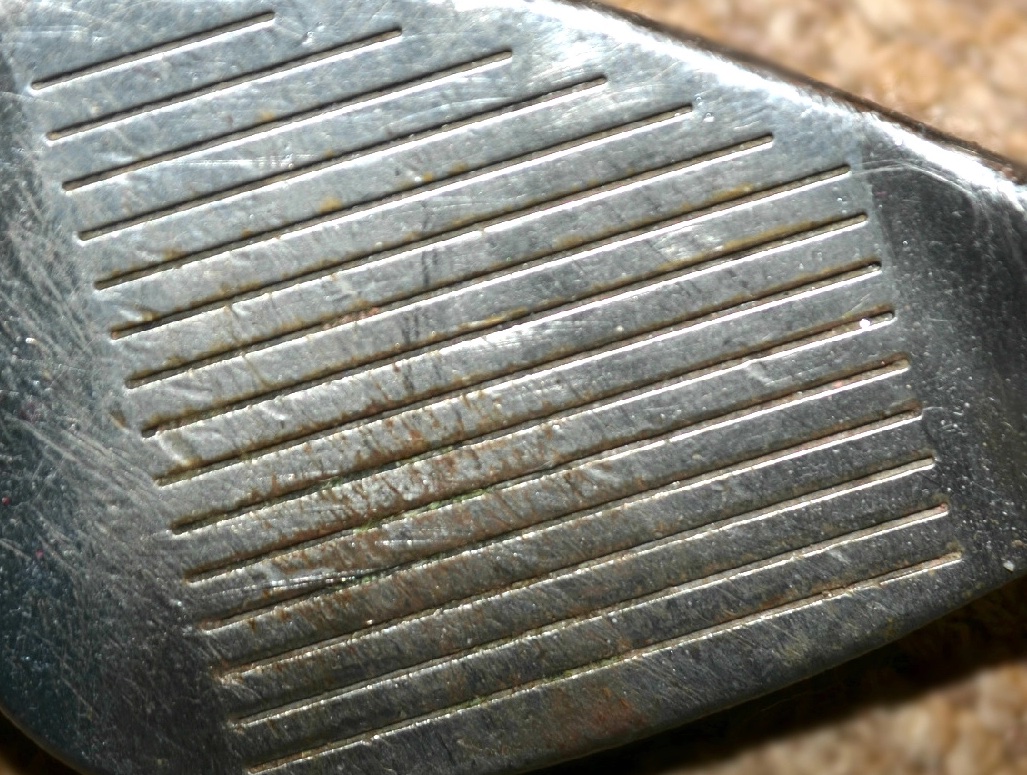
Today’s post will hopefully get most of you thinking a bit more deeply about what you really get when you purchase a new set of irons. While every set – regardless of design, make, or model – has a club at the short end of the set marked with a “P,” do not let yourself be fooled: No set of irons has included a true “pitching wedge” for decades now.
In a recent review of the specifications of current iron models, the highest lofted “P-club” I could find was 46 degrees, and that was in a very traditional forged blade model. The vast majority of “P-clubs” are now at 45 degrees, with a rapidly growing number of game improvement models reducing that to as low as 42 degrees.
The basis for this “argument” is that solid technique for hitting true “pitch shots” was perfected decades ago, when Hogan, Nelson, Snead and their peers were dominating the game. In those days, their true pitching wedges were all some kind of one-piece blade design with about 50-52 degrees of loft and were used to hit pitch shots of all descriptions — high, soft-landing shots, penetrating “one hop and stop” shots, and a myriad of creative approaches in between. Those old pros learned how to use their pitching wedges to great effect and “wrote the book(s)” on effective pitching technique. In fact, Ben Hogan was so proficient with his that fellow pros dubbed it “the equalizer,” which the Ben Hogan Company adopted as the official name of its highest lofted club in a set of irons.
It’s also interesting to note that in his 1949 book, Power Golf, Hogan wrote that the sand wedge could be effective for certain greenside recoveries but listed his maximum distance with that club as 50 yards! This was written by arguably the best player in the history of the game, who listed his maximum distance with a driver at 300 yards! My bet is that every one of you routinely calls on your sand wedge for shots of 50-100 yards, so you must be better than Ben Hogan!
But back to the topic at hand, the simple fact of golf ball physics is that true pitch shots cannot be hit with an iron of only 42-45 degrees of loft, which is why those old pros didn’t try to hit pitch shots with their 8-irons, which were about that same loft back then. And you can’t either.
I’ve written before about how loft-strengthening has taken away critical scoring clubs from the modern golfer. And how these jacked-up lofts require you to be a bit more creative in putting your set of irons together to give you proper distance gaps between irons, from your highest-lofted wedge all the way down through your set.
But when it comes to those score-making or score-saving shots inside full swing range, you simply must have one or two clubs with which you can execute a variety of true “pitch shots,” and that means giving special attention to your clubs of lofts over 45-47 degrees. Do you even have the right clubs there?
I can tell you that a 50- to 52-degree set-matching club – which has come to be named the “approach wedge” or something – probably isn’t the best option, especially if you are playing a thin-faced game improvement iron design. Realize that club is as far in loft from the 6-iron as is your 3-wood, and while that design might make for an effective 27- to 30-degree iron, it doesn’t work nearly as well when you add twenty more degrees of loft, no more than it would if you cranked it down to 15 degrees and put a 3-wood shaft in it.
In today’s parlance, that true “pitching wedge” of 50-52 degrees of loft is likely thought of as a “gap wedge,” but don’t think of that club as simply the next full swing club after the one with a “P” on the bottom. It should probably be your “go-to” club for almost all your shots inside full-swing range, as your distance consistency and impact efficiency will likely be much better than it will be with a higher-lofted sand wedge or lob wedge, as impact with the ball isn’t as much of a glancing blow as with the higher lofts.
If you really want to improve your performance inside full swing “P-club” range, don’t automatically go to your sand wedge for all those partial swing shots. Instead, consider spending at least as much time testing and playing true “pitching wedges” of various designs as you do selecting a driver, putter, or set of irons.










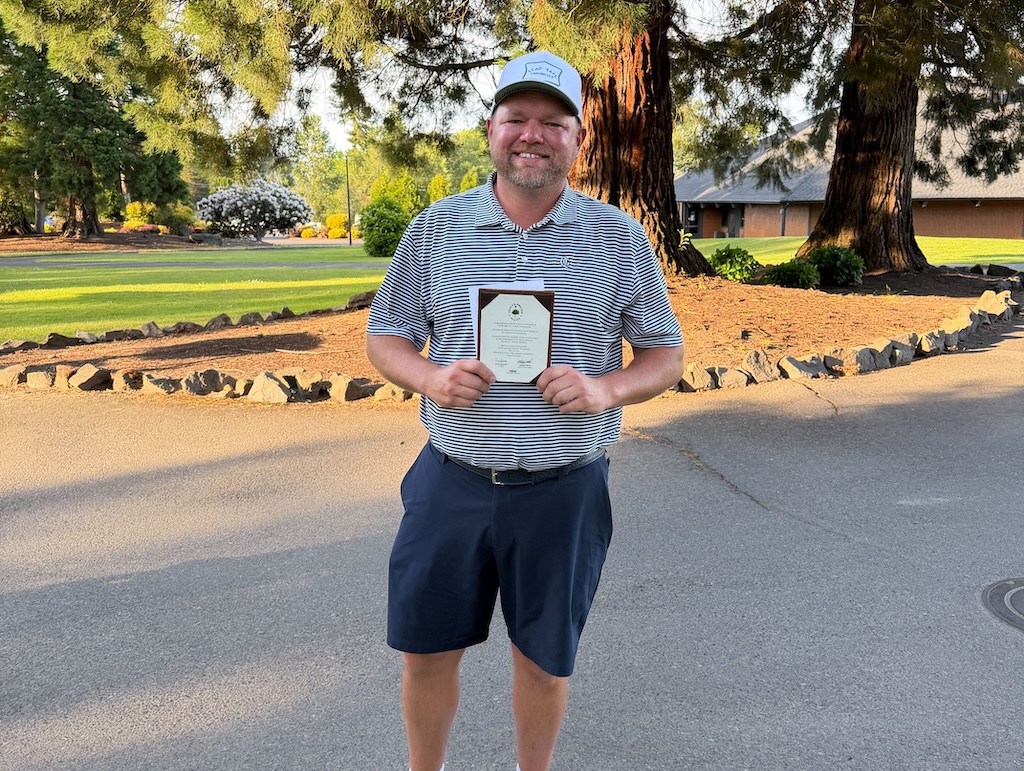
This past Monday, I played in the U.S. Amateur local qualifier at Rock Creek Country Club in Portland, Oregon. A full tee sheet from 7:30 a.m. to 1:55 p.m., the top 11 scores would make it to the U.S. Amateur final qualifying.
I teed off at 10:48 a.m.. With the 7:30 am tee time, you can get a feel for the leaders’ pace, and they were off and running on the challenging setup at Rock Creek.
View this post on Instagram
Getting to the highlight of the round on the par five 17th, a drive up the left side and 212 yards left to the front hole location. I took out a 5-iron with plans of middle of the green. The ball ended up 8 feet left of the hole, pin high. A slight downhill putt dropped in for an eagle 3 on the 17th. With the cut line looking to be anywhere from -2 to even par. This was the boost I had been waiting for all day.
With making par from the trees on 18, it was time to wait for a potential playoff with a posted score of one under par 71.
Three hours later, it was playoff time. 8 players for 6 spots. I made par on the playoff hole, which was good enough to advance to the U.S. Amateur final qualifying in July. USGA qualifiers sure deliver on all of the emotions in golf!
Club Junkie
Building my 2026 gamer WITB: Ranking the contenders and new putter projects – Club Junkie Podcast

The annual What’s In The Bag build is underway, and on this episode of Club Junkie, Brian breaks down the clubs currently leading the race for a spot in his 2026 gamer setup. From drivers and fairway woods to irons, wedges, and shafts, he ranks the equipment that’s performing best and explains what’s separating the front runners from the rest of the field.
Brian also heads into the workshop to discuss several putter projects currently on the bench. From head options and shaft choices to build ideas and testing plans, he shares what he’s working on and which putters could become serious contenders for the bag this season.
If you’re a gear junkie who loves equipment testing, club building, and the never-ending pursuit of the perfect setup, this episode is for you.
Follow Club Junkie:
Instagram: @clubjunkiepod
TikTok: @clubjunkiepod
Threads: @clubjunkiepod
X: @ClubJunkiePod
Club Junkie
Tour Edge Exotics mini driver review + TaylorMade Spider ZT Max first look – Club Junkie

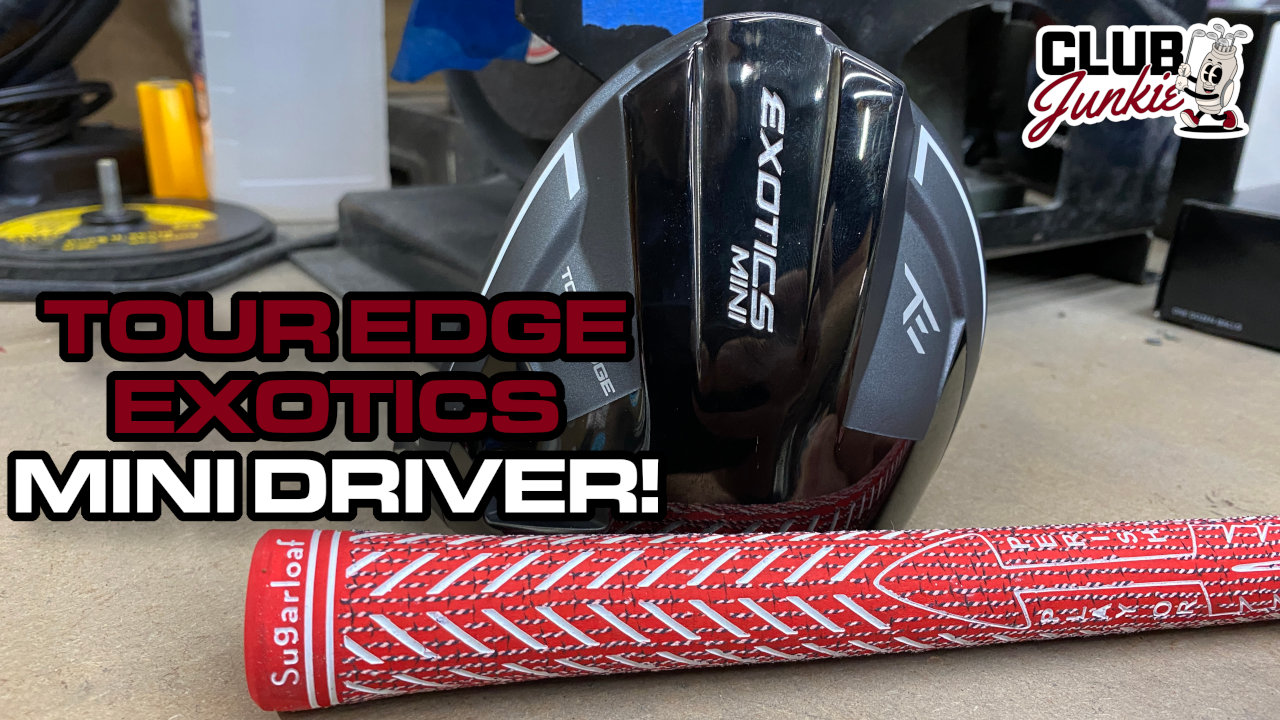
On this episode of Club Junkie, I put the new Tour Edge Exotics Mini Driver to the test and break down the performance, forgiveness, distance, and where it fits compared to a traditional driver or strong fairway wood. If you have been curious about adding a mini driver to the bag, this one is worth a look.
I also dive into the new TaylorMade Spider ZT Max putter that was recently spotted and discuss the growing zero torque putter trend. Plus, there is a closer look at the new Project X Titan Yellow shaft showing up on the PGA Tour and what makes it different from other profiles currently out there.

Justin Rose WITB 2026 (April): Full WITB breakdown with new McLaren irons

What’s the story behind Webb Simpson’s custom-stamped irons?

Cadillac Championship Tour Report: Spieth’s sizable changes, McLaren Golf launches, and more

Memorial Tournament Tour Report: Rory McIlroy, Cameron Young switch up drivers, and more

Russell Henley’s winning WITB: 2026 Charles Schwab Challenge

Kristoffer Reitan’s winning WITB: 2026 Truist Championship

Aaron Rai’s winning WITB: 2026 PGA Championship

Cameron Young’s winning WITB: 2026 Cadillac Championship

Details on Jason Day’s latest prototype Avoda iron setup

J.T. Poston’s winning WITB: 2026 Memorial Tournament


Asterisk Talley WITB (June 2026)
Driver: TaylorMade Qi4D (9 degrees) Shaft: Fujikura Ventus Blue 6 S 3-wood: TaylorMade Qi4D (16.5 degrees) Shaft: Fujikura Ventus Blue...

Brianna Do WITB (June 2026)
Driver: Callaway Quantum Triple Diamond (9 degrees) Shaft: KBS PGW 3-wood: Callaway Elyte Titanium (15 degrees) Shaft: KBS PGW 5-wood:...
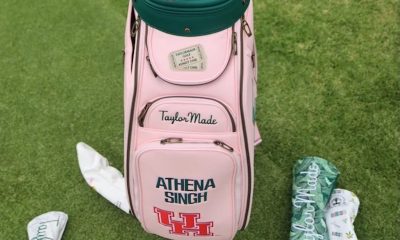

Athena Singh WITB 2026 (June)
Driver: TaylorMade Qi4D (10.5 Degrees) Shaft: Fujikura Ventus Blue 6 S 3-wood: TaylorMade Qi10 Max (16 Degrees) Shaft: Fujikura Ventus Red 6...
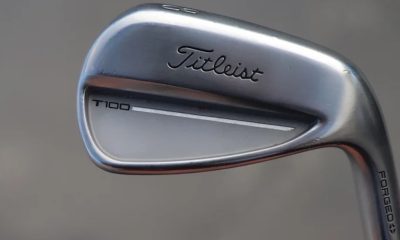
J.T. Poston’s winning WITB: 2026 Memorial Tournament
Driver: Titleist GTS3 (9 degrees) Shaft: Mitsubishi Diamana BF 60 TX 3-wood: Titleist TS2 (15 degrees) Shaft: Graphite Design Tour...
-
 Equipment4 days ago
Memorial Tournament Tour Report: Rory McIlroy, Cameron Young switch up drivers, and more
-
 News1 week ago
Russell Henley’s winning WITB: 2026 Charles Schwab Challenge
-
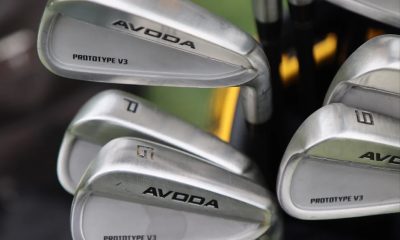 Equipment6 days ago
Details on Jason Day’s latest prototype Avoda iron setup
-
Whats in the Bag2 days ago
J.T. Poston’s winning WITB: 2026 Memorial Tournament
-

 Equipment1 day ago
Best irons 2026: Best irons overall, most forgiving irons, and more
-

 Equipment3 weeks ago
CJ Cup Byron Nelson Tour Report: Koepka and Kim’s newest putters finally get hot
-
 News2 weeks ago
Charles Schwab Challenge Tour Report: MacIntyre, Åberg and Spaun all switch putters, TaylorMade launches new Spider
-
 Equipment2 weeks ago
Details on J.J. Spaun’s surprise putter switch


Bjorn
Jun 17, 2024 at 11:58 pm
Since I’m not a racist… Many people might see me as better than people in the past.
Sid Storch
Jul 25, 2024 at 2:16 pm
In what sense are you not a racist? Do you have your money with a black investment guy? Do you have a black guy doing your taxes? Have you used a black contractor ro remodel your kitchen? Have you hired anyone black to tutor your kid for the SAT/ACT? Does a black guy even do your brakes? Is your answer to all these questions, “Uh, well … no.”? What I thought.
Pingback: The Wedge Guy: how many wedges do you need? - Fly Pin High
Pingback: The Wedge Guy: How many wedges should you carry? – GolfWRX
Pingback: The Wedge Guy: Understanding iron designs, Part 2 – GolfWRX
Bob Pegram
Dec 16, 2022 at 4:32 pm
I use irons from 2011 which have older/higher lofts (Callaway RAZR X Forged). I have 3 hybrid, 5-A wedge, SW, LW. I omit the 4 iron to stay within the 14 club limit. The PW is 47 degrees and the AW is 51 degrees. If I were to buy a new set it would be 3 hybrid and still 5-A, SW, LW which would amount to the same thing if I bought another wedge between the PW and AW. However, I would still have to omit the 5 iron or another iron from that to stay within the 14 club limit. I would gain nothing. The current irons are in good condition (from Callaway pre-owned, best condition rating). I cover every distance with the short irons. They are the iron model Jim Furyk used to shoot 58 in a PGA Tour tournament (I didn’t know that when I bought them).
Kourt
Dec 16, 2022 at 1:58 pm
Sorry but I disagree. Golf has changed dramatically since Hogan’s time. Balls aren’t as soft and don’t spin as much, groove rules have changed, greens are much faster etc etc. It’s not as easy to stop a ball with a short shot as it was in Hogan’s time. Most courses you need to be proficient with a sand and lob wedge to produce enough height and spin to stop the ball. It’s much more difficult to stop a modern ball on modern greens with a 50 degree wedge partial swing. Sand and lob wedges are crucial for most golfers today. Many tour pros are starting to switch to a matching iron set gap wedge for this very reason. They are using GW for significantly more full shots than they are partial shots so it makes sense to ditch the old theory.
Ezekial Brunos
Dec 21, 2022 at 1:41 pm
lol, modern balls spin twice as much as balls from the 40s 50s 60s 70s 80s 90s.
‘groove rules ‘ have changed…back to 50s standards. lol
And, It’s MUCH easier to stop a ‘modern ball ‘ on ‘ modern greens ‘
lol
Bob Jones
Dec 16, 2022 at 10:22 am
The E-wedge from my 1998 Hogan Apex irons is 48 degrees. I use that, my 52, 56, and 60 to pitch with, per Dave Pelz. Works great. I’ve even used my 9-iron from that Hogan set, 44 degrees, to pitch with all day from distance. Worked just fine.