
Opinion & Analysis
Simple Aids To Help Cut Your Handicap? Do They Work?


Are you a high handicapper? Are you working on your game? Do you want to be able to fix your swing without spending piles of money on instruction?
I am too, so I decided I would take a look and see what’s available out there. When I was done one thing became obvious: There is nothing to replace an instructor and time on the range or the course.
But that doesn’t mean that some training aids can’t help golfers improve certain things. For that reason, here is a list of some of the most popular training aids available on the market today. It is by no means intended to be a comprehensive list, but it will give golfers a good idea of what’s out there.
Fitness Aids
These are mainly focused on keeping you in shape and healthy. Most fitness aids come with exercises and routines that are supposed to help with golf specific movements and muscles. Their key components are improving stability, strength and flexibility.
Many golf fitness aids can benefit just about anyone. Most golfers strive to be in better shape (it’s awful getting tired at the end of a round and screwing up their personal best), and if they’re doing it in a manner that can help their golf game, all the better right?
The biggest downfall of many products and exercises is the fact that they don’t necessarily work multiple muscles at once. Too many people want to work on “golf-only” or “mirror” muscles and they neglect to balance that work. For example, doing a million pushups but ignoring the supporting muscle groups can cause swing problems.
Anyone delving into fitness should do so in an informed manner. Talk to a doctor, and/or a fitness expert and come up with an appropriate plan. In the end, get yourself in better shape. If golf related exercises fit into a routine and help your overall fitness go right ahead!

A simple fitness aid is basically a medicine ball with handles. It’s great for working the core and strengthening the shoulders and arms.

“Fitness kits” vary in composition. They usually include a variety of devices that strengthen certain muscles or work to ingrain certain swing patterns. Some of them are useful, some are far from it.

Above is the “Orange Whip,” which costs around $110. It is considered the cream of the crop of weighted clubs.
Swing trainers like the Orange Whip help with swing tempo and fitness. The extra weight and flexibility of the club helps work out and stretch muscles. To swing the club properly, one has to even their tempo out and resist the urge to yank the club down from the top.
Swing Aids
Ahh, here is probably the biggest market for people trying to make a quick buck on us poor unsuspecting golfers. There are so many different options out there. There are weighted clubs (mentioned above in the fitness section), hinged clubs, flexible weighted swing trainers, alignment sticks, items to keep wrist hinge correct, swing analyzers that attach to the club… the list goes on and on.
Do they work? It’s up to the person trying it out. Tempo problems? Well then some of the tempo aids MAY assist you.
What about alignment, is it horrible? Alignment sticks may help depending on WHY one’s alignment is wrong. No one has the same swing and a particular swing aid may try to force someone into movements that don’t work for them. In the end if a product can help deliver the club face to the ball in a repeatable manner then it most likely works.

Medicus dual hinged clubs (around $150) are used to supposedly help you swing “on plane” and “on tempo.” They can definitely help with tempo because any jerky motions will cause the hinges to “break.” Helping you find the proper plane, on the other hand, is debatable. The clubs can allow a person to get very over the top or make other very bad swing motions and still keep the hinges from breaking.

Impact bags allow for learning the proper feel at impact. They can be used at home and are easy to find.

Alignment sticks are used for many, many purposes. They can be run along the feet to show alignment, set up to assist with the swing plane, create a gate for aiming (hit the ball through the gate) and have many other uses. There is even an accessory that can turn an alignment stick into an iPhone mount for taking video.
Putting Aids
Lastly we have putting aids. Who loses a ton of strokes on the putting green? Yep, high handicappers (and most amatuer golfers).
Again, putting is a unique swing. Each person is different. Does the putter move in a straight line? Maybe it moves in an arc? There is a device for that!
There are smartphone apps that can be attached to a putter such as Ping’s iPing. There are boards with lines and tracks to keep the putter moving in the right direction. Of course, each person is going to be the only one who can determine what works and what does not.

A putting mirror ($60 from EyeLine Golf) has alignment markers, allows one to see their setup, and “gates” can be added to keep the stroke in line, etc. A great aid for putting.

A putting rail ($60 EyeLine Golf) helps ingrain a putting stroke with a slight arc and also assists with set up.

A hinged putter ($60 from SKLZ) will help with tempo and takeaway. If the move is too fast or too offline it will “break.”
Conclusion
It’s easy to spend almost as much on “golf aids” as it is on the equipment itself and guess what? It’s very possible not one bit of it will make a person a better golfer.
The only surefire way to get better is by learning from an instructor who is compatible with the particular student. This is someone who teaches in manner that allows for lessons to be digested and applied. It might take a few different instructors before the student finds the right teacher. Once you find the right one, all that is left is practicing, either on the range or out on the course. The more of it that is done, the better one’s game will get.
Lessons can be expensive and gadgets are cheap (usually). The problem is that most times golfers purchase many gadgets before they stumble onto the useful ones for them. At that point, it is very likely that more has been spent on the gadgets than expected!
I’ve personally taken the route of instruction and my game is trending in the right direction. I believe yours should too. One final benefit to getting instruction versus adding gadgets? My garage is MUCH cleaner than it has been.



This past Monday, I played in the U.S. Amateur local qualifier at Rock Creek Country Club in Portland, Oregon. A full tee sheet from 7:30 a.m. to 1:55 p.m., the top 11 scores would make it to the U.S. Amateur final qualifying.
I teed off at 10:48 a.m.. With the 7:30 am tee time, you can get a feel for the leaders’ pace, and they were off and running on the challenging setup at Rock Creek.
View this post on Instagram
Getting to the highlight of the round on the par five 17th, a drive up the left side and 212 yards left to the front hole location. I took out a 5-iron with plans of middle of the green. The ball ended up 8 feet left of the hole, pin high. A slight downhill putt dropped in for an eagle 3 on the 17th. With the cut line looking to be anywhere from -2 to even par. This was the boost I had been waiting for all day.
With making par from the trees on 18, it was time to wait for a potential playoff with a posted score of one under par 71.
Three hours later, it was playoff time. 8 players for 6 spots. I made par on the playoff hole, which was good enough to advance to the U.S. Amateur final qualifying in July. USGA qualifiers sure deliver on all of the emotions in golf!
Club Junkie
Building my 2026 gamer WITB: Ranking the contenders and new putter projects – Club Junkie Podcast

The annual What’s In The Bag build is underway, and on this episode of Club Junkie, Brian breaks down the clubs currently leading the race for a spot in his 2026 gamer setup. From drivers and fairway woods to irons, wedges, and shafts, he ranks the equipment that’s performing best and explains what’s separating the front runners from the rest of the field.
Brian also heads into the workshop to discuss several putter projects currently on the bench. From head options and shaft choices to build ideas and testing plans, he shares what he’s working on and which putters could become serious contenders for the bag this season.
If you’re a gear junkie who loves equipment testing, club building, and the never-ending pursuit of the perfect setup, this episode is for you.
Follow Club Junkie:
Instagram: @clubjunkiepod
TikTok: @clubjunkiepod
Threads: @clubjunkiepod
X: @ClubJunkiePod
Club Junkie
Tour Edge Exotics mini driver review + TaylorMade Spider ZT Max first look – Club Junkie

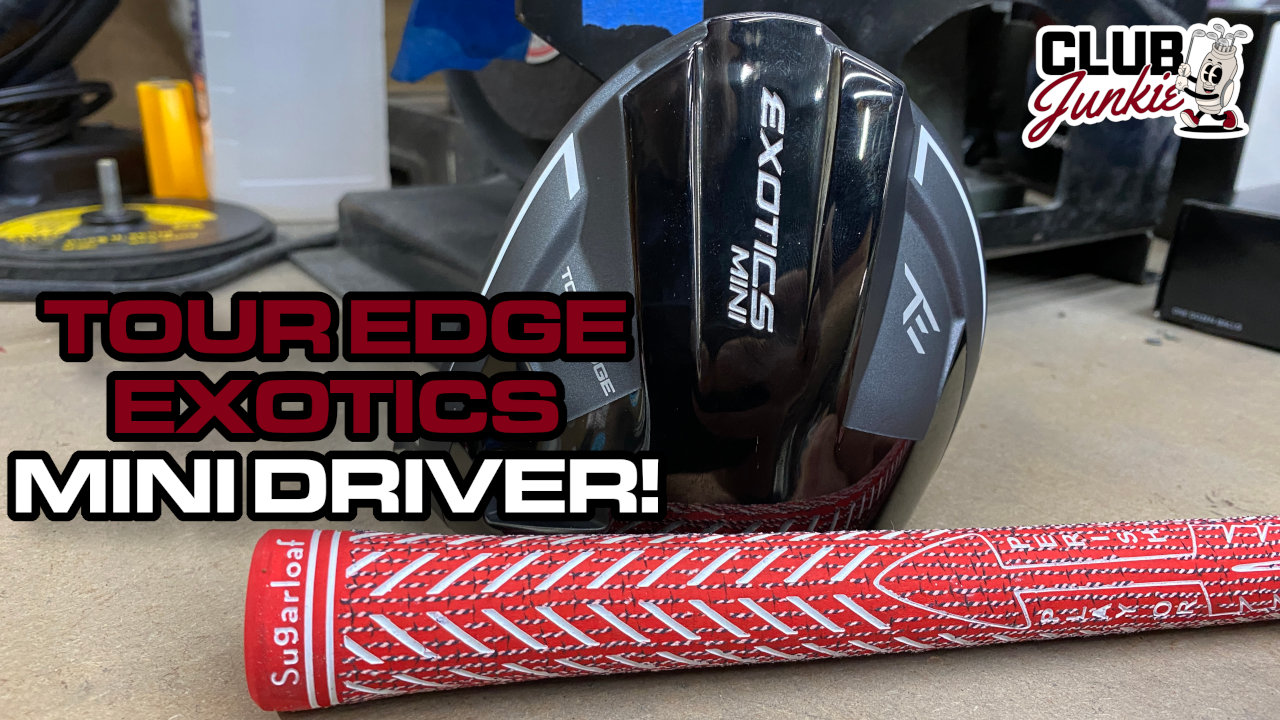
On this episode of Club Junkie, I put the new Tour Edge Exotics Mini Driver to the test and break down the performance, forgiveness, distance, and where it fits compared to a traditional driver or strong fairway wood. If you have been curious about adding a mini driver to the bag, this one is worth a look.
I also dive into the new TaylorMade Spider ZT Max putter that was recently spotted and discuss the growing zero torque putter trend. Plus, there is a closer look at the new Project X Titan Yellow shaft showing up on the PGA Tour and what makes it different from other profiles currently out there.

Justin Rose WITB 2026 (April): Full WITB breakdown with new McLaren irons

What’s the story behind Webb Simpson’s custom-stamped irons?

Cadillac Championship Tour Report: Spieth’s sizable changes, McLaren Golf launches, and more

Memorial Tournament Tour Report: Rory McIlroy, Cameron Young switch up drivers, and more

Russell Henley’s winning WITB: 2026 Charles Schwab Challenge

Kristoffer Reitan’s winning WITB: 2026 Truist Championship

Aaron Rai’s winning WITB: 2026 PGA Championship

Cameron Young’s winning WITB: 2026 Cadillac Championship

Details on Jason Day’s latest prototype Avoda iron setup

J.T. Poston’s winning WITB: 2026 Memorial Tournament
Brianna Do WITB (June 2026)
Driver: Callaway Quantum Triple Diamond (9 degrees) Shaft: KBS PGW 3-wood: Callaway Elyte Titanium (15 degrees) Shaft: KBS PGW 5-wood:...

Athena Singh WITB 2026 (June)
Driver: TaylorMade Qi4D (10.5 Degrees) Shaft: Fujikura Ventus Blue 6 S 3-wood: TaylorMade Qi10 Max (16 Degrees) Shaft: Fujikura Ventus Red 6...
J.T. Poston’s winning WITB: 2026 Memorial Tournament
Driver: Titleist GTS3 (9 degrees) Shaft: Mitsubishi Diamana BF 60 TX 3-wood: Titleist TS2 (15 degrees) Shaft: Graphite Design Tour...

Alex Noren WITB 2026 (June)
Driver: Callaway Paradym Ai Smoke Max D (9 degrees @7, draw setting) Shaft: Graphite Design Tour AD VF 6 X 3-wood: Callaway...
-
 Equipment4 days ago
Memorial Tournament Tour Report: Rory McIlroy, Cameron Young switch up drivers, and more
-
 News1 week ago
Russell Henley’s winning WITB: 2026 Charles Schwab Challenge
-
 Equipment6 days ago
Details on Jason Day’s latest prototype Avoda iron setup
-
Whats in the Bag1 day ago
J.T. Poston’s winning WITB: 2026 Memorial Tournament
-

 Equipment14 hours ago
Best irons 2026: Best irons overall, most forgiving irons, and more
-

 Equipment3 weeks ago
CJ Cup Byron Nelson Tour Report: Koepka and Kim’s newest putters finally get hot
-
 News2 weeks ago
Charles Schwab Challenge Tour Report: MacIntyre, Åberg and Spaun all switch putters, TaylorMade launches new Spider
-
 Equipment2 weeks ago
Details on J.J. Spaun’s surprise putter switch


Jason
Sep 11, 2013 at 8:44 pm
Here are my must haves:
1.) Tour strikers–SW and 7 iron
2.) Sklz ball first trainer–works great as an alignment aid and putting trainer as well.
3.) Perfect Pendulum- great for chipping, full swing, and putting.
4.) Momentus IDL putting trainer.
Put in some good practice with these things, and the game improves.
8thehardway
Sep 2, 2013 at 11:04 am
After 15 years and a high single digit handicap I still had no idea what a golf swing should feel like… especially my drives. The Orange Whip gave me a rough feel for it right out of the box and it started making a very noticeable difference on the course after five months. I think this is a must-have item if, like me, you have no natural talent for golf.
Tyler
Aug 31, 2013 at 6:58 pm
Another training aid that I find invaluable is a grip trainer. The grip is so important and being able to pick up a grip trainer daily really makes it easier to focus on other things at the range. I have two stubby/short grip trainers at a grand total of $30 for the pair! They’re nice because I can swing them and I don’t hit walls.
I’d say in order:
1. Grip trainer
2. Alignment sticks
3. A regular stretching and exercise program!
Nick
Aug 30, 2013 at 10:35 am
There are only a couple of aids a golfer actually NEEDS – alignment sticks are versatile and can help you isolate if you have an alignment issue sending your shots off line (easy to fix) or a swing. You can also configure them for a variety of drills.
The trusty towel – cleans your clubs, can be used to designate a “landing zone” in short game practic, and the old towel under the arm pit drill, when done properly, can be helpful.
I do like two sticks and a piece of string for putting. Helps check alignment and swing path on the putter.
These things can be had for next to no money. The rest of it is really costly and you have to ask yourself, it this putting mirron which costs 60 bucks going to be more helpful than a 30-45 minute putting lesson with a PGA professional which might be had for around the same price.