
Opinion & Analysis
Fix your golf back pain, Step 1: The importance of assessment


This article is No. 1 in a 4 part series:
Step 1: The Importance of Assessment
Step 2: Early Stage Rehab
Step 3: Functional Strength and Golf Movement Patterns
Step 4: Building global strength for prevention of future injury
Introduction
If your back pain has been bugging you for a while and is starting to annoy and worry you, then your enjoyment of the game and your performance is likely beginning to be affected too. It’s frustrating, and you are ready to take action……..with your new foam roller and exercise bands in hand, you’re ready to knock the back pain on the head finally and forever.
Please wait a moment before you start!
Back pain and especially back pain in golfers, is a complicated thing. More often than not, it’s the result of many contributing factors, and is vitally important that you identify what those factors are before you start your mission to fix your back pain. We really can’t stress this point enough! We have seen many people start a program to ‘help’ or ‘strengthen’ their backs, but only succeed in making them worse and getting even more frustrated.
As the famous saying goes: “If you’re not assessing, you’re guessing!”
To help successfully address your back pain, we must first identify what the main causes are. In our experience, it’s usually a combination of factors from these three categories:
1 – Physical issues (muscle imbalances, alignment issues, muscle weakness, lack of strength endurance, etc.)
2 – Golf swing mechanics (swing faults such over-swinging and excessive side bend)
3 – Lifestyle factors (sleep, diet, hydration, stress, posture, activity level outside of golf, etc.)
To help identify contributing physical issues, specific physical tests and screening tests are extremely valuable. There is a range of these we like to use, and in this article, we will share 5 of the main ones with you. These are tests we often use with our professional golfers on the road and remotely when we can’t see them in person. They are also go-to tests and screens we use with our online clients who can do them in the comfort of their own homes.
These tests will help give you an indication if an underlying alignment or muscle imbalance issue could be a contributing factor to your stubborn back pain. Please read the instructions carefully! Even though they seem like ‘simple’ tests, they are subtle, and the more careful you are with the execution, the better the results will be.
With all these tests, it can be helpful to take a picture or video with your phone. It is also useful to have them documented for comparison with future test results.
Test 1 – Leg Length Test

- Start by lying on your back relaxed.
- Rest your arms at your sides on the floor. Take a normal breath in through your nose. Exhale fully through your mouth to bring the ribcage downward and to feel your lower back make contact on the floor.
- Ask a friend or family member to have a look at the bones on the insides of your ankles (medial malleolus).
- Are they the same level, or is one higher/lower compared to the other one?
Test 2 – Seated Ankle Mobility Test
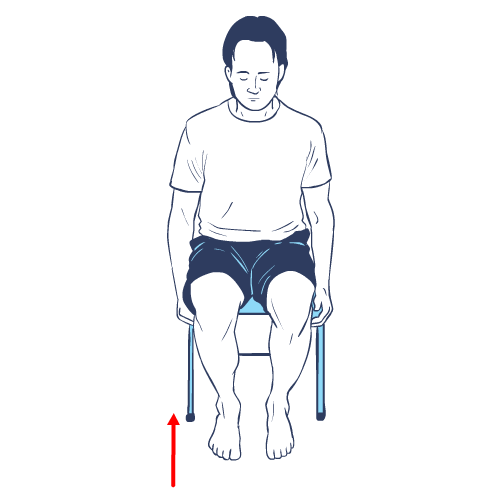
- In bare feet, sit with both heels on the floor and your back resting comfortably against the back of the chair.
- Hips and knees should be bent approximately 90 degrees each.
- Keeping your heels on the ground, feet flat, and toes pointing straight ahead.
- Slide your foot straight back until your heel starts lifting up off the floor. Stop as soon as the heel starts lifting up.
- Note the distance. Keep that foot there.
- Now repeat on the other side.
- Note if there is any difference in range of motion between the two sides.
Test 3 – Seated Rotation Test
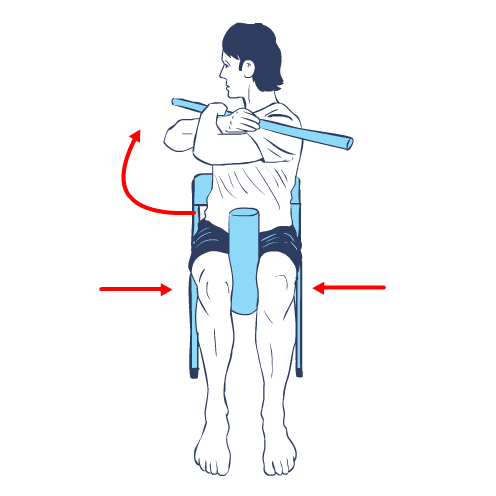
- In bare feet, sit on the front half of a chair with both heels on the floor.
- You should feel your “sit bones” in contact with the chair.
- Find the center of both heels and maintain the position throughout the test.
- Place a foam roller, small ball or equivalent object of about 4-6” in diameter between your knees.
- Place a broomstick, golf club or the equivalent across the front of the shoulders with your arms crossed.
- Keeping your heels centered at all times and holding the stick stable across the front of your shoulders, turn the shoulders as far as you can to the right.
- Note how far and how easily you can turn to your right side.
- Return to the starting position.
- Again, keeping your heels centered at all times and holding the stick stable across the front of your shoulders, turn the shoulders as far as you can to the left.
- Note how far and how easily you can turn to your left side.
- Repeat the test a few times to ensure an accurate measurement.
- Take note of any difference in range of motion between the two sides, and areas of restriction and discomfort.
Test 4 – Supine Hip Internal Rotation Range Test

- Start by lying on your back relaxed.
- Rest your arms at your sides on the floor. Take a normal breath in through your nose. Exhale fully through your mouth to bring the ribcage downward and to feel your lower back make contact with the floor (as discussed above).
- Lightly squeeze either your fists, foam roller, or a small ball between your knees.
- Rotate your feet outwards while maintaining 90 degrees at your hips and knees.
- This will measure your hip internal rotation range of movement.
- Go as far as comfortably possible. Don’t force it.
- Take note of the range of motion and any difference between the two sides.
Test 5 – Seated Hip External Range Test
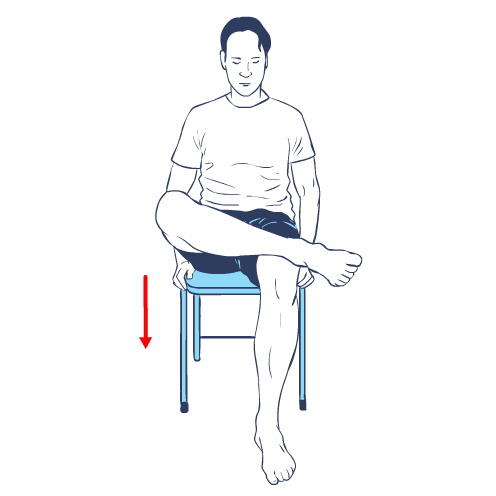
- Sit with both heels on the floor and your back resting comfortably against the back of the chair.
- Bring the outside of your ankle and place it on the top of the opposite knee.
- Go as far as comfortably possible. Don’t force it.
- Relax in this position.
- This will measure your hip external rotation range of movement in the seated position.
- Repeat on the other side.
- Take note of any difference in range of motion between the two sides, and areas of restriction and discomfort.
If there is an imbalance or difference between the left and the right sides in any of the above tests, it could be an indication that you might have an alignment or muscle imbalance issue that needs to be addressed first before you start any strengthening program. You wouldn’t want to throw a bigger, more powerful engine in a car with poor alignment and bad suspension!
In the next article; Step 2: Early Stage Rehab, we will provide you with exercises that can help improve mobility / flexibility, muscle imbalances and posture issues.
If you would like to see how Marnus can help with your golfing back pain, then check out the resources below:
Marnus Marais – marnusmarais.com
If you would like to access training programs designed for elite and recreational players, then check out the following resources and services from Nick at Golf Fit Pro:



This past Monday, I played in the U.S. Amateur local qualifier at Rock Creek Country Club in Portland, Oregon. A full tee sheet from 7:30 a.m. to 1:55 p.m., the top 11 scores would make it to the U.S. Amateur final qualifying.
I teed off at 10:48 a.m.. With the 7:30 am tee time, you can get a feel for the leaders’ pace, and they were off and running on the challenging setup at Rock Creek.
View this post on Instagram
Getting to the highlight of the round on the par five 17th, a drive up the left side and 212 yards left to the front hole location. I took out a 5-iron with plans of middle of the green. The ball ended up 8 feet left of the hole, pin high. A slight downhill putt dropped in for an eagle 3 on the 17th. With the cut line looking to be anywhere from -2 to even par. This was the boost I had been waiting for all day.
With making par from the trees on 18, it was time to wait for a potential playoff with a posted score of one under par 71.
Three hours later, it was playoff time. 8 players for 6 spots. I made par on the playoff hole, which was good enough to advance to the U.S. Amateur final qualifying in July. USGA qualifiers sure deliver on all of the emotions in golf!
Club Junkie
Building my 2026 gamer WITB: Ranking the contenders and new putter projects – Club Junkie Podcast

The annual What’s In The Bag build is underway, and on this episode of Club Junkie, Brian breaks down the clubs currently leading the race for a spot in his 2026 gamer setup. From drivers and fairway woods to irons, wedges, and shafts, he ranks the equipment that’s performing best and explains what’s separating the front runners from the rest of the field.
Brian also heads into the workshop to discuss several putter projects currently on the bench. From head options and shaft choices to build ideas and testing plans, he shares what he’s working on and which putters could become serious contenders for the bag this season.
If you’re a gear junkie who loves equipment testing, club building, and the never-ending pursuit of the perfect setup, this episode is for you.
Follow Club Junkie:
Instagram: @clubjunkiepod
TikTok: @clubjunkiepod
Threads: @clubjunkiepod
X: @ClubJunkiePod
Club Junkie
Tour Edge Exotics mini driver review + TaylorMade Spider ZT Max first look – Club Junkie

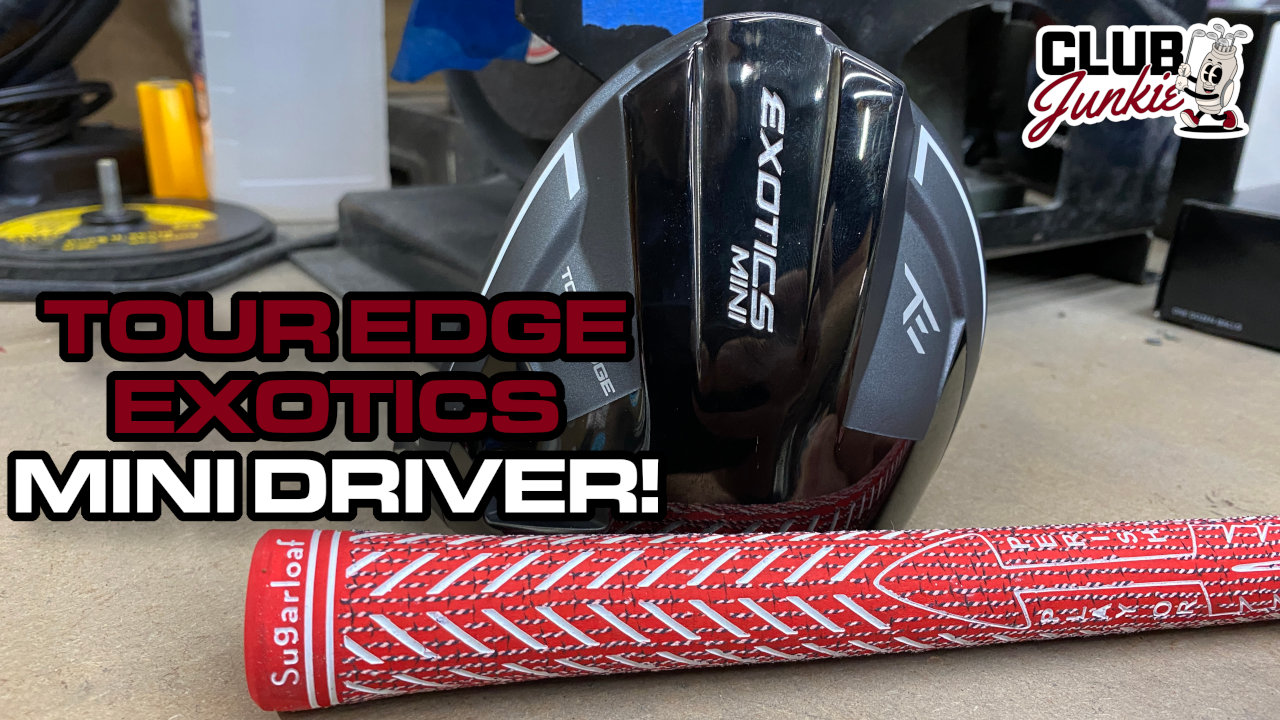
On this episode of Club Junkie, I put the new Tour Edge Exotics Mini Driver to the test and break down the performance, forgiveness, distance, and where it fits compared to a traditional driver or strong fairway wood. If you have been curious about adding a mini driver to the bag, this one is worth a look.
I also dive into the new TaylorMade Spider ZT Max putter that was recently spotted and discuss the growing zero torque putter trend. Plus, there is a closer look at the new Project X Titan Yellow shaft showing up on the PGA Tour and what makes it different from other profiles currently out there.

Justin Rose WITB 2026 (April): Full WITB breakdown with new McLaren irons

What’s the story behind Webb Simpson’s custom-stamped irons?

Cadillac Championship Tour Report: Spieth’s sizable changes, McLaren Golf launches, and more

Memorial Tournament Tour Report: Rory McIlroy, Cameron Young switch up drivers, and more

Russell Henley’s winning WITB: 2026 Charles Schwab Challenge

Kristoffer Reitan’s winning WITB: 2026 Truist Championship

Aaron Rai’s winning WITB: 2026 PGA Championship

Cameron Young’s winning WITB: 2026 Cadillac Championship

Details on Jason Day’s latest prototype Avoda iron setup

J.T. Poston’s winning WITB: 2026 Memorial Tournament

Brianna Do WITB (June 2026)
Driver: Callaway Quantum Triple Diamond (9 degrees) Shaft: KBS PGW 3-wood: Callaway Elyte Titanium (15 degrees) Shaft: KBS PGW 5-wood:...


Athena Singh WITB 2026 (June)
Driver: TaylorMade Qi4D (10.5 Degrees) Shaft: Fujikura Ventus Blue 6 S 3-wood: TaylorMade Qi10 Max (16 Degrees) Shaft: Fujikura Ventus Red 6...
J.T. Poston’s winning WITB: 2026 Memorial Tournament
Driver: Titleist GTS3 (9 degrees) Shaft: Mitsubishi Diamana BF 60 TX 3-wood: Titleist TS2 (15 degrees) Shaft: Graphite Design Tour...


Alex Noren WITB 2026 (June)
Driver: Callaway Paradym Ai Smoke Max D (9 degrees @7, draw setting) Shaft: Graphite Design Tour AD VF 6 X 3-wood: Callaway...
-
 Equipment4 days ago
Memorial Tournament Tour Report: Rory McIlroy, Cameron Young switch up drivers, and more
-
 News1 week ago
Russell Henley’s winning WITB: 2026 Charles Schwab Challenge
-
 Equipment6 days ago
Details on Jason Day’s latest prototype Avoda iron setup
-
Whats in the Bag2 days ago
J.T. Poston’s winning WITB: 2026 Memorial Tournament
-

 Equipment1 day ago
Best irons 2026: Best irons overall, most forgiving irons, and more
-

 Equipment3 weeks ago
CJ Cup Byron Nelson Tour Report: Koepka and Kim’s newest putters finally get hot
-
 News2 weeks ago
Charles Schwab Challenge Tour Report: MacIntyre, Åberg and Spaun all switch putters, TaylorMade launches new Spider
-
 Equipment2 weeks ago
Details on J.J. Spaun’s surprise putter switch

