
News
My two won


Words are flying in all languages tonight. You know why: the LPGA has sent the word down that it’s going to be English-mostly on tour from now on.
Now, the pressure is on. It’s on the foreign pros to learn English well enough to say "Nice shot, Nancy" and "Keep your head down" to their pro/am partners, who apparently have spent big bucks not only to rub elbows and play with the LPGA players, but to demand witty chit-chat that will open the money coffers and shower the tour with gold, gold I tells ya.
The pressure is also on the amateur players to come up with conversation — easily understandable and vibrant conversation: "Do you…have Big Macs…in your country?" Instead, they have to think: "What on earth am I paying for here–awkward, embarrassing, forced conversation? I thought they ordered these women to speak English for us! If this event is so important, where are the translators? Cheap old LPGA…."
Will speaking halting English be enough to realize their money goals? Is Shakespearean English next? Or, perhaps favorite songs sung by your LPGA pro? Can a pro exchange English lessons for a skill that might realize even more money, like juggling?
I get it, I get it. I do. But usually persuasive and patronizing marketing tactics aren’t flailed about in such a blatantly crass and unfeeling manner. Usually, this type of tactic is employed beneath the radar with Thought Leaders wielding people-strategies. The LPGA is not only embarrassing the players, but the public is embarrassed for and sympathizes with these talented women.
Some people see the sense in this new rule, and the people I’ve heard defend it seem ticked-off at having to defend it. But how will the success of this Words-for-Dollars campaign be measured? Answer me that in any language? Why do so many companies try to force change on people, instead of changing their system or their vision?
This isn’t about how valuable it is to learn English. Clearly, on the LPGA, it is far more important to learn golf. This is about finding a way to attach puppet strings to the players who don’t have their own ball color or their own TV show, but whose numbers increase yearly.
At a time when the golf on the LPGA has rarely been better, more exciting, and more entertaining, a dark cloud has swept over the women’s tour today. It feels like the 1950s around here.
On the other hand, maybe this opens the door to other changes down the road. Hmmm. I, for one, would like to see more redheads on the LPGA.
note: won=Korean currency


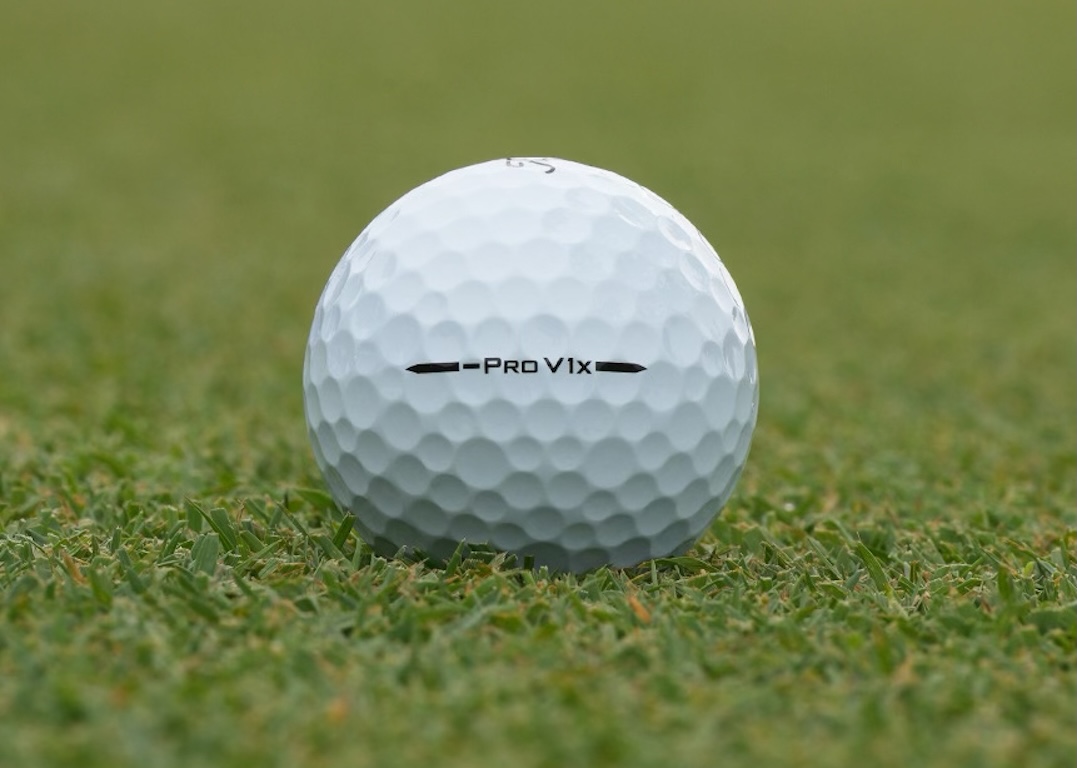
J.T. Poston required extra holes Sunday to earn a handshake from Jack Nicklaus himself and walk away with the biggest victory of his career.
Poston outlasted Ryan Gerard on the second playoff hole at the Memorial Tournament, and the victory at Jack’s place was aided by two significant gear switches ahead of the tournament in Ohio.
Firstly, Poston swapped from the Titleist Pro V1x to the new Pro V1x Left Dash in his last start at the Charles Schwab Challenge. It’s the ball that made headlines just a month ago, when Jordan Spieth also transitioned into the low-spinning variant at the Cadillac Championship.
Poston’s ball change was spurred by a discussion with Titleist Tour reps about testing some options that could be a little better for him in the wind, after the now four-time PGA Tour winner had gained slightly more speed of late and was feeling like his irons and full wedge shots were overspinning.
Poston spent time testing both the current-generation Pro V1 and the new Left Dash at home the week after the PGA Championship, and at Colonial Country Club, he spent more time dialing things in on the range with J.J. Van Wezenbeeck before deciding to tee up the Left Dash that week. At the time, Poston was 85th in SG: Approach (+0.024); he gained +1.402 at Colonial.
“So we felt like today was going to be a good test of that and it obviously performed really well,” Poston said after a second-round 65 at Muirfield Village which propelled him into the lead. “We had a couple shots that I felt like didn’t quite hit ’em perfect and it hung in there pretty well. So I feel like just having that confidence in that too is big, where I just — we’re trying to hit the smart shot and hit the right shot and just trying to execute and go from there.”
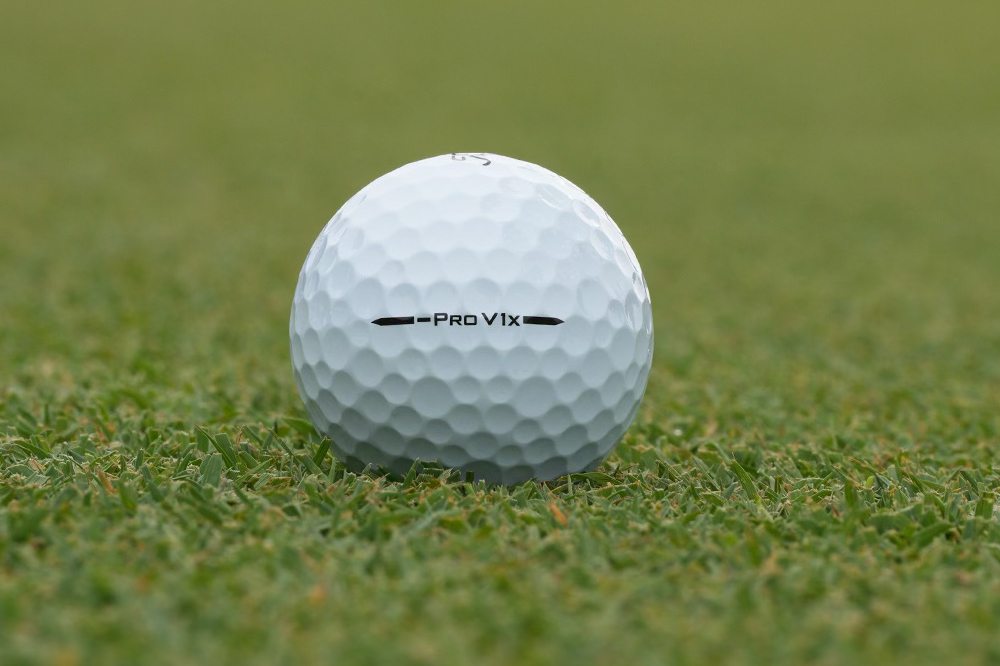
On his way to victory, Poston delivered a dominant performance from tee-to-green and was +8.081 in approach and tied for fourth in greens in regulation.
Poston’s Memorial victory was also the first on Tour for the new torched line of TaylorMade’s 2026 Spider putters. Poston also added the L-Neck Tour X at the Charles Schwab Challenge the week prior, something prompted because “it seems to be working for a lot of the other guys.”
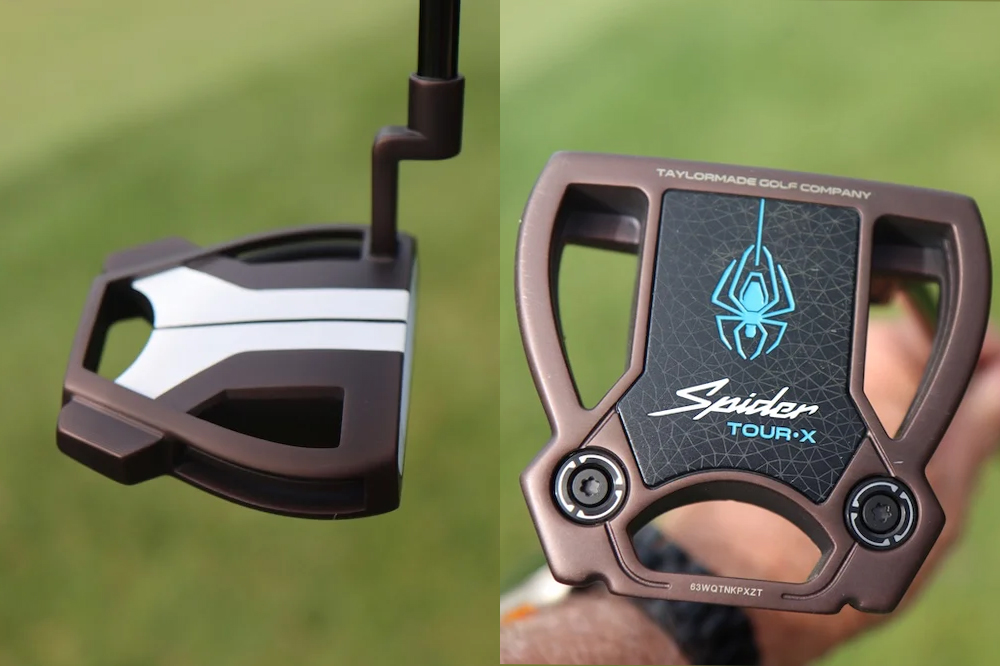
A usually reliable putter, Poston had dropped to as low as 89th on Tour in strokes gained, and when he saw his good friend Denny McCarthy using the Spider, he thought about the change. With the new flatstick in hand, Poston gained close to seven shots on the field at the Memorial and ranked third in SG: Putting for the week.
Poston was the first to agree, though, that neither switch was more important than the other.
“The ball got me there, the putter helped me get it in the hole,” Poston said.

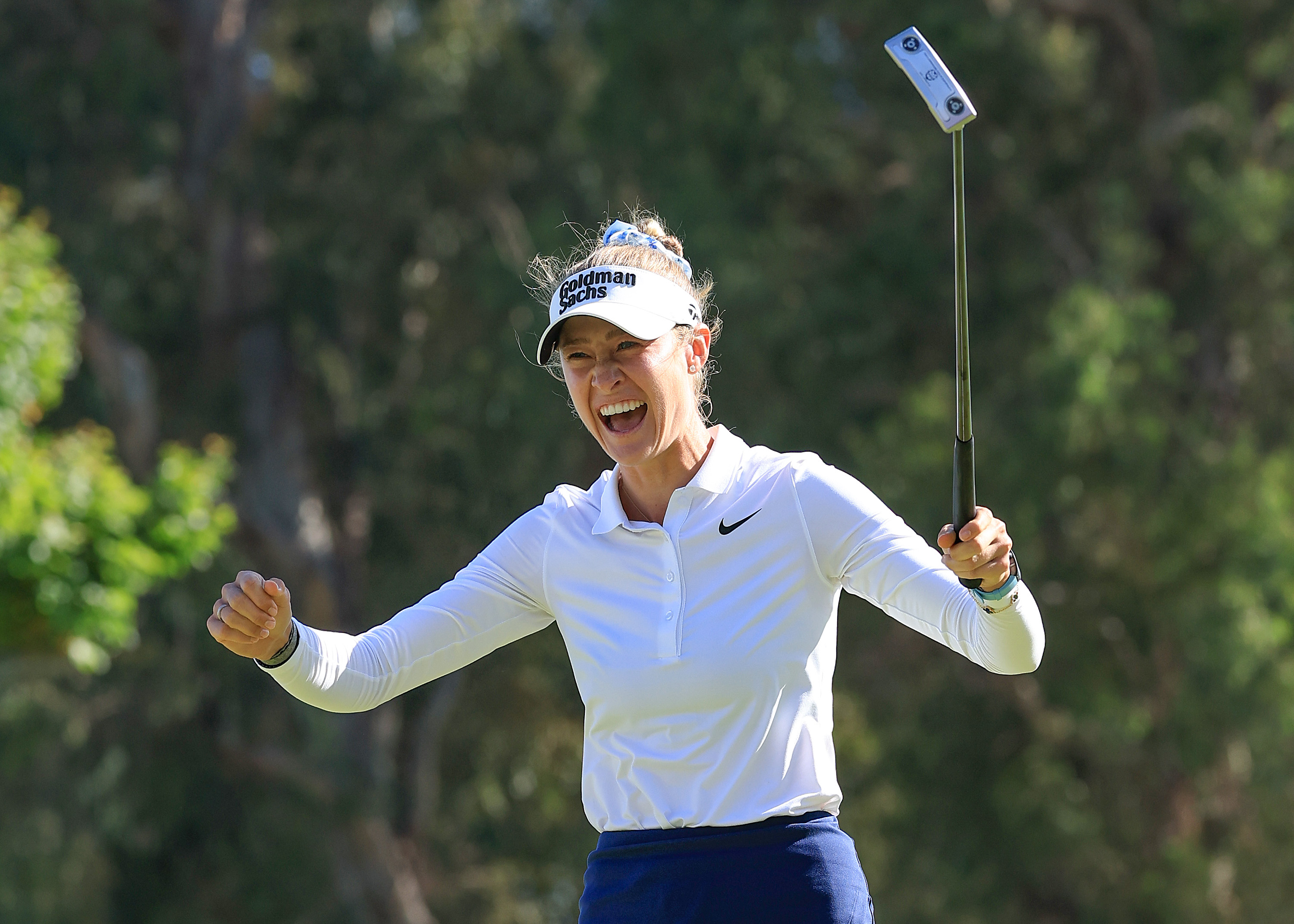
As is expected at a major championship, many story lines developed throughout the day at Riviera Country Club. There were amateurs in the mix. There were young and old professionals without major wins, seeking an initial one. There were major winners seeking another on the way to hall of fame status. As for the golf course, there was concern that the competition committee might lose control over green speeds and rough heights (they didn’t) and that they might eliminate cool features like the backstops on the first and sixth greensites (they didn’t.) Riviera was a spectacular success for the USGA, at a time when it needed one. Riviera will host two men’s major competitions over the next half decade (the 2028 Olympic tournament and the 2031 men’s U.S. Open) and the blueprint has been laid down for how to set the course.
The lead was passed around throughout the day like a trip photo album. Riviera gave up a few low scores, with 67 from Charley Hull and Pajaree Anannarukarn leading the pack. Makes sense, since today is 6/7. What Riviera did not do, was offer up a 64 or 65 that would have allowed a distant chaser into contention. The old dame of the Palisades made it clear that you would earn the open by consistent play throughout the week, not with one dazzling effort over 18 holes.
As mentioned, so many story lines. We’ll hold ourselves to just four as we conclude Open week and say goodbye to Pacific Palisades and her barrancas and kikuyu. Here’s what we learned on day four of the U.S. Women’s Open.
Storyline One: The Amateurs
Four amateurs finished inside the top twenty-five players at this year’s celebration. Kiara Romero was not one of the three mentioned yesterday, but she was the class of the crew on Sunday. Romero closed with two birdies and a par, to finish on three shots under par. That was enought to edge Maria Jose Marin for the gold medal. Marin also made birdie at 16 and 17, but she slipped to bogey on 18 to finish T8, just behind Romero’s T6. Also representing the non-working class with distinction were Aphrodite Deng at T17 and Asterisk Talley at T22.
Storyline Two: Charley comes close again
I’m not counting, but Charley Hull has a dozen, top-ten finished in major titles. She began competing full-time in these prestigious events in 2014, which works out to one close call a year. On Sunday, Hull played magnificently through the first eleven holes. She had five birdies and one bogey through eleven holes, and reached eight-under par. Perhaps aware that she had assumed the lead, Hull gave two shots back over the next three holes., and slipped to minus-six. One final birdie at 17 brought her agonizingly close to another major title. Hull underclubbed on her approach at twelve, then took three putts from distance. On fourteen, she once again came up short, this time in a bunker, but came out briliantly to three feet. Whether it was a misread or an open face is left to the mists. What is known is that she missed for a second bogey in three holes.
Some who have not felt the sharp blade of competition will carelessly toos comments like she just can’t putt or he putting lets her down to give plausible explanation for why Charley Hull did not win. Check out the two-putts that she made at 15 and 16. Over 100 feet of putts combined, and she got the ball in the hole in four strokes. If I had to guess, it would come down to adrenaline and the ability to manage it, but only on certain holes. Truth is, no one played better than Hull on Sunday. Her 26 putts were tied for 6th on the day. On the three holes where she made bogey, she had a putt for birdie. In the end, it was rotten luck that Hull didn’t raise the trophy.
Storyline Three: Lopez almost gets it done for the kitchen staff
Politics and culture rarely take any stage during a major golf event. Once in a blue moon, Payne Stewart discusses race relations or Scottie Scheffler gets arrested, but nearly always, the golf occupies 100% of the media production. That’s why it was so heartwarming to hear Gaby Lopez discuss the pride she felt all week, when greeting the kitchen staff at Riviera. Lopez is Mexican, and she acknowledged that all of the kitchen staff at Riviera is Hispanic, mostly Mexican. Lopez beamed with pride when she revealed how supported she felt, and how she longed to win the title for them and for her home country. She nearly made the dream a reality.
Lopez made nine consecutive pars on Sunday, which did nothing to label her a contender. If you check the USGA highlights for the co-runner up, you’ll see only a putt on ten and eleven, and an approach and putt on thirteen. Let me fill in the spaces: Lopez had five feet and in for birdie on all three holes. Like Hull at 16, Lopez played beyond the hole, then took three putts from distance. Lopez could not get up and down for birdie from the penultimate hole’s right greenside bunker, but she did drop a twenty-feet putt for birdie at the last.
Storyline Four: Nelly Korda has the first two legs of the Grand Slam
Nelly Korda was the picture of consistency on Sunday. She had one boegy on her card, courtesy of a three-putt green. No one completely mastered the George Thomas greens in the valley. Hogan’s Alley, though, became Nelly’s Valley, as the Floridian won her second major title of 2026, and created a buzz for the Women’s PGA, to be held next month in Minnesota.
Like the other challengers, Korda hit around 10 greens and 10 fairways in regulation. The massive putting surfaces place a premium on proximity to the hole. Every element of Korda’s game was better than the field, save for putting. Off the tee, from the fairway, around the green, Nelly was nasty. As for the putting, all that she needed was one putt fewer than the rest, and she got it, but just barely. Her open-faced tug from two feet caught the left edge and fell. It was about the worst putt, at about the worst time, as one might imagine, but it was good enough.

Despite Colin Jost being so over the expression That was not on my bingo card, so much of what happened on Saturday at Riviera was precisely defined by that 2026 catch-phrase. Seasoned professionals faltered while young amateurs soared. Leaders posted par rounds while afterthoughts amassed birdie after day-three birdie. What transpired set up the potential for the best duels in USWO history. In the mixing bowl are the world’s number one, former champions, former contenders, and a host of the game’s top names.
Over the first three days, Riviera has played more like a golden-age gem than it ever has in modern times. Players are using greenside slopes and fairway cambres to propel the ball into proper position. Green speeds are manageable, yet daunting from the absolute worst place (read: above) in relation to the hole location. Nothing is unfair (fingers crossed for the same in two weeks on Long Island) and everything is earned.
Could it be Nelly, or Charley, or Sei Young or In-gee? How about Gaby or Jennifer, Nasa or Ruoning? All have contended before in the U.S. Women’s Open, but only In-gee Chun has raised the Semple trophy in triumph. A Hollywood sound stage is set for a dramatic finish, but prior to the conclusion, let’s revisit the five things that we learned on Saturday at the U.S. Women’s Open.
Saturday Thing One: Nelly Korda is tied at the top
If it were anyone else, after consecutive rounds of 67, the dam would break. That’s not the case with Korda. If anything, we expect that she might go lower on Sunday, to the tune of 65, and walk off with her first U.S. Women’s Open title.
We know that ruling bodies and host clubs adore name champions. They salute all victors, but the success of a current top golfer, a media darling, or a proven veteran serves to legitimate and venerate the event and the venue. The USGA and Riviera would be thrilled to have Nelly Korda as a champion.
What will propel the three-time major titleist to a fourth grand slam victory? Another 67, for starters. Reaching double-digits under par would place the Floridian in a marvelous space. It would require Sei Young to keep pace, and would demand that all the trailers post 66 or better.
Saturday Thing Two: How about those amateurs?
1 2 3 5 6 10 13 16 17 18
Those are the holes that Maria Jose Marin (68), Aphrodite Deng (68), and Asterisk Talley (66) birdied on Saturday. That’s a minus-ten ringer score for the trio. As we sleep one more sleep before the final round, consider that Marin and Deng are four strokes back of the leaders, while Talley is five shots behind. To have three amateur golfers within striking distance of the top ladder rung is heady stuff. Can Talley possibly follow up her minus-five with another one on Sunday? Even that might not be enough. How about Marin and Deng. Can they drop a mid-60s scorecard on the professionals, and throw a scare into them? Our intuition suggests no on both counts, but the potential for a top-five amateur finish is certainly in the cards.
Saturday Thing Three: the Korean Kontingent
Sei Young Kim and In-gee Chun would win any partner event this week, given their current form. Kim will tee off with Nelly Korda in the last game, and she will have a front-row seat to Chun’s performance, as In-gee will play in the game just ahead. Of the two, Sei Young appeared to have less control over her shots, as a substantial number of spproach shots turned inordinately left.. Time and again, her short game bailed her out of the bogeytown prison, although she did miss a fair number of short putts. Dumbo (aka Chun) seemed more in control from tee to green, but will need to channel her early-2020s self to insert herself into the narrative.
Saturday Thing Four: Kupcho’s Komeback
It’s not like she went very far away, but Jennifer Kupcho’s 69 on day three had to be gratifying. The Colorado native and Wake Forest alumna was in fine Friday position to make a statement and expand her lead. She had posted 66 on Thursday, but fell off form on day two with 73. There were 67s and 68s at Riviera that day, but Kupcho’s birdie production fell from seven to two, as her bogey line increased from two to four. She reduced the bogey output on Saturday, and redoubled birdies to four. She finds herself precisely one shot off the lead, in a tie with In-gee Chun, her Sunday walkabout mate.
What will Kupcho need on day four, to provide an opportunity for victory? Fairways and greens always help, but that electric, day-one start of birdies on holes one, two, and three will be massive. Stay on the proper side of the green-center bunker on six, and survive the dautning holes. Kupcho has made bogey on 13 and 15 twice in three days. Should she come to the final stretch in a place of power or hope, those two holes will test her worth and mettle. Kupcho has also played the closing triumvirate of holes in par or better, each of the three days. That sort of clutch-time performance will stand her well on day four.
Saturday Thing Five: How will it all transpire?
No one expects that both of the top two will struggle on Sunday. One of them will shoot 68, to reach nine-under par. That means that the trailers will have to light up the western sky with fireworks, to keep pace. There is a golfer with nine, top-ten finishes in major championships, who has never won a major. That golfer is Nasa Hataoka, and she is poised to break through and make a victory out of her tenth, top ten finish at a major. Hataoka finished T2 and T4 in this event in, respectively, 2021 and 2023. A missed cut in 2025 was a shock to the system, but the Japanese golfer will bounce back in style and claim the title.

Justin Rose WITB 2026 (April): Full WITB breakdown with new McLaren irons

What’s the story behind Webb Simpson’s custom-stamped irons?

Cadillac Championship Tour Report: Spieth’s sizable changes, McLaren Golf launches, and more

Memorial Tournament Tour Report: Rory McIlroy, Cameron Young switch up drivers, and more

Russell Henley’s winning WITB: 2026 Charles Schwab Challenge

Kristoffer Reitan’s winning WITB: 2026 Truist Championship

Aaron Rai’s winning WITB: 2026 PGA Championship

Cameron Young’s winning WITB: 2026 Cadillac Championship

Details on Jason Day’s latest prototype Avoda iron setup

J.T. Poston’s winning WITB: 2026 Memorial Tournament
Brianna Do WITB (June 2026)
Driver: Callaway Quantum Triple Diamond (9 degrees) Shaft: KBS PGW 3-wood: Callaway Elyte Titanium (15 degrees) Shaft: KBS PGW 5-wood:...
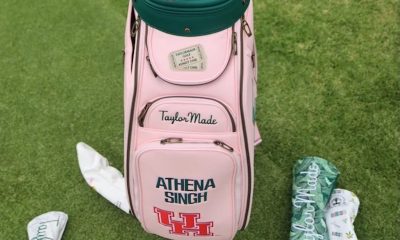

Athena Singh WITB 2026 (June)
Driver: TaylorMade Qi4D (10.5 Degrees) Shaft: Fujikura Ventus Blue 6 S 3-wood: TaylorMade Qi10 Max (16 Degrees) Shaft: Fujikura Ventus Red 6...
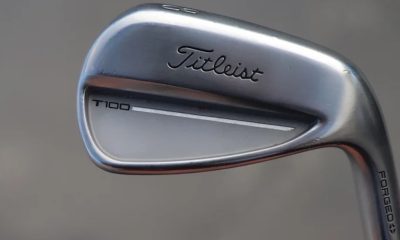
J.T. Poston’s winning WITB: 2026 Memorial Tournament
Driver: Titleist GTS3 (9 degrees) Shaft: Mitsubishi Diamana BF 60 TX 3-wood: Titleist TS2 (15 degrees) Shaft: Graphite Design Tour...
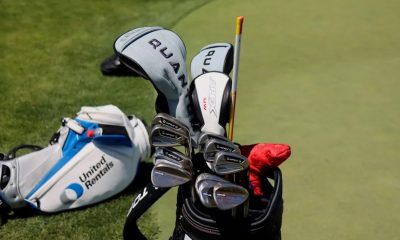

Alex Noren WITB 2026 (June)
Driver: Callaway Paradym Ai Smoke Max D (9 degrees @7, draw setting) Shaft: Graphite Design Tour AD VF 6 X 3-wood: Callaway...
-
 Equipment3 days ago
Memorial Tournament Tour Report: Rory McIlroy, Cameron Young switch up drivers, and more
-
 News1 week ago
Russell Henley’s winning WITB: 2026 Charles Schwab Challenge
-
 Equipment6 days ago
Details on Jason Day’s latest prototype Avoda iron setup
-
Whats in the Bag1 day ago
J.T. Poston’s winning WITB: 2026 Memorial Tournament
-

 Equipment12 hours ago
Best irons 2026: Best irons overall, most forgiving irons, and more
-

 Equipment3 weeks ago
CJ Cup Byron Nelson Tour Report: Koepka and Kim’s newest putters finally get hot
-
 News2 weeks ago
Charles Schwab Challenge Tour Report: MacIntyre, Åberg and Spaun all switch putters, TaylorMade launches new Spider
-
 Equipment2 weeks ago
Details on J.J. Spaun’s surprise putter switch


bobsuruncle
Sep 3, 2008 at 5:04 am
Whatever happened to the old saying – “let your clubs do the talking”? I wonder what language clubs actually converse in? Chinese? Most of the clubs are made in China after all !