
Opinion & Analysis
Making the case for putting instruction


For most golfers, the thrill of the game is hitting the ball high, far and straight. I would go so far as to say that some players would rather set their hair on fire than spend an hour on the putting green three days a week. But most avid players would also give up something important to break a major scoring barrier like shooting in the 80’s for the first time. For the majority of golfers, whose time is limited but who still hope to play the golf of their dreams, putting lessons and proper putting practice are without doubt the most efficient way to spend practice time.
I should tell you that I am a certified instructor with the SeeMore Putter Institute and therefore have an interest in promoting putting instruction. However, the reason I became a putting teacher was that as a tournament player I know how much value there is in working on that part of my game. I also know I can help my students improve and enjoy golf more through putting instruction and putter fittings because putting involves a shorter, less complicated motion that they can practice at home, the office and at a golf course. So, first I am going to discuss some statistics that show why putting is so important for great scoring and overall golf enjoyment. Then I’ll address why you should spend your precious time learning how to putt from a qualified instructor.
Avid golfers know that a scorecard treats putting with the same importance as the long game. On a regulation par-72, 18-hole golf course with four par 3 holes, four par 5’s, and ten par 4’s, the scorecard allocates as many strokes for putting as for full shots from the tee and fairway. Because most of us miss a significant number of greens per round, the average golfer generally takes 45 percent of his strokes on the green. However, putting tops the list as the skill that determines overall scoring performance.
The PGA Tour’s Strokes Gained-Putting statistic is great at showing just how important the flat stick is. Columbia University Business School Professor Mark Broadie created the method of gauging putting performance, which measures the putts a player takes from a certain distance relative to the PGA Tour average “taking into account the initial putt distance on each green.” So, if a player makes a 35-footer, and the PGA Tour average from that distance is 2.0 putts, then he picked up a putt on the field. The number of times the player either gains or loses a stroke to his competitors during a round determines his ranking.
In 2012, Brandt Snedeker led the strokes gained category with an average of 0.860 strokes over 81 rounds, meaning he gained almost an entire stroke on a field of the best players in the world every time he teed it up. He won the Farmers Insurance Open, the Tour Championship and the $10 million FedExCup race, which is a test of consistency over the entire season. Despite being short and crooked compared to the rest of the TOUR (ranking 108th in driving distance, 106th in driving accuracy, and 126th in greens hit in regulation) Snedeker finished the season third on the money list behind only Tiger and Rory and won $4,989,739, and he’s off to an even better start in 2013. Luke Donald led the Strokes Gained-Putting category in 2011 on the way to topping the European Order of Merit and the PGA Tour money list titles. To those who say that golf has become strictly a “bomb and gouge” game, I say look at the numbers.
There is also a hidden message in these statistics that many folks who have spent time around golf already know. If two of the shorter hitters on TOUR were able to overcome that deficit with stellar putters, good putting must instill the type of confidence and grit no other part of one’s game can. The inverse is also true — strong ball striking and weak putting lead to the frustrated feeling that no matter how well a player hits the ball, he will never reach his full scoring potential.
Look at the number of wins and career money Boo Weekley, Kevin Sutherland, John Senden and Joe Durant have collected. These fine players have led or been near the top of the greens-in-regulation statistics for the past five years, but with all due respect, they would probably tell you that they wished they were better putters. The fact is that strong putting leads to the kind of good feelings that a player cannot get from hitting towering drives and laser-like approaches. Putting well reinforces that it is OK to take certain risks since a strong putter feels he can get up and down from 80 yards or from a tough lie on the short side of a green. Good putting controls momentum and confidence during a round of golf. Many golfers know this, but the vast majority of players do not do what is necessary to become consistently effective once they are on the green.
Putting a golf ball well is not an innate talent that some players are simply born with. Like other golf skills, putting takes some hand-eye coordination but it can be taught and improved with practice. Most players don’t really know where to start. Should the stroke be straight back and straight through, travel on an ellipsis, or from inside and then down the line? Like the full swing, there is so much conflicting information out there that it is hard for even a very good player to know what advice is best. If a player somehow finds the advice that is right, reading a book or magazine article does not guarantee that player is properly executing what he or she reads. We all need a qualified pair of eyes to give us feedback and guidance.
Enter the trained putting instructor
Compared to the general population of golf pros, trained putting teachers are rare. According to the PGA, only 6 percent of golf lessons include putting instruction and that does not mean the entire lesson was dedicated to putting. There are probably two reasons for this:
- Most golfers choose to focus on the long game when they hire a teacher, and many golf pros just do not feel comfortable teaching putting.
- To find a good teacher to help you with the most important part of your game, you will need to do a little research.
The SeeMore Putter Institute is a great place to start, but so are a number other great teachers who focus on the flat stick. Regardless of whom you learn from, the lessons and the practice should center around promoting pre-shot mental focus, and sound, neutral fundamentals — grip, alignment, posture and ball position — because that will facilitate repeatability in your stroke even with a limited practice schedule. If you work on these things for 20 minutes at home every other day and practice your putting for an hour once or twice a week on a putting green, I promise you will see long-term scoring dividends, and enjoy the game more.


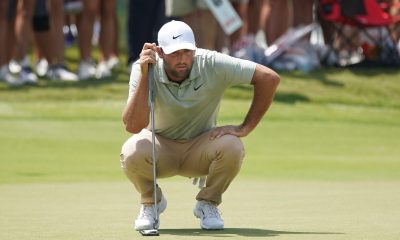








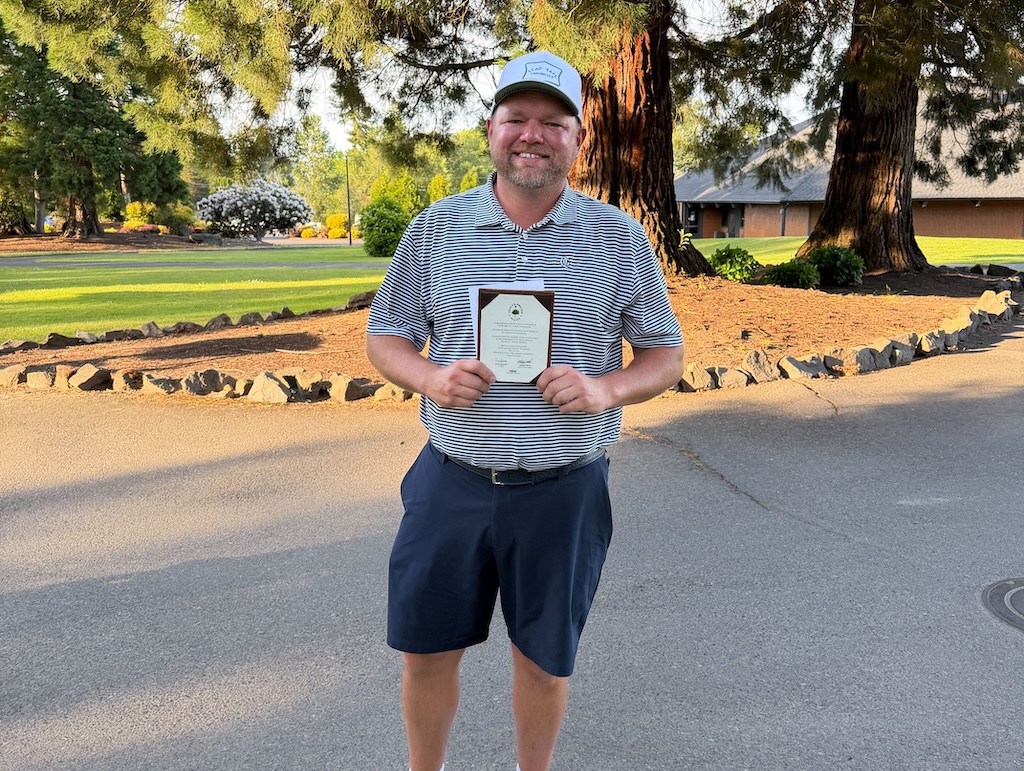
This past Monday, I played in the U.S. Amateur local qualifier at Rock Creek Country Club in Portland, Oregon. A full tee sheet from 7:30 a.m. to 1:55 p.m., the top 11 scores would make it to the U.S. Amateur final qualifying.
I teed off at 10:48 a.m.. With the 7:30 am tee time, you can get a feel for the leaders’ pace, and they were off and running on the challenging setup at Rock Creek.
View this post on Instagram
Getting to the highlight of the round on the par five 17th, a drive up the left side and 212 yards left to the front hole location. I took out a 5-iron with plans of middle of the green. The ball ended up 8 feet left of the hole, pin high. A slight downhill putt dropped in for an eagle 3 on the 17th. With the cut line looking to be anywhere from -2 to even par. This was the boost I had been waiting for all day.
With making par from the trees on 18, it was time to wait for a potential playoff with a posted score of one under par 71.
Three hours later, it was playoff time. 8 players for 6 spots. I made par on the playoff hole, which was good enough to advance to the U.S. Amateur final qualifying in July. USGA qualifiers sure deliver on all of the emotions in golf!
Club Junkie
Building my 2026 gamer WITB: Ranking the contenders and new putter projects – Club Junkie Podcast

The annual What’s In The Bag build is underway, and on this episode of Club Junkie, Brian breaks down the clubs currently leading the race for a spot in his 2026 gamer setup. From drivers and fairway woods to irons, wedges, and shafts, he ranks the equipment that’s performing best and explains what’s separating the front runners from the rest of the field.
Brian also heads into the workshop to discuss several putter projects currently on the bench. From head options and shaft choices to build ideas and testing plans, he shares what he’s working on and which putters could become serious contenders for the bag this season.
If you’re a gear junkie who loves equipment testing, club building, and the never-ending pursuit of the perfect setup, this episode is for you.
Follow Club Junkie:
Instagram: @clubjunkiepod
TikTok: @clubjunkiepod
Threads: @clubjunkiepod
X: @ClubJunkiePod
Club Junkie
Tour Edge Exotics mini driver review + TaylorMade Spider ZT Max first look – Club Junkie

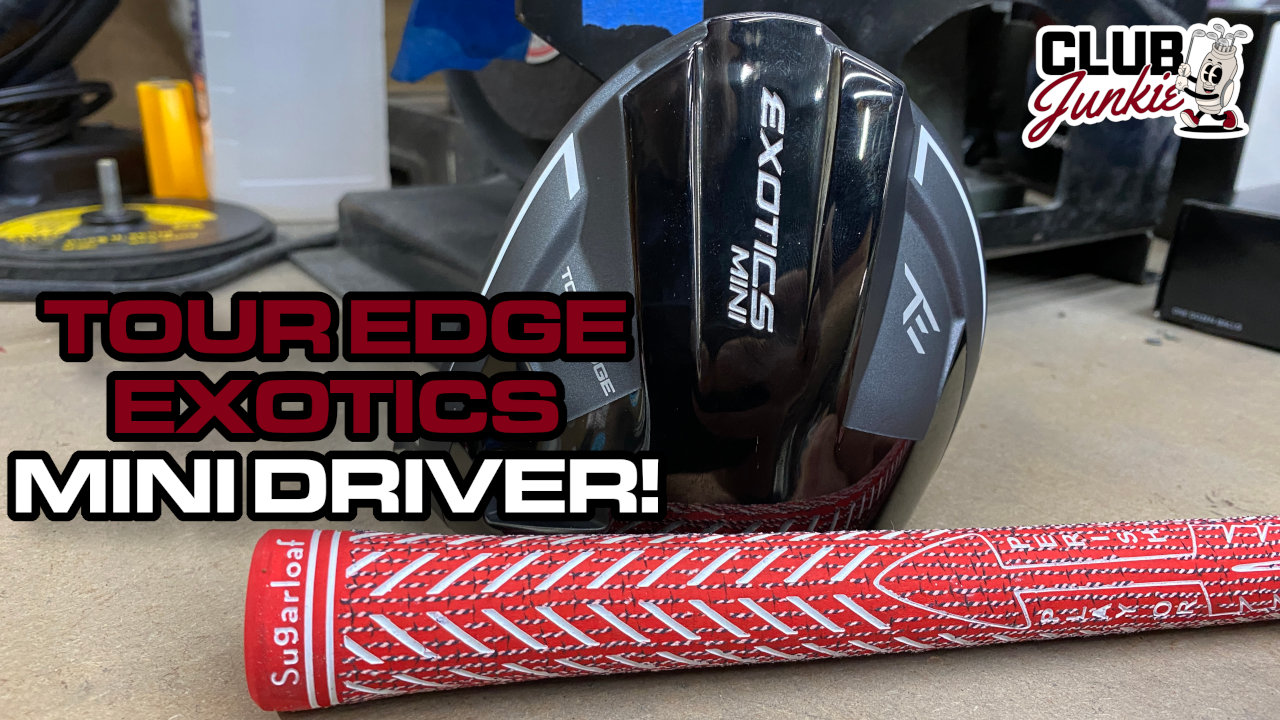
On this episode of Club Junkie, I put the new Tour Edge Exotics Mini Driver to the test and break down the performance, forgiveness, distance, and where it fits compared to a traditional driver or strong fairway wood. If you have been curious about adding a mini driver to the bag, this one is worth a look.
I also dive into the new TaylorMade Spider ZT Max putter that was recently spotted and discuss the growing zero torque putter trend. Plus, there is a closer look at the new Project X Titan Yellow shaft showing up on the PGA Tour and what makes it different from other profiles currently out there.

Justin Rose WITB 2026 (April): Full WITB breakdown with new McLaren irons

What’s the story behind Webb Simpson’s custom-stamped irons?

Cadillac Championship Tour Report: Spieth’s sizable changes, McLaren Golf launches, and more

Memorial Tournament Tour Report: Rory McIlroy, Cameron Young switch up drivers, and more

Russell Henley’s winning WITB: 2026 Charles Schwab Challenge

Kristoffer Reitan’s winning WITB: 2026 Truist Championship

Aaron Rai’s winning WITB: 2026 PGA Championship

Cameron Young’s winning WITB: 2026 Cadillac Championship

Details on Jason Day’s latest prototype Avoda iron setup

J.T. Poston’s winning WITB: 2026 Memorial Tournament
Brianna Do WITB (June 2026)
Driver: Callaway Quantum Triple Diamond (9 degrees) Shaft: KBS PGW 3-wood: Callaway Elyte Titanium (15 degrees) Shaft: KBS PGW 5-wood:...

Athena Singh WITB 2026 (June)
Driver: TaylorMade Qi4D (10.5 Degrees) Shaft: Fujikura Ventus Blue 6 S 3-wood: TaylorMade Qi10 Max (16 Degrees) Shaft: Fujikura Ventus Red 6...
J.T. Poston’s winning WITB: 2026 Memorial Tournament
Driver: Titleist GTS3 (9 degrees) Shaft: Mitsubishi Diamana BF 60 TX 3-wood: Titleist TS2 (15 degrees) Shaft: Graphite Design Tour...


Alex Noren WITB 2026 (June)
Driver: Callaway Paradym Ai Smoke Max D (9 degrees @7, draw setting) Shaft: Graphite Design Tour AD VF 6 X 3-wood: Callaway...
-
 Equipment4 days ago
Memorial Tournament Tour Report: Rory McIlroy, Cameron Young switch up drivers, and more
-
 News1 week ago
Russell Henley’s winning WITB: 2026 Charles Schwab Challenge
-
 Equipment6 days ago
Details on Jason Day’s latest prototype Avoda iron setup
-
Whats in the Bag1 day ago
J.T. Poston’s winning WITB: 2026 Memorial Tournament
-

 Equipment20 hours ago
Best irons 2026: Best irons overall, most forgiving irons, and more
-

 Equipment3 weeks ago
CJ Cup Byron Nelson Tour Report: Koepka and Kim’s newest putters finally get hot
-
 News2 weeks ago
Charles Schwab Challenge Tour Report: MacIntyre, Åberg and Spaun all switch putters, TaylorMade launches new Spider
-
 Equipment2 weeks ago
Details on J.J. Spaun’s surprise putter switch


David
Sep 4, 2018 at 10:08 pm
I am keeping detailed putting stats for the rest of the year. Have my last 10 rounds and I’m committed to getting data for at least 100 rounds. Looking good so far, but still room for improvement, of course!
Paul Kaster
Mar 9, 2013 at 7:57 pm
Thanks Larry! As the saying goes, understanding is the first step to acceptance. More to come!
Paul
Larry Perfetti
Mar 8, 2013 at 7:08 pm
Okay, I’m convinced that I need to spend a lot more time on my putting and that that time will pay off in many ways on the course.
Now, I hope Paul follows this article with several articles describing the aspects of putting and drills that will help me become a better putter.
Great article.
Thanks,
Larry
Paul Kaster
Mar 1, 2013 at 8:44 am
Mark and Jeff, glad you liked the article and thanks for your comments! Remember to use whatever aides (or better yet instruction) you can – any practice is only as good as the reliable feedback that guides it. Keep at it and have fun!
Jeff
Feb 28, 2013 at 4:07 pm
Great article ! I’m glad all my golf buddies don’t believe articles like this . Just having a second set of eyes
Look at your alignment and where you’re aimed will take strokes off, let alone actual instruction from a pro. I love practicing the short game bc as you said , it frees up the long game knowing you can save par on off days
3Puttnomore
Feb 27, 2013 at 11:29 pm
I agree that some don’t want to spend time on a putting green every day.. which means that some do!… During the good weather I stop at my local course and spend an hour on the green 4 or 5 days a week!… I love it!
It relaxes me on my way home… I enjoy the late afternoon or early evening… And I get GREAT satisfaction from getting better at learning to read greens… I spend more time on a putting green than a driving range because you’re right, the best place to pick up strokes is there!
Thanks for the article… Enjoyed it…
Mark R.
Brampton, Ont.
Paul Kaster
Feb 25, 2013 at 9:45 pm
Thanks Kevin! I would love to see that data when you’re done. Accomplished players definitely reach parity at a certain level when it comes to ball striking. But I also think average golfers have the most gain by working on the fundamentals of putting and the short game – as Dr.Bob Rotella said in Golf is Not a Game of Perfect, you have to accept missing greens and fall in love with your wedge and putter to make real progress as a player.
Paul
kevin smith
Feb 26, 2013 at 1:51 pm
We had a booth at The PGA Show, and worked with alot of average golfers. I have little doubt the average golfer has the most to gain from working on Putting Fundamentals. The Players just need to add a little commitment and they can improve.
I will get you a copy of the data we come up with at the end of the spring season.
Kevin
Kevin Smith
Feb 25, 2013 at 2:11 pm
Could not agree more!! We are doing some putting coaching with our device at the division1 ranks and are in the process of compiling data. The one thing we see alot , is 5 minutes of putting practice then straight to the range .
Those in the “know”, know putting is where it is at!! As your competitive level increases ball striking becomes pretty equal.
Great Article
Kevin Smith
Get The Point Golf