
Opinion & Analysis
The looming “Fiscal Cliff” of golf clubs


I had this article about 90 percent completed when Tom Wishon posted his article: The way golf clubs are being sold has hurt golf. Since his post and mine are both discussing the retail business, I felt it appropriate to add his link for another viewpoint. While we are looking at different parts of the industry, there are some parallels.
The recent announcement on “anchoring” has made me reflect on some of the bonehead equipment decisions made by golf’s ruling bodies in the last 30 years, going back to the Ping Eye 2 fiasco. Each time, a “wait and see” attitude has eventually resulted in a massive reversal or rollback in the equipment section. The USGA’s decision on grooves allowed engineers to maximize widths through CNC milling and tight tolerances until the ruling bodies chose to make 30 years of clubs obsolete with “Conditions of Competition.”
In 2003, the COR ruling was announced with a ruling to be made in 2007. While the manufacturers pushed face technology to produce a reliable 0.860 COR driver, the ruling bodies did an about-face and capped COR at 0.830. Unlike wedges, the OEMs had to suck it up and offer conforming replacement drivers for those golfers that had purchased equipment in good faith that it was within the tolerance of the current rules. The quest of the ruling bodies to reduce driver distance also resulted in a club length maximum of 48 inches. Sure, Wedgy Winchester had learned how to accurately swing a 60-inch driver on the long drive circuit. But how many other golfers could keep a driver that long in the fairway? Finally, clubhead size was capped at 460cc to minimize the ability to create a forgiving driver through size.
Essentially, you cannot build a longer driver than anything that has been made in the last 10 years that met the COR/CT max. A center strike “on the screws” cannot travel farther. The only variable to the golfer now is to optimize launch and spin through a fitting on a launch monitor. This has led the OEMs to try and maximize distance in fairways, hybrids and even irons by creating hot-faced clubs. Despite the fact that these clubs should fly precise distances for scoring, the selling point of distance trumps all.
Suppose that you have already gotten the hottest-faced clubs, conforming grooves, fitted lengths/lofts/lies/grips and your launch conditions are proper. What will now make you buy a new club? This is the nightmare that has to be keeping sales managers up at night. Sure, you have the GolfWRX crowd that always wants the latest and greatest. But how do you convince a recreational golfer or serious player to buy a new club when it isn’t much longer or more accurate, and offers little or no performance advantage over their current clubs?
This is the “fiscal cliff” that looms in the golf world. By 2014, it is expected that an overwhelming majority of golfers will have converted to conforming grooves. That sales hike in irons and wedges will recede back to normal levels. With no ability to create better launch conditions, what will be the selling point on the next generation of drivers? Right now, it’s graphics and all the colors of the rainbow. Why buy the newest equipment when top quality clubs with premium shafts are available for a song in the used market?
So what’s left?

Ironically, service, which has been driven to near extinction by the big box stores, will be the key ingredient to their survival. Similar to the tailor in a fine suit store, the need for fitting of clubs will be the last variable that the manufacturers will be able to offer for improving scores. The need to adjust length, loft, lie and grips gives each golfer the fit and comfort of a well tailored suit.
The advent of launch monitors, high speed cameras and elaborate shaft software have made it easy to get the player “in the ballpark” of a club that fits their swing. But it always comes to the assessment and final tweaks of the clubfitter to make sure everything is optimized. Are the yardage gaps between clubs consistent? Is the golfer increasing their center-face contact? Will the launch and spin give the golfer the best chance of hitting and holding the green? Do the clubs allow the golfer to execute the shot that is visualized in the mind?
More and more clubs are being purchased off the rack. Even Ping, whose green grass model for years forced you to order your clubs, has 6 to 8 sets on the wall of my local big box, ready for sale. The “right now” mentality of our society wants to take their clubs immediately to the range or the first tee instead of ordering to spec or having them fitted after the sale. Would it make sense to put a cushion in the price of a set of irons to allow the retailer to fit and set the lofts/lies of the clubs for the customer?
Perhaps partnering with teaching professionals to have them observe their student’s patterns on the lie board after they purchase new clubs would be an option. The teacher can recommend the dynamic adjustments and the golfer can now bring his clubs back for the correct loft/lie settings as part of the initial purchase. The same can be done with the adjustable drivers.
Have your teaching pro look at your flight patterns to determine optimal adjustments. Then return to the store and confirm your numbers on the launch monitor. There is revenue to be made in service and fitting if the industry embraces the concept. With the number of golfers staying static or declining in the US, and the need for publicly traded companies to increase sales and profits quarterly, the American retailers will have to adapt or share the same fate the electronics stores have: extinction by plummeting off the cliff.



This past Monday, I played in the U.S. Amateur local qualifier at Rock Creek Country Club in Portland, Oregon. A full tee sheet from 7:30 a.m. to 1:55 p.m., the top 11 scores would make it to the U.S. Amateur final qualifying.
I teed off at 10:48 a.m.. With the 7:30 am tee time, you can get a feel for the leaders’ pace, and they were off and running on the challenging setup at Rock Creek.
View this post on Instagram
Getting to the highlight of the round on the par five 17th, a drive up the left side and 212 yards left to the front hole location. I took out a 5-iron with plans of middle of the green. The ball ended up 8 feet left of the hole, pin high. A slight downhill putt dropped in for an eagle 3 on the 17th. With the cut line looking to be anywhere from -2 to even par. This was the boost I had been waiting for all day.
With making par from the trees on 18, it was time to wait for a potential playoff with a posted score of one under par 71.
Three hours later, it was playoff time. 8 players for 6 spots. I made par on the playoff hole, which was good enough to advance to the U.S. Amateur final qualifying in July. USGA qualifiers sure deliver on all of the emotions in golf!
Club Junkie
Building my 2026 gamer WITB: Ranking the contenders and new putter projects – Club Junkie Podcast

The annual What’s In The Bag build is underway, and on this episode of Club Junkie, Brian breaks down the clubs currently leading the race for a spot in his 2026 gamer setup. From drivers and fairway woods to irons, wedges, and shafts, he ranks the equipment that’s performing best and explains what’s separating the front runners from the rest of the field.
Brian also heads into the workshop to discuss several putter projects currently on the bench. From head options and shaft choices to build ideas and testing plans, he shares what he’s working on and which putters could become serious contenders for the bag this season.
If you’re a gear junkie who loves equipment testing, club building, and the never-ending pursuit of the perfect setup, this episode is for you.
Follow Club Junkie:
Instagram: @clubjunkiepod
TikTok: @clubjunkiepod
Threads: @clubjunkiepod
X: @ClubJunkiePod
Club Junkie
Tour Edge Exotics mini driver review + TaylorMade Spider ZT Max first look – Club Junkie

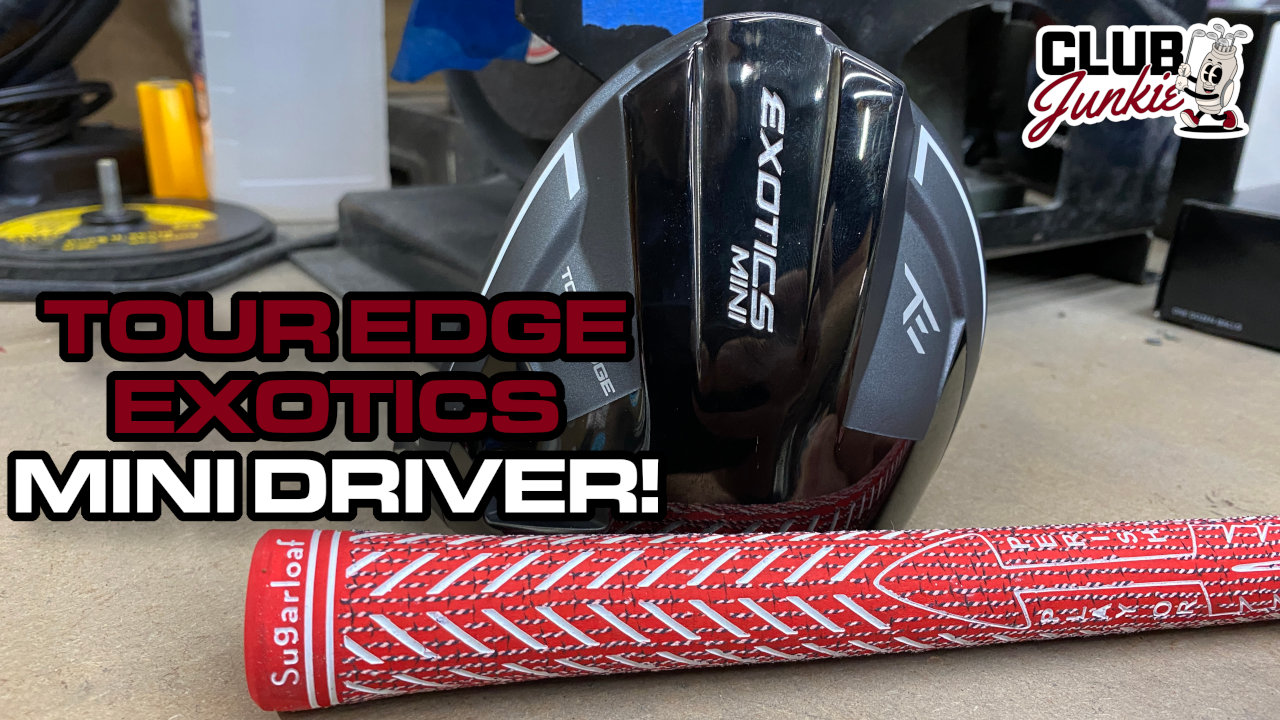
On this episode of Club Junkie, I put the new Tour Edge Exotics Mini Driver to the test and break down the performance, forgiveness, distance, and where it fits compared to a traditional driver or strong fairway wood. If you have been curious about adding a mini driver to the bag, this one is worth a look.
I also dive into the new TaylorMade Spider ZT Max putter that was recently spotted and discuss the growing zero torque putter trend. Plus, there is a closer look at the new Project X Titan Yellow shaft showing up on the PGA Tour and what makes it different from other profiles currently out there.

Justin Rose WITB 2026 (April): Full WITB breakdown with new McLaren irons

What’s the story behind Webb Simpson’s custom-stamped irons?

Cadillac Championship Tour Report: Spieth’s sizable changes, McLaren Golf launches, and more

Memorial Tournament Tour Report: Rory McIlroy, Cameron Young switch up drivers, and more

Russell Henley’s winning WITB: 2026 Charles Schwab Challenge

Kristoffer Reitan’s winning WITB: 2026 Truist Championship

Aaron Rai’s winning WITB: 2026 PGA Championship

Cameron Young’s winning WITB: 2026 Cadillac Championship

Details on Jason Day’s latest prototype Avoda iron setup

Justin Rose on the switch to McLaren Golf, learnings from previous equipment moves
Brianna Do WITB (June 2026)
Driver: Callaway Quantum Triple Diamond (9 degrees) Shaft: KBS PGW 3-wood: Callaway Elyte Titanium (15 degrees) Shaft: KBS PGW 5-wood:...


Athena Singh WITB 2026 (June)
Driver: TaylorMade Qi4D (10.5 Degrees) Shaft: Fujikura Ventus Blue 6 S 3-wood: TaylorMade Qi10 Max (16 Degrees) Shaft: Fujikura Ventus Red 6...

J.T. Poston’s winning WITB: 2026 Memorial Tournament
Driver: Titleist GTS3 (9 degrees) Shaft: Mitsubishi Diamana BF 60 TX 3-wood: Titleist TS2 (15 degrees) Shaft: Graphite Design Tour...


Alex Noren WITB 2026 (June)
Driver: Callaway Paradym Ai Smoke Max D (9 degrees @7, draw setting) Shaft: Graphite Design Tour AD VF 6 X 3-wood: Callaway...
-
 Equipment3 days ago
Memorial Tournament Tour Report: Rory McIlroy, Cameron Young switch up drivers, and more
-
 News1 week ago
Russell Henley’s winning WITB: 2026 Charles Schwab Challenge
-
 Equipment5 days ago
Details on Jason Day’s latest prototype Avoda iron setup
-
 Tour Photo Galleries3 weeks ago
Photos from the 2026 CJ Cup Byron Nelson
-

 Equipment2 weeks ago
CJ Cup Byron Nelson Tour Report: Koepka and Kim’s newest putters finally get hot
-
 News1 week ago
Charles Schwab Challenge Tour Report: MacIntyre, Åberg and Spaun all switch putters, TaylorMade launches new Spider
-
Whats in the Bag22 hours ago
J.T. Poston’s winning WITB: 2026 Memorial Tournament
-
 Equipment2 weeks ago
Details on J.J. Spaun’s surprise putter switch


Square
Jan 5, 2013 at 5:16 am
I hit the ball 280-300 off the tee, play the bag tees and really have a love affair with the game. For 30 years I’ve never taken a break. Hooked the first time I played the game. I hit the ball far enough. It’s probably impossible, but I would have loved for the USGA to provide a higher COR for the average to below average player who wants to hit it farther. Interesting article….